
Identifying What You Have: Gold, Silver, and Purity Standards
To successfully work with a buyer of gold and silver and maximize your payout, start by sorting your items by purity, tracking current live spot prices, and choosing an established dealer who conducts transparent testing on certified scales in your presence.
Before approaching any precious metals dealer, you must understand the categories of items you hold. Most personal holdings fall into three buckets: bullion, scrap metal, and finished estate goods. Bullion includes minted bars, government-issued coins, and privately minted rounds designed solely for investment. Scrap items encompass broken chains, mismatched earrings, dental restorations, and bent mountings where the value rests entirely on melt weight. Estate goods include signed designer jewelry, vintage pocket watches, and collectible silverware.
Silver items often hide in plain sight around the home. If you have inherited tea sets or flatware collections, learning the specifics of selling silver flatware can help you differentiate weighted hollowware from solid sterling pieces. Additionally, many jewelry collections contain white metals that may not be silver or white gold at all; knowing where to sell platinum ensures you receive accurate testing and appropriate market offers for denser, high-value platinum alloys.
Understanding Karat Marks, Fineness, and Hallmarks
Precious metals are rarely used in their pure state for daily wear because pure gold and pure silver are naturally soft. Instead, they are alloyed with base metals like copper, nickel, silver, or zinc to enhance durability. Karat marks and millesimal fineness stamps indicate the exact percentage of precious metal contained within the item.
To understand how to determine gold purity, check the tiny engraved stamps on your items:
24 Karat (999 or 999.9): This represents pure gold 24 k, containing 99.9% pure gold, most commonly found in investment bullion bars and select high-purity foreign jewelry.
18 Karat (750): Contains 75.0% pure gold. Highly prized in fine jewelry and luxury watches.
14 Karat (585): Contains 58.5% pure gold. The standard for North American jewelry due to its balance of rich color and structural strength.
10 Karat (417): Contains 41.7% pure gold. The legal minimum purity to be labeled solid gold in the United States.
Sellers often wonder what is the difference between 14 k and 18 k gold when liquidating assets. An 18K piece contains roughly 28% more pure gold by weight than a 14K item of identical physical mass, directly increasing its baseline melt payout.
For silver, look for the standard "925" or "Sterling" hallmark, which indicates 92.5% pure silver alloyed with 7.5% copper. Vintage American coinage minted before 1965 consists of 90% silver ("junk silver").
Professional dealers verify these stamps using non-destructive X-ray Fluorescence (XRF) analyzers, which scan the elemental composition down to hundredths of a percent, or traditional nitric acid touchstone assays that confirm karat boundaries without damaging the underlying structure.
Melt Value vs. Numismatic and Designer Premiums
A fundamental mistake many sellers make is assuming all precious metal items should be priced strictly by their weight on a scale. Melt value represents the baseline intrinsic value of the raw metal once melted down and refined. For instance, a simple, unadorned 24 carat gold ring or an unbranded broken chain will sell based directly on its pure weight and the prevailing spot price.
However, items with collector value, historical provenance, or luxury brand signatures command substantial premiums well above their melt weight. When you sell silver eagles or rare numismatic gold coins, their condition, mintage year, and scarcity can elevate their payout far beyond raw bullion values. Similarly, fine estate jewelry from houses such as Cartier, Tiffany & Co., or Van Cleef & Arpels carries luxury resale premiums that exceed the scrap value of their gold and gemstones. A reputable appraiser separates commercial scrap from premium collectible assets before making an offer.
How Precious Metals Are Priced: Spot Rates and Refining Margins
The global benchmark for valuing precious metals is the live spot price. The spot price reflects the current trading rate for one troy ounce of raw, pure metal on institutional commodity exchanges. Precious metals are measured in troy ounces (31.103 grams), not standard avoirdupois ounces (28.349 grams).
Tracking the gold silver price gives you the baseline for calculating an item's raw market worth. Global clearing standards maintained by organizations like the London Bullion Market Association ensure physical trading and clear audit trails for wholesale bars across major vaults. For individual sellers, understanding this foundational pricing structure helps clarify why consumer offers fluctuate throughout the day.
When calculating the baseline scrap price for retail jewelry, dealers calculate the pure metal content and apply the current spot rate. If you are calculating the price gold 14 k per gram, you multiply the current spot price per gram of 24K gold by 0.585 (58.5%), then adjust for refining margins.
Calculating Bullion Offers vs. Scrap Jewelry Melt Values
Bullion products and scrap jewelry are treated differently by precious metals buyers. High-purity government bullion (like American Eagles, Canadian Maple Leafs, or certified bars) requires no chemical refining; dealers can immediately verify them and turn them over in liquid secondary markets. As a result, buyback rates on recognizable bullion coins and bars are exceptionally high, often reaching 95% to 98% of the live spot price.
In contrast, scrap jewelry, dental gold, and sterling flatware must be batched, shipped, melted down, and processed by an industrial refinery to separate pure gold and silver from base alloy metals. Refineries charge melt fees, assay fees, and treatment costs, while market backlogs can introduce price risk during processing. Consequently, buyers offer lower percentages for scrap to cover these overhead and processing fees.
Metal Product Category | Typical Purity | Processing Requirement | Average Payout Range (% of Spot) |
|---|---|---|---|
Pure Gold Bullion Coins & Bars | 99.9% – 99.99% | Instant resale (No refining needed) | 95% – 98% |
Pure Silver Bullion (Eagles/Bars) | 99.9% | Instant resale (No refining needed) | 90% – 95% |
High-Karat Scrap Jewelry (14K–18K) | 58.5% – 75.0% | Melting & chemical refining required | 70% – 85% |
Low-Karat Scrap Jewelry (10K) | 41.7% | High base-metal separation refining | 60% – 75% |
Sterling Silver Flatware & Scrap | 92.5% | Bulk melting & refining required | 65% – 80% |
Dental Gold Restorations | Variable (40%–70%) | Specialized assay & refining required | 50% – 70% |
Tax Implications: Capital Gains and Inherited Metals
Before executing a major precious metals transaction, consider the tax framework governing these physical assets. The Internal Revenue Service (IRS) classifies physical gold, silver, and platinum bullion or coins as "collectibles." Under federal law, net profits from the sale of collectibles held for more than one year are subject to a maximum long-term capital gains on gold tax rate of up to 28%, rather than the standard long-term capital gains rates applied to equities.
For inherited jewelry and estate bullion, tax regulations generally provide a "stepped-up basis." The cost basis of the inherited precious metals is adjusted to the fair market value of the assets on the exact date of the original owner's death. If you sell the inherited items promptly at their current market appraisal, your taxable gain may be minimal or non-existent. Always maintain written appraisal receipts and consult a qualified tax professional regarding your personal reporting requirements.
How to Choose the Right Buyer of Gold and Silver
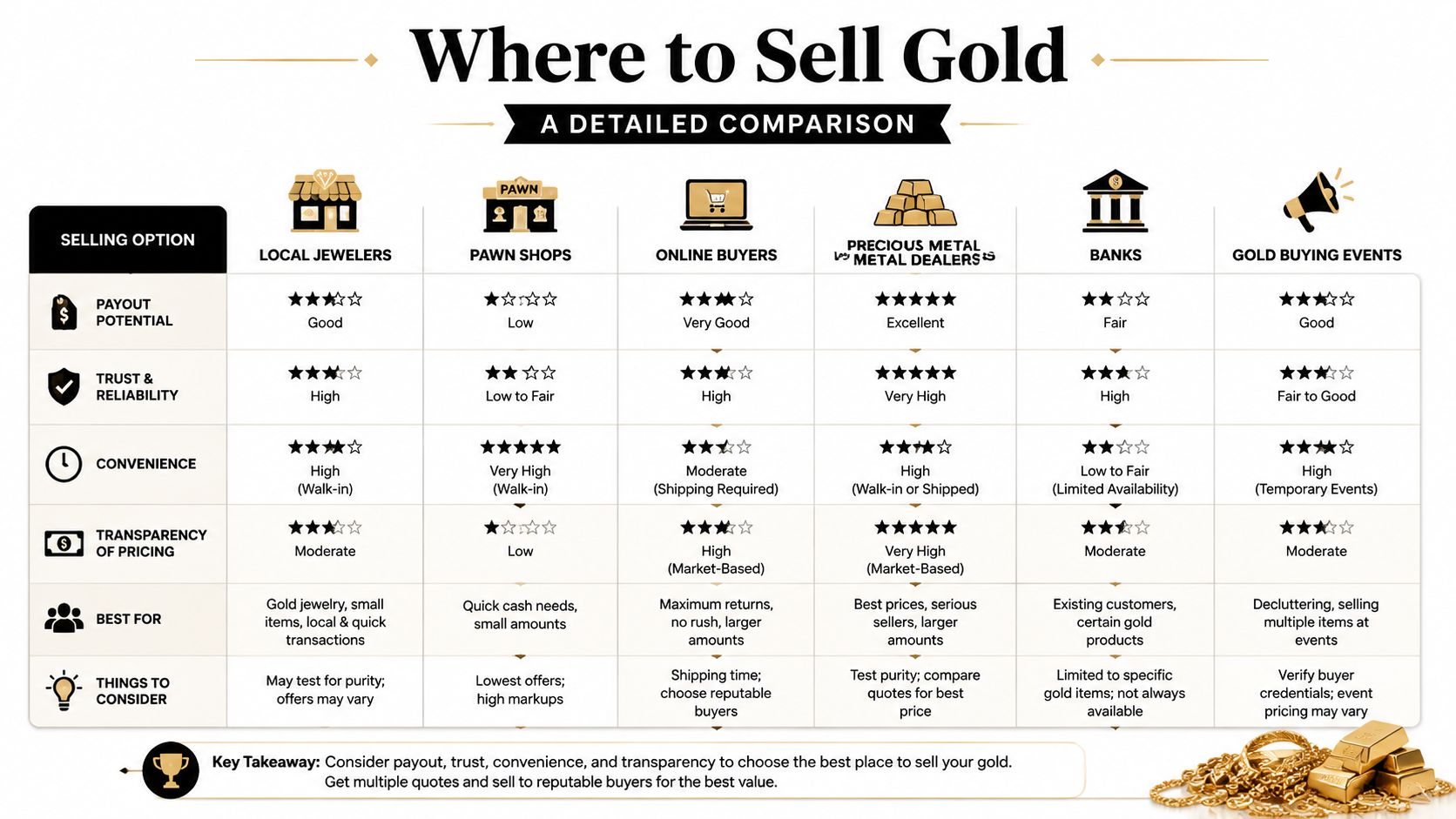
Finding a reputable partner is the most critical step when liquidating valuable items. Knowing where to sell gold and silver means understanding the difference between specialized luxury appraisers, wholesale bullion dealers, pawnshops, and transient pop-up operations. When preparing to sell silver and gold, evaluate the dealer's physical security, testing transparency, customer review history, and credentialing.
The best place to sell gold is an established buyer who provides fully transparent evaluations in your presence, quotes prices directly based on live market spot rates, and charges zero hidden evaluation or transaction fees.
What to Expect When Visiting a Local Buyer of Gold and Silver
When searching for verified gold buyers near me, look for dedicated appraisal offices rather than general retail storefronts. For clients working with specialized gold buyers atlanta or those seeking to sell gold tampa, an appointment-only showroom offers privacy, personal attention, and high security.
A professional dealer will welcome you into a private office, place your items on a certified digital scale in full view, and explain the testing methodology step-by-step. If you have diamond-accented pieces or luxury timepieces, a premier buyer will appraise both the metal and the secondary gemstones. This makes an estate specialist the best place to trade in gold jewelry when you wish to capture full value for designer signatures, vintage craftsmanship, and certified diamonds alongside raw metal weight, concluding with immediate on-the-spot payment.
Online Dealers vs. Brick-and-Mortar Appraisers
The digital landscape offers various mail-in precious metals services. When selling standardized investment bars online, remote portals allow you to lock in a spot price before shipping your items via insured mail.
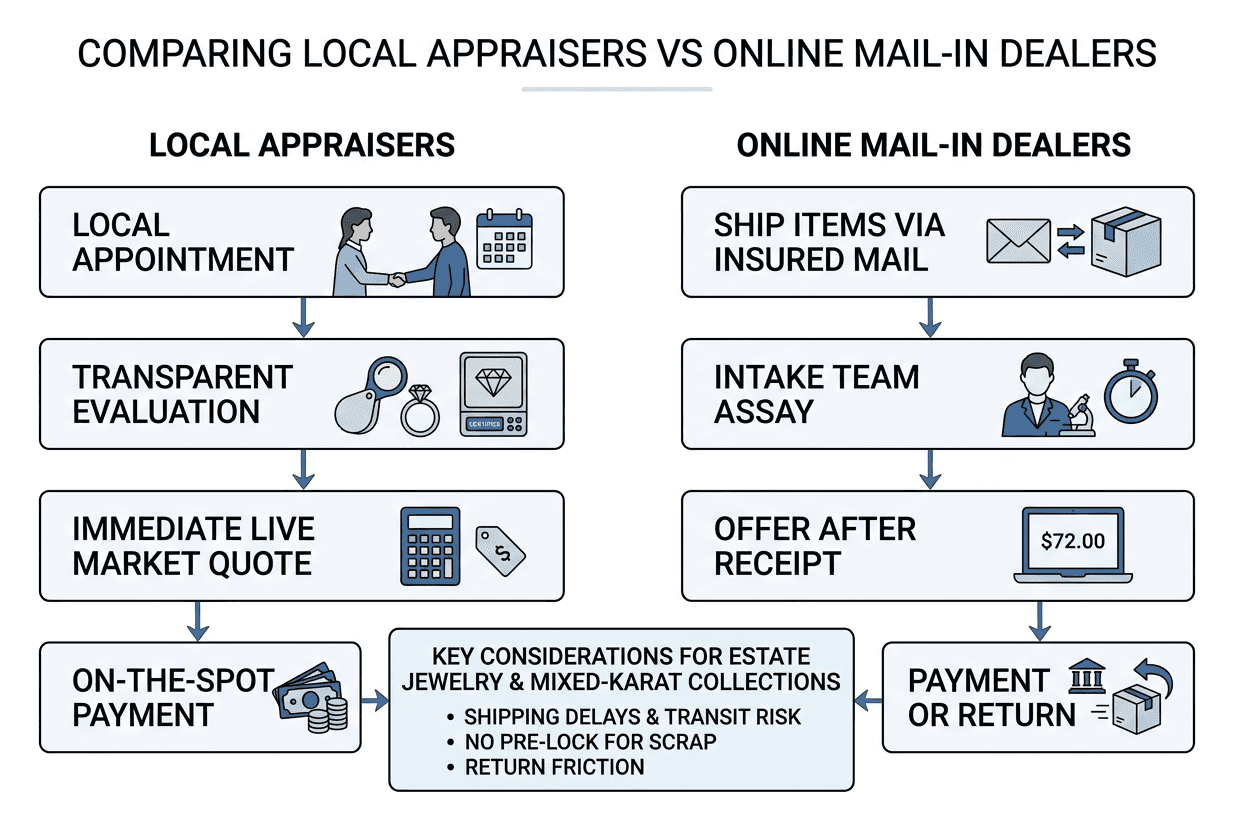
However, online mail-in programs have distinct drawbacks for estate jewelry and mixed-karat collections:
Shipping Delays and Transit Risk: High-value metals require insured registered mail, introducing transit stress and multi-day delays.
No Pre-Lock for Scrap: Online buyers cannot lock in a price for scrap jewelry or unverified estate items until their intake team receives, unboxes, and assays the parcel.
Return Friction: If you reject a mail-in offer, you may face return shipping fees or delayed return transit.
Immediate Local Payment: Local brick-and-mortar buyers evaluate items in your presence and issue immediate funds via cash, check, or bank wire without shipping risks.
Red Flags to Avoid When Selecting a Buyer of Gold and Silver
Protect yourself against predatory buying operations by watching out for common industry red flags:
Hidden, Out-of-Sight Testing: Never allow a buyer to carry your jewelry into a back room or behind a partition to test or weigh it. All evaluations should occur in plain sight.
Concealed Weight Displays: Scales should have visible digital displays, certified calibration seals, and clear indicators showing whether weight is recorded in grams, pennyweights (dwt), or troy ounces.
Hotel Pop-Up "Buying Events": Traveling buying fairs that set up in hotel ballrooms for a single weekend operate with heavy advertising overhead and low payout rates, leaving town before sellers realize they were underpaid.
High-Pressure Tactics: Reputable buyers present written offers and give you space to consider your options without aggressive pressure or artificial "today only" price drops.
Step-by-Step Guide to Preparing and Selling Your Items
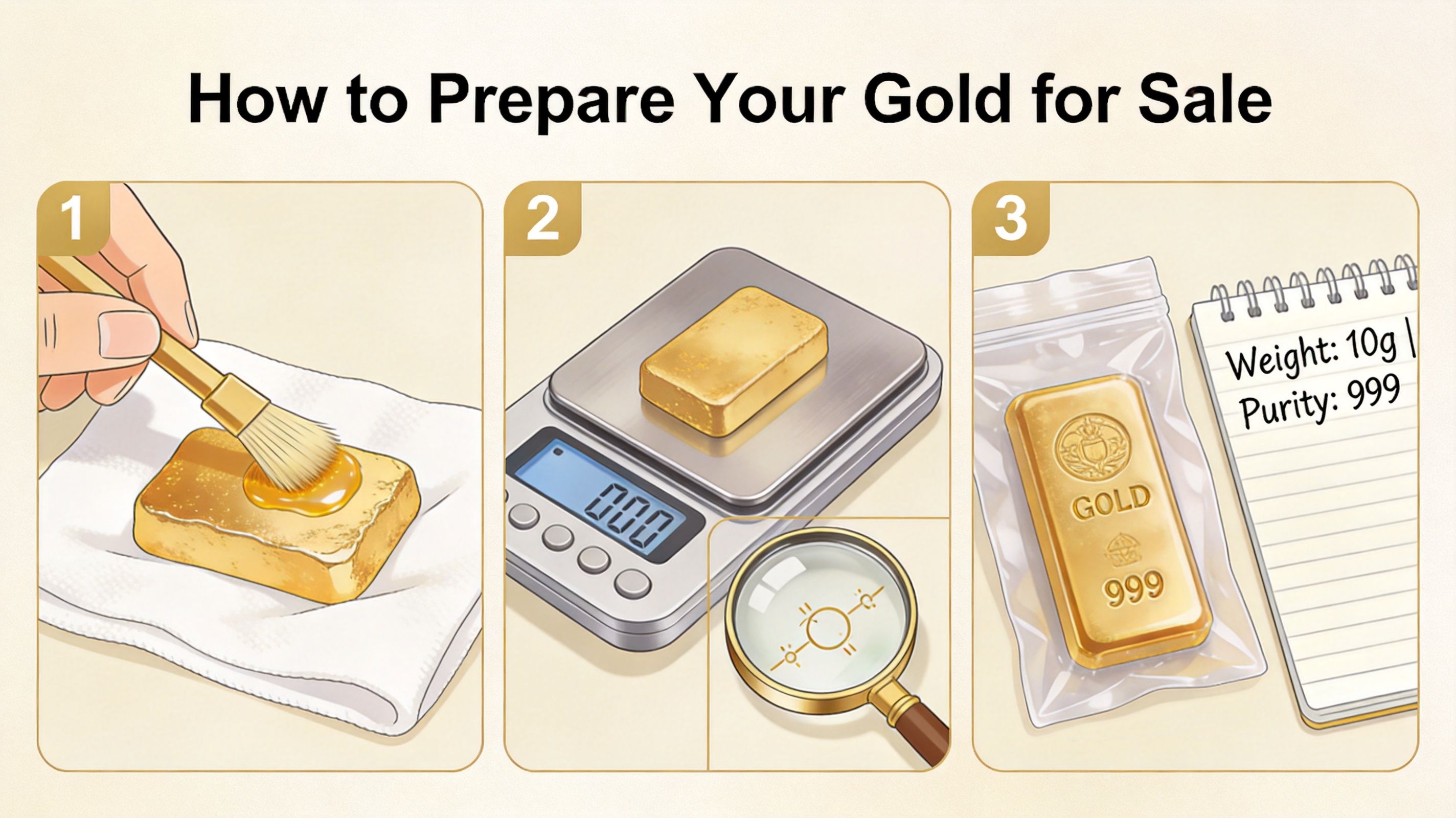
Maximizing your payout requires basic home preparation before you step into a buyer's office. Follow this practical, structured workflow to ensure a smooth, lucrative transaction.
Pre-Sale Preparation and Market Timing
Begin by gathering and cataloging your inventory. Use a magnifying glass or jeweler’s loupe to inspect stamps and organize your items into separate containers based on purity (10K, 14K, 18K, 925 sterling silver, and platinum). If you have vintage silver sets, our old silver selling guide 2026 provides in-depth advice on distinguishing plated items (marked "EPNS", "Silverplate", or "IS") from solid sterling alloy.
Weigh each group on a digital kitchen or jewelry scale to establish baseline weights in grams. Calculate your approximate metal content so you know what to expect before seeking an appraisal.
When you prepare to sell gold jewelry for cash, never clean or polish collectible coins or antique jewelry. Cleaning coins with chemical dips, cloths, or abrasives creates microscopic surface scratches (hairlines) that permanently destroy their collector value and numismatic grade, reducing a potentially valuable coin to base melt value. Leave all vintage patina untouched.
Comparing Quotes and Negotiating the Best Offer
Precious metals prices move constantly throughout the trading day. When shopping for offers, visit multiple reputable buyers on the exact same day so your comparative quotes reflect the same underlying market spot price.
Request Transparent Itemized Quotes: Ask the appraiser to break down their offer by karat category, weight, and payout percentage of spot price.
Identify Gemstone and Designer Value: Ensure the buyer evaluates mounted diamonds, fine colored gemstones, and brand hallmarks separately from melt weight.
Evaluate Total Value: Read through our sell gold jewelry ultimate guide 2026 for strategies on separating scrap pieces from items best suited for estate resale.
Select Secure Settlement: Choose a licensed buyer providing transparent paperwork and immediate payment through secure methods like bank wire, official check, or cash.
Frequently Asked Questions About Selling Gold and Silver
How much do precious metals buyers typically pay relative to spot price?
Payout percentages depend directly on product type and refining requirements. For pure government bullion coins (such as American Gold Eagles or Canadian Silver Maples), top-tier dealers pay between 95% and 98% of the live spot price. For scrap jewelry, dental gold, and sterling silver items, payouts generally range between 65% and 85% of intrinsic melt value to account for refinery melt losses, assay fees, chemical processing costs, and dealer handling.
Should I clean my silver coins or gold jewelry before having them appraised?
No. You should never clean, polish, or alter silver coins, historical bullion, or antique estate jewelry. Cleaning historical coins removes their original mint luster and surface toning, which can instantly reduce a rare coin's numismatic premium down to raw melt value. For estate jewelry, original patina often verifies antique authenticity and is prized by collectors. Bring items in their natural, as-found condition.
What identification is required when selling precious metals for immediate payment?
Legitimate precious metals dealers operate under strict federal Anti-Money Laundering (AML) regulations and local second-hand dealer laws designed to prevent the sale of stolen property. You must present a valid, unexpired government-issued photo ID (such as a state driver’s license, military ID, or passport). Dealers are legally required to record transaction details, metal descriptions, and seller identification for local regulatory compliance.
Conclusion
Liquidating precious metals should be a straightforward, transparent, and empowering experience. By identifying your hallmarks, calculating baseline melt weights, understanding live spot price mechanics, and avoiding predatory pop-up buyers, you can confidently secure top-tier market value for your assets.
At Antwerp Diamond Store, we offer a private, upscale alternative to noisy storefronts and generic pawn shops. Operating from our private Atlanta showroom, our specialists conduct detailed, face-to-face appraisals using advanced testing technology in full view. Whether you are selling bullion bars, fine scrap gold, signed estate pieces, or luxury timepieces, we provide zero-fee market evaluations and immediate payouts via cash or wire transfer.
Discover the best way to sell gold jewelry by scheduling your private evaluation with us today, and turn your precious metals into instant capital with complete peace of mind.