

Sell Gold Jewelry for a Clear, Competitive Offer
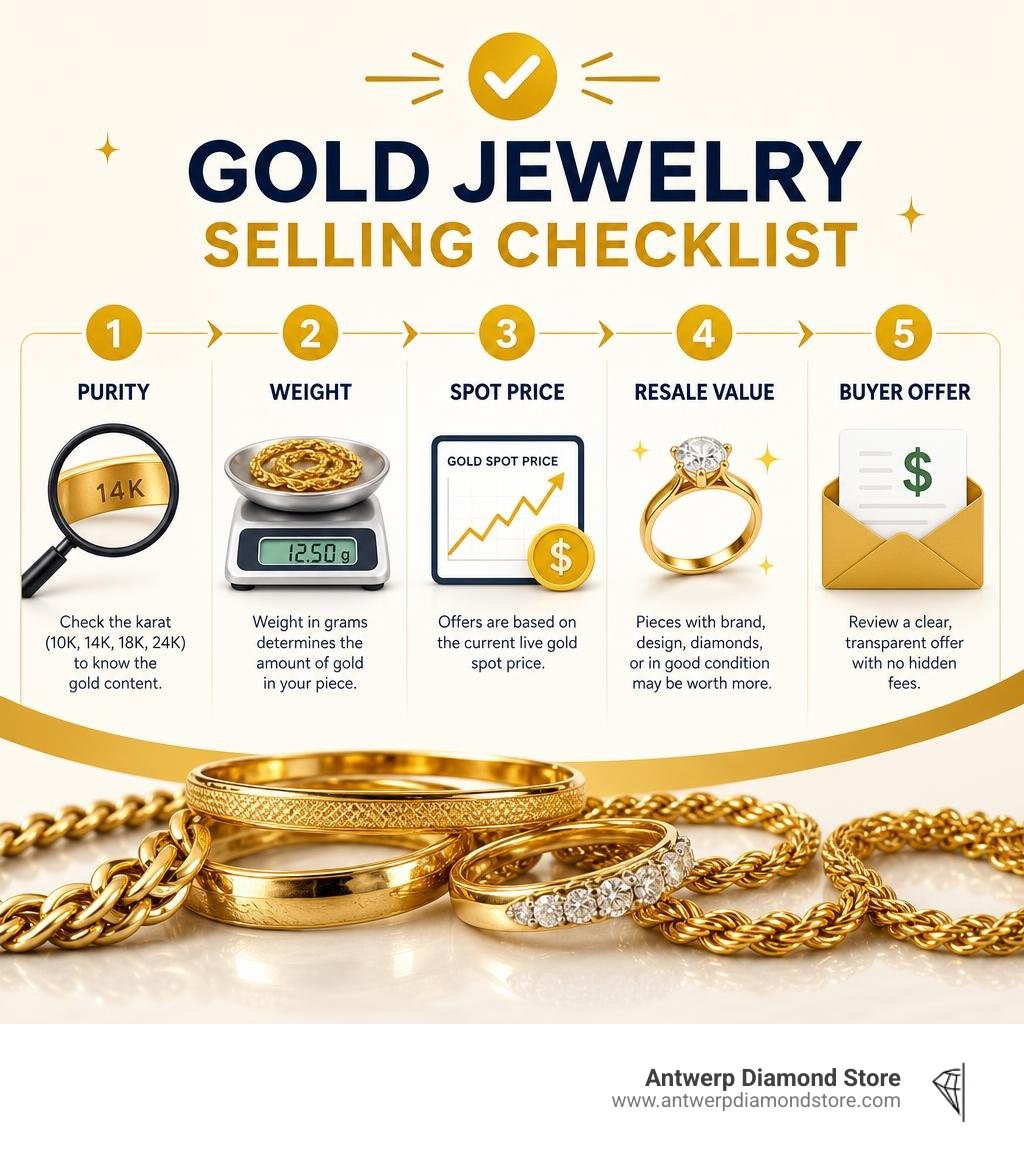
To sell gold jewelry for the best price, know its karat, weight, and whether it has resale value beyond its gold content, then compare transparent offers tied to the live gold spot price.
Broken, plain, or mismatched pieces are often valued for their melt value.
Designer, antique, diamond-set, or intact fine jewelry may be worth more as jewelry than as scrap.
A fair offer should show the tested purity, weight, current gold price, and any deductions for stones or non-gold parts.
For privacy and speed, choose a buyer that can evaluate the piece clearly and make an offer without pressure or hidden fees.
Gold prices can move daily, but the biggest difference in your payout often comes from how a buyer classifies your item. A 14K chain is not pure gold - it is about 58.3% gold by content - while an 18K piece is 75% gold. That distinction, along with the item’s gram weight, sets the baseline before brand, condition, gemstones, and demand enter the picture.
For valuable jewelry, a fast sale should not mean a vague sale. The goal is to understand what you own well enough to recognize a market-based offer and decide whether immediate cash or a higher resale-oriented valuation best fits the piece.
Understanding Gold Purity, Karatage, and Weight
Before you present your items to a buyer, you must understand the basic parameters that determine precious metal values. Gold in its rawest form is soft and malleable, so jewelers blend it with alloy metals like copper, nickel, or silver to enhance durability and alter tone. Knowing how much pure metal resides in your piece prevents surprise when reviewing offer sheets.
Identifying Karat Stamps and Purity Markings
The hallmark stamped inside a ring band or near a chain clasp reveals its fine metal proportion. Karat measurement is based on a 24-point scale:
24-Karat Gold: 99.9% pure metal. Soft, rich yellow, and rarely used for daily fashion jewelry. Learning more about pure gold 24 k helps put daily-wear alloys into context.
18-Karat Gold: 75.0% pure gold blended with 25% alloy metal (marked as 18K or
750).14-Karat Gold: 58.3% to 58.5% pure gold (marked as 14K or
585).10-Karat Gold: 41.7% pure gold (marked as 10K or
417), representing the legal minimum standard for gold jewelry in the United States.
Sellers often wonder what is the difference between 14 k and 18 k gold. Beyond durability and color saturation, 18K yields roughly 28% more fine metal per gram than 14K.
European items frequently display three-digit numeric hallmarks instead of karat stamps. For example, a heavy solid gold cuban chain stamped 750 indicates 75% purity. That older vintage jewelry may show slight hallmark wear, requiring physical verification from a professional.
Calculating Intrinsic Melt Value vs. Resale Value
Understanding your piece's melt value gives you a baseline before you seek an evaluation. To calculate raw metal value, you need a precise digital gram scale, the item's verified purity percentage, and the prevailing live gold market spot price.
The math operates on standard conversions:
Troy Ounce Standard: Precious metals trade globally in troy ounces, where 1 troy ounce = 31.1035 grams. (Standard avoirdupois ounces weigh only 28.35 grams, so never use kitchen postal scales set to standard ounces).
Gemstone Deductions: Non-gold inclusions, structural springs, and stones must be subtracted. For example, 1 carat of gemstone weight equals 0.2 grams.
For instance, consider a 5-gram 14K ring when the live spot price equals $95 per gram:
Net Weight: 5.0 grams
Purity Factor: 0.585 (58.5%)
Fine Metal Content: 2.925 grams of pure gold
Calculated Melt Value: 2.925 grams × $95/g = ~$278
To perform fast estimates, you can reference an online How Much Is My Jewelry Worth? Gold Calculator before meeting a buyer. Scrap buyers apply a modest margin off this intrinsic melt ceiling to cover operational overhead and refinery processing fees.
Where to Sell Gold Jewelry: Comparing Your Buying Options
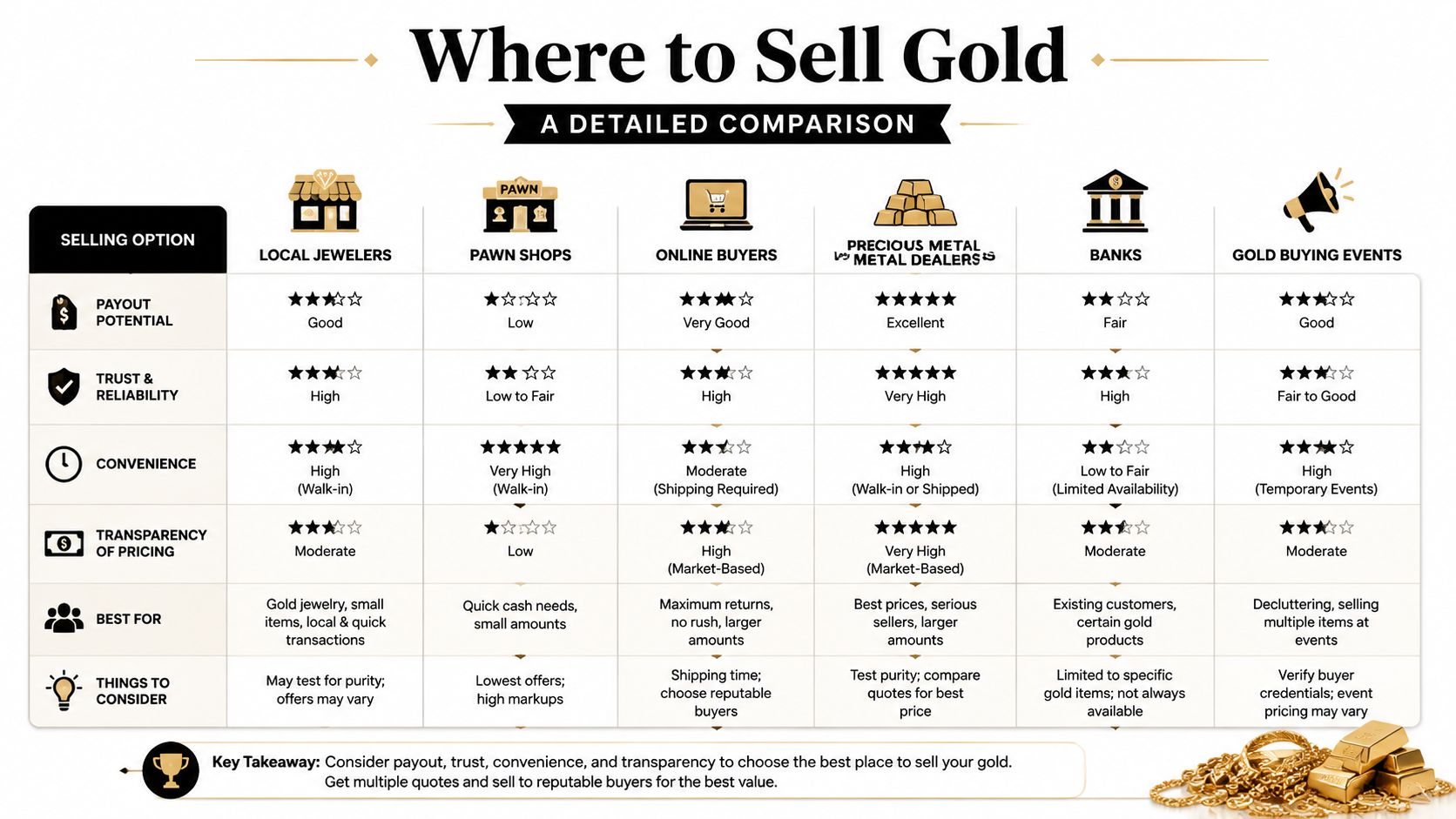
Where you choose to sell gold jewelry impacts both your financial payout and selling experience. Each venue caters to different seller priorities, balancing immediate cash needs against potential luxury markup premiums.
Selling Channel | Typical Payout Range (% of Melt) | Transaction Speed | Ideal For | Safety & Privacy Level |
|---|---|---|---|---|
Luxury Estate Buyers & Fine Jewelers | 85% - 95%+ (Up to 150%+ for Designer Items) | Same Day / By Appointment | Signed luxury brands, fine diamonds, estate heirlooms | High (Private appointments, expert appraisal) |
Online Bullion & Scrap Dealers | 80% - 95% | 3 to 8 Days | Scrap gold, broken chains, uniform bullion | Moderate (Requires insured shipping) |
Local Coin & Jewelry Shops | 80% - 90% | Immediate | Standard unbranded gold rings, chains, coins | Moderate (Walk-in counter setup) |
Pawn Shops & Cash-for-Gold Retailers | 50% - 70% | Immediate | Emergency liquidity, lower value items | Variable |
Private Online Marketplaces | 90% - 102% | Days to Weeks | Direct peer-to-peer retail buyers | Low to Moderate (Scam risks, transaction delays) |
Local Jewelers and Estate Appraisers
When dealing with high-grade estate items or designer pieces, local specialized jewelers offer clear advantages over basic scrap counters. If you own an intact piece from a luxury house, its market value easily surpasses raw scrap melt metal pricing.
When visiting an established jeweler, bring any original packaging, certificate cards, or sales receipts. If you wonder where to sell fine jewelry or need an expert estate jewelry appraisal, specialized buyers assess both metal content and secondary market desirability. Unblemished items like a classic 14 k solid gold figaro chain or a vintage 24 carat gold ring retain added value as finished pieces.
Online Precious Metal Buyers
Mail-in programs offer flexibility for sellers who lack access to top-tier physical diamond districts. Reputable online buyers supply insured shipping mailers, evaluate incoming shipments under video recording, and email quotes linked to live spot tickers.
If you are exploring where to sell jewelry online, ensure the buyer guarantees free return shipping if you reject their offer. While online services offer convenience for broken scrap metal, high-value luxury diamond jewelry often benefits from an in-person private evaluation where you can discuss the offer directly.
Pawn Shops and Cash-for-Gold Counters
Pawn shops provide fast cash, making them a common option when speed is the priority. However, their payout offers reflect a different business model. Because pawn shops incur holding risks and higher retail overhead costs, their scrap offers typically range between 50% and 70% of live spot value.
If you are considering pawning a ring short-term versus selling it outright, weigh loan interest rates against a clean sale. Knowing how pawn shops operate helps you decide if they are the best place to sell gold for your situation or if a dedicated jewelry buyer is a better fit.
How Spot Prices and Market Trends Impact Offers
Precious metals operate on live international market exchanges. Spot values fluctuate constantly based on global currency strength, inflationary pressure, central bank reserve purchases, and geopolitical changes.
Key Steps to Take Before You Sell Gold Jewelry
Market movements directly influence what buyers can pay on any given day. In early 2026, market momentum pushed precious metal values toward historic highs, making tracking live spot prices essential before requesting quotes.
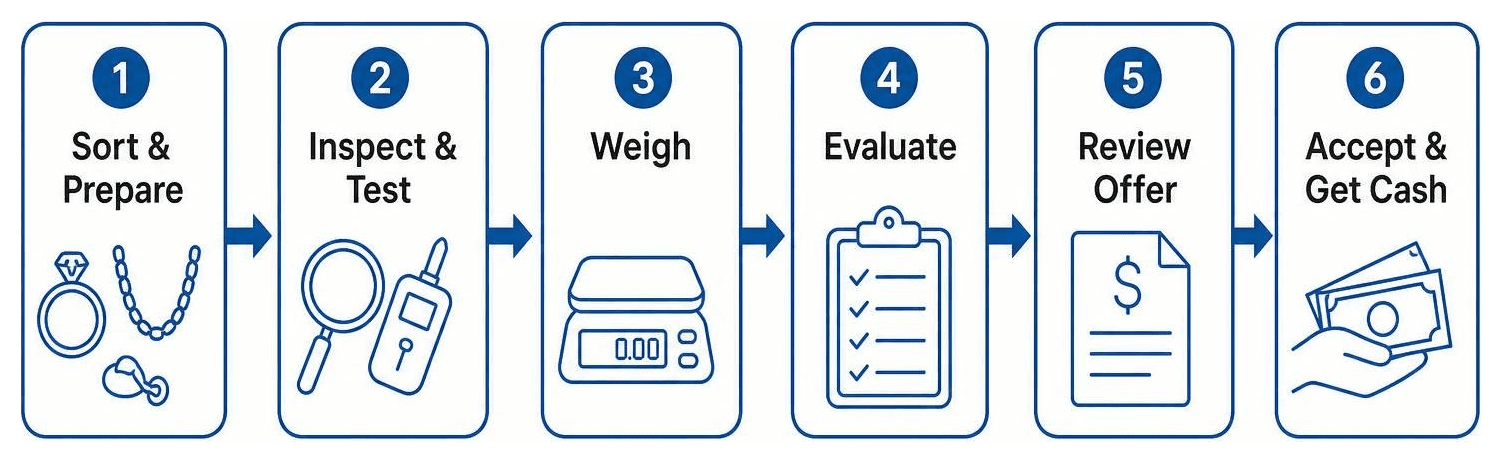
When preparing to sell, follow these actionable preparation steps:
Track the Daily Spot Rate: Monitor live spot prices per troy ounce and per gram. Knowing whether gold is trading higher or lower helps you time your transaction.
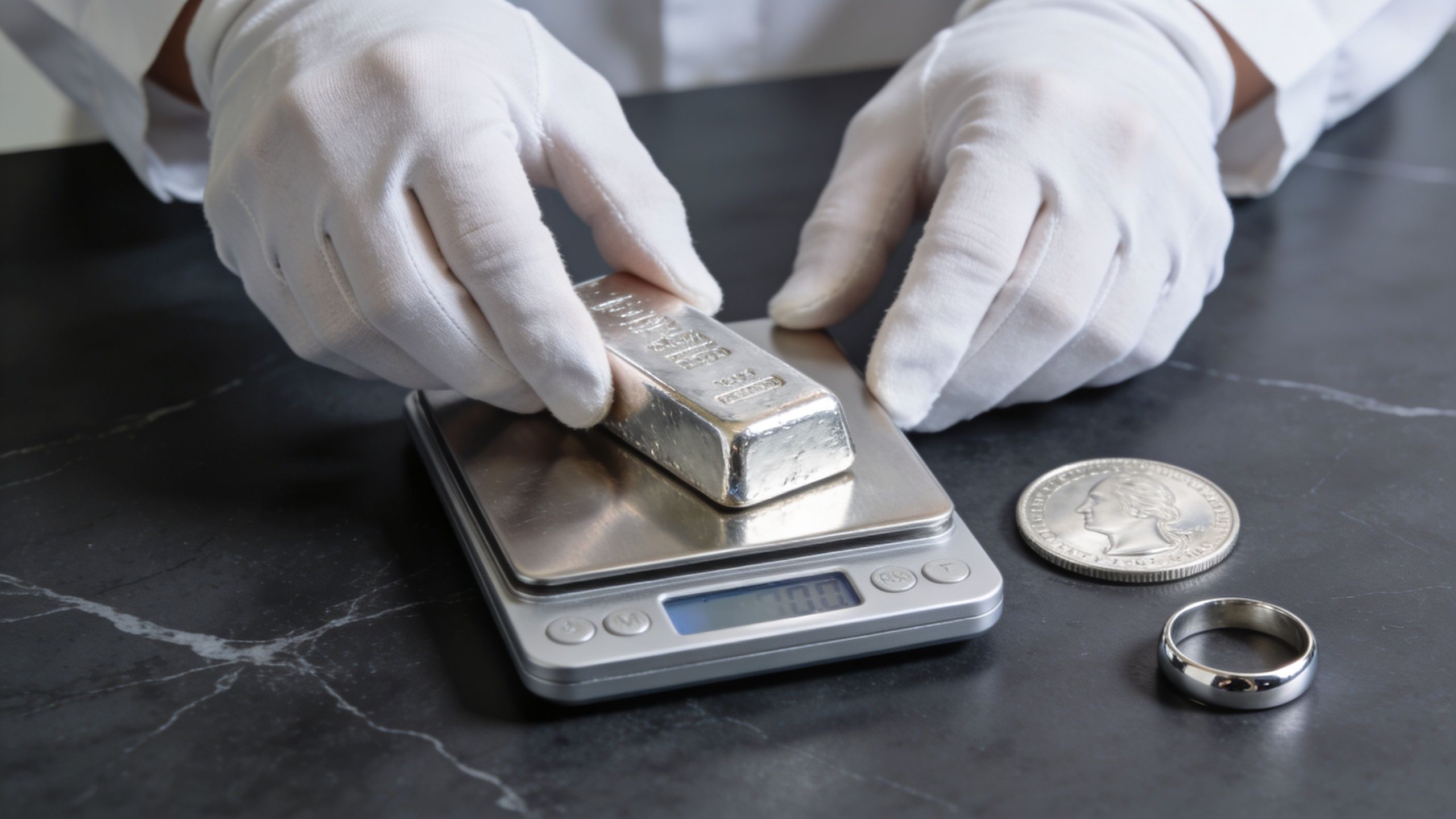
Weigh Your Items in Grams: Group your jewelry by karat stamp (e.g., separate 10K, 14K, and 18K piles) and record their gram weights on a digital scale.
Check Related Metals: If your collection includes silver pieces, track the current gold silver price ratio to sell both metals effectively.
Avoiding Common Pricing Pitfalls
Unscrupulous buyers rely on confusion around weights and units to lower their offers. Here are the most common pricing traps to avoid:
The Pennyweight Trick: Some buyers weigh items in pennyweights (dwt) rather than grams (1 dwt = 1.555 grams) without clarifying the unit, creating confusion during payouts.
Gross Weight Offers: A buyer might weigh an entire ring—including heavy center stones—and offer a single low flat rate for the combined piece. Always insist on separate valuations for metal and gemstones.
The "Plated" Misclassification: A buyer might claim a solid 14K item is merely gold-filled or plated based on a superficial scratch test. Require non-destructive testing before accepting a low offer.
Flat Per-Item Rates: Never accept a blanket dollar offer for a box of mixed items. Every piece must be sorted by purity, weighed individually, and calculated transparently.
How to Vet Buyers and Secure Top Dollar
A reliable transaction depends on finding a buyer who values transparency, security, and clear communication.
How to Safely Sell Gold Jewelry for Top Dollar
When visiting a buyer, observe their evaluation setup. Trustworthy valuation environments share several key characteristics:
Visible Calibrated Scales: Scales must bear official state weights-and-measures inspection seals and be placed where you can see the digital readout clearly.
Advanced Non-Destructive Testing: Premier buyers use X-ray Fluorescence (XRF) analyzers or electronic conductivity meters. These tools identify exact metal composition instantly without filing deep notches or applying harsh acids to your fine jewelry.
Private, Secure Settings: High-value transactions should occur in private offices rather than open retail counters, protecting both your safety and privacy.
Clear Credentials: Look for Better Business Bureau (BBB) accreditation, long-standing local operating history, and GIA-trained staff. Searching for verified gold buyers near me helps connect you with established local buyers.
At Antwerp Diamond Store in Atlanta, GA, we conduct transparent evaluations in a private, appointment-only setting. We guide you through every step—testing metal purity, calculating precise weight, assessing gemstone quality, and providing an immediate market-based payout with no hidden fees or sales pressure.
Tax Rules and IRS Reporting Requirements
Understanding tax obligations ensures you stay fully compliant after a sale:
Collectibles Classification: The IRS classifies precious metals—including gold jewelry, bullion, and coins—as collectibles.
Capital Gains Rate: Profits realized from selling gold jewelry held longer than one year are subject to a maximum capital gains tax rate of up to 28%.
Establishing Cost Basis: Your taxable gain is the sale price minus your original cost basis (what you paid originally, or the fair market value on the date you inherited the piece).
Form 1099-B Guidelines: Commercial buyers report specific high-volume transactions to the IRS under Federal regulations. Keeping purchase invoices, inheritance records, or professional appraisal sheets simplifies accounting. Reading up on capital gains on gold helps keep your filings structured.
Frequently Asked Questions About Selling Gold Jewelry
How do buyers determine the melt offer for 14K gold?
Buyers calculate a 14K gold offer using a straightforward mathematical formula:
Purity Verification: 14K gold contains 58.3% (or 58.5%) fine gold.
Net Weight Calculation: The item is weighed on a calibrated gram scale after deducting non-gold parts or gemstones.
Spot Price Application: The net weight is multiplied by 0.583 and then by the current spot price per gram.
Buyer Margin: Professional scrap buyers apply a modest discount (typically 5% to 15%) off this raw figure to cover refining costs and overhead.
Should broken gold jewelry be sold strictly for scrap?
Yes, broken chains, damaged clasps, bent ring shanks, and single lost earrings are ideal candidates for scrap gold sales. Because repairing severely damaged, unbranded items often costs more than their retail market value, selling them for melt value offers a practical way to turn unused metal into immediate cash.
How do I distinguish scrap gold value from fine jewelry resale value?
Scrap value relies strictly on weight and metal purity, regardless of craftsmanship or aesthetic appeal. In contrast, fine jewelry resale value applies to items that can be resold intact for a premium. This category includes pieces from recognized luxury houses, signed vintage items, fine estate jewelry, and pieces featuring high-quality certified diamonds or rare gemstones.
Conclusion
To sell gold jewelry safely and efficiently, understand what you own before seeking an offer. By identifying your item's karat stamps, calculating its net gram weight, and monitoring live spot market trends, you can evaluate offers with confidence and avoid common industry traps.
When you are ready to sell, select a buyer that prioritizes transparency, privacy, and expert care. At Antwerp Diamond Store in Atlanta, GA, we offer private, appointment-only consultations, non-destructive testing, and immediate, market-based cash payouts with zero hidden deductions.
Whether you are liquidating a single gold chain or evaluating an inherited estate collection, knowing the best way to sell gold jewelry ensures you receive the true market value your fine jewelry deserves.