

24k gold is 99.9% pure gold, the highest purity grade of gold commercially available, and that purity is exactly why it is prized for bullion, bars, and high-value gold items. It's also very soft, so if you're holding a ring, bracelet, coin, or inherited piece and wondering what it's really worth, purity is the first thing that determines both value and wearability.
A lot of people land here in the same situation. They've found a stamped piece in a jewelry box, they're comparing a gold buyer's offer, or they've been told an item is “pure gold 24k” and want to know if that's true. The confusion usually starts with one small mark, 24K, 999, or something that only partially makes sense.
If you understand what those marks mean, how authentic 24k gold behaves, and how buyers calculate value, you can make a much better decision whether you plan to sell, borrow against, appraise, or keep the piece. That matters in Atlanta, Buckhead, Sandy Springs, Alpharetta, Roswell, Brookhaven, Midtown Atlanta, and across Georgia, where owners often bring in family jewelry, bullion pieces, and high-purity gold gifts for evaluation.
Table of Contents
What Exactly Is Pure 24k Gold
A client walks in with a heavy yellow bracelet from an estate box and asks a simple question: is this jewelry, or is it gold value in wearable form? That question gets to the heart of 24k.
Pure gold 24k means gold refined to 99.9% purity, also called 999 fineness, a standard widely used in the bullion trade according to the Royal Mint's guide to gold purity and fineness. In plain terms, almost all of the metal is gold, with only minute residual traces left after refining.
For a seller, that difference matters because 24k is valued much closer to its raw gold content than lower-karat jewelry. A 14k ring and a 24k bar can weigh the same, but they do not contain the same amount of fine gold. That is why purity is the starting point for resale, not just appearance, style, or age.
You can think of 24k as wearable bullion when it appears in simple chains, bands, pendants, and certain regional jewelry styles. The item may be made to wear, but the market often judges it by recoverable gold first and craftsmanship second. That distinction helps explain why some plain 24k pieces sell more like small bullion holdings than like fashion jewelry.
It also clears up a common myth. 24k white gold is not a real purity category. Pure gold is naturally rich yellow. White gold is created by mixing gold with white-colored metals, which means it is an alloy and therefore below 24k.
Softness is the tradeoff. Pure gold can bend, scratch, and show pressure marks more easily than 18k or 14k pieces, which is why jewelers often reserve 24k for bullion, ceremonial pieces, and designs meant to emphasize gold weight over daily durability. If you want a jewelry example, this 24 carat gold ring guide shows how pure gold behaves once it is shaped into something wearable.
If you are comparing forms of physical gold before selling, this explanation of gold bullion vs coinage helps show why purity is only one part of value. Form, market demand, and ease of resale also affect what a buyer offers.
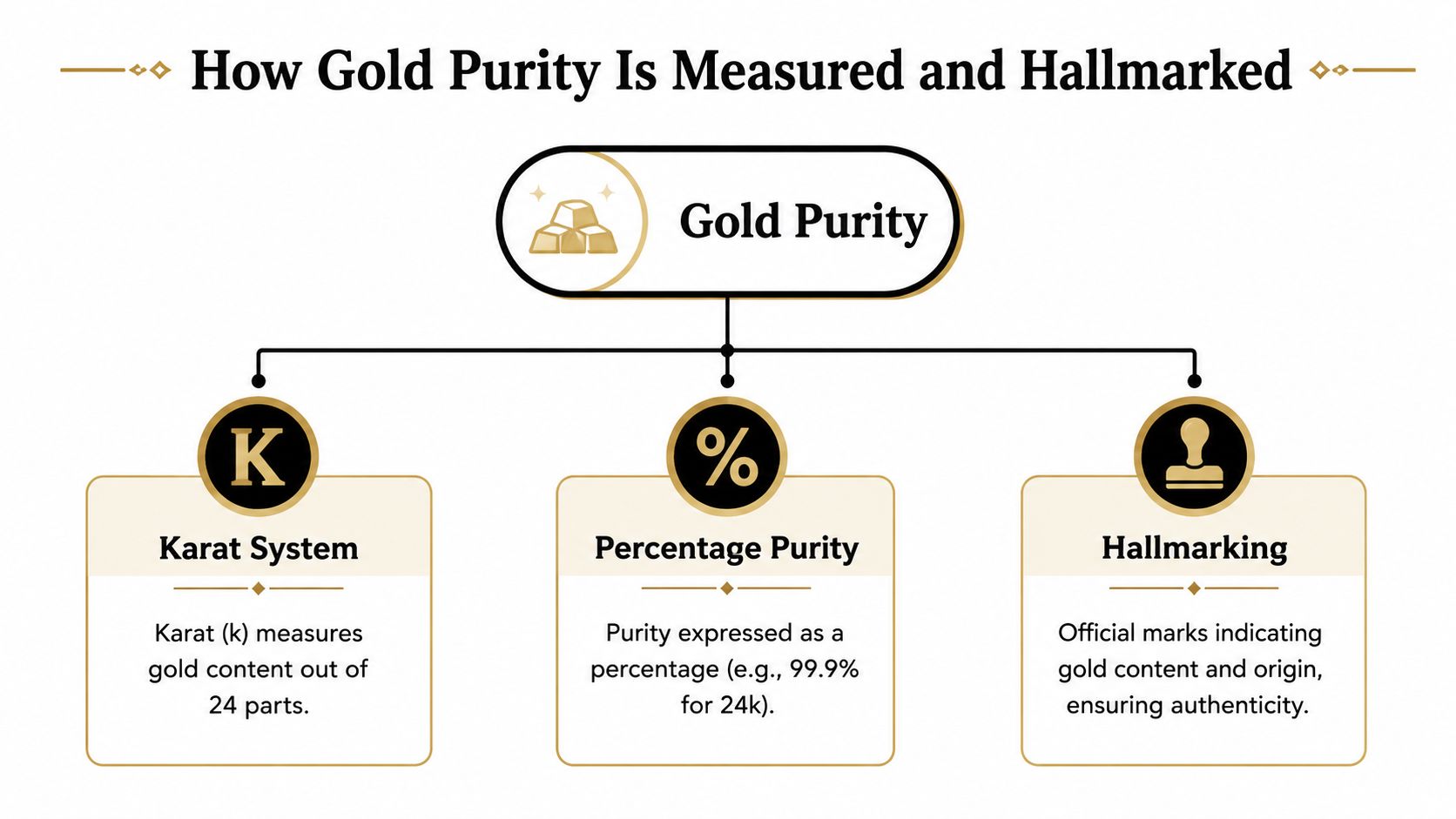
How Gold Purity Is Measured and Hallmarked
A seller often sees a tiny stamp, 24K, 999, 750, and assumes it settles the question. It does not. That mark is a useful clue, but you need to know what language it is speaking and what it does, and does not, prove about resale value.
Why karat exists
Jewelers use karat to describe how much of an item is gold compared with the other metals blended into it. The system is based on 24 parts, so a 24k item is the full-purity standard in karat language, while lower karats contain a larger share of alloy metals.
Here is the practical translation:
Marking | Meaning in plain language |
|---|---|
24K | Pure gold standard |
18K | High gold content, with alloy added for strength |
14K | Lower gold content, usually better suited to frequent wear |
999 | Fineness mark often used instead of karat |
Alloyed gold works like a recipe. Change the proportion, and you change the result. A little added metal can make gold harder, alter its color, and change how the item is valued by a buyer who is calculating recoverable gold.
That is one reason resale conversations can go sideways. A client may hear “solid gold” and assume the piece is close to pure. In trade terms, “solid gold” can still mean 14k or 18k. If you want a clear side-by-side explanation of how lower karats differ in use and composition, this 14k versus 18k gold explanation is a helpful reference.
What 999 and 999.9 mean
Fineness expresses purity in parts per thousand rather than parts out of 24. This system is common on bars, coins, and some high-purity jewelry.
According to this gold purity standards guide, 999 fineness means 99.9% gold content, while 999.9 fineness means 99.99% gold content. In other words, both are very pure, but 999.9 is the tighter refining standard you often see on investment-grade bullion.
For a seller, that distinction matters most when the item is being treated as wearable bullion. A simple 999 or 999.9 chain may be priced closer to its fine-gold content than to its design value, especially if the workmanship is plain and the weight is the main attraction.
A stamp can tell you what the maker intended to mark. It does not prove the item is genuine.
How to read hallmarks
Hallmarks are usually small and easy to miss. You may find them inside a ring, on a clasp tongue, on a pendant bail, or along the back edge of a bracelet. High-purity pieces often carry marks such as 24K, 999, or 999.9, though regional systems can vary.
When you inspect a hallmark, check three things:
Clarity of stamp: The mark should look deliberate and readable, not blurred, crooked, or crudely punched.
Placement: Jewelers usually place marks in protected spots where normal wear is less likely to erase them.
Consistency: The surface around the mark should match the rest of the item in color, texture, and finish.
Myths can cost sellers money. Some owners see a bright white piece with a “24K” claim and assume “24k white gold” must be a premium category. It is not a recognized purity category. Pure gold is yellow by nature, so a white-colored item described that way deserves extra scrutiny.
Hallmarks are a starting point for identification. Serious buyers still confirm purity with testing, because counterfeit stamps exist, older marks wear down, and imported pieces may use unfamiliar standards.
Comparing 24k Gold with Lower Karats and Plating
A seller often brings in two chains that look nearly identical at arm's length. One turns out to be 24k. The other is 14k, or plated. The visual difference can be small, but the resale difference can be large.

A practical comparison
The easiest way to sort gold categories is to separate three questions. How much actual gold is in the piece. How well will it hold up in daily wear. How much value is left if a buyer cares more about metal content than style.
Type | Main trait | Best use |
|---|---|---|
24k gold | Highest purity, soft, rich yellow color | Bullion, high-purity pieces, some traditional jewelry |
18k gold | Stronger than 24k, still luxury grade | Fine jewelry worn regularly |
14k gold | More durable for daily use | Rings, bracelets, everyday pieces |
Gold plated | Thin gold layer over base metal | Fashion jewelry, not intrinsic gold value |
Here is the key distinction for a seller. Lower-karat gold contains less pure gold because other metals are mixed in for strength and color control. Plated pieces are different again. They usually have only a thin surface layer of gold over a base metal core.
That difference affects wear, repair, and payout. A 24k chain is softer, so it can mark, bend, or flatten more easily. A 14k chain usually tolerates everyday knocks better. But if the buyer is calculating value from recoverable gold content, the 24k piece has far more fine gold in the same weight.
This is why some simple high-purity chains are treated almost like wearable bullion. Their appeal in the resale market may come less from design and more from weight and purity. If you want a closer look at how construction affects usefulness as well as value, this guide to buying gold chains explains why link type, thickness, and clasp design still matter after purity is known.
Gold plating belongs in its own lane. It can look attractive when new, but plating has limited intrinsic value because the gold layer is so thin. For resale, that usually places it much closer to costume jewelry than to solid gold.
Why 24k white gold is a myth
Color causes a lot of confusion, especially for owners trying to judge whether a piece should command a pure-gold price.
Pure 24k gold is naturally yellow. White gold gets its pale color from alloy metals such as nickel, palladium, or other whitening agents. Rose gold gets its warmer pink tone from copper and related alloys. Once those metals are added, the piece is no longer 24k.
As noted in this 24k gold guide, the myth of “24K white gold” or “24K rose gold” stems from a misunderstanding of purity; these colors require alloying with other metals, which by definition means the gold is not 24K. This is a critical authentication point, as sellers may unknowingly misrepresent alloyed pieces.
A simple way to view it is this. Purity and color are connected. If a piece is 24k, its color should align with pure gold's natural appearance. If it is white or distinctly rose-toned, you should expect alloying, plating, or another treatment, and that changes how a knowledgeable buyer will value it.
If a colored gold piece is described as 24k white or 24k rose, treat that as a red flag and verify it carefully.
That point matters most at the selling counter. An owner may expect a pure-gold payout because of a label, family description, or verbal claim. Professional testing can bring the piece back to its actual category very quickly, and the offer will follow the tested purity rather than the story attached to it.
Practical Ways to Test for 24k Gold Authenticity
You bring in a heavy yellow bracelet that has always been described as "pure gold." The stamp looks promising, the color looks right, and the family story sounds certain. At the counter, though, resale value depends on what the metal proves under testing, not on the label attached to it.

A careful gold check works like a layered inspection in a workshop. You start with what the eye can confirm. Then you move to simple physical screening. If real money is at stake, the last step is professional testing that can separate solid high-purity gold from plated, filled, or alloyed pieces made to imitate it.
Start with non-destructive checks
Begin under magnification and inspect the piece slowly, especially the places a maker would mark discreetly or where wear appears first.
Look for hallmarks: Check clasps, inner shanks, pendant bails, and backs for 24K, 999, or 999.9.
Study the surface: Solid gold usually shows a consistent color across the piece, rather than a top layer wearing thin.
Check stress points: Edges, corners, links, and clasps often reveal a different metal first if the item is plated or lightly coated.
Compare the finish: A genuine high-purity piece should not show abrupt color shifts between one area and another.
Then use a magnet as a quick screen. Pure gold is non-magnetic. A strong pull toward the magnet is a warning sign, although a lack of magnetic reaction does not confirm 24k by itself.
Pure 24k gold is non-magnetic, very dense, and resistant to nitric acid, properties noted in this authentication guide. Those traits help explain why professionals rely on multiple tests instead of appearance alone.
That last point matters for sellers. Counterfeit items can copy color and even weight reasonably well. A buyer evaluating resale value is trying to confirm actual recoverable gold content, especially with pieces marketed as high-purity jewelry or wearable bullion.
For a broader view of how professionals judge metal, workmanship, and resale factors together, this jewelry appraisal guide explains how testing fits into a full evaluation.
What home tests can and cannot prove
Home checks are useful for screening. They are poor substitutes for a professional verdict.
Density testing is one of the better at-home methods because pure gold is unusually heavy for its size. If a large item feels light, that mismatch deserves attention. In a simple water displacement test, you compare weight to volume and see whether the result is in the range expected for very high-purity gold.
A sensible order looks like this:
Inspect the hallmark and workmanship.
Use a strong magnet to rule out obvious impostors.
Compare size and weight. Real high-purity gold often feels heavier than new owners expect.
Try density testing only if you can measure carefully.
Some owners also try ceramic scratch tests or acid kits. Those methods can leave marks, remove surface material, or reduce value in a piece that might otherwise sell well. That risk is easy to underestimate. A small scar on a plain bullion-style pendant may matter less than the same mark on a finely made bracelet or heirloom ring.
Home tests are screening tools. If the result will affect resale, inheritance, insurance, or a loan, professional non-destructive testing is the better choice.
Professional buyers and appraisers use a fuller testing profile because one convincing trait is never enough. A fake can copy color. Another can avoid magnetic response. Another can carry a misleading stamp. For a seller, the question is narrower and more practical: how much verified pure gold is in the item, and will the buyer price it as true 24k or as something less.
How the Market Values Pure 24k Gold
You bring in a heavy 24k bracelet and expect the offer to match what you paid at retail. The buyer studies it for a few minutes, weighs it, tests it, and the number comes back lower than you hoped. That gap is where many sellers get confused.
The market does not value pure gold the way a jewelry case does. A retailer prices design, labor, overhead, packaging, and profit. A resale buyer usually starts much closer to melt value, meaning the value of the recoverable gold itself. For a seller, that distinction matters more than color, sentiment, or the original purchase price.
What a buyer actually calculates
A professional buyer usually works from four inputs:
The current spot price of gold: the live benchmark for raw gold
The item's precise weight: often measured in grams, then converted as needed
The confirmed purity: true 24k is priced differently from 22k, 18k, or plated pieces
The buyer's margin: refining loss, testing, business overhead, and market risk
A simple way to picture it is this: the item is treated like a container, and the question is how much fine gold is inside that container after testing. If a bracelet weighs 30 grams but includes a steel spring, solder, or a non-gold clasp component, the payable gold weight may be a little lower than the scale suggests at first glance.
That is why two items that look nearly identical can bring very different offers. One may be solid high-purity gold. The other may be hollow, lower karat, or assembled with parts that do not carry the same value.
Form also affects pricing. Coins and bars with recognized hallmarks often trade closer to bullion value because they are easy to identify, easy to resell, and simple to compare against the live market. Jewelry can still contain pure gold, but buyers may treat it more cautiously if it has wear, repairs, stones, or mixed-metal findings. If you are selling jewelry rather than a bar or coin, this guide on the best way to sell gold jewelry gives useful context on how those details affect offers.
Why “24k” does not always mean “top dollar”
Sellers often assume the highest purity automatically gets the highest resale premium. Purity helps, but premium and payout are not the same thing.
Pure 24k gold has the strongest bullion appeal because it contains very little alloy. At the same time, 24k jewelry is softer than lower-karat jewelry, so condition can matter more than owners expect. Bent bangles, stretched chains, dented hollow pieces, and worn links may still have strong melt value, but they may lose any added appeal as a finished jewelry item.
That practical difference matters. A pristine minted bar and a heavily worn 24k necklace can contain similar gold purity, yet the bar may be easier for a buyer to price aggressively because resale is more straightforward.
Where wearable bullion fits in
“Wearable bullion” is the modern term for high-purity gold made to function as both adornment and gold holding. The idea is simple. You can wear your gold instead of storing all of it in a vault or safe.
This category is common in some global markets, especially in heavy chains, bangles, and plain high-purity pieces bought for both beauty and savings. For a seller, the key question is whether the next buyer sees the piece primarily as jewelry or primarily as gold content.
That is also where a few myths need clearing up. “24k white gold” is not a standard market reality. White gold gets its color from alloying yellow gold with white metals, which means it is not pure 24k. If a piece is described that way, a careful buyer will focus on what the tests show, not the sales language attached to it.
In plain terms, the resale value of pure 24k gold usually rests on verified gold content first. Design value comes second, and sometimes it disappears entirely. Sellers who understand that difference tend to read offers more clearly and negotiate from a stronger position.
The Smart Way to Sell Your 24k Gold
Selling high-purity gold goes best when the process is orderly, documented, and calm. Rushing usually leads to confusion, especially with inherited pieces, foreign hallmarks, or jewelry that mixes pure gold with stones or findings.

What to bring and what to expect
If you plan to sell, bring everything connected to the item that helps establish identity and confidence.
Bring the piece itself in current condition: Don't polish aggressively right before evaluation.
Bring receipts or packaging if you have them: They may support origin, though testing still matters most.
Bring related paperwork: Old appraisals, certificates, or purchase records can provide context.
Bring matching parts: Clasps, broken sections, or companion pieces can affect how the item is understood.
A careful buyer will inspect markings, test the metal, weigh it accurately, and explain how the offer is reached. That transparency matters whether you're selling a simple bangle, a bullion pendant, or a high-purity necklace purchased abroad.
If your item is jewelry rather than plain bullion, this article on the best way to sell gold jewelry adds helpful context on preparing for evaluation.
In-person and remote selling options
Some sellers prefer a face-to-face meeting so they can watch the evaluation in real time and ask questions on the spot. That's often the most comfortable route for owners in Atlanta, Buckhead, Sandy Springs, Alpharetta, Roswell, Brookhaven, Midtown Atlanta, and the wider Georgia area.
Others want a remote option, especially when they live outside Georgia or are handling an estate from another state. In those cases, insured mail-in evaluation can be practical if the process is clearly explained and the item is handled by an established luxury buyer.
A helpful walkthrough can make the process less abstract:
Whether you sell in person or remotely, the same standards should apply. You want verified purity, exact weight, clear explanation, and a no-pressure decision point. If the item has collector appeal, strong craftsmanship, or a brand-related premium, ask whether the offer reflects only metal value or broader resale value.
The right sale process feels documented and understandable. You should know what was tested, what was weighed, and why the offer lands where it does.
Frequently Asked Questions About 24k Gold
Is buying 24k gold a good investment
It can be, but the answer depends on what you expect it to do.
Pure 24k gold is closer to a stored-value asset than a growth asset. Owners often buy it for liquidity, global recognition, and direct exposure to the gold market. A simple way to view it is this. You are holding metal value first, and any design premium second.
For a seller, that distinction matters. A plain 24k bar or a heavy 24k chain often trades much closer to its melt value than lower-purity fashion jewelry, especially if the item is best understood as wearable bullion.
Can I get a loan against my 24k gold instead of selling it
Sometimes, yes.
A collateral loan can let you use the item to secure cash while keeping ownership, at least for the term of the loan. The lender will usually care about verified purity, weight, resale ease, and the current gold price. A simple 24k item with clear testing results is often easier to assess than a complicated piece with stones or mixed materials.
Read the terms closely. Interest, storage, repayment deadlines, and default rules determine whether a loan serves you better than a direct sale.
Why did my 24k gold jewelry bend or scratch so easily
Pure gold is soft by nature. According to this discussion of daily wear and 24k gold, 24k gold has a Vickers hardness of about 25 HV, which helps explain why it can scratch, bend, or lose crisp detail with regular wear.
That softness does not mean the gold is fake or low quality. In fact, the opposite is often true. High purity gives you more gold content, but less resistance to dents and deformation. Jewelers solve that tradeoff by mixing gold with other metals in 18k or 14k pieces meant for harder daily use.
A related point causes confusion. There is no true 24k white gold in the normal jewelry sense. White gold gets its color from alloying pure gold with white metals, which lowers the karat. If someone is trying to sell you "24k white gold," treat that claim with caution and ask for testing and an explanation of the metal content.
If you want a clear, professional opinion on a high-purity gold item, Antwerp Diamond offers a practical next step. You can request an evaluation, visit for a private in-person review, or ask about a secure mail-in process if you're outside Atlanta.


