Selling to online watch buyers is usually safe and efficient when you prepare the watch properly, ask for a data-backed valuation, and use a buyer that offers transparent pricing plus secure logistics. Online watch sales are projected to grow at a 7.01% CAGR from 2025 to 2030, but the market is still hybrid, which is why many sellers start online and finish with insured shipping or an in-person appointment.
If you're holding a Rolex, Cartier, Patek Philippe, Audemars Piguet, or Omega and wondering what to do next, the process doesn't have to feel like a black box. Most first-time sellers aren't worried only about price. They're also worried about getting lowballed, shipping an expensive watch to the wrong place, or having less negotiating power because they don't know how buyers calculate an offer.
A professional sale should feel clear from the start. You should know what documents matter, what photos help, what questions to ask, and what payment method gives you a clean, traceable finish to the transaction.
Table of Contents
How to Prepare Your Watch and Documents for Sale
What a complete set means
What to gather before you request an offer
Photograph condition honestly
Vetting Reputable Online Watch Buyers
What trustworthy buyers do
Red flags that should stop the process
Understanding Your Watch's True Market Value
Why online estimates vary so much
What professionals actually evaluate
Insured Shipping vs In-Person Appointments
When insured shipping makes sense
When an in-person appointment is better
Navigating Offers and Securing Your Payment
How to read an offer correctly
Payment methods that protect the seller
Frequently Asked Questions About Selling Watches Online
Can I sell a watch without box and papers
What if my watch is a replica or has non-original parts
Which brands are strongest in the resale market
Will my information stay private
Should I get more than one offer
Is an online quote final
How long does the process take
How to Prepare Your Watch and Documents for Sale
The strongest online submissions are organized before the first message goes out. That doesn't mean you need a perfect collector-grade package. It means you should present the watch in a way that helps a buyer verify authenticity, assess condition, and make an offer without guessing.
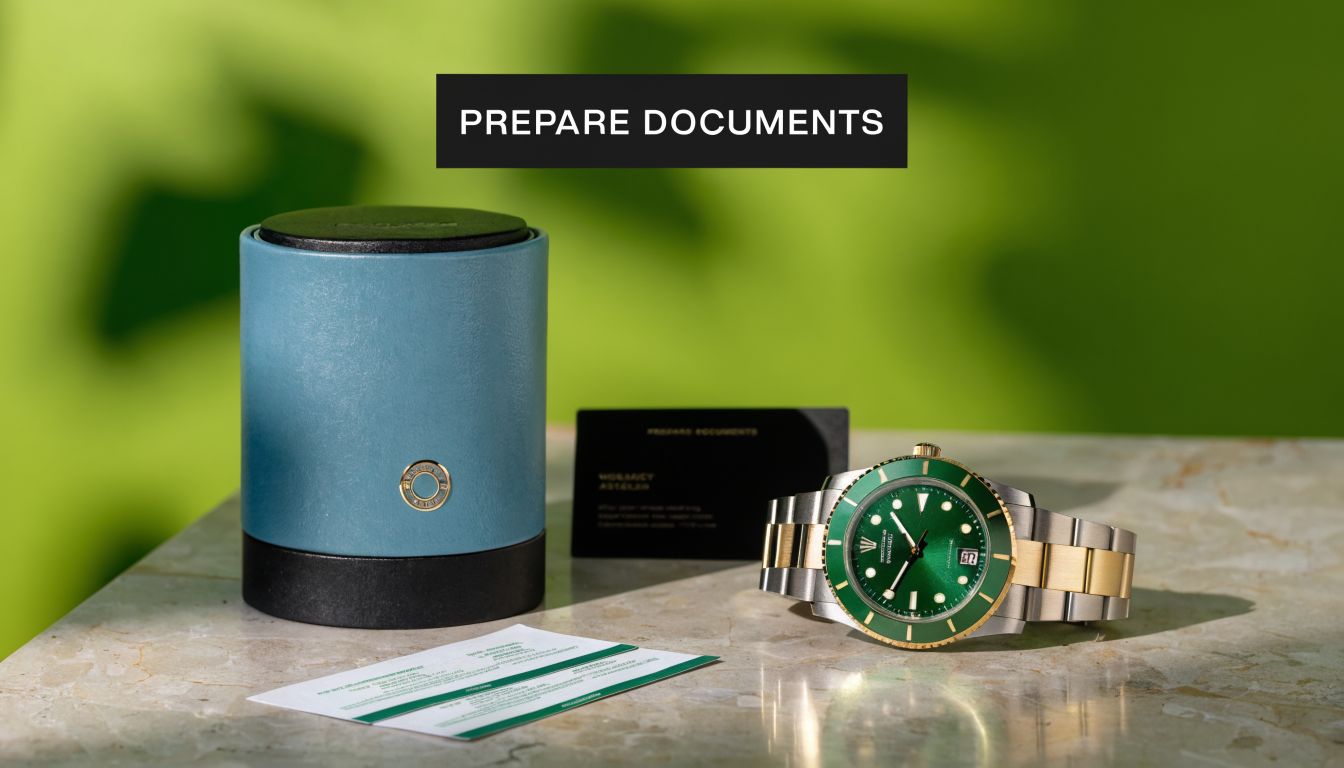
What a complete set means
A complete set usually means the watch, original box, warranty card, booklets, hang tags if available, receipts, service paperwork, and any extra bracelet links. Buyers care because each item reduces uncertainty. Less uncertainty usually means a smoother offer process and fewer revisions after inspection.
Missing paperwork doesn't make your watch unsellable. Plenty of valuable watches trade without box and papers. It means the buyer has to lean more heavily on physical authentication, serial verification, condition, and market demand.
Practical rule: Never throw out old service receipts, even if they seem unimportant. A service record can answer questions before they become price deductions.
What to gather before you request an offer
Start with a simple checklist:
The watch itself: Include the head, bracelet or strap, clasp, and any removed links.
Warranty card and purchase receipt: These help establish provenance and model details.
Service records: Especially useful for older Rolex, Cartier, Omega, and Patek Philippe pieces.
Original packaging: Helpful, but secondary to authenticity and condition.
Serial and reference information: Share it carefully and only with a legitimate buyer.
Then take photos that do real work. Good photos don't try to hide wear. They show the dial, case sides, caseback, bracelet stretch if relevant, clasp, crown, lugs, and any visible scratches or dings in normal lighting.
A buyer who can't see condition clearly will either delay the quote or build in a safety discount. A buyer who can see everything can move faster and explain the number with more confidence.
Photograph condition honestly
Use a plain background and keep the watch clean, but don't over-polish it or try to buff out issues yourself. Amateur polishing can do more harm than surface wear. If the crystal has chips, the bezel has dents, or the bracelet is loose, show it clearly.
I also recommend photographing the paperwork separately and then together with the watch. That lets the evaluator match the set quickly and cuts down on back-and-forth questions.
If you want a practical overview of what sellers should organize before they reach out, this guide on how to sell high end watches is a useful starting point.
Vetting Reputable Online Watch Buyers
The biggest risk in selling online usually isn't the watch. It's the person or business on the other side of the transaction. The pre-owned watch market is projected to reach $29 billion to $32 billion by 2025, and consumer interest in pre-owned has doubled since 2020, which makes seller protections like insured shipping and specialist authentication more important, not less, according to this market analysis on the luxury watch resale shift.
What trustworthy buyers do
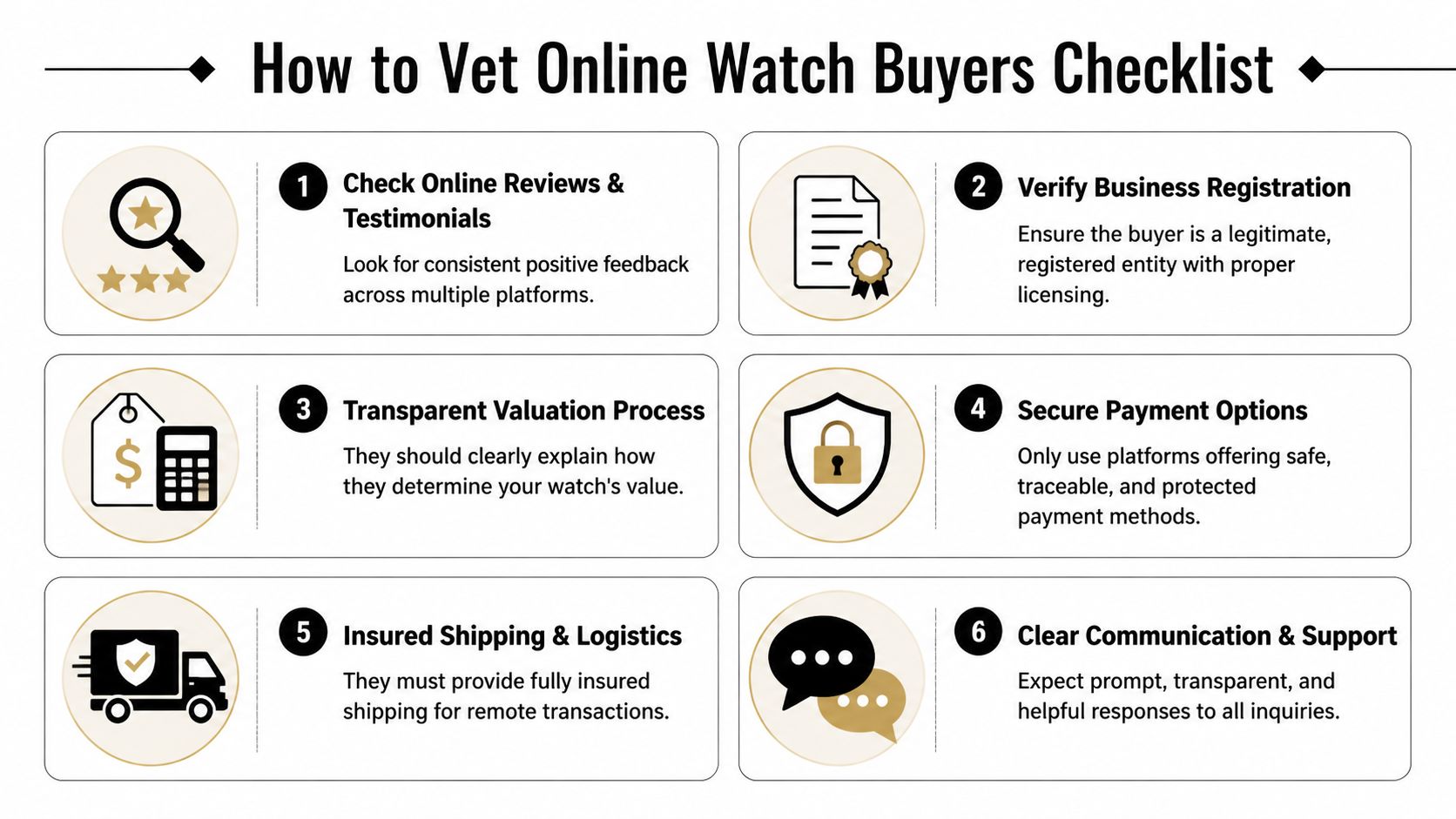
Reputable online watch buyers tend to be boring in the best way. They have a real business identity, a clear process, and no hesitation about explaining how your watch will be handled.
Look for this combination:
A verifiable business presence: Physical address, business registration, and a working phone line.
A clear valuation process: They should explain what affects the offer, including model, condition, completeness, and current market demand.
Defined logistics: If you're shipping, they should explain packaging, insurance, and what happens when the watch arrives.
Traceable payment options: Bank wire, business check, or in-person cash when appropriate.
Consistent communication: Fast matters, but clarity matters more.
If you're comparing channels broadly before choosing a buyer, it can help to compare options for selling your luxury watch. The useful part isn't finding one universal winner. It's seeing how payout speed, fees, and convenience shift depending on whether you're dealing with a direct buyer, marketplace, or consignment model.
Buy the buyer first. A strong offer means very little if the process around it is vague.
Red flags that should stop the process
A surprising number of scam patterns are easy to spot once you know what to watch for.
Sign | What it usually means |
|---|---|
Refuses phone calls or live conversation | They don't want real-time scrutiny |
Won't explain how they priced the watch | The offer may not be defensible |
Pushes you to ship immediately | Pressure is replacing process |
Avoids talking about insurance | The seller is carrying hidden risk |
Changes terms after initial contact | Expect more problems later |
Another red flag is a buyer who only talks about "top dollar" and never talks about authentication, inspection, or paperwork. Serious buyers discuss risk because they manage it every day.
For a seller's perspective on comparing platforms, fees, authentication, and payout speed across another luxury category, this breakdown of top platforms for selling handbags with security and payout considerations is relevant because the same trust issues show up in watch transactions.
Understanding Your Watch's True Market Value
A fair watch offer is not the same thing as retail price, replacement value, or an insurance appraisal. It is a current market purchase price based on what buyers are paying for comparable watches, adjusted for your watch's exact condition and completeness.
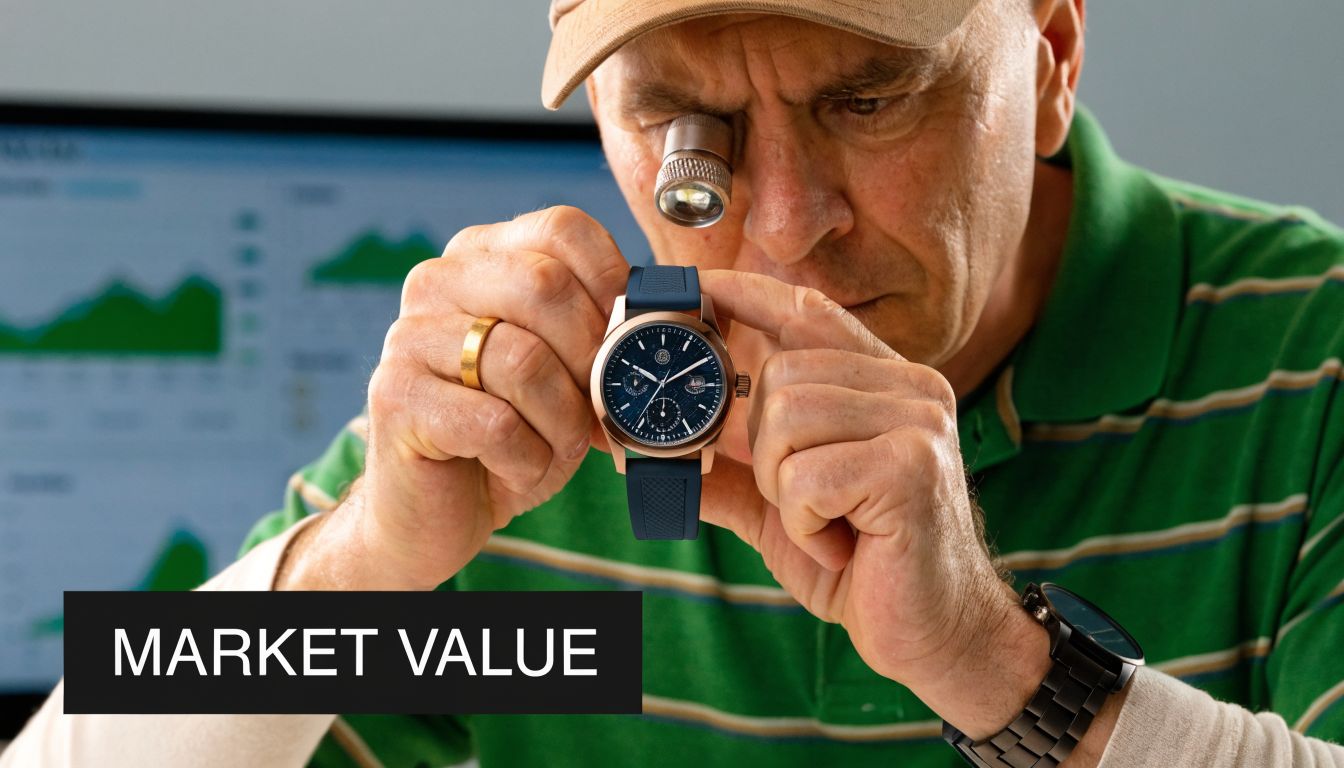
Why online estimates vary so much
Some online tools pull from asking prices. That's better than nothing, but asking prices are not closed transactions. Professional online watch buyers use multi-source data aggregation systems, analyzing pricing data from over 260 marketplaces and 350 auction houses, and the most advanced platforms rely on millions of actual transaction prices rather than listings, as explained in this overview of how professional online watch valuation tools work.
That difference matters because listed prices can be optimistic. Completed sales show what buyers really accepted.
The same source notes a practical benchmark many first-time sellers miss: private sellers typically receive a 13% discount versus dealer asking prices. That's one reason a direct cash offer can come in below the number you saw on a marketplace listing. The listing may still need negotiation, time, servicing, photography, fraud screening, and the risk of sitting unsold.
What professionals actually evaluate
A serious valuation usually weighs several factors together, not one at a time:
Brand and model strength: Rolex, Patek Philippe, Audemars Piguet, Cartier, Omega, and Tudor all trade differently.
Condition: Sharp case edges, original dial, bracelet wear, crystal damage, and signs of polishing all matter.
Set completeness: Box, papers, receipts, service history, spare links.
Specific demand: Some references move quickly, while others require patience.
Metal and material components: Relevant for gold watches and certain complications.
Authenticity markers: Serial, reference, movement correctness, and matching configuration.
A buyer who sends a number with no explanation may still be legitimate, but the strongest buyers can justify the offer in plain English.
Market reality: The best valuation isn't the highest estimate you receive. It's the one that still makes sense after inspection.
This short video gives a useful visual sense of how evaluation and buying can work in practice.
If you're selling a modern Rolex Submariner with card and recent service, the offer should reflect that strength. If you're selling a heavily polished watch with missing links and no paperwork, the number may still be fair, just lower for reasons the buyer should be able to explain.
Insured Shipping vs In-Person Appointments
For many sellers, the primary decision isn't whether to sell online. It's whether to finish the deal remotely or face to face. In the United States, online luxury watch buying is relatively mature, with 54% online purchase penetration, which supports strong marketplace liquidity and makes remote selling more practical. The same market view also points to hybrid models that combine remote evaluation with in-person appointments as an effective option, especially for sellers who want speed plus certainty, according to this study on online luxury watch buying behavior.
When insured shipping makes sense
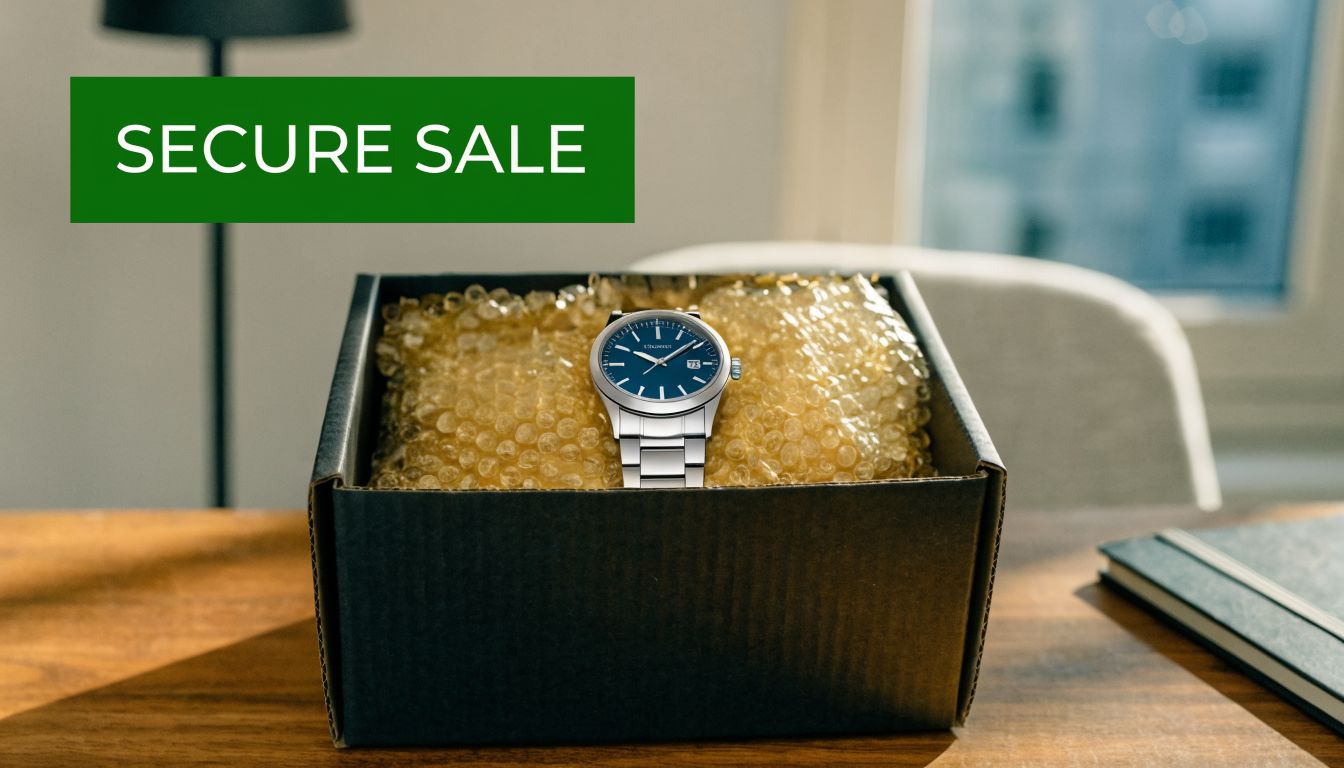
Insured shipping is often the better fit if you're outside a major luxury buying hub or you want to handle the first phase from home. It works well when the buyer provides clear instructions, insures the package appropriately, and confirms what happens on arrival.
Ask these questions before you ship:
Who arranges the label and insurance
What packaging standard is required
How the item is logged on arrival
Whether the opening is documented
How quickly the inspection is completed
For sellers in Atlanta suburbs like Sandy Springs, Alpharetta, Brookhaven, Roswell, or farther across Georgia, remote evaluation can save time. The key is making sure the convenience doesn't come at the expense of control.
If you want a general visual reminder of why coverage matters for valuables in transit, this reference on insuring high-value jewelry assets is a simple prompt to think about protection before anything leaves your hands.
When an in-person appointment is better
An in-person appointment is often better for very high-value watches, unusual vintage pieces, or sellers who want immediate closure. You can review the watch with the evaluator, discuss condition in real time, and complete payment without shipping.
That option is especially appealing around Atlanta, Buckhead, Midtown Atlanta, Roswell, Sandy Springs, Alpharetta, and the greater Georgia market, where private appointments are realistic and easy to schedule. For many first-time sellers, being able to hand the watch directly to a professional removes the biggest psychological hurdle.
The best setup is often hybrid. You send photos first, get a preliminary range, then decide whether insured shipping or a private appointment gives you the cleaner outcome.
Navigating Offers and Securing Your Payment
By the time you receive an offer, the hard part should already be done. The buyer has reviewed your photos, looked at current market comparables, and decided where your watch fits in the current resale environment. Online watch sales are projected to grow at a 7.01% CAGR through 2030, yet 74% of senior executives in the Swiss watch industry still expect physical stores to lead sales, which helps explain why many deals begin online and close through a more hands-on final step, according to global watch market projections and channel trends.
How to read an offer correctly
A professional offer should answer three basic questions:
What watch are they valuing
What condition assumptions are built into the number
What happens if inspection changes the assessment
This isn't the moment for emotional haggling. It's the moment to verify accuracy. If the buyer says the bracelet stretch is heavier than your photos showed, ask them to explain. If they marked the watch as missing a link you have, correct it. If they say the dial or hands appear replaced, ask what they observed.
A buyer who can explain an adjustment is easier to trust than one who only repeats the final number.
Payment methods that protect the seller
The safest payment methods are the ones that are traceable, documented, and tied to the legal business name of the buyer.
Payment method | Best use | What to confirm |
|---|---|---|
Bank wire | Larger transactions | Correct beneficiary details and timing |
Business check | Some in-person transactions | When funds are considered cleared |
Cash | Local, in-person deals | Receipt and business identity |
For remote transactions, bank wire is usually the cleanest option. For local appointments in places like Buckhead or Midtown Atlanta, some sellers prefer immediate in-person payment, provided the transaction is documented.
Get a written purchase record before you consider the deal finished. It should identify the watch, the agreed amount, and the payment method.
If you want to see how a direct-buyer process can look when immediate payment is part of the model, this guide on selling a watch for instant payment gives a practical reference point.
Frequently Asked Questions About Selling Watches Online
Can I sell a watch without box and papers
Yes. A missing box or warranty card can affect price, but it doesn't make the watch unsellable. Strong brands and desirable references still attract serious buyers if the watch is authentic and the condition is accurately represented.
What if my watch is a replica or has non-original parts
A reputable buyer will inspect for authenticity and originality. If a watch is a replica, the transaction should stop. If the watch is genuine but has replacement or non-original parts, value may change because collectibility and buyer confidence change.
Which brands are strongest in the resale market
Rolex and Omega remain core names in resale, but buyer demand isn't static. According to Chrono24 data, Gen Z buyers' share of Cartier sales rose from 1.7% to 6.8% over seven years through H1 2025, and this group now accounts for 12% of all dress watch sales. Their dress watch purchases rose 44% from 2018 to 2025, versus 29% for other groups, showing why design-led brands and dressier watches have gained momentum on secondary platforms, as outlined in Chrono24's Secondary Watch Market Report H1 2025.
That same shift helps explain why Cartier and Tudor can perform very well alongside established leaders. Brand matters, but the exact model, dial, condition, and completeness still decide the final number.
Will my information stay private
It should. Professional buyers usually request only the information needed to evaluate the watch and complete payment. Share detailed serial information, identification, and payment details only after you've confirmed you're dealing with a legitimate business and you've agreed on the next step.
Should I get more than one offer
Usually, yes. Comparing a few offers helps you see whether one buyer is out of line. What matters isn't just the amount. Compare communication quality, how clearly they justify pricing, whether shipping is insured, and how payment is handled.
Is an online quote final
Not always. Most online quotes are preliminary until the watch is physically inspected. That's normal. The key is whether the buyer explained that upfront and whether any final adjustment is based on verifiable condition or authenticity findings.
How long does the process take
That depends on the buyer, the watch, and whether you're shipping or meeting in person. Well-run transactions move quickly because the seller provides complete photos and documents, and the buyer explains each step without delay.
If you'd like a confidential, no-pressure evaluation, Antwerp Diamond offers online watch reviews, insured shipping options, and private in-person appointments for sellers in Buckhead, Atlanta, Roswell, and other U.S. markets. It's a practical option if you want a transparent offer, clear communication, and a secure way to sell a luxury watch without guessing how the number was reached.