
Appraising jewelry starts with two stages: a careful self-check of the piece's materials and condition, then a formal evaluation by a qualified professional for a specific purpose such as insurance or immediate resale. In most markets, a professional jewelry appraisal typically costs about $50 to $150 per item or $75 to $200 per hour, so it's worth knowing what the process is meant to answer before you pay for it.
A lot of people start from the same place. They open a box, find an inherited ring, an old bracelet, or a diamond pendant they haven't worn in years, and ask one simple question: what is this worth? The hard part is that the answer changes depending on why you need the appraisal.
If you want to insure a piece, the number on the report may be very different from what a buyer would offer if you sold it today. That difference confuses sellers all the time. Knowing how to appraise jewelry properly means understanding both the physical facts of the item and the type of value being assigned to it.
Table of Contents
What Is a Jewelry Appraisal and Why You Need One
You inherit a ring, open the paperwork, and see an appraisal for $8,500. If you plan to insure it, that number may be useful. If you plan to sell it, it can set the wrong expectation from the start.
A jewelry appraisal is a formal written opinion that identifies one specific item and assigns a value for a stated purpose. The purpose is the part many owners miss. An insurance appraisal usually states a retail replacement value, which reflects what it may cost to replace the piece with a comparable item through a retail source. That is not the same as resale market value, liquidation value, or what a jeweler, dealer, auction house, or private buyer will pay you.
That difference matters in real dollars. I regularly see sellers bring in appraisals that are accurate for insurance and still far above any realistic resale offer. The report is not wrong. It is answering a different question.
A proper appraisal should describe the jewelry in enough detail that another professional can understand what is being valued and why. That usually includes metal type, weight, measurements, gemstone identification, quality factors, condition, workmanship, and any hallmarks or brand signatures. It should also state the effective date and the valuation premise used. Without that, the number has limited use.
The reason to get an appraisal depends on what you need to do next. Insurance claims, estate settlement, tax reporting, charitable donation support, divorce matters, and resale planning each call for a different value standard. If you ask for "an appraisal" without saying the goal, you may pay for a report that does not help you make the decision in front of you.
Short version. The number only makes sense when the purpose is clear.
A casual verbal estimate can still help if you only need a first pass on whether a piece is costume jewelry, solid gold, a natural diamond, lab-grown, or a branded item with collector demand. For anything involving insurance, legal documentation, estate work, or a sale where the gap between replacement value and resale value matters, get a written appraisal or valuation document that matches that use.
If the piece includes a diamond, grading language will affect how the appraiser describes it and how buyers interpret it. Reviewing a GIA certified engagement ring guide can help you read the terminology in older paperwork without assuming that every grading term translates directly into resale value.
Your Pre-Appraisal Checklist What You Can Do First
Before you book an appointment, do your own groundwork. This won't replace a professional valuation, but it will make the process faster, safer, and much more productive.
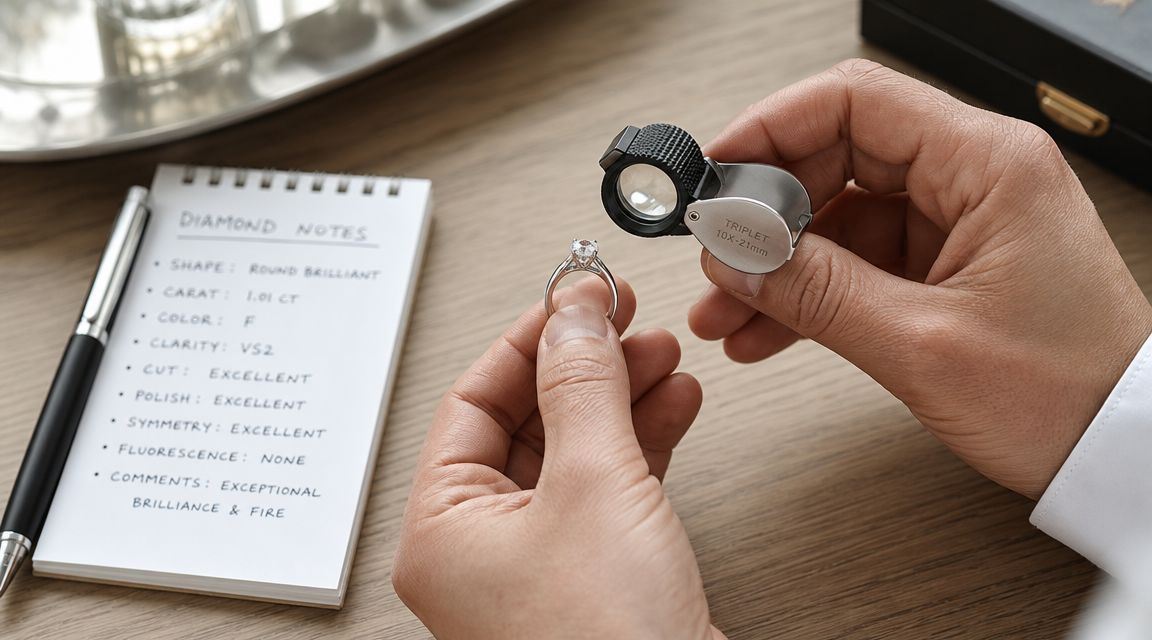
Check the metal marks first
Start with the simplest question: what is the piece made of? Look inside a ring shank, on a clasp, behind an earring post, or under a bracelet link for stamps and hallmarks.
You may see marks that suggest gold purity, platinum content, maker's marks, or brand signatures. These marks don't prove everything on their own, but they give the appraiser a starting point and help you avoid walking in completely blind.
Use this quick checklist:
Look for purity marks: Common jewelry stamps may indicate gold, platinum, or sterling content.
Check for brand signatures: Cartier, Tiffany & Co., Van Cleef & Arpels, and similar names can affect demand and verification needs.
Note serial numbers or custom engravings: These can help connect the item to receipts, warranties, or prior paperwork.
Don't over-interpret a stamp: A hallmark is a clue, not a full authentication.
If the mark is worn or hard to read, don't scrub aggressively. Light cleaning is fine, but harsh polishing can remove useful surface evidence.
Inspect the setting and overall condition
Condition changes value. It also changes risk.
A loose center stone, bent prong, cracked shank, chipped gem, replaced clasp, or missing melee diamond may not be obvious until you inspect the piece under good light. Those issues matter because a buyer, insurer, or estate appraiser isn't valuing a perfect version of your jewelry. They're valuing the actual item in front of them.
Here's what to look for:
Stone security: Gently listen for movement. If a stone rattles, say so at the appointment.
Prong wear: Thin or lifted prongs can make a ring less secure and affect condition notes.
Visible damage: Chips, abrasions, dents, solder repairs, and worn rhodium plating are worth documenting.
Signs of alteration: Resized rings, replaced heads, or mixed-era components can affect value and marketability.
An appraisal works best when the item is identified exactly as it exists today, not as the owner remembers it from years ago.
Photograph the piece like documentation, not marketing
Take clear photos before the appraisal. Include the front, back, side profile, hallmarks, and any visible damage. Use natural light or diffuse indoor light, and keep the background plain.
This helps in two ways. First, it gives you a condition record before the item leaves your possession. Second, it can help an appraiser or buyer understand the piece before they examine it in person.
A strong set of reference photos should include:
A full view: The entire item, centered and in focus.
Close-ups of marks: Any stamp, signature, serial, or engraved detail.
Side angles: Enough to show the setting height and construction.
Problem areas: Chips, worn prongs, dents, or discoloration.
If you need help getting usable images, this guide on how to photograph jewelry is a practical place to start.
Understanding Your Jewelry's True Value
A common source of confusion involves people bringing in a ring with an old insurance appraisal and expecting the same number in cash. That usually isn't how the market works.
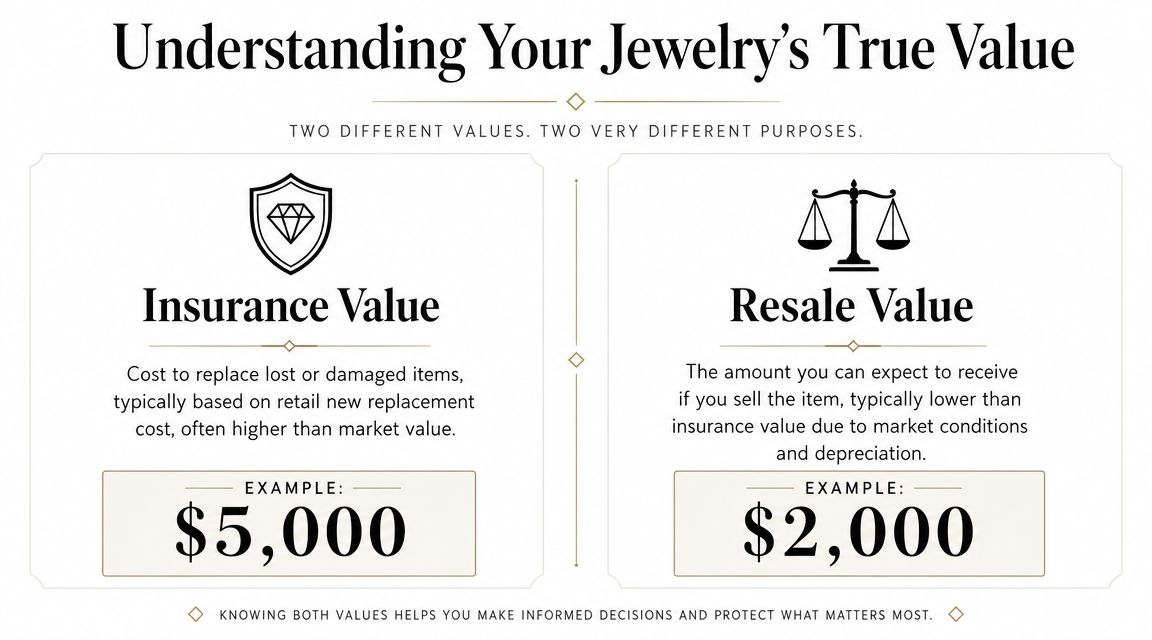
Recent consumer guidance notes that jewelry appraisals are often used for insurance, estate, or documentation purposes, and the report frequently states a retail replacement value, not the amount a buyer will pay at resale. The same guidance points out that many sellers don't realize an insurance appraisal can overstate resale value, which is why intended use, condition, brand demand, and liquidity need to be separated clearly in plain English, as discussed in this jewelry insurance appraisal explainer.
Why sellers get tripped up by appraisal numbers
An insurance appraisal usually asks: what would it cost to replace this item in a retail environment with a comparable piece?
A resale buyer asks a different question: what can I pay for this item today, given condition, current demand, and how easily I can resell it?
Those are not the same question, so they don't produce the same number.
For example, a custom ring with a commercial-grade center stone may carry a high replacement figure because recreating it at retail includes labor, markup, and sourcing a similar stone. But if the design is dated and demand is weak, a resale buyer may focus far more on the center diamond's tradable quality, the metal content, and whether the mounting adds any real market appeal.
Insurance value protects replacement. Resale value reflects what the market will pay now.
Appraisal Value Types Compared
Valuation Type | What It Means | Typical Use Case |
|---|---|---|
Retail Replacement Value | Estimated cost to replace the item with a comparable one through retail channels | Insurance scheduling and claims support |
Fair Market Value | A market-based opinion used when neither buyer nor seller is under pressure and both are reasonably informed | Estate planning, probate, tax or legal contexts |
Liquidation Value | A lower, speed-sensitive value based on a faster sale environment | Immediate sale, distress sale, some asset disposition situations |
A smart seller always asks which type of value is being discussed before reacting to the number.
If your goal is to sell, you also need to think like the next buyer. They're measuring opportunity, risk, and turnaround. A branded Cartier piece with original documents may attract stronger interest than an unbranded item of similar material quality because the buyer has more confidence in resale demand. A diamond with a respected lab report is easier to price than one with no grading documentation.
What changes a real resale offer
Resale value usually moves on a short list of practical factors:
Brand demand: Signed jewelry from recognizable houses often sells differently from generic pieces.
Condition: Repair needs reduce confidence and may reduce offers.
Documentation: Receipts, prior appraisals, lab reports, and original packaging help establish identity and history.
Stone quality: Buyers look closely at measurable quality, not just size.
Liquidity: Some styles sell quickly, others sit.
If you want a rough benchmark before speaking with a buyer, a diamond resale value calculator can help frame the right questions, especially for center-stone rings. Just don't confuse a preliminary estimate with a formal appraisal or a binding offer.
How to Choose a Qualified Jewelry Appraiser
A weak appraisal is worse than no appraisal. It creates false confidence, bad insurance assumptions, and unrealistic selling expectations.
What credentials actually matter
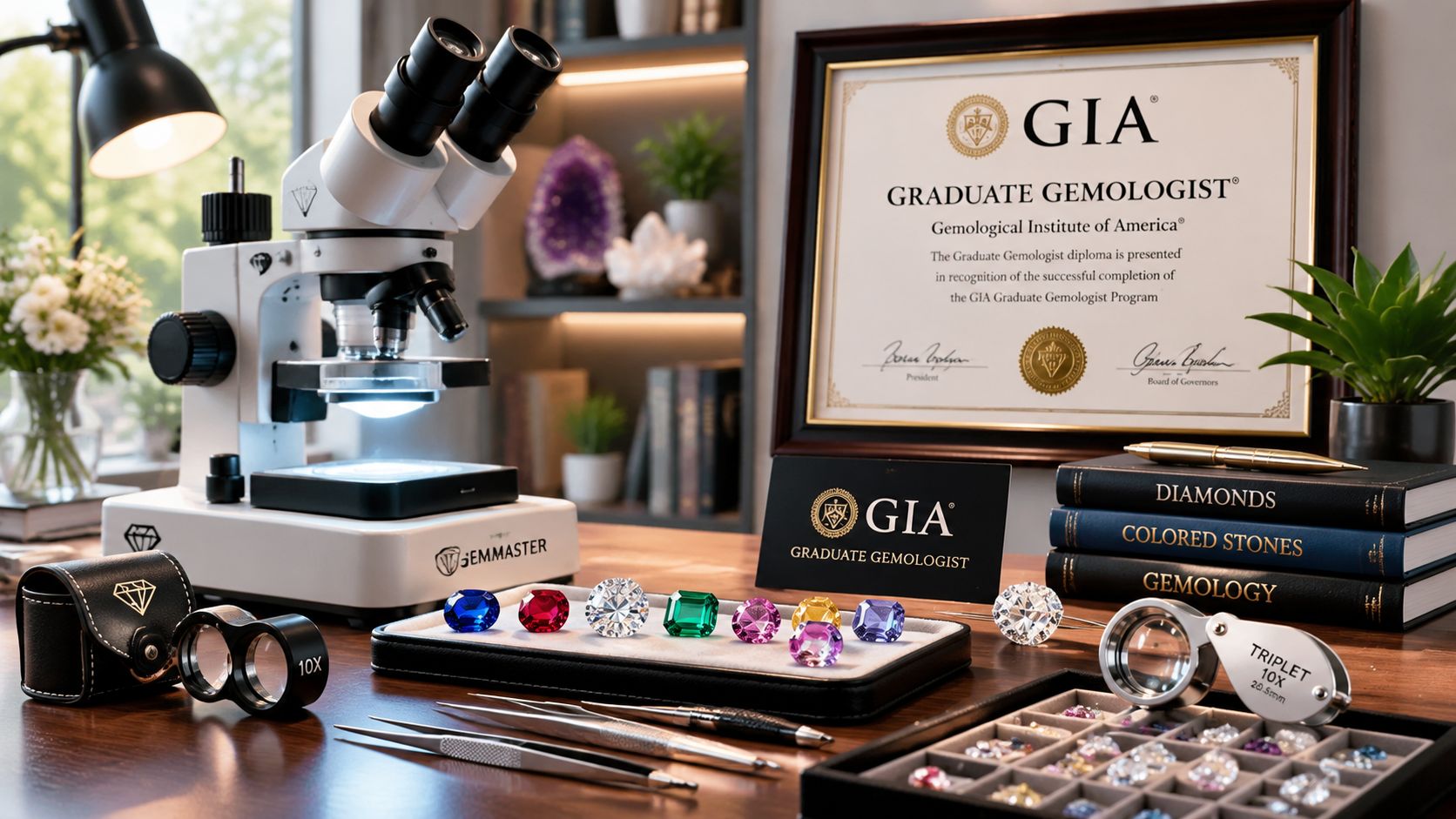
In many markets, there are no federal or state licensing requirements for jewelry appraisers, which is why credentials matter so much. For higher-stakes or legal-use work, industry guidance emphasizes qualifications such as Graduate Gemologist training, NAJA or ISA membership, and USPAP compliance, along with a report that clearly states the item identity, intended use, intended user, scope of work, and appraiser qualifications, as outlined in this discussion of independent jewelry appraisal and expert witness standards.
That means you should ask direct questions:
What gemological training do you have?
Do you follow USPAP standards?
What kind of jewelry do you appraise most often?
Will the report state the intended use clearly?
Are you valuing this for insurance, estate, or resale planning?
An experienced appraiser won't be annoyed by those questions. They should answer them easily.
What a professional appraisal usually includes
Pricing is one of the simplest credibility checks. One industry guide says many certified appraisers charge about $50 to $150 per item or $75 to $200 per hour, and the process commonly includes photography, metal-fineness testing, weighing, gemstone grading, and market research before a written report is delivered, according to this overview of jewelry appraisal pricing and process.
That fee structure matters for another reason. A professional appraiser should charge by time or by item, not by a percentage of the value assigned. A percentage-based fee creates a conflict because the number on the report affects the appraiser's compensation.
Look for a report that is methodical, not vague. It should describe what was examined, how it was identified, which facts were observed, and which valuation method was used.
Here's a useful benchmark for the quality of the final document:
Specific item identification: Metal, stones, measurements, markings, and workmanship.
Current-date report: Not an undated printout or a generic store form.
Signed and typed format: Professional, reviewable, and usable for the stated purpose.
Clear methodology: Cost, market-data or sales-comparison, or another stated method appropriate to the assignment.
For people comparing categories of luxury assets, a watch appraisal guide is also worth reading because the same credibility issues appear in watches, signed jewelry, and estate pieces.
Online and AI-assisted appraisals versus in-person exams
Online intake is convenient. It can be helpful for a preliminary screening, especially if you're in Alpharetta, Sandy Springs, Roswell, Brookhaven, Midtown Atlanta, or elsewhere in Georgia and want to know whether a piece is worth pursuing further.
But photo-only valuation has limits. Recent coverage notes that some platforms use uploaded images and AI trained on jewelry images and appraisal data to help identify materials, stones, styles, and hallmarks. The same coverage also points to the gap: AI struggles with issues such as mounted stones, altered settings, hidden damage, and natural versus synthetic identification, and authoritative guidance still stresses human expertise, methodology disclosure, and limitation disclosure in the appraisal process, as summarized in this article on digital jewelry appraisal tools and their limits.
A quick visual overview can help if you're weighing options:
In practice, use online or AI-assisted review as a first filter, not the final word, especially for high-value diamonds, signed estate jewelry, or anything with legal or insurance consequences.
Preparing for Your Professional Appraisal
A good appraisal appointment starts before the jeweler ever opens the microscope. If you walk in with the piece, the paperwork, and a clear reason for the appraisal, the report is usually more accurate and more useful.

The first thing to settle is the purpose. Sellers often bring in a ring expecting one number, then leave with a document that states a much higher insurance replacement value. That is not an error if the assignment was written for insurance. It is a different definition of value. If you may sell the piece, say so at the start and ask whether the appraiser can address resale market value, fair market value, or only retail replacement.
Bring the item in the condition it is in. Light cleaning is fine. Heavy polishing is not. Polishing can soften engraving, disturb antique finishes, and remove clues an appraiser uses to judge wear, repair history, and condition.
Bring every document you have, even if it seems outdated or incomplete. Useful records include purchase receipts, prior appraisals, diamond grading reports, colored stone lab reports, repair invoices, brand packaging, old photographs, and insurance schedules. For signed or estate jewelry, original boxes, service papers, and dated photos can help support identity and provenance.
A useful appointment packet usually includes:
The jewelry itself: Present the full item, including matching earring backs, detachable pendants, or altered parts.
Receipts and invoices: These help confirm what was purchased and sometimes show whether a stone or mounting was later changed.
Prior appraisals: Older reports can provide weights, measurements, or inscriptions that are harder to verify after repairs or remounting.
Lab reports: Important for diamonds, sapphires, rubies, emeralds, and any stone where natural, treated, or laboratory-grown status affects value.
Repair or service records: These can explain replaced prongs, sizing, re-tipping, or missing original parts.
Clear photos: Earlier images can document condition before damage, alteration, or stone loss.
Ask direct questions before the examination starts. The right ones save confusion later.
What type of value will this report state?
Is this for insurance replacement, fair market value, or likely resale?
Can you explain how mounted stones limit grading accuracy?
Will the report note assumptions, treatments, or parts you could not verify without disassembly?
If I plan to sell, what in this piece helps or hurts marketability right now?
Those answers matter because appraisal numbers do different jobs. An insurance appraisal usually answers, "What might it cost to replace this item at retail?" A seller needs a different answer, closer to, "What will an actual buyer pay in the current secondary market?" The gap can be wide, especially for commercial-grade diamonds, heavily worn pieces, or jewelry that is expensive to replace new but hard to resell used. If selling is your goal, it helps to compare the report with realistic selling options before reacting to the number. This guide on where to sell jewelry for cash gives a useful market view.
If you need to mail the piece, confirm the chain of custody before shipping anything. Ask who signs for the package, where it is stored, whether the item is insured while in transit and in the office, and how return shipping is handled. Photograph the piece from multiple angles, keep copies of every document, and list any existing chips, worn prongs, or missing parts in writing.
A careful appraiser will also tell you what cannot be known with certainty from an in-setting examination. That is a good sign, not a weakness. Clear limits, clear purpose, and clear paperwork usually produce the best report.
What to Do with Your Appraisal
Once you have the report, use it for the purpose it was written for. That sounds obvious, but it's where people make expensive mistakes.
If the appraisal was prepared for insurance, send it to your insurer or agent and confirm the coverage reflects the actual report language. If it was prepared for estate, legal, or documentation use, keep both digital and physical copies with your other records.
If you're planning to sell, read the valuation type before you react to the number. An insurance replacement figure is not a cash offer. A resale decision should be based on current buyer demand, condition, documentation, and whether the piece is easy to place in the market.
For sellers who want to understand the next step, this guide on where to sell jewelry for cash can help you compare realistic paths without confusing appraisal paperwork with an actual sale price.
Frequently Asked Questions About Jewelry Appraisals
Do I need an appraisal for every piece of jewelry
No. Focus on pieces where the value, insurance need, estate importance, or resale potential justifies the cost and effort of a formal report.
Is a jewelry appraisal the same as a diamond grading report
No. A grading report describes gemstone characteristics. An appraisal identifies the full item and assigns value for a specific purpose.
Can I appraise jewelry from photos alone
You can get a preliminary opinion from photos, but a photo-only review has limits. Important details such as hidden damage, mounted stone issues, or certain identification questions may still require in-person examination.
Why doesn't my appraisal match the offer I got from a buyer
Because the report may reflect retail replacement or another valuation standard, while a buyer is pricing the item for today's resale market.
Should I clean jewelry before an appraisal
A gentle clean is fine. Avoid harsh polishing or repairs before the appointment unless the appraiser advises it, because over-cleaning can remove useful evidence or mask condition issues.
If you want a professional next step after reviewing your paperwork, Antwerp Diamond offers confidential evaluations for fine jewelry, diamonds, luxury watches, and other high-value assets. You can request an evaluation online or arrange a private in-person review if you're in Atlanta, Buckhead, Sandy Springs, Alpharetta, Roswell, Brookhaven, Midtown Atlanta, or the wider Georgia market.