
Sell Your Diamond Ring Quickly Without Guesswork
To sell a diamond ring for a strong, fair price, first gather its grading report, receipt, and any details you have about the stone and setting. Then request a private valuation from a specialist buyer, compare like-for-like offers, and accept only when the price, fees, and payment method are clear.
A quick sale does not have to mean an uninformed sale. Your ring's resale value depends mainly on the diamond's carat weight, cut, color, clarity, certification, condition, and current buyer demand. The gold or platinum setting also has separate value.
Keep expectations grounded: an insurance or retail replacement appraisal is not the same as a secondary-market cash offer. A professional appraisal should explain the difference and show how the offer was reached.
Whether you have an engagement ring, estate jewelry, a loose diamond, or a damaged piece, preparation helps you move faster and more confidently. This guide covers what to bring, how buyers assess value, how to sell online or in person, and how to secure a discreet, prompt payout.

Key Factors That Determine Diamond Ring Resale Value
When you bring a piece of jewelry to a luxury buyer, understanding the underlying math prevents unwanted surprises. The secondary market evaluates your ring based on its intrinsic commodity and gemological value, completely stripped of original retail markups, marketing overhead, and designer licensing fees.
A diamond's core worth hinges on the classic 4Cs framework:
Carat Weight: Larger diamonds are rarer in nature. Value scales exponentially rather than linearly with weight—meaning a single 2.0-carat diamond commands a significantly higher price than two 1.0-carat diamonds of identical quality.
Cut Quality: The precision of the cut dictates how light refracts through the stone, providing fire and brilliance. An "Excellent" or "Ideal" cut maximizes light return, whereas shallow or deep cuts leak light, directly reducing market demand.
Color Grade: Natural white diamonds are graded on an alphabetical scale from D (colorless) to Z (light yellow or brown). As you move closer to D, market rarity increases alongside cash liquidity.
Clarity Grading: Evaluated under 10x magnification, clarity measures internal inclusions and surface blemishes from Flawless (FL) down to Included (I1–I3). Stones with no eye-visible inclusions (typically VS2 or higher) hold strong secondary value.
Beyond the center stone, the setting holds distinct intrinsic worth. Rings crafted from platinum, 18k gold, or 14k gold are evaluated by weight against live precious metal spot prices. Learning how much is a diamond worth in today's secondary landscape means looking at both the primary gem and the precious metal scrap or estate value combined.
To see how modern pricing models work across the diamond trade, you can review our guide on how to calculate diamond price.
Feature | Retail Replacement (Insurance) Value | Secondary Market Cash Resale Value |
|---|---|---|
Purpose | Estimates full retail replacement cost if lost or stolen | Reflects immediate wholesale liquidity and trade demand |
Includes Markup? | Yes (retail rents, brand premiums, sales commissions) | No (strictly intrinsic gem, metal, and market value) |
Metal Valuation | High manufacturing retail price per gram | Raw spot metal melt or fine jewelry estate resale rate |
Diamond Value | Full retail catalog pricing | Secondary dealer wholesale value based on the 4Cs |
Payout Timeline | N/A (policy claims process) | Immediate (same-day bank wire or instant payment) |
Grading Certificates and Documentation
Independent laboratory certification acts as your diamond’s official passport. Having third-party documentation from globally recognized laboratories eliminates subjectivity and allows buyers to make precise, top-tier offers without discounting for uncertainty.
The most trusted gemological institutions include:
GIA (Gemological Institute of America): The international benchmark for diamond grading, known for strict standards in color and clarity.
IGI (International Gemological Institute): Widely utilized for both natural diamonds and fine jewelry pieces.
HRD Antwerp: Highly respected across Europe and global trading hubs for rigorous grading accuracy.
If your ring features a certified center stone, you can easily verify its grading report online before scheduling a private consultation. To understand how grading reports impact physical appraisals, explore our breakdown of a gia ring appraisal.
What if you do not have paperwork? You can still request an evaluation to appraise my diamond directly with our in-house gemologists, who will measure dimensions, inspect inclusions under magnification, and determine accurate grading specifications on-site.
Step-by-Step Process to Sell Diamond Ring for Top Dollar
Liquidation does not need to be stressful or opaque. By following a structured approach, you ensure maximum financial return while protecting your personal security throughout the transaction.
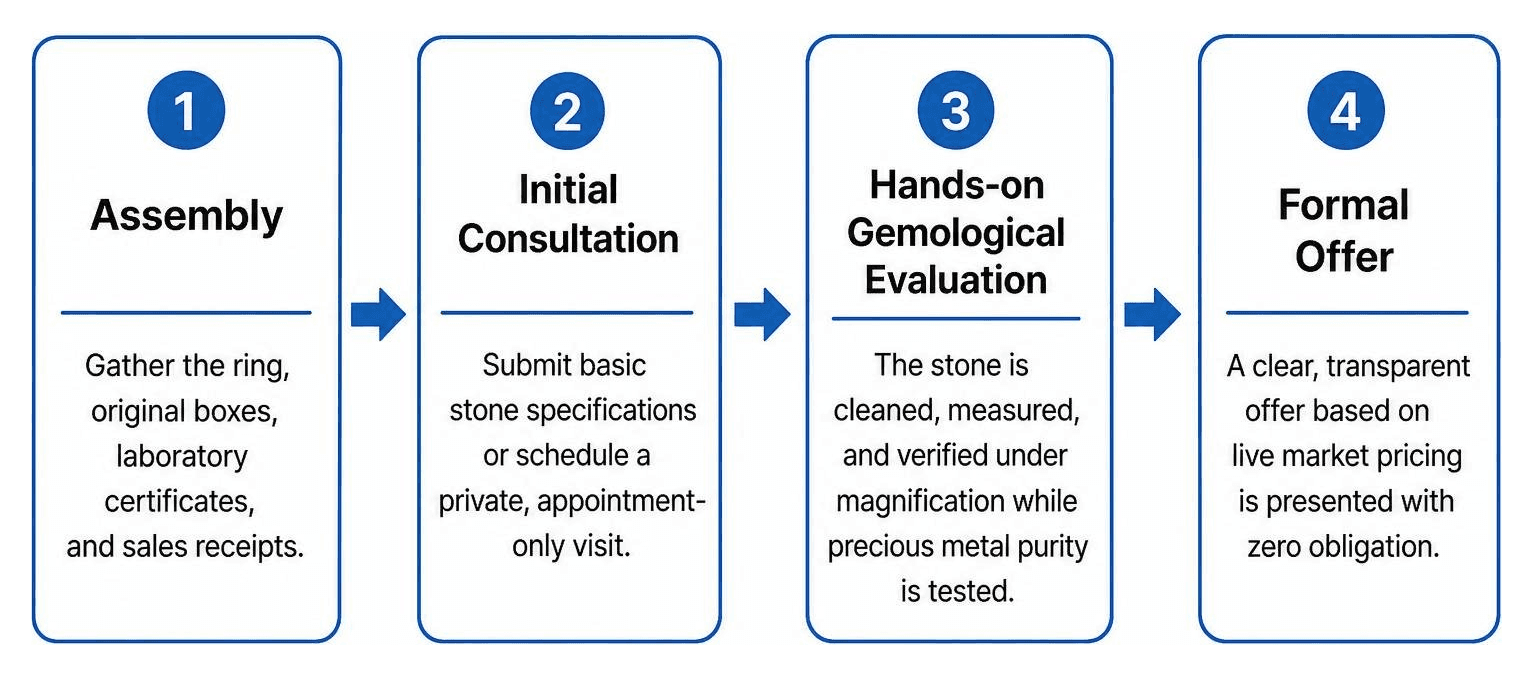
When you decide to sell fine jewelry, following the best way to sell gold jewelry and diamonds involves clear steps:
Step 1: Assembly: Gather the ring, original boxes, laboratory certificates, and sales receipts.
Step 2: Initial Consultation: Submit basic stone specifications or schedule a private, appointment-only visit.
Step 3: Hands-on Gemological Evaluation: The stone is cleaned, measured, and verified under magnification while precious metal purity is tested.
Step 4: Formal Offer: A clear, transparent offer based on live market pricing is presented with zero obligation.
Step 5: Immediate Settlement: Accept the offer to receive instant payment via direct bank wire or preferred payment method.
For a deeper dive into professional selling tactics, review our complete guide on how to sell diamonds.
Prepare Your Ring and Documentation
Before presenting your ring to an appraiser, proper preparation ensures an accurate assessment:
Clean Safely: Remove surface lotions and oils using warm water, mild dish soap, and a soft-bristled baby toothbrush. Never use harsh chemical cleaners, bleach, or abrasive pastes, which can degrade settings or loosen prongs.
Collect Paperwork: Locate your original laboratory dossier (GIA, IGI, or HRD), previous retail receipts, and any vintage provenance records.
Verify Ownership: Ensure you have a valid government-issued photo ID. Established luxury buyers adhere to strict anti-money-laundering regulations and property verification standards.
For more insights on preparing your fine jewelry for evaluation, review our curated jewelry appraisal tips 2026.
Choose How to Sell Diamond Ring: In-Person vs Online

Selecting the right sales channel depends on your schedule, location, and comfort level:
Private In-Person Consultations: Ideal for high-value estate assets and engagement rings. In an appointment-only office setting, you sit across from a certified gemologist who evaluates your ring in real time. You maintain visual contact with your jewelry throughout the entire evaluation and leave with settled funds.
Secure Online Sales: When using a remote service, reputable buyers provide prepaid, fully insured shipping labels. Once received under high-definition security cameras, the package is opened, assessed, and an offer is extended via phone or secure portal. If declined, the piece is insured and returned to you.
Those seeking immediate remote service can explore options to sell diamond ring online, while local sellers often prefer finding a discreet location to sell my diamond ring near me.
Where and How to Get Cash for Diamond Ring Resales
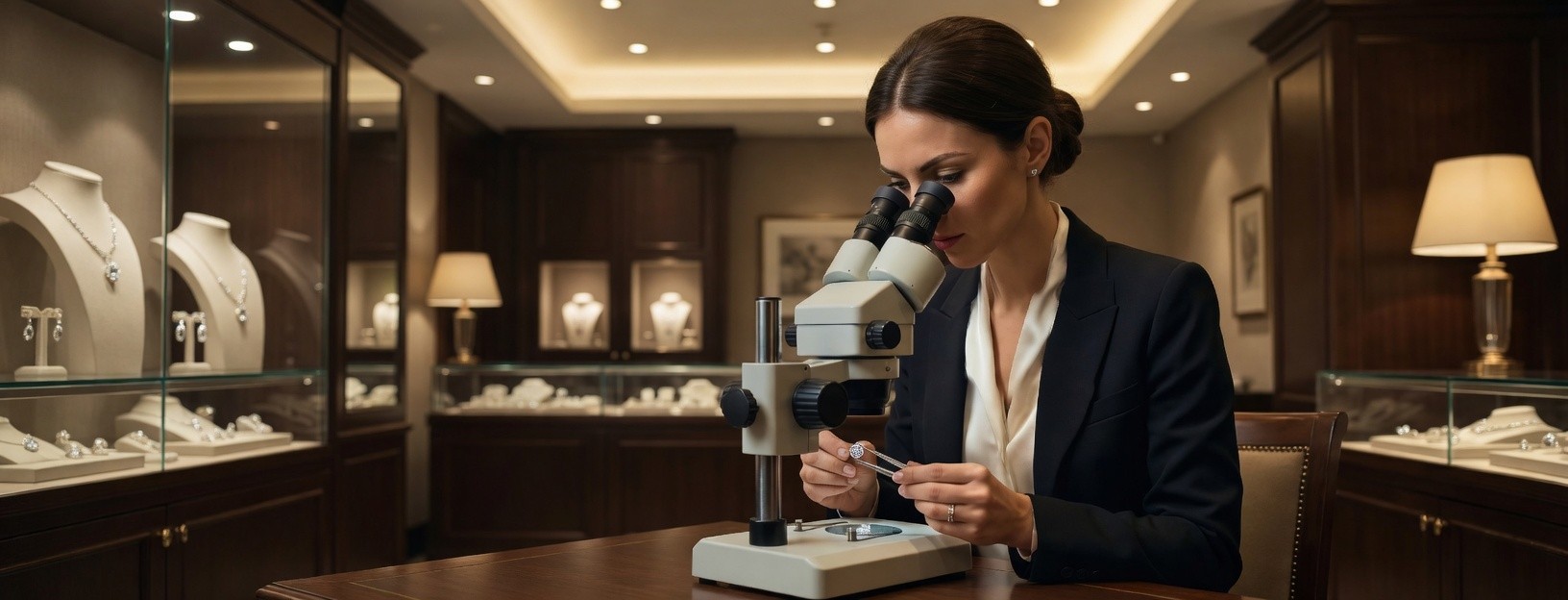
Choosing where to liquidate your luxury assets determines the final payout you receive. While pawnshops and generalist antique stores buy jewelry, they often operate on broad margins and lack specialized gemological tools, leading to conservative offers.
By working with specialized luxury buyers and established estate jewelers, you work directly with experts who trade in the secondary diamond market every day. Understanding where to sell fine jewelry allows you to bypass retail intermediaries and secure direct wholesale cash values.
If you are looking to turn an unwanted or inherited asset into liquidity quickly, exploring specialized cash for diamond ring solutions guarantees competitive, transparent offers backed by real-time diamond index pricing.
Selling Damaged, Estate, or Loose Stones
Rings that have endured heavy wear, chipped girdles, missing pavé accents, or broken prongs still possess substantial financial value.
Damaged Diamonds: Stones with minor chips can often be professionally recut or polished by secondary dealers. We evaluate the stone’s recut potential, calculating the yield and projected value of the finished gem.
Estate and Inherited Pieces: When dealing with vintage heirlooms or selling inherited jewelry, settings may carry historical or designer provenance (such as Cartier, Tiffany & Co., or Van Cleef & Arpels) that commands a premium above raw material costs.
Loose Diamonds: If your stone has already been removed from its mounting, specialized dealers who understand where to sell loose diamonds can assess color and clarity without setting interference, often speeding up the final quotation.
Setting Recycling: Even if the center stone is removed, the gold or platinum mounting is melted down and recycled at live daily spot prices, ensuring every gram contributes to your total payout.
Frequently Asked Questions About Selling Diamond Rings
How Can I Accurately Calculate My Resale Payout Before Selling?
Secondary diamond payouts reflect wholesale liquidity rather than original retail price tags. Retail jewelry stores add substantial markups to cover marketing, staffing, and inventory holding costs. When calculating your expected return, the diamond's cut, clarity, carat weight, and live precious metal spot rates serve as the baseline.
Using an online diamond resale value calculator provides an estimated range, but a definitive cash figure requires a hands-on physical inspection of the stone's light performance and proportions.
Can I Sell Diamond Ring Without a GIA or Laboratory Certificate?
Yes. While laboratory grading reports from GIA, HRD, or IGI simplify remote evaluations, lack of certification does not prevent a sale. Professional luxury buyers utilize electronic thermal and optical testers, calibrated gemological scales, and binocular microscopes to grade unmounted or mounted stones accurately in-house, presenting an immediate cash offer based on direct findings.
How Fast Are Payouts Transferred and What Payment Methods Exist?
At Antwerp Diamond Store, we finalize transactions immediately upon offer acceptance. In-person clients receive instant payouts via same-day electronic bank wire or immediate funds transfer with zero transaction or appraisal fees. In the luxury diamond trade, preliminary offers are typically valid for 48 hours to account for fluctuating precious metal spot prices and global diamond exchange rates.
Conclusion
Liquidating a valuable diamond ring should be a transparent, secure, and rewarding experience. By understanding the 4Cs, gathering your paperwork, and working with dedicated luxury buyers rather than generalist pawnbrokers, you can confidently secure the highest possible return on your fine jewelry.
At Antwerp Diamond Store, we operate on a private, appointment-only model in Atlanta, GA. We offer discreet consultations, free zero-obligation evaluations, and immediate, fee-free payouts on luxury watches, fine jewelry, and certified diamonds.
To discover what your diamond is worth on the live market today, explore our detailed resource on how much to value a diamond ring and schedule your private consultation with our gemologists.