
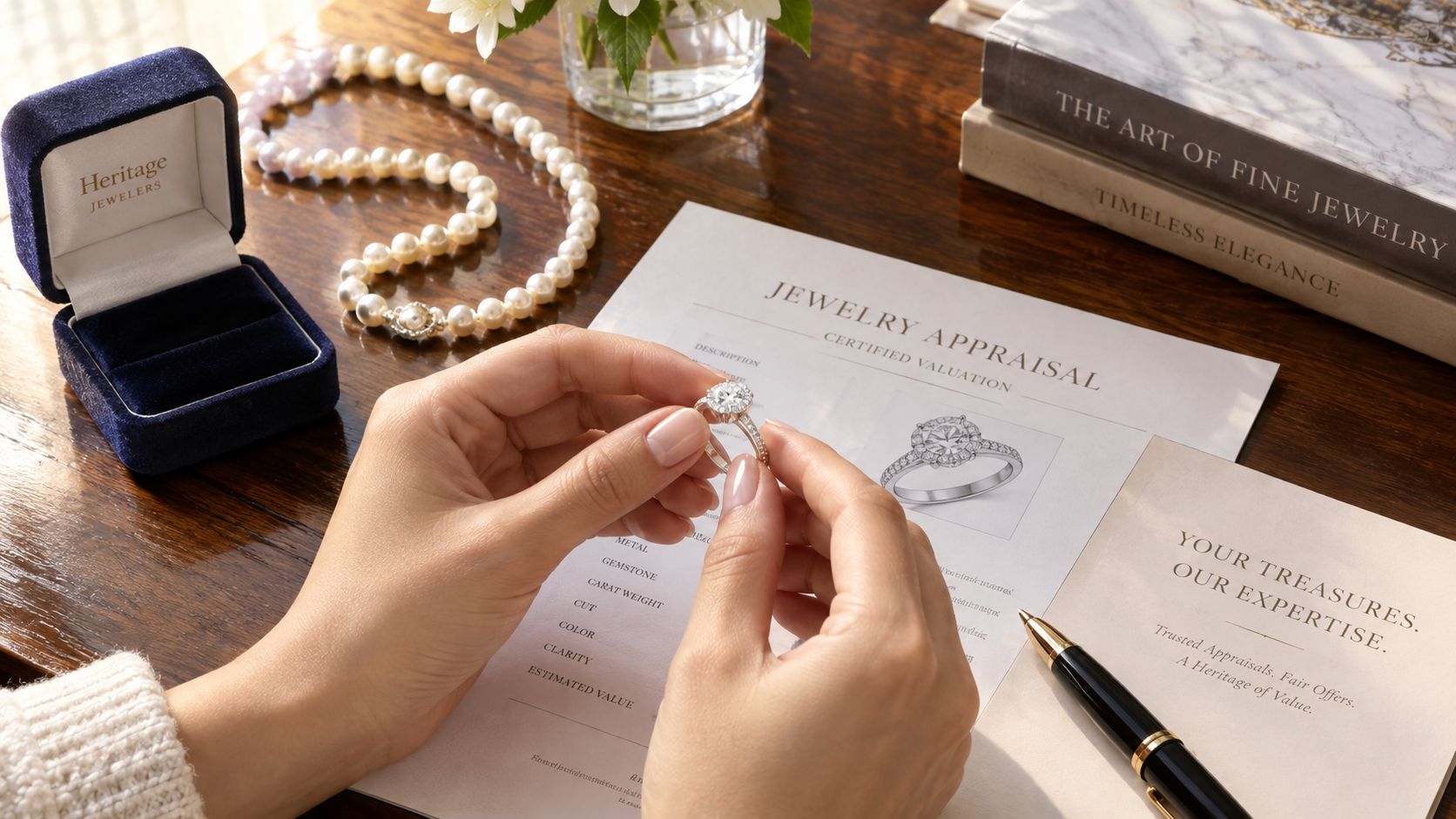
You've inherited the jewelry; now you need to decide whether to sell it, hold it, or get it documented before anyone talks price. The right move is usually not to rush to the first buyer, because inherited pieces often sell for far less than their original retail price and the spread between offers can be wide, especially when you haven't inventoried, appraised, or compared channels first. Selling inherited jewelry is a financial decision with emotional weight, and the people who maintain the most control are the ones who slow down long enough to understand what they have.
Table of Contents
What to Do First When You Inherit Jewelry
The first call you make is not to a buyer. It is to yourself, and the decision is simple, keep it, sell it, or set it aside until the paperwork is clear. Do not clean the pieces, do not rush them to the first person who offers cash, and do not let family sentiment decide what the market will pay. Start by protecting your position, because a rushed sale leaves money behind.
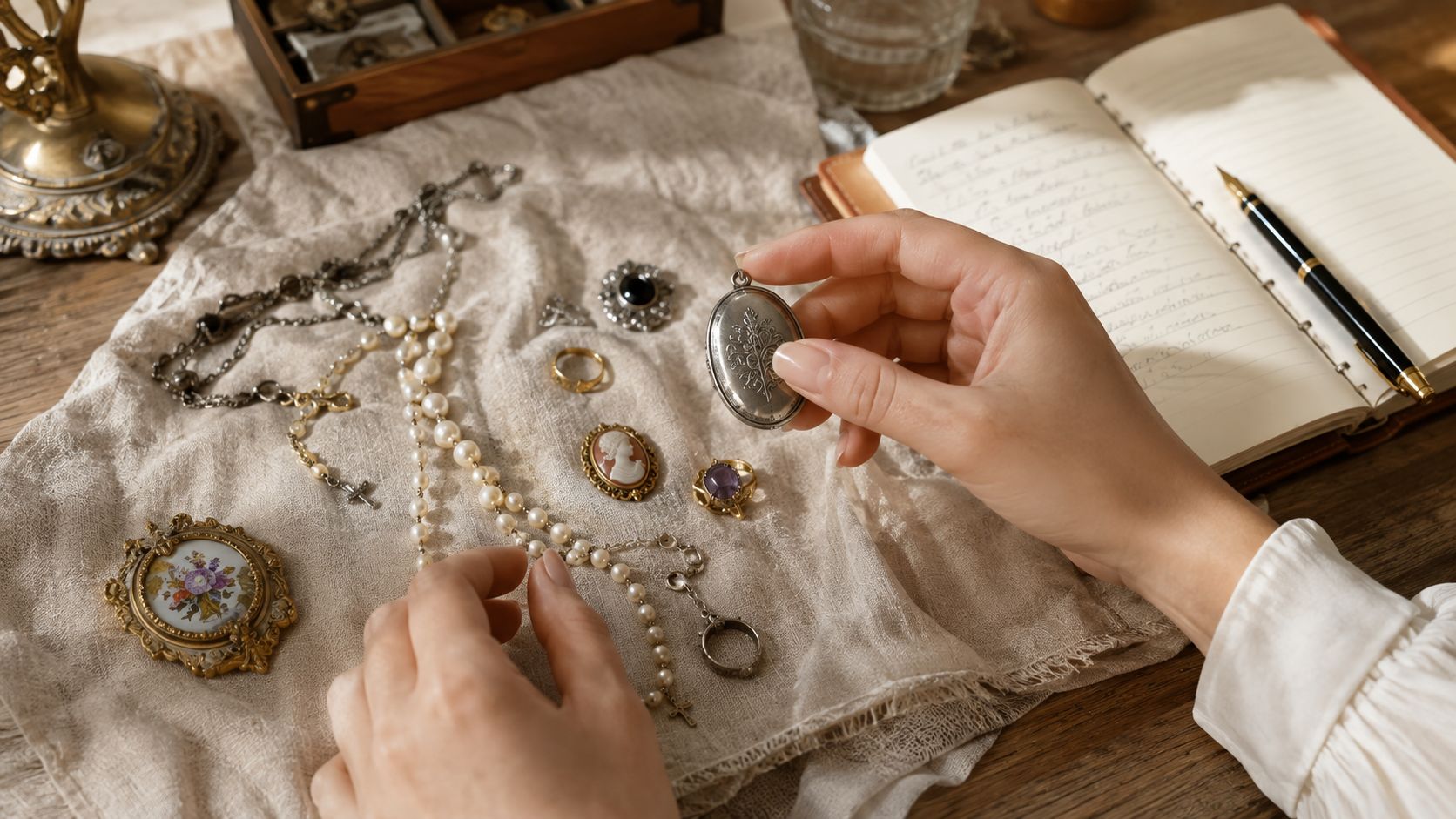
Separate emotion from operations
Treat the emotional choice and the sale decision as two different jobs. If a piece belongs in the family, put it aside now. If a piece is a sale candidate, secure it and record what you have before anyone prices it.
That split matters because inherited jewelry often brings less than people expect, especially when a buyer has to price in resale risk, condition, and speed. Immediate cash offers usually come in lower than patient sales, and the first number you hear is rarely the best number you can get (worthlens.ai). For a rough guide to what separates ordinary jewelry from higher-value pieces, see what is fine jewelry.
Practical rule: if you need money fast, accept that the offer will reflect speed. If you want stronger pricing, hold the pieces, document them, and compare offers before you commit.
Set your timeline before you ask for money
Your timeline should drive the sales path. A plain gold chain, a costume piece, and a signed designer item do not deserve the same approach, and a seller who needs liquidity now should price that need appropriately instead of hoping for retail-style money.
If you are unsure, stop at a basic home inventory and hold there. That gives you a clean starting point for appraisal, family discussions, and buyer conversations without forcing a decision before you understand what you have. It also matters for the tax side, because inherited jewelry is not treated like an ordinary resale item. Your basis and the estate records can change the math, so keep the pieces together until you know whether selling now helps or hurts after tax and timing are considered (claimyr.com).
Inventorying, Photographing, and Documenting Each Piece
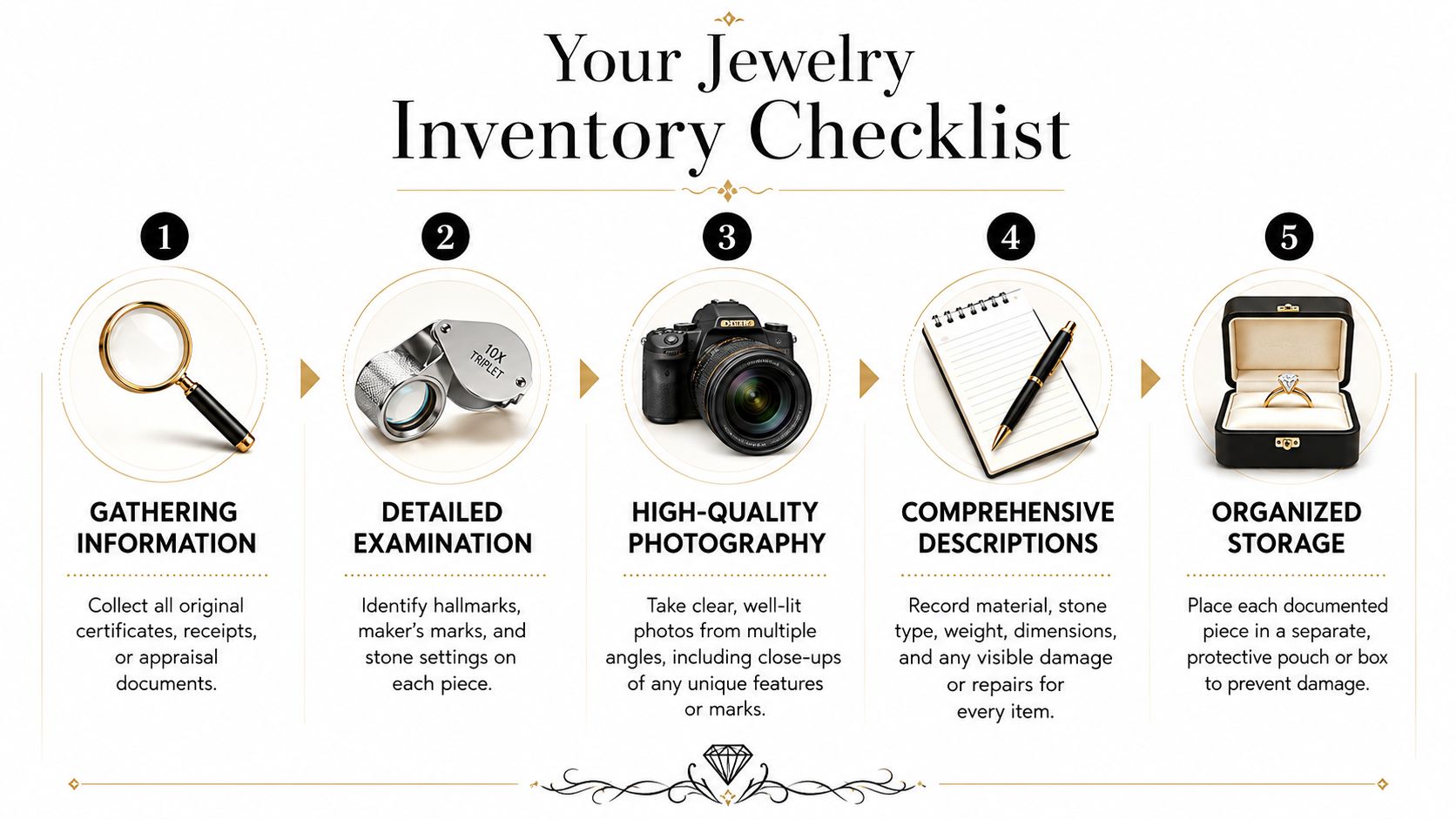
Documentation is the most impactful part of selling inherited jewelry, and it's the step most heirs skip. Write down every piece before anyone tries to buy it, because once a buyer sees incomplete records, your bargaining power drops fast.
Build a record that a buyer can trust
List the basics for each item, metal, stones, brand marks, condition, and any provenance that came with the estate. Hallmarks, maker's marks, and stamped purity marks matter because they help separate resale jewelry from scrap and improve buyer confidence.
A serious buyer wants evidence, not a story. Keep certificates, receipts, old appraisals, brand boxes, and written notes together, and photograph the front, back, clasp, hallmarks, stone settings, and any damage before the piece is cleaned or repaired. A chain-of-custody note is smart if the item leaves your home.
Don't “improve” the piece before it's documented
Polishing and repairs can erase evidence. That's a problem for antique items, signed pieces, and anything with condition-related value, because once you alter it, you can't show what the original state was.
Use this order instead, inventory, photograph, store separately, then assess whether cleaning or minor repair is even worth it. For a visual walkthrough of the photo process, the guide to how to photograph jewelry for resale is a useful reference when you're preparing images for appraisers or buyers.
Getting the Right Appraisal for the Right Reason
An appraisal is only useful if it matches the reason you need it. A sale appraisal, an insurance appraisal, and a probate valuation are not interchangeable, and mixing them up is how heirs end up with a number they cannot use.
Ask for the purpose up front
Say exactly why you need the appraisal, sale, insurance, or probate. That one detail changes how the appraiser frames value, and a good appraiser should say so plainly before they inspect anything.
Professional appraisal practice also helps reduce conflicts of interest when the appraiser charges a fixed fee or hourly rate instead of a percentage of value. That structure keeps the focus on description, condition, and fair market reasoning, not on inflating the number to make a seller feel good. For a deeper overview, see estate jewelry appraisal guidance.
Read the report like a buyer would
The fields that matter are the ones that drive offers, metal purity, stone quality, total carat weight, maker or brand, and condition notes. A high insurance number does not mean a high resale number, it usually reflects replacement cost, not what a buyer will pay today.
A written appraisal is a starting point, not a promise. If the report is old, recheck it before you sell, because market conditions and demand move.
One recent guide also notes that an appraisal can establish tax basis and that older appraisals may no longer reflect current market conditions, which is exactly why a fresh review matters before you negotiate (heirfolio.ai).
Choosing Where to Sell Inherited Jewelry
Different selling channels solve different problems. If you choose the wrong one, you'll either leave money on the table or wait too long for cash.
Compare the channels by outcome
Channel | Typical Speed | Price vs Retail | Best For | Watch For |
|---|---|---|---|---|
Private sale | Slowest | Can be strong if the buyer is right | Signed pieces, collectible jewelry, branded items | Time, safety, and negotiation risk |
Local dealer | Fast | Usually below retail, but straightforward | Mixed estates, urgent sellers | Wide offer differences between buyers |
Auction house | Slow to moderate | Can work well for rare items | Exceptional pieces with demand | Fees and uncertain final result |
Consignment | Slow | Potentially higher, but delayed | Sellers who can wait | Commission and return timing |
Mail-in buyer | Fast | Usually liquidity-focused | Remote sellers and simple transactions | Shipping terms and inspection disputes |
A signed Cartier necklace, for example, belongs in a channel that values brand, condition, and presentation. A plain gold bracelet is often better judged by metal and melt value than by a collector narrative.
Choose the buyer, not just the offer
A serious buyer should have a physical presence, explain the offer in writing, and show how the price was reached. That's especially important if you're comparing buyers in Atlanta, Buckhead, Sandy Springs, Alpharetta, Roswell, Brookhaven, or Midtown Atlanta, where the quality of in-person review can vary a lot.
For a seller trying to compare local and specialty options, the overview of where to sell fine jewelry is a helpful way to match the channel to the piece instead of guessing.
Preparing the Pieces and Evaluating Offers
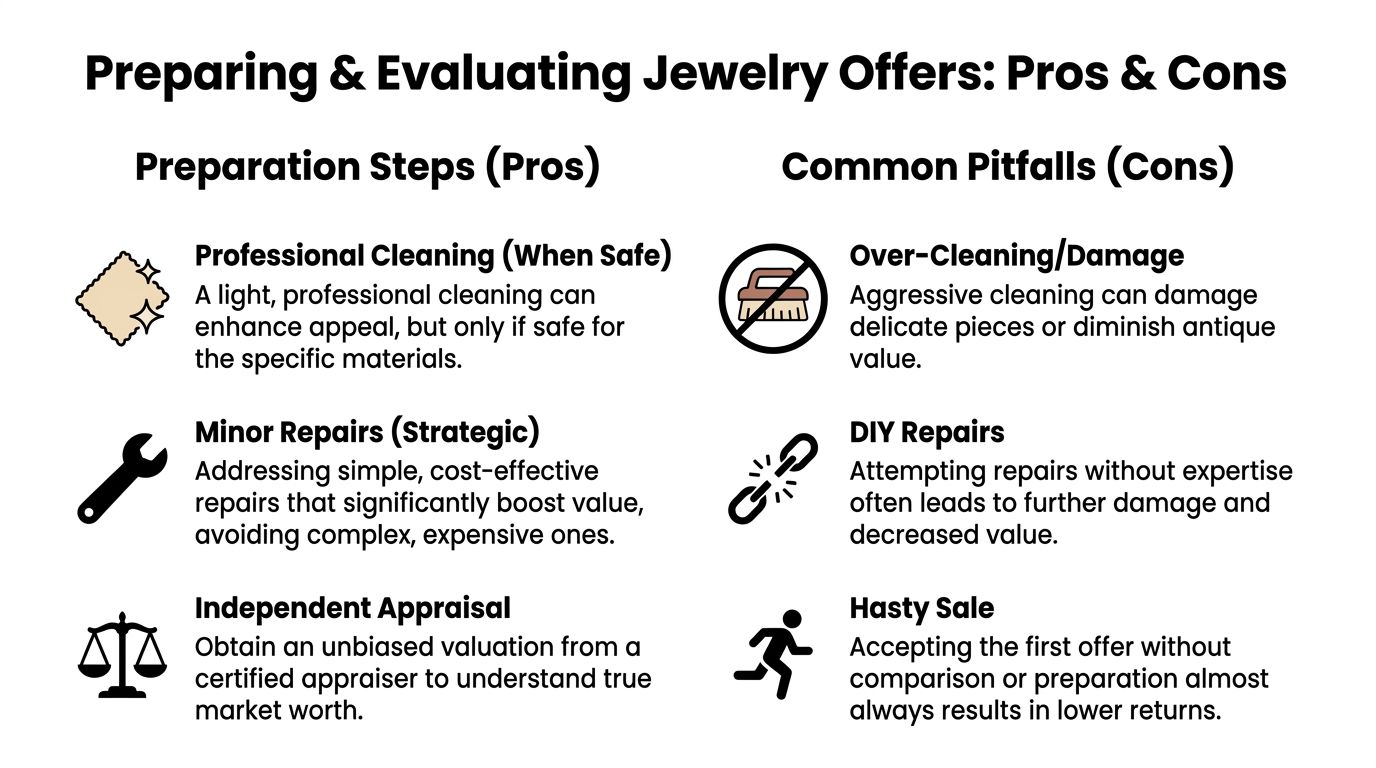
Preparation is not about making the jewelry prettier. It's about making the buyer's decision cleaner, faster, and harder to discount.
Prepare without damaging value
Clean only after documentation, and only if the material can handle it. Package each piece separately so chains don't tangle and stones don't scratch against one another, then use insured shipping if the buyer is remote.
Never sign exclusivity before you have a written appraisal or a clear written offer. That locks you into one path before you know whether the market would pay more somewhere else.
Demand comparable offers in writing
Get at least three offers from credible buyers. Each one should tell you what item they evaluated, what they think it is, and what basis they used to arrive at the number, whether that's resale, melt, auction estimate, or consignment estimate.
The first offer is rarely the best market price, and the spread between buyers for the same piece can be wide.
That's especially true when a buyer treats everything as scrap. Gold buyers usually discount below spot to cover refining and margin, so you should compare the quoted percentage of today's spot price for each karat, not just the headline dollar amount. A practical guide on how to sell antique jewelry reinforces the same basic idea, compare buyer type to item type.
Spot weak buyers quickly
Walk away if the buyer pressures you to decide immediately, refuses to put terms in writing, or ignores branded resale value on pieces that clearly have more than melt value. Those are classic signs that you're being priced for speed, not for the item's real market position.
If a piece includes gemstones, brand signatures, or unusual craftsmanship, don't let a generic gold quote define the deal. Mixed lots need more care, not less.
Tax Basis, Probate, and the Timing Question
Inherited jewelry is a timing decision as much as a pricing decision. Sell too fast, and you may accept the wrong number before you know what the piece is really worth in the estate. Hold too long, and you can miss the chance to document the item properly while the paper trail is still easy to build. The right move depends on basis, probate status, and whether the piece has resale value above simple metal weight.
Why basis changes the math
For inherited property, tax basis usually resets to fair market value at the date of death. That changes the sale math completely, because the original purchase price is usually irrelevant to your gain calculation. A receipt from decades ago may be interesting, but it is not the anchor you should use when deciding whether to sell now or wait. The IRS treatment of inherited property is explained in claimyr.com, and the practical takeaway is straightforward, the date-of-death value is what matters.
That is why heirs should treat inherited jewelry like an asset first and a keepsake second. If the basis is unclear, the market is thin, or you have not separated heirloom value from scrap value, pause before selling. Sometimes the better move is to document the piece, establish its position in the estate, and wait until you have a clean read on value. Selling blind is how money gets left on the table.
Probate can require formal valuation
Estate administration can demand a formal valuation, not a casual opinion from a buyer who wants the piece for melt. In a UK probate context, HMRC expects a qualified independent valuation for items over £1,500, and it expects all jewelry in the estate to be accounted for, with value tied to the date of death open-market figure (mozerisfineantiques.com).
Families also need to know what belongs in the estate file and what passes outside it. For that, understanding probate vs nonprobate gives a useful plain-English framework. If the paperwork is messy, stop and document before you sell. A clean estate file protects the value of the jewelry and keeps later disputes from landing on the wrong person.
If you do not have a clear basis or a current market read, document the piece, insure it, and hold before you sell.
Closing the Sale Safely and Your Next Steps
Once you've chosen a buyer, keep the finish clean. Get the final terms in writing, verify the buyer's physical address, and use insured shipping with declared value and signature on delivery if the transaction isn't in person.
Keep the payout and records clean
A clean payout is a bank transfer, cashier's check, or a documented cash receipt. Keep the offer, the final settlement, and any fees or commissions with your estate papers, because those records matter later if questions come up.
If you want a general frame for handling sale records, tax guidance for investors is a useful reminder that clean documentation matters long after the item leaves your hands.
Heirs in Atlanta, Buckhead, Sandy Springs, Alpharetta, Roswell, Brookhaven, or the broader Georgia market can bring inherited jewelry in for a private in-person evaluation, and remote sellers can start with a free online review and insured shipping. If you want a no-obligation read on what the pieces are worth, visit Antwerp Diamond and ask for a professional evaluation before you make the first sale decision.