
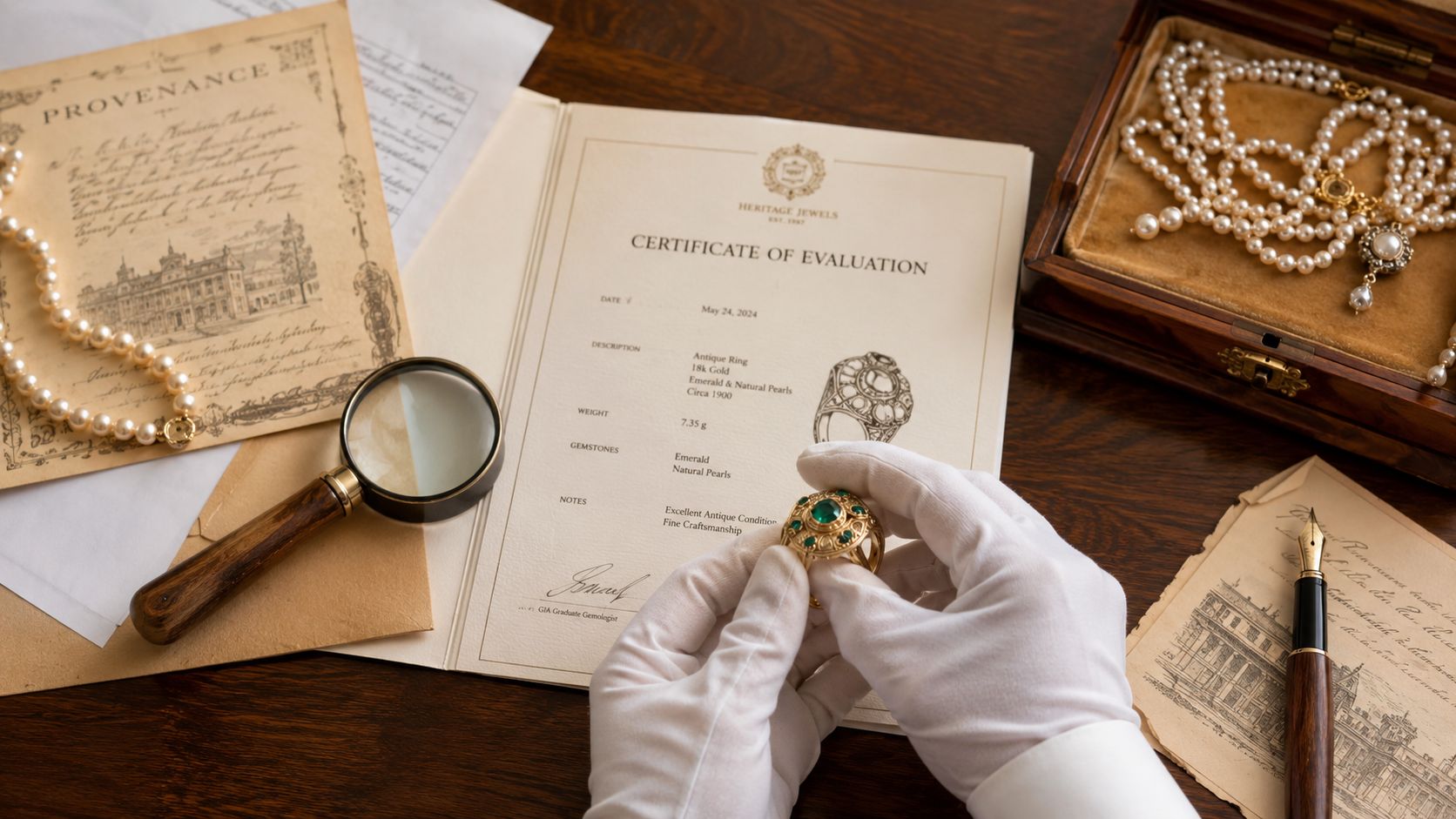
To sell antique jewelry, start by gathering any documentation and getting a professional market-value appraisal to understand its true worth. Then, compare selling options like trusted local buyers, auction houses, and online platforms to find the best fit for your item's value and your timeline.
Many sellers in Atlanta start in the same place. A ring box from a parent's estate, a brooch that has sat in a drawer for years, or a bracelet that looks old enough to matter, but not old enough to trust your own judgment on value. The biggest mistake at that moment is treating the piece like scrap before you know whether it has collector appeal.
That distinction matters because antique and estate jewelry is a real resale category, not a side market. Rapaport reported that Kentley Insights estimated global estate and antique jewelry retail sales at $4.4 billion in 2023, and the vintage-ring segment alone was valued at $3.29 billion in 2024 in its coverage of old jewels attracting new fans. If you're trying to decide whether your item should be sold by metal weight or as a period piece, a pricing mindset similar to a diamond resale value calculator can help. Start with the baseline material value, then determine whether age, craftsmanship, rarity, and provenance push it into a higher category.
Table of Contents
Understanding the True Value of Your Antique Jewelry
Most first-time sellers ask the wrong opening question. They ask, “How much is the gold worth?” when the better question is, “Am I holding a collectible object that happens to contain gold?”
That difference changes the entire sale. A plain broken chain often trades close to metal logic. A signed Edwardian ring, an original Art Deco bracelet, or a hand-fabricated Victorian brooch can attract interest because buyers are paying for design, age, condition, and scarcity, not just content.
Scrap value and collector value are not the same
Scrap value is the baseline. It reflects metal content, sometimes with separate consideration for stones that can be removed and resold.
Collector value sits above that baseline when the piece has qualities that matter to the secondary market:
Age and period: Antique jewelry is generally defined as 100 years old or more
Maker identity: Signed pieces and recognizable workshop traits matter
Originality: Replaced stones, altered prongs, and heavy polishing can hurt
Condition and wearability: Damage affects both collectors and practical buyers
Provenance: Receipts, family history, original boxes, and prior paperwork can support a stronger asking position
Practical rule: If a buyer talks only about weight before examining construction, marks, and condition, you're probably being steered toward a scrap-value conversation.
In Atlanta, that issue comes up often with inherited jewelry. Families in Buckhead, Sandy Springs, Alpharetta, Roswell, Brookhaven, and Midtown Atlanta may have pieces that look modest at first glance but deserve period identification before any sale decision. A delicate platinum filigree ring with old-cut diamonds can be misread in minutes by a buyer who focuses only on melt.
What usually lowers value before the sale even starts
Sellers often damage their advantage by making assumptions. They polish aggressively, replace missing parts too quickly, or accept the first offer because the piece “looks old but worn.”
What works is slower and more disciplined. Identify the category, preserve original details, document what you have, and only then compare offers. If your goal is to learn how to sell antique jewelry for more than its material content, the process matters as much as the piece.
How to Prepare Your Jewelry for a Successful Sale
A seller walks into my office with a ring that belonged to her grandmother. One buyer has already quoted it by weight. After ten minutes under magnification, the conversation changes. The mounting is hand-fabricated, the diamond is an old European cut, and the ring belongs in a collector discussion, not a melt-value discussion.
That is the point of preparation. Before you ask for offers, gather enough evidence to steer the piece toward the right market.
Sort the piece into the right selling lane
Preparation starts with classification, because scrap buyers and estate jewelry buyers look at the same item through different lenses.
The trade generally treats antique jewelry as 100 years old or more, while vintage pieces fall into a later period. More important than the label, though, is whether the piece shows traits that collectors pay for: original construction, period-correct design, signed workmanship, and stones that match the era. Age by itself does not create a premium.
If you are unsure what you have, examine the piece closely before anyone tests, polishes, or repairs it:
Hallmarks and maker's marks: Check shanks, clasps, pin stems, earring backs, and pendant bails
Construction details: Hand-cut galleries, die-struck elements, milgrain, closed-back settings, and old solder work
Stone cutting style: Old mine cuts, old European cuts, rose cuts, calibre cuts
Materials and period clues: Platinum filigree, silver-topped gold, enamel work, repoussé, Georgian or Edwardian design traits
A local seller looking for where to sell my diamond ring near me often assumes any older ring should bring a collector price. In practice, collector value depends on what can be verified and how intact the piece remains.
Clean for presentation, not for renovation
I see this mistake often in inherited jewelry. A family member wants the piece to "look better" before showing it to buyers, so they polish away patina, replace a worn clasp, or plate over surface wear. Those steps can lower the price because they remove evidence of age and originality that specialist buyers want to see.
City National Bank cautions sellers against improper restoration in its guide on how to sell estate jewelry. That advice matches what happens in the trade every week. Bright is not always better.
Use a conservative approach:
Wipe with a soft dry cloth: Remove dust, skin oils, and surface residue
Check stone security first: If a stone clicks or shifts, stop handling the piece
Leave old finishes alone: Patina, engraving depth, and hand-applied texture can matter
Keep original packaging: Boxes, pouches, and retailer tags may support provenance
Avoid these common value killers:
Ultrasonic or steam cleaning at home: Older settings, glued elements, and fragile stones can fail
Polishing compounds or dip cleaners: They can soften edges and blur engraving
Pre-sale repairs: Replaced prongs, shanks, backs, or clasps may hurt originality
Replating or refinishing: Surface changes can make a period piece look newer than it is
Collector buyers pay for intact history. Scrap buyers pay for weight.
Build a seller file that supports the better offer
A folder with paperwork and strong images changes the quality of the conversation. It helps a serious buyer assess whether the piece belongs in inventory as an estate jewel, should go to auction, or has no market above metal and stone value.
Include:
Receipts or invoices tied to the purchase
Lab reports for major diamonds or colored stones
Prior appraisals even if the numbers are outdated
Family notes or letters that connect ownership history
Photos of the front, back, marks, clasps, and any damage
Good photos help buyers decide whether your piece deserves an in-person review for collector value. For a practical refresher on lighting, angle, and background, this guide to mastering product photography is useful because the same fundamentals apply to jewelry submissions for preliminary review.
For Atlanta sellers, this step matters more than many expect. Dealers covering Buckhead, Sandy Springs, Roswell, Alpharetta, and Midtown see a steady flow of inherited jewelry. Clear documentation helps your piece stand out from the many submissions that arrive with no marks photographed, no stone details, and no context beyond "old family ring."
Getting an Accurate Appraisal and Authentication
The appraisal stage decides whether you're entering the market informed or vulnerable. Sellers often arrive with an old insurance document and assume that number represents what a buyer will pay. It usually doesn't.
Ask for market value, not replacement value
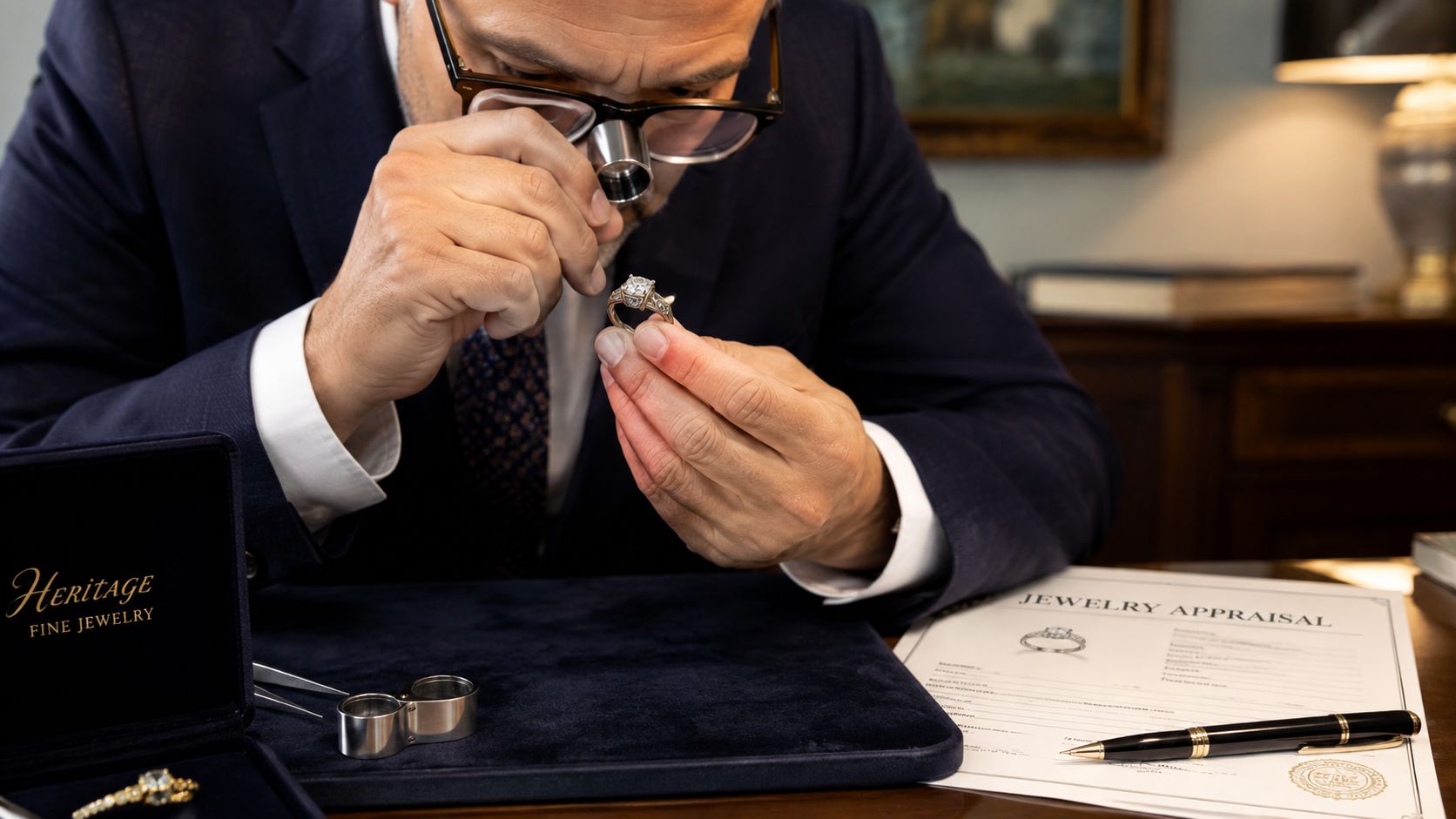
A sound sales process starts with a market-value appraisal, not an insurance appraisal, according to this estate-jewelry selling guide from Element 79 Jewelry. That same guidance advises sellers to gather documentation and obtain 2–3 dealer estimates or comparable-market checks before accepting an offer.
That distinction is essential:
Insurance appraisal: Often reflects replacement cost in a retail environment
Market-value appraisal: Focuses on what similar items realistically trade for
Dealer offer: Reflects resale risk, holding time, condition, and demand
If you're selling in the greater Atlanta market, in-person evaluation is particularly helpful. A buyer or appraiser can inspect maker's marks, mounting quality, old repairs, and stone security in a way that photos alone may not capture. One local option is Antwerp Diamond's Buckhead evaluation process, which fits sellers who want a direct review of condition and marketability before deciding on a channel.
What professionals look for during authentication
Authentication isn't one test. It's a chain of observations.
A trained appraiser or estate buyer usually examines:
Maker's marks and signatures
Metal stamps and fabrication style
Stone cuts and setting methods
Signs of replacement parts
Surface wear, repairs, resizing, and solder seams
Whether the piece is wearable in current condition
A signed Cartier brooch, a hand-pierced Edwardian pendant, and an unsigned Victorian ring all require different reasoning. The point isn't only to confirm age. It's to understand whether the piece should be priced as a period collectible, a branded estate item, or a metal-and-stone asset.
Bring every piece of paper you have, even if it seems minor. An old box label or handwritten family note can support a stronger story than memory alone.
For diamond-set pieces, lab documentation can also help separate a serious listing from a weak one. If the center stone already has grading paperwork, keep it with the item.
A short overview of how professionals assess condition and stones can help before your appointment:
Why multiple opinions protect you
No single buyer defines value. Markets differ, and so do buyer models.
A refiner may quote close to melt logic. A general jeweler may give a practical trade offer. A period specialist may pay more because they understand exactly who will buy the piece next. That is why getting more than one opinion is not shopping around in a negative sense. It's basic protection.
In Georgia, this matters even more for inherited collections. One buyer may want the diamond ring, another may want only the gold, and a specialist may want the complete group because the provenance and period cohesion make the collection stronger together.
Comparing Your Best Options for Selling Jewelry
Where you sell matters almost as much as what you sell. The same ring can produce very different outcomes depending on whether it goes to a local buyer, an auction house, a consignment case, or an online marketplace.
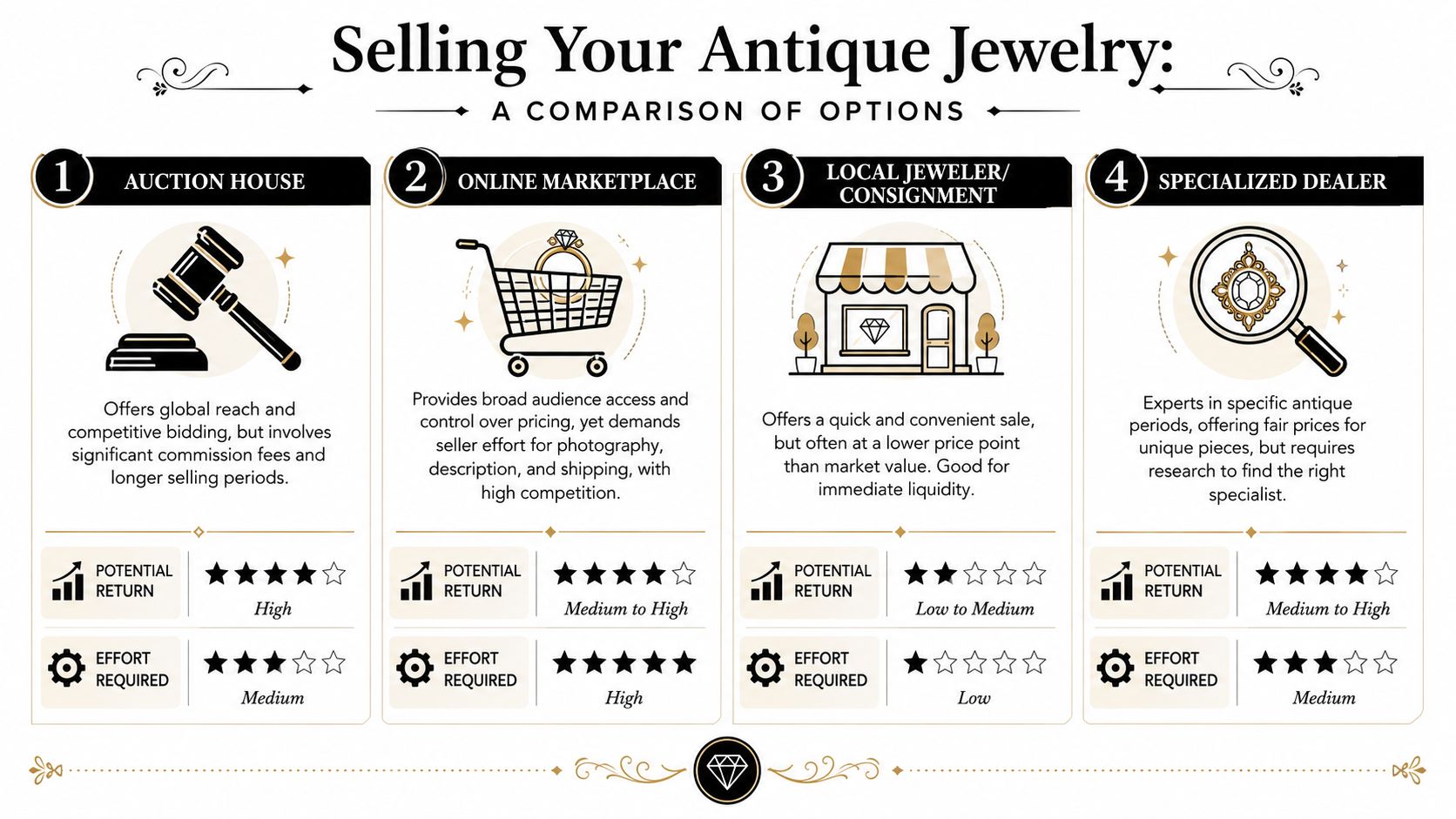
Guidance from St. John & Myers notes that the best sales channel depends on the item's rarity and your timeline. Their overview of selling antique jewelry explains that antique stores are typically faster but may offer lower returns, online marketplaces widen reach but require management, and auctions can suit rare pieces because bidding may improve the result. They also note that buyers often benchmark offers against melt value and condition.
When a direct local buyer makes sense
A direct buyer is usually the cleanest route if your priorities are speed, privacy, and fewer moving parts. This is often the right fit for sellers in Buckhead, Sandy Springs, Alpharetta, Roswell, Brookhaven, or Midtown Atlanta who don't want to manage listings, shipping, returns, and uncertain buyers.
This route works best when:
You want clarity quickly: One review, one offer, one decision
The item is valuable but not auction-level rare: Good estate pieces often fit here
You care about security: In-person handling reduces transit risk
You want a straightforward net number: No waiting to see what fees consume later
If you're still mapping options, this guide on where to sell fine jewelry for maximum value gives a broader resale framework that also applies to antique pieces.
When auction or online selling may fit better
Auction houses make more sense when a piece has strong specialist appeal. Signed examples, rare design periods, unusual gemstones, or highly desirable provenance can benefit from competitive bidding and exposure to a collector audience.
Online marketplaces can work if you're comfortable doing the labor yourself. That includes writing accurate descriptions, answering questions, photographing marks and damage, packing securely, and dealing with the possibility of returns or disputes.
If a piece is ordinary in the market but meaningful in your family, sentiment won't create collector value. Choose the channel based on demand, not emotion.
Consignment sits in the middle. It can expose the item to retail buyers, but it usually requires patience and close attention to commission terms, markdown rules, and payout timing.
Comparison of Antique Jewelry Sales Channels
Channel | Potential Return | Speed | Security | Seller Effort |
|---|---|---|---|---|
Auction house | High for rare pieces | Slow to moderate | Moderate | Medium |
Online marketplace | Medium to high | Variable | Lower than in-person channels | High |
Local jeweler or consignment | Low to medium | Fast to moderate | Moderate | Low |
Specialized dealer | Medium to high | Fast to moderate | High when handled professionally | Medium |
A simple decision framework helps:
Choose auction if the piece is rare, signed, or likely to attract multiple bidders.
Choose online if you're confident in listing, communication, packing, and shipping.
Choose consignment if you can wait and the terms are clear.
Choose a specialized direct buyer if you want an informed offer tied to actual resale potential without the delay of public sale.
For many antique pieces, the most important question isn't “Which channel pays the most in theory?” It's “Which channel understands the difference between a metal object and a period jewel?”
Navigating Offers, Fees, and Secure Payments
An offer only becomes meaningful when you understand what it is based on. Sellers often compare numbers without comparing the logic behind them.
Read the offer for what it really is
Ask a direct question: is this offer based on melt, on stone value, on resale potential as an antique, or on some mix of all three?
That answer tells you whether the buyer sees the piece as collectible. If the item has period craftsmanship, signed details, or original condition, a melt-driven offer may leave money on the table. On the other hand, if the piece is heavily altered, incomplete, or commercially common, scrap logic may be closer to reality.
Pay attention to fees as well. Auction and consignment channels can reduce your net result even if the headline sale price sounds strong. Ask about commission, photography, cataloging, shipping, insurance, unsold-item handling, and payout timing before you agree to anything.
A seller comparing antique and material routes may also benefit from reviewing how buyers think about the best place to sell gold, because that mindset helps you identify when a jewelry offer is really just a metal offer.
Protect the transaction from avoidable problems
Once you accept an offer, the final stage is operational, not emotional. Keep it that way.
Use a checklist:
Confirm the payment method: Wire transfer, business check, or another documented method
Get the terms in writing: Item description, agreed amount, and any return window
Document the handoff: Photos, receipt, and identification of the receiving party
If shipping is involved, insure the package: Follow the buyer's process carefully
Don't rush because of pressure: A serious buyer can explain timing and next steps clearly
For remote transactions, ask who bears shipping risk and when responsibility transfers. For in-person deals around Atlanta, meet at an established business location and verify that the person receiving the item matches the company you've been dealing with.
Negotiation should stay simple. If you have documentation, multiple opinions, and a clear understanding of condition, you don't need dramatic tactics. You just need to know whether the offer reflects the right category of value.
Frequently Asked Questions About Selling Antique Jewelry
A common Atlanta scenario goes like this. Someone brings in a grandmother's ring, assumes the diamond and gold set the price, and is surprised to learn the mounting may matter more than the melt value. That is the question behind many first-time sales. Are you selling materials, or are you selling a period piece with collector demand?
Is antique jewelry the same as vintage jewelry
No. In the trade, antique usually means about 100 years old or older. Vintage is newer than that, but still from an earlier period. Estate jewelry means pre-owned, so it can include both.
That distinction affects price. A Victorian or Art Deco ring may deserve collector evaluation, while a later piece with no design demand may trade closer to diamond or scrap value.
Can I sell inherited jewelry with no paperwork
Yes. Lack of paperwork does not stop a sale.
It does change how the piece should be presented. Without receipts, certificates, or prior appraisals, a buyer has to rely more heavily on construction, hallmarks, gemstone testing, condition, and signs that stones or parts were replaced over time. Bring family notes, old photos, boxes, and anything else that helps establish what the piece is and whether it stayed original.
Should I sell a group of pieces together or one by one
Separate evaluation usually gets better results when the group includes one or two stronger pieces.
I often see estates where ten items are ordinary scrap-grade jewelry and one signed brooch, platinum dinner ring, or period bracelet carries real collector interest. If you bundle everything, the best item can disappear inside an average offer. If the pieces are mostly low-demand and damaged, a group sale can save time and simplify the transaction.
Do I need to think about taxes when I sell
Possibly. Tax treatment depends on how you acquired the jewelry, your basis, and your overall situation.
That is a question for a tax professional, not a buyer. A jeweler or appraiser can identify the piece and estimate market range, but tax advice should come from your CPA or attorney.
What if my antique jewelry has been repaired
Repairs matter because collector buyers pay for originality.
A well-done antique prong retip or an old sizing job does not automatically ruin value. Replaced center stones, rebuilt galleries, modern solder work, heavy polishing, and altered mountings can change the category of buyer. In practice, some repaired pieces still sell well as jewelry, but they lose premium pricing as period examples.
Is it better to clean antique jewelry before showing it
Use restraint. Dust and fingerprints are fine to remove. Aggressive polishing is where sellers get into trouble.
Patina, engraved detail, milgrain, and old tool marks can all support collector value. Once those are polished away, they do not come back. If you are not sure whether a piece belongs in the scrap lane or the collector lane, let a professional examine it first and decide how much cleaning is appropriate.
If you want a professional opinion before deciding how to sell, Antwerp Diamond offers in-person evaluations in Atlanta and remote review options for sellers who want a clear, no-pressure assessment of antique jewelry, estate pieces, diamonds, and other high-value items. Bring the piece, any paperwork you have, and a few good questions. That usually leads to a better decision than chasing the first offer.


