

A gia certified engagement ring usually sells more easily and for more money than a comparable uncertified ring. Standard diamond rings often resell for 25% to 50% of original retail price, while rings with a GIA-certified center stone tend to land at the higher end of that range, and comparable GIA stones commonly realize 5% to 20% more than uncertified stones in secondary-market transactions.
If you're holding a ring box, a paper certificate, and a lot of questions, that's normal. Most sellers don't need another buyer-focused guide about romance or sparkle. They need to know what the GIA report does, how to verify it, and how it affects a real-world offer when it's time to sell, borrow against, or appraise the ring.
Table of Contents
What GIA Certification Truly Means for Your Ring
Why sellers should care about that distinction
Why GIA became the benchmark
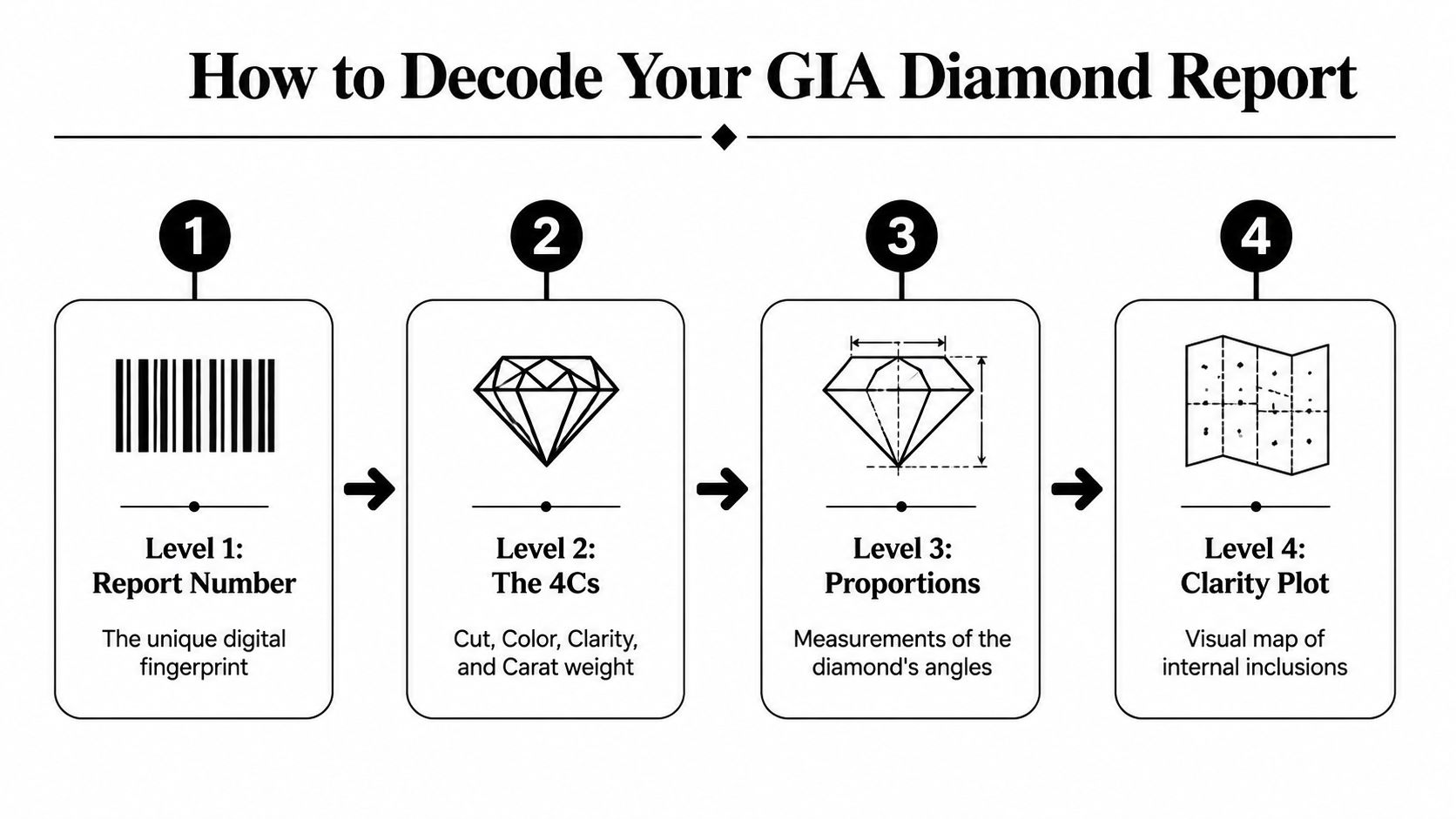
How to Decode Your GIA Diamond Report
Start with the report number
Read the 4Cs in the right order
Don't ignore proportions and the clarity plot
How GIA Certification Impacts Your Ring's Resale Value
Why buyers pay more for documented stones
What still affects the final offer
Verifying Your GIA Report and Spotting Forgeries
How to use GIA Report Check
Red flags that deserve a closer look
A Step-by-Step Guide to Selling Your GIA Certified Ring
Prepare the ring before anyone prices it
Choose the selling path that fits your priorities
Frequently Asked Questions About GIA Rings
Is a GIA report the same as an appraisal
Are GIA-certified lab-grown rings worth the same as natural ones
What if I lost the paper report
How much does the setting matter
Does GIA matter more than other labs
Can I sell the ring if the diamond is chipped or the setting is damaged
Does GIA matter more in Atlanta and the Georgia market
What GIA Certification Truly Means for Your Ring
A GIA report is best understood as an independent identity document for the center diamond, not as a price tag. It tells a buyer what the stone is, how it was graded, and how its quality was measured. For a seller, that changes the entire conversation from opinion to documentation.
That matters because GIA didn't just join the grading business later. It shaped it. The Gemological Institute of America was founded in 1931 and later introduced the internationally adopted 4Cs, which still define how diamonds are described and compared today. Major online jewelers and national chains also report that over 70% of their higher-priced engagement rings, typically above the $10,000 threshold, include GIA reports as standard, which shows how GIA is firmly embedded in the premium end of the market (Andria Barbone on GIA-certified engagement rings).
Why sellers should care about that distinction
If a ring comes in with no report, every buyer has to spend more time confirming what the stone is. If the ring comes in with a GIA report, the starting point is clearer.
Think of it like this:
A receipt shows what someone paid. That may or may not reflect today's market.
An appraisal states a value for a specific purpose. Insurance appraisals often serve replacement needs, not resale realities.
A GIA report describes the diamond itself. That's what lets a professional compare your stone to actual market demand.
Practical rule: A GIA report doesn't guarantee a specific price, but it does reduce doubt, and reduced doubt usually improves liquidity.
A lot of confusion comes from sellers assuming the certificate itself creates value out of thin air. It doesn't. The diamond's actual quality still drives value. What the report does is make that quality portable and credible.
Why GIA became the benchmark
Buyers, estate dealers, pawnbrokers, auction specialists, and resellers need common language. GIA created that language with cut, color, clarity, and carat. That's why a gia certified engagement ring usually gets taken more seriously than a ring with only a store card or vague paperwork.
If you're comparing grading systems or trying to understand why retailers emphasize certification, this overview on buying a GIA certified diamond is a useful consumer-friendly reference. For sellers who want a local starting point in Georgia, the main Antwerp Diamond Store site outlines evaluation options without requiring a commitment.
How to Decode Your GIA Diamond Report
Most sellers look at a GIA report and go straight to carat weight. That's understandable, but it misses how professionals read the page. A gemologist usually starts with identity, then moves to quality, then to whether the stone and report still match.
Start with the report number
The report number is the first checkpoint. It's the unique reference tied to the grading record. If that number appears on the document and, where applicable, on the diamond's girdle inscription, you have a much stronger chain of identification.
For a seller, that number does two things. It lets a buyer verify the report through GIA's system, and it prevents the conversation from drifting into guesswork about whether the paper belongs to the stone.
Read the 4Cs in the right order
GIA documents the diamond across Carat Weight, Color, Clarity, and Cut, and these factors work together in determining market value. GIA also uses standardized ranges such as Color from D to Z and Clarity from FL to I3, while cut quality has a major effect on light return and visual brilliance, which is why two diamonds of the same weight and color can look very different in person (Luxury Evermore on GIA-certified engagement rings).
A practical reading order helps:
Carat Weight
This tells you the stone's mass, not how large it looks face-up. A deep stone can carry weight without looking broad across the top.Cut
This is often the visual engine of the diamond. A better cut can make the stone look brighter and more lively, which influences buyer confidence fast.Color
This measures how colorless the stone appears within GIA's scale. Subtle differences may matter more in some sizes and shapes than others.Clarity
This records internal and external characteristics. Not every inclusion is equally important. Location, visibility, and impact matter.
A seller with a report can describe the diamond objectively. A seller without one often ends up repeating what the retail salesperson said years ago.
Don't ignore proportions and the clarity plot
Beyond the 4Cs, professionals look at the measurements and proportion data because they affect how the diamond presents in real life. That section helps explain why one stone faces up beautifully while another looks sleepy or smaller than expected.
The clarity plot is the stone's map. It doesn't just mark imperfections. It helps identify the stone and provides a visual record of where inclusions or blemishes were observed at grading.
Here are the parts worth checking before a sale or appraisal:
Measurements: These show the diamond's dimensions, which help assess spread and shape.
Polish and symmetry: These support finish quality.
Fluorescence: This can influence buyer preference depending on the stone.
Comments section: Treatments or notable grading remarks belong here.
If you've ever sold another high-value item, the logic is similar. Good documentation speeds trust. That same pattern shows up in other luxury categories, including watches, where condition details and identification records matter to online buyers, as discussed in this guide to online watch buyers.
How GIA Certification Impacts Your Ring's Resale Value
When sellers ask whether GIA "adds value," the practical answer is yes, but not in the simplistic way many websites describe it. The report doesn't replace the underlying quality of the diamond. It makes that quality easier to trust, compare, and price.
Research and industry data indicate that a standard diamond ring typically resells for 25% to 50% of its original retail price, while rings with GIA-certified center diamonds consistently fall at the higher end of that range. The same data also indicates that GIA-certified stones commonly realize 5% to 20% more in secondary-market transactions than comparable uncertified stones (Beyond 4Cs diamond industry trade statistics).
Why buyers pay more for documented stones
In resale, buyers are paying for the diamond, the documentation, and the reduction in risk. A GIA report lowers the amount of time and uncertainty involved in verifying what the stone is.
That creates advantages that sellers feel directly:
Factor | GIA-certified stone | Uncertified or house-graded stone |
|---|---|---|
Buyer confidence | Higher | Lower |
Speed of initial evaluation | Faster | Slower |
Need for re-verification | Reduced | Greater |
Pricing consistency | Stronger | More variable |
A documented diamond is also easier to compare against similar stones in the market. That's why a gia certified engagement ring often attracts more serious interest than a ring with broad descriptions like "near colorless" or "very good quality."
What still affects the final offer
Certification helps, but it doesn't erase trade-offs. A GIA report won't rescue a weak cut, visible damage, or a style of setting that's hard to resell.
The final offer still depends on a mix of factors:
The center stone's grades: Cut, color, clarity, and carat still lead.
Natural versus lab-grown: This matters materially and belongs in the valuation conversation.
Condition of the setting: Bent prongs, worn shanks, and missing melee affect presentation and repair costs.
Metal and design: Platinum and heavy gold settings may add value, while highly personalized mountings can narrow the buyer pool.
Current demand: Market appetite shifts by size, shape, and category.
If your ring also contains substantial platinum, it's worth understanding how metal value is separated from diamond value during resale. This overview on where to sell platinum gives a useful parallel.
Verifying Your GIA Report and Spotting Forgeries
Before you discuss price with anyone, confirm that the paperwork is genuine and that it matches the diamond. This isn't just a security step. It affects how confidently a buyer can proceed.
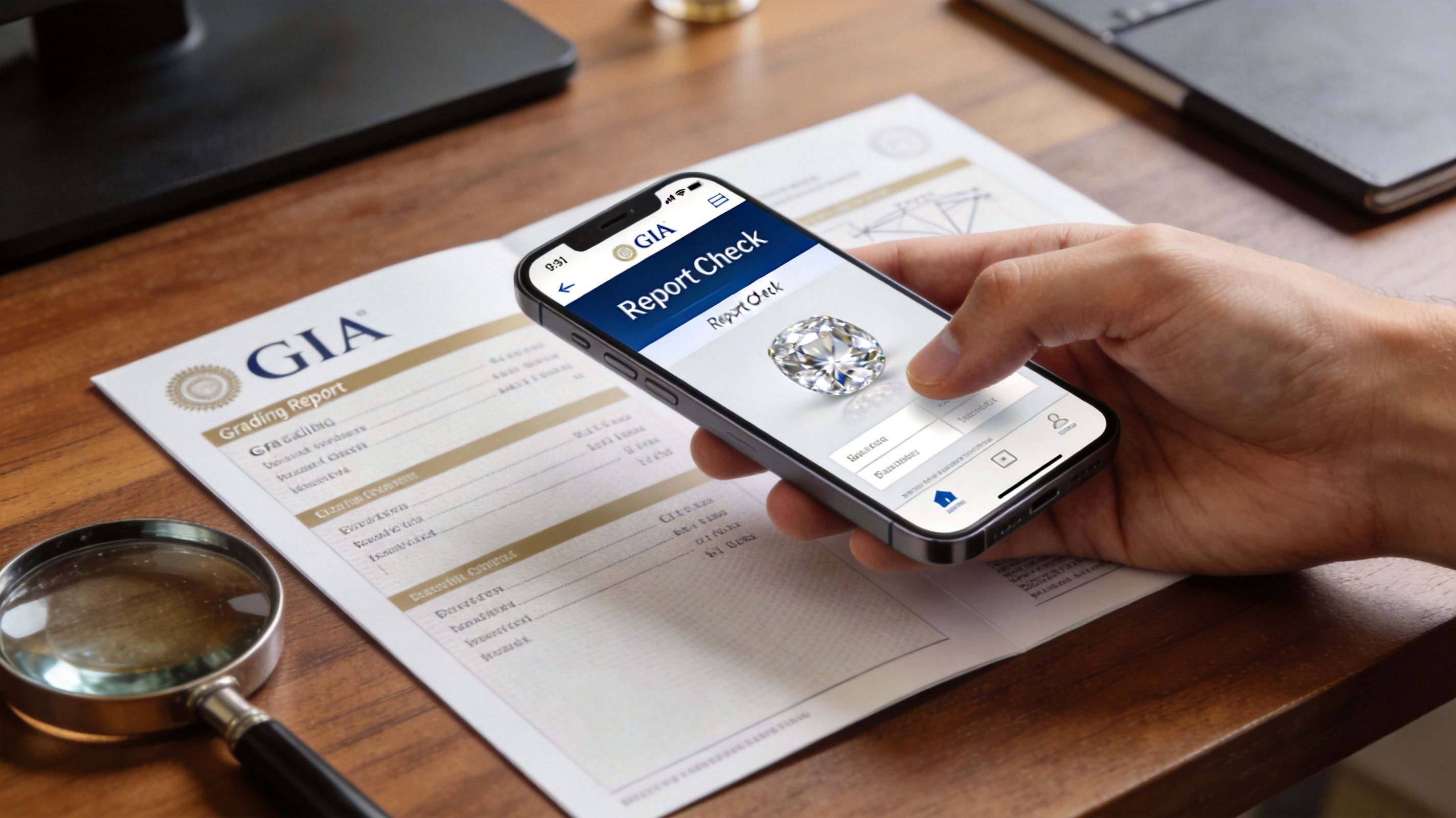
The Gemological Institute of America operates GIA Report Check, a global report database accessible through unique report numbers. That verification system is important for establishing provenance, and certification status can directly impact resale value by 15% to 25% depending on market conditions (GIA on what a GIA diamond is).
How to use GIA Report Check
The process is straightforward:
Locate the report number on the paper report.
Enter it in GIA Report Check and confirm that the digital record appears.
Compare the report details against your stone, especially shape, measurements, and grading data.
Check for a laser inscription if your diamond has one and it's accessible under magnification.
Review the setting condition to make sure chips, repairs, or damage haven't changed the stone's presentation since grading.
For many sellers, the most reassuring step is matching the report to the physical diamond. If the inscription is visible and the report data aligns, you're in a much stronger position.
A real report and the right diamond need to travel together. If they don't match, the document doesn't help.
A short visual walkthrough can help if you've never handled this process before:
Red flags that deserve a closer look
Some problems are obvious. Others are subtle. These are the issues that should slow you down:
Formatting that looks off: Spacing, type alignment, or odd print quality can signal trouble.
A report number that returns no result: That calls for immediate caution.
Mismatch between report and stone: A round report paired with an oval stone is the easy example, but even small differences in measurements matter.
Seller language that leans on vague claims: If someone says "certified" but can't identify the lab, ask questions.
Resistance to verification: Legitimate documentation should withstand scrutiny.
That same security mindset applies across luxury resale. Authentication steps, chain of documentation, and controlled handoff procedures matter whether you're selling a diamond ring or a Birkin, which is why this review of platforms for selling handbags and comparing authentication, fees, and payout timing is surprisingly relevant.
A Step-by-Step Guide to Selling Your GIA Certified Ring
Once the report is verified, the selling process becomes more practical. The strongest outcomes usually come from being organized before you request an offer.

Prepare the ring before anyone prices it
Start by gathering every piece of documentation you still have. The GIA report matters most, but the original receipt, prior appraisal, ring box, service paperwork, and any brand packaging can still help provide context.
Then do a simple preparation pass:
Clean lightly: Remove surface grime, but don't attempt aggressive DIY polishing.
Photograph clearly: Take top view, side view, close-up of the center stone, and a photo of the report.
Note changes: If the ring has been resized, repaired, or reset, mention it.
Separate expectations from replacement value: Insurance paperwork and retail receipts often describe a different market purpose.
If you're considering a remote sale first, this guide on how to sell jewelry online gives a practical overview of presenting jewelry well and preparing for buyer questions.
Choose the selling path that fits your priorities
Different sellers want different things. Some care most about speed. Others want a private appointment and time to review the offer. In Atlanta, Buckhead, Sandy Springs, Alpharetta, Roswell, Brookhaven, Midtown Atlanta, and the wider Georgia market, in-person evaluation can be especially useful because the buyer can inspect the ring, the report, and the setting at the same time.
A sensible selling path usually looks like this:
Request an initial evaluation
Share photos of the ring and the GIA report. That lets the buyer determine whether the piece fits the market they serve.Schedule a full inspection
For stronger offers, the ring needs to be seen in person or received securely for review. The buyer confirms the stone, setting, and paperwork.Review the explanation, not just the number
A serious evaluation should explain what is driving the offer, especially the center stone quality and any condition issues.Ask how payment and transfer work
Sellers should understand timing, method of payment, and when ownership changes hands.
Seller's checklist: Bring the ring, the report, your identification if required by the buyer, and any supporting paperwork. The smoother the handoff, the smoother the transaction.
Some owners also compare the ring's precious metal content separately, especially if the setting is substantial. If that's part of your thinking, this local resource on the best place to sell gold helps frame how gold value is evaluated apart from stone value.
Frequently Asked Questions About GIA Rings
Is a GIA report the same as an appraisal
No. A GIA report identifies and grades the diamond. An appraisal assigns a value for a purpose such as insurance, estate planning, or resale discussion.
Those documents can work together, but they aren't interchangeable. For sellers, the report is the objective quality record. The offer depends on that record plus condition and current buyer demand.
Are GIA-certified lab-grown rings worth the same as natural ones
No, and this is one of the most important modern distinctions. Recent market analyses show lab-grown diamond prices dropping 30% to 40% year-over-year, and resale demand remains thin. A GIA-certified lab-grown ring may appraise at a fraction of its original cost, while a comparable GIA-certified natural diamond ring generally holds value more steadily (Van Scoy on GIA-certified lab-grown vs natural).
This catches many sellers off guard because both stones can carry GIA documentation. The report still matters, but it doesn't erase the natural versus lab-grown value gap.
What if I lost the paper report
Losing the paper copy isn't ideal, but it doesn't automatically mean the diamond has lost its identity. The important question is whether the report number can still be confirmed and whether the stone can be matched to its grading record.
If the number is inscribed on the diamond or already recorded in prior paperwork, a professional buyer or gemologist may still be able to work from that. If not, the ring may need more verification before a firm resale opinion is possible.
How much does the setting matter
The setting matters, but usually in a secondary way unless it's from a highly sought-after maker or contains substantial precious metal value. For most resale conversations, the center diamond drives the value discussion first.
That said, setting condition still affects the offer. Worn prongs, excessive thinning, missing accent stones, or a heavily customized style can reduce buyer enthusiasm because repairs and resale positioning become harder.
Does GIA matter more than other labs
In practical resale work, GIA is generally the benchmark buyers trust most. That's why many sellers notice stronger confidence when the center stone is GIA-graded rather than accompanied by a store certificate or a less recognized lab document.
The issue isn't branding for its own sake. It's consistency, recognition, and how quickly a buyer can stand behind the grading language in the marketplace.
Can I sell the ring if the diamond is chipped or the setting is damaged
Yes, but the condition needs to be disclosed and evaluated transparently. Damage doesn't always make a ring unsellable, though it can change the offer and sometimes shift the buyer's focus toward salvageable components rather than a ready-to-resell piece.
A chipped diamond, loose head, or bent shank raises practical questions about repair cost and risk. The cleaner the documentation and the clearer the condition disclosure, the easier that conversation goes.
Does GIA matter more in Atlanta and the Georgia market
It matters anywhere buyers need confidence, and that includes Atlanta, Buckhead, Sandy Springs, Alpharetta, Roswell, Brookhaven, Midtown Atlanta, and sellers across Georgia. Local markets still connect to broader national pricing logic, so the same documentation standards travel well.
For local sellers, the main benefit is simple. A buyer can inspect the ring and paperwork together, which reduces delays and helps you leave with a more informed answer.
If you're ready to understand what your ring is worth in the current market, Antwerp Diamond offers a practical next step. You can request an evaluation online or arrange a private review if you're in Atlanta, Buckhead, Roswell, or elsewhere in the Georgia market, and get a clear explanation of how the diamond, report, setting, and current demand affect your options.


