The best places where to sell platinum are specialized precious metal buyers, reputable online bullion dealers, and high-end buyers who can properly evaluate more than melt value. For investment-grade platinum, major online bullion dealers have paid retail sellers roughly 92% of spot for 1 oz bars and about 90% to 93% of spot for popular coins, while local coin shops and pawn chains often pay only 65% to 80% of spot for platinum jewelry and scrap.
If you're holding a platinum ring from an old engagement, a small bullion bar, or a branded watch with a platinum case, the right buyer depends on what the item is. That's where many sellers lose money. They walk into the first local shop, get a weight-based offer, and never learn whether the piece should have been sold as bullion, jewelry, or a luxury asset with brand value attached.
A platinum sale works best when the buyer understands purity, weight, live market pricing, and resale demand. It works poorly when the buyer treats everything like anonymous scrap.
Table of Contents
Your Best Options for Selling Platinum
The short list that usually makes sense
How Platinum Value Is Determined
Weight, purity, and live pricing
Why testing method changes the offer
Comparing Places to Sell Your Platinum
At-a-glance comparison
How each selling channel really performs
Selling Different Forms of Platinum
Jewelry and scrap platinum
Coins and bars
Branded platinum watches and designer jewelry
A Step-by-Step Guide to a Safe Transaction
Before you ask for offers
How to review the quote and complete the sale
Common Pitfalls and Scams to Avoid When Selling
Red flags that usually mean a weak offer
How to protect yourself
Frequently Asked Questions About Selling Platinum
Common Questions About Selling Platinum
Your Best Options for Selling Platinum
A seller walks into a local shop with a platinum Rolex or Cartier piece and hears an offer based mostly on melt. That is one of the costliest mistakes in this category. Platinum can be sold as bullion, scrap, estate jewelry, or luxury merchandise, and the payout changes sharply depending on which bucket the buyer puts it in.
The best channel depends on what you own. Plain platinum wedding bands, damaged chains, and mismatched jewelry usually perform best with a specialized precious metals buyer. Recognizable bars and government-minted coins fit bullion dealers. Branded platinum watches and signed designer jewelry belong with luxury buyers, watch specialists, or auction-driven channels because the brand, model, condition, and paperwork can matter more than the raw metal weight.
That distinction gets missed all the time. A heavy non-branded ring may be worth close to scrap. A lighter branded watch can bring far more because the buyer is paying for a finished luxury asset, not just platinum content.
The short list that usually makes sense
Online bullion dealers: Best for standard platinum coins and bars with clear liquidity and easy price comparison.
Specialized platinum and precious metal buyers: Best for scrap, plain jewelry, damaged pieces, and mixed lots where accurate testing matters.
Luxury asset buyers or auction-oriented channels: Best for branded platinum watches, signed designer jewelry, and estate pieces with resale demand beyond melt.
Pawn shops and general local buyers: Best only if speed is the main goal and you accept that the offer is often lower.
Loan option instead of selling: If you need cash but want to keep the item, consider a luxury collateral loan.
High-transparency buyers usually explain the offer line by line: weight, purity, deductions, and the market basis used that day. Low-ball local options often skip that detail and move straight to a number. In practice, that difference is where sellers lose money, especially on branded platinum items that should never be bought as simple scrap unless condition or authenticity problems leave no better route.
Use the channel that matches the resale market for the item. The same logic that helps collectors sell your vinyl collection for more than a bulk lot price also applies here. Specialty buyers usually recognize value that general buyers ignore.
How Platinum Value Is Determined
Two sellers can walk in with platinum that weighs the same and leave with very different offers. The difference usually comes down to what the item is, how accurately it is tested, and whether the buyer is pricing it as scrap or as something with resale demand.
Weight, purity, and live pricing
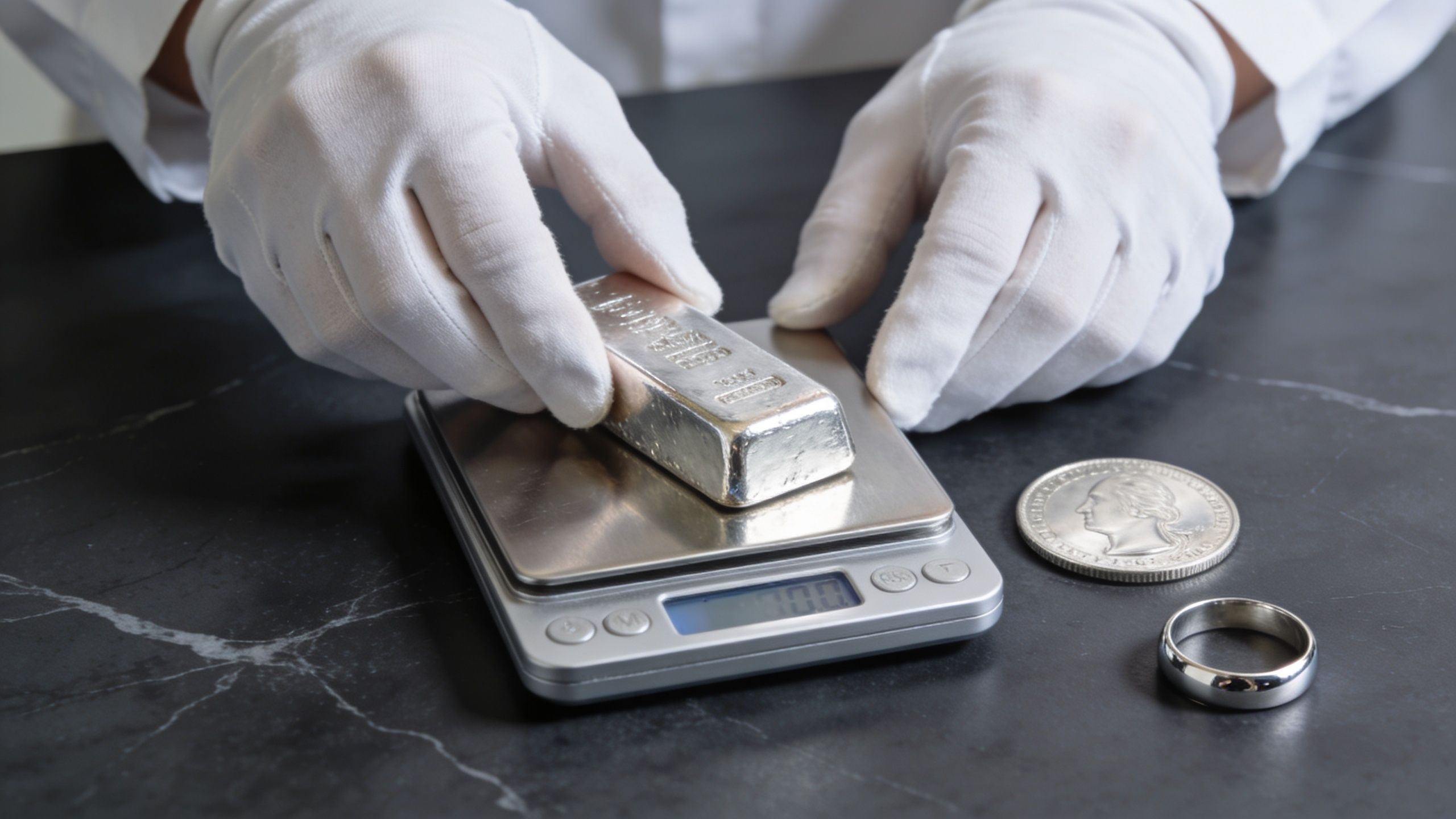
Every platinum offer starts with recoverable metal content. That means actual payable weight, actual purity, and the buyer's live market reference at the time of evaluation.
Weight is not always the number on your home scale. Buyers should separate out stones, springs, solder, stainless parts, movement components, and any other non-platinum material before calculating value. This matters a lot with watches, gemstone jewelry, and mixed-metal pieces. A platinum watch case from a major brand can carry value far above melt, but only if the buyer recognizes it as a branded luxury item rather than reducing it to case weight alone. Sellers comparing channels should understand how online watch buyers evaluate branded platinum watches, because that process is very different from a straight scrap quote.
Purity changes the payout just as directly. Common marks include 950, 900, and 850. A 950 stamp means the item is 95% platinum. A lower mark means less platinum in each gram, which lowers the metal value even when the piece looks just as substantial in the hand.
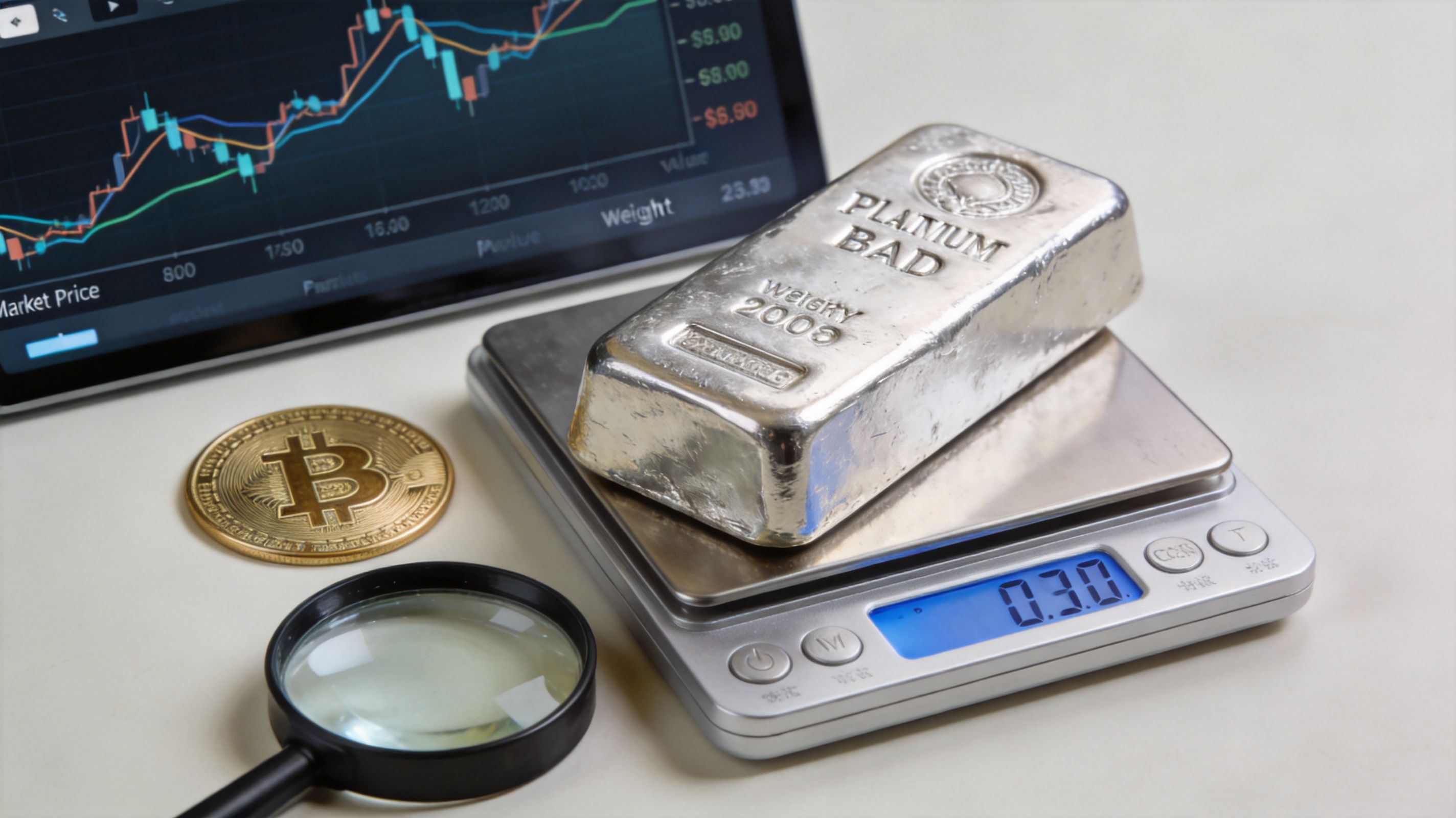
Then there is price basis. Serious buyers use a live platinum market reference and calculate from there. Less transparent local buyers often skip the math and quote a flat number. That is usually where the spread opens up. If a buyer will not show the day’s platinum price, the weight used, and the purity used, the offer is hard to verify.
Why testing method changes the offer
Testing quality affects payout more often than sellers expect. Platinum can be misread if the buyer relies on rough methods or limited experience, especially with older jewelry, custom pieces, and items that contain iridium, ruthenium, or other alloying metals.
In professional buying, X-ray fluorescence, or XRF, is a common first-line tool because it gives a fast elemental reading without damaging the item. According to The Alloy Market's platinum selling page, XRF can measure platinum alloys marked 950 to ±0.1% accuracy.
Older acid-style testing methods have much wider error margins, around ±5% on platinum by the same source. A buyer working with that kind of uncertainty often protects their margin by bidding low. That is one reason a specialist buyer can outpay a general gold buyer even before resale value enters the picture.
Practical rule: Ask how the item is tested, then ask how the offer is calculated.
I also look at the second layer of value. Is the item only feedstock for a refiner, or does it have a resale market as a finished object? A plain worn band usually trades close to metal economics. A signed platinum ring, a high-end platinum bracelet, or a platinum watch from a known brand can justify a very different pricing model. In those cases, the best buyer is often the one who can authenticate, market, and resell the piece, not the one offering the fastest scrap quote.
A fair offer should be easy to follow in plain English. You should hear the gross weight, the payable platinum weight, the purity result, the live price reference, and any deduction for refining or resale risk. If the buyer cannot break the number down, assume the offer leaves room on their side, not yours.
Comparing Places to Sell Your Platinum
A seller walks into a neighborhood gold buyer with a platinum watch, hears a quote based on weight, and leaves hundreds or even thousands of dollars short because the buyer priced it like scrap. Evaluating options is simpler. Check payout, transparency, speed, and whether the buyer is suited to the specific item in your hand.
At-a-glance comparison
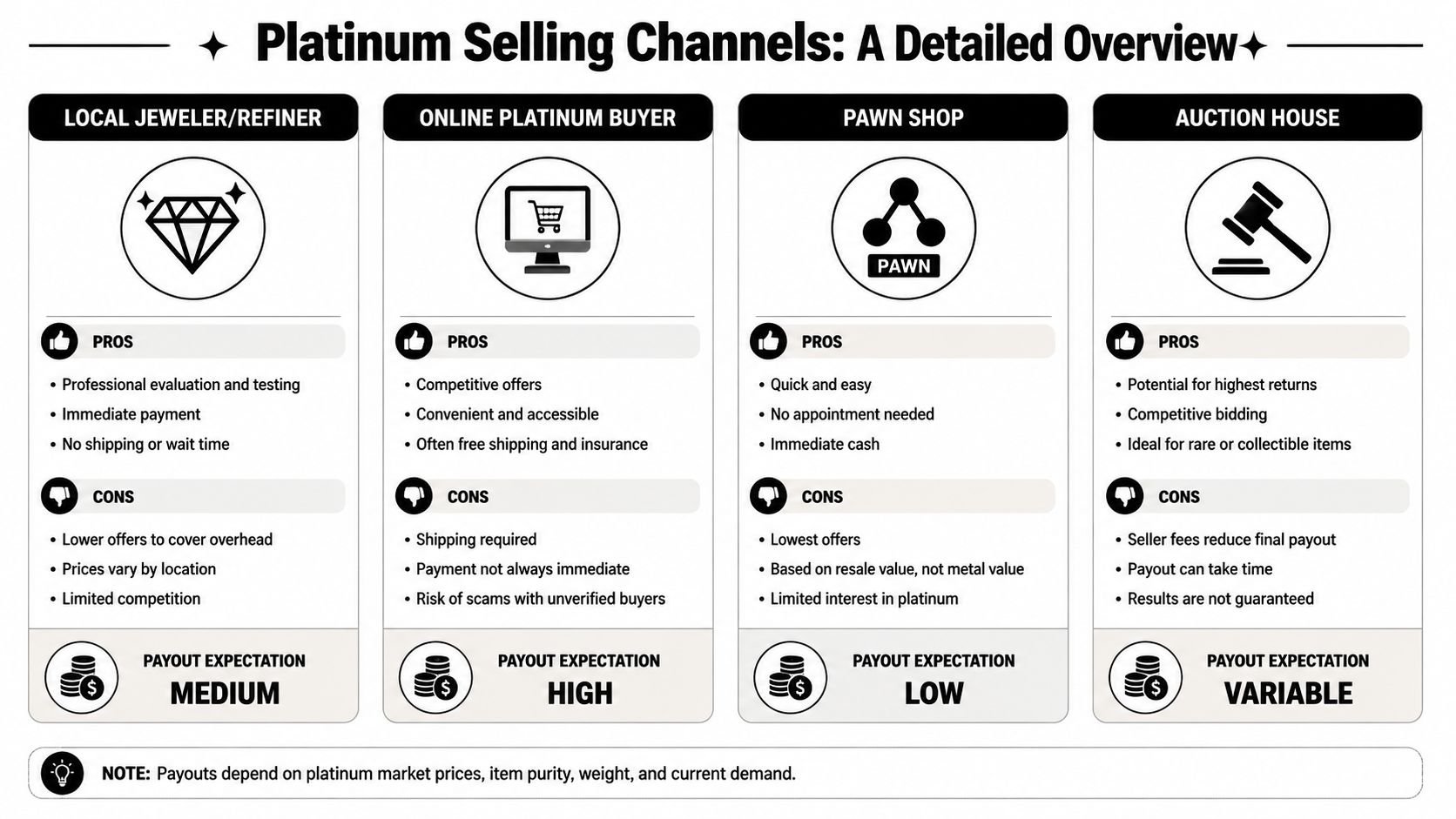
Selling Option | Typical Payout (vs. underlying value) | Pros | Cons |
|---|---|---|---|
Online bullion dealer | Strong for recognized coins and bars | Market-based pricing, clear buy lists, good fit for standard bullion | Weak fit for ordinary jewelry, shipping and verification still apply |
Specialized platinum buyer or refiner | Usually stronger than general local buyers for scrap-grade platinum | Better testing, better understanding of alloys, clearer treatment of mixed lots | Quality varies, and some buy strictly for melt |
Pawn shop or cash-for-gold buyer | Usually the weakest for platinum | Fast, local, same-day money | Wider spreads, less platinum expertise, branded goods often get reduced to scrap |
Auction house or luxury resale channel | Best upside for certain branded or collectible pieces | Can price brand, provenance, model, and resale demand | Slower, selective, and not useful for plain scrap |
How each selling channel really performs
Online bullion dealers
For platinum bars and widely traded coins, online bullion dealers often set the benchmark. They buy products with known purity, recognizable formats, and established resale demand. That usually leads to tighter pricing and a quote you can compare against live market conditions without much guesswork.
This channel breaks down once the item stops being standard bullion. A cast platinum bracelet, an old wedding band, or a watch case without full documentation does not fit the same pricing system. Sellers lose money when they force a jewelry problem into a bullion lane.
Specialized platinum buyers
A specialist is usually the right call for plain rings, broken jewelry, findings, dental material, or mixed lots. The advantage is not just better testing. It is a better understanding of what can be refined efficiently, what can be resold intact, and what risk deserves an actual deduction instead of a vague low offer.
This is also where branded platinum can get misread. Some specialists buy only for melt. Others have the channels to resell signed jewelry, premium settings, or complete watches. Ask that question early. If the buyer has no resale outlet, the offer will reflect scrap economics even when the item deserves more.
Pawn shops and general local stores
These stores win on speed. They do not usually win on price.
A local buyer who handles mostly gold may treat platinum cautiously because it ties up more cash, turns more slowly, and requires better testing to bid with confidence. The result is familiar. Wider margins, simple weight-based offers, and very little credit for design, maker, or secondary-market demand. If you need cash today, this channel is still useful. Just treat it as a convenience sale, not a pricing benchmark.
Auction houses and luxury resale buyers
The biggest spread in outcomes becomes particularly clear. A plain platinum band and a platinum Rolex should not go through the same valuation process. One is usually a metal sale. The other may trade on brand, reference, condition, box and papers, service history, and buyer demand in the watch market.
For platinum watches and signed designer pieces, resale buyers can beat scrap buyers by a wide margin because they are selling an object, not just recovering metal. Sellers who want to compare specialist routes should review how online watch buyers assess branded platinum watches, condition, and payout timing.
One more practical point. High-transparency buyers show the math. Low-ball local options usually do not. If a buyer cannot explain whether the offer is based on melt, wholesale resale, or a branded secondary-market estimate, keep shopping.
Even outside the jewelry trade, value depends on structure and liquidity. The same basic idea appears in markets tied to gold tokenization for DeFi lending. The cleaner the pricing model and exit path, the easier it is to see what an asset is really worth.
Selling Different Forms of Platinum
Where to sell platinum depends heavily on the form of the item. Platinum jewelry is not priced like bullion, and bullion is not priced like a platinum Rolex or a signed Cartier piece.
Jewelry and scrap platinum
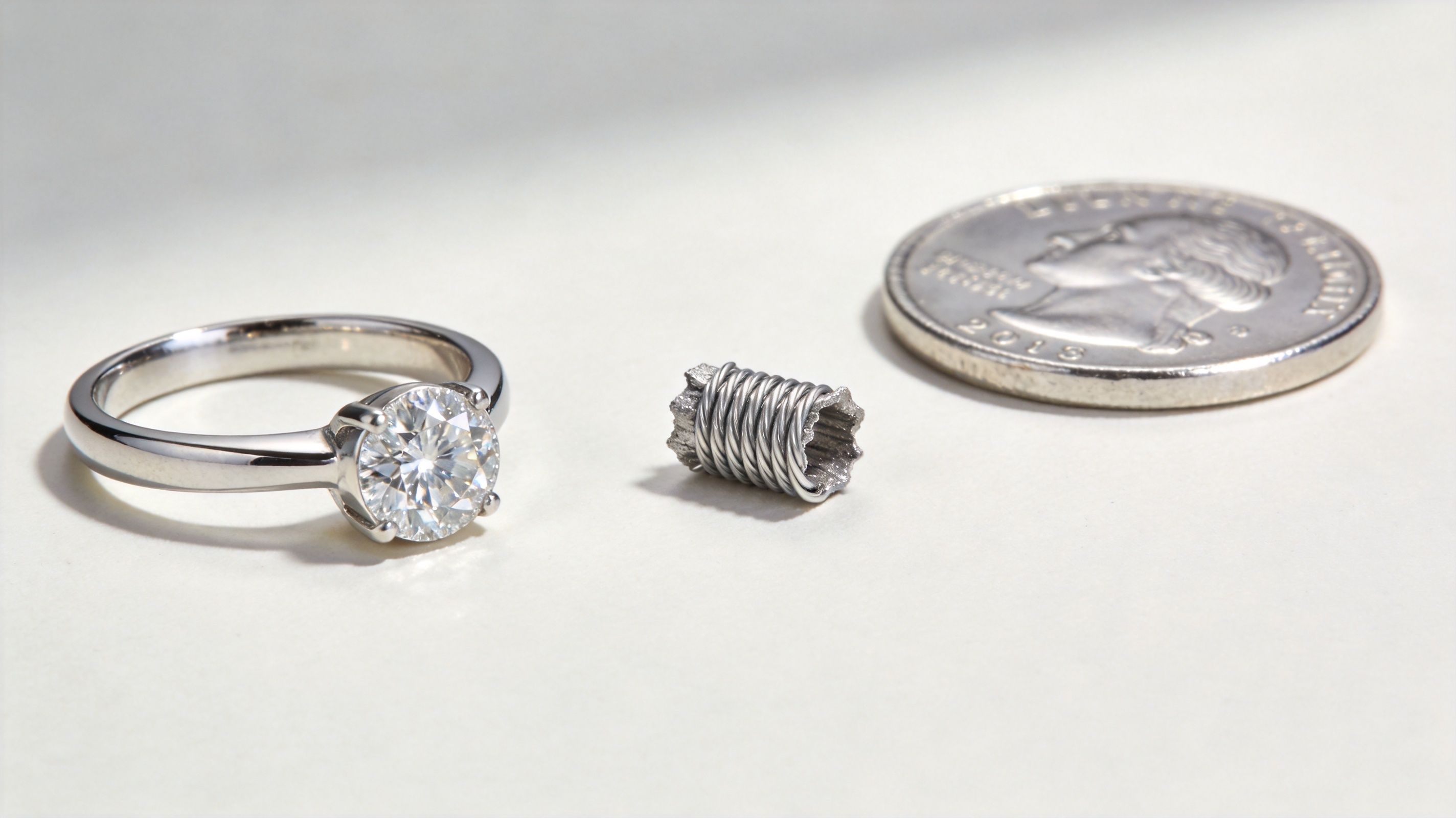
Plain platinum bands, broken jewelry, damaged settings, and non-branded pieces are usually sold for their recoverable metal value. Design often matters less than sellers expect unless the item has strong resale appeal on its own.
That means your best outcome usually comes from a buyer who understands refining and purity, not from a showroom that mostly sells new jewelry. A general jeweler may pass entirely, or make a conservative offer because platinum isn't their core buying category.
Coins and bars
Coins and bars are easier because they are closer to wholesale logic. Their purity and form are already known, and recognized mint products are easier to verify and resell.
This is also where condition, packaging, assay cards, and recognizability can matter. Bars with original assay packaging and popular sovereign coins are simpler to price than anonymous metal.
Branded platinum watches and designer jewelry
Sellers often make the biggest mistakes. A branded platinum piece may be worth far more as a luxury object than as metal.
Most guides on selling platinum focus on bullion or scrap and miss branded luxury items entirely. A platinum Rolex Daytona can sell at auction for 2 to 5 times its melt value, according to this discussion of platinum resale blind spots. That's the core point: if the buyer only talks about grams and purity, you may be in the wrong room.
A platinum watch case is metal. A Rolex, Patek Philippe, or Cartier platinum watch is a market asset.
For those pieces, value comes from multiple layers:
Brand and model: Rolex, Patek Philippe, Audemars Piguet, and Cartier have established secondary markets.
Condition: Case polish, dial originality, movement health, and bracelet stretch matter.
Documentation: Boxes, papers, service history, and serial consistency improve buyer confidence.
Market demand: Some platinum references trade on scarcity and collector appeal, not melt.
The same idea is showing up in newer asset conversations too. People looking at digital ownership models for hard assets often explore topics like gold tokenization for DeFi lending, but the old-fashioned lesson still holds: the form of the asset determines the market you should sell into.
If you're dealing with a platinum watch, use a buyer who understands resale demand, not just metal recovery. A guide on how to sell high-end watches is often more relevant than a generic precious metal guide.
A Step-by-Step Guide to a Safe Transaction
A safe platinum sale usually starts the same way. You walk in expecting a price based on what you own, and the buyer starts talking only about weight. That is fine for plain scrap. It is often the wrong approach for a signed watch, branded jewelry piece, or any item with collector demand.
Before you ask for offers
Get your paperwork together first. Boxes, papers, service records, original receipts, assay cards, and prior appraisals do not guarantee a higher offer, but they make it easier for a serious buyer to price the piece with confidence. That matters most on branded platinum items, where uncertainty is expensive.
Leave the item alone. Do not polish a watch case at home. Do not scrub jewelry with abrasive compounds. I have seen sellers reduce resale appeal by trying to make a piece look newer than it is.
Then build a clean record of what you are selling.
Photograph everything clearly: Include hallmarks, serial numbers when appropriate, clasp stamps, caseback markings, packaging, and any chips, dents, or worn areas.
Write down the key details: Note the brand, model, metal mark, total weight if known, and whether the piece includes diamonds, steel parts, gold accents, or aftermarket modifications.
Match the item to the buyer: Plain platinum scrap can go to a refiner or metal buyer. A platinum watch or signed jewelry piece should also be quoted by a resale specialist.
How to review the quote and complete the sale
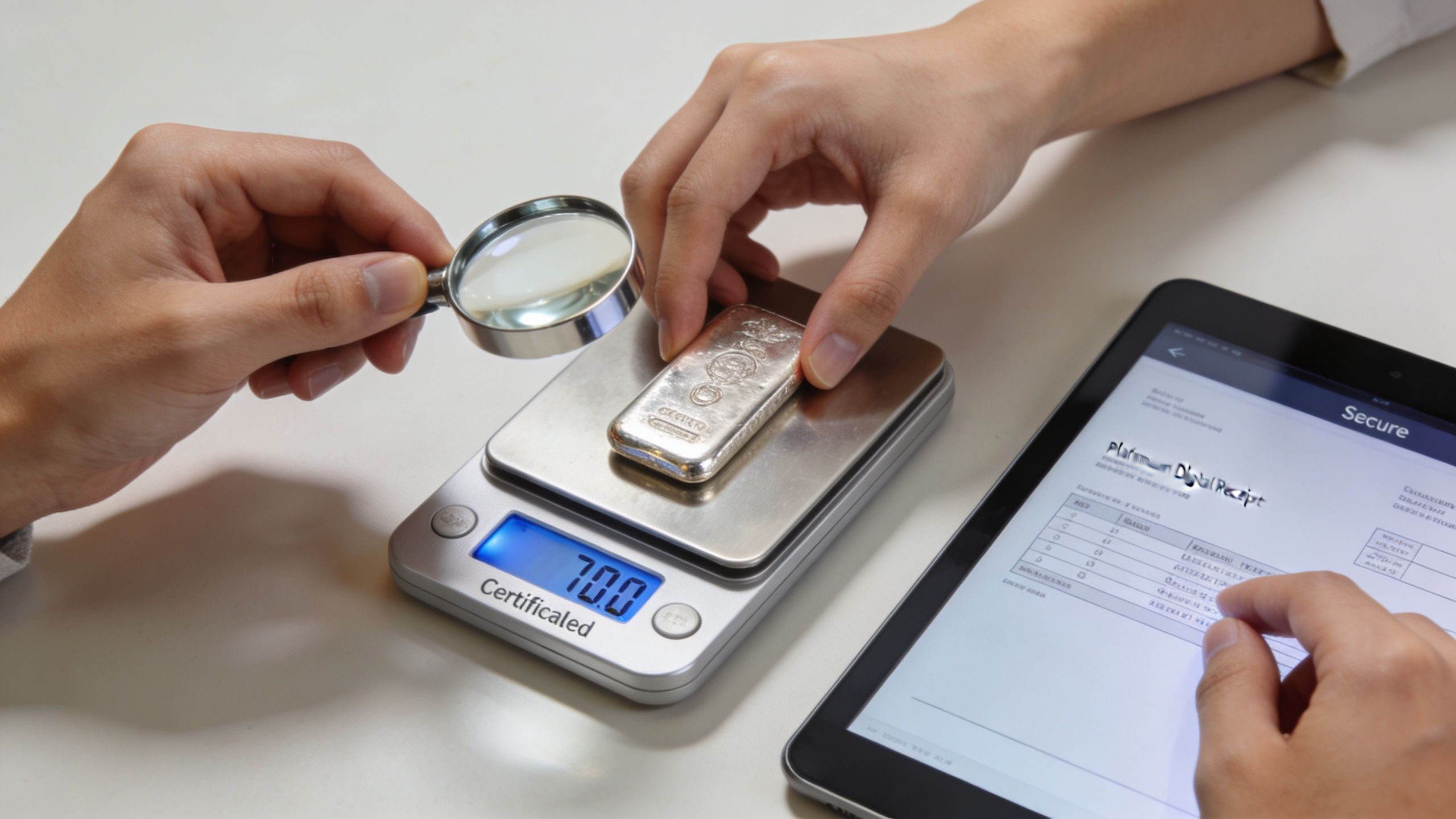
Platinum pricing changes with the market, so every quote needs context. Ask what price reference the buyer used, when it was pulled, what purity they verified, what weight they are paying on, and what margin or refining spread they deducted. A trustworthy buyer can explain the math in a minute or two.
Use a simple question: "Can you show me the offer based on spot, purity, payable weight, and your fee?"
That one question separates transparent buyers from buyers who expect you to accept a single cash number without explanation.
For in-person sales, ask for the testing and weighing to happen in front of you. The scale should be visible. The platinum mark should not be the only basis for the offer, because marks can be wrong and some pieces are partially platinum rather than solid platinum. For mail-in sales, confirm insurance limits, payout timing, return terms if you decline the offer, and who carries the risk while the package is in transit. Photograph the packed item before sealing the box, and keep the receipt and tracking.
Branded platinum items need one extra step. Get a resale quote before you accept a melt quote. The difference can be meaningful, especially if the buyer understands watch demand, service history, and model liquidity rather than treating the piece as recoverable metal. If speed matters, compare that option with a specialist route such as selling a watch for instant payment.
Do not leave without documentation. You should have a written receipt, the tested weight and purity if available, the final payout, and the buyer's business details. If the transaction cannot be reconstructed on paper later, the process was not tight enough.
Common Pitfalls and Scams to Avoid When Selling
A seller walks into a local shop with a platinum watch, hears "we buy platinum," and leaves with a scrap offer that ignores the watch brand, model demand, service history, and resale market. That is one of the most common and expensive mistakes in this category.
The core problem is simple. Buyers do not all price platinum the same way. Some buy on recoverable metal value only. Others understand when an item should be valued as a resalable luxury piece first and scrap second. The gap between those two approaches can be large.
Low offers usually hide behind vague process, not complicated math. If a buyer avoids specifics, assume the margin is being protected at your expense.
Red flags that usually mean a weak offer
Watch for these signs:
No clear testing method: A buyer should be able to explain how they verified platinum content, especially on mixed-metal jewelry, watches, and pieces with worn marks.
Cash quote with no breakdown: If you get one number and no explanation of payable weight, purity, or deductions, you cannot judge whether the offer is fair.
Pressure to sell immediately: Urgency is often used to stop you from checking a second market.
Mail-in terms that stay fuzzy: If insurance, return shipping, or loss responsibility are unclear, the risk has been pushed onto you.
Branded item priced as scrap on sight: That is a major warning sign with platinum watches and signed jewelry. A buyer who only sees melt may be the wrong buyer, even if the metal quote sounds decent.
The branded-item issue gets overlooked all the time. Plain platinum bands often trade close to metal value. A Cartier, Tiffany, or luxury watch case can follow a very different pricing logic. If the buyer never asks about box, papers, service records, or model reference, they are probably not evaluating the item for resale.
How to protect yourself
Use channel discipline. Get a scrap quote from a transparent precious-metals buyer. Then get a resale quote if the item is signed, collectible, or attached to a known watch or jewelry brand. That comparison tells you whether you are selling platinum or selling a marketable luxury item.
Local cash buyers can still make sense for speed, but speed usually costs money. The better local operators explain their offer and document the transaction. The weaker ones rely on convenience, a fast pitch, and the assumption that you will not challenge the number.
The same pattern shows up in adjacent resale categories. For a useful parallel, review this guide that compares platforms for selling handbags, including authentication fees, payout speed, and ways to maximize value and security. The details differ, but the lesson is the same. Transparent process usually leads to stronger pricing and fewer surprises.
A practical rule has served sellers well for years. If the buyer cannot explain what they are buying and why they are paying that number, keep shopping.
Frequently Asked Questions About Selling Platinum
Common Questions About Selling Platinum
Question | Answer |
|---|---|
Where should I sell platinum jewelry? | Usually to a specialized precious metal buyer if it's plain, broken, or non-branded. If it's signed designer jewelry, get a resale-oriented evaluation before accepting a melt offer. |
Where should I sell platinum bars or coins? | Reputable online bullion dealers are often the strongest fit for standardized bars and widely recognized coins. |
Do pawn shops buy platinum? | Yes, many do. The trade-off is that speed is often better than pricing. |
Is platinum jewelry worth more than scrap? | Sometimes, but not always. Plain platinum jewelry is often bought for metal value, while branded or collectible pieces can command more. |
Should I clean platinum before selling it? | Light dusting is fine, but don't aggressively polish, repair, or alter the piece before evaluation. |
Do I need an appraisal first? | Not always. For plain scrap, a formal appraisal may be unnecessary. For luxury watches, signed jewelry, or estate pieces, a professional evaluation can prevent undervaluation. |
Is selling online safe? | It can be, if the buyer uses insured shipping, tracks the package, and provides a clear offer process. |
What if I need money but don't want to sell? | A collateral loan may be worth discussing if the item has strong underlying value and you want to keep ownership options open. |
Short answer, where to sell platinum comes down to what you're selling and how the buyer values it. Plain scrap needs technical testing and transparent payout terms. Bullion needs a market-linked buyer. Branded platinum items need a buyer who understands the secondary luxury market, not just melt.
If you're in Atlanta, Buckhead, Sandy Springs, Alpharetta, Roswell, Brookhaven, Midtown Atlanta, or elsewhere in Georgia, in-person evaluation can be especially useful for platinum watches, signed jewelry, and mixed estate items. Those are the pieces most likely to be underpriced when a buyer looks only at metal weight.
If you'd like a professional second opinion before you sell, Antwerp Diamond offers confidential evaluations for platinum watches, fine jewelry, and other high-value assets. You can request an evaluation online or arrange an in-person visit in the Atlanta market for a clear, no-pressure review of what your item is worth and which selling route fits it best.