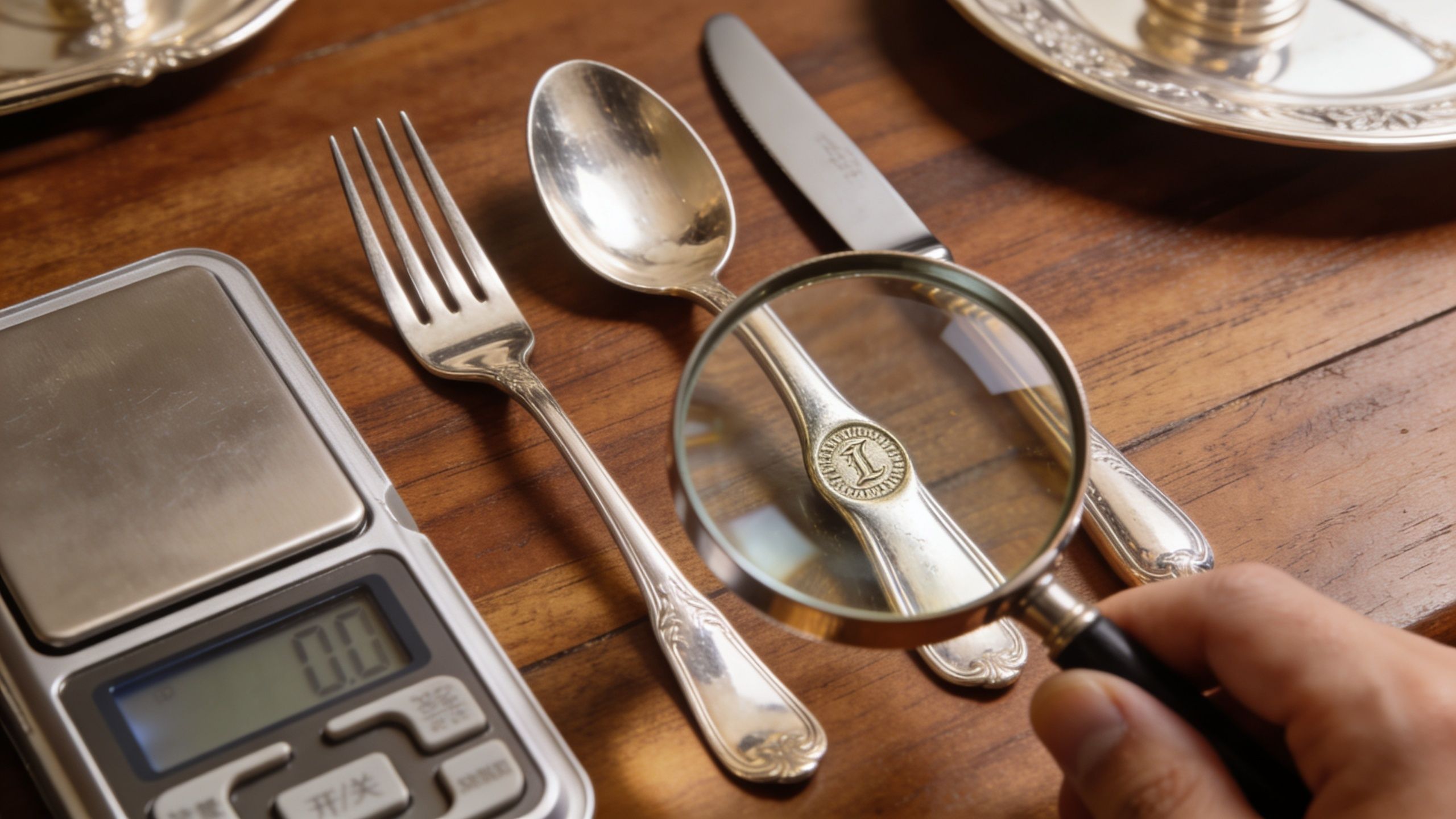
If you're looking to sell silver flatware, the best path starts with one question: is it sterling silver or silver plate? After that, your decision becomes strategic. You need to choose whether your priority is the highest possible price, the fastest payout, or the easiest transaction.
Many first-time sellers are dealing with inherited family silver, a partial set from an estate, or a box of old serving pieces that have been sitting in storage for years. The biggest fear is usually the same: getting lowballed because you don't know what you have. A careful, informed process makes that much less likely.
Table of Contents
Is Your Flatware Sterling Silver or Silver Plate
Check the marks before you do anything else
What silver plate usually looks like
How to Estimate Your Silver Flatware's Value
Metal value sets the floor
Maker and pattern can change the outcome
Condition matters more than most sellers expect
Preparing Your Silver for a Successful Sale
What to do before an appraisal
What not to do
Comparing Your Selling Options for Silver Flatware
Choose based on your actual goal
Where to sell silver flatware comparison
Finalizing the Sale and Avoiding Scams
How to close the sale safely
Red flags that should make you walk away
Frequently Asked Questions About Selling Silver
Can I sell mismatched sterling pieces
Should I polish antique silver before selling
Is it better to sell the set together or piece by piece
Do I need paperwork to sell family silver
What if I live in Atlanta or nearby
Is Your Flatware Sterling Silver or Silver Plate
The first step is simple, but it controls everything that follows. You need to know whether the pieces are sterling silver or only silver-plated.
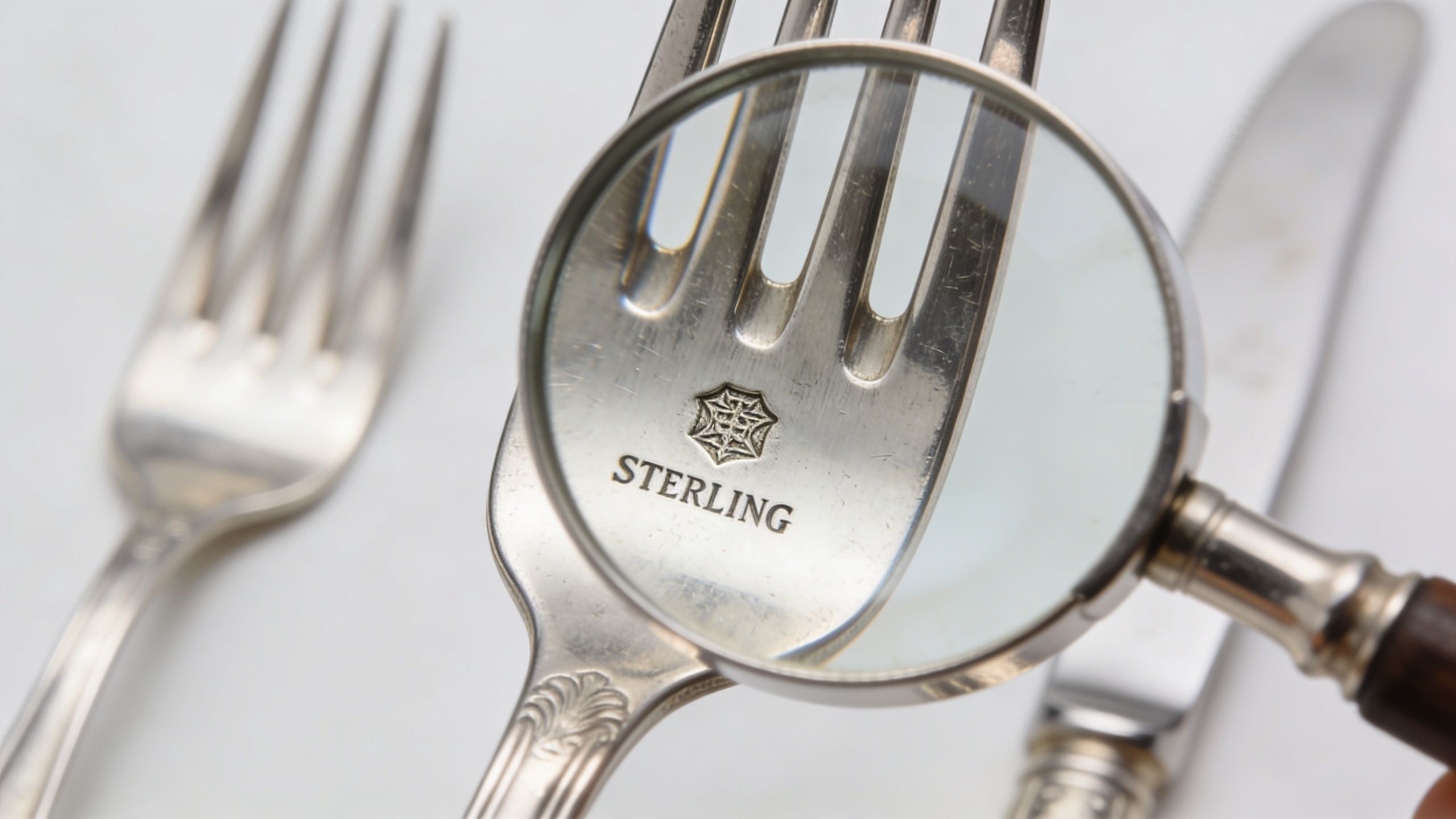
Authenticating sterling through hallmarks is the starting point. Marks such as Sterling, 925, or a recognized maker's mark can identify genuine sterling, while non-sterling silverplate typically brings only 5 to 10 percent of sterling value per gram because the silver layer is so thin, as noted in this hallmark overview.
Check the marks before you do anything else
Turn each piece over and inspect the back of the handle, the stem, or the area where the handle meets the bowl or tines. You're looking for markings stamped into the metal, not printed labels from a box.
Common sterling indicators include:
Sterling: The clearest mark, and usually the most reassuring.
925: A standard sterling mark that reflects sterling purity.
Maker's mark: Names or symbols tied to known manufacturers can support authenticity.
If you're sorting through a mixed family set, don't assume every piece matches. Sellers often discover that some forks are sterling, some serving pieces are plated, and a few knives are constructed differently. Piece-by-piece checking prevents expensive assumptions.
Practical rule: Never sell a group of flatware as scrap until each piece has been checked for marks. Mixed sets are common.
A quick visual review often tells you more than people expect. Hallmarks, pattern consistency, and manufacturer stamps can separate a valuable matching set from a box of mixed household silver.
For broader valuation tips on jewelry, silver, watches, and other items, Antwerp Diamond's luxury asset blog is a useful reference point.
What silver plate usually looks like
Silver plate can still have decorative appeal, but it usually doesn't carry the same resale value as sterling. The key difference is that plate has a thin outer coating of silver over a base metal.
If you don't see sterling marks, slow down and keep inspecting. Plate is often identified by wording or symbols that point to plated construction rather than solid silver content.
Look out for signs like:
EPNS: A common plated designation.
A1: Often associated with plating grades rather than sterling purity.
Silver on Copper: A direct clue that the core metal isn't silver.
Uneven wear: If a different color metal shows through at edges or high-contact points, that usually points to plate.
Sellers often feel disappointed when a family set turns out to be plated, but that answer is still valuable. It saves you from carrying unrealistic price expectations into a sale and helps you choose the right buyer from the start.
How to Estimate Your Silver Flatware's Value
Once you've confirmed the flatware is sterling, valuation becomes a three-part exercise. The number on a final offer usually reflects metal content, maker and pattern, and condition.
Metal value sets the floor
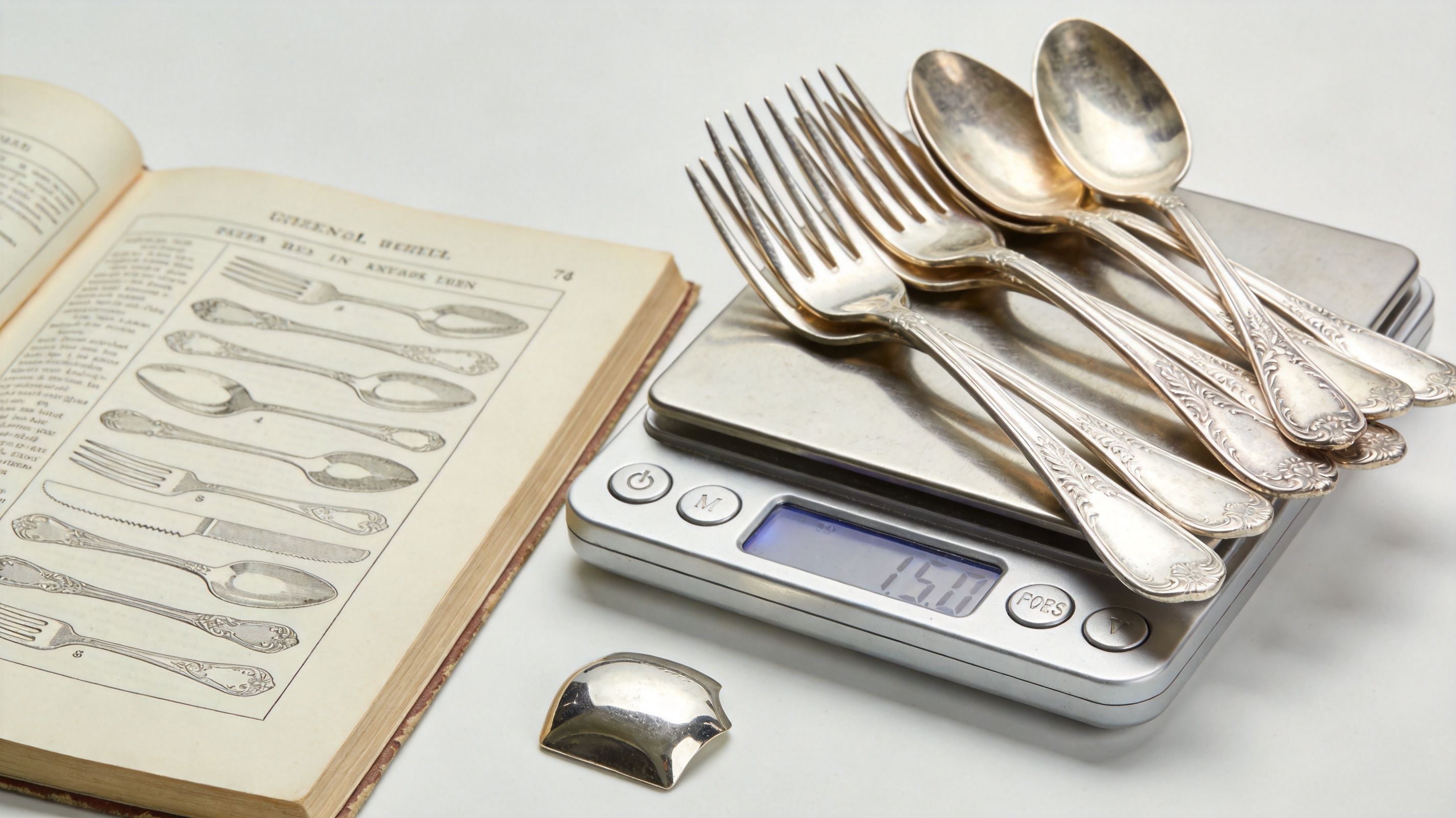
Sterling silver flatware is 92.5% pure silver, so its baseline value tracks the silver market. For example, if silver is $25 per troy ounce, sterling melt value is about $23.125 per ounce, and antique pieces from respected makers can reach 2 to 5 times melt value in the right circumstances, according to this silver pricing breakdown.
That doesn't mean every buyer pays full melt. Some buyers focus strictly on scrap recovery, while others look at resale potential. That's why two offers on the same set can look very different without either one being random.
A basic valuation process usually looks like this:
Confirm sterling status through marks.
Weigh the silver in troy ounces, not kitchen ounces.
Separate out unusual pieces like knives or weighted handles if needed.
Use metal value as a floor, not the full story.
A seller who knows the melt floor usually negotiates with more confidence.
Maker and pattern can change the outcome
Many first-time sellers often leave money on the table. Sterling flatware isn't always just bullion in a different shape.
Buyers who handle estate silver look at the maker, the pattern, and whether the set is complete. Tiffany & Co., Reed & Barton, Gorham, and similar names can shift the sale from a metal transaction to a collector transaction. A desirable pattern, especially in a matching service with serving pieces, can justify a much stronger offer than melt alone.
Things that can increase value include:
Recognized maker names
Matching pieces in a consistent pattern
Serving pieces included with the set
Older, desirable designs with collector demand
Original storage chest or documentation, if still present
A useful parallel exists in other resale categories too. Sellers of designer handbags face the same issue: material value matters, but brand, model, and condition often determine the market. Antwerp Diamond's guide to comparing platforms for selling handbags explains a similar decision process.
A short visual overview can help if you're trying to understand how buyers think about silver value:
Condition matters more than most sellers expect
Condition doesn't just affect appearance. It affects whether a buyer sees your flatware as collectible, resalable, or scrap.
Use this checklist when reviewing your set:
Value factor | What a buyer notices | Why it matters |
|---|---|---|
Surface wear | Scratches, thinning, polish loss | Heavier wear weakens collector appeal |
Completeness | Full service vs mixed leftovers | Matching sets are easier to resell |
Repairs | Solder marks, bent tines, replaced parts | Repairs can reduce confidence |
Monograms | Family initials or presentation engraving | Some buyers don't mind them, some do |
Storage history | Tarnish, corrosion, residue | Neglect can affect presentation |
A seller should expect more scrutiny on pristine antique sets than on scrap lots. That's normal. Buyers pay more when they believe they can resell with fewer objections from the next owner.
Preparing Your Silver for a Successful Sale
Good preparation doesn't mean making the silver look brand new. It means presenting it clearly, accurately, and in a way that supports a serious offer.
What to do before an appraisal
Start with an inventory. Lay everything out on a table and group the flatware by type, pattern, and mark. Count forks, spoons, knives, serving pieces, and any unusual extras.
Then gather the practical details a buyer will need:
Photograph each group clearly: Use daylight or soft indoor lighting.
Take closeups of hallmarks: Marks often decide whether the next conversation is about scrap or collector value.
List missing pieces: A partial set can still have value, but accuracy matters.
Note visible issues: Bent tines, dents, deep scratches, and repairs should be disclosed.
Keep pieces together by pattern: Mixed trays create confusion and lower confidence.
A neat presentation changes the tone of the transaction. It tells the buyer you're organized, informed, and less likely to accept an unexplained number.
What not to do
Don't machine polish antique silver. Don't use harsh abrasives. Don't scrub so aggressively that you blur hallmarks or remove the look that collectors expect from older pieces.
Light hand cleaning is fine if the pieces are dusty or greasy from storage. The purpose is visibility, not restoration. Over-polishing can strip character from older flatware and make appraisal harder, not easier.
Buyer insight: Clean enough to show the marks and overall condition, but stop before the silver starts to look altered.
If you're used to preparing other valuables for sale, the principle is similar. The best watch sellers organize documentation, photograph details, and avoid amateur refinishing. Antwerp Diamond's guide on how to sell high-end watches follows the same practical logic.
Comparing Your Selling Options for Silver Flatware
Where you sell matters almost as much as what you sell. The wrong channel can cost you money, create delays, or expose you to avoidable risk.
Choose based on your actual goal
Some sellers want the strongest possible price and don't mind waiting. Others want a same-day transaction with no shipping, no listing process, and no back-and-forth.
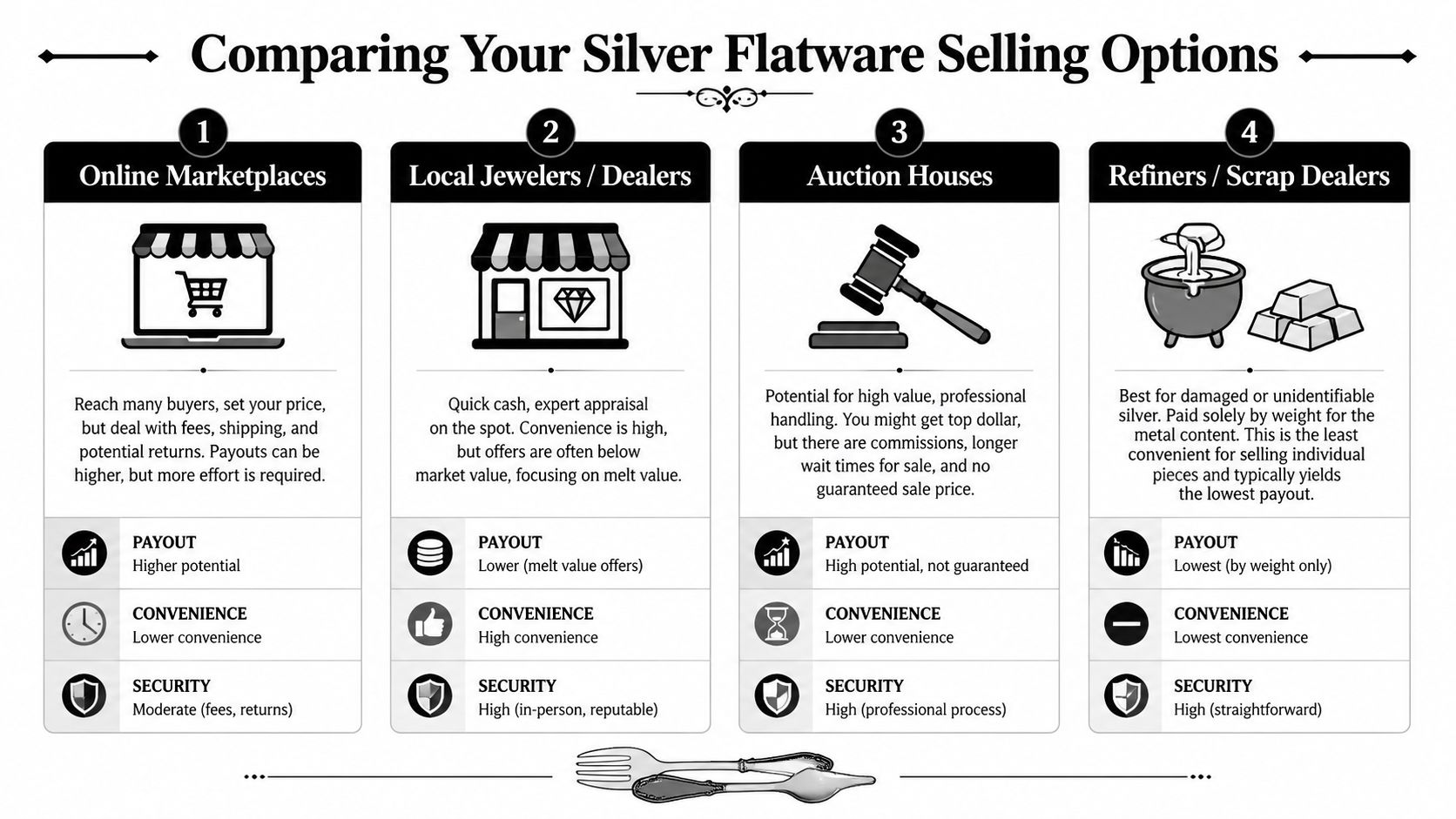
That trade-off is real. Local dealers in markets such as Atlanta or Buckhead can offer 10 to 20 percent higher prices than online buyers because shipping risk isn't part of the deal, and they often close sales 85 percent faster. The same data notes that sellers who accept the first offer can lose 15 to 25 percent on average, as explained in this guide to selling silver flatware through different channels.
Here is the cleanest way to think about your options:
Local specialist buyer: Best when you want speed, privacy, and a direct explanation of the offer.
Online marketplace: Useful if the set has collector appeal and you're comfortable handling photos, messages, shipping, and possible returns.
Auction house: Better suited to exceptional antique sets where provenance, maker, and pattern may attract strong bidding.
Refiner or scrap buyer: Practical for damaged, incomplete, or purely melt-driven sterling.
Where to sell silver flatware comparison
Selling Channel | Potential Payout | Speed | Best For |
|---|---|---|---|
Online Marketplaces | Can be strong for collectible sets | Slower | Sellers willing to manage listings and shipping |
Local Jewelers / Dealers | Often competitive for straightforward sales | Fast | Sellers who want in-person review and immediate payment |
Auction Houses | Can be attractive for special antique sets | Slower | Rare makers, strong patterns, collector-oriented material |
Refiners / Scrap Dealers | Usually based on metal value | Moderate to fast | Damaged, mismatched, or low-premium sterling |
A lot of poor selling experiences come from using the wrong channel, not from having bad silver. A beautiful but incomplete set might struggle at auction and do well with a direct buyer. A rare matching set might deserve more patience.
For sellers who care most about immediate liquidity, the same logic applies in other luxury categories. Antwerp Diamond's article on how to sell a watch for instant payment outlines a similar balance between speed and maximum upside.
Don't choose a sales channel because it sounds prestigious. Choose it because it fits the specific silver in front of you.
Finalizing the Sale and Avoiding Scams
A silver sale is only successful when the payment clears, the terms stay consistent, and the handoff is secure. This is the stage where sellers need discipline.
How to close the sale safely
For in-person transactions, cash or wire payment is often the cleanest route. For online platform sales, reporting rules may apply. Transactions on platforms such as eBay over a qualifying threshold may trigger IRS Form 1099-K, while a direct professional buyer using cash or wire can offer a more private and straightforward process, as discussed in this article on selling silver flatware and transaction reporting.
That doesn't mean anyone should structure a sale to avoid legal obligations. It means you should understand how the payment method affects documentation, reporting, and privacy. For tax questions, a qualified tax professional is the right person to ask.
Keep these closing habits in place:
Get the offer terms in writing: Weight basis, pricing method, fees if any, and payment method should be clear.
Document what you delivered: Photos and a piece count reduce disputes.
Use insured shipping for remote deals: High-value silver shouldn't travel uninsured.
Save your records: If you ever need to prove ownership or transaction details, paperwork matters.
If you're not sure what counts as useful documentation, this explanation of the importance of sales receipts is a practical reference. A receipt isn't just bookkeeping. It protects both sides if a question comes up later.
Red flags that should make you walk away
Scams in silver buying usually don't look dramatic. They look rushed, vague, and slightly inconsistent.
Watch for warning signs such as:
The buyer won't explain the valuation
The terms change after the silver is in hand
The payment method becomes unclear at the last minute
You feel pressured to ship immediately without documentation
The buyer avoids giving a proper receipt
If a transaction becomes less clear as it moves forward, stop the process.
For remote deals involving other valuables, the same caution applies. Antwerp Diamond's overview of online watch buyers is useful because it highlights the same core issue: secure process matters as much as price.
Frequently Asked Questions About Selling Silver
Can I sell mismatched sterling pieces
Yes. Mismatched sterling still has value, especially when the silver content is clear. A buyer may value it as metal, as replacement pieces, or as part of a grouped lot.
Should I polish antique silver before selling
Only lightly, if needed. A gentle cleaning to remove grime is fine, but heavy polishing can hurt presentation and make older pieces less appealing.
Is it better to sell the set together or piece by piece
That depends on what gives the set its value. A complete matching service often benefits from staying together, while leftover or mixed pieces may be easier to sell in smaller groups.
Do I need paperwork to sell family silver
Not always, but documentation helps. Photos, old receipts, appraisals, family notes, and original boxes can all make the transaction smoother and reduce questions about identification or provenance.
What if I live in Atlanta or nearby
If you're in Atlanta, Buckhead, Sandy Springs, Alpharetta, Roswell, Brookhaven, Midtown Atlanta, or elsewhere in the greater Georgia market, in-person evaluation can be especially useful. It lets you review the silver with a professional, ask questions in real time, and compare a direct offer against the alternatives before making a decision.
The best way to sell silver flatware is to match your item to the right path. Scrap-driven sterling should be handled differently from antique pattern silver, and a seller who understands that distinction usually gets a better result.
If you'd like a professional evaluation before deciding how to sell, Antwerp Diamond offers confidential reviews for silver and other luxury assets. You can request an online evaluation or arrange an in-person appointment in the Atlanta market, including Buckhead and Roswell, for a clear, no-pressure assessment.