A diamond ring's resale value is typically 20% to 60% of its original retail price, and the final amount depends on the diamond's quality, the brand, and market demand. That's the practical answer most sellers need, especially when they're holding a ring with emotional significance but no clear idea what a real buyer would pay today.
The common starting point is misguided, focusing on the receipt, an insurance appraisal, or what a similar ring seems to cost in a jewelry store. None of those numbers reliably answers the question that matters most: what is this ring worth in the market you're entering now, whether you want to sell it, borrow against it, or understand its real-world value?
Table of Contents
How Much Is a Diamond Ring Really Worth
If you want to know how much to value a diamond ring, start by separating emotional value from market value. In practice, many guides blur retail, resale, and liquidation value, which is why sellers get confused before they ever speak to a buyer. One market guide notes that diamond rings often resell for 20% to 60% of original purchase price, while engagement rings commonly sell second-hand for 30% to 50%, and it stresses that stone value, setting value, and sales channel need to be evaluated separately (Angara's discussion of diamond ring prices).
That range is wide for a reason. A certified natural diamond in a simple platinum mounting is evaluated differently than a commercial-grade stone in a heavy designer setting. A private buyer may pay one number, a jeweler another, and a loan-based offer may sit somewhere else because the buyer is also assessing speed of resale and downside risk.
What value means in practice
There isn't one universal value for a ring. There are usually at least three:
Retail value: What a store charged, including branding, overhead, and merchandising.
Resale value: What a buyer in the secondary market is willing to pay now.
Scrap or liquidation value: What the materials are worth if the piece is broken down and sold for components.
Sentiment can explain why you kept the ring. It can't explain what the market will pay for it.
If you're selling in Atlanta, Buckhead, Sandy Springs, Alpharetta, Roswell, Brookhaven, or Midtown Atlanta, the same rule applies as anywhere else in the Georgia market. Buyers don't price from your receipt. They price from what they can verify, what they can resell, and how strong demand is for that specific ring right now.
Understanding the Diamond's Core Value The 4Cs
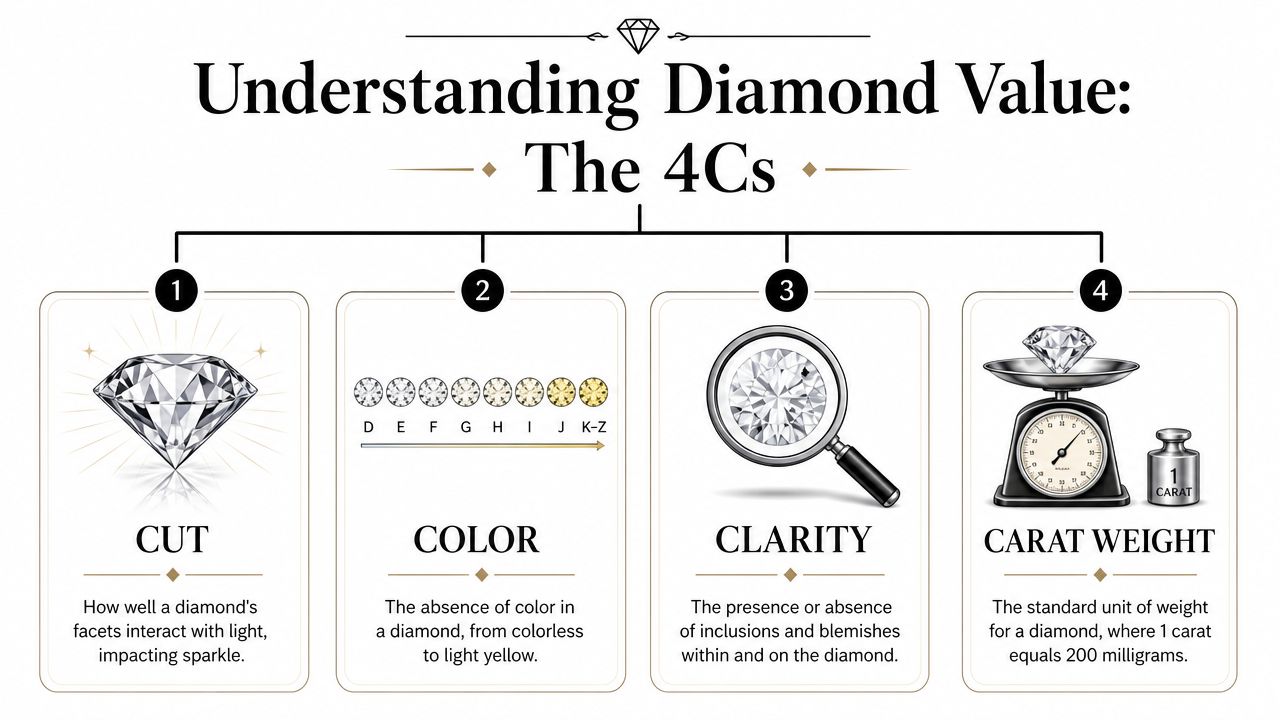
The center stone usually drives the conversation. If the diamond has meaningful resale potential, that potential comes from the same fundamentals professionals use every day: cut, color, clarity, and carat weight.
Why the 4Cs matter in resale
A diamond isn't priced by size alone. Two stones with the same carat weight can land in very different value ranges because a one-grade change in color, clarity, or cut can move the stone into a different market band. Trade guidance on appraisal and certification explains that a proper valuation starts with the stone's 4Cs and shape, then maps those characteristics to current comparables. It also makes clear that certification is a non-monetary grading report, while appraisal is a monetary estimate (Diamond Banc on diamond appraisal and certification).
Here's a simple approach:
Cut affects light performance and buyer appeal.
Color measures how colorless the stone appears.
Clarity tracks inclusions and blemishes.
Carat weight affects rarity and pricing tiers.
If you're reading your own report and want a plain-English refresher, this guide to understand diamond clarity and color does a good job of explaining what those grades mean visually.
For a broader resale-focused perspective, this piece on how much a diamond is worth is also helpful when you're trying to connect grading details to actual market behavior.
A short visual explanation can also help if the paperwork feels technical:
Certification is not the same as appraisal
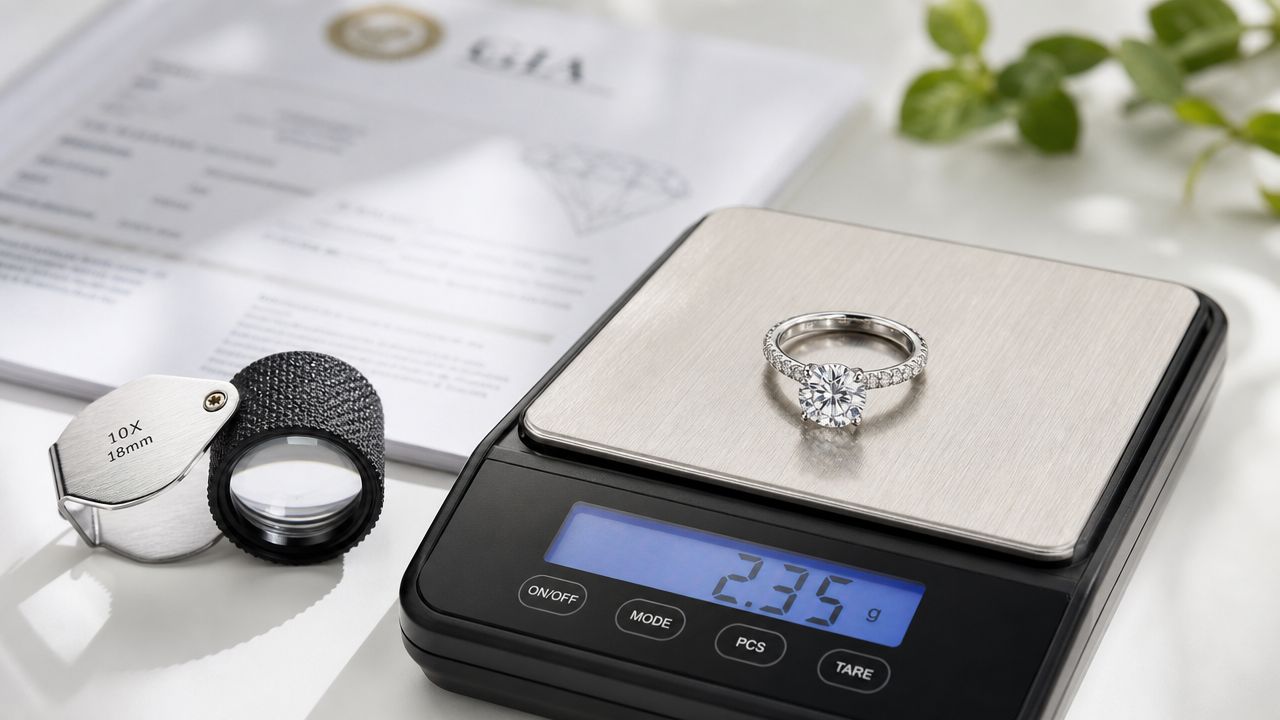
Many owners often confuse grading reports with valuation tools. A GIA or similar grading report can make a buyer more confident because it gives them a trusted description of the stone. It does not tell you what the diamond is worth in cash today.
Practical rule: If the document lists grades but no market research or valuation conclusion, it's not an appraisal.
A proper appraisal for resale includes photographs, measurements, technical details, and pricing logic tied to current market conditions. Without that second step, you have a description of the diamond, not a conclusion about value.
Evaluating the Setting Brand and Condition
The ring is more than the center stone, but owners often overestimate how much the rest of the piece adds. Buyers usually break the ring into components first, then ask whether the whole ring is more valuable intact than dismantled.
What the setting actually adds
Diamond pricing is rooted in the loose-stone market, and the gap can be dramatic. Pricing guides show that a round-cut 1-carat natural diamond can exceed $20,000 at the high end, while lower-quality stones may be closer to $3,000, which is why professionals evaluate the components, certification, and condition rather than relying on the old store price (PriceScope diamond price chart).
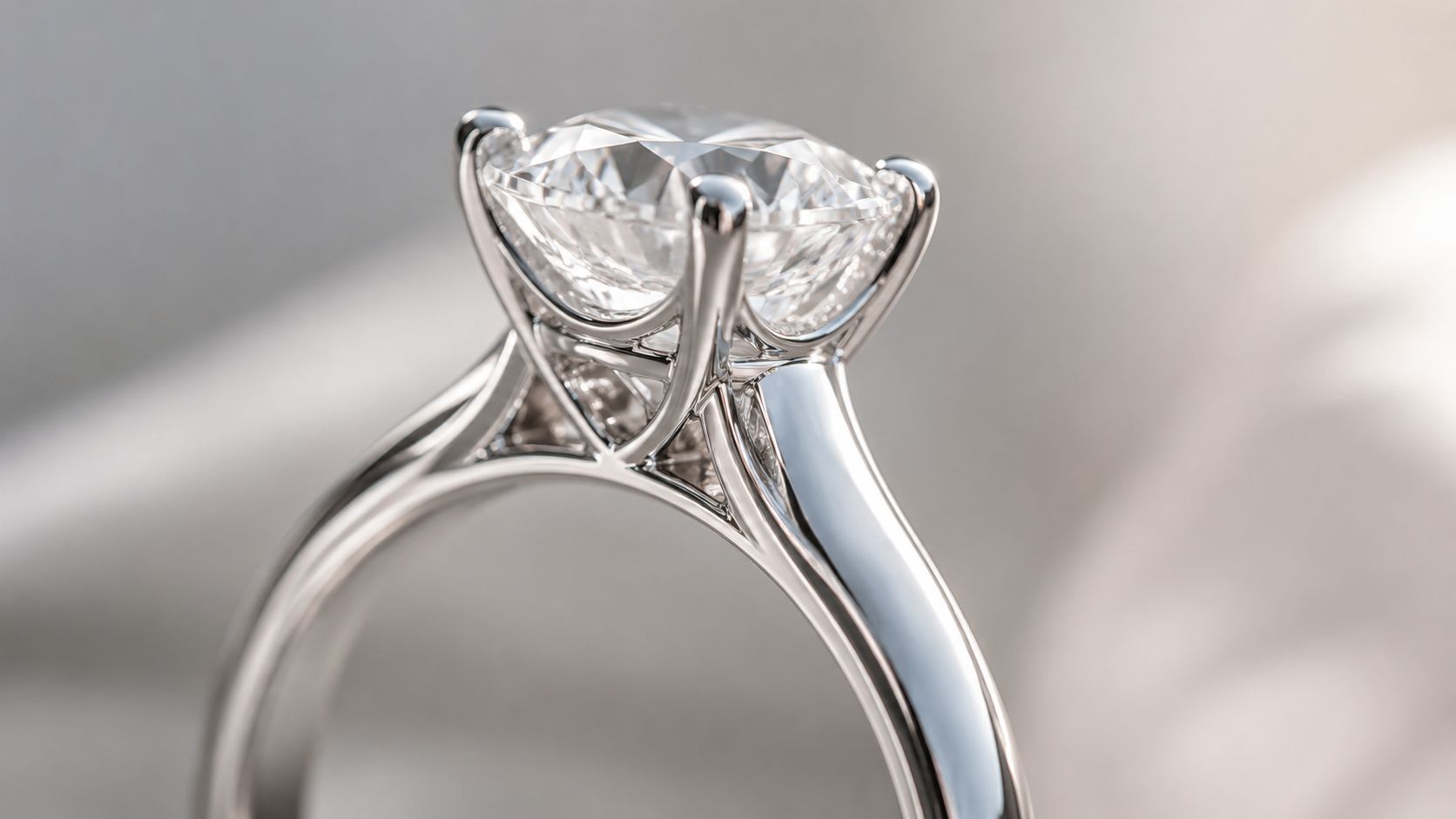
That has a direct implication for the mounting. The metal has value, especially if it's platinum or high-karat gold, but the setting often contributes less to a cash offer than owners expect. Decorative side stones, halo work, and labor-intensive design can matter, yet they don't always translate into a strong secondary-market premium.
If you're also trying to understand how metal value gets separated from jewelry value, this article on where to sell platinum gives useful context.
Brand and condition change buyer confidence
Brand can help. Tiffany & Co., Cartier, and Van Cleef & Arpels can attract stronger buyer interest than an unbranded mounting because authenticity and demand are easier to establish. Still, brand recognition doesn't mean the ring will return anything close to original retail.
Condition matters in a quieter but very practical way:
Loose prongs can reduce confidence because they suggest repair risk.
Noticeable wear may require refurbishment before resale.
Missing paperwork can slow the process even when the ring is genuine.
Clean hallmarks and signed details can support the brand case.
A buyer looking at the ring isn't just asking, “Is this nice?” They're asking, “How quickly can I resell this, and what work will it need first?”
Retail Price vs Resale Value A Realistic Look
A lot of disappointment comes from treating all valuations as if they mean the same thing. They don't. The number on a store receipt answers one question. The number on an insurance appraisal answers another. A cash offer answers a completely different question.
Why the original receipt usually misleads sellers
In the secondhand market, engagement rings typically sell for about 30% to 50% of original retail price, with some sellers expecting roughly 20% to 45% depending on the ring's components and the sales channel. The same analysis explains that this gap exists because retail includes overhead and branding markups that don't carry over into resale, so a resale appraisal has to focus on what a similar item is selling for in the pre-owned market now (MyGemma on selling an engagement ring).
That's not unique to diamonds. Luxury watches work the same way. If you've ever looked at how a watch owner thinks about market demand versus original purchase price, this article to learn about Rolex resale with Perpetual Time offers a useful comparison.
A ring can be expensive to buy and still be modest to resell. Those are not contradictory facts. They're different markets.
If you want to see how this applies across categories of jewelry, where to sell fine jewelry is a relevant next read.
Comparing Diamond Ring Valuations
Valuation Type | Purpose | Typical Value |
|---|---|---|
Retail price | What a store charged when the ring was sold new | Often the highest figure, because it includes markup, overhead, and branding |
Insurance replacement value | Used to replace the item with a similar one through an insurer | Often higher than resale reality |
Resale value | What a dealer, marketplace buyer, or private buyer may pay now | Commonly 20% to 60% of original retail, with many engagement rings in the 30% to 50% range |
Scrap or liquidation value | Material-driven fallback if the ring has limited market appeal as a finished piece | Usually tied more to the metal and recoverable components |
The practical mistake is using an insurance appraisal as a negotiating tool in a resale conversation. Insurance numbers are built around replacement. Buyers are looking at current liquidation, resale demand, and how much room they need if they take the ring into inventory.
How to Get an Accurate Diamond Ring Valuation
A reliable valuation isn't one dramatic number. It's a defensible range based on current comparables, the ring's technical details, and the channel you plan to use.
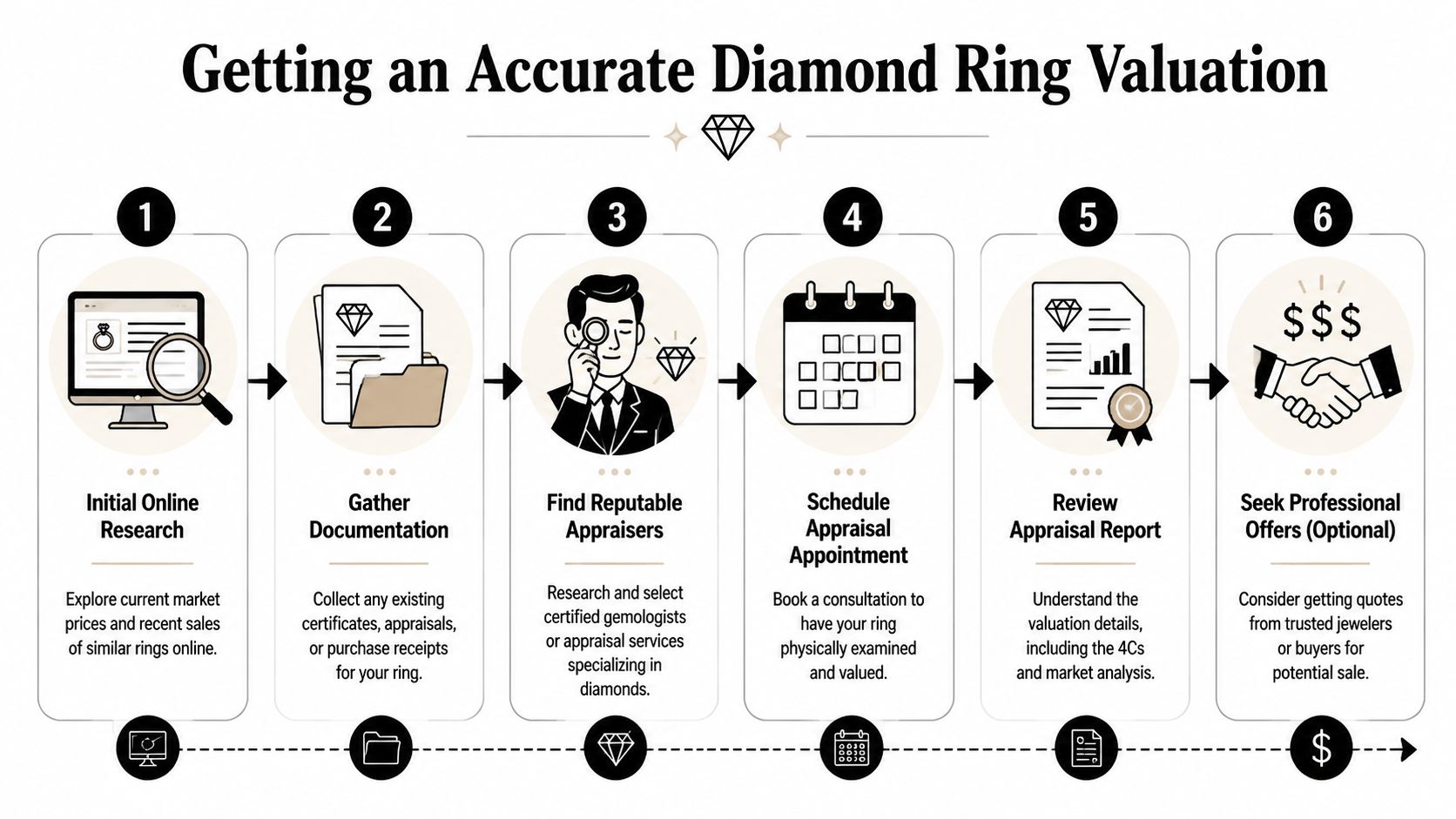
Start with documents and comparables
Begin by gathering whatever supports the ring's identity:
Certification first: A grading report helps establish what the diamond is.
Past paperwork next: Old appraisals and receipts can add background, even if they don't set current value.
Photos and measurements: These help when you're requesting preliminary opinions remotely.
A resale-oriented guide from Washington Diamond explains that the best benchmark is a price range built from current wholesale and resale data for comparable stones, not a single fixed number. It also notes that appraisers factor in setting, condition, and metal hallmarks, and warns against overvaluing a ring based on sentiment or insurance replacement figures (Washington Diamond on calculating diamond ring value).
If you're comparing offers on a certified engagement ring, this article on a GIA certified engagement ring is worth reviewing before you book an appointment.
Then get a resale-oriented opinion
Not every evaluator is solving for the same outcome. Some appraisers are writing for insurance. Some jewelers are thinking like retailers. Some buyers are pricing for immediate purchase or a collateral-based transaction.
That's why I recommend getting clarity on the purpose before you ask for the number:
For resale: ask what a similar ring is trading for now.
For a loan: ask how the lender weighs liquidation risk and demand.
For estate or insurance: ask for a formal written appraisal suited to that use.
The best valuation conversation starts with, “What kind of value do you need?” not “What's the biggest number you can put on paper?”
For sellers in Atlanta, Buckhead, Sandy Springs, Roswell, Alpharetta, Brookhaven, Midtown Atlanta, and the wider Georgia market, an in-person review is often the fastest way to sort out these distinctions because the ring can be examined under magnification and matched against current market demand.
Preparing Your Ring for Appraisal and Sale
Preparation won't turn a commercial ring into a rare one, but it can make the valuation process smoother, faster, and more accurate. Small details affect buyer confidence.
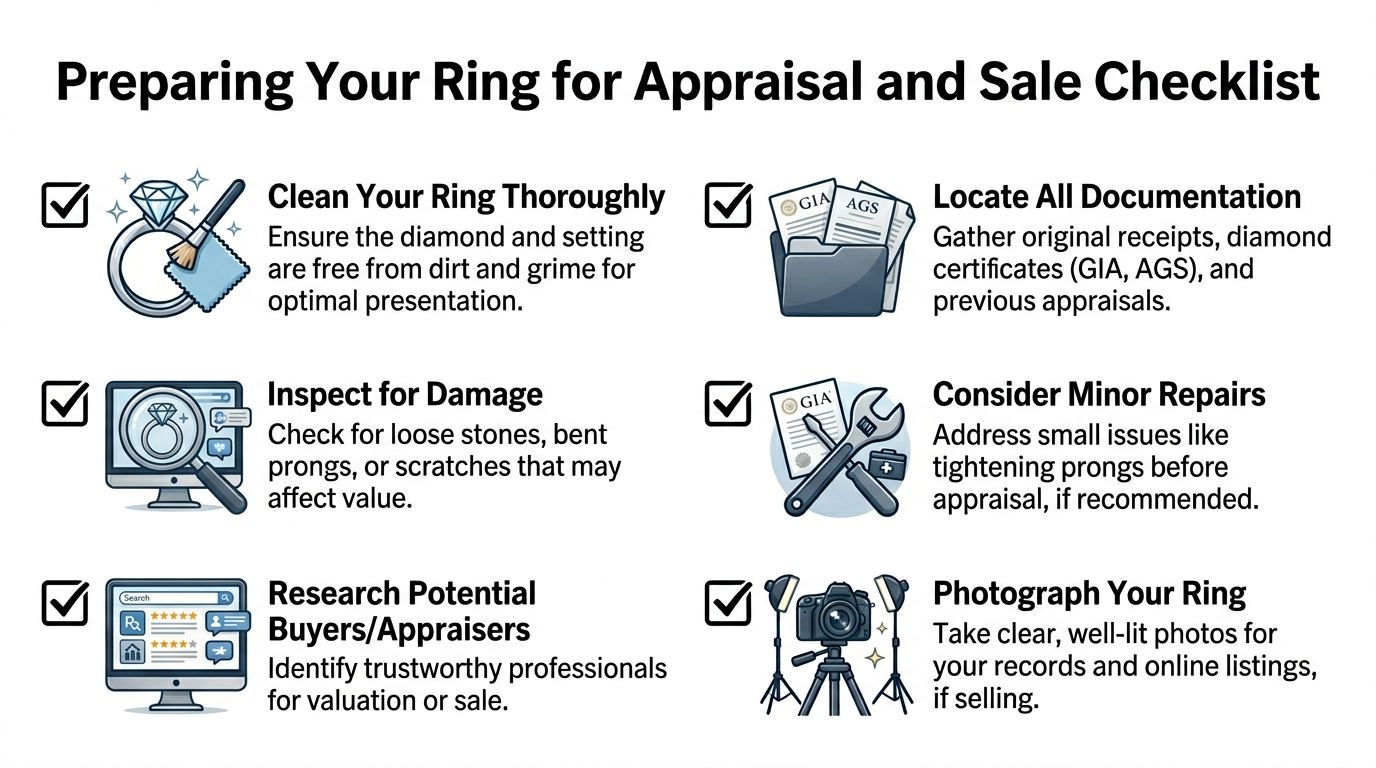
A practical checklist before you walk in
Use this checklist before seeking an offer or formal appraisal:
Gather the paperwork: Bring any grading report, prior appraisal, receipt, branded packaging, and repair history.
Clean the ring gently: A dirty stone looks dull. Mild cleaning can help the diamond present properly, but don't attempt aggressive polishing at home.
Check for obvious issues: Bent prongs, loose side stones, and chipped melee should be pointed out upfront.
Know your goal: Selling, borrowing against the ring, and insuring it require different valuation logic.
Photograph everything: Take clear pictures of the ring, hallmarks, and any paperwork for your own records.
If you're searching locally, this guide on sell my diamond ring near me can help you think through what to ask before choosing a buyer.
A prepared seller usually has a better conversation because fewer questions are left unresolved. That doesn't guarantee a higher number, but it does reduce uncertainty and speed up a serious offer.
Frequently Asked Questions About Diamond Ring Value
How are inherited or vintage diamond rings valued
They're valued by the same market principles as other rings, but the evaluator may also consider period design, maker, and whether the piece has appeal as an intact vintage item. Inherited pieces often carry high family significance, yet the market still separates sentimental value from resale demand.
Do lab-grown diamonds get valued differently
Yes. Buyers usually evaluate lab-grown diamonds under a different resale dynamic than natural diamonds because secondary-market demand and replacement pricing behave differently. The important point for any owner is to get a current, resale-oriented opinion rather than relying on what the ring cost when new.
Is it better to sell the diamond and setting separately
Sometimes, but not always. If the center stone has independent demand and the setting adds little value, separating them can make sense. If the ring is attractive as a complete piece, especially if it's signed or well made, keeping it intact may be the better route.
Can I use an old appraisal to estimate a loan or sale value
You can use it as background, not as the answer. A loan offer or cash purchase depends on what the ring supports in the market today, not what an appraiser estimated years ago for replacement purposes.
For anyone in Atlanta, Buckhead, Sandy Springs, Alpharetta, Roswell, Brookhaven, Midtown Atlanta, or elsewhere in Georgia, the most useful next step is a current in-person evaluation or a documented remote review. That gives you a realistic range based on the ring in front of the buyer, not on assumptions.
If you want a professional, low-pressure opinion on your ring's current market value, Antwerp Diamond offers confidential evaluations for sellers who need a realistic resale, appraisal, or loan-oriented conversation. You can start with an online review or arrange an in-person appointment if you're in the Atlanta area and want a clear, no-obligation assessment based on current market conditions.