
The best places to sell loose diamonds include specialized online buyers, reputable local jewelers such as those in Atlanta's Buckhead district, and auction houses. The right choice depends on your diamond's quality, certification, and whether you care most about speed, certainty, or the highest possible payout.
A lot of sellers are in the same position. You have a loose diamond from an old ring, an inheritance, or a purchase that no longer fits your plans, and you want a fair offer without making an expensive mistake. The hard part isn't finding a buyer. It's choosing the selling channel that matches your priorities.
You don't need a long list of options; you need a framework. If you judge each option by speed, payout, and certainty, the decision becomes much clearer.
Table of Contents
First Steps to Selling Your Loose Diamond
If you've found or inherited a loose diamond, don't rush to the first buyer who says they can make a quick offer. A loose stone can be sold through a local jeweler, a specialized diamond buyer, an online mail-in platform, an auction-style service, a consignment arrangement, or a private buyer. Each route comes with different tradeoffs.
Start by deciding what success looks like for you. Some sellers need immediate cash and want the process finished the same day. Others can wait longer if there's a stronger chance of attracting multiple bids.
Know your priority before you ask for prices
Here's the simplest way to think about where to sell loose diamonds:
If speed matters most: A local buyer or direct diamond buyer is usually the most practical route.
If payout matters most: Wider exposure, competitive bidding, or an auction-style process may be worth considering.
If certainty matters most: Work with a buyer who can inspect the stone in person, explain the valuation, and make a clear written offer.
Practical rule: Don't treat every buyer as if they serve the same purpose. A fast cash buyer, an auction marketplace, and a private jeweler solve different problems.
Before you contact anyone, gather what you know about the stone. Was it ever in a ring? Does it have a grading report? Do you know whether it's natural or lab-grown? Even basic answers will narrow your options quickly.
A helpful starting point is understanding what makes a stone authentic and how buyers think about it. This overview of what a genuine diamond means gives useful context before you start collecting offers.
Use a simple decision lens
Most sellers overfocus on one question: “Who pays the most?” That's understandable, but it's incomplete.
Use this three-part lens instead:
Payout: What could this channel realistically produce after fees or commissions?
Speed: Will you get a direct offer now, or wait while the stone is marketed?
Certainty: Do you know what happens if the diamond doesn't sell, needs more grading, or receives lower-than-expected bids?
That lens will save you time, lower stress, and keep you from choosing a channel that looks attractive at first but doesn't fit your actual situation.
Comparing Your Selling Options From Local to Online
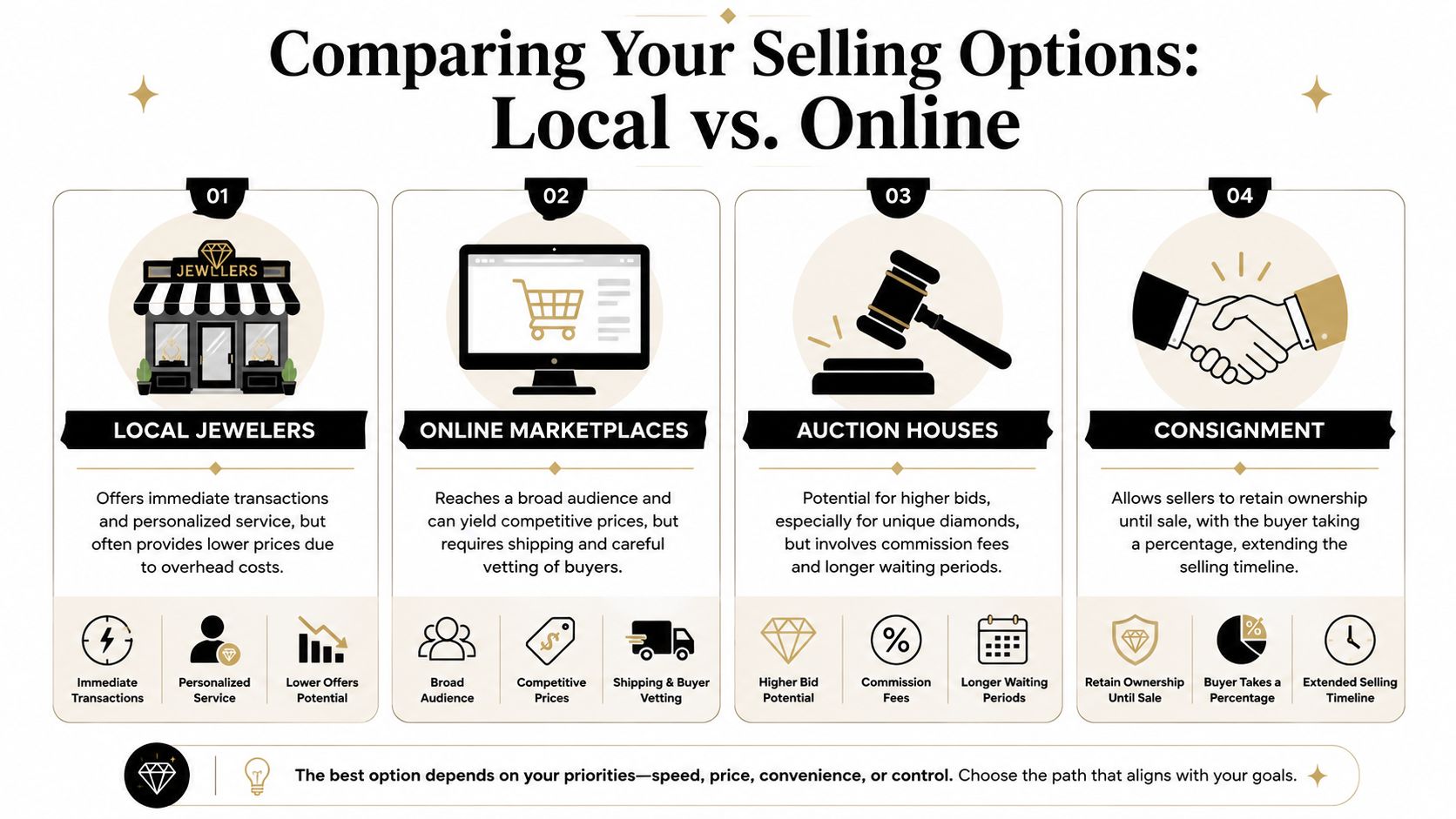
Not every loose diamond should be sold the same way. A common commercial stone with no paperwork should usually be approached differently than a certified natural diamond with strong color and clarity. The channel matters because each buyer type has a different cost structure, risk tolerance, and customer base.
The three questions that matter most
A practical buyer comparison comes down to this:
Selling channel | Speed | Payout potential | Certainty |
|---|---|---|---|
Local jeweler or local diamond buyer | Usually faster | Often moderate, sometimes strong for desirable certified stones | High if evaluation is done in person |
Online direct buyer | Often efficient | Varies by buyer and inspection result | Moderate to high if shipping is insured and terms are clear |
Auction-style platform | Slower | Can be stronger for rare or high-value stones | Lower certainty until bidding ends |
Consignment | Usually slowest | Can be attractive if retail exposure is strong | Lower, because sale timing is uncertain |
Private sale | Unpredictable | Sometimes appealing in theory | Often lowest, because trust and payment risk are on you |
Pawn shop | Fast | Typically weaker | High on speed, weaker on valuation depth |
Professional buyers often use auctions or wide-network sourcing to create price competition. Online buyers can expose a diamond to a larger audience, while auction houses may take longer but can sometimes produce higher returns for rare stones. That's why comparing multiple bids matters, as noted in this guide to selling a diamond.
How each selling channel really works
Local jewelers and local diamond buyers are often the easiest place to start, especially in Atlanta, Buckhead, Sandy Springs, Alpharetta, Roswell, Brookhaven, and Midtown Atlanta where in-person appointments are realistic. You can ask questions face to face, review the stone together, and avoid shipping. This route is especially useful if you want a direct answer and don't want your diamond tied up in a long selling cycle.
Some specialized local buyers handle loose diamonds routinely and can evaluate grading reports, marketability, and buyer demand on the spot. For sellers comparing jewelry channels more broadly, this guide on where to sell fine jewelry helps explain how different local and online outlets behave.
Online direct buyers appeal to sellers who want convenience without listing the diamond themselves. The stronger services usually provide insured shipping, inspection, and a formal offer after review. The upside is reach and convenience. The downside is that the final offer still depends on what the buyer sees when the stone arrives.
If you're mailing a loose diamond, the real issue isn't convenience. It's whether the process is documented, insured, and easy to reverse if you decline the offer.
Auction-style platforms can make sense for stronger stones because they create buyer competition. Worthy describes a process that includes secure shipping, expert cleaning, evaluation, photography, a seller-set reserve, and online bidding in its loose diamond selling process. That model can expand exposure, but fee structures are a real consideration. A third-party industry guide cited commissions around 10 to 18% for Worthy-like auction services in the same discussion, which means the headline bid isn't the same as your final net.
Consignment works differently. You usually keep ownership until the item sells, and the store or platform takes a percentage. This can help if the diamond needs retail-facing presentation rather than an immediate wholesale-style offer. The tradeoff is time. You may wait, receive updates slowly, and still have no sale at the end.
Private sales sound attractive because they seem to cut out the middleman. In practice, they often create more friction than value. Buyers want proof, independent verification, and confidence in the stone. Sellers want safe payment, a secure meeting, and a clean transaction. Without infrastructure, both sides hesitate.
Pawn shops exist for speed, not nuanced diamond pricing. If your priority is immediate liquidity above all else, they may be an option. If you have a certified loose diamond and care about maximizing value, they usually aren't the first route I'd test.
How to Prepare Your Diamond and Paperwork for a Top Offer
Preparation changes the quality of the offers you receive. Buyers pay more confidently when the diamond is easier to verify, easier to grade, and easier to resell.
Start with the documents you already have
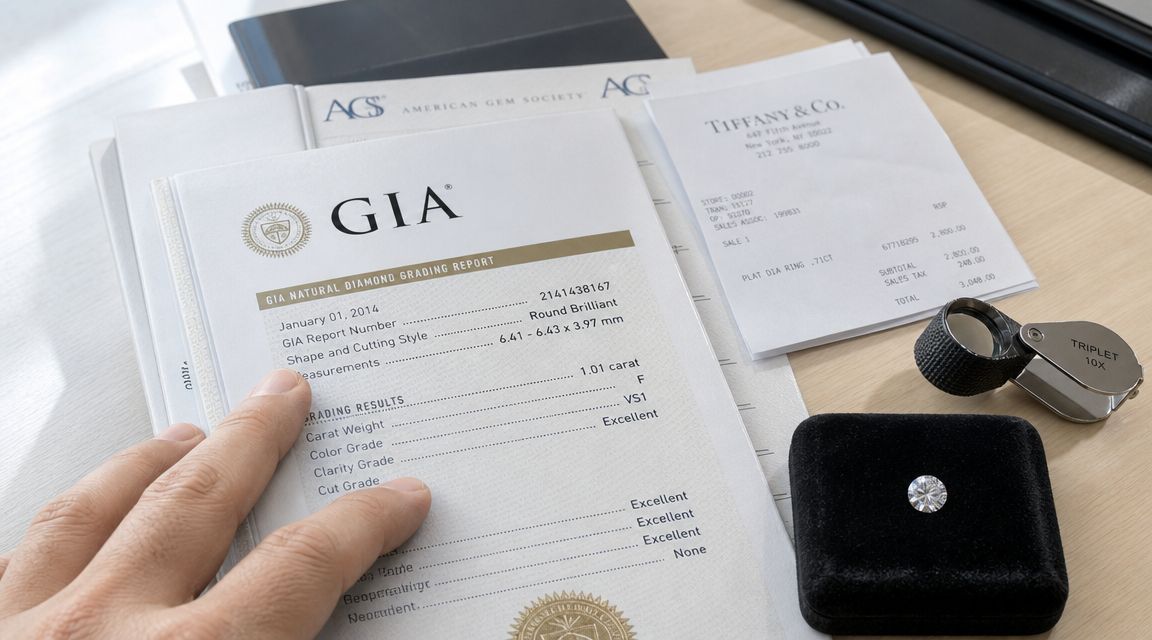
Find every document tied to the stone before you ask for an offer. That includes a grading report, prior appraisal, purchase receipt, laser inscription information, and any correspondence identifying the stone as natural or lab-grown. You don't need all of it, but every piece helps reduce uncertainty.
This matters even more today because the loose-diamond market isn't uniform anymore. The value share of loose lab-grown diamonds increased from an average of 8.3% in 2020 to 17.3% in 2022, and Edahn Golan's analysis projected that by May 2023, 50% of loose diamonds sold by American jewelry retailers would be lab-grown. In that environment, proving that a diamond is natural can directly affect resale positioning and buyer confidence, as explained in Edahn Golan's lab-grown diamond market analysis.
A grading report from a recognized lab often does three things at once:
Speeds up review: The buyer starts with documented measurements and grading details.
Improves confidence: There's less guesswork about what the stone is.
Expands your buyer pool: More professional buyers will engage seriously when the stone is documented.
If you're reviewing old paperwork and trying to understand why certification matters in resale, this article on a GIA certified engagement ring is useful background.
What to do if your diamond has no paperwork
No certificate doesn't mean the diamond can't be sold. It does mean the buyer has to do more work before making a firm offer.
Start by handling the stone carefully. Keep it in a small gem box, parcel paper, or another secure container. Don't deep clean it with harsh household products. A gentle presentation is enough. You want the stone to be visible and safe, not overhandled.
Then expect one of two paths:
A buyer evaluates it in person and gives you a preliminary offer subject to closer inspection.
A buyer recommends grading or further review before committing to a stronger price.
Here's a helpful overview of what professional grading looks like in practice:
Bring the stone exactly as it is, with whatever documents you have. Don't try to “improve” it before inspection, and don't assume an old appraisal answers current resale questions.
If the diamond was removed from jewelry, note that too. Some buyers want to know whether the girdle may have abrasion, whether the culet has wear, or whether the stone sat in a damaged setting. Those details affect salability even before anyone talks price.
Understanding Diamond Value vs The Price You Get
The number that matters most to sellers is the actual offer. Unfortunately, that number is often confused with retail price, insurance appraisal value, or what someone paid years ago. Those are not the same thing.
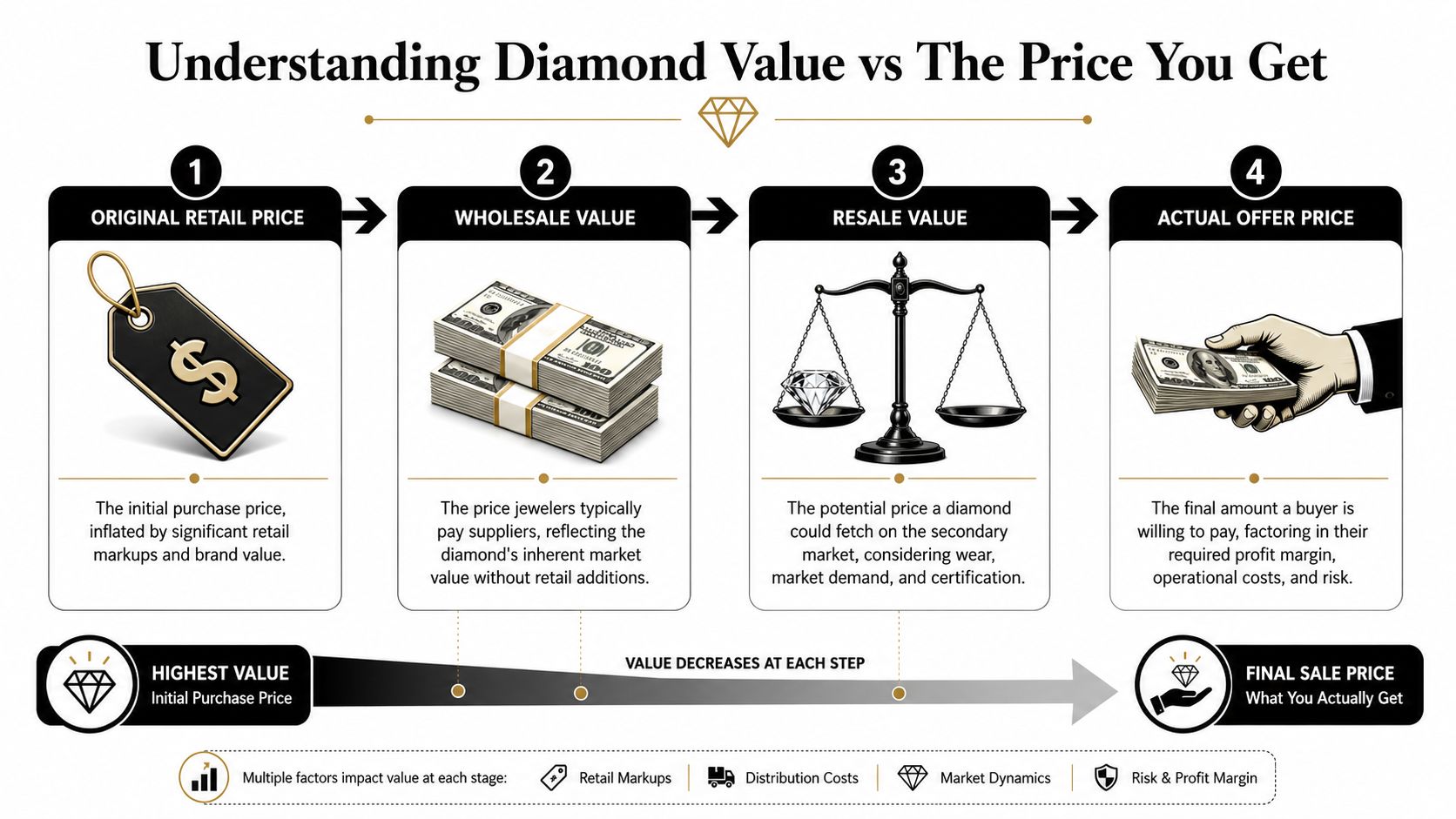
Why appraisal numbers and cash offers are different
A buyer isn't purchasing your diamond the way a retail customer buys from a jewelry case. The buyer has to account for re-grading risk, time to resale, market demand, and profit margin. That's why a cash offer can feel far below an old appraisal.
A fair resale conversation usually starts with the 4Cs, then moves quickly into practical resale details such as fluorescence, shape demand, measurement spread, certification quality, and whether the stone is natural or lab-grown. A strong round brilliant with reliable paperwork is usually easier to price and easier to sell onward than an unusual shape with uncertain documentation.
Here's the cleanest mental model:
Value type | What it reflects |
|---|---|
Original retail price | What a consumer paid in a store |
Insurance appraisal | A replacement-oriented number, often not a cash resale figure |
Wholesale-style market value | What buyers look at when assessing trade demand |
Actual offer price | What a specific buyer will pay now, under current conditions |
If you want a deeper explanation of why offers and appraisals differ, this diamond resale value calculator guide can help frame expectations.
Why quotes can vary so much
One of the biggest mistakes sellers make is assuming a diamond has one obvious resale number. It doesn't. Different buyers have different inventory needs, overhead, customer channels, and tolerance for risk.
That difference can be financially significant. In a 2023 comparison of online diamond-buying platforms, quotes for the same loose diamond ranged from about $4,800 to $6,550, showing that channel choice can materially change the final payout, according to StoneAlgo's comparison of where to sell a diamond online.
That's not a reason to chase every possible buyer. It's a reason to get more than one serious quote.
Seller mindset: The first offer tells you what one buyer thinks. Multiple offers tell you what the market thinks.
A lower offer isn't always bad faith. Sometimes that buyer doesn't specialize in your type of stone. Sometimes they need more margin. Sometimes they don't have a client base for that shape, size, or quality range. The point is to compare intelligently, not emotionally.
A Checklist for Choosing a Reputable Diamond Buyer
Once you know which channel fits your priorities, the next step is choosing the actual buyer. This decision either protects sellers or creates unnecessary risk.
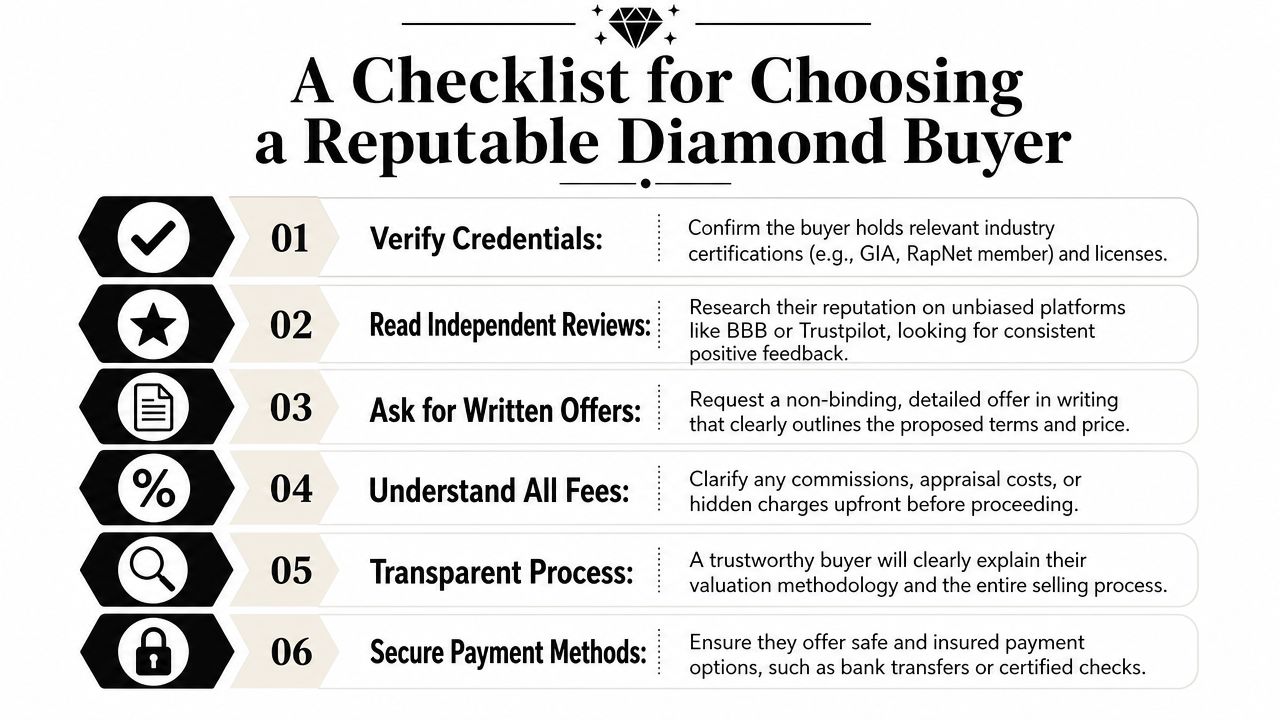
What a trustworthy buyer should do
A reputable diamond buyer should be comfortable explaining how the offer is being formed. You don't need a lecture. You need clarity.
Look for these signs:
A real evaluation process: The buyer inspects the stone, reviews documentation, and explains what matters.
Clear offer structure: You know whether the offer is direct, consignment-based, or subject to outside bidding.
Transparent logistics: If shipping is involved, the process should be insured and documented.
No-obligation posture: You should be able to decline without pressure.
Professional setting: In-person meetings should be private, orderly, and appropriate for high-value items.
In markets like Atlanta, Buckhead, Roswell, and the broader Georgia area, many sellers prefer private appointments because they can ask detailed questions face to face. For people who want a direct local option, where to sell jewelry for cash is a useful broader guide. Antwerp Diamond is one example of a buyer that offers private in-person evaluations and insured remote submissions as part of that category.
Red flags that should make you walk away
Problems usually show up early. Pay attention to how the buyer behaves before you hand over the diamond.
Avoid buyers who do any of the following:
Rush the process: Pressure is a warning sign, especially if you haven't had time to compare offers.
Stay vague about fees: If there's commission, shipping cost, or service cost, it should be clear before you proceed.
Quote aggressively without inspection: A strong verbal promise can shrink quickly once the stone is reviewed.
Dismiss paperwork: Serious buyers care about grading reports and origin questions.
Resist written documentation: Important terms should not live only in a phone call.
A good buyer doesn't need you to feel confused. They need you to feel informed enough to say yes or no.
If you're shipping a loose diamond, ask direct questions. Who insures the parcel? What happens if you reject the offer? How is the stone logged on arrival? How is payment issued if you accept? Clear answers matter more than polished marketing.
A reputable buyer should also respect your timeline. Some sellers want to close fast. Others want to collect several offers over a week or two. The right buyer won't treat comparison shopping as a problem. They'll expect it.
Frequently Asked Questions About Selling Diamonds
Is it better to sell a loose diamond or a diamond in a setting
If the diamond is the main source of value, selling it loose often makes evaluation easier. Buyers can inspect the stone more accurately when prongs, bezels, or halos aren't blocking parts of it. If the setting also has value, ask whether the buyer wants both together or separately.
Can I sell an inherited loose diamond without paperwork
Yes, you can. Expect more scrutiny and possibly a more cautious offer until the stone is identified and graded. If the diamond appears promising, some sellers benefit from getting professional grading or a formal evaluation before committing to a sale.
What's the safest way to sell a loose diamond locally
Meet with a professional buyer in a private office, not in a casual public meetup. Bring any paperwork you have, ask for the offer terms in writing, and don't feel forced to accept on the spot.
Are online diamond buyers safe
Some are, some aren't. The safer ones use insured shipping, clear intake procedures, transparent offer terms, and an easy return process if you decline. Read the process carefully before mailing anything.
Should I clean my diamond before selling it
Light cleaning is fine. Don't use harsh chemicals or aggressive cleaning methods. The goal is simple presentation, not home restoration.
How many offers should I get
Enough to understand the market for your specific stone. If the quotes are very close, that tells you something. If they're far apart, it usually means one of the buyers sees the stone very differently, or uses a different business model.
What if I need money quickly but don't want to undersell
Then focus on direct buyers who can inspect the stone promptly and make a same-day or near-term offer. You may give up some upside compared with a slower auction route, but you gain speed and certainty.
Where to sell loose diamonds comes down to matching the stone to the channel. A certified natural diamond with strong market appeal may justify broader exposure. A more standard stone, or a seller who wants a simple transaction, may do better with a direct professional buyer and a clean offer process.
If you want a clear, no-pressure opinion on your stone, Antwerp Diamond can review your loose diamond in person or through a secure remote process and explain your options for sale based on the diamond's documentation, condition, and current resale demand.