
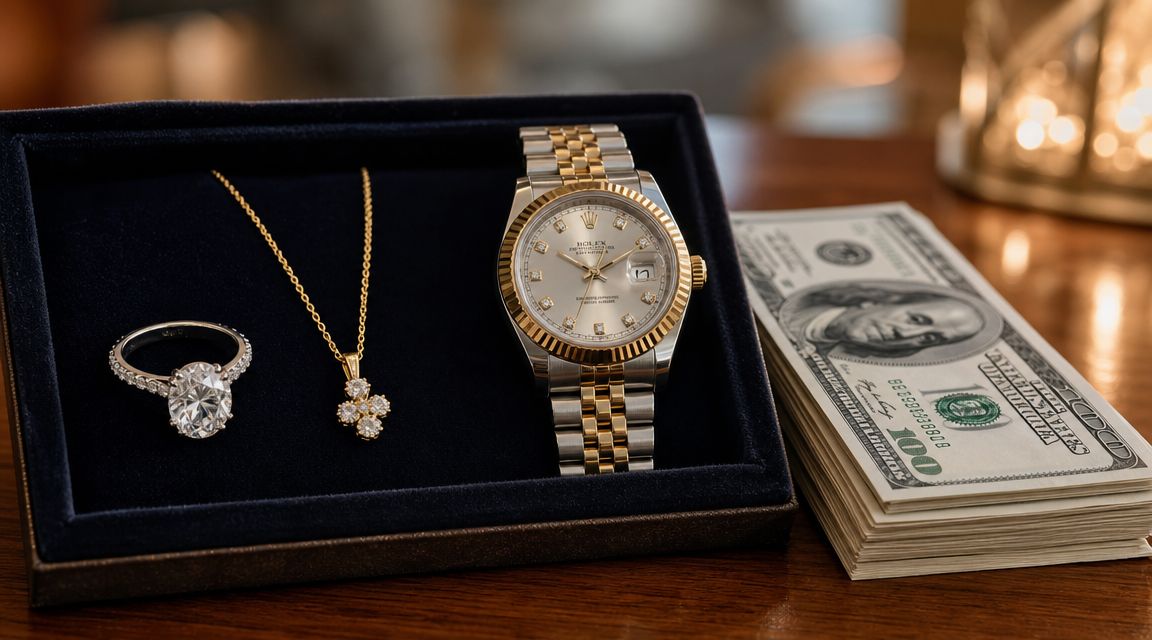
The best places to sell jewelry for cash are local jewelry stores, specialized buyers, pawn shops, and online marketplaces. Your real decision is not just where to sell, but which buyer type matches your item, because speed, convenience, and payout all change depending on whether the buyer sees your jewelry as scrap, resale inventory, or a branded luxury piece.
If you're holding an old diamond ring, a Cartier bracelet, broken gold chains, or inherited estate jewelry, you're probably asking one simple question: where will I get the most money without taking unnecessary risk? That's the right question. Most sellers lose money because they choose the wrong outlet for the item they have.
A plain gold chain, a Tiffany & Co. necklace, and a diamond engagement ring should not be sold the same way. The business model on the other side of the table drives the offer. A scrap buyer pays for recoverable metal. A reseller pays for what another buyer will want. A specialist pays attention to brand, craftsmanship, documentation, and secondary market demand.
For sellers in Atlanta, Buckhead, Sandy Springs, Alpharetta, Roswell, Brookhaven, Midtown Atlanta, and the wider Georgia market, that distinction matters even more because you usually have both local and national selling options. If you understand the economics first, you won't walk into a quick-cash deal and accidentally price a fine jewelry piece like a melt lot.
Table of Contents
How to Prepare Your Jewelry for a High-Value Sale
Preparation changes the conversation. If you show up with a tangled chain and no information, many buyers will default to the safest pricing model for them, not the most profitable one for you.
The American Gem Society makes an important point in its guidance on selling fine jewelry: sellers should compare offers from several pawn shops and consider other options if they can wait, because immediate-cash buyers usually pay less than buyers who can assess resale or resetting value. It also notes that different item types should be treated differently, because scrap gold, signed jewelry, loose diamonds, and high-end watches do not belong in the same sale category (American Gem Society guidance on selling fine jewelry).
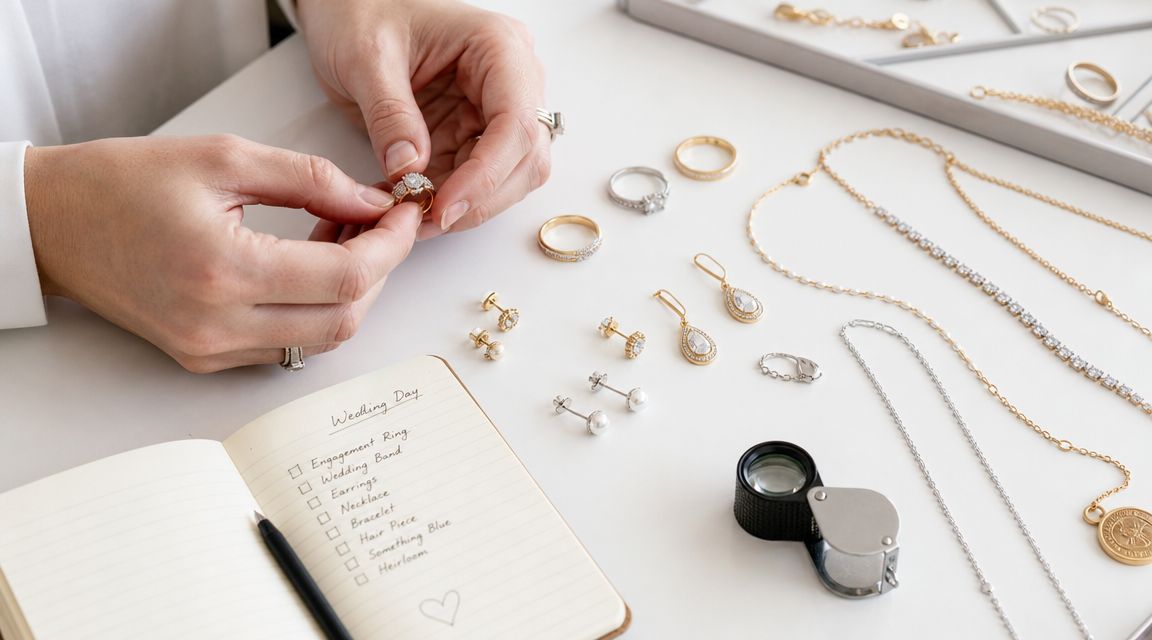
Start with documentation and identification
Gather everything that proves what the piece is.
Diamond reports: If you have a GIA report, bring it. For diamond jewelry, grading paperwork can make the difference between a generic estimate and a confident offer. If you need a refresher on why grading matters, review this guide to a GIA certified engagement ring.
Original receipt and brand packaging: Boxes, receipts, service records, and branded paperwork matter most for Cartier, Tiffany & Co., Van Cleef & Arpels, and similar names.
Appraisals: An old appraisal isn't a cash offer, but it can help identify what you own.
Hallmarks and stamps: Look for 10K, 14K, 18K, 22K, 24K, PLAT, maker's marks, and signatures.
If you don't know what a mark means, don't guess. Wrong assumptions lead sellers to accept scrap pricing on pieces that should be evaluated as finished jewelry.
Practical rule: Before asking what it's worth, identify whether you own a metal lot, a diamond piece, a signed designer item, or estate jewelry with resale appeal.
Present the item like it belongs in the resale market
You don't need to over-polish anything. You do need to make it easy to inspect.
Do three things before getting offers:
Photograph the item clearly. Use neutral lighting, photograph the front, back, clasp, shank, hallmarks, and any damage.
Group sets together. Matching earrings, bracelet-and-necklace sets, and original ring boxes should stay together.
Write down what you know. Diamond shape, approximate carat weight, metal type, brand, date purchased, and whether any stones were replaced.
A clean presentation helps for a simple reason. Buyers price uncertainty into the offer. The less they have to guess, the less room they need to leave for risk.
If the item has no paperwork, that doesn't kill the deal. It just means the buyer has to do more authentication and valuation work. For a branded or diamond-heavy piece, that extra work can still be worthwhile. For a basic broken gold item, paperwork usually matters far less.
A Comparison of Your Top Selling Options
Where to sell jewelry for cash depends on what you care about most. If you need money today, the answer is different than if you're trying to maximize proceeds on a diamond ring or designer bracelet.
The trade-off is speed versus price
Industry guidance is consistent on one point: local pawn shops and neighborhood jewelers are usually the fastest because they can pay immediately, but the payout is often below full market value. Online marketplaces and consignment channels usually take longer, yet they can improve returns because they expose the item to a broader buyer pool. High-value pieces such as diamond rings often do better with specialist platforms and authenticated resale services that combine professional evaluation with competitive bids (industry overview of jewelry selling channels).
Here is the broad comparison at a glance.
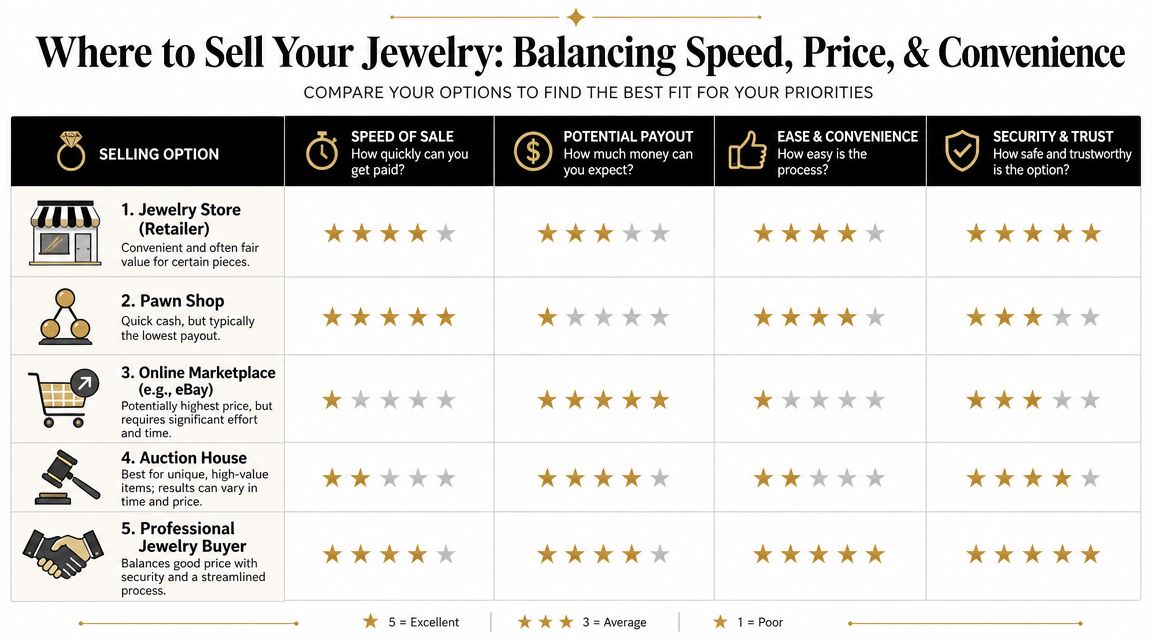
Jewelry selling options compared
Selling Venue | Typical Payout (% of Market Value) | Time to Payment | Pros | Cons |
|---|---|---|---|---|
Pawn shop | Lower than full market value | Immediate | Fast cash, simple process | Often prices defensively, strong discounting |
Local jeweler | Varies by item type | Often immediate | Convenient, in-person inspection | May buy selectively, may focus on scrap or trade inventory |
Professional jewelry buyer | Varies by quality and demand | Often immediate after acceptance | Expert evaluation, secure process, strong fit for fine jewelry | Offer still depends on resale demand, not retail price |
Online marketplace | Potentially higher gross sale | Longer | Broad buyer pool, seller controls asking price | You handle listings, payment risk, shipping, returns, buyer disputes |
Consignment shop | Can be higher than immediate cash channels | Slowest | Shop handles sale process | Commission reduces net payout |
Auction house | Best for rare, collectible, or unusual pieces | Slow | Strong option for special items with collector appeal | Timing, fees, reserve issues, no fast payment |
A separate issue many sellers ignore is commission. If you're considering consignment, review typical rates for consignment stores before handing over a valuable piece. The gross sale price isn't what you take home.
A short video can also help you compare the options visually:
My direct recommendation by item type
If you want my blunt view as a buyer, use this filter:
Broken gold, mismatched earrings, outdated basics: Sell to a reputable local buyer if speed matters more than squeezing out every dollar.
Diamond engagement rings, bridal jewelry, larger center stones: Use a specialist or professional buyer who understands grading and secondary demand.
Signed designer pieces: Don't dump them into a scrap channel. Brand, condition, and original packaging may matter more than metal weight.
Rare or unusual estate pieces: Consider auction or niche resale if you're patient.
You want immediate cash but still want an expert read: A professional buyer often sits in the middle. For example, luxury collateral and cash options can make sense if you want to evaluate whether selling or borrowing is the better move for your situation.
The wrong venue doesn't just lower the offer. It changes what the buyer is buying.
That is the central mistake sellers make. They assume every buyer is valuing the whole item. Many aren't. They're valuing only the part of the item their business can monetize.
What Determines Your Jewelry's Cash Value?
Two rings can both weigh the same. Two diamond rings can both be one carat. Their cash value can still be very different.
The reason is simple. Cash value depends on the buyer's exit strategy.
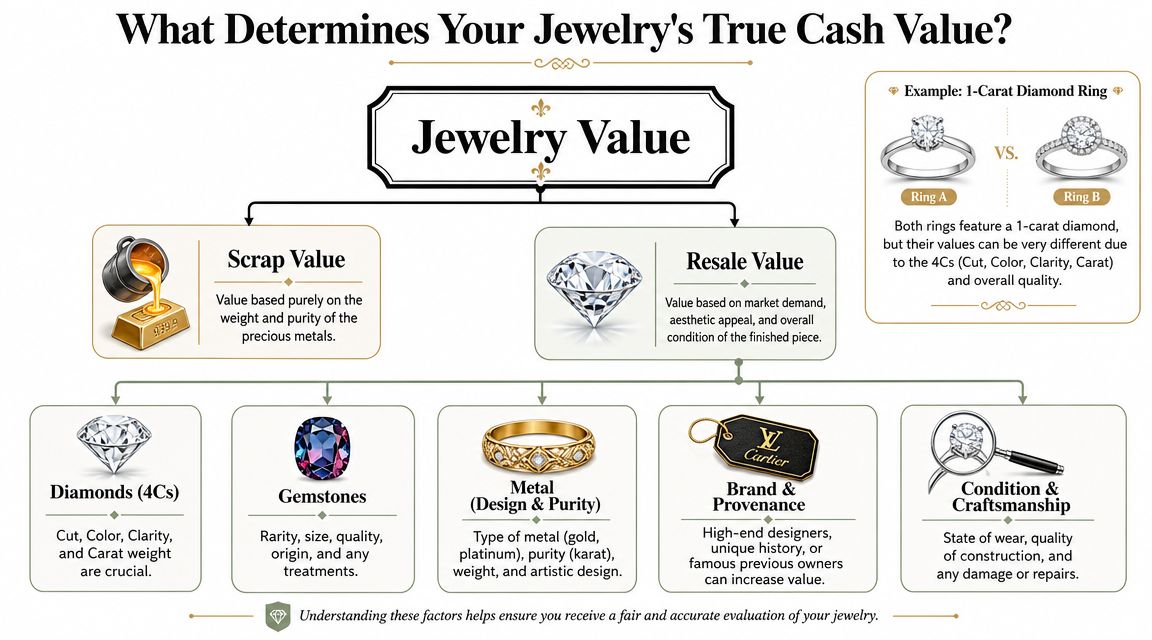
Scrap value and resale value are not the same thing
Scrap-oriented buyers and many pawn outlets price jewelry from recoverable material value, not retail replacement value. CLOSO notes that pawn shops commonly pay about 30% to 50% of scrap metal value, which shows how large the spread can be between melt economics and consumer resale value (CLOSO guide on maximizing profit when selling jewelry).
That discount exists for concrete reasons:
Refiner costs: Metal has to be processed.
Assay uncertainty: Purity has to be confirmed.
Stone removal risk: Some stones add value, some add labor.
Liquidity risk: Not every item sells quickly as-is.
If a buyer's model is melting, they won't pay you for elegant design, brand prestige, or a desirable setting style. They can't monetize those features the same way a reseller can.
A scrap buyer isn't lowballing because they're rude. They're pricing according to a different business model.
What serious buyers actually evaluate
Resale value is broader. A professional buyer looks at the whole piece and asks whether another real buyer would want it.
That evaluation usually includes:
Diamond quality: Cut, color, clarity, and carat weight. If you want a deeper baseline on how these factors affect pricing, start with this explanation of how much a diamond is worth.
Gemstone quality and treatments: Natural versus treated, durability, matching, and market appeal.
Metal and craftsmanship: Platinum versus gold, hand fabrication, and overall construction.
Brand and provenance: Cartier, Tiffany & Co., Van Cleef & Arpels, and other signed makers often trade on brand confidence as much as material value.
Condition: Missing stones, bent prongs, sizing seams, worn shanks, and poor repairs all affect the offer.
Current demand: Contemporary styles move differently than dated designs.
Here is the cleanest way to understand it:
Value Lens | What the buyer cares about most | Works best for |
|---|---|---|
Scrap value | Metal purity and weight | Broken gold, damaged basics, low-demand items |
Resale value | Design, stones, brand, condition, demand | Fine jewelry, diamond rings, signed luxury pieces |
Collectible value | Rarity, maker, provenance, market appetite | Estate, vintage, unusual, or branded collectible items |
A seller who understands this distinction rarely makes the classic mistake of selling a desirable piece as if it were only gold weight.
How to Sell to a Professional Jewelry Buyer
For many sellers, this is the most balanced route. You get speed, privacy, and a more informed evaluation than you usually get in a pure scrap environment.
The jewelry resale market is large enough that venue choice can materially affect proceeds. According to the industry overview summarized by Worthy, the U.S. jewelry wholesaling industry was estimated at $87.5 billion in 2026, with 30,118 businesses and 4.0% CAGR from 2021 to 2026. It also notes that Statista estimated the U.S. jewelry market at about $63 billion in 2023, and that one resale platform says it works with over 1,000 professional buyers, while another global buyer reports 28 locations and immediate payment with no fees or commissions (Worthy market overview). That scale is exactly why comparing channels matters.
What the process should look like
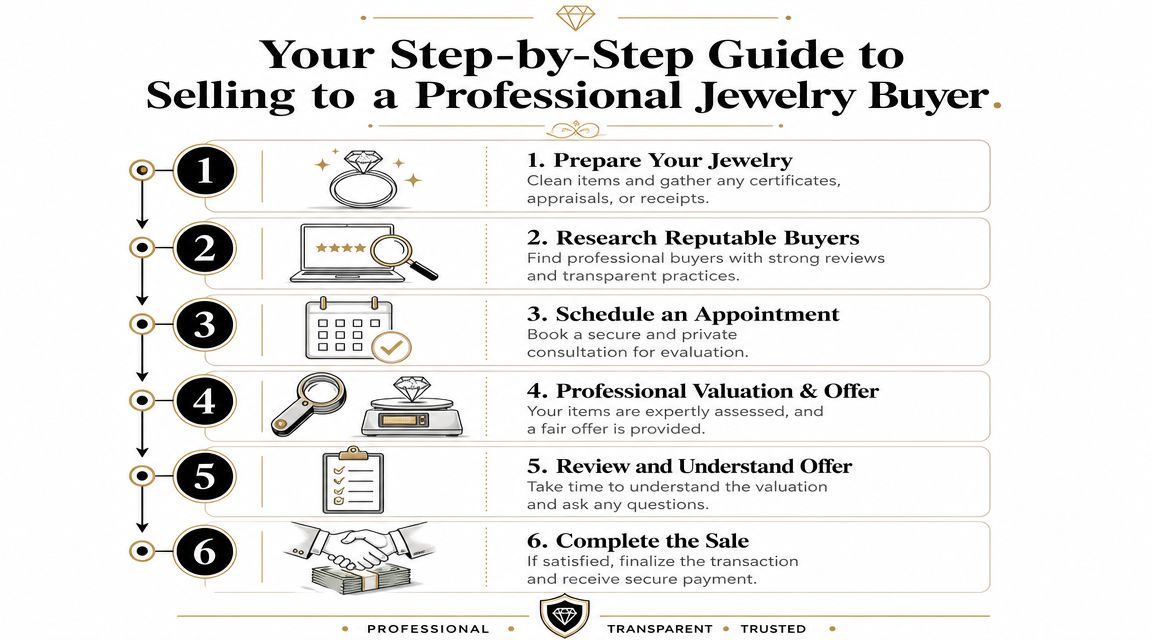
A proper professional-buyer process is straightforward.
First, you submit photos or book an appointment. For Atlanta-area sellers, that often means a private in-person visit in Buckhead or nearby areas such as Roswell, Sandy Springs, Alpharetta, Brookhaven, or Midtown Atlanta. If you're outside Georgia, remote evaluation and insured shipping may be the practical route.
Then the buyer inspects the item and explains what they are valuing. That should include metal verification, diamond or gemstone assessment, brand authentication if relevant, condition review, and a discussion of resale demand.
After that, you receive a no-obligation offer. If you accept, payment should be made through a documented and secure method.
Why this route works for high-value pieces
This route is strongest when the item has more than melt value.
A professional buyer can evaluate a diamond ring as a diamond ring, not just as a gold mounting with removable stones. The same applies to signed designer jewelry and fine watches. That doesn't guarantee the highest theoretical sale price in every case. A direct-to-consumer sale can still produce more on paper. But it often produces more work, more delay, and more risk too.
One example of this specialist route is online watch buyers and luxury item evaluations, which reflects the same principle across categories: seller outcome improves when the buyer understands the specific asset class.
Use this checklist when choosing a professional buyer:
Transparent evaluation: They should explain the offer, not just state it.
Private process: High-value items shouldn't be handled casually.
Authentication capability: Essential for branded goods and better diamonds.
Clear payment method: No confusion, no vague timing.
No pressure to accept immediately: A strong buyer doesn't need coercion.
If the buyer can't explain why your piece is worth what they're offering, you don't have enough information to sell.
Smart Negotiation and Safety Guidelines
Good selling isn't just about price. It's also about control. You need enough knowledge to push back, enough discipline to walk away, and enough caution to protect yourself.
How to negotiate without hurting your position
Fox Fine Jewelry's guidance is useful here: direct marketplace sales on Facebook Marketplace, eBay, or Craigslist can net more than selling to a jeweler, but they bring more effort, more time, and more security risk. It also notes that online consignment can produce similar proceeds to jeweler buyouts, yet commissions can push the net payout back toward metal-plus-stone value. The practical takeaway is to match the venue to the item's demand profile (Fox Fine Jewelry selling tips).
That leads to a better negotiating stance.
Ask what model they are using: Are they buying for scrap, store inventory, resale, or client order demand?
Use your documentation: A GIA report, maker's mark, receipt, or branded box strengthens your position because it reduces uncertainty.
Get more than one quote: Not because every offer will be wildly different, but because buyer type differs.
Counter with logic, not emotion: "This is Cartier with original paperwork" is stronger than "I paid a lot for it."
If a buyer says, "This is just scrap," ask why. That's a fair question. Sometimes they're right. Sometimes they aren't the right buyer.
How to protect yourself during the sale
For in-person transactions, choose a secure office, not an improvised meeting place. For online transactions, use insured shipping and document what you send.
If you keep valuables at home before selling, basic storage discipline matters. A practical resource on protecting high-value items is Fintrack's safety deposit box guide, which outlines when secure off-site storage can make sense.
Many of the same safety rules that apply to luxury handbags also apply here, especially around authentication, chain of custody, and payout clarity. This comparison of platforms for selling handbags with authentication, fees, payout speed, and security is useful because the risk patterns are very similar.
Watch for these red flags:
Pressure tactics: "This offer is only good for the next five minutes."
No explanation: They refuse to discuss how they priced the item.
Casual handling: Valuable jewelry should be inspected carefully and professionally.
Unclear payment terms: You should know exactly when and how funds are delivered.
No paper trail: Always leave with documentation.
The safest sale is usually the one where the process feels boring. That's a good sign.
Frequently Asked Questions About Selling Jewelry
Do I need an appraisal before I sell?
No. You don't need a formal appraisal to sell jewelry. But for fine jewelry, larger diamonds, signed pieces, and estate items, having documentation helps you understand whether you're discussing scrap value or resale value.
Is selling online better than selling in person?
It depends on the item and your tolerance for hassle. Online selling can expose the piece to more buyers and may produce a higher gross result, but you handle listing quality, buyer communication, shipping, payment risk, and potential disputes. In-person selling is usually faster and simpler.
Can I sell jewelry without the box or papers?
Yes. Many sellers do. Missing paperwork doesn't make an authentic piece worthless, but it can affect confidence and pricing, especially for designer jewelry and higher-end diamonds.
How do buyers calculate gold value?
They start with purity and weight. Then they decide whether the piece is being bought as scrap material or as finished jewelry with resale potential. That distinction matters more than most sellers realize.
Should I sell to a pawn shop or a jeweler?
If you need cash immediately, a pawn shop or local jeweler may be the fastest route. If your piece has diamond quality, strong design, or brand value, a jewelry specialist usually makes more sense.
What's the best place to sell a diamond ring for cash?
For a meaningful diamond ring, skip generic scrap-style buyers. Use a venue that can assess the stone, setting, and market demand together. A ring with a strong center stone should be evaluated as a finished resale asset, not just as metal and loose parts.
Is a local buyer a good option in Atlanta?
Yes, if the buyer has a secure office, explains the offer clearly, and understands the specific category you're selling. In the Atlanta market, that means looking beyond basic cash-for-gold advertising and focusing on actual jewelry expertise.
What if I am not ready to sell yet?
Then don't sell yet. Get quotes, learn what category your item falls into, and wait until you're comfortable. Rushed sellers usually make expensive decisions.
If you're in Atlanta, Buckhead, Roswell, Sandy Springs, Alpharetta, Brookhaven, Midtown Atlanta, or elsewhere in Georgia and want a professional opinion before you decide, Antwerp Diamond is one local option for private evaluations of fine jewelry, diamonds, watches, and other luxury items. Bring your piece in, or start with a preliminary review online, and use the information to decide whether selling now makes sense.