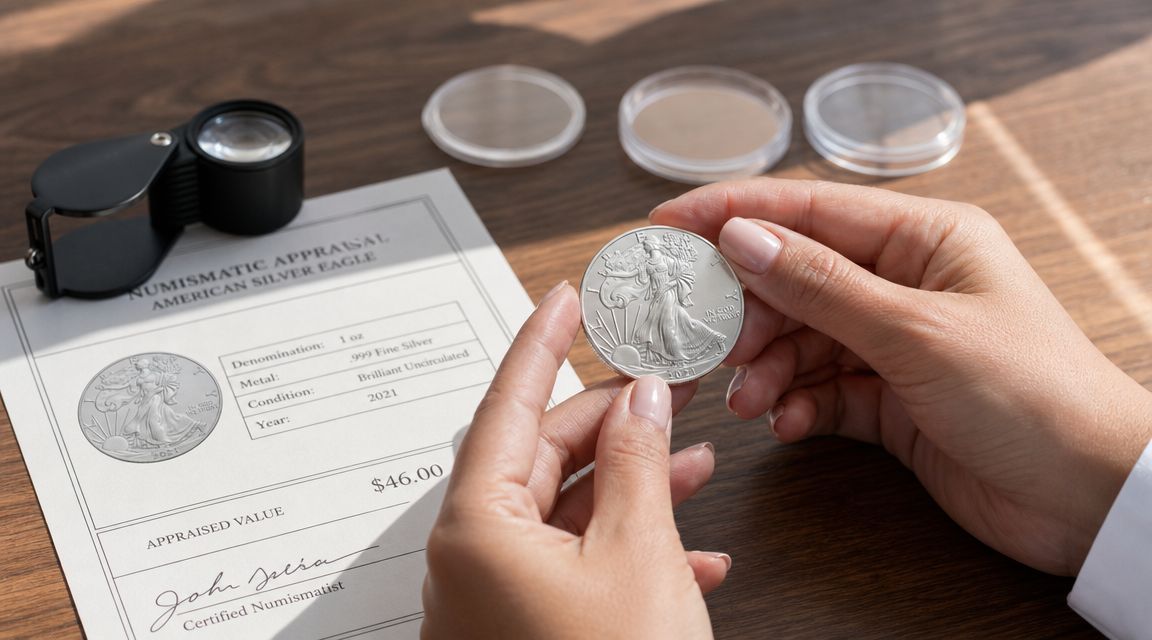
Selling American Silver Eagles starts with one decision: are your coins being priced as bullion or as collectibles. Common-date Eagles are usually bought based on their 1 oz of .999 silver content plus a market premium, while certain proofs, reverse proofs, burnished coins, and key dates can justify a separate numismatic appraisal.
If you're holding a tube, a box, or an old collection you inherited, most first-time sellers often make a mistake. They call one buyer, ask for a quote on the whole lot, and accept a bullion-style offer on coins that should have been separated first. To sell silver eagles well, you need to understand spot price versus final payout, compare reputable buyers, and match each coin to the right selling channel.
Table of Contents
First Steps to Evaluate Your Silver Eagles
The first thing I tell any seller is simple: don't treat every Silver Eagle as the same coin. The market doesn't.
A common bullion Eagle and a better-date proof may both say Silver Eagle, but buyers won't value them the same way. That difference is where sellers either protect their upside or give it away.
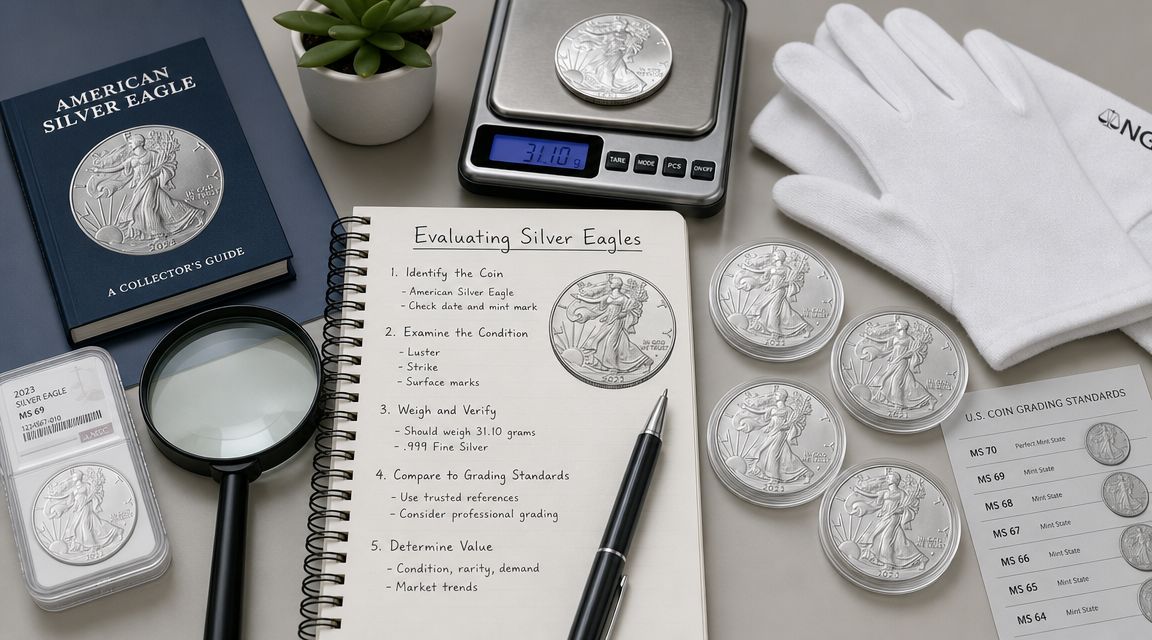
Sort the coins before you ask for offers
Start with four trays, envelopes, or simple groups on a table:
Bullion coins: Standard 1 oz Silver Eagles that are mainly being sold for silver value and liquidity.
Proof coins: Collector strikes, often with mirror fields and frosted devices.
Burnished coins: Collector issues with a different finish, often needing separate treatment.
Certified coins: Coins already graded and sealed by a third-party grading service.
Then make a fifth category for anything that looks unusual. That includes older proofs, reverse proofs, complete sets, mint-marked pieces, and slabbed coins with high grades.
Practical rule: If a coin has special packaging, a certificate, a slab, or a finish that looks different from regular bullion, don't include it in a generic bulk quote.
This step matters because sellers who treat all Silver Eagles as identical bullion may realize lower returns. Some dates and formats, including the 1995-W proof, various reverse proofs, and certified MS70 examples, can command premiums, which is why splitting common bullion from premium material often produces a better total result, as noted by Atlanta Gold & Coin's guidance on selling American Silver Eagle proof coins.
What belongs in the collectible group
You don't need to be a numismatist to sort intelligently. You're not grading yet. You're identifying which coins deserve a closer look.
Put these aside from regular bullion:
Coins in original government packaging: Boxes, capsules, and presentation cases can support a stronger bid.
Proof and reverse proof issues: These usually appeal to collectors more than bulk silver buyers.
Slabbed coins: A certified coin is already authenticated and graded, which changes who should quote it.
Better date or set material: If the coin came from a special issue or complete annual set, treat it separately.
If you also own sterling or scrap silver alongside your Eagles, it helps to separate those categories too. A coin buyer and a flatware buyer may look at them differently, which is why it's useful to understand related resale categories like how to sell silver flatware.
How to Estimate Your Silver Eagles' Market Value
A Silver Eagle's value usually has two layers. First is the metal value. Second is the premium, which is the extra amount a buyer may pay because the coin is recognized, collectible, certified, or easier to resell.
It's similar to a car. Scrap metal value is the floor. Brand, condition, rarity, and paperwork create the spread above that floor.
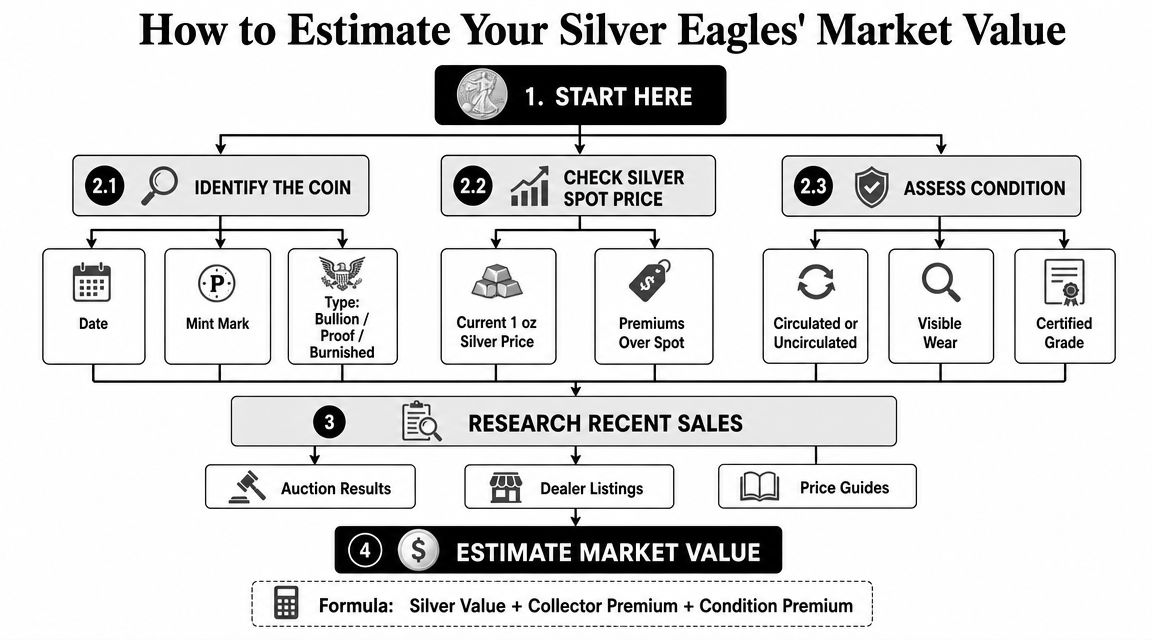
Start with the silver floor
The American Silver Eagle series launched in 1986, and market tallies place total mintage at roughly 674 million coins, with summaries often describing the series as 600+ million or over 500 million sold. The highest bullion mintage year commonly cited is 2015 with 47,000,000 coins, and the lowest bullion year cited is 1996 with 3,603,386 coins. That depth helps explain why common-date Eagles have one of the most liquid secondary markets in U.S. bullion and are often priced quickly as near-spot items, according to Silver Eagle Guide's mintage data.
That liquidity matters when you're selling in Atlanta, Buckhead, Sandy Springs, Alpharetta, Roswell, Brookhaven, Midtown Atlanta, or anywhere else in the Georgia market. A buyer who knows they can move common-date Eagles easily will usually quote them faster than less familiar silver products.
Premium is the part many sellers misread
A common bullion Eagle is often valued as silver content plus a market spread. A collectible Eagle is different. Now the buyer is asking:
Is it proof, burnished, reverse proof, or bullion?
Is it raw or professionally graded?
Is the grade high enough to matter?
Does it have packaging or a certificate?
Is the date or finish one collectors actively seek?
That's why two Silver Eagles with the same silver content can receive very different offers.
A realistic valuation isn't one number. It's a range based on coin type, condition, documentation, and who the likely next buyer will be.
If you're trying to benchmark a bullion-style offer, it helps to compare with how experienced buyers approach other precious metal categories too. The same basic discipline applies when checking the best place to sell gold: know the commodity floor, then separate pieces that deserve a resale premium.
Comparing Your Best Selling Options
Where you sell is often just as important as what you sell. A fast cash buyer may be perfect for bullion Eagles and wrong for a scarce proof. An auction platform may create more interest for a premium coin and less net profit for a common one after fees, time, and hassle.
The strongest selling strategy is usually a matched strategy, not a one-channel strategy.
Match the channel to the coin
For bullion-grade Silver Eagles, reputable local dealers, coin shops, and established online buyback programs are usually the most efficient route. For rarer proofs, low-population certified coins, and special issues, collector networks, specialized auctions, or coin shows may produce a stronger result. Buyer reputation, transparent spreads, insured shipping, and written records all matter, especially because casual peer-to-peer sales tend to carry more fraud risk, as explained in Big Apple Coins' guide to selling American Silver Eagles.
That sounds straightforward, but sellers still get tripped up because they optimize for the wrong thing. They focus only on top-line price, or only on speed, or only on convenience.
Use this lens instead:
Local coin dealer or bullion buyer: Usually the simplest route for common-date coins.
Private collector sale: Sometimes stronger for niche items, but it takes more screening and patience.
Auction format: Better suited to premium or unusual coins when broad bidder exposure matters.
General marketplace listing: Works if you know how to photograph, describe, pack, insure, and manage disputes.
Pawn-style quick cash outlet: Usually chosen for urgency, not for maximizing proceeds.
If you want a private in-person evaluation in Atlanta, one option in the local market is where to sell fine jewelry, which also reflects the kind of appointment-based, documentation-focused process many higher-value asset sellers prefer.
Comparison of Selling Options for Silver Eagles
Selling Option | Potential Price | Speed | Security | Best For |
|---|---|---|---|---|
Local coin shop or bullion dealer | Usually competitive for common bullion | Fast | Strong if established and documented | Common-date bullion Eagles |
Online buyback program | Often solid for standard material | Moderate | Strong if insured and reputable | Sellers outside major metro areas |
Auction platform | Can be stronger for special pieces | Slower | Varies by platform and process | Rare proofs, certified coins, unusual lots |
Private collector sale | Sometimes highest on the right coin | Slower | Lower unless carefully managed | Advanced sellers with niche material |
Pawn or urgent cash outlet | Often weaker | Very fast | Varies | Sellers prioritizing immediate cash |
The wrong channel can cost more than a weak negotiation. A premium coin sold as generic bullion rarely gets a second chance.
Preparing Your Coins and Documentation for Sale
Presentation changes the quality of the offer because it changes the buyer's confidence. Confident buyers bid faster and more precisely.
This doesn't mean polishing the coins or trying to make them look newer. It means organizing them in a way that reduces uncertainty.
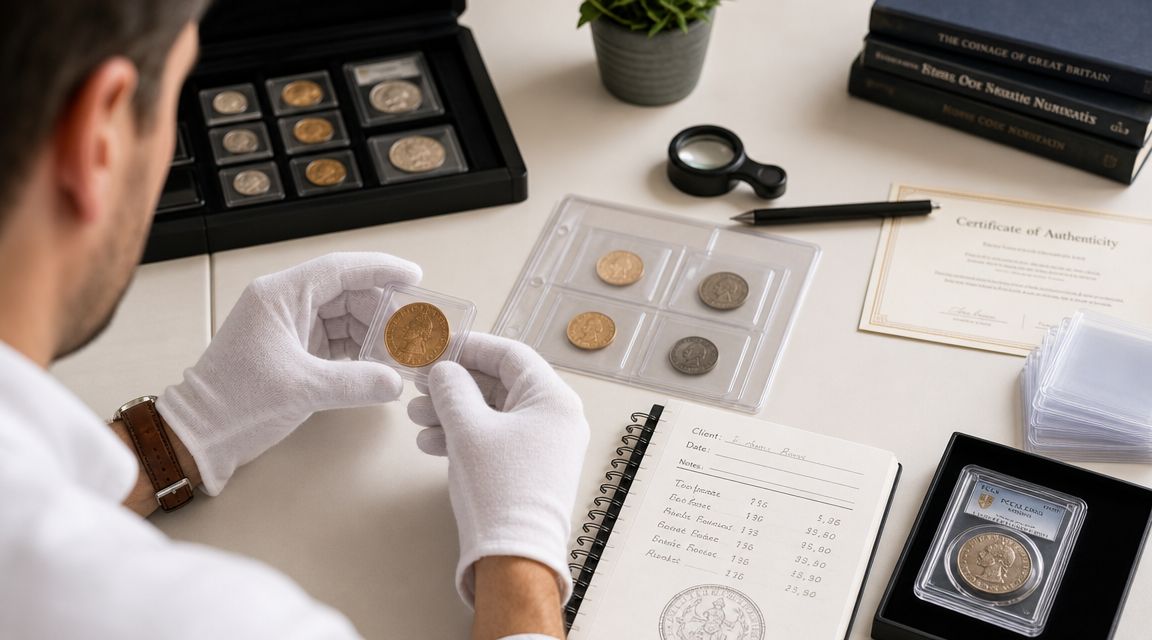
What to gather before requesting quotes
Obtain 3–5 dealer quotes, because one industry guide estimates that comparing multiple offers can improve proceeds by about 5–15% versus taking the first offer. That same guidance notes that coins with original government packaging, certificates, or third-party grading reports usually receive stronger bids because they reduce authentication risk and support collectible premiums, according to Summit Metals' selling mistakes guide.
Before you contact buyers, assemble:
Original packaging: Capsules, mint boxes, outer sleeves, and certificates.
Grading details: If the coin is slabbed, note the grading service and grade.
Clear photos: Front, back, slab label, and packaging.
Simple inventory notes: Year, finish, mint mark if present, and whether it's raw or certified.
The same preparation mindset shows up in other appraisal-driven categories. If you've ever reviewed paperwork for a GIA certified engagement ring, you already understand why original documents can affect confidence and pricing.
What not to do
Don't clean the coins. Don't wipe fingerprints with a cloth. Don't remove a coin from a slab. Don't tape flips together or ship loose coins that can slide and mark each other.
A seller trying to "improve" appearance often damages what a collector buyer wants preserved. Natural surfaces, intact packaging, and honest presentation are better than cosmetic tampering.
Keep the coin exactly as the next serious buyer would want to inspect it.
Safely Completing the Transaction
A fair offer only matters if the transaction is secure. Most problems happen at the finish line, not during the quote stage.
That includes rushed meetings, vague payment terms, poor packing, and shipments with too little protection.
In-person sales
For a local appointment, confirm the business name, address, and evaluation process in advance. Bring your inventory list and documentation, and ask how the buyer separates bullion quotes from collectible quotes.
During the meeting, pay attention to whether the buyer explains the offer clearly. A professional transaction should identify what is being priced as melt-driven bullion, what is being treated as collectible, and whether any pieces need specialist review.
Use practical negotiation, not theatrics:
Ask for line-item clarity: Especially if your lot includes both common bullion and premium pieces.
Take notes: Write down quote details while you're there.
Be ready to walk: If the offer lumps everything together without explanation, keep shopping.
Confirm payment method: Cash, company check, or secure transfer should be clear before you hand over the coins.
Mail-in sales
If you're selling remotely, insured shipping with tracking and signature confirmation isn't optional. Pack coins so they don't shift, and photograph the contents before sealing the package.
For sellers shipping valuable items across borders, it's also worth reviewing resources on how to protect international shipments so you understand where ordinary carrier coverage may stop and separate cargo protection may begin.
Written records matter here too. Save the quote email, packing photos, shipping receipt, tracking details, and final payment confirmation. If you're comparing remote precious-metal and luxury-asset buyers, it also helps to understand how established online watch buyers structure insured shipping, intake, and payment controls, because the same security principles apply.
Understanding Tax and Record Keeping Essentials
A clean sale isn't just one where you got paid. It's one where you can prove what you sold, what you received, and what the transaction cost you.
Many sellers ignore this part because it isn't exciting. That's a mistake. Weak records make it harder to measure the sale's actual profitability, and harder to document it later if questions come up.
Why the paperwork matters
APMEX advises sellers to track profit or loss from a sale for accurate tax reporting, and that advice deserves more attention than it usually gets. Preserving invoices, photos, grading information, and shipping receipts matters because the best gross offer isn't always the best net result after fees and related costs, as noted in APMEX's guide to selling American Eagle silver coins.
This isn't legal or tax advice. It's practical discipline.
If you can't reconstruct the transaction six months later, your recordkeeping wasn't good enough.
What to keep in your file
Keep one folder, digital or physical, with:
Original purchase records: Invoices, receipts, or estate documentation if available.
Sales records: Buyer name, date, coin description, and amount paid.
Support documents: Photos, slab numbers, certificates, and packaging notes.
Transaction costs: Shipping, insurance, and any related fees.
If you want a simple framework for organizing records in case your files are ever reviewed, this Bookkeeping and Accounting Florida audit resource is a useful general checklist.
Frequently Asked Questions About Selling Silver Eagles
A lot of seller questions come down to edge cases. Should you grade first, sell as a lot, keep the packaging, split the collection, or wait?
The right answer depends less on theory and more on what type of Eagles you have.
Question | Answer |
|---|---|
Should I sell all my Silver Eagles in one lot? | Not automatically. If the group includes common bullion and collectible formats, splitting the lot usually makes more sense. Bulk bullion often belongs with a dealer quote, while proofs, reverse proofs, burnished coins, and strong certified examples deserve separate review. |
Are common-date Silver Eagles easy to sell? | Usually, yes. The series has a deep secondary market, so standard bullion pieces are often straightforward for established buyers to evaluate and quote. |
Does original government packaging matter? | Yes, especially for collectible issues. Packaging, certificates, and mint materials can improve buyer confidence and support stronger bids because they reduce authentication uncertainty. |
Should I clean tarnished or spotted coins before selling? | No. Cleaning can hurt value, particularly on coins that may have collectible appeal. Leave surfaces alone and let the buyer evaluate them as-is. |
Is it worth grading my Silver Eagles before selling? | Sometimes, but not always. Grading can make sense for coins that already appear to be premium candidates, such as better dates, special finishes, or pieces with strong eye appeal. For ordinary bullion Eagles, grading often doesn't improve the outcome enough to justify the extra step. |
What if I inherited a collection and don't know what's inside? | Sort first by bullion, proof-style packaging, certified slabs, and anything unusual. Then get multiple quotes and ask buyers to identify which pieces are being treated as collectible rather than as ordinary silver bullion. |
Should I sell to a local buyer in Atlanta or use an online buyer? | It depends on your priorities. Local selling may feel more direct and easier for same-day resolution. Online buyers can be useful if they provide clear procedures, insured shipping, and written offers. |
How many quotes should I get? | More than one. Comparing several quotes helps you see whether one buyer is pricing everything as bulk bullion while another is recognizing premium pieces properly. |
Do complete sets sell differently from loose coins? | Often, yes. Some buyers will pay more attention to a complete set than to the same coins scattered across individual flips, especially if the packaging and documentation are intact. |
What records should I keep after the sale? | Keep invoices, buyer details, photos, grading information, shipping receipts, and the final payment record. Good files help you confirm the sale terms and support later reporting. |
One more point for higher-net-worth sellers, estate representatives, or anyone liquidating multiple asset classes at once: it helps to think about the sale inside a wider documentation plan. Even a general visual like this family office financial guidance can be a reminder that asset sales, records, taxes, and timing often connect.
If you're in Atlanta, Buckhead, Sandy Springs, Alpharetta, Roswell, Brookhaven, Midtown Atlanta, or the greater Georgia market, the practical path is the same. Sort your Silver Eagles correctly, gather the paperwork, compare reputable offers, and don't let collectible coins get absorbed into a bullion quote.
If you'd like a professional review of your Silver Eagles or other high-value items, Antwerp Diamond offers private evaluations, local appointments, and remote selling options with a straightforward, documentation-focused process.