
A genuine diamond is a real diamond made of crystalline carbon, and that term can apply to either a natural diamond or a lab-grown diamond. It does not mean a lookalike stone such as cubic zirconia, because simulants may resemble diamond but they are not diamond material.
If you're holding a ring, loose stone, or inherited piece of jewelry and wondering what "genuine diamond" means for an appraisal or cash offer, the answer is more nuanced than most sellers expect. A stone can be genuine and still be lab-grown. It can be genuine and still be treated. It can also be visually convincing and still turn out to be a simulant. For anyone selling in Atlanta, Buckhead, Sandy Springs, Alpharetta, Roswell, Brookhaven, Midtown Atlanta, or elsewhere in Georgia, that distinction affects value immediately.
Table of Contents
What Is the True Meaning of a Genuine Diamond
A client walks in with a ring, points to an old receipt that says "genuine diamond," and expects that wording to settle the value question. In an appraisal room, it does not. "Genuine" only tells me the stone is being represented as diamond, not what kind of diamond it is, whether it has been treated, or how the resale market will price it.
In gemology, a diamond is crystalline carbon. The distinction is important because sellers often confuse "genuine" with "natural" and then assume rarity, strong resale demand, and a higher cash offer. In actual trade use, a genuine diamond may be natural or lab-grown, since both are diamond. From a seller's perspective, origin is where value starts to separate.
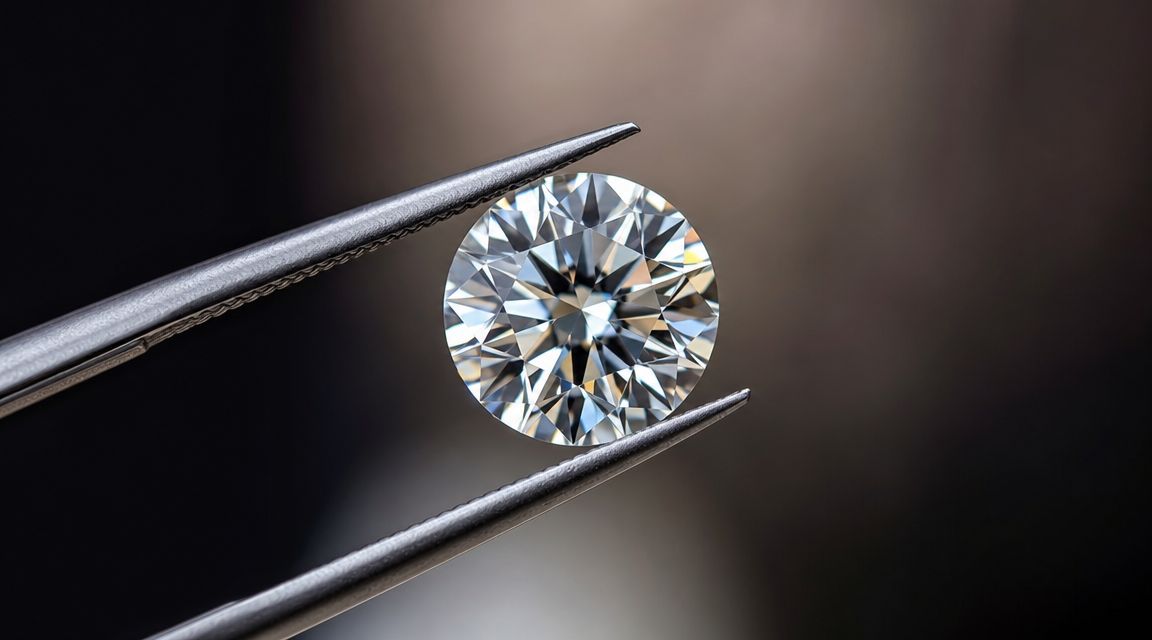
That gap between label and market reality affects cash offers every day. A natural diamond with credible grading, no treatment disclosure issues, and healthy demand trades in a very different range than a lab-grown diamond of similar face-up appearance. A treated natural diamond can also sell for less than an untreated stone, even though both are genuine diamond material. Sellers who skip these distinctions usually misjudge what they own.
Why this matters to a seller
For resale, estate division, or a loan review, the useful questions are more specific than "is it genuine?":
Is it diamond material? This separates diamond from lookalikes such as moissanite or cubic zirconia. If you are still choosing between moissanite and diamonds, that distinction affects value immediately.
Is it natural or lab-grown? Both are real diamonds, but the secondary market prices them differently.
Has it been treated? Fracture filling, HPHT, irradiation, and other enhancements can change what a buyer is willing to pay.
Can the origin and quality be supported? A grading report, inscription match, or prior appraisal can shorten the path to a credible offer, even if the stone still needs to be checked in person.
A practical rule in the trade is simple. "Genuine" is a starting description, not a value conclusion.
That is especially true in mounted jewelry. A ring may sell better as a finished piece than as a loose center stone, but the offer still depends on what the diamond is, how the market views that category, and how easy it is to verify. Sellers comparing options can review this guide on where to sell fine jewelry.
Natural vs Lab-Grown vs Simulants A Clear Comparison
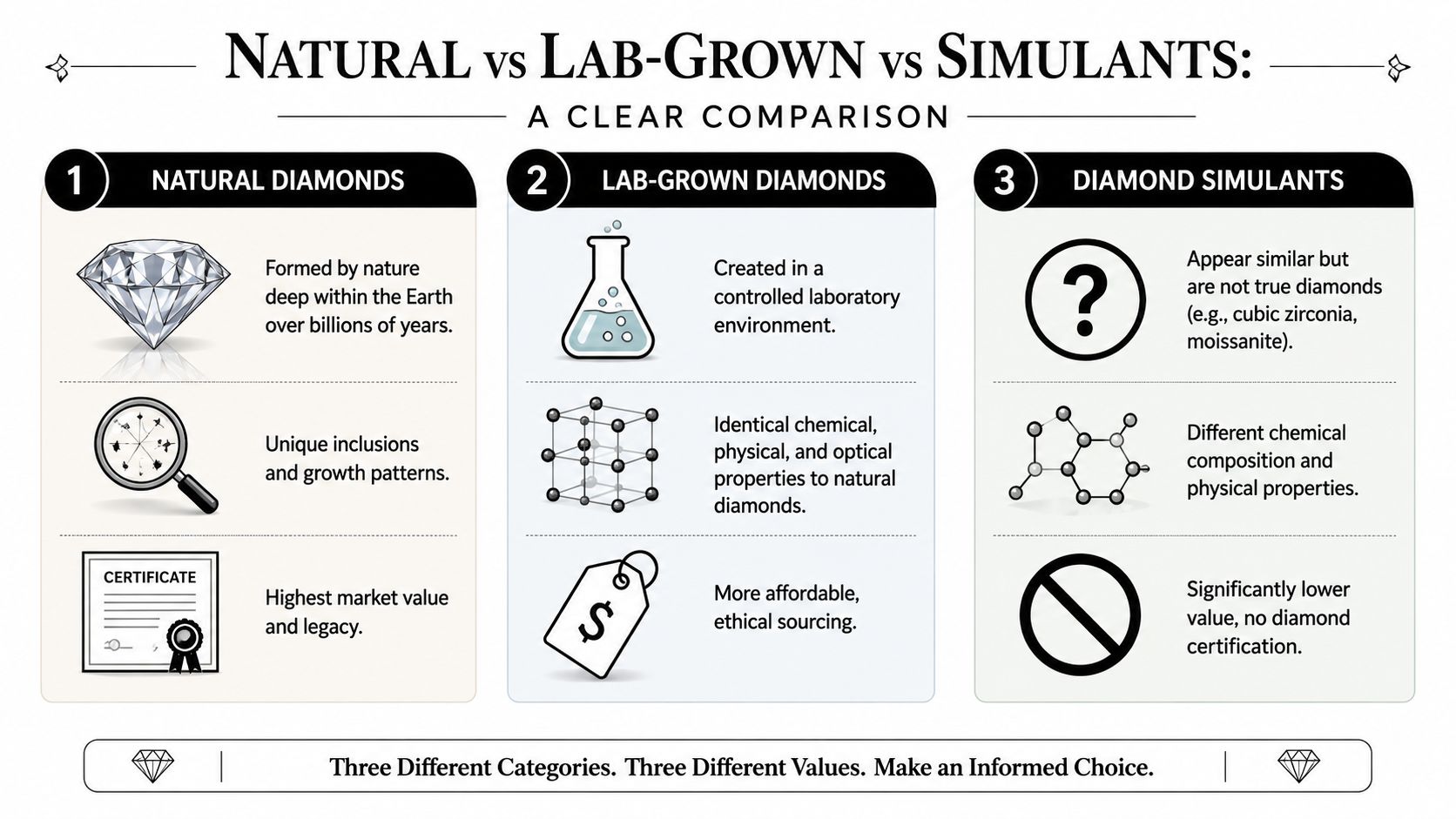
The easiest way to understand genuine diamond meaning is to separate the stones you see in the market into three buckets. Two are real diamonds. One only looks similar.
What each category actually means
A natural diamond formed in the earth. A lab-grown diamond was created in a controlled environment. A simulant is something else entirely, such as cubic zirconia or moissanite, depending on the stone.
In the trade, a genuine diamond can mean either a natural diamond or a lab-grown diamond, because both are chemically, physically, and optically real diamonds. The key distinction is origin, not composition, and lab-grown stones are produced in controlled environments that replicate the high-pressure, high-temperature conditions of Earth formation, as explained in this comparison of lab-grown vs natural diamond differences.
Here is the comparison that matters most to a seller:
Attribute | Natural Diamond | Lab-Grown Diamond | Diamond Simulant (e.g., CZ) |
|---|---|---|---|
Material | Real diamond | Real diamond | Not diamond |
Origin | Formed in the earth | Created in a laboratory | Manufactured or naturally different gemstone |
Naked-eye appearance | Can look identical to other categories | Can look identical to natural | Can also look convincing |
Authenticity status | Genuine diamond | Genuine diamond | Not a genuine diamond |
Typical resale position | Usually strongest | Usually lower than natural | Usually minimal intrinsic stone value |
A lot of consumer confusion comes from appearance. A very bright, clean stone isn't automatically natural. A slightly included stone isn't automatically lower quality in a resale setting either. In practice, the market pays for what the stone is, not just how it looks in a ring box.
This video gives a useful visual overview before a hands-on evaluation:
What sellers need to understand about resale
Natural diamonds usually sit at the top of the value hierarchy because buyers are paying for geological origin, rarity, and established market demand. Lab-grown diamonds are real diamonds, but they don't usually trade the same way on resale. Simulants generally don't carry diamond-level cash value because they aren't diamond.
A seller's biggest mistake is assuming "real" and "valuable" are the same thing.
That's why "genuine diamond ring" in an old receipt doesn't answer the value question. It only tells you the center stone may be real diamond material. It doesn't tell you if it's natural, lab-grown, treated, or attractive to the secondary market.
If you're trying to understand alternatives that often get confused in consumer shopping, this breakdown on choosing between moissanite and diamonds is useful because it shows why appearance alone can mislead buyers and sellers.
How Gemologists Determine Diamond Authenticity
Professional authentication doesn't start with a fog test, a scratch test, or guessing from sparkle. It starts with measurable properties.
A natural diamond is a crystalline form of carbon with atoms arranged in a diamond-cubic lattice, and gemologists rely on measurable diagnostics such as thermal conductivity testing and microscopic inspection of inclusions rather than appearance alone, as described in this explanation of how natural diamonds are identified.
Why visual checks fail
At-home tests are popular because they're simple. They also create false confidence.
A real diamond can have inclusions. A fake can look very clear. A lab-grown diamond can appear identical to a natural diamond to the naked eye. Surface sparkle, size, and "how expensive it looks" aren't authentication tools.
Here are common seller assumptions that often go wrong:
"It looks flawless, so it must be valuable". Flawless appearance doesn't prove authenticity or natural origin.
"It was bought years ago, so it must be natural". Age of ownership is not proof of origin.
"The jeweler said it was genuine". That wording may only confirm it is real diamond, not that it is natural or untreated.
Documentation is part of the stone's value story, not just a piece of paper.
What a real authentication process includes
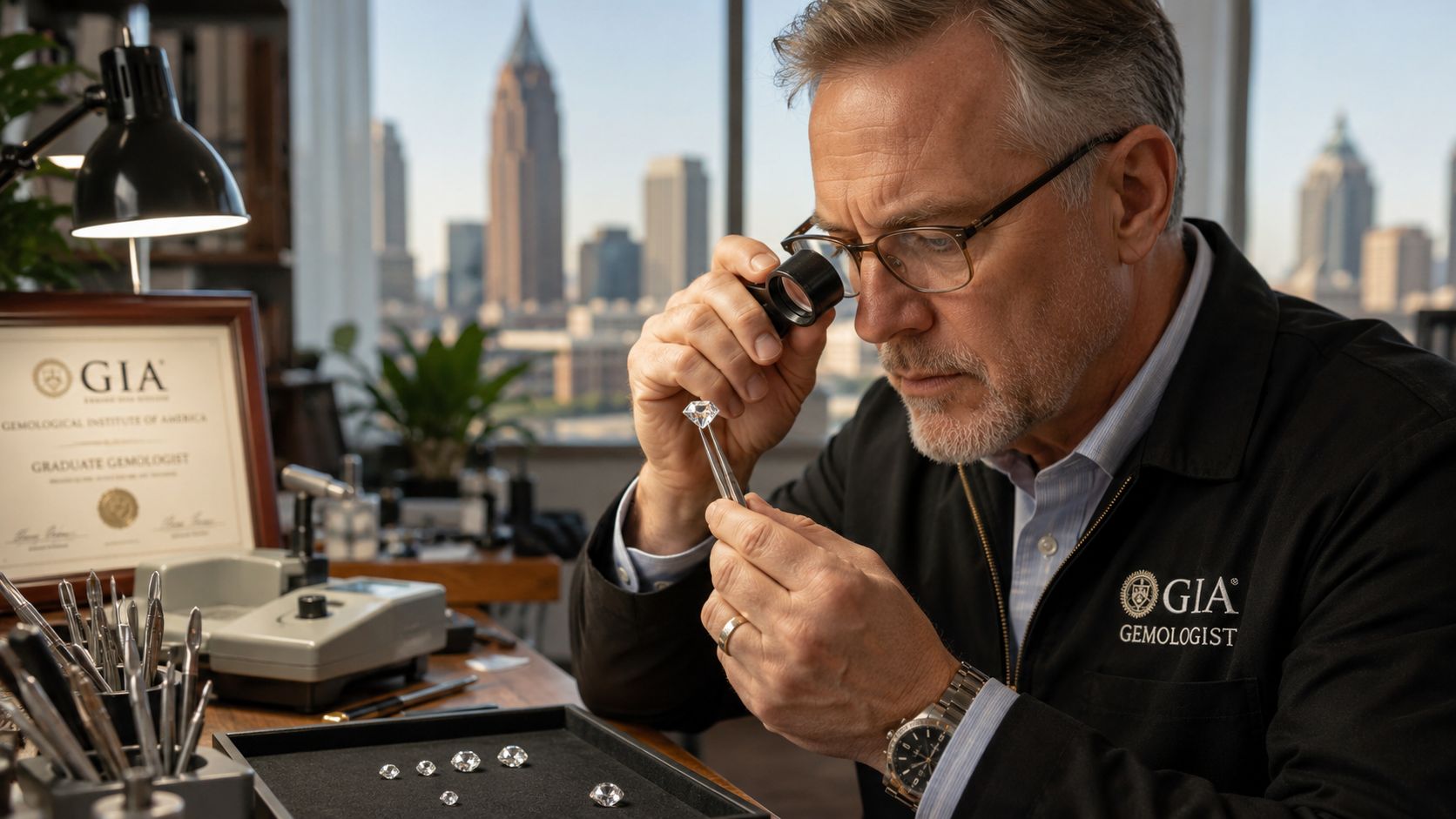
A proper review usually includes several checks together, not one trick. Gemologists examine the stone under magnification, review facet edges and surface wear, assess inclusions, and use diamond testing equipment. If the stone has a laser inscription, that inscription should match the grading report exactly.
For sellers, the workflow is usually straightforward:
Initial visual review. The stone and mounting are examined for obvious clues, damage, wear, and setting limitations.
Instrument testing. Thermal conductivity tools help separate diamond from many simulants.
Microscopic analysis. Internal features may support natural formation or raise questions about origin.
Report matching. If a certificate exists, inscription and report details must line up.
Market interpretation. After identity is clear, the evaluator can discuss resale implications.
If you want a consumer-friendly explanation of the paperwork side, this guide on why diamond certification matters is a useful companion. For examples of report-backed stones, this page on a GIA certified engagement ring also helps show what proper documentation looks like in practice.
Why Diamond Authenticity and Origin Matter for Value
Two stones can look almost identical in a ring and produce very different offers. That's the part many sellers don't expect.
The market doesn't price a diamond only by beauty. It prices identity first, then quality, then saleability. If origin is uncertain, value becomes uncertain. If a stone turns out to be lab-grown or treated, the offer can shift significantly from what the owner expected.
Origin comes before grading
The Four Cs, cut, clarity, carat, and color, are the grading language most sellers know. They matter, but only after the material has already been confirmed as diamond and the origin question has been addressed. The Four Cs were established and are universally recognized by the Gemological Institute of America, and this overview also notes that in 2024 Canada was the world's fourth-largest producer of rough diamonds by value, accounting for 11% of global production, according to this summary on diamond grading and market context.
That distinction is important in an appraisal or cash-offer setting. A stone doesn't become more valuable just because someone knows its carat weight. Carat without identity is incomplete information.
How this affects a cash offer
From a seller's perspective, the practical value order is usually simple:
Natural diamond: strongest demand in many resale situations
Lab-grown diamond: real diamond, but usually weaker resale position
Simulant: often valued mainly as part of fashion jewelry, not as a diamond asset
This is why appraisal conversations can feel frustrating if the owner focuses only on size. A larger stone that is lab-grown or treated may bring less than a smaller natural stone with stronger market demand. The same issue comes up with mounted jewelry, where the setting, brand, condition, and documentation also shape the final offer.
If you're trying to estimate your item before an appointment, this guide on how much a diamond is worth gives a practical starting point. It helps frame the difference between retail expectations and actual resale logic.
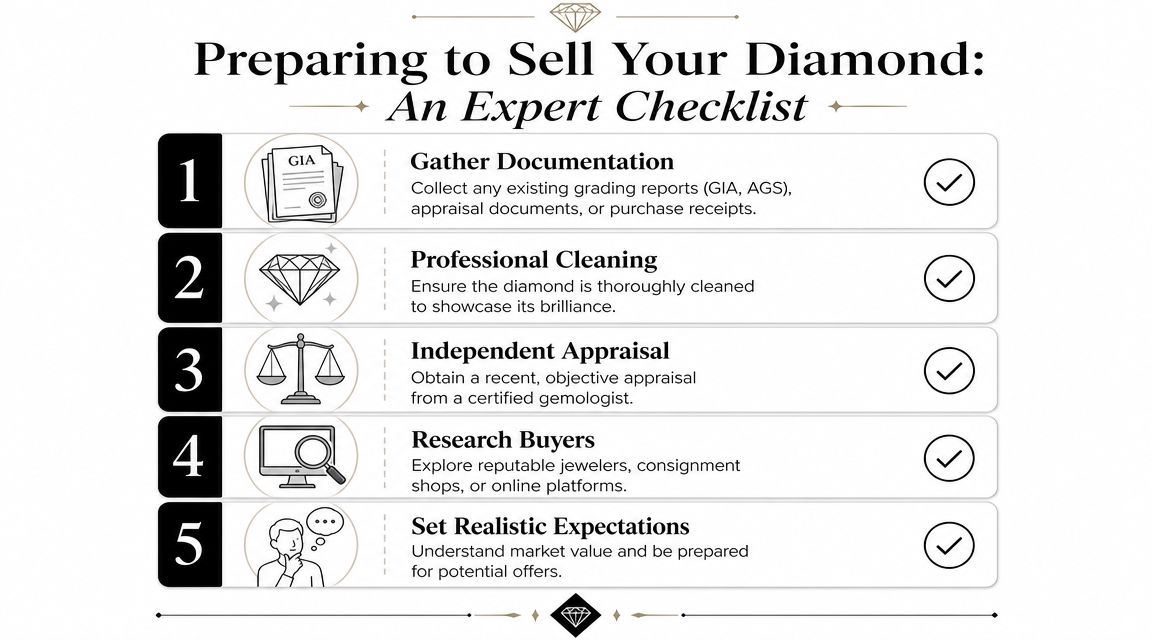
Preparing to Sell Your Diamond An Expert Checklist
A seller walks in with a ring, an old appraisal, and a firm idea of what the stone should bring. Ten minutes later, the actual issue is usually clear. The offer depends less on the owner's expectation and more on what can be verified about the diamond, the mounting, and the paperwork.
Preparation affects price because it affects certainty. A buyer can move faster and take less risk when the stone's identity, condition, and selling format are clear. That matters whether you are offering a loose diamond, a finished ring, or an estate piece with incomplete history.
What to gather before your appointment
Bring documents that help establish what the stone is and how it has been represented before. In a resale setting, that can narrow the gap between a quick estimate and a defensible cash offer.
Grading reports: GIA reports carry the most weight for many buyers because they help confirm whether the stone is natural or lab-grown and record the grading details used in the offer.
Previous appraisals: These are reference documents, not pricing commitments. They can still help identify the item, note measurements, and flag whether the jewelry was described as natural, treated, or branded.
Receipts or invoices: Purchase records can show what the seller was told at the time of sale.
Stone plots, repair slips, and old envelopes: Small paperwork often helps more than owners expect, especially when a report number is missing or the piece has been serviced over time.
The complete jewelry item: If the diamond is mounted, bring the whole ring or pendant. Head style, condition, brand marks, and side stones can all affect salability.
What to avoid before selling
Do not try to "improve" the diamond before an appointment. I regularly see stones brought in after ultrasonic overuse, harsh chemical cleaning, or unnecessary resetting. Those steps can loosen prongs, damage fragile mountings, and add cost without improving the offer.
Keep the preparation simple.
Clean gently: Warm water, mild soap, and a soft brush are usually enough.
Leave the stone in the mounting: Removing it first can create liability, extra bench work, and new questions about whether the stone matches older paperwork.
Skip home tests: Scratch tests and online photo comparisons do not establish origin, treatment status, or market value.
Separate sentiment from resale: Insurance numbers and family significance do not translate directly into a buyer's cash position.
One more practical point. Decide whether you are selling the diamond for its stone value, the jewelry for its wearable resale value, or the piece for scrap and diamond recovery. Those are different channels, and they can produce very different numbers.
If you are bringing in a mounted piece, this guide on how much to value a diamond ring explains the factors buyers and appraisers review before putting a number on it.
Get a Professional Diamond Evaluation in Atlanta
By the time a seller asks about genuine diamond meaning, the actual question is usually financial. Is this a natural diamond, a lab-grown diamond, a treated diamond, or a simulant, and what does that mean for a sale, loan discussion, or appraisal?
A genuine diamond may still be treated to improve color or clarity, and those treatments can materially affect value. Because treatments are not always visible to the naked eye and may not be disclosed clearly at sale, expert verification is critical before a realistic market price can be established, as discussed in this article on untreated versus treated diamonds.
Who should get a professional review
You should get a formal evaluation if any of these sound familiar:
You inherited a diamond ring: Estate pieces often come with incomplete paperwork.
You only have an old appraisal: Older documents may not answer origin or treatment questions clearly.
You're considering selling soon: You need resale reality, not retail replacement language.
You're comparing a sale versus a loan: Both require accurate identification.
You live in the greater Atlanta market: In-person review is often the fastest way to remove uncertainty.
For clients in Atlanta, Buckhead, Sandy Springs, Alpharetta, Roswell, Brookhaven, and Midtown Atlanta, an in-person appointment lets a specialist examine the stone, paperwork, and mounting together. One local option is Antwerp Diamond, which provides private evaluations for diamonds, jewelry, and other luxury assets, along with remote submission options for clients outside Georgia. If you're starting with a ring sale question, this page on selling a diamond ring near you is a useful next step.
What to bring to an in-person evaluation
Keep it simple. Bring the ring or loose stone, any report or appraisal, and any receipts you still have. If the piece came from a known jeweler or includes branded documentation, bring that too.
That gives the evaluator the best chance to determine what the stone is, whether the origin claim holds up, and how the current resale market is likely to view it.
If you want a clear answer on what your diamond is worth, contact Antwerp Diamond for a confidential evaluation. You can request a review online or arrange a private appointment if you're in Atlanta, Buckhead, Roswell, Sandy Springs, or the surrounding Georgia market.