
To sell gold in Tampa, first sort your items by karat, then compare offers against the live spot price before accepting any deal. Gold moved through $4,000 per ounce in 2025, and Tampa jewelers reported a rush of sellers when prices spiked, so even small differences in purity, testing, and buyer type can change your payout materially.
If you're reading this with a tangle of old chains, broken bracelets, single earrings, or inherited jewelry on the table, the biggest mistake is treating every offer as if it's based on the same math. It isn't. In Tampa, a quick cash offer and a fair market value offer can look similar at first, but they often come from very different testing methods, pricing logic, and business models.
A fair offer starts with the right inputs: karat, weight, current market price, and a buyer who explains the deduction from spot in plain English. A weak offer usually shows up when items get lumped together, weighed without explanation, or quoted as a convenience purchase instead of a metal-value transaction.
Table of Contents
How to Prepare Your Gold for a Tampa Sale
You walk into a Tampa gold buyer with a tangled bag of chains, a class ring, two single earrings, and a coin from a relative. One counter offer comes back fast because everything is treated as scrap. A better offer usually starts before you leave home, by separating what you have so each item is judged on the right standard.
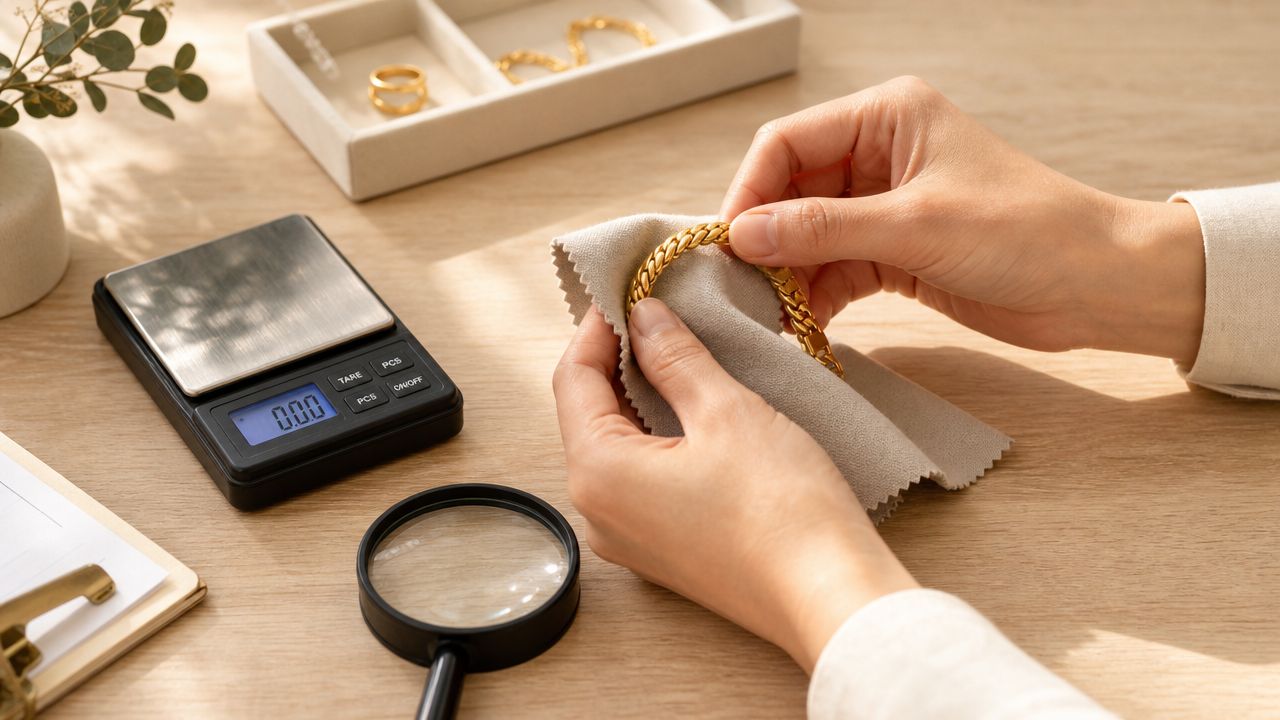
Preparation does two things. It speeds up the appointment, and it makes weak quotes easier to spot. A quick cash buyer benefits when mixed items get evaluated in one pile. A fair market value offer is more likely when karat, weight class, and resale category are already clear.
Sort by karat before anyone quotes you
Start with the stamp inside the ring shank, near a clasp, or on the back of a pendant. Common marks include 10K, 14K, 18K, and 24K. If you need a refresher on what those marks mean, this guide on gold purity levels explained gives the basics.
Keep the process simple:
Group stamped pieces by karat.
Put unmarked items in a separate pile.
Bag each group so nothing gets mixed at the counter.
Write a quick note if a piece is broken, missing a stone, or has a non-gold clasp.
That last point matters more than sellers expect. I have seen hollow pieces, spring-loaded clasps, and two-tone jewelry quoted as if all the weight were equal. It is better to know which items may need closer testing before a buyer starts writing numbers on a pad.
Use a home scale only for a rough check. Grams are the standard, and the final weight should be taken on a calibrated jewelry scale in front of you.
Never accept one blended quote for mixed-karat jewelry if you have not seen how the buyer separated it.
Separate scrap, bullion, and jewelry with resale potential
First-time sellers often leave money on the table. Gold is not one category.
Broken chains, plain bands, single earrings, and damaged pieces usually sell on metal value. Coins and bars should be discussed as bullion. Signed jewelry, well-made estate pieces, and items with diamonds may deserve review beyond melt. If everything goes into a single tray as "gold," the fast offer is often the lower offer.
Here is the simplest way to sort it:
Item type | How to group it before selling | Why it matters |
|---|---|---|
Broken or plain gold jewelry | Scrap pile by karat | Usually valued for metal content |
Coins and bars | Separate from jewelry | Often priced differently from scrap |
Signed or designer pieces | Keep together with boxes or papers | May deserve evaluation beyond melt |
Jewelry with diamonds or colored stones | Separate for closer review | Stones may need independent consideration |
Original boxes, receipts, and brand paperwork can help with signed jewelry. They usually do not change scrap value, but they can matter if the buyer has an estate or retail channel.
For broader context on buyer types and selling venues, this article on where to sell jewelry for cash is a useful reference.
Clean lightly, but do not repair for a gold sale
A soft cloth is enough. Remove dust, lotion, and obvious debris so stamps are easier to read and pieces can be handled cleanly.
Do not spend money polishing, soldering, re-tipping prongs, or replacing missing stones if the item is headed for scrap. Those costs rarely come back in the offer. The exception is a piece you believe has resale value as jewelry, not just melt. In that case, keep all parts together and let the buyer decide whether condition affects the category.
Good preparation does not mean making the gold look new. It means making it easy to test, weigh, and classify correctly. That is the difference between a quick payout and an offer that reflects what you brought in.
Understanding How Gold Buyers Calculate Offers
A seller walks into a Tampa shop with a tangled pile of chains, a class ring, and one heavy bracelet. One buyer glances at the lot and names a number in under a minute. Another sorts by karat, tests each group, removes non-gold parts from the weight, checks the live market, and explains the math. Those two offers can be far apart, even when the gold is the same.
The four variables behind a real offer
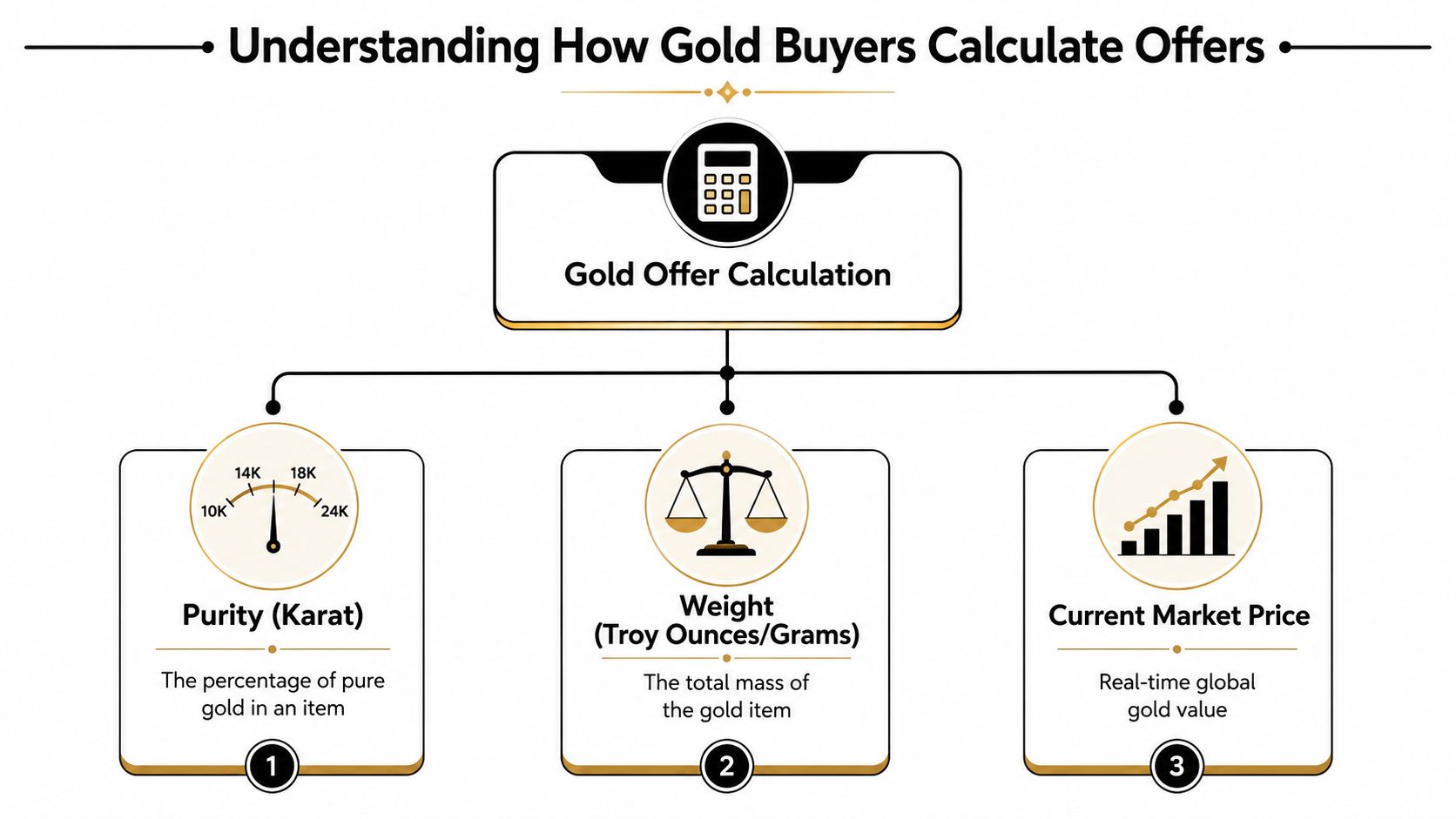
Gold buyers usually build an offer from four inputs. Purity, weight, spot price, and buyer margin. If any one of those is handled loosely, your payout drops.
Purity
The buyer identifies the actual gold content, such as 10K, 14K, 18K, or 22K. Hallmarks help, but serious buyers verify rather than relying on the stamp alone.Weight
Gold is usually weighed in grams. A careful buyer separates pieces by karat and may subtract stones, springs, pins, or other non-gold components before calculating value.Spot price
The current market price for gold sets the benchmark for the metal content.Buyer margin
The buyer discounts from spot to cover refining loss, overhead, market movement, and profit.
That fourth variable creates the biggest gap between a quick cash offer and a fair market value offer.
A fast buyer may quote one number for the whole pile because speed is the product. That can make sense if you need money the same day and are willing to accept less for convenience. A stronger offer usually comes from a buyer who tests carefully, separates by purity, and shows how the live gold price affects the final number.
If you need a simple refresher on karat content before you sell, this guide on gold purity levels explained is a useful primer. For a broader look at sale options and valuation context, this guide on the best place to sell gold adds helpful perspective.
Why testing method changes confidence in the quote
Testing is where experienced buyers separate themselves from buyers who are just trying to buy cheap.
Professional buyers often use XRF analysis, along with hallmark review, magnet testing when needed, and precise gram scales. XRF is fast and non-destructive, and it gives a clearer read on alloy content than a quick visual guess. Acid testing still has a place, especially for confirming questionable pieces, but by itself it gives a first-time seller less visibility into how the karat call was made.
The practical issue is simple. If a buyer undercalls 18K as 14K, or mixes 10K and 14K in one scrap total, the payout falls immediately.
Ask direct questions and listen for direct answers:
What karat did you determine for each item or group
Did you remove non-gold parts from the weight
What live spot price are you using right now
What percentage of spot are you paying on this category
Is this being bought for scrap, resale, or bullion inventory
Those last words matter. Buyer type affects payout. A refiner-focused scrap buyer may pay well on plain broken chains. A jeweler may pay more for a wearable piece. A pawn-style transaction often prioritizes speed and margin.
What a transparent offer sounds like
Clear offers are specific. Weak offers stay vague.
Offer style | What you usually hear | What it often means |
|---|---|---|
Quick cash offer | "I'll pay this for everything" | The buyer is prioritizing speed, and the calculation may be broad or undisclosed |
Fair market value offer | "This group is 14K, this is the net weight, here is today's spot, and here is my buy price" | The buyer is showing the logic behind the number |
In practice, the best Tampa offers usually come from buyers who are willing to slow down long enough to test, sort, and explain. That extra five or ten minutes often matters more than any slogan about paying top dollar.
Comparing Tampa Gold Buyers Local vs Online Options
A Tampa seller can walk into one shop and get a quick cash number in five minutes, then visit a second buyer and hear a much higher offer on the same lot. The difference usually is not luck. It comes from how carefully the gold is tested, whether the buyer is paying as scrap or resale inventory, and how much margin they need built into the deal.
Local and online buyers both have a place. The better option depends on your items, your timeline, and how much visibility you want into the pricing.
What each buyer type usually prioritizes
Use buyer type as a clue, not a guarantee. Two local stores on the same block may price the same bracelet very differently if one is buying for scrap and the other thinks it can resell the piece.
Buyer Type | Typical Offer Style | Speed | Best Fit | Main Trade-Off |
|---|---|---|---|---|
Pawn shop | Broad lump-sum offer | Usually same day | Immediate cash needs | Speed often comes with a wider buying margin |
Jewelry store | Scrap offer or resale-based offer | Fast to moderate | Wearable jewelry, signed pieces, estate items | Results depend on whether the buyer sees retail value or only melt |
Coin or bullion dealer | Metal-driven pricing | Moderate | Coins, bars, simple gold items | Less interested in design value or small accent stones |
Online specialist buyer | Structured review and final offer after receipt | Moderate | Comparison shopping, specialty items, privacy-sensitive sales | You do not watch testing in person |
The question is not local versus online. It is whether the buyer is set up to value your item correctly.
A pawn-style buyer may be perfectly reasonable if you need funds today and accept that convenience has a cost. A jeweler can outperform a scrap buyer on a wearable chain, a branded bracelet, or a piece with strong resale appeal. A bullion dealer is often sharper on bars and coins because the pricing model is tied closely to metal content and market spread.
For sellers sorting an estate lot with more than one precious metal, this guide on where to sell platinum is useful because blended quotes can hide value.
Where local Tampa buyers usually have the edge
A local sale gives you something online cannot fully replicate. You can put the item on the counter, ask why one chain tested 14K and another tested 18K, and decide on the spot whether the explanation makes sense.
That transparency matters most for first-time sellers. If a buyer is willing to separate pieces, remove non-gold components from weight, and explain the offer line by line, you are much closer to fair market value than to a rushed cash number. Same-day payment is also a real advantage if you do not want to ship valuables or wait through a review process.
Where an online or remote buyer can make sense
Remote selling works best when the item needs a more specialized audience or when convenience matters more than in-person testing. Designer jewelry, mixed jewelry-and-watch lots, or pieces that may deserve resale review instead of pure melt are common examples.
The trade-off is simple. You gain reach and often a cleaner comparison process, but you give up the ability to watch the evaluation happen in front of you. That means the terms matter. Look for insured shipping, a clear acceptance step before payment, and a stated return process if you decline the offer.
Antwerp Diamond Store is one example of a buyer that offers online evaluations, insured shipping options for remote clients, and in-person appointments in several U.S. markets. For a Tampa seller, that can serve as a comparison quote rather than a substitute for checking strong local buyers.
The practical approach is to match the buyer to the item. Plain broken gold usually belongs with the buyer who prices metal accurately and explains the math. A signed or wearable piece belongs with the buyer who may pay beyond melt. That is the difference between a quick cash offer and a fair market value offer, and it is where many Tampa sellers leave money on the table.
How to Verify a Buyer's Legitimacy and Avoid Scams
When gold prices are high, sloppy buying gets more common. In 2025, gold broke through $4,000 per ounce, and Tampa-area jewelers reported a rush of sellers and investors, according to FOX 13's report on Bay Area gold demand. Busy markets attract reputable buyers, but they also attract opportunists.
The checks worth doing before you visit
A legitimate buyer shouldn't be offended by basic due diligence. If anything, a solid business expects it.
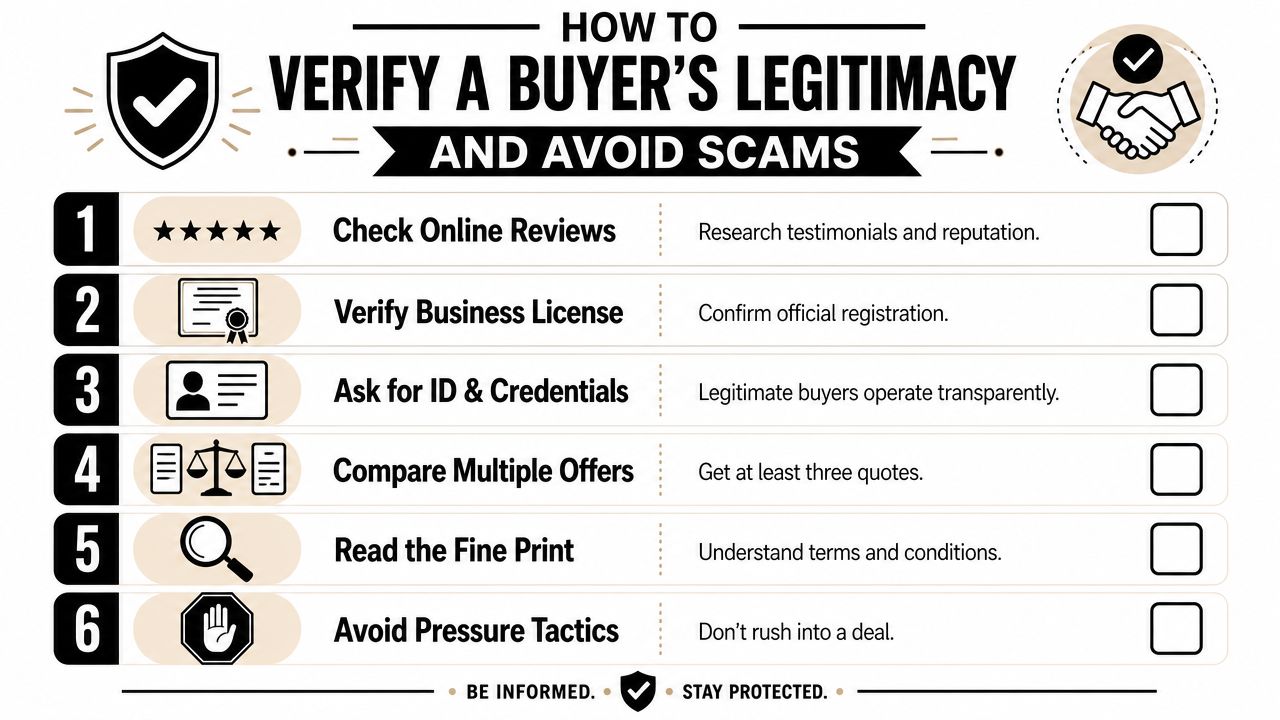
Use this checklist before you commit:
Check reviews carefully: Look for patterns, not just star counts. Repeated comments about hidden fees, changing quotes, or rushed transactions matter.
Verify BBB information: You're looking for consistency between the business name, address, and complaint history.
Confirm licensing and business identity: A real storefront should be easy to verify.
Ask how testing is done: The answer should be clear and specific.
Request a written breakdown: Karat, weight, and final offer should be understandable.
Bring your ID: Buyers commonly require government-issued identification for precious-metal transactions.
This short video is worth watching if you want a basic scam-awareness refresher before selling:
For sellers comparing remote luxury buyers, this article on online watch buyers is useful because many of the same trust checks apply to mail-in transactions.
Pressure tactics that should end the conversation
Some red flags are subtle. Others aren't.
Walk away if you hear or see any of the following:
"This offer is only good right now" when no market explanation is given.
Testing done out of sight with no reason and no transparency.
A lot quote with no item breakdown when your pieces are mixed in karat or type.
Reluctance to answer simple questions about purity, weight, or spot reference.
No receipt or unclear paperwork after an offer is made.
You don't need to prove a buyer is dishonest before leaving. You only need to decide that the process isn't transparent enough.
A fair buyer knows sellers are cautious. That's normal. The gold is yours until you accept the deal.
Frequently Asked Questions About Selling Gold in Tampa
Is now a good time to sell gold in Tampa
It can be. The World Gold Council reported gold repeatedly hitting record highs in 2024 and staying near historic levels into 2025, which is why a fair offer should stay closely tied to the live spot price, as discussed in this market-focused seller guide. The better question isn't just whether prices are high. It's whether the offer in front of you reflects current market conditions.
Do I need an appraisal before selling scrap gold
Usually, no formal appraisal is needed for straightforward scrap gold. What you do need is a clear evaluation showing purity, weight, and the buyer's pricing logic. Formal appraisals are more relevant when a piece may have resale, designer, or gemstone value beyond melt.
What if my jewelry is gold-plated or gold-filled
Those items are different from solid gold and usually bring less because the recoverable gold content is lower. Keep them separate from solid gold before getting quotes. If you mix them into one pile, the entire offer can get muddier.
Should I sell locally or online
Sell locally if you want in-person testing, quick answers, and immediate payment. Consider online if you want to compare specialized buyers, need privacy, or have a more complex lot. For jewelry that may deserve more than scrap treatment, this guide on where to sell fine jewelry for maximum value is a helpful next step.
Will I need ID to sell gold
In many cases, yes. Buyers commonly ask for government-issued identification as part of the transaction process. Bring it with you so the sale doesn't stall at the counter.
Are there tax issues when selling gold
Possibly, depending on your situation, what you sold, and whether there was a gain. That's a question for a qualified tax professional. It isn't something to guess about at the sales counter.
If you're comparing Tampa offers and want another set of experienced eyes on your gold, jewelry, or other valuables, Antwerp Diamond offers confidential evaluations, remote review options with insured shipping, and in-person appointments in several U.S. markets. A low-pressure second quote can help you tell the difference between a quick cash number and a fair offer.