Diamond Necklace Price Ranges at a Glance
A diamond necklace price can start near $100 for a small diamond pendant in sterling silver and reach $25,000 to $90,000 or more for designer, high-carat, or diamond-intensive statement pieces. Most everyday diamond pendants and station necklaces fall roughly between $500 and $3,000, while tennis necklaces, large multi-diamond designs, and luxury-brand pieces often cost $5,000 to $30,000+.
The fastest way to compare prices is to check these details side by side:
Total diamond weight and quality: Larger diamonds, better cut, higher color, and stronger clarity grades usually raise the price.
Diamond origin: Lab-grown diamonds commonly cost less than comparable natural diamonds.
Style and setting: A simple solitaire pendant costs far less than a full tennis or Cuban-style necklace with diamonds across the chain.
Metal and brand: Platinum and 18K gold generally add cost, as can designer names, special craftsmanship, and retail markup.
For context, current retail listings span from about $110 for a lightweight fashion pendant to $34,100 for a diamond Cuban necklace, while a major luxury brand lists diamond necklaces up to $89,000. Retail price is not the same as resale value, though. If you are buying or seeking a valuation, focus on the diamonds, metal weight, condition, documentation, and current secondary-market demand rather than the original ticket price.

Factors That Influence Diamond Necklace Price
The market dynamics of fine jewelry are shaped by supply chains, raw material availability, labor, and branding. When evaluating any fine jewelry piece, the overall cost combines the intrinsic worth of the precious materials, bench labor, certification expenses, and brand retail margins.
Handcrafting an intricate setting requires master jewelers to dedicate dozens of hours to metal shaping, stone matching, and precision micro-prong or bezel work. Independent certification bodies charge evaluation fees that factor into retail pricing. Furthermore, high-end design houses incorporate their creative heritage, advertising overhead, and boutique real estate expenses into retail price tags, creating notable variance across retailers for necklaces sharing identical gemological specs.
Diamond Quality and the Four Cs
The 4Cs—Cut, Color, Clarity, and Carat Weight—serve as the global standard for establishing diamond value. Each factor alters the look and cost of the finished necklace:
Cut: Cut quality determines how a stone reflects light. An Excellent or Ideal cut maximizes sparkle and fire. Poorly cut stones can lose brilliance, trading beauty for carat weight retention.
Color: Graded on an alphabetical scale from D (colorless) to Z (light yellow or brown), diamond value climbs as color diminishes. To find the right balance between appearance and cost, reviewing a diamond color grades chart can help you decide if near-colorless grades (G–J) offer the best value for your chosen metal setting.
Clarity: Clarity assesses internal and external characteristics. Understanding what is an inclusion in a diamond lets you identify eye-clean stones in the VS1–SI1 range, avoiding the steep price premiums commanded by Flawless (FL) and Internally Flawless (IF) ratings.
Carat Weight & Total Weight: Carat weight measures mass. In multi-stone necklaces, you will often encounter the term CTW (carat total weight). Knowing what is ctw helps distinguish between a single large center stone and the combined weight of dozens of smaller accent stones. Larger single diamonds are rarer and carry a much higher per-carat price than smaller melee diamonds.
When evaluating a piece, exploring how much is a diamond worth individually provides a baseline for understanding how center stones shape the overall jewelry valuation.
Metal Type: Gold, Platinum, and Silver
The choice of setting metal significantly impacts both the aesthetic durability and the retail price of a necklace. Precious metals fluctuate daily based on global commodity markets, which is why monitoring the gold silver price gives insight into raw material cost trends.
14K vs. 18K Gold: Gold is blended with alloy metals like copper, silver, and zinc to improve durability. Deciding what is the difference between 14 k and 18 k gold comes down to purity and wearability. 14K gold contains 58.3% pure gold, making it scratch-resistant and budget-friendly, while 18K gold boasts 75% pure gold, delivering richer color with a higher price tag. Knowing how to determine gold purity via hallmark stamps ensures you receive genuine metal.
Platinum: Typically used at 95% purity in fine jewelry, platinum is dense, hypoallergenic, and naturally white. Its rarity and weight make it roughly 30% to 50% more expensive in finished jewelry than 14K gold.
Sterling Silver: Composed of 92.5% pure silver, sterling silver provides an affordable entry point for fashion pendants, keeping retail prices under $500 even when set with genuine diamond accents.
Natural vs. Lab-Grown Diamonds

A major development in modern jewelry is the widespread availability of lab-grown diamonds. Chemically, physically, and optically identical to mined stones, lab diamonds are cultivated in controlled laboratory environments using High Pressure High Temperature (HPHT) or Chemical Vapor Deposition (CVD) methods.
The key differences center on rarity, cost, and long-term value retention. When evaluating lab grown vs natural diamond jewelry, lab-created alternatives generally cost 70% to 90% less at retail for comparable 4C grades.
For certification, natural diamonds are traditionally graded by the Gemological Institute of America; understanding what is gia diamond certification ensures your natural diamond has undergone rigorous, unbiased grading. Meanwhile, lab-grown pieces frequently carry International Gemological Institute (IGI) grading reports. For example, a delicate princess cut necklace or a Princess Necklace – Verlas set with a 0.25 ct diamond in 14K gold can provide accessible everyday luxury, while custom fine pieces like a handcrafted Diamond Necklace with Round Brilliants – LEIBISH featuring 1.5 ctw of natural diamonds in 18K gold command luxury-tier prices starting around $8,550.
Comparing Necklace Styles Across Cost Tiers
Design architecture dictates how many diamonds are needed, the metal volume required, and the labor required to set each stone.
Necklace Style | Typical Diamond Weight (CTW) | Metal Options | Average Retail Price Range (USD) | Best Suited For |
|---|---|---|---|---|
Fashion / Initial Pendant | 0.02 ct – 0.25 ct | Sterling Silver, 10K/14K Gold | $100 – $750 | Everyday wear, gifting, layering |
Solitaire Pendant | 0.20 ct – 1.50+ ct | 14K/18K Gold, Platinum | $600 – $6,500+ | Classic daily staple, milestones |
Station Necklace | 0.25 ct – 2.00 ctw | 14K/18K Gold | $800 – $3,500 | Lightweight office wear, modern layering |
Diamond Tennis Necklace | 3.00 ctw – 20.00+ ctw | 14K/18K Gold, Platinum | $3,500 – $35,000+ | Black-tie events, luxury statement |
High-Jewelry / Statement Set | 5.00 ctw – 50.00+ ctw | 18K Gold, Platinum | $15,000 – $90,000+ | Galas, weddings, heirloom collections |
Comparing Diamond Necklace Price by Style: Tennis vs. Solitaire
Solitaire pendants showcase a single center diamond floating along a delicate chain. This style directs the budget into one stone, maximizing cut, color, and clarity. Clean minimalist choices such as a Solitaire Diamond Necklace | Ecksand start around $1,835 CAD for a 0.15 ct stone in solid 14K gold. Understanding genuine diamond meaning ensures your solitaire is a solid, untreated diamond rather than a composite or simulant.

In contrast, a diamond tennis necklace features an unbroken, flexible line of individually set stones wrapping around the entire collarbone. Setting fifty to one hundred matched diamonds demands extensive mounting labor and consistent color matching. Classic tennis chain jewelry and broader mens tennis chains range from $3,500 for lightweight 3-carat designs to over $30,000 for 15+ ctw layouts. For those seeking alternative brilliance, options like the Eternity Diamond Necklace | Timeless Luxury utilizing 24 CT of moissanite illustrate how metal karat (10K at $7,411 to 18K at $16,677) influences multi-stone eternity designs.
Station, Choker, and Fashion Pendants
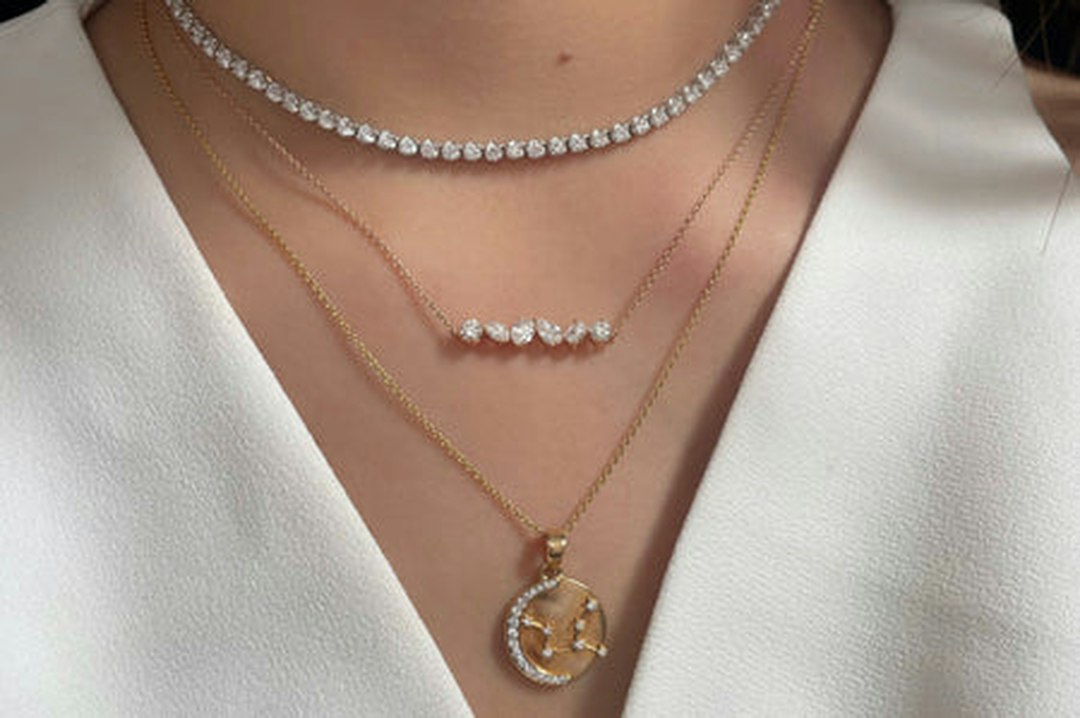
Station necklaces—often referred to as "diamonds by the yard"—feature bezel-set or prong-set diamonds spaced evenly along a fine precious metal chain. They deliver the continuous visual interest of a tennis necklace with less total carat weight, making them lightweight and versatile for daytime wear.
Fashion pendants encompass geometric charms, hearts, crosses, and alphabet initials. Discovering what is fine jewelry helps shoppers distinguish between base-metal costume jewelry and authentic pieces crafted from solid gold or platinum with natural gems. High-artistry luxury statement pieces, such as the cinema-inspired Burnished gold with diamonds necklace at $26,400, or the Buy Elegant Filigree Diamond Necklace Set at Best Price | Tanishq US crafted with over 600 diamonds in 18K rose gold for $17,101, showcase how filigree work and bespoke artisan settings shape the upper tiers of fine jewelry pricing.
Hidden Costs, Valuation, and Secondary Market Realities
When budgeting for a diamond necklace, consider expenses beyond the retail sticker price:
Sales Tax & International Duties: Domestic sales taxes add 5% to 10% depending on state and municipal laws. International shipments often incur import tariffs, customs processing fees, and VAT.
Shipping & Insurance: Secure transport requires specialized couriers; insured shipping jewelry protects your investment in transit against loss or theft.
Maintenance & Care: Periodic maintenance includes prong retipping, ultrasonic cleaning, and rhodium plating for white gold every 12 to 24 months.
Financing Fees: While installment providers (like Shop Pay or retail layaway) make high-value jewelry accessible, long-term financing interest can increase your total out-of-pocket cost if not paid within promotional windows.
Resale Valuation and Long-Term Diamond Necklace Price Retention

A common misconception among jewelry buyers is that retail prices directly reflect resale value. Retail pricing accounts for designer markup, operational overhead, marketing, and distribution. When a piece enters the secondary market, its valuation shifts to the intrinsic worth of the precious metals and secondary-market liquidity for the diamonds.
Knowing how to appraise jewelry enables owners to navigate this difference. Insurance replacement appraisals assign a high estimated retail replacement value, whereas cash liquidation value is based on actual market trading prices. If you want to calculate your item's worth, using an online diamond resale value calculator or researching how much is my diamond worth helps set realistic expectations for private sales or trade-ins.
At Antwerp Diamonds, we provide private, appointment-only, discreet transactions for clients looking to sell fine jewelry, luxury watches, and designer accessories in Atlanta, GA. We offer complimentary evaluations, transparent market-based offers, and immediate cash payouts without hidden consignment fees.
Frequently Asked Questions About Diamond Necklaces
What is the entry-level price for a genuine diamond necklace?
Genuine diamond necklaces start between $100 and $350. These entry-level pieces typically feature small diamond accents (0.01 to 0.10 ctw) set in sterling silver or 10K yellow, white, or rose gold. They make classic gifts for birthdays, graduations, and introductory fine jewelry collections.
How much does setting complexity affect the final cost?
Setting complexity impacts the overall cost by increasing bench labor hours. A simple four-prong solitaire requires minimal labor, keeping retail margins focused on the diamond. Intricate pave halos, tension settings, channel-set collars, or vintage-style filigree demand skilled stone setters. Labor and setting fees can add several hundred to thousands of dollars to high-carat statement pieces.
Is a diamond necklace a good store of value?
Fine jewelry holds intrinsic value in its precious metals and diamonds, but it should not be viewed as a short-term speculative investment. Standard retail markups mean resale values often sit below original retail prices. However, high-quality natural diamonds, substantial gold weights, and iconic signed designer pieces retain long-term secondary-market value better than mass-market fashion jewelry.
Conclusion
Finding the right diamond necklace involves balancing aesthetic preferences with an understanding of diamond quality, metal purity, and craftsmanship. Whether you are shopping for a subtle solitaire pendant, an everyday station necklace, or a luxury tennis piece, knowing how each element drives cost empowers you to invest wisely.
If you already own estate jewelry, luxury timepieces, or fine diamonds and want to unlock their real market value, we can help. For more detailed guides and industry pricing breakdowns, explore our complete resource on diamond necklace and price trends to make informed decisions for your collection.