
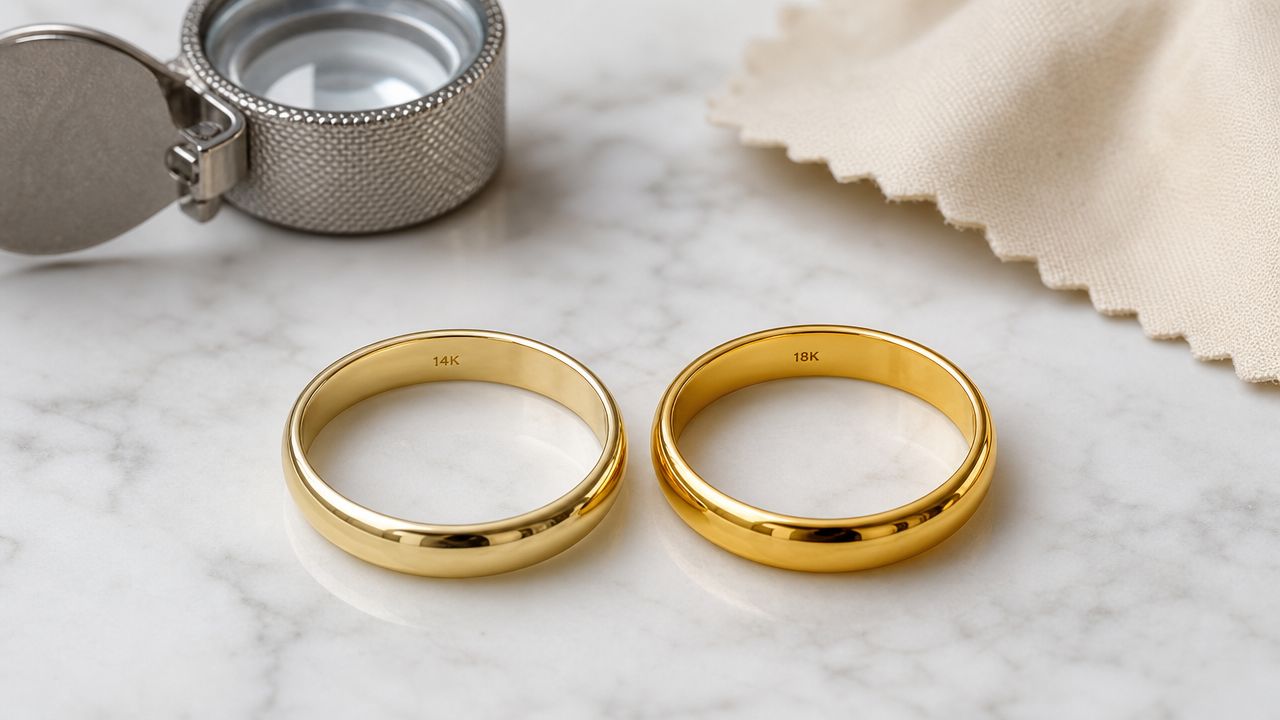
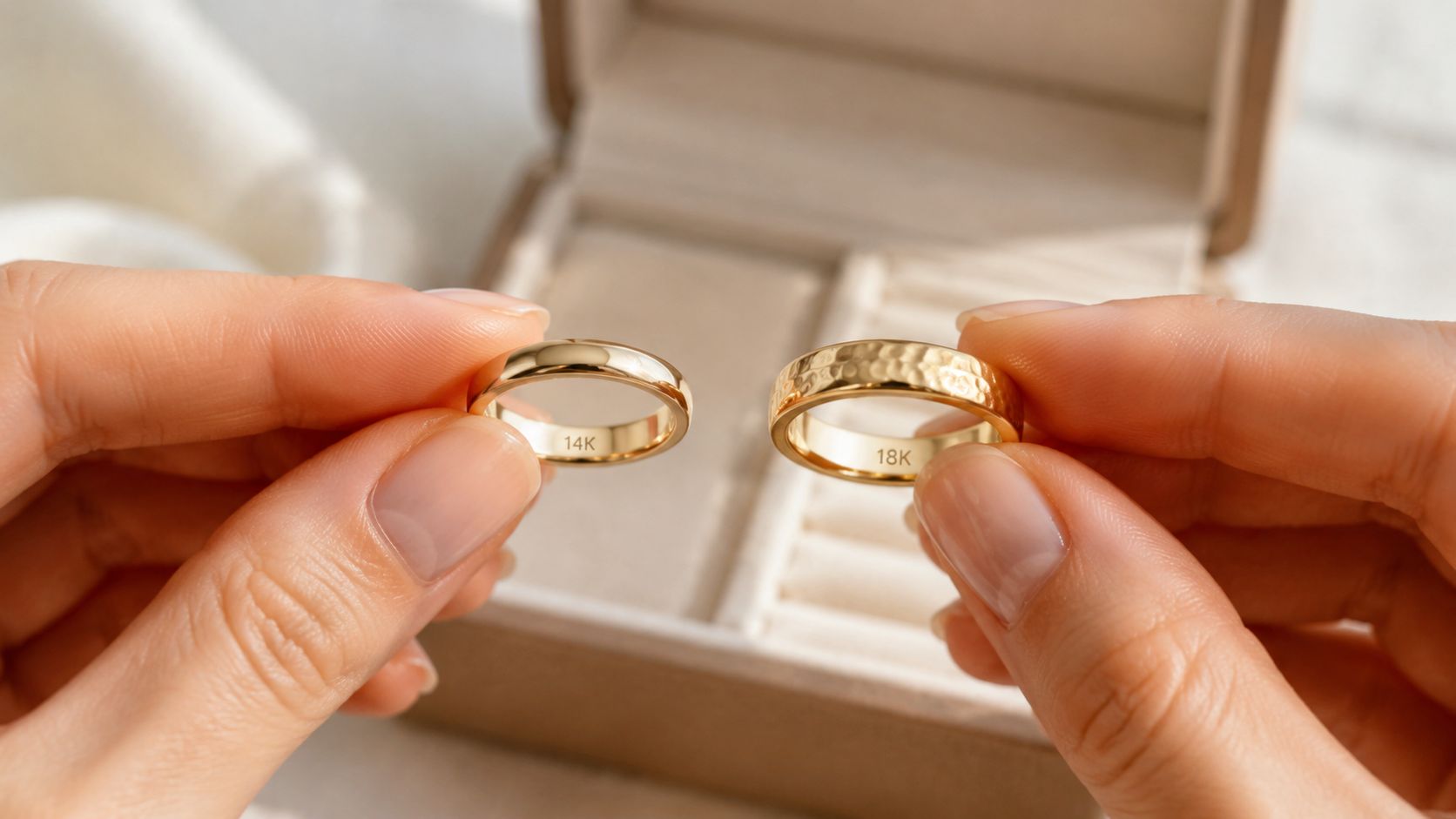
18k gold is 75% pure gold, while 14k gold is 58.3% pure gold. That means 18k looks richer and contains more gold, while 14k is typically the tougher and more practical choice for daily wear.
Those asking what is the difference between 14k and 18k gold are standing in one of two places. They're either buying a piece and trying to avoid regret, or they're selling a piece and trying to understand why one buyer talks about purity while another talks about wear, demand, and resale. As an appraiser, I can tell you that both questions matter, because the retail decision and the resale decision are not the same.
Table of Contents
14k vs 18k Gold An Introduction
If a client places two yellow gold rings on my desk and asks which one is better, the honest answer is that neither is universally better. The right choice depends on what you care about most: durability, color, budget, comfort, or what the piece may realistically bring if you sell it later.
The core difference is purity. According to this 14k and 18k comparison of gold content, 14k gold is 58.3% pure gold and 18k gold is 75% pure gold. That means 18k contains 16.7 percentage points more gold, and if you compare the gold fraction directly, it has about 28.7% more pure gold than 14k.
That one purity difference drives most of what people notice in real life. Higher gold content usually means a deeper yellow tone and a higher intrinsic metal value. Lower gold content means more alloy metal in the mix, which is why 14k is commonly treated as the everyday-wear option in major jewelry markets.
Here's the practical version:
Feature | 14k Gold | 18k Gold |
|---|---|---|
Gold purity | 58.3% | 75% |
Common fineness mark | 585 | 750 |
Typical look | Slightly lighter yellow | Richer yellow |
Everyday wear | Usually more practical | Usually softer |
Resale basis | Depends on gold content, weight, demand, brand, and condition | Depends on gold content, weight, demand, brand, and condition |
Practical rule: If the piece will be worn hard, 14k usually makes life easier. If the richest gold look matters most, 18k usually wins.
For people in Atlanta, Buckhead, Sandy Springs, Alpharetta, Roswell, Brookhaven, Midtown Atlanta, and the wider Georgia market, the most useful mindset is simple. Buy based on how you'll wear it. Sell based on what the secondary market will pay, not what the retail tag once said. If you want a broader overview of jewelry, gold, and resale services, Antwerp Diamond Store is a useful starting point.
Gold Purity Appearance and Hallmarks
Purity is the cleanest place to start because it gives you something objective to verify. When a gold item comes in for review, I look first for the metal stamp, then for how the piece was made, and only after that for condition and marketability.
How karat and fineness relate
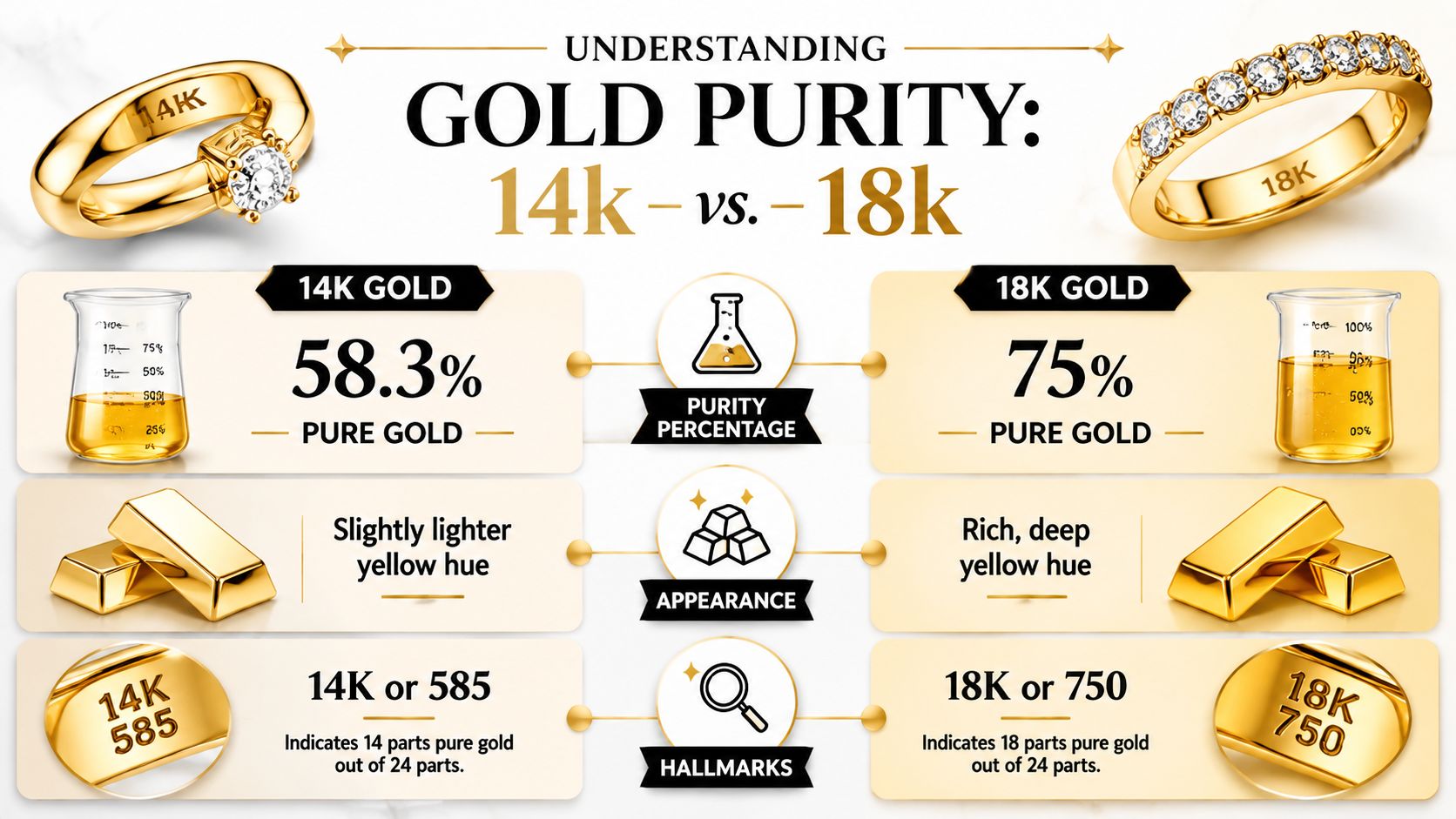
Karat is a purity scale. In the trade, you'll also see fineness marks, which express purity in another standard form. This gold fineness and assay benchmark guide notes that 14k gold is standardized at about 58.3% gold and stamped 585, while 18k gold is about 75% gold and stamped 750.
That matters because hallmarks help answer two questions fast:
Is the claimed purity plausible: A 14k piece should typically show a 14k or 585-style mark, and 18k should typically show 18k or 750-style marking.
Does the piece match international trade language: Buyers, jewelers, pawnbrokers, and appraisers often speak in fineness when documenting value.
Is more testing needed: A hallmark is helpful, but if a piece is heavily worn, altered, or suspicious, professionals still test.
If you've ever looked inside a ring shank or on the clasp of a chain and seen tiny numbers, that's often what you're seeing. For a wider look at how markings and luxury value cues are interpreted across jewelry and fashion, these Vivien Lauren blog insights are a useful companion read.
What the color difference actually looks like
Clients often expect a dramatic difference in color. Sometimes they get it, sometimes they don't. The visual gap depends on lighting, finish, and the exact alloy recipe, but in yellow gold, 18k usually looks warmer and deeper, while 14k often appears a touch lighter.
That color difference follows the purity difference. More pure gold generally means a more saturated yellow appearance, while more alloy metal shifts the tone slightly.
A hallmark tells you what the metal should be. Your eyes tell you how that alloy presents in the real world.
When someone is shopping for chains, this matters a lot because color is a major part of the appeal. If you're comparing styles where tone, weight, and wear all matter, this guide to buying gold chains helps frame the decision in practical terms.
Durability and Hardness for Everyday Wear
Durability is where the conversation stops being theoretical. A ring that gets knocked against countertops, gym equipment, steering wheels, and luggage hardware lives a very different life from a pendant that mostly rests against clothing.
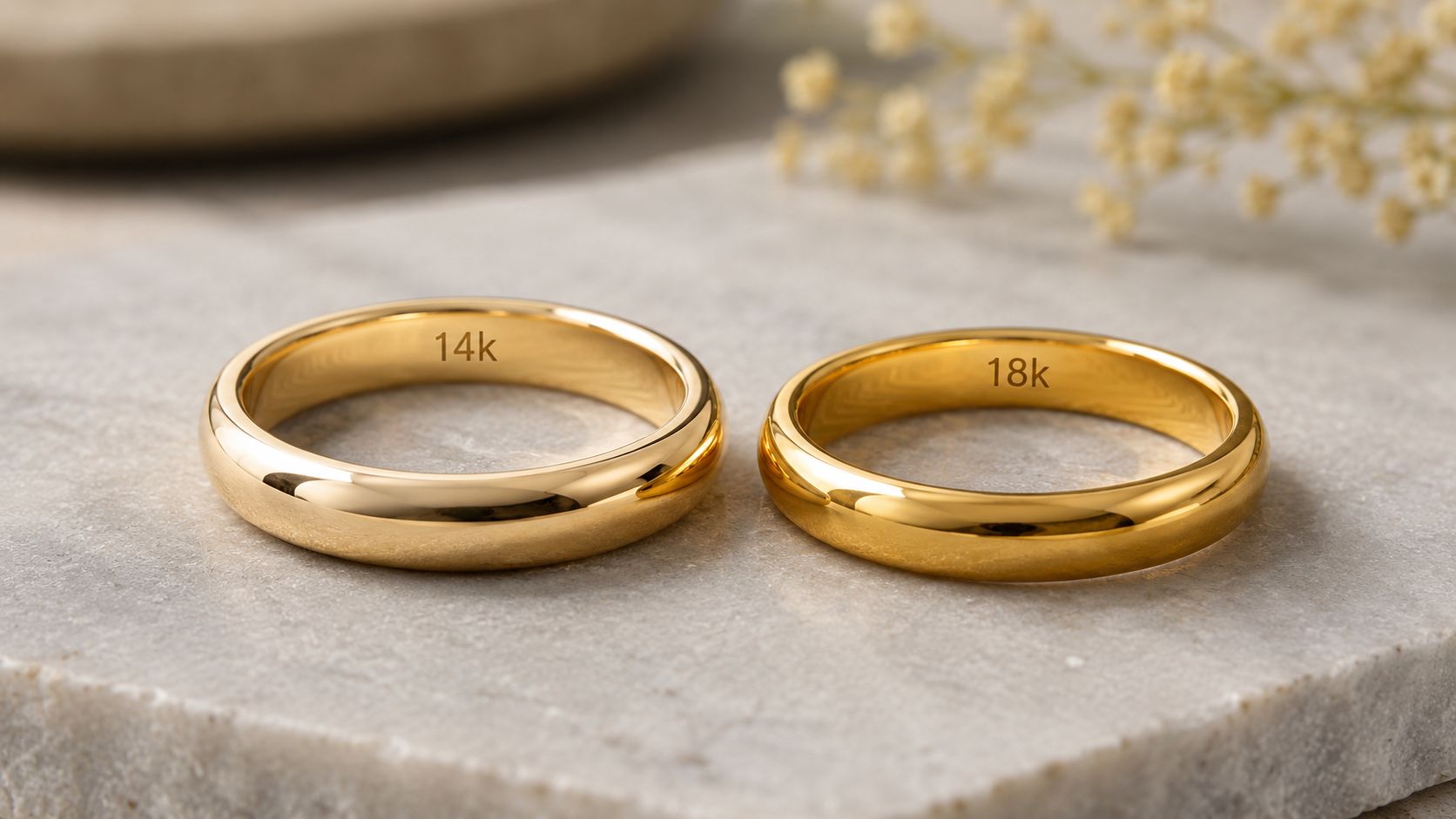
A useful trade reference on 14k, 18k, and 24k wear differences explains the basic rule clearly: 14k contains a larger proportion of alloy metals, so it is generally harder and more resistant to scratches and dents than 18k. The same source notes that 18k is softer and more prone to surface wear, although it offers a richer gold color.
Why 14k handles daily friction better
Think of 14k as the more workmanlike option. It still looks like fine gold jewelry, but it usually tolerates routine abrasion better. That's why I often see 14k recommended for pieces that take repeated contact, especially rings, bracelets, and some chain styles.
For many owners, 14k works well when the piece is:
Worn every day: Wedding bands, engagement rings, and signature bracelets see constant contact.
Exposed to impact: If you work with your hands, softer metal can show wear sooner.
Expected to stay low-maintenance: Less softness usually means less worry about surface marks.
Here's a useful visual walkthrough of how gold jewelry compares in everyday use:
When 18k still makes sense
18k isn't fragile. That's important to say plainly. Fine jewelry houses use it for a reason. It asks for more awareness if the piece will be worn hard and often.
In practice, 18k often suits pieces where visual richness matters more than abrasion resistance. Earrings, pendants, and occasion jewelry can be excellent candidates. Branded luxury jewelry also commonly appears in 18k because the market values that premium feel and color.
If you love the look of 18k and don't mind normal surface wear over time, it can be the more satisfying choice.
What doesn't work is buying 18k with 14k expectations. If you want a ring you never have to think about, 14k is usually the easier answer.
Price Resale Value and Getting a Fair Offer
Many buyers and sellers often stumble on this point. They assume that because 18k costs more at retail, it must always bring proportionally more in the secondary market. That's not how most real offers are built.
Retail jewelry pricing includes more than metal. It can reflect design, manufacturing labor, branding, overhead, packaging, and the store's own margin. When a piece comes back into the market, many buyers strip the question down to what they can verify and resell.
Why retail price and resale price diverge
A seller often remembers what was paid. A buyer focuses on what's recoverable now. Those are different numbers.
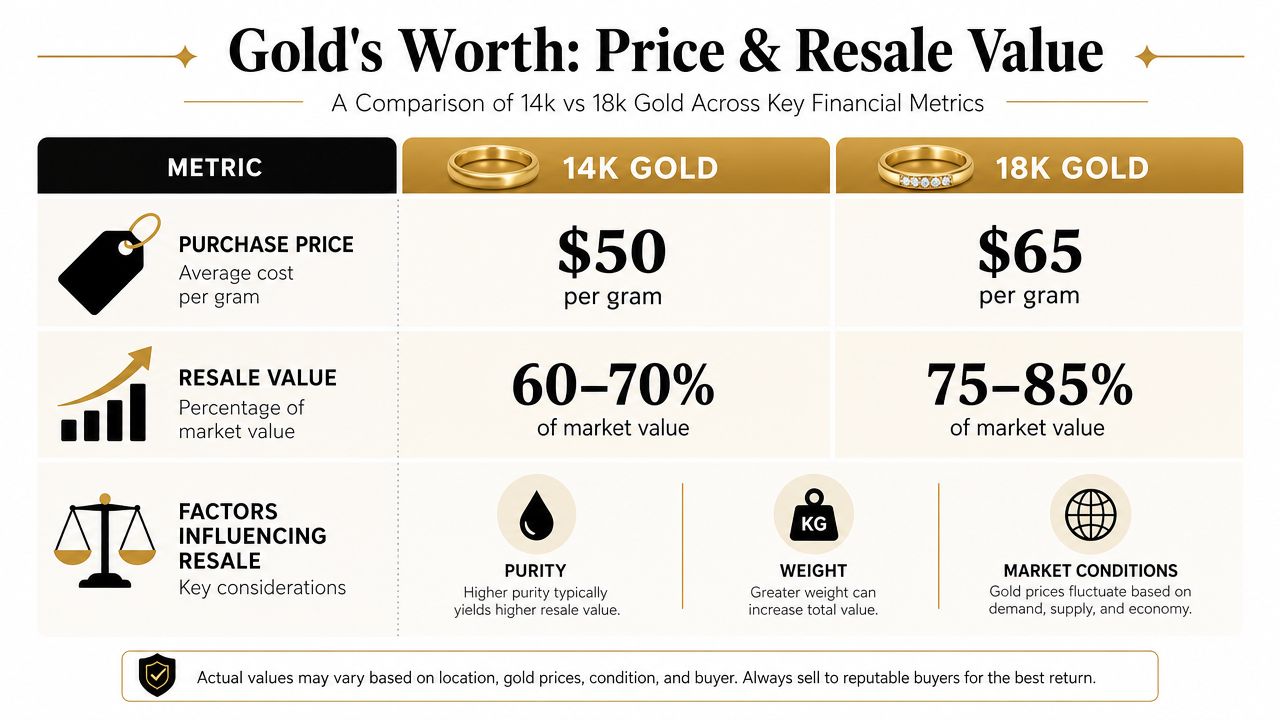
This seller-focused comparison of 14k and 18k gold resale makes an important point: the resale gap can be much smaller than people expect because many secondhand buyers pay based on melt value plus demand, not the original karat premium. The same guide says that a plain 5-gram 18k ring contains only about $80 more gold than the equivalent 14k ring, and it also notes that 14k can sell faster in volume even though 18k has higher purity.
That is the part many retail comparisons skip. The premium you paid for 18k may be real at purchase, but it won't always come back in equal proportion when you sell.
How a buyer actually evaluates your piece
When I evaluate a gold item for cash offer or collateral review, karat is only one input. The final number usually depends on several layers working together:
Metal content: Higher purity usually means higher intrinsic value per gram.
Weight: More material generally matters, but only after purity is verified.
Condition: Deep wear, repairs, missing parts, or bent links can change buyer confidence.
Brand and design: A Cartier bracelet and an unbranded bracelet are not treated the same, even if the metal content is similar.
Liquidity: Some pieces are bought for scrap, others for estate resale, others for branded resale.
A plain wedding band often trades very differently from a signed luxury piece with original paperwork. A broken chain may be valued mostly for metal. A recognizable designer bracelet may hold appeal beyond melt.
The fairest offers usually come from buyers who explain what they're valuing, not just the final number.
That's especially relevant in markets like Atlanta, Buckhead, Alpharetta, Roswell, and greater Georgia, where sellers may compare jewelry stores, gold buyers, estate buyers, and pawn-style lending options. If you're trying to understand how professionals think through that process, this article on the best place to sell gold is a practical reference.
What works for sellers is simple. Know the karat. Know the weight. Understand whether the piece has brand resale potential or only metal value. Don't assume the original store price is the same as current market value.
Hypoallergenic Properties and Skin Sensitivity
A lot of people hear one rule and stop there: buy 18k if you have sensitive skin. Sometimes that advice helps. Sometimes it misses the actual problem.
The better question is not just how much gold is in the piece. It's what the rest of the alloy contains. A person who reacts to a specific metal can still have trouble with a higher-karat piece if that alloy isn't right for them.
Why karat alone doesn't decide irritation
This overview of alloy chemistry and skin sensitivity points out that the advice to buy 18k for sensitive skin can be wrong in practice if the reaction is to a specific alloy rather than gold content alone. It also notes that 14k is commonly alloyed with copper, silver, zinc, and sometimes nickel, while 18k still contains enough non-gold metal to affect allergy risk.
That means a well-made, nickel-free 14k item may suit someone better than a poorly chosen 18k alloy. It also means imported jewelry can vary, especially across markets with different alloy practices and nickel restrictions.
Questions worth asking before you buy
If you've had irritation before, ask direct questions:
What metals are in the alloy: Don't stop at the karat stamp.
Has the piece caused problems before: Estate jewelry sometimes carries a wear history that tells a story.
Is the issue the metal or the finish: Clasps, posts, solder, and plating can matter too.
One practical reason this matters is that skin sensitivity questions come up across metals, not only gold. If you're comparing how different precious metals behave in resale and wear, this guide on where to sell platinum gives helpful context from the seller side.
If your skin is reactive, don't buy on karat alone. Buy on alloy disclosure.
Which Is Right for You Common Uses and Recommendations
When one has completed comparing purity, color, wear, and resale, the answer becomes more personal than technical. The better karat is the one that matches the job the jewelry has to do.
For the daily wearer
Choose 14k if you want practicality first. It often suits wedding bands, engagement rings, stackable rings, bracelets, and chains that will see constant use.
A few profiles where 14k usually makes sense:
The active owner: You don't want to baby your jewelry.
The everyday ring wearer: You want better resistance to routine knocks and scratching.
The value-conscious buyer: You want real gold without paying extra mainly for higher purity and richer tone.
For the luxury buyer and the future seller
Choose 18k if you care most about richer color, a softer luxurious feel, or the standards often seen in higher-end branded jewelry. Cartier, Van Cleef & Arpels, and similar houses often use 18k in ways that shape buyer expectations in the luxury market.
18k tends to fit these buyers well:
The appearance-first buyer: You want the deeper yellow tone.
The occasion-jewelry owner: The piece won't take hard daily wear.
The branded-jewelry holder: You own or want designer jewelry where karat, signature, and market recognition all matter together.
For sellers, there's another practical angle. If the piece is unbranded and heavily worn, karat alone may not transform the offer the way people hope. If the piece is signed, desirable, and in good condition, the conversation becomes broader than metal content.
Buy 14k for workhorse wear. Buy 18k for richer presentation. Sell either one with realistic expectations.
If you're preparing to part with a ring, bracelet, necklace, or designer piece, this guide on where to sell jewelry for cash is a useful next step.
Frequently Asked Questions About 14k and 18k Gold
How do experts test gold purity
Professionals usually start with hallmarks such as 585 or 750, then confirm the metal through standard testing methods when needed. A stamp is helpful, but appraisers don't rely on marks alone if the piece looks altered, repaired, or inconsistent.
Does the difference between 14k and 18k apply to white and rose gold too
Yes. The purity difference still applies, but the visible color depends on the alloy mix used to create white or rose tones. That's why two pieces with the same karat can still look different from one another.
Can you tell the difference between 14k and 18k just by looking
Sometimes, but not reliably. In yellow gold, 18k often looks warmer and deeper, while 14k may look slightly lighter. Lighting, polish, age, and alloy composition can narrow or widen that visual gap.
Is 14k or 18k better for resale
Neither is automatically better in every situation. 18k has more pure gold, but actual offers often depend on weight, condition, brand, design, and whether a buyer sees the piece as scrap, estate jewelry, or branded resale inventory.
Is 14k or 18k better for everyday wear
For many people, 14k is the easier everyday choice because it is generally harder and more resistant to routine wear. 18k can still be worn daily, but owners should expect a softer surface and treat it accordingly.
If you want a professional opinion on a 14k or 18k piece, whether you're planning to sell, borrow against it, or to understand what you own, Antwerp Diamond offers confidential evaluations with clear explanations of how purity, weight, brand, condition, and current resale demand affect value. If you're in Atlanta, Buckhead, Roswell, Sandy Springs, Alpharetta, Brookhaven, Midtown Atlanta, or elsewhere in Georgia, an in-person review can help you separate retail assumptions from real market value.