

Insured shipping jewelry starts with proof, not packing tape. Before a ring, bracelet, or necklace leaves your hands, document its condition, value, and identity, then ship it in a plain double-boxed parcel with full-value insurance, tracking, and a signature on delivery.
Table of Contents
Before You Ship Documenting and Valuing Your Jewelry
A shipment is only as defensible as the file behind it. If a parcel is lost, delayed, or disputed, the insurer will ask what the piece was, what condition it was in, and whether the seller can prove it left in that state. That is why the first step is a clean record with recent appraisals, purchase receipts, and clear photos taken before packing starts.
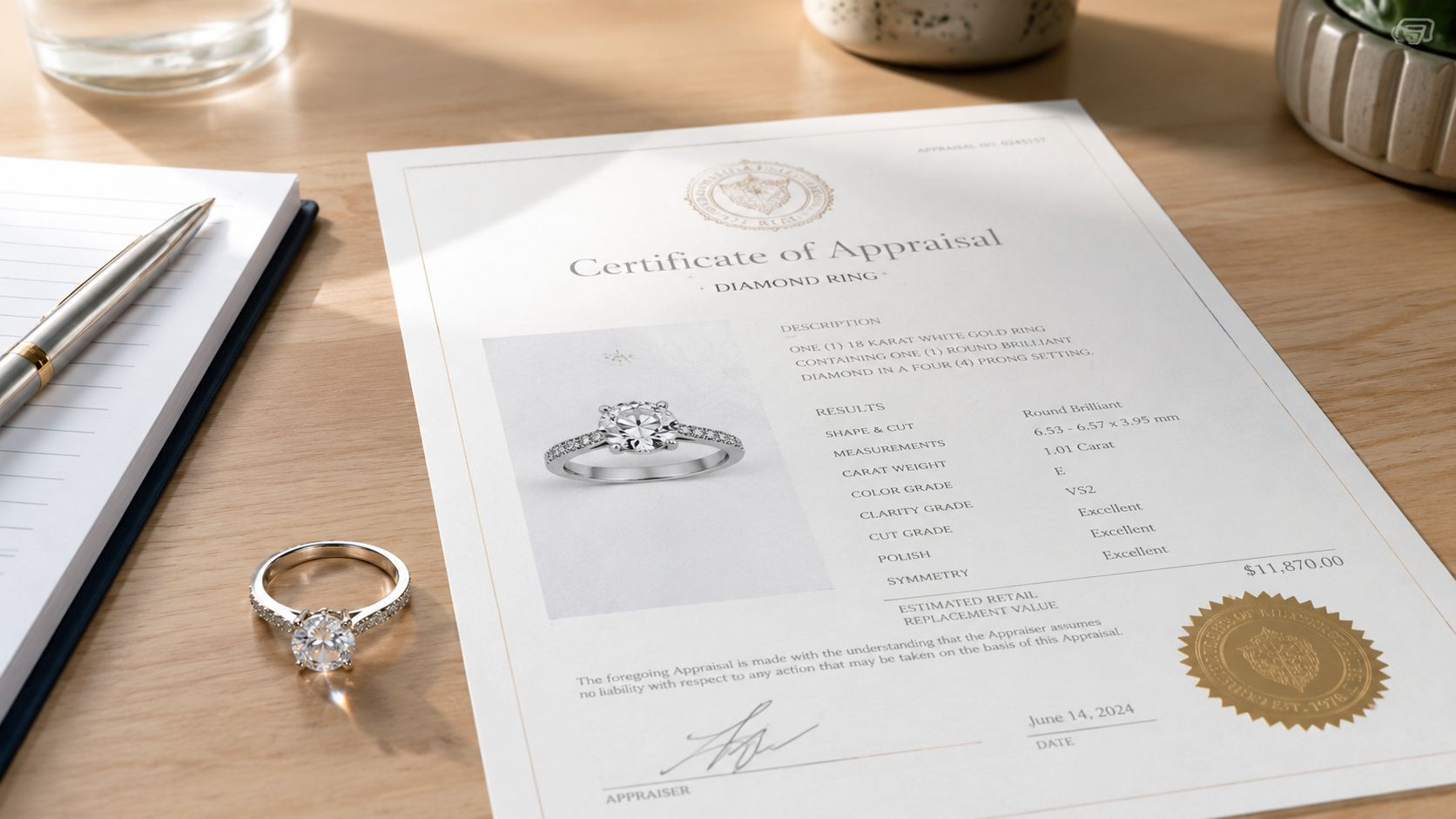
Treat the documentation like an inventory file, not a sales brochure. Photograph the front, back, clasp, hallmarks, prongs, serial numbers, and any visible wear, then save everything in a dated folder so the record is easy to trace later. A recent appraisal gives the insurer a value basis, while a receipt or invoice connects the item to a purchase history.
Practical rule: if the piece has anything unique, a maker's mark, engraving, repaired area, stone inclusion, or serial number, photograph it before it's boxed. Those details can become the difference between a clean claim and a long dispute.
The goal is not to make the file pretty; it's to make it hard to challenge. High-resolution photos from several angles help establish pre-shipment condition, while appraisals and receipts support value. For sellers who need to appraise jewelry before a sale, this guide on how to appraise jewelry is a useful starting point because valuation and shipping need to match from the beginning.
Claim file tip: keep the original file, a PDF copy, and a backup in cloud storage. If a package is delayed, lost, or questioned, you want the same evidence ready to send without reconstructing it under pressure.
A careful shipper also keeps the item description consistent across the appraisal, the insurance form, and the shipping paperwork. If one document says diamond pendant and another says platinum pendant with diamonds, the claim review can slow down while the carrier sorts out the mismatch. Precision matters because insurers examine documents line by line when a package goes missing or arrives damaged.
When selling to a remote buyer, the valuation record needs to stand on its own. A buyer who cannot inspect the piece in person will rely on photos, descriptions, and the appraisal trail, so every detail should support the same story. If you need a refresher on valuation standards before shipping, the process is laid out clearly in this guide on how to appraise jewelry, and it helps align your paperwork with the price you are asking.
Packaged items should also be described in a way that leaves no room for assumptions. A professional buyer or insurer will compare the stated metal, stone type, setting, and condition against the image file and appraisal, so vague wording creates friction that can be avoided. Keep the language specific, keep the records consistent, and keep the file ready for review the moment the shipment leaves your hands.
For sellers who want extra padding in the handling stage, cushioned mailers for moving can help protect smaller components before they go into the final shipping setup. That does not replace proper boxing or insurance, but it does reduce movement inside the package when the item is being prepared for transit.
How to Package Jewelry for Maximum Security
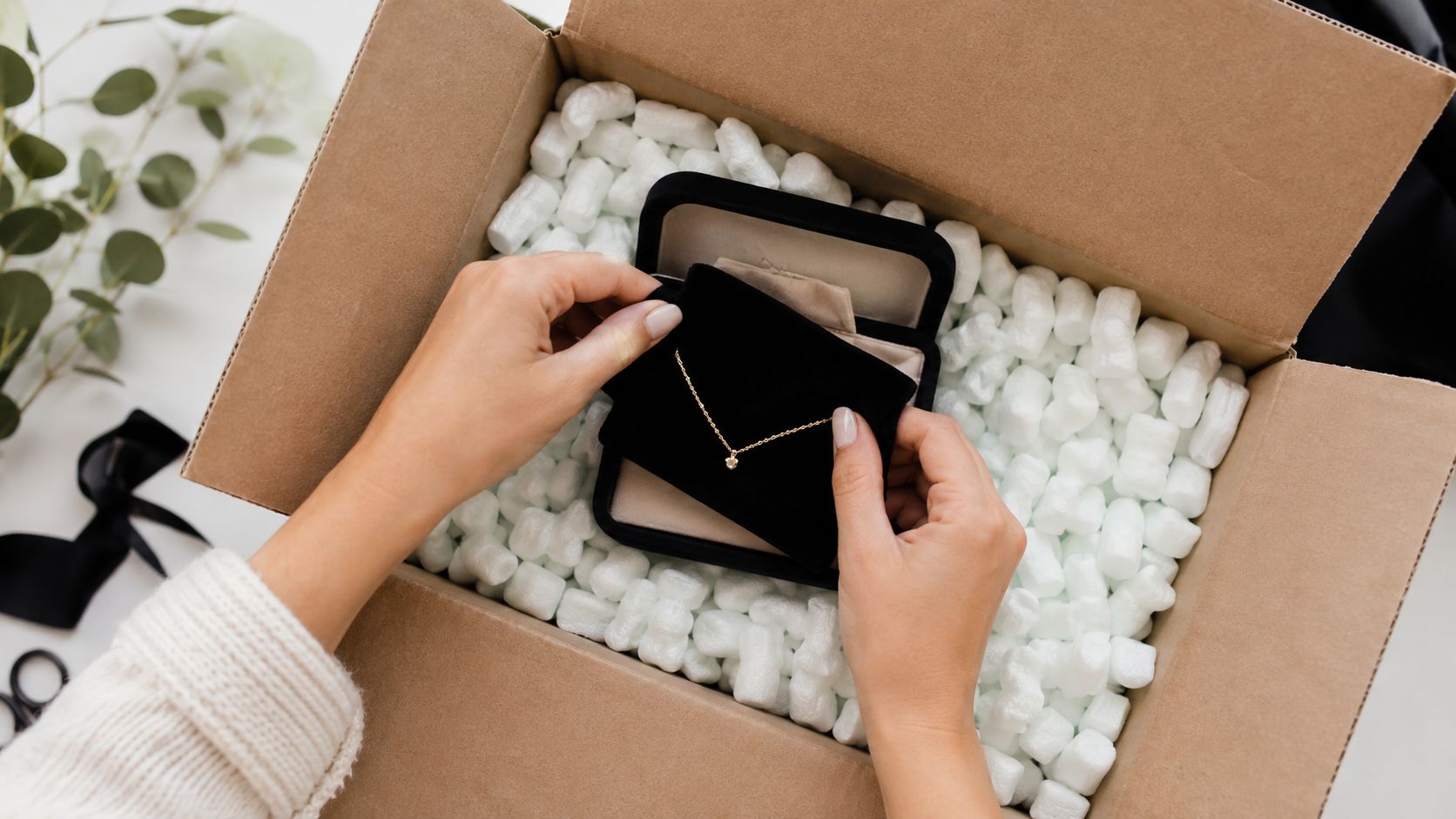
A high-value parcel should look ordinary from the outside and stay motionless inside. Jewelry that shifts, rattles, or telegraphs its contents creates avoidable risk, and a plain outer carton gives a thief less incentive to intercept it. It also gives a claims reviewer a cleaner story to follow if the shipment is lost or damaged.
Start with a rigid inner box that fits the piece properly. Wrap the item in tissue, a pouch, or a protective insert, then place that box inside a larger outer carton with void fill on every side so nothing can move in transit. Guidance for high-value shipments specifically points to double-wall corrugated packaging and two inches of void fill on every side as the default setup for insured parcels source guidance on high-value packaging.
That layered structure matters for claim review as much as it does for transit protection. If the parcel arrives crushed or is opened after a theft attempt, the carrier and insurer will look for signs that the item was packed with care and that the outside carton matched the risk level of the contents. A weak box or loose fill can make the loss harder to defend.
Use tamper-evident tape on every seam. If the carton opens during transit, the seal should make that obvious. It is a simple step, but it helps deter casual interference and gives you better evidence if the package is inspected later.
The label should stay plain. Leave out “jewelry,” “diamonds,” store names, and product names on the exterior. Remote buyers and secure logistics teams both benefit from packaging that does not advertise value, especially when a package is moving between parties who do not know one another in person, as outlined in this resource on online jewelry buyers.
Use a packing sequence that removes guesswork:
Protect the piece first. Place the jewelry in a rigid inner container so prongs, chains, and clasps are not exposed to pressure.
Stabilize the inner box. Fill the outer carton so the item cannot shift, bounce, or settle during transit.
Seal every opening. Tape all seams, then reinforce the flap edges so the carton shows tampering if it is opened.
Keep the exterior plain. Use unbranded packaging and avoid any wording that hints at the contents.
Record the final parcel. Photograph the sealed package and the shipping label before handoff.
For smaller components or interim protection, cushioned mailers for moving can help reduce movement during preparation, but they do not replace a rigid shipping carton. Jewelry needs a hard outer build, because soft padding alone will not protect prongs, settings, or clasps from crush pressure.
Treat the package as part of the claim file. If an insurer, carrier investigator, or professional buyer reviews it later, they should see a deliberate build that matches the declared value and the level of risk involved. That is the standard a remote sale demands, and it is the standard a careful buyer expects before release of funds.
Do not use decorative jewelry boxes as the outer shipping box. They advertise value immediately and reduce discretion before the parcel leaves your hands.
A shipping label image or intake video can help later, but the physical parcel is what protects the item on the move and supports the claim if something goes wrong.
Choosing the Right Shipping Insurance
A professional buyer looks at shipping insurance the same way an appraiser looks at a stone report, as part of the proof chain. Declared value is the carrier's liability framework, while third-party insurance is a separate policy that pays claims under its own terms. That difference matters because jewelry shipments often need stronger protection than a standard parcel service is built to carry.
FedEx, UPS, and USPS commonly include $100 of coverage at no extra charge, but anything beyond that usually moves into declared value or separate insurance Shippo cost and coverage analysis. For lower-value pieces, that may be enough. For fine jewelry, it often leaves too much exposure on the seller.
The price gap can widen fast. Shippo reports that at an insured value of $150, its coverage cost is $1.88, compared with $4.95 to $5.10 for carrier declared-value programs on the same shipment Shippo cost and coverage analysis. Industry guidance also notes that many jewelry shippers work in the 1% to 3% premium range of declared value, with some specialty providers quoting around 1% to 2% and coverage limits reaching $100,000 per shipment Shippo cost and coverage analysis. For a remote sale, especially when a professional buyer is waiting on release, that difference affects both cost control and claim posture.
Bottom line: the cheapest label is rarely the cheapest shipment once jewelry value enters the picture.
Carrier Declared Value vs. Third-Party Insurance
Feature | Carrier Declared Value | Third-Party Insurance |
|---|---|---|
Coverage source | Carrier liability framework | Separate policy |
Common baseline | $100 included on many services Shippo | Depends on policy terms |
Cost pattern | Higher as value rises | Often priced as a premium tied to value |
Example cost | $4.95 to $5.10 at $150 insured value Shippo | $1.88 at $150 insured value via Shippo coverage Shippo |
Claim focus | Carrier rules, packaging compliance, and acceptance proof | Policy terms and proof of value |
High-value fit | Limited and service-specific | Better suited to luxury jewelry workflows |
Practical use | Small shipments, lower exposure | Full-value jewelry shipments |
A declared-value label can still work when the carrier program matches the item and the service limits are adequate. FedEx states that jewelry shipments can be declared at a maximum value of up to $1,000 per package, and advises customers with jewelry worth more than that to buy third-party insurance because FedEx does not provide insurance for loss or damage beyond its declared-value program FedEx jewelry shipping guidance. That ceiling makes the service useful for some pieces, but not for higher-value items.
Third-party coverage is usually the cleaner choice when the shipment is materially valuable. It gives the seller a policy built around indemnity, not carrier convenience. For a seller who wants to match valuation practice with shipping protection, this overview of an independent jewelry appraiser is a useful reference point for how appraisal, documentation, and insurance fit together.
Another advantage is claim clarity. Carrier claims can turn on packaging defects, value declaration issues, or service restrictions. Specialty insurers still have rules, but they are built around the question jewelry sellers care about most, whether the item is covered while it is in transit.
Selecting a Carrier and Required Services
A jewelry shipment is not the place to pick a carrier by habit or by whichever counter is closest. The decision should follow the item's value, the carrier's handling rules, and the proof you will need if the parcel is delayed, diverted, or challenged later. For a professional buyer sending to a remote client, such as Antwerp Diamond, the right service is the one that fits the shipment cleanly, without forcing exceptions at the counter or at claim time.
What the major carriers are good for
USPS can work for regular jewelry shipments, especially when the parcel is lower in value and chain-of-custody matters more than speed. Its Registered Mail service is often cited as a stronger option for controlled handling, and it remains relevant for higher-value pieces because each handoff is documented more tightly than in standard mail. That makes it useful when the goal is traceability, not just transit.
FedEx is more structured for luxury shipments. Its high-value jewelry program shows how a carrier can build a service around declared value and controlled handling, and FedEx also states that jewelry shipments above $1,000 should move to third-party insurance because its declared-value framework stops there on standard jewelry shipments FedEx high-value jewelry program reference FedEx jewelry shipping guidance. For a seller shipping a ring, necklace, or bracelet to a buyer in another city or another country, that distinction matters because the carrier's limit can be lower than the item's replacement risk.
UPS can be workable in limited cases, but its jewelry coverage is tighter than what high-value parcels usually require. If the piece is already close to the carrier's ceiling, the service is too exposed for a clean sale. At that point, the risk sits with the seller, not the shipping label.
Practical rule: if the item matters enough to replace a weekend's profit, it matters enough to choose a carrier and service tier built for proof, not just transit.
Required services that should not be skipped
A valuable jewelry parcel should move with full tracking, adult signature, and, when possible, overnight or 2-day air. Less time in transit means fewer handoffs, fewer opportunities for loss, and less ambiguity if the package is delayed. Industry guidance for high-value items also recommends insurance for the full declared value before pickup and a service setup that makes every stage traceable high-value shipping guidance.
Use a staffed counter whenever possible. A handoff at the counter creates an acceptance scan, and that scan is stronger proof than a drop box scan or a depot record. If the parcel later goes missing, the counter receipt and scan history help show exactly when the carrier took responsibility.
For a seller who is preparing a claim file, packaging evidence should already exist before the parcel leaves the building. Clear photos of the piece before packing, along with photos of the boxed item, also help later when you need the record to match the shipment. A good reference point for those images is how to photograph jewelry for shipping, because the goal is not just presentation, it is evidence.
The service should also fit the buyer's delivery environment. If a home address is exposed to porch theft, a signature requirement or a hold-for-pickup option is safer than a normal doorstep drop. The same logic applies when the buyer is remote and the package is crossing more than one hub, because every extra touchpoint adds another chance for a mistake.
If a claim is ever disputed, a clean record matters. Sellers who want a better sense of how carriers and insurers evaluate those records can also review the guide for effective claim appeals.
Creating Your Proof of Shipment and Claim File
A luxury parcel can leave your hands in perfect condition and still become a dispute if the paper trail is weak. The handoff has to create proof, not just a label scan. Give the parcel to a staffed carrier clerk, wait for the acceptance scan, and keep the physical receipt. A drop box may save time, but it weakens the record at the point where a later claim needs the strongest evidence.
Build the file before the package leaves the building, then keep every document together. Include the pre-shipment photos, the appraisal, the insurance policy or declared-value record, the shipping receipt, the tracking number, and any acceptance scans from the carrier counter. For a remote sale to a buyer such as Antwerp Diamond, that file should also match the packaging steps you used, because the seller often has to prove not only what was shipped, but how it was secured.
A strong claim file depends on a sequential control chain. The item was documented, packed, handed off, scanned, transported, and then delivered or investigated. If any link is missing, the insurer has room to question the shipment, so the goal is to preserve each handoff exactly as it happened.
A practical filing system usually looks like this:
Item proof: appraisal, receipt, and condition photos taken before packing.
Packing proof: photos of the boxed item, outer carton, and sealed label.
Handoff proof: counter receipt and acceptance scan.
Transit proof: tracking history and delivery signature.
Policy proof: insurance documents and any correspondence with the insurer.
If a problem happens, organized records save time and reduce arguments over what was sent. They also make escalation easier if a claim is delayed or underpaid. For a close look at how documentation supports disputes, the guide for effective claim appeals is useful because the same standard applies here, clear records carry more weight than vague statements.
Keep this simple: no receipt, no claim file, no recovery plan.
That is why under-declaring value or skipping the staffed counter is such a costly mistake. It may feel efficient in the moment, but it leaves the shipment exposed when the insurer asks for proof. Sellers who already know they need strong images before the sale should use this guide on how to photograph jewelry, because those photos serve both the listing and the claim file.
Conclusion Your Next Steps for a Secure Sale
A secure sale starts before the box is sealed. If you are shipping insured jewelry, the process needs to be deliberate from the first photo to the final handoff. Document the piece first, package it in a plain double-boxed carton, buy the right coverage, choose a tracked service with signature requirements, and hand it to a staffed clerk so the acceptance record exists from day one. That sequence protects the item and gives the insurer a clean trail if a claim is ever needed.
The quickest way to lose coverage is to improvise. A remote sale works best when shipping is treated as a controlled transfer, not a casual mailing. Strong photos, a solid appraisal, and a clear record of handoff reduce disputes over condition, value, and responsibility. They also make the shipment easier to defend if the buyer is remote and the item has to move through a carrier network before it reaches a secure intake desk.
From a buyer's side, the best shipping file is the one that answers every question before anyone asks it. I want to see exactly what left your hands, how it was packed, who accepted it, and which service carried it. That is why double-boxing matters for claim approval, and why a plain outer carton matters too. The package should look ordinary, because attention on the outside creates risk without helping the claim.
If you are comparing places to sell, start with a buyer that explains the intake process clearly and accepts shipments in a controlled way. Where to sell jewelry online is a useful starting point if you are weighing remote options, especially when the item is valuable enough that every shipping decision affects your risk.
If you are in Atlanta, Buckhead, Sandy Springs, Alpharetta, Roswell, Brookhaven, or Midtown Atlanta, bring the piece in for an in-person evaluation when that is easier. If you are shipping from elsewhere in Georgia or the U.S., use the same disciplined process and work with a buyer who knows how to receive high-value jewelry safely.
If you are ready for the next step, Antwerp Diamond can review your jewelry with a private evaluation and explain the safest way to send it in for a remote sale. Visit Antwerp Diamond to start a free online evaluation, then decide whether an in-person visit or insured mail-in shipment makes the most sense for your item.


