Find the Real Old Silver Selling Price Before You Sell
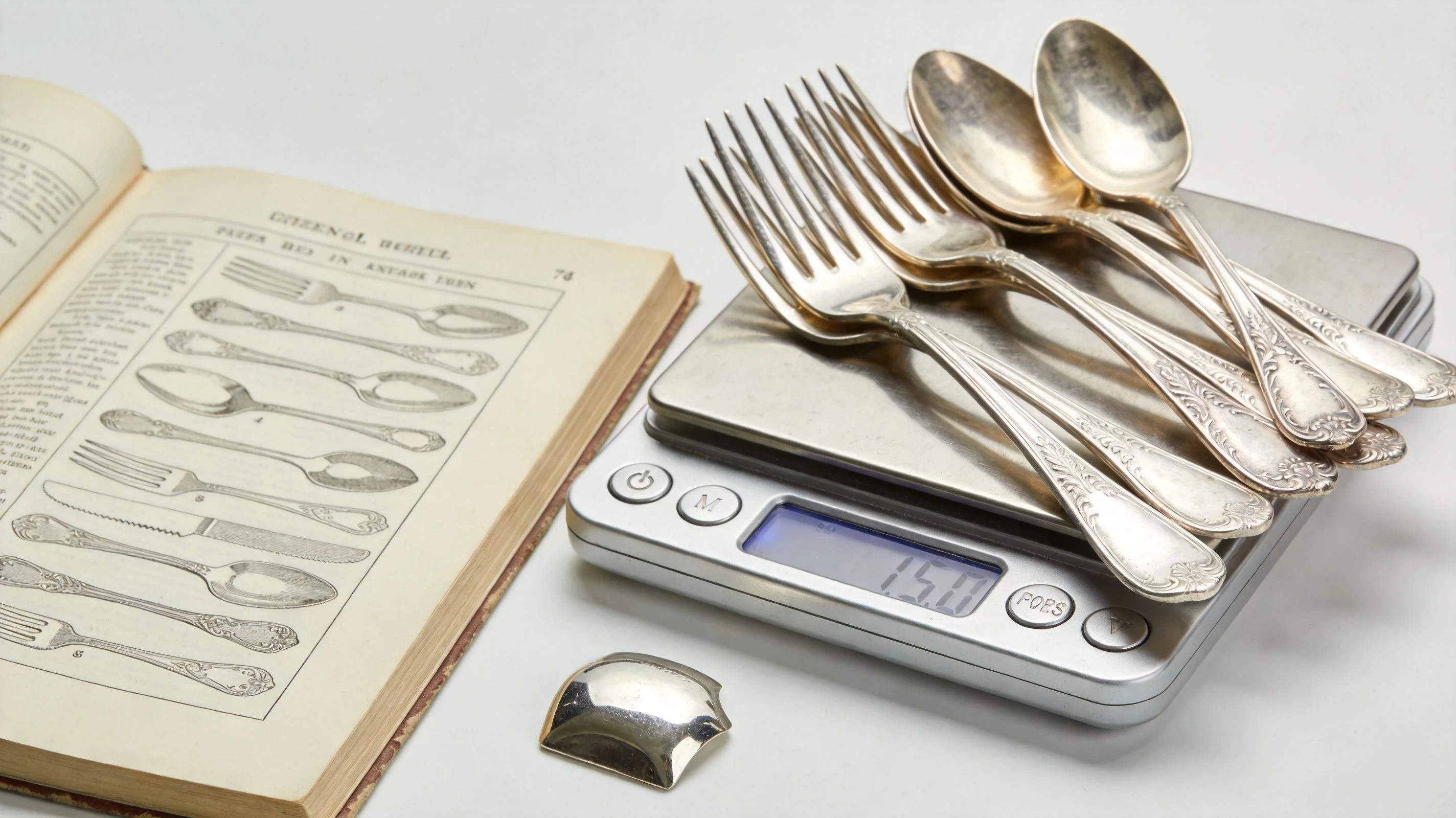
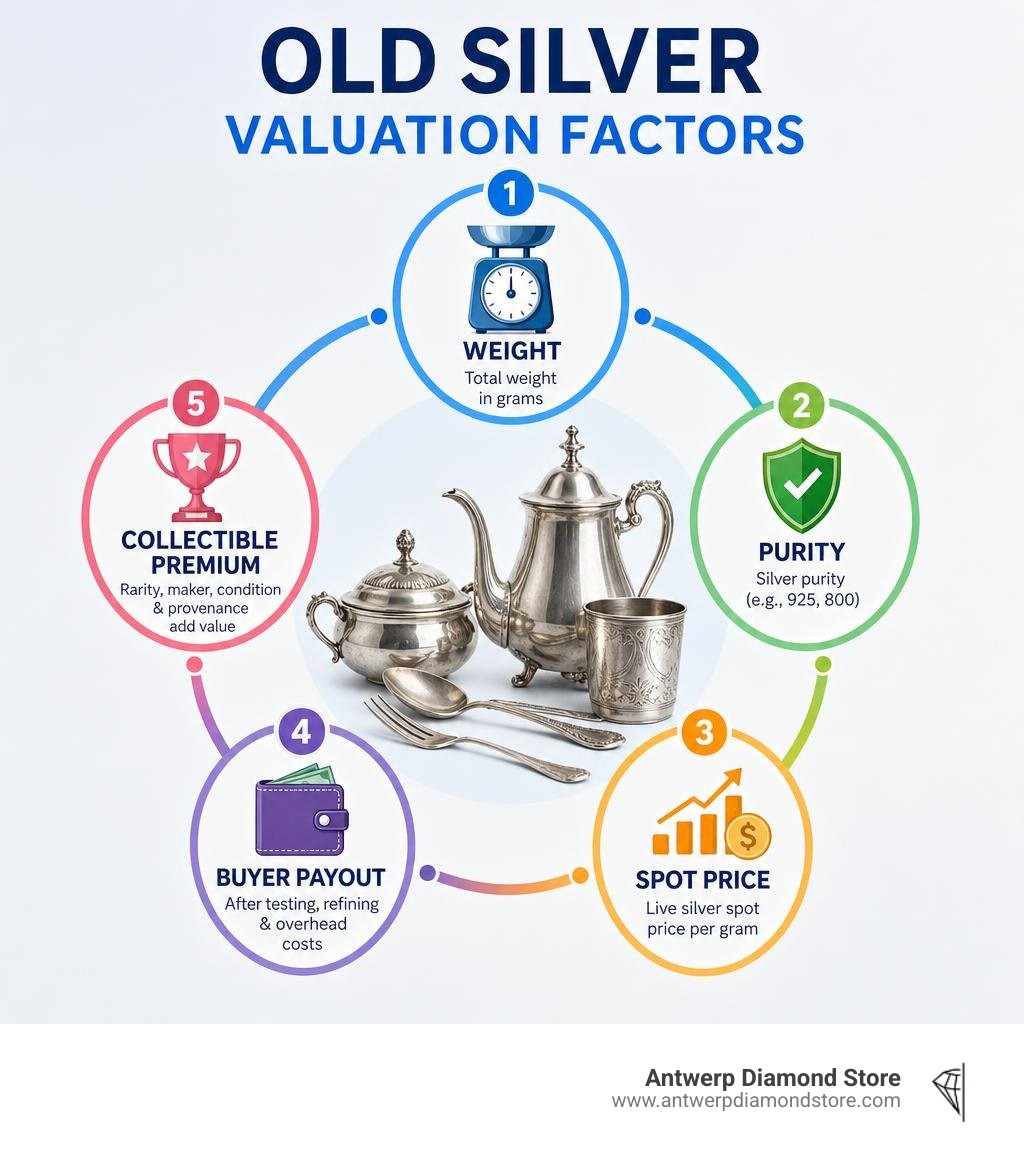
Your old silver selling price starts with three facts: weight, purity, and the live silver spot price. Multiply the item's weight in grams by its silver purity and the current spot price per gram to find its melt value. Then allow for the buyer's testing, refining, and resale costs to estimate the cash offer.
For example, sterling silver marked 925 is 92.5% silver, while 800 silver contains 80%. Silver-plated items usually have little scrap value because the silver layer is very thin.
Do not sell an old coin, flatware set, tea service, or signed jewelry piece for melt until you check for added collector value. Recognized makers, rare dates, complete sets, original condition, and provenance can make an item worth far more than its metal content.
This guide shows you how to identify authentic silver, calculate a defensible price, separate solid silver from plate, and compare offers without hidden guesswork.
Understanding How Old Silver Selling Price Is Determined: Melt Value vs Scrap Value
Determining the true value of your vintage pieces begins with understanding how precious metal markets operate. Tracking the gold silver price gives you a reliable baseline, but knowing the difference between what your silver is intrinsically worth on paper and what a buyer will actually put in your hands is key.
Melt value represents the theoretical value of the pure precious metal contained inside an item, measured strictly against current global spot prices. It assumes 100% extraction efficiency with zero transactional overhead.
Scrap value (or cash offer), by contrast, represents the realistic payout you receive from a dealer, refiner, or estate buyer after accounting for assaying, melting, refining fees (typically 1% to 15%), and dealer operating margins.
To evaluate your items, you can use the standard scrap silver value formula:
$$\text{Melt Value} = \text{Gross Weight in Grams} \times \left(\frac{\text{Purity Percentage}}{100}\right) \times \text{Spot Price Per Gram}$$
Because silver spot prices are traded internationally in troy ounces, convert the spot price to grams by dividing the troy ounce price by 31.1035:
$$\text{Spot Price Per Gram} = \frac{\text{Spot Price Per Troy Ounce}}{31.1035}$$
If you prefer an automated calculation, an interactive Scrap Silver Price Calculator or a dedicated Scrap Silver Calculator — Free Live Melt Value Tool allows you to plug in live parameters without doing the conversions manually.
Intrinsic Metal Worth vs Realistic Dealer Payouts
When evaluating mixed silverware or estate jewelry, items rarely consist of 100% fine silver. They are alloyed with base metals like copper to add structural rigidity. Non-precious base metals carry zero scrap payout at precious metal refineries; only the net millesimal fineness counts.
When you bring items to a buyer, they will perform non-destructive testing (such as X-ray fluorescence or specific gravity tests) or chemical acid assays to confirm the alloy's composition. Real-world cash payouts reflect these testing steps and dealer holding costs:
Wholesale / Bulk Refiners: 88% to 95% of melt value
Online Precious Metal Refiners: 80% to 92% of melt value
Local Coin Shops & Specialized Buyers: 75% to 85% of melt value
Traditional Pawnshops: 50% to 70% of melt value
Live Spot Price Drivers and Market Benchmarks
Silver is traded around the clock on major commodity exchanges, including the London Bullion Market Association (LBMA), the New York Commodity Exchange (COMEX), the Tokyo Commodity Exchange (TOCOM), and the Shanghai Gold Exchange (SGE).
Because silver functions both as an investment asset (an inflation hedge and store of wealth) and as an essential industrial commodity (used extensively in solar photovoltaics, electronics, automotive manufacturing, and medical equipment), its market price fluctuates throughout every trading session. Monitoring the daily benchmark before requesting an evaluation protects you from outdated offers during periods of high market volatility.
Purity Hallmarks and Identification: Sterling, Coin Silver, and Plate
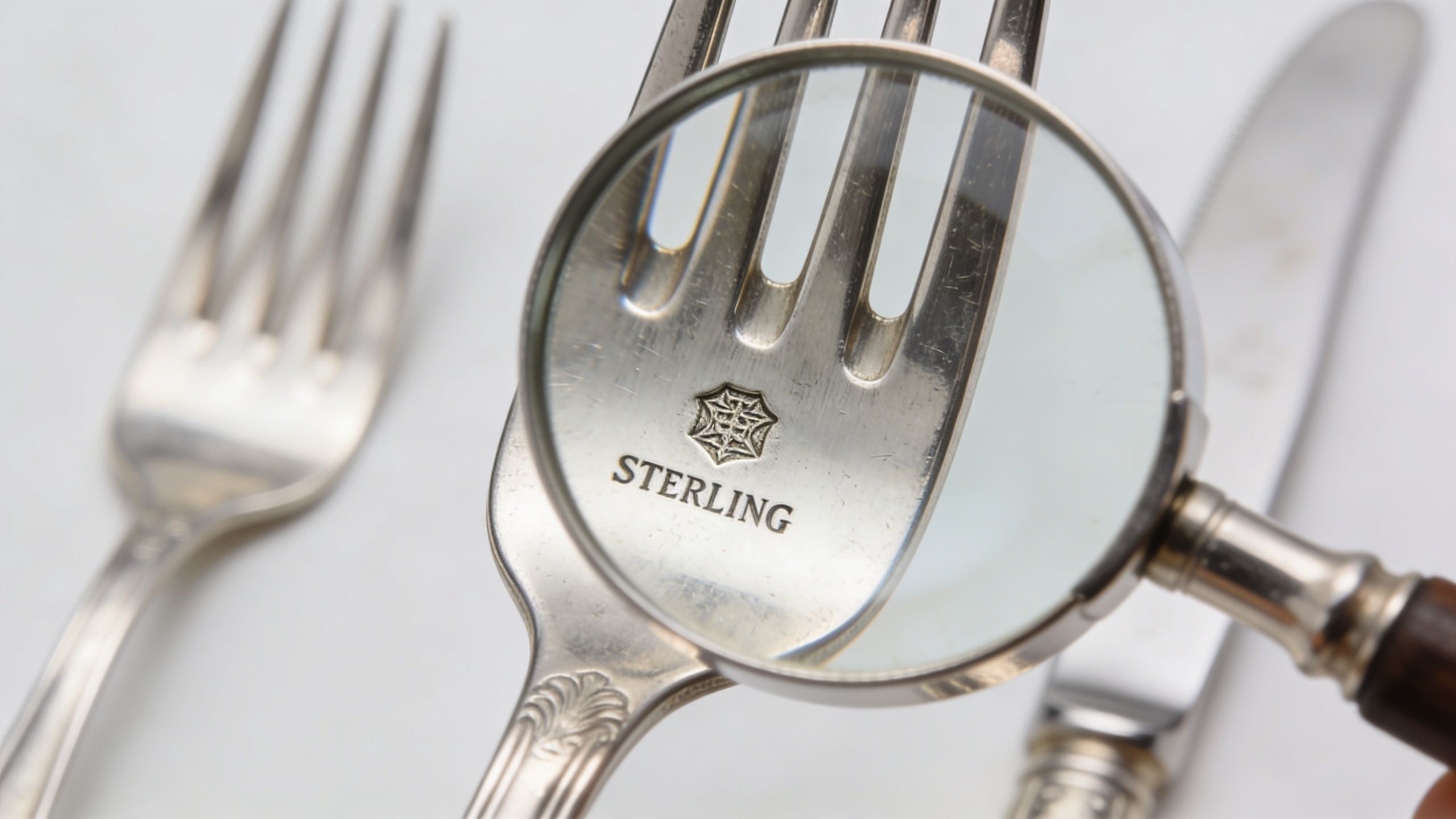
Before weighing your silver, you must identify its purity. Precious metals have been stamped with standardized hallmarks for centuries to guarantee fineness.
Decoding Millesimal Fineness and Maker Hallmarks
Millesimal fineness indicates silver purity in parts per thousand:
999 (Fine Silver): 99.9% pure silver. Typically found in modern investment bullion, rounds, and minted bars.
925 (Sterling Silver): 92.5% pure silver and 7.5% alloy (usually copper). The historical standard in the United States and Britain for fine jewelry, tea services, and flatware. British pieces often display a Lion Passant mark alongside city and date stamps.
900 (Coin Silver): 90.0% pure silver. Used in circulating US coinage minted prior to 1965 and early 19th-century American silverware marked "COIN."
830 / 835 (Continental Silver): 83.0% to 83.5% pure silver. Common in Scandinavian, German, and Dutch domestic items crafted during the early-to-mid 20th century.
800 (Continental Standard): 80.0% pure silver. Widely used across Germany, Italy, Austria, and parts of Eastern Europe for hollowware and personal accessories.
Testing Real Silver vs Silver-Plated Items
If you are sorting an estate collection to sell silver and gold, separating solid silver alloys from silver-plated items is your most important step. Silver plate consists of an inexpensive base metal core (such as copper, brass, or nickel) covered by a microscopically thin layer of pure silver.
Because refining silver plate costs more in chemical processing and energy than the recovered metal is worth, silver-plated items have virtually no commercial scrap melt value.
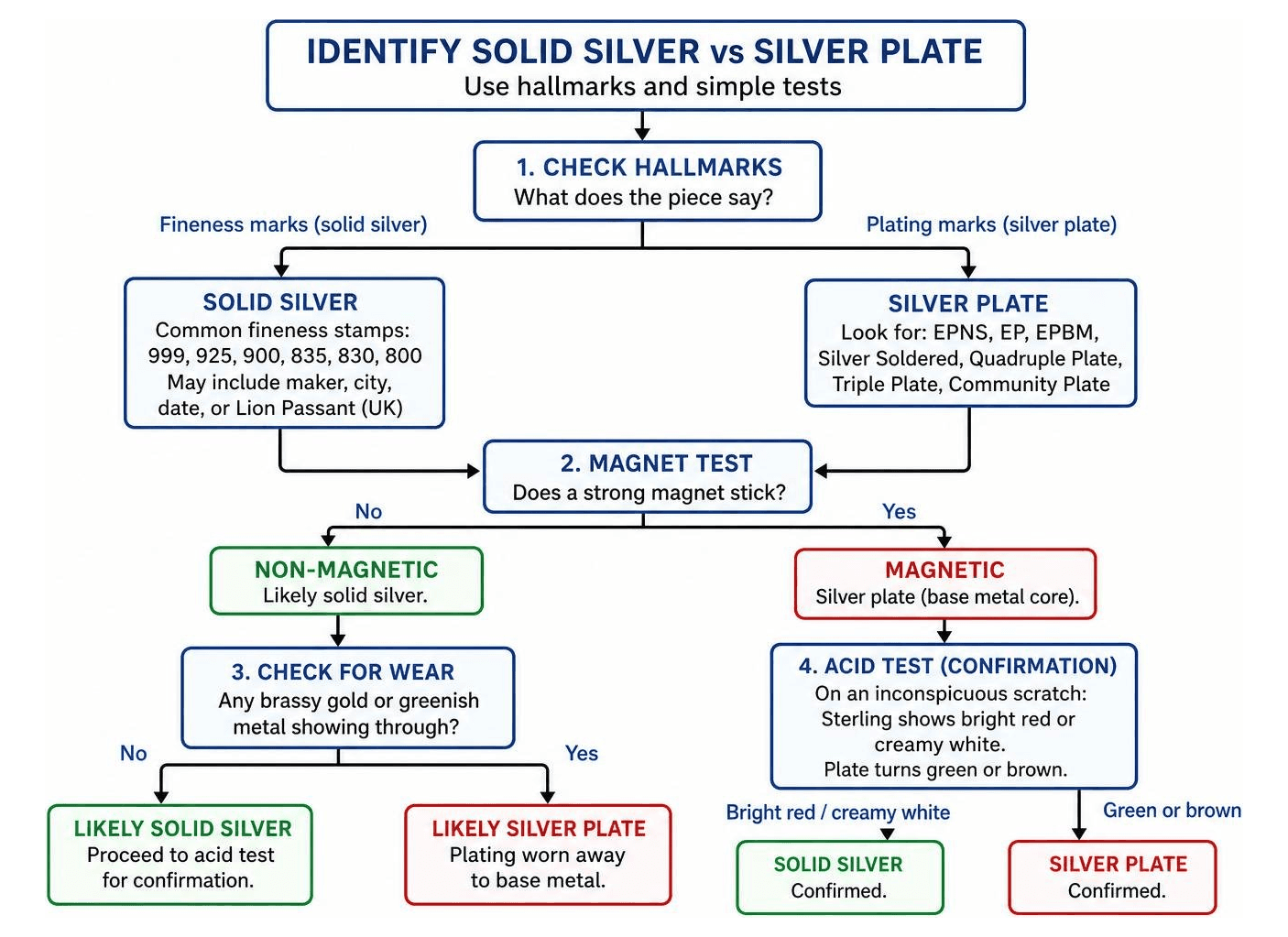
Look for these common signs of silver plate:
Plating Hallmarks: Stamps such as
EPNS(Electroplated Nickel Silver),EP,EPBM,Silver Soldered,Quadruple Plate,Triple Plate, orCommunity Plate.The Magnet Test: Pure silver and sterling silver are non-magnetic. If a strong neodymium magnet adheres firmly to the piece, it contains a heavy iron or nickel core and is not solid precious metal.
Base Metal Exposure: Examine areas of heavy friction (such as the tines of forks, heels of spoons, or edges of trays). If you see a brassy gold or greenish undertone peeking through, the plating has worn down to the base metal.
Chemical Acid Testing: When applied to an inconspicuous scratch, precious metal testing acid shows bright red or creamy white on genuine sterling, but turns green or brown on plated base metals.
Calculating Value for Vintage Coins, Bullion, and Silverware
Use the reference breakdown below to understand the metal content and pricing metrics for standard silver purities.
Silver Category / Standard | Millesimal Fineness | Silver Content (%) | Typical Melt Baseline (Spot @ $33.00/oz) | Current UK Scrap Rate (Reference) |
|---|---|---|---|---|
Fine Silver Bullion | .999 | 99.9% | ~$1.060 per gram | £1.49 / gram |
Sterling Silver | .925 | 92.5% | ~$0.981 per gram | £1.00 – £1.40 / gram |
US Pre-1965 Coinage | .900 | 90.0% | ~$0.955 per gram | Purity Equivalent |
Continental 830 | .830 | 83.0% | ~$0.880 per gram | Pro-rata Spot |
Continental 800 | .800 | 80.0% | ~$0.849 per gram | Pro-rata Spot |
Debased British (1920–1946) | .500 | 50.0% | ~$0.530 per gram | £0.72 – £0.80 / gram |
Silver Plate (EPNS) | N/A | < 1.0% | $0.00 (No melt payout) | Nil |
Note: UK scrap rates reflect published trade ranges from sources like Scrap Silver Prices Per Gram : UK Cash For Silver Rates.
Determining the Old Silver Selling Price for Pre-1965 US and British Coinage
Vintage circulating coins are among the most liquid forms of silver in the secondary market. Often referred to in bulk trading as "junk silver"—meaning their value is derived from their intrinsic metal content rather than extreme numismatic rarity—these coins have set specifications.
For US currency, every dime, quarter, half dollar, and dollar minted in 1964 or earlier is made of 90% silver and 10% copper:
$1,000 Face-Value Bag: Contains 715 net troy ounces of pure silver, regardless of whether it consists of dimes, quarters, or halves. A full bag weighs roughly 55 pounds (about the size of a standard football).
Pre-1965 Dimes, Quarters, & Halves: A 90% silver quarter contains approximately 0.1808 troy ounces of pure silver.
Morgan & Peace Silver Dollars (1878–1935): Contain 0.7734 troy ounces of pure silver.
Kennedy Half Dollars (1965–1970): Contain 40% silver (0.1479 troy oz pure silver).
Jefferson War Nickels (1942–1945): Contain 35% silver, 56% copper, and 9% manganese (0.0563 troy oz pure silver).
If you are holding investment-grade bullion coins like American Silver Eagles (minted from 1986 to the present in .999 fine silver), you can easily sell silver eagles at or above live spot rates due to high ongoing institutional and retail demand.
For British currency, a historical policy shift dictates metal content:
Pre-1920 British Coinage: Minted in 92.5% sterling silver. As detailed in resources covering Pre-1920 Silver Coins Scrap Value | Sell Old British Silver Coins - SMP Bullion & Diamonds, a pre-1920 half crown contains roughly 13 grams of pure silver content.
1920–1946 British Coinage: Debased to 50% silver (a 1925 half crown contains only about 7 grams of pure silver). Coins dated 1947 and later are made of cupronickel and carry no precious metal content.
Assessing Old Silver Selling Price for Sterling Flatware and Heirlooms
Before you scrap inherited silverware, consider that complete sets and pieces from renowned makers often sell for well above melt value. For comprehensive guidance on liquidating dining sets, read our guide on how to sell silver flatware.

According to historical auction metrics and secondary market data, complete services from premier silversmiths can fetch 150% to 400% of their base melt value:
Premier American Silversmiths: Tiffany & Co., Gorham (especially Martelé lines), Wallace (such as the Grand Baroque pattern), Reed & Barton (Francis I pattern), and Kirk Stieff.
European Master Silversmiths: Georg Jensen, Puiforcat, Buccellati, Paul Storr, and Hester Bateman.
Condition and Completeness: Monogram-free sets in original fitted wooden canteens command the highest premiums. Monogrammed, bent, or heavily worn items are typically valued at melt scrap rates.
For unusual, uncataloged, or museum-caliber pieces, consult historical guides like How to Sell Antique Silver to identify whether a private auction or an estate collector will pay more than a standard scrap payout.
Where to Sell Scrap Silver and Expected Dealer Payouts
Maximizing your payout requires matching your silver items with the right sales channel.
Comparing Payouts: Coin Dealers, Refiners, and Pawnshops
Specialized Luxury & Precious Metal Buyers: Ideal for high-value sterling flatware, estate jewelry, and bullion. These buyers provide free evaluations, live market payouts, and private transactions without the retail overhead deductions typical of generic pawn operations.
Online Refiners: Good for large volumes of unadorned scrap metal (broken chains, damaged hollowware). They pay 80% to 92% of melt value, though you will need to package, insure, and ship your items.
Local Coin Shops: Excellent for pre-1965 junk silver bags, graded numismatic coins, and government-minted bullion rounds. Payouts typically range from 75% to 85% of melt value with immediate payment.
Pawnshops: Best suited only when you need immediate cash locally and have no alternative buyers nearby. Due to high retail overhead and broad inventory models, offers generally land between 50% and 70% of actual melt value.
Step-by-Step Preparation: Weighing, Sorting, and Preservation
Follow these steps to prepare your silver before presenting it to an appraiser:
Sort by Purity: Group your items into separate piles: .999 bullion, .925 sterling, .900 coin silver, continental alloys (.800/.830), and suspected silver plate.
Weigh with Precision: Use a digital scale calibrated to 0.01 grams. Never use standard bathroom or kitchen scales; missing even a few grams can reduce your payout. 1 troy ounce equals 31.1035 grams, whereas a standard avoirdupois ounce equals 28.35 grams—mixing up these units is the most common pricing mistake sellers make.
Do Not Clean or Polish: This is critical. Aggressive polishing with abrasive chemical cleaners strips away original patinas, creates micro-scratches on soft silver, and can permanently destroy the numismatic or antique value of rare coins and historic hollowware. Leave items in their as-found state.
Document Maker Marks: Take close-up photographs of all stamps, hallmarks, dates, and maker symbols using a macro lens or jeweler's loupe before heading to an evaluation.
Frequently Asked Questions About Old Silver Valuation
What is the exact formula for calculating scrap silver value per gram?
To calculate the scrap value per gram:
$$\text{Value Per Gram} = \left(\frac{\text{Live Spot Price Per Troy Ounce}}{31.1035}\right) \times \left(\frac{\text{Purity Percentage}}{100}\right) \times \text{Dealer Payout Percentage}$$
For example, with a live spot price of $33.00 per troy ounce, a 28-gram sterling silver (.925) bracelet has an intrinsic melt value of approximately $27.48 ($0.981/gram). At an 85% dealer payout, your net cash return would be roughly $23.36.
Should I clean or polish antique silver before getting an appraisal?
No. Never chemically polish or mechanically buff antique silver coins, historical medals, or heirloom hollowware before a professional valuation. Collectors and appraisers look for the natural oxidation and patina that builds up in recessed engravings over decades. Stripping this finish can cut an item's secondary market collectible value in half.
How do I know if my vintage silver is worth more than its melt value?
Your vintage silver is likely worth more than scrap melt value if it satisfies any of the following criteria:
It carries the maker's mark of an iconic luxury silversmith (such as Tiffany & Co., Gorham Martelé, Cartier, or Georg Jensen).
It is a complete, undamaged flatware service in a desirable pattern with its original case.
It is a rare-date circulating coin (such as a 1916-D Mercury Dime or an 1893-S Morgan Dollar) in high-grade condition.
It comes with documented provenance connecting it to a notable historical figure, estate, or artistic era.
Conclusion
Understanding the true value of your vintage silver protects you from low offers and gives you full confidence when selling. By identifying purity hallmarks, accurately calculating pure metal weight, separating solid pieces from silver plate, and checking for collectible premiums, you ensure you receive fair market value for your assets.
At Antwerp Diamond Store in Atlanta, GA, we buy luxury jewelry, fine watches, and precious metals. We provide free evaluations, transparent market-based pricing, and immediate payouts in a private, appointment-only setting without hidden fees.
To learn more about maximizing your return on estate items, read our detailed guide on where to sell gold and silver or schedule a private consultation with our team today.


