
The best places where to sell gold and silver are reputable online buyback dealers, specialist local buyers, and established precious metal refiners. For standard investment-grade bullion, online programs usually pay about 95% to 100% of live spot, while local coin shops often come in about 2% to 5% lower, and hotel-style pop-up gold buyers are often the worst option at 20% to 40% below reputable dealer rates.
Most sellers ask the wrong first question. They ask who pays the most, when the better question is who pays fairly for the specific item you have. A sealed American Gold Eagle, a box of generic silver rounds, a broken gold bracelet, and a Cartier watch with gold content are not sold the same way, and they shouldn't be.
Finding the right buyer means matching the selling channel to the item, your timeline, and your tolerance for shipping, negotiation, and appraisal risk. If you need same-day cash in Atlanta, Buckhead, Sandy Springs, Alpharetta, Roswell, Brookhaven, or Midtown Atlanta, a local buyer may make sense. If you want the strongest bullion payout and can ship, an online dealer often wins. If you're worried about misleading offers, it's worth understanding the warning signs of investment fraud before sending valuables anywhere.
This guide compares seven practical options, with the actual trade-offs that matter: speed, transparency, item fit, and what usually happens to your final payout after fees, deductions, and grading decisions.
Table of Contents
1. Antwerp Diamond
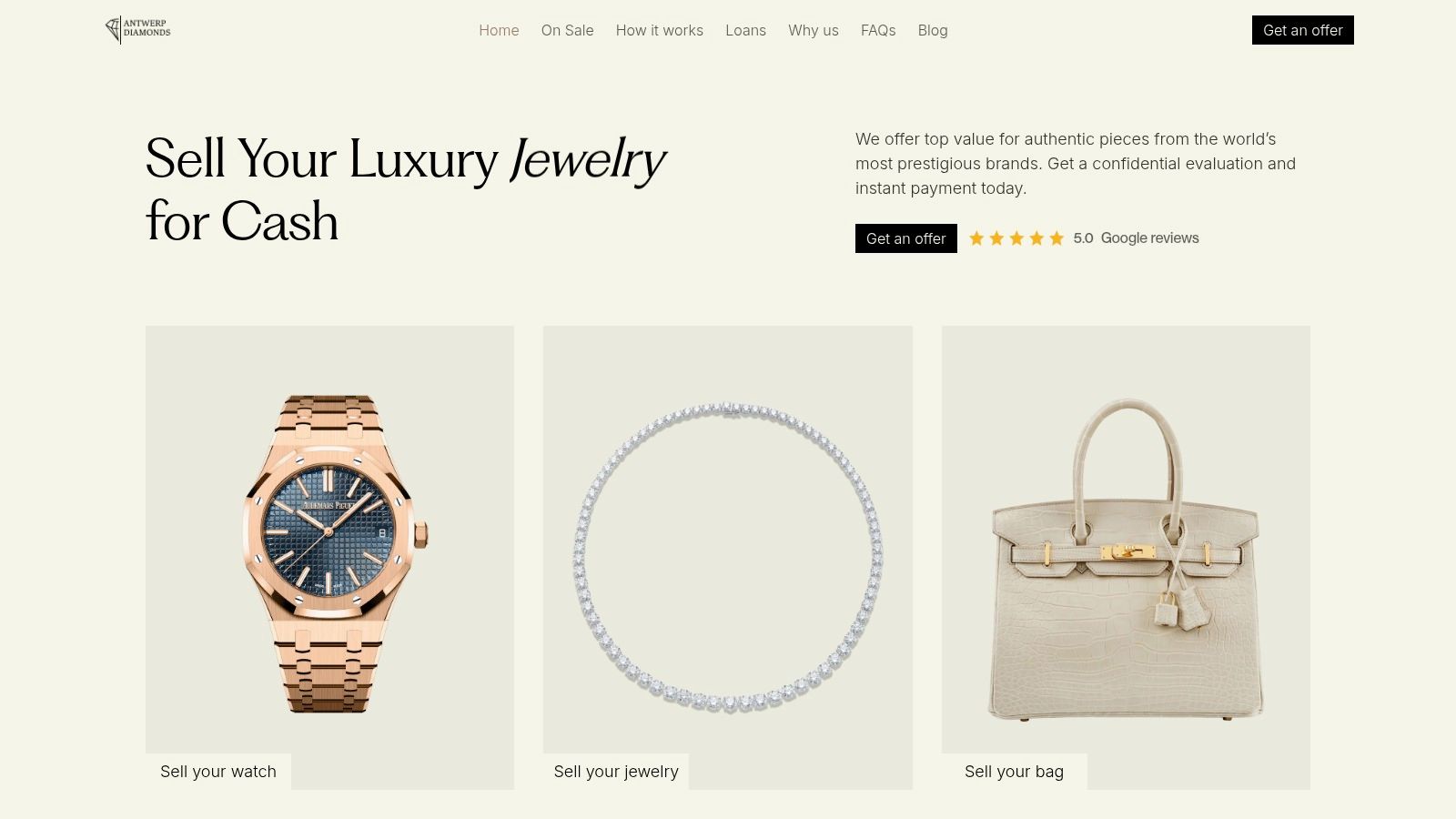
Need to decide whether your item should be sold for melt, collector demand, or brand resale? Antwerp Diamond deserves a close look if the piece may be worth more than its gold or silver content alone.
That distinction matters. A plain 14K chain is usually priced by weight and purity. A signed Cartier bracelet, a diamond ring with strong paperwork, or a gold Rolex follows a different pricing logic that includes brand, condition, craftsmanship, and resale demand. Sellers lose money when they send all of those items into the same scrap channel.
Why it works for more than melt value
Antwerp Diamond focuses on categories that often get mispriced by bullion-only buyers: fine jewelry, luxury watches, estate pieces, loose diamonds, handbags, and precious metal items with secondary-market appeal. That makes it useful for mixed collections, especially estates or personal collections where one box can hold scrap gold, designer jewelry, and a watch that needs a very different buyer.
The practical advantage is evaluation depth. Instead of stopping at karat, gram weight, and spot price, the review can account for stone quality, brand recognition, wear, service history, original packaging, and whether the item is resellable as-is. That is the right framework for pieces that sit above commodity value.
I tell sellers to sort items into three buckets before getting quotes: bullion, scrap, and resale-grade luxury. Antwerp Diamond fits the third bucket best, and sometimes the second. That decision step is what keeps a seller from accepting a melt-based number on an item the next buyer would place directly into inventory.
For Atlanta-area sellers, private appointments in Buckhead or Roswell add another layer of control. You can ask how the offer was built, compare the metal value against the resale value, and decide whether the speed of a local sale is worth more to you than testing multiple outlets.
Who should use it
This option fits sellers with jewelry-heavy or luxury-heavy holdings, especially if privacy and quick decisions matter. It also makes sense for anyone handling inherited items and trying to separate true scrap from pieces that deserve a stronger appraisal process.
If you are sorting several precious metal categories at once, it also helps to review where to sell platinum jewelry and precious metal items so platinum pieces do not get lumped into the wrong sales path.
A few trade-offs are worth keeping in view:
Best fit: Designer jewelry, diamond jewelry, luxury watches, estate pieces, and premium accessories with precious metal content
Less ideal fit: Standard bullion bars, common rounds, and low-premium scrap lots that a bullion dealer may price more aggressively
Strong local option: In-person access helps sellers who want explanation, discretion, and immediate feedback before committing
Useful for decision-making: Good choice if you need help figuring out whether an item belongs in the melt bucket or the resale bucket
In the Atlanta market, I point jewelry sellers here early for one reason. A proper appraisal process can protect the value that disappears when a buyer treats every item like scrap.
2. APMEX Sell to Us
APMEX is a practical choice for sellers who want a large, standardized online process. Its APMEX Sell to Us program covers bullion, coins, numismatics, and an Old Gold and Silver channel for jewelry and silverware. That range makes it useful for people sorting through a safe, a collection, or an estate box with several item types.
The main appeal is procedural clarity. You lock the quote, follow packing rules, ship through the provided logistics process, and wait for authentication and payment. Sellers who like structure usually prefer this format to haggling locally.
Best use case
APMEX fits standard bullion and widely recognized coins especially well. That's because large online buyback programs from reputable dealers consistently offer the highest payouts for standard investment-grade gold and silver, typically around 95% to 100% of live spot, while local coin shops usually pay less because of storefront overhead, according to GoldSilver's guide to selling gold and silver.
Government-minted coins also tend to perform better than generic products on resale. If you're selling American Gold Eagles or similar pieces, this type of platform is usually where pricing gets more competitive. If you're sorting old household silver first, it also helps to understand how to sell silver flatware without confusing scrap with collectible value.
What to watch
APMEX works best when your item is easy to identify and authenticate within a standardized system. That's a strength for bars and common coins. It's less ideal when the item's value depends on design house, provenance, or estate appeal.
A few practical points matter:
Follow shipping instructions exactly: Insurance usually depends on compliance with packing and labeling rules.
Expect metal-first logic on jewelry: Jewelry and silverware offers are often driven mainly by metal content.
Use it for clean, recognizable inventory: Common bars, rounds, and coins fit the model better than unusual estate pieces.
Standardized online buyers are efficient. They're not always the right place to discover hidden value.
3. JM Bullion Sell to Us
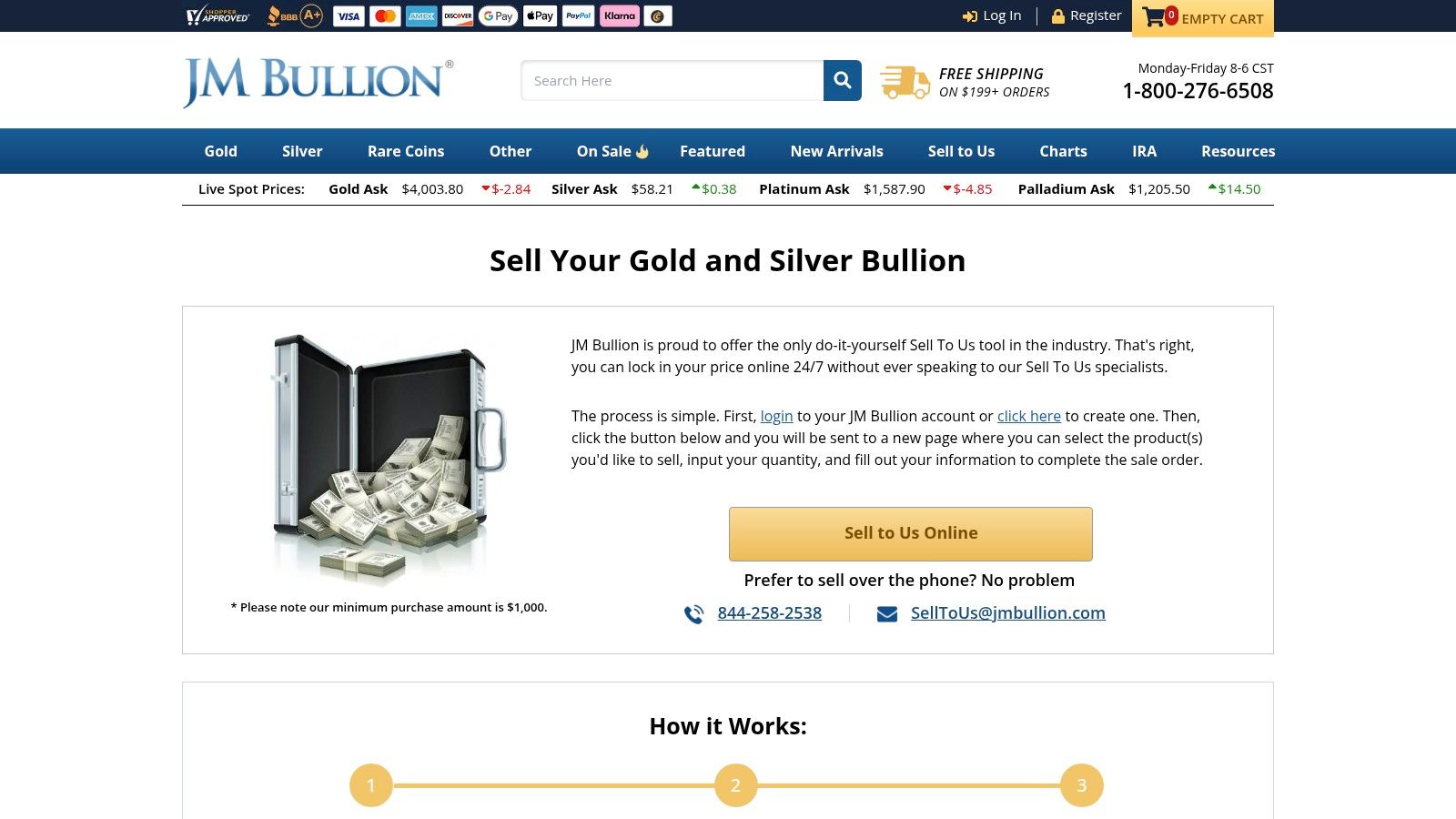
Need to sell bullion without a phone call or a store visit? JM Bullion appeals to sellers who want a price-locking process they can handle online, then finish by shipping the metals in for verification and payment.
Its strength is control. You can review buy prices, decide whether the spread makes sense for your bars or coins, and place the order on your own schedule. For experienced sellers, that saves time and cuts down on the back-and-forth that often comes with local negotiations.
Where it fits
JM Bullion makes the most sense for straightforward, investment-grade material and for sellers who can meet the service minimum. If you're mailing a few common gold coins, silver rounds, or standard bars, the workflow is usually easier than trying to shop a small number of local offers one by one.
The trade-off is item type and lot size. This format is built for recognized bullion products first. It is less useful for pieces where value depends on craftsmanship, maker, or wearable appeal. A chain marked 14K and an 18K bracelet can have very different resale dynamics, so it helps to know the difference between 14K and 18K gold before selling.
That distinction matters in the article's decision framework. If your checklist points to standardized bullion, JM Bullion belongs on the short list. If your checklist points to estate jewelry, designer pieces, or mixed silver household goods, a specialty buyer or in-person appraiser usually gives you better information before you commit to a sale.
Practical drawbacks
Speed is the obvious one. This is not the route for same-day cash.
There is also less room for nuance. A local buyer can sometimes sort a mixed lot on the counter, separate pieces with collectible or jewelry value, and explain why one item should not be sold at melt. An online bullion desk is usually more efficient with clearly identified products than with "I inherited this box and need help figuring out what belongs in which category."
Use JM Bullion when the math is simple:
Best fit: Recognizable bullion, larger lots, sellers who want to lock a price online
Less ideal: Small lots, urgent cash needs, mixed jewelry and silver items
Better alternative: A specialty jewelry or estate buyer if design, brand, or condition may add value beyond metal content
For sellers choosing between convenience and maximum value, JM Bullion is a strong middle path. It is more structured than selling locally, but it still works best when the material is easy to identify and price.
4. Kitco Sell Bullion Bars and Coins
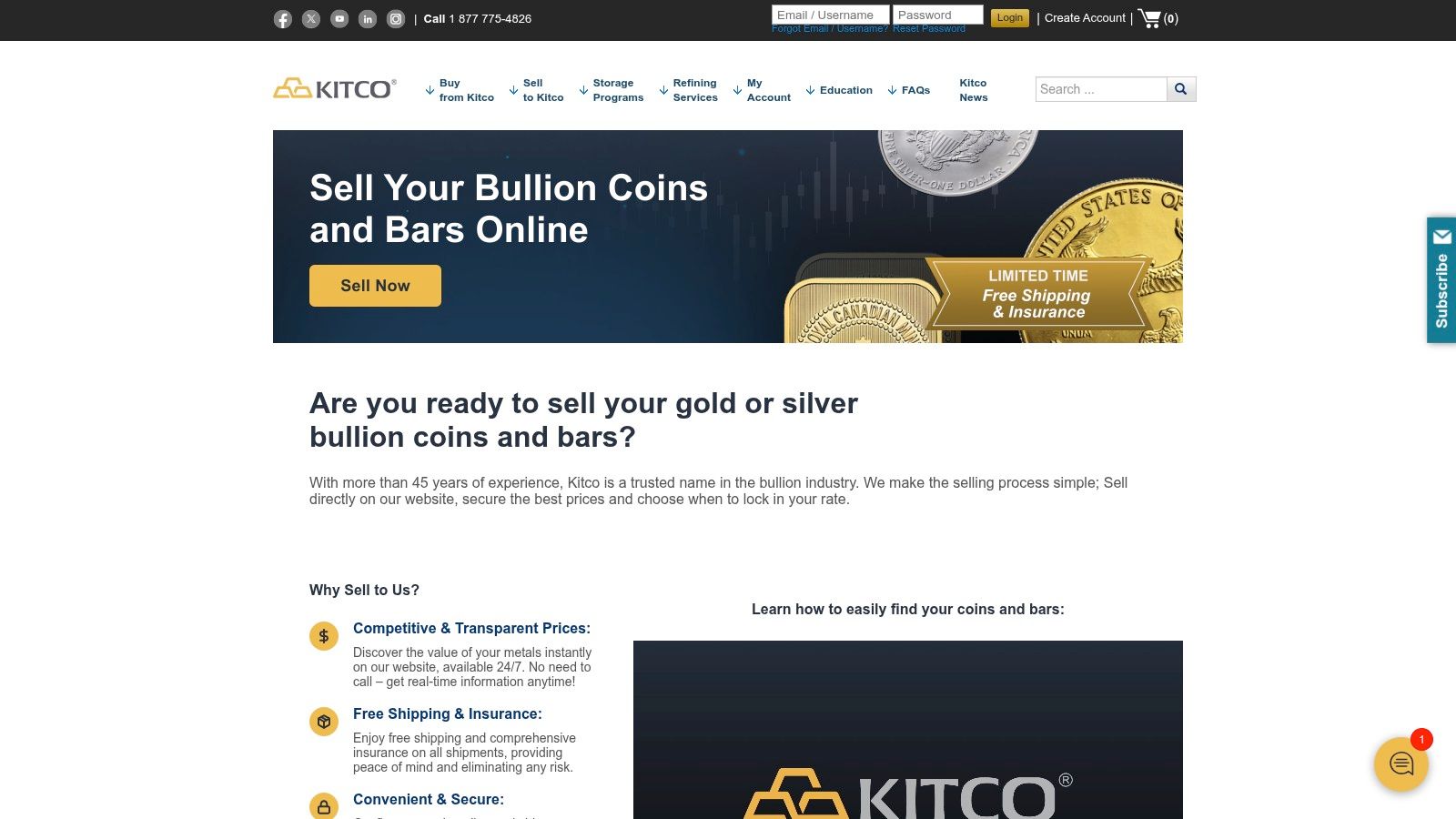
Kitco is a familiar name for sellers who track bullion markets closely. Its Kitco bullion selling service is centered on bars, coins, and rounds, with clear FAQs and a mail-in workflow that's easy to follow if you're already comfortable with spot-price selling.
What separates strong bullion buyers from weaker ones is price visibility. You want live pricing, not stale screens or vague promises.
Why sellers trust this format
When selling gold and silver, one of the most important technical details is real-time spot integration. Dealers using live, algorithm-driven spot data that refreshes within 60 seconds reduce the risk that you get valued against outdated market information, as described by Elemetal's live precious metals pricing system. That kind of setup is exactly what I look for in bullion transactions.
For experienced sellers, Kitco's format makes sense because it stays close to market logic. If you know your item's purity, weight, and general bullion category, the process feels predictable.
Check the live spot price before you negotiate, then compare how each buyer applies it to your exact item.
If you're also selling jewelry, don't assume the bullion workflow applies cleanly. Gold purity matters, and many sellers don't understand the pricing difference between karat grades until the offer is on the table. This is a good point to review the difference between 14K and 18K gold before getting a quote.
When it gets more complicated
Kitco is strongest for standard bullion. Scrap and refining programs can involve different intake rules, and that matters if your package includes broken jewelry, odd lots, or mixed-metal household items.
This is the practical checklist I'd use:
Use Kitco for: Common bullion bars, coins, and rounds.
Ask more questions first for: Scrap jewelry, mixed lots, or anything with collectible features.
Compare at least one other quote: Small pricing differences against spot can still change your payout meaningfully.
For disciplined bullion selling, Kitco is a serious option. For estate jewelry, it may be only one quote in a wider process.
5. SD Bullion Sell Gold and Silver

Want a buyer with firm rules instead of back-and-forth negotiation? SD Bullion fits that profile. Its sell page spells out how price locks work, what quantities it will accept, how to ship, how you get paid, and what happens if a seller cancels.
That structure helps sellers who treat bullion sales like a transaction, not a conversation. I see the appeal for people moving standard bars and coins, because the process is defined before the package goes out.
The trade-off is just as clear. SD Bullion is a better fit for straightforward bullion than for mixed estates, jewelry, or small odd lots. Published minimums on certain sell orders make that plain, so this is usually not the right first stop for someone testing the waters with a single small item.
Product type also matters. A tube of recognizable government-minted coins often sells through a different buyer channel than generic rounds or scrap silver, which is why it helps to review how to sell Silver Eagles for the best return before choosing where to send them.
Where SD Bullion makes sense
Use SD Bullion if your checklist looks like this:
You have standard bullion: Bars, rounds, and widely traded coins fit the model best.
You can meet the order minimums: Small sellers may be screened out by the quantity rules.
You are comfortable locking a price by phone: This works best for sellers who are ready to commit.
You have a clean, organized package: Mixed jewelry, damaged pieces, and collectible edge cases usually need a different kind of buyer.
One point deserves close attention. SD Bullion states that canceled locked transactions can trigger a fee plus any market loss. In a fast market, that can turn a casual change of mind into a real cost.
For sellers using the comparison table in this guide, that puts SD Bullion in the "process certainty over flexibility" category. If your priority is moving a meaningful amount of standard metal under published terms, it is a practical option. If your priority is squeezing the best value out of designer jewelry, scrap, or a mixed estate lot, I would treat it as a narrower fit rather than a default choice.
6. Money Metals Exchange Sell to Us
Money Metals Exchange works well for sellers who want to see live buy prices on product pages before making contact. Its Money Metals Sell to Us program is straightforward, and it doesn't require that you originally bought the items from them.
That matters more than many people think. Sellers often inherit coins and bars from different sources, and they don't want to untangle purchase histories just to get a quote.
What stands out
The strongest feature here is visible pricing paired with practical shipping guidance. Money Metals emphasizes insured shipping methods and clear packaging steps, which gives the process a useful level of transparency.
This is also where I'd warn sellers about hidden math in online transactions. Consumer-focused guidance has raised concerns that remote sales can lose substantial value through processing fees, shipping deductions, and refining charges that appear late in the process, and that some quoted website offers later drop because of condition deductions, as summarized in this consumer-protection discussion of online gold-selling fees and deductions. That's why live posted pricing is helpful, but it's not enough by itself.
Watch for this: A good posted quote can still become a weak final payout if deductions appear only after receipt.
Who benefits most
Money Metals is a good fit for organized bullion sellers who are comfortable arranging shipment and insurance themselves. It's less attractive if you want prepaid labels across the board or if you're selling items that need a more interpretive appraisal.
Use this decision filter:
Good choice for: Common bars, rounds, and coins with easy product matching.
Less ideal for: Designer jewelry, estate gold, or mixed-value collections.
Important step: Audit every possible deduction before you lock the sale.
For people asking where to sell gold and silver online without a lot of guesswork, Money Metals is a credible option, but only if you read the shipping and lock terms carefully.
7. Abe Mor Gold Buying
Selling gold jewelry instead of bullion? Start by choosing a buyer that prices jewelry as jewelry. Abe Mor's Abe Mor gold buying service focuses on gold jewelry, diamonds, and estate pieces, with both mail-in and appointment-based options.
That matters because valuation methods change the outcome. A bullion desk usually looks first at purity, weight, and current melt value. A jewelry buyer may also consider branded origin, stone quality, design, and whether the piece has resale appeal beyond scrap.
I see this mistake often. Sellers bring in a mixed lot, a broken chain, diamond studs, a signed bracelet, maybe an older estate ring, and expect one simple gold quote. That approach leaves money on the table if anything in the batch deserves a resale-market appraisal instead of a melt calculation.
Consumer guidance has made the same point. AARP's overview of selling gold and silver and the numismatic versus scrap distinction explains how sellers can lose value when collectible property gets treated as metal only. The same pricing problem shows up with estate and designer jewelry.
Abe Mor fits best if your checklist looks like this:
Your items are jewelry first, metal second: Chains, rings, earrings, estate pieces, and diamond jewelry.
Brand, craftsmanship, or stones may affect value: Signed or designer pieces deserve separate review.
You need a decision framework, not just a spot quote: Compare the offer against at least one melt-based bid and one jewelry-focused bid.
Your lot is mixed: A specialized buyer is more likely to sort pieces by resale potential instead of grouping everything into scrap.
The trade-off is straightforward. If you are selling bars, rounds, or common bullion coins, a bullion specialist usually offers a cleaner process and more predictable market-based pricing. If you are selling jewelry with diamonds, brand value, or estate character, a jewelry-focused buyer can produce a better financial result, but only if the appraisal is specific and the offer breaks out how value was assigned.
For sellers working through the options in this list, Abe Mor fills an important lane in the comparison table. It is the quote to get before a melt-only buyer weighs everything together.
Where to Sell Gold & Silver, Top 7 Comparison
Service | 🔄 Process Complexity | ⚡ Speed / Efficiency | ⭐ Trust / Effectiveness | 📊 Expected Outcomes | Ideal Use Cases |
|---|---|---|---|---|---|
Antwerp Diamond | 🔄 Medium, online, in-person, or insured mail workflows | ⚡ High, instant payment after acceptance | ⭐⭐⭐⭐⭐, strong reviews & specialty expertise | 📊 High for premium luxury items; low-end items may underperform | High-value watches, designer handbags, fine jewelry, private appointments |
APMEX, Sell to Us | 🔄 Low, end-to-end online with prepaid labels | ⚡ High, often next-business-day payment after check-in | ⭐⭐⭐⭐, large, standardized dealer | 📊 Market-based returns for bullion; jewelry priced mainly for metal content | Bullion, coins/numismatics, Old Gold & Silver jewelry/silverware |
JM Bullion, Sell to Us | 🔄 Low, 24/7 self-serve price-lock tool | ⚡ Medium-High, fast processing; can slow in busy periods | ⭐⭐⭐⭐, established national dealer | 📊 Transparent, published buy prices; better for larger orders (≥ $1,000) | Bullion sellers, scrap/jewelry with minimum order considerations |
Kitco, Sell Bullion Bars & Coins | 🔄 Low, online lock now or book later options | ⚡ High, typically 1–2 business days after verification | ⭐⭐⭐⭐, long-standing global brand | 📊 Good returns for common bars/coins; scrap has separate rules | Mail-in bullion bars, coins, rounds with flexible price-locking |
SD Bullion, Sell Gold & Silver | 🔄 Medium, phone-lock model with published minimums | ⚡ Medium, optional wire upgrade for faster payout | ⭐⭐⭐⭐, transparent contract-style terms | 📊 Strong for larger, contract-style sells; fees/cancellation rules apply | Sellers meeting minimum quantities, depository account holders |
Money Metals Exchange, Sell to Us | 🔄 Medium, live prices but seller arranges shipping/insurance | ⚡ Medium-High, fast once locked; locks are non-cancelable | ⭐⭐⭐⭐, clear live pricing and quoting desk | 📊 Predictable market returns; requires seller-managed shipping | Sellers who want live buy prices and to sell common bars/rounds |
Abe Mor, Gold Buying (jewelry & estate items) | 🔄 Low, pre-estimate then insured overnight shipping kit | ⚡ High, offers typically within 48 hours of receipt | ⭐⭐⭐⭐, long-established jeweler/buyer | 📊 Often higher than melt for designer/estate pieces; not optimal for bullion | Jewelry, diamonds, estate pieces where designer/collector value matters |
Get a Professional Valuation for Your Gold and Silver
Choosing where to sell gold and silver comes down to one practical question: what exactly are you selling? Standard bullion usually performs best with reputable online buyback programs that publish live prices and process recognized products efficiently. Fine jewelry, estate pieces, signed items, and luxury goods need a different lens because authenticity, condition, brand, documentation, and resale demand can matter as much as metal content.
The mistake I see most often is channel mismatch. Sellers take collectible coins to a scrap buyer, estate jewelry to a bullion desk, or a small emergency cash sale to an online platform with shipping delays and minimums. That's how money gets left on the table.
For same-day local speed in Atlanta, Buckhead, Roswell, Sandy Springs, Alpharetta, Brookhaven, Midtown Atlanta, and the wider Georgia market, an in-person buyer can be the right move, especially if you want questions answered face to face. For maximum bullion efficiency, national online dealers often have the stronger structure. For jewelry and premium items, the right buyer is the one who can separate melt value from resale value.
Before you accept any offer, use a simple decision-making framework:
Identify the item type: Bullion, scrap jewelry, designer jewelry, silverware, collectible coin, or luxury watch.
Check the value drivers: Purity, weight, brand, condition, documentation, serial numbers, rarity, and current resale demand.
Match the buyer to the item: Bullion dealer for standard bars and coins, specialty jewelry buyer for signed or estate pieces, local evaluator if speed matters.
Confirm the deal terms: Shipping, insurance, inspection timing, final payout method, and any possible deductions.
Get at least one comparison: Not because every offer will vary wildly, but because one wrong category can produce the wrong valuation logic.
For sellers in Buckhead, Roswell, and greater Atlanta who want a confidential, no-pressure evaluation, Antwerp Diamond is a sensible local option. The company handles gold, silver, fine jewelry, watches, handbags, and diamonds, which is especially helpful when your items don't fit a single commodity bucket.
FAQs
Is it better to sell gold and silver online or locally
The better channel depends on what you are selling and what matters more, payout or speed. Online dealers usually fit standard bullion best because their buyback systems are built around bars and common coins. Local buyers are often the better choice if you want same-day payment, want the item tested in front of you, or are selling pieces that need a more nuanced in-person review.
Who usually pays more for bullion
For standard investment-grade gold and silver, established online buyback programs often post the stronger numbers. That does not mean every online offer wins. Shipping rules, minimums, lock-in procedures, and final inspection terms can change the net result. Compare the final payout, not just the headline price.
Should I sell jewelry by melt value only
No. Melt value is only one pricing method.
Designer jewelry, estate pieces, vintage styles, and items with diamonds or strong brand demand can sell for more than their raw metal content. If a buyer weighs it and quotes scrap immediately, ask whether the piece has any resale premium beyond gold or silver value.
Are local coin shops still useful
Yes. They are useful for small lots, quick transactions, and straightforward bullion sales.
They are also a good checkpoint when you want a second opinion before mailing anything. The trade-off is that many shops buy with tighter margins for themselves than large national dealers can, especially on common bullion.
What should I bring to an in-person evaluation
Bring the item, any original box or paperwork, receipts if you still have them, grading reports for diamonds, and certificates or holders for coins. Brand documentation, serial numbers, and service records can also matter for watches and premium jewelry. The more complete the file, the easier it is for a buyer to separate scrap value from resale value.
If you are still deciding where to sell, use the checklist and comparison table above one more time before you commit. Match the item type to the buyer type, then weigh the two factors that usually drive the outcome most: how fast you need to sell and how much pricing precision the item requires. That process prevents a common mistake. Sellers bring designer jewelry to a bullion buyer, or send generic bullion to a specialty estate buyer, and leave money on the table in both cases.
For Atlanta-area sellers who want an in-person evaluation, a local appointment can help clarify whether you are looking at melt, collector, or resale value, as noted earlier. Bring everything in one visit and ask the buyer to explain how they are pricing each category. A clear breakdown usually tells you more than the first number on the table.