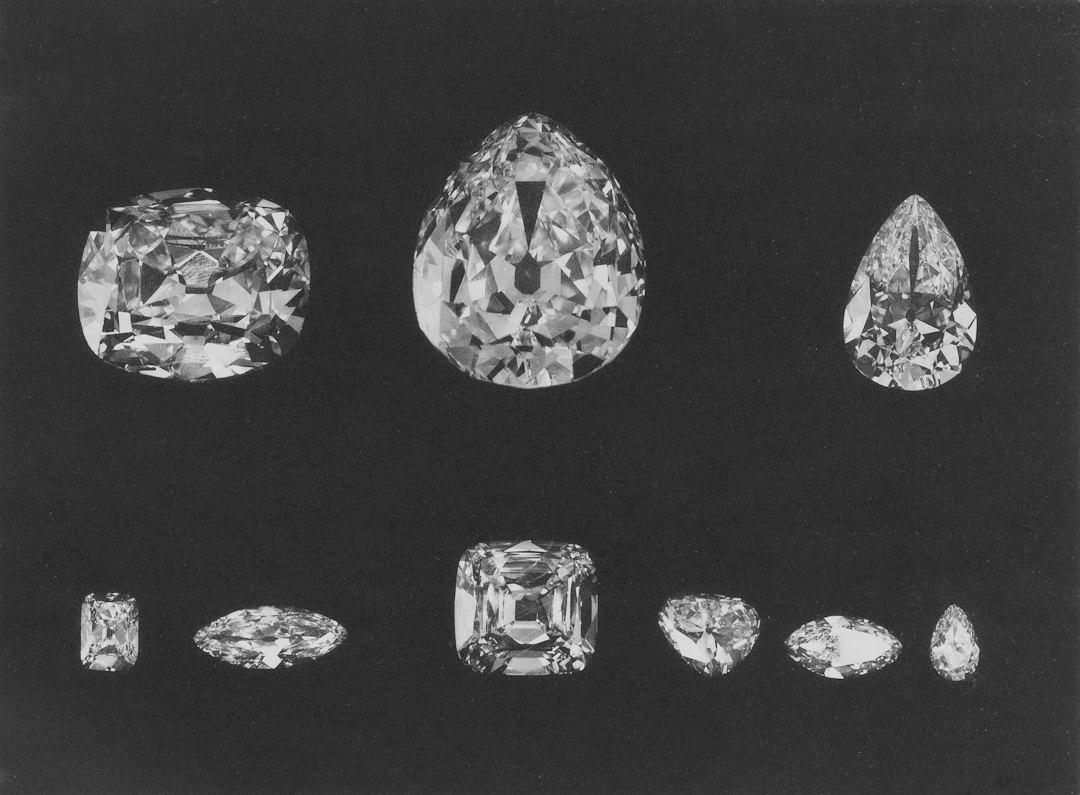

An iced watch is a men's timepiece customized with diamonds or other gems covering its surfaces. Real diamond iced Rolex models retain 60–70% of value after 3 years, while CZ-iced equivalents can fall to 25–30%, and one of the biggest reasons is whether the work was done by the original brand or by a third party.
If you're reading this, you may already own an iced Rolex, Audemars Piguet, Patek Philippe, or Cartier and you're trying to answer a practical question: what is this watch worth, and how will a buyer judge it? In the resale market, the answer usually turns on one issue first, factory-set, high-quality aftermarket, or low-quality aftermarket. That distinction affects authenticity review, buyer confidence, serviceability, and the final number a serious purchaser is willing to discuss.
Table of Contents
What Defines a Men's Iced Watch
A men's iced watch is a timepiece covered with diamonds or other precious stones on the bezel, dial, bracelet, and case. A standard definition used across the trade describes an iced out watch as a watch encrusted with stones to create an ice-like appearance, and the work often starts with full disassembly before gem-setting begins, as described in this guide to men's iced out watches.
What iced out actually means
Not every diamond watch is "iced out" in the way buyers and appraisers use the term. The technical benchmark is Full Pavé, where gemstones cover the bezel, dial, lugs, case, and bracelet for maximum light return and dense visual coverage. Partial coverage can still look expensive, but it doesn't carry the same impact in valuation or buyer perception.
The construction matters more than most owners expect. A proper jeweler doesn't just add stones on top of a finished watch. The watch is broken down, the movement is removed, the setting layout is planned, and the metal is prepared for pavé or bead setting so each stone sits securely and evenly.
Practical rule: If the setting looks flashy from a distance but uneven under magnification, buyers treat it as decoration, not craftsmanship.
A quality result also has to remain a functioning watch. The case must keep its structural integrity, the bracelet must still flex properly, and no stones should catch on clothing. After setting, the watch has to be reassembled, pressure-tested, and checked for timekeeping because extra weight and altered case geometry can affect performance.
Factory-set versus aftermarket
This is the line that changes everything.
A factory-set watch left the original brand with diamonds installed by the manufacturer. A Rolex, Patek Philippe, Audemars Piguet, or Cartier factory-set piece generally commands stronger buyer confidence because the market knows the stones, finishing, and watch architecture were designed together.
A high-quality aftermarket watch starts with a real luxury watch, then a skilled jeweler performs the stone setting later. These can be impressive pieces when the base watch is authentic, the setting is clean, the diamonds are genuine, and the work respects the watch's structure.
A low-quality aftermarket watch is where value falls fast. Common signs include soft metal removal, uneven pavé rows, poor finishing around the lugs, weak bead work, damaged serial areas, glue residue, or simulant stones presented as diamonds.
For anyone trying to understand diamond quality in watches, this breakdown on VVS diamond watches gives useful context on what serious buyers look for in the stones themselves.
How the Value of an Iced Watch Is Determined
A seller brings in two diamond-covered Rolexes. One gets strong interest in a day. The other sits because every buyer sees future problems. The difference is rarely the amount of sparkle. It is the credibility of the base watch, the quality of the stone setting, and whether the piece is factory-set, high-quality aftermarket, or low-quality aftermarket.
The base watch sets the floor
An iced Rolex Day-Date, Royal Oak, or Nautilus starts with a real secondary-market foundation. A heavily modified watch from a weaker brand does not. Buyers price the watch first as a watch, then add or subtract value for the diamond work.
That means reference desirability, service history, case condition, bracelet condition, movement health, and visible serial information all matter before anyone argues about carat weight. If the watch is overpolished, hard to service, or compromised around the case and bracelet, the setting becomes a discount instead of an asset.
Stone type changes value fast. Genuine diamonds keep buyer interest because they wear better, test cleanly, and remain saleable in more channels. Simulants reduce confidence and narrow the resale market. Anyone comparing common non-diamond options should understand the differences in this cubic zirconia vs moissanite comparison.
Factory-set, strong aftermarket, and weak aftermarket do not trade the same
This is the dividing line in real appraisals.
A factory-set watch usually commands the strongest offer because the brand delivered the watch in that configuration. The stones, metal finishing, and production records line up more cleanly, and that lowers buyer risk.
A high-quality aftermarket watch can still sell well. I see good results when the underlying watch is authentic, the setting is clean, the diamonds are genuine, and the work has not hurt the case, bracelet, crystal fit, or serviceability. These pieces still face more scrutiny than factory-set examples, but they remain viable if the workmanship holds up under magnification and the paperwork is credible.
Low-quality aftermarket pieces lose value for practical reasons. Poor pavé alignment, inconsistent stone sizes, weak bead work, overcut metal, softened lug edges, damaged hallmarks, or hidden glue residue all create future cost. Buyers assume stone loss, repair difficulty, and lower resale demand, then price the watch accordingly.
Buyers do not pay only for diamonds. They pay for a watch they can trust, service, and resell.
According to 2023 luxury auction data and dealer trading patterns, factory-set diamond watches generally retain buyer confidence better than aftermarket-set examples, while simulant-set pieces are discounted the hardest because authentication and resale are more difficult.
If you plan to sell, this guide on how serious buyers assess and sell high-end watches explains the documents and condition points that affect an offer before the watch ever reaches the counter.
Iced Watch Value Comparison Factory vs Aftermarket
Attribute | Factory-Set | High-Quality Aftermarket | Low-Quality Aftermarket |
|---|---|---|---|
Brand confidence | Highest | Moderate to strong, depends on jeweler and execution | Weak |
Authentication path | More straightforward | Requires careful inspection of watch and setting | Often difficult |
Diamond credibility | Usually easier to document | Varies by paperwork and testing | Often uncertain |
Buyer pool | Broadest among luxury buyers | Selective but active | Narrow |
Serviceability | Usually better understood | Depends on how the watch was modified | Frequently problematic |
Resale stability | Usually strongest | Can be solid | Often heavily discounted |
Verifying the Quality and Authenticity of Your Watch
A seller walks in with an iced Rolex that looks impressive across the counter. Five minutes later, the conversation changes once the loupe comes out. The watch itself may be authentic, but the setting work, stone quality, and paperwork decide whether it trades like a strong luxury piece or a hard-to-sell custom job.
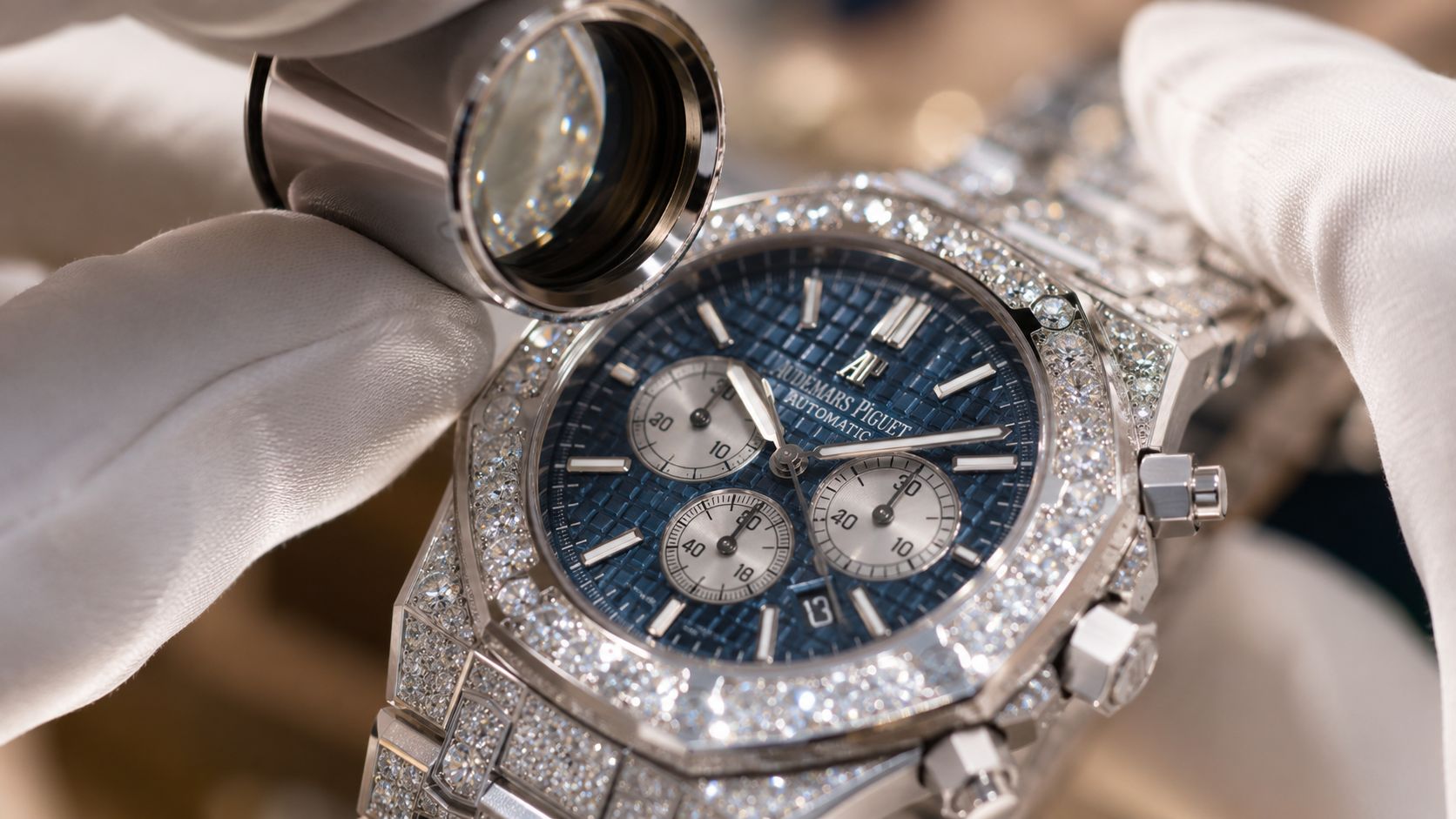
The first question is simple. Is it factory-set, high-quality aftermarket, or low-quality aftermarket? That distinction drives nearly everything that follows. Factory-set pieces usually have the clearest authentication path. Strong aftermarket work can still sell well, but only if the watch remains structurally sound and the diamonds test as represented. Low-grade aftermarket pieces create the most friction because buyers have to question the watch, the stones, and the workmanship at the same time.
Start with the setting itself. Good work looks controlled under magnification. Prongs or beads should be even, rows should track cleanly, and the metal around each stone should show deliberate cutting rather than torn or overworked surfaces. On poor jobs, I usually see mixed stone sizes, wandering lines, rough seat cuts, and polishing that has softened the case shape.
Then inspect the watch as a watch, not just as jewelry.
Stone security: Check for movement, lifted corners, or gaps between stones and metal.
Pattern consistency: Compare spacing and alignment across the bezel, lugs, case sides, and bracelet links.
Case and bracelet integrity: Look for stretched links, weakened screw points, or signs that too much metal was removed during setting.
Finish quality: Sharp transitions should still look intentional. Rounded edges and blurred lines often mean aggressive refinishing after drilling.
Wearability: The bracelet should move freely and sit flat, without snagging cuffs or catching at the clasp.
Turn the piece over. Hidden surfaces tell the truth faster than the dial side. I pay close attention to clasp interiors, bracelet backs, lug undersides, and the area around the caseback because shortcuts usually show up there first.
Stone identity matters just as much as workmanship. Many owners are told their watch is "iced" and assume that means natural diamonds. Sometimes it does. Sometimes it means lab-grown stones, moissanite, cubic zirconia, or a mix. If you need a basic primer on common simulants before an appraisal, this cubic zirconia vs moissanite comparison is a useful starting point. A professional buyer will still test the stones, but knowing what may be in the watch helps you understand the likely price range and buyer interest.
Paperwork helps, but only when it matches the watch in front of the buyer. The best file includes original brand papers for the base watch, service history, jeweler invoices for the setting work, and any stone documentation that can be tied to the piece. If the seller claims factory diamonds, the watch should support that claim through model details, production traits, and documentation.
Serial numbers need to be clear and intact. If engraving is softened, partially covered, or damaged during customization, authentication gets harder and resale gets slower. This guide to watch serial number lookup basics explains why buyers check those details early.
A few red flags justify immediate professional review: glue residue, cloudy stones mixed into one surface, misaligned rows, bent bracelet links, missing screws, and any sign the case may no longer seal properly. On a heavily customized watch, water resistance is often assumed lost unless recent pressure testing proves otherwise.
A credible iced watch should survive two separate questions. Is the base watch authentic, and was the diamond work done to a standard the next buyer can trust? If either answer is weak, the selling process gets harder fast.
Popular Brands and Models for Iced Out Watches
Some brands show up in the iced market far more often because they start with strong resale demand and instantly recognizable design. That doesn't mean every customized example is desirable. It means the base watch gives the jeweler, and later the buyer, something worth paying attention to.
Why some watches are chosen more often
Rolex is the most common starting point. Datejust and Day-Date models have broad recognition, solid demand, and enough case and bracelet presence to carry full pavé work without losing their identity.
Audemars Piguet also appears often, especially the Royal Oak. Its geometry gives a setter clear visual zones, but that same geometry also makes poor work easy to spot. On a Royal Oak, uneven stone placement stands out immediately.
Patek Philippe pieces such as the Nautilus are another category buyers watch closely. The upside is prestige. The risk is that any aftermarket intervention on a high-value, highly scrutinized watch draws more questions.
Models buyers recognize immediately
Cartier Santos models are common in iced form because the watch already has a strong design language. The same goes for some larger Cartier references where the case shape gives a jeweler more usable surface.
These watches are popular canvases because they combine three things buyers understand quickly:
Strong base value: The watch has an established place in the luxury market.
Clear design identity: Even after customization, the model remains recognizable.
Real buyer demand: There is already an audience for the unmodified watch.
This is also why lesser-known brands usually struggle as iced pieces. Even a heavy diamond layout can't create demand if the market doesn't already trust the watch beneath it.
For a broader view of recognized models, this page on used luxury watches for sale is helpful for seeing which names consistently remain relevant in the secondary market.
Essential Care and Maintenance for Iced Watches
An iced watch isn't maintained like a plain steel sports watch. Stones, beads, prongs, bracelet articulation, and altered case geometry all create new failure points. Owners lose value when they clean too aggressively, store the watch loosely, or assume water resistance remains unchanged after customization.

Cleaning without creating damage
Use a soft lint-free cloth and mild soap solution only when appropriate, and keep the process gentle. Avoid harsh chemicals, direct high-pressure water, and any attempt to scrub stones aggressively.
This matters even more on lower-grade custom work. Improper cleaning can loosen 30–40% of hand-set stones in CZ-iced watches within 12 months, according to the Angles Watchmaker Industry Report cited here.
A few habits protect both appearance and value:
Inspect before and after wear: Look for one raised stone, one shifted bead, or one snag point. That's how small problems show up first.
Store with separation: Keep the watch in its box or a soft pouch so the stones don't rub against metal jewelry or hard surfaces.
Skip home repairs: If a stone feels loose, don't press it, glue it, or try to tighten anything yourself.
Service habits that protect value
A proper iced watch should go back through careful reassembly after setting, including movement cleaning and reinstall, fitting the dial and hands, sealing the case, and pressure-testing and timekeeping verification. Those steps matter because extra weight and structural changes from pavé can affect chronometric performance if the work isn't engineered correctly.
That also means periodic service should be handled by a watchmaker or jeweler who understands customized pieces. A standard service bench that treats the watch like an untouched factory model can miss risks around bracelet flexibility, altered bezels, or compromised sealing surfaces.
Don't judge the watch only by sparkle. Judge it by whether it still behaves like a well-built watch.
How to Sell Your Iced Watch to Antwerp Diamond
Selling an iced watch works best when you approach it like a documented luxury asset, not like a fashion accessory. The stronger your watch package and the cleaner the customization story, the easier it is to get a serious review in Atlanta, Buckhead, Sandy Springs, Alpharetta, Roswell, Brookhaven, Midtown Atlanta, or from anywhere else in Georgia and the U.S.
A buyer evaluating an iced watch will want enough information to separate the underlying watch from the customization. They need to confirm the base brand and model, inspect the setting quality, review any papers, and decide whether the finished piece is liquid in the resale environment.
What an appraiser will review
The watch is usually examined in layers.
First comes the base watch. Is it authentic, correctly identified, and mechanically sound?
Second comes the diamond work. A quality iced out watch is created by disassembling the base watch, drafting a layout for stone placement, selecting stones, and drilling precise micro-holes for pavé or bead setting to secure each diamond, as described in this watchmaking explanation of iced out Rolex production.
Third comes the marketability. Some iced pieces are easy to place with buyers. Others are so personalized, so heavily altered, or so unevenly executed that the pool shrinks fast.
This video gives useful background on the selling experience and what informed clients typically ask before moving forward.
How the selling process works
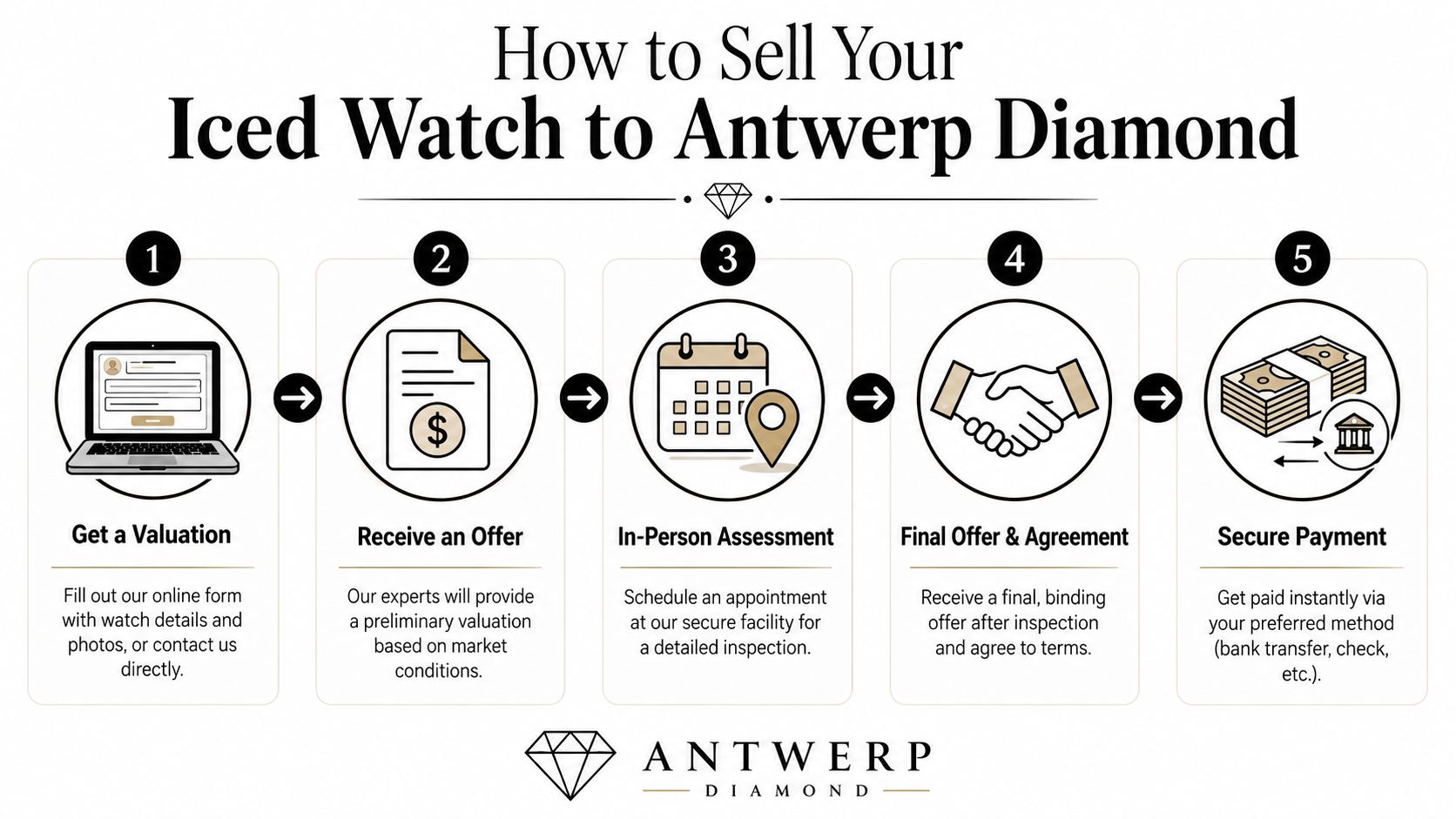
A practical selling process usually follows five steps:
Initial valuation request: Provide brand, model, condition notes, and clear photos of the dial, caseback, bracelet, clasp, and papers.
Preliminary review: The buyer gives a first-pass opinion based on visible details and current resale demand.
In-person or secure delivery inspection: The watch is examined physically to verify construction, authenticity, and setting quality.
Final offer: Once the inspection is complete, the buyer presents a no-obligation number based on what the item is, not what it was represented to be.
Payment and transfer: If accepted, payment is made and ownership documents are completed.
For owners who want a sense of how the payment side works, this page on selling a watch for instant payment covers the practical side without overcomplicating the process.
When the watch is strong, the transaction tends to be straightforward. When the watch has unclear paperwork, suspect stones, damaged serial areas, or weak aftermarket work, the discussion slows down because the buyer has to price in future risk.
Frequently Asked Questions About Iced Watches
Does adding aftermarket diamonds to my Rolex void the warranty
In most cases, yes. Once a third party modifies the watch case, bezel, dial, or bracelet, the original manufacturer typically won't treat it as an untouched factory watch.
Can I get a loan on my iced watch
Often, yes, but it depends on the base watch, the stone type, the setting quality, and how liquid the piece is in the current market. A lender will evaluate it much like a buyer would. If you want background on that process, review how watch collateral is typically evaluated for a loan.
Is a factory-set iced watch a good investment
Factory-set usually holds value better than aftermarket because authenticity and buyer confidence are stronger. Still, luxury watches are market assets with price fluctuations, so no piece should be viewed as risk-free.
Are all diamond-set watches considered fully iced out
No. In trade language, partial coverage and true Full Pavé are not the same thing. Full coverage generally gets more attention from experienced buyers.
What hurts resale the fastest
Poor aftermarket work, simulant stones presented as diamonds, damaged serial areas, missing documentation, and signs that the watch no longer functions properly after customization.
If you want a professional opinion on an iced watch, Antwerp Diamond offers confidential evaluations for luxury watches, jewelry, and other high-value assets. You can request a review online or arrange a private in-person appointment in Atlanta and other service markets if you'd like a clear, no-pressure assessment of authenticity, condition, and current resale potential.