

The best place to sell handbags depends on your priority: if you want speed and immediate payment, a direct buyer is usually the strongest fit, while consignment can sometimes bring a higher selling price if you're willing to wait. This is a strong market to enter, because the global luxury resale market is projected to surpass $60 billion in 2025, and 40% of luxury secondhand purchases are handbags.
If you're holding a Chanel flap bag, a Louis Vuitton Neverfull, or a Hermès piece you haven't used in months, you're probably weighing the same questions most first-time sellers ask. Should you take the quick offer, hold out for more through consignment, or try to list it yourself and hope nothing goes wrong with authentication, returns, or lowball messages?
The answer usually comes down to three things: how fast you need funds, how much work you want to do, and how comfortable you are with condition risk. That last point matters more than most guides admit. Many sellers delay listing because their bag isn't perfect, then lose time and confidence while the item sits unused.
Table of Contents
Where Should You Sell Your Designer Handbag
The best place to sell handbags depends on your goal, not the platform. A seller who needs money this week should make a different choice than someone willing to wait for a retail buyer.
For many owners, the hesitation starts before they even choose where to sell. The bag may have corner wear, light scratches on hardware, or a pen mark inside. That doesn't mean it can't sell. It means you need the right route and a realistic pricing strategy.
The resale backdrop is favorable. The handbag market outlook from Fortune Business Insights notes that the global luxury resale market is expected to surpass $60 billion in 2025, and 40% of luxury secondhand purchases are handbags. That matters because buyers are already trained to shop secondhand luxury, especially for names like Hermès, Chanel, Gucci, and Louis Vuitton.
What matters most before you choose
Speed: If you need a firm answer quickly, a direct buyer usually makes more sense than consignment.
Net payout: A higher listing price doesn't always mean a higher amount in your pocket.
Effort: Some channels require photos, listing management, buyer communication, shipping, and return disputes.
Privacy: Local private evaluation is often more comfortable than public listing, especially for high-value bags.
Condition tolerance: Some channels are stricter than others when a bag shows visible wear.
Practical rule: Choose the method that matches your real-life timeline, not the one that sounds best in theory.
If you're still early in the process, this guide on how to sell my designer handbag is a useful starting point before you compare buyer types.
Comparing Your Handbag Selling Options at a Glance
The main selling channels are direct buyers, consignment platforms, online marketplaces, auction houses, and local buyers. None is perfect. Each one asks you to trade one benefit for another.
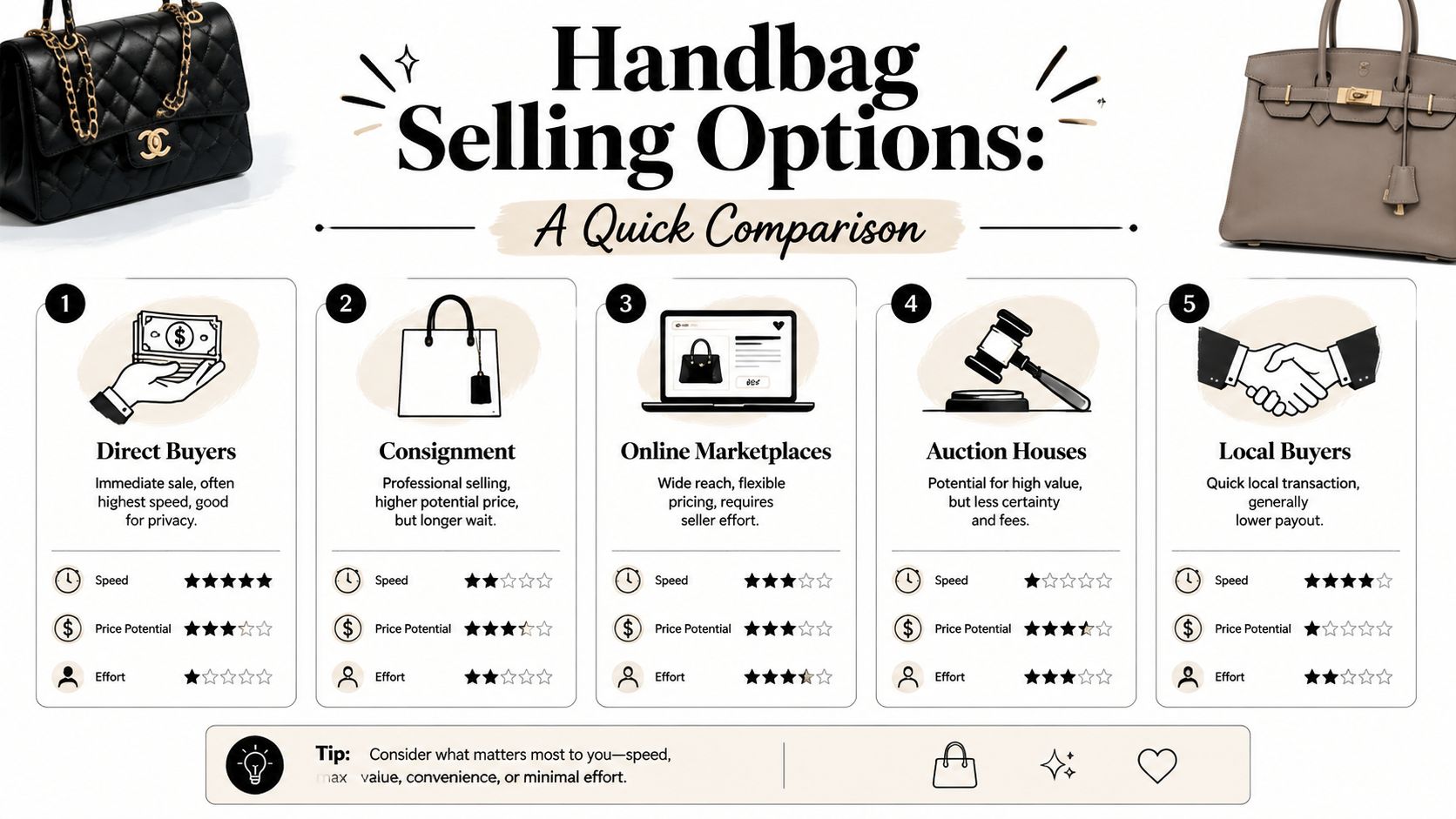
Selling Method | Payout Speed | Potential Price | Typical Fees | Convenience |
|---|---|---|---|---|
Direct buyer | Fast | Moderate to strong | Usually built into offer | High |
Consignment | Slow | Often higher asking price | Commission reduces net payout | Moderate |
Online marketplace | Varies | Flexible | Platform and payment fees may apply | Low to moderate |
Auction house | Varies | Strong for rare pieces | Seller fees may apply | Moderate |
Local buyer | Fast | Usually lower | Varies | High |
What each selling channel is really good at
A direct buyer works well when certainty matters more than squeezing out every possible dollar. You receive an evaluation, decide whether to accept, and move on. This is often the cleanest path for sellers in Atlanta, Buckhead, Sandy Springs, Alpharetta, Roswell, Brookhaven, or Midtown Atlanta who want an in-person appointment rather than an open-ended listing process.
Consignment can work if you're patient and your bag photographs well, authenticates cleanly, and has strong buyer demand. The trade-off is time, plus the fact that your net payout can shrink once commissions are deducted.
An online marketplace gives you control, but also gives you all the work. You handle title writing, photos, pricing, messages, shipping, and buyer issues. For first-time sellers, that can feel manageable until the first authenticity question or return request arrives.
A quick way to narrow your choice
Ask yourself these questions:
Do I need funds quickly? If yes, look at direct sale options first.
Am I comfortable waiting for a retail buyer? If yes, consignment may fit.
Can I package and ship confidently? If not, in-person evaluation may be safer.
Is my bag rare, pristine, and highly desirable? If yes, auction or specialist consignment may be worth considering.
For a broader platform-by-platform breakdown, this article on comparing top platforms for selling handbags covering authentication, fees, payout speed and steps to maximize value and security helps clarify the differences.
How to Prepare Your Handbag to Maximize Its Value
Most sellers don't lose value because they chose the wrong website first. They lose value because they list too quickly, describe condition poorly, or assume a flawed bag is unsellable.
Start with condition, not with the platform
Condition paralysis is real. Sellers often stop at the first scuff mark and decide the bag isn't worth offering. But visible wear doesn't automatically kill a sale. It changes which buyer is likely to want it, how it should be presented, and whether light prep is worth doing first.
The Who What Wear overview on designer bag selling notes that 68% of luxury handbag submissions to some major online buyers are rejected due to condition mismatches, and offers can drop 22% to 35% for bags with visible wear. That's why preparation matters before you request quotes.
A bag with honest wear can still sell well. A bag with unclear photos and vague condition notes is where sellers get hurt.
Your pre-sale checklist
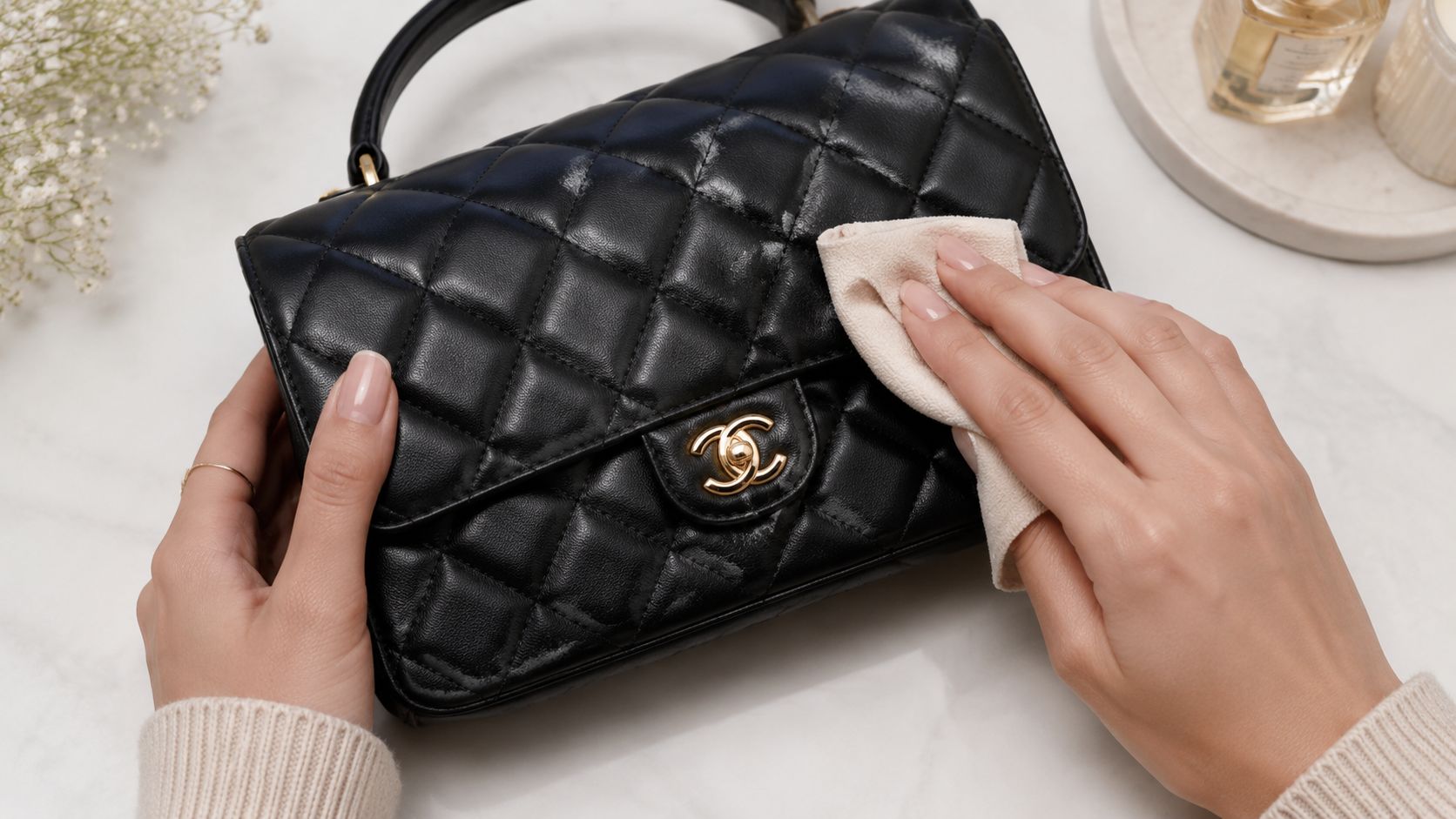
Clean gently: Wipe exterior leather or coated canvas with a soft dry cloth. Empty the interior completely and remove lint or debris carefully.
Gather extras: Dust bag, box, authenticity card, receipt, strap, lock, clochette, mirror, and care booklet can all help the evaluation process.
Photograph everything: Take front, back, sides, base, corners, interior, hardware close-ups, serial details if present, and every flaw.
Describe defects plainly: Say "surface scratches on turn-lock" or "wear on bottom corners." Don't write "excellent" if the photos say otherwise.
Check storage smell: Perfume, smoke, mildew, and closet odor can affect buyer response.
Pack correctly if shipping: If you're mailing the bag, it's worth taking time to compare protective mailer options so the handbag, box, and hardware arrive without avoidable transit damage.
If you're curious how condition affects one of the most frequently resold categories, this guide to Chanel bag resale value is useful context.
A quick visual refresher on handbag cleaning and presentation can help before you photograph the piece:
When repair makes sense
Don't over-restore a bag casually. Basic cleaning and light leather care are one thing. Major recoloring, replacement stitching, or unbranded hardware work can create new authentication questions.
Good candidates for professional attention include light corner touch-up, hardware polishing by a qualified specialist, or interior cleaning when the bag is otherwise strong. If the repair cost is high or the result may alter originality, get an opinion before authorizing the work.
Selling to a Direct Buyer for Speed and Security
You cleaned the bag, photographed the corners, and then paused because the turn-lock shows scratches and the glazing is not perfect. That hesitation costs sellers money more often than the flaws themselves. A direct buyer can be the fastest way to get a realistic answer on a bag that is valuable but not presentation-perfect.
How the direct buyer process works
The process is straightforward. You send photos and details, or arrange an in-person review. The buyer assesses the brand, model, condition, date or serial details when applicable, included accessories, and current resale demand, then makes an offer if the piece fits their buying criteria.
This route appeals to sellers who want a decision instead of a listing cycle. You know the number upfront. You also avoid buyer messages, return risk from peer-to-peer platforms, and the long delay that can happen when a bag needs the right retail buyer to appear.
It is also a good answer to a common first-time seller question. Yes, you can still sell your bag if it is not perfect. Direct buyers purchase plenty of bags with corner wear, softened structure, light hardware scratches, or missing accessories. The key is accuracy. Clear photos and plain condition notes usually do more for the process than waiting weeks to chase minor cosmetic fixes that may not change the offer much.
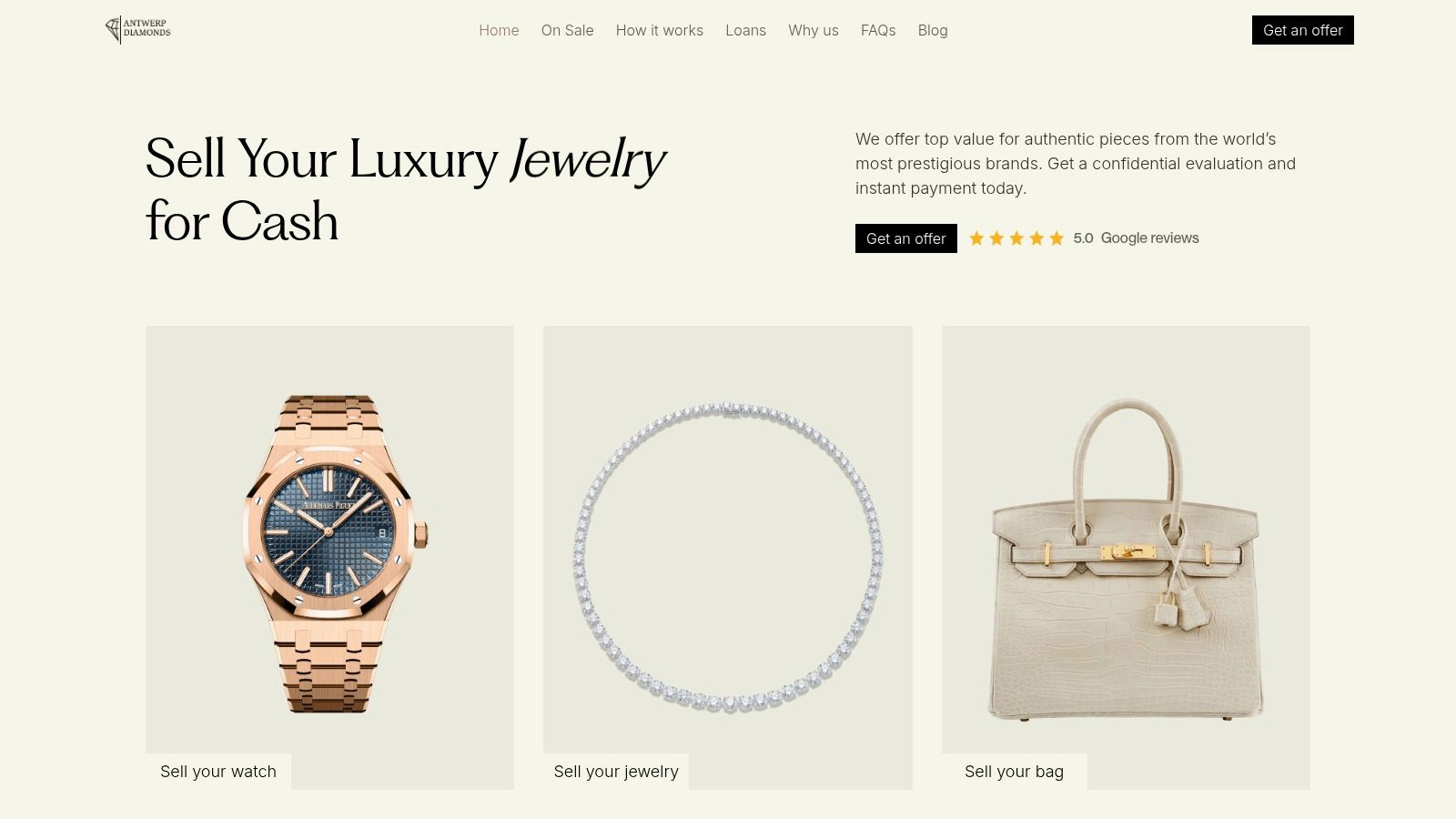
One example is Antwerp Diamond Store's handbag buying service, which offers private evaluations for luxury items and immediate offers when a bag matches its buying profile. For sellers in Atlanta, Buckhead, Roswell, and nearby areas, that setup can be easier to manage in person.
Fashionphile also uses a direct-purchase model, and its sell with us page states that sellers can receive payouts as soon as the next day when visiting a location directly or shipping a bag, while online submissions typically receive an offer within 7 to 10 business days.
Who this option fits best
Direct sale usually suits sellers who care more about certainty than squeezing out every possible dollar.
It tends to work well for:
Sellers on a deadline: You want funds this week, not after a listing sits.
Owners of strong luxury brands: Hermès, Chanel, Louis Vuitton, Goyard, and similar labels are commonly evaluated through this channel.
People who value privacy: Your bag is reviewed privately instead of being publicly listed.
Sellers stuck in condition paralysis: You are delaying the sale over flaws a professional buyer can price quickly.
If you're shipping a bag for evaluation, careful packing matters. A crushed box, loose chain strap, or exposed hardware can create avoidable damage in transit. This practical guide to FedEx shipping is useful if you want to pack the item securely before it leaves your hands.
For a parallel example in another luxury category, this article on how online watch buyers assess speed, offer certainty, and condition trade-offs shows how the same direct-buyer model works outside handbags.
Using Consignment for Potentially Higher Payouts
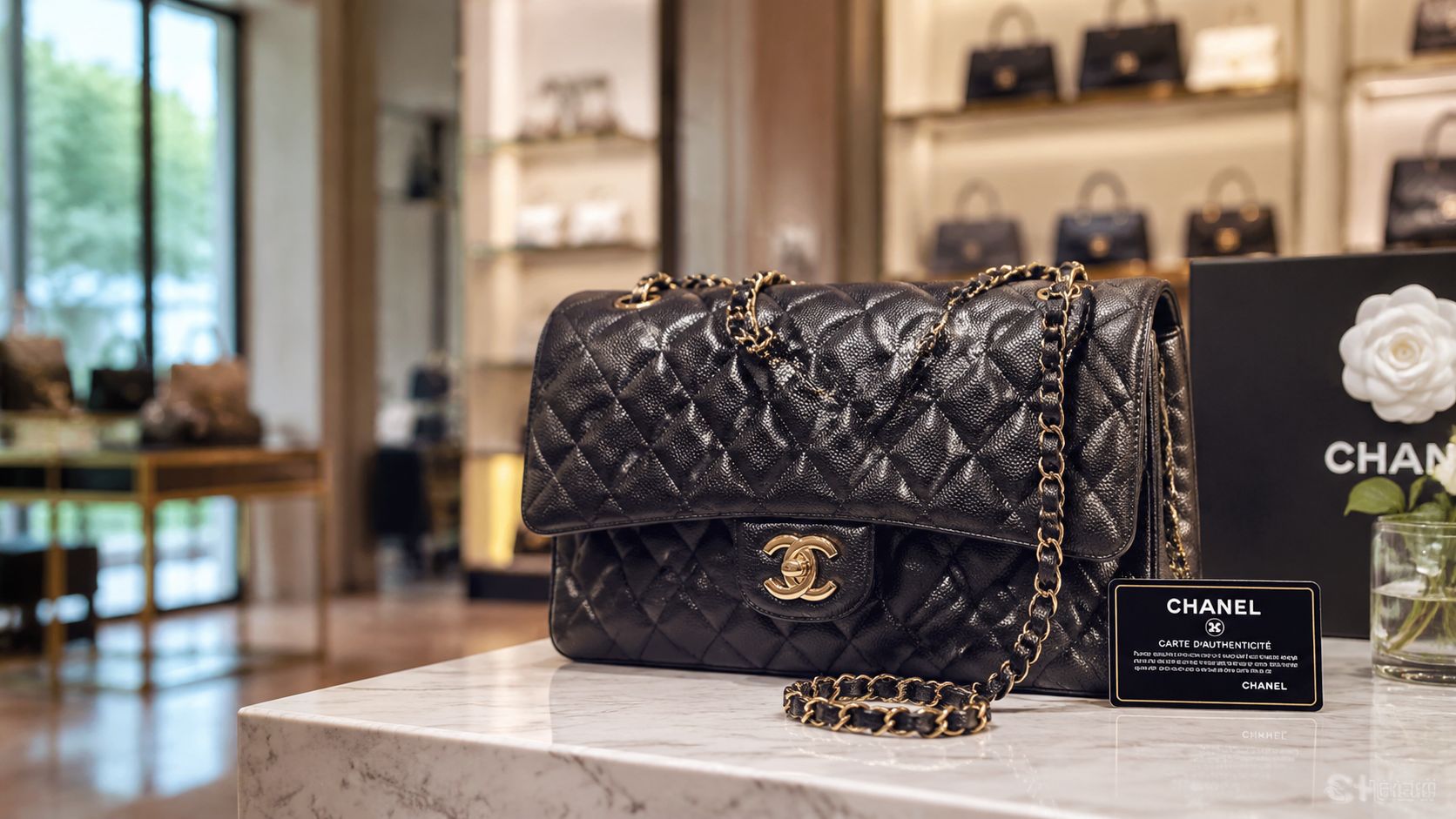
Consignment appeals to sellers for one simple reason: the asking price can look better. If a platform has a large audience of retail buyers and strong brand recognition, your bag may attract attention at a higher list price than a direct buyer would offer upfront.
Why sellers choose consignment
Consignment can make sense when the bag is desirable, the seller isn't in a hurry, and presentation is strong. It also suits people who don't want to run their own listing but still want exposure to a retail-facing buyer network.
The platform comparison from Confidential Couture notes that consignment platforms like Real are known to take a large commission portion from sellers, while specialized resale sites like Vestiaire Collective can achieve up to 30% faster inventory turnover for mid-tier luxury due to authentication and buyer trust. That's a useful distinction. Faster turnover isn't the same as better net payout, but it can reduce the time your item sits unsold.
Consignment is attractive when your bag is easy to market. It becomes frustrating when you need certainty, control, or a clear payout timeline.
Where consignment gets expensive
The first issue is commission. Even if the sale price looks promising, your share may end up lower than expected after fees. The second issue is timing. A bag can sit, get repriced, and still not produce the number you had in mind.
RealReal is widely known for this trade-off. A public discussion referencing seller experience with The RealReal points out that the platform takes a large commission portion, which can significantly reduce the final payout compared with an upfront buyout.
For some categories, especially mid-tier luxury, specialist resale sites may move stock better than broad marketplaces. For top-tier bags, though, patience still doesn't guarantee the best outcome after markdowns and commissions.
If you want a simple primer on how consignment works operationally, this explainer on consigned inventory for e-commerce brands is helpful background before you sign any agreement.
This route tends to fit sellers who are comfortable with the following realities:
A longer timeline: You may wait for the right buyer.
Less control over markdowns: Some platforms adjust pricing over time.
A lower net than expected: The listed price and your payout are not the same thing.
Authentication dependency: If the platform's review raises concerns, your item may not list at all.
If you're weighing handbags alongside other valuables, this guide on where to sell jewelry online offers a useful comparison of how resale channels behave across categories.
Which Selling Method Is Right for You
The right answer usually becomes obvious once you stop asking which option is universally best and start asking what problem you're trying to solve. Most sellers are balancing urgency, risk tolerance, and effort.
Choose based on your real constraint
If you need money by Friday, choose a direct buyer. You want a firm offer, a short timeline, and no open-ended waiting. This is often the cleanest route for people who value privacy and don't want to manage buyer communication or shipping disputes.
If you want to chase the highest possible public sale price and you're comfortable waiting, consignment may suit you better. This is the patient seller's route. It works best when the bag is in strong condition, the brand is in demand, and you're prepared for commission.
If you're experienced with luxury resale and don't mind doing everything yourself, an online marketplace can work. But this isn't ideal for most first-time sellers. You need clean photos, accurate condition grading, comfort with buyer screening, and confidence in packaging and shipping.
For very rare or especially collectible pieces, an auction house may be worth considering. Alex Cooper Auctioneers, Fashionphile, and Real are identified in Alex Cooper's comparison of places to sell designer handbags as three notable channels with different sales models: auction, instant buyout, and consignment.
A simple way to put it:
Need speed and certainty: Direct buyer
Want exposure to retail buyers: Consignment
Want full control and accept more work: Marketplace
Own something unusual or highly collectible: Auction
Frequently Asked Questions About Selling Handbags
Do I need the original box, dust bag, or receipt
No, not always. They help, and they can support value and buyer confidence, but a reputable evaluator can still review the bag itself based on craftsmanship, hardware, material quality, serial or date details when present, and overall construction.
How is authenticity verified
Authentication is usually a multi-point review. Evaluators look at stitching, leather or canvas quality, hardware engravings, brand-specific construction details, date codes or serial markings when applicable, and whether the wear pattern makes sense for the piece.
What if I don't like the first offer
Get a second opinion, but compare methods fairly. A direct buyout should be compared with another direct buyout. A consignment estimate should be judged by likely net proceeds after commission, not by the top-end listing number alone.
Are heavily worn handbags still sellable
Often, yes. Heavy wear doesn't help, but it doesn't automatically make the bag unsellable. The smarter question is whether the bag should be sold as-is, lightly cleaned, or professionally restored before submission.
What's the safest way to sell locally in Atlanta
For a high-value bag, local safety usually means a private appointment with a professional buyer or a secure business setting. That's often more comfortable than arranging a public meetup with an unknown buyer, especially for premium brands.
Are proceeds from selling a handbag taxable
That depends on your situation, including whether you sold the bag for more or less than what you originally paid. Tax rules can be fact-specific, so it's wise to speak with a qualified tax professional. This article is informational only and isn't financial or tax advice.
If you'd like a professional opinion before you decide where to sell, Antwerp Diamond offers private evaluations for luxury handbags and other high-value items. You can request a review, visit the Atlanta area store, or bring in your item for a straightforward, no-pressure assessment.


