
To sell your designer handbag well, start by assessing its condition, gathering the original dust bag, box, receipt, and authenticity materials, then choose the selling path that matches your goal. Documentation can add 15 to 25% to your payout, direct buyout offers can arrive within 1 to 2 business days, and the broader second hand bag market was valued at USD 7,123.2 million in 2025 with a projection of USD 12,517.9 million by 2035.
When looking to sell a designer handbag, you're probably in one of two situations. You either want fast money and a clean transaction, or you want to squeeze every bit of value out of a bag you no longer use. Those goals are not the same, and the biggest mistake first-time sellers make is treating them like they are.
A Chanel flap, Louis Vuitton Neverfull, Hermès Kelly, Gucci Marmont, or Goyard tote doesn't sell on sentiment. It sells on brand demand, condition, proof of authenticity, and how you choose to bring it to market. The right path depends on whether your bag is pristine, lightly worn, missing accessories, or something you need to turn into cash without a long wait.
Table of Contents
Your Guide to Selling a Designer Handbag
Most sellers start with the wrong question. They ask, "How much is my bag worth?" before they ask, "What kind of sale am I trying to make?"
A practical sale starts with three decisions. First, identify the bag correctly, down to the exact model, size, material, and color if possible. Second, be honest about condition, including corner wear, scratches, glazing issues, stains, odor, or missing accessories. Third, decide whether speed, convenience, or maximum payout matters most to you.
If you need funds quickly, the fastest path is usually a direct buyer. If you can wait, a consignment route may expose the bag to a retail buyer over a longer period. If you enjoy managing listings, answering questions, and handling shipping risk, peer-to-peer marketplaces can work, but they require more effort and more tolerance for friction.
Practical rule: The best selling method is not the one with the highest theoretical price. It's the one that fits your bag, your timeline, and your tolerance for hassle.
For sellers in Atlanta, Buckhead, Sandy Springs, Alpharetta, Roswell, Brookhaven, Midtown Atlanta, and the wider Georgia market, local in-person evaluation adds one major advantage. A trained buyer can inspect the leather, lining, hardware, structure, serial details, and accessories immediately, which often shortens the process and reduces misunderstandings.
Approach the sale like an appraiser would. Identify, authenticate, stage, compare real sold results, then choose the channel.
How Do I Know What My Designer Handbag Is Worth
A seller walks in with a Chanel flap, remembers paying boutique price, checks a few listings online, and assumes the highest asking price is the target. Then the offers come in lower than expected. The gap usually comes down to three things: actual condition, how complete the set is, and how fast the seller wants the bag sold.
A usable valuation starts with the resale market for that exact bag today, not the original receipt. Retail price still matters, but only as background. Buyers and professional resellers are pricing what they can sell now, how long that may take, and how much risk they take on if the bag needs work.
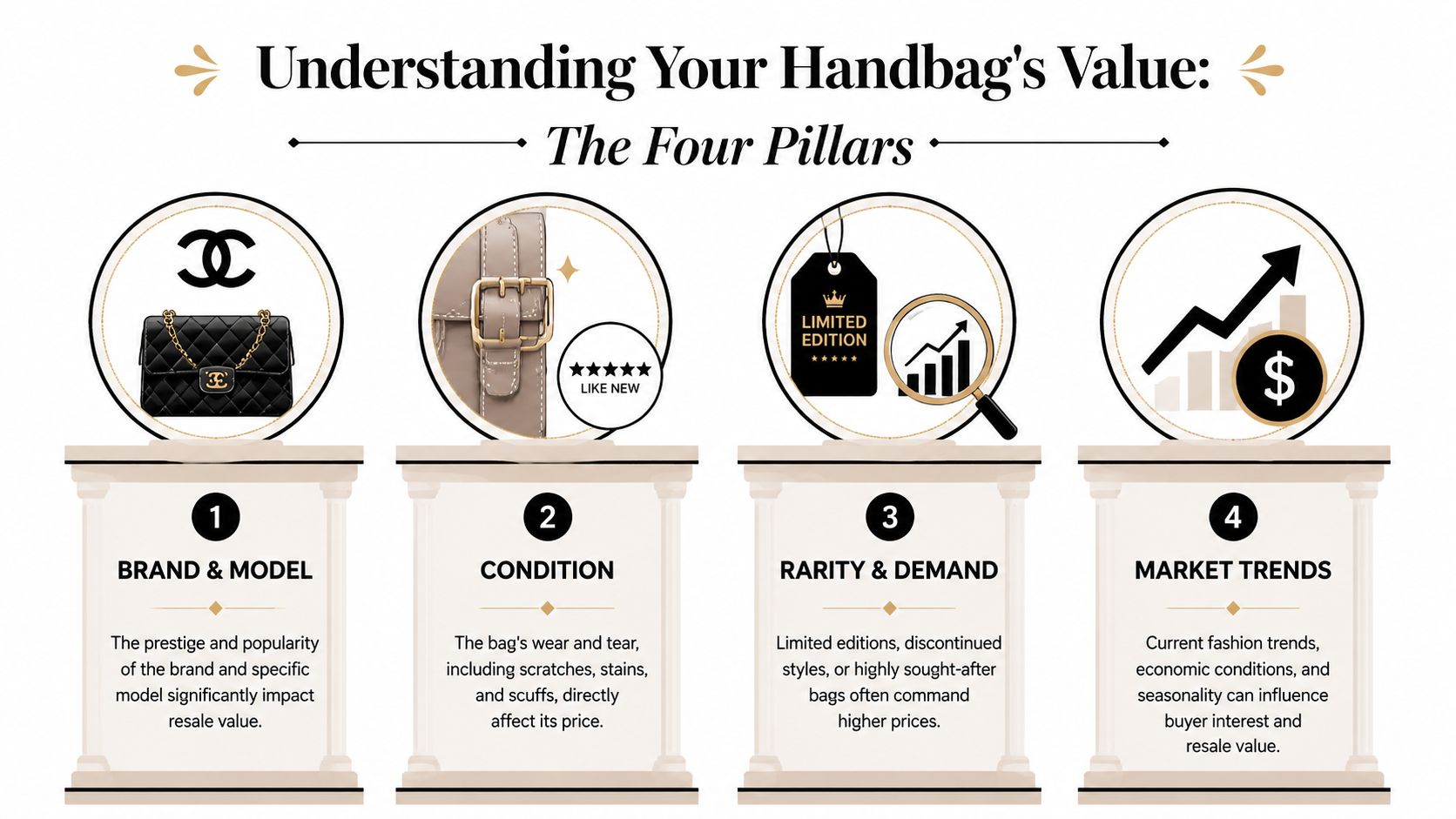
The four pillars buyers use
Professional offers usually come down to four factors.
Brand and model set the range. Proven styles with steady resale demand, such as a Hermès Birkin, Chanel Classic Flap, Louis Vuitton Speedy, or Goyard Saint Louis, usually start from a stronger position than seasonal pieces or discontinued bags with less buyer recognition.
Condition moves the number up or down fast. Corner wear, hardware scratches, handle darkening, edge paint cracks, interior staining, loss of shape, and odor all affect resale because they affect how easily the next buyer can say yes.
Completeness affects confidence and payout. Original dust bags, boxes, receipts, straps, locks, cloches, and authenticity cards do not guarantee a premium every time, but they often help a bag sell faster and with less negotiation. The Luxury Closet explains in its guide to selling your designer handbags without delays that missing accessories and unclear documentation can slow a sale, while highly sought-after Hermès and Chanel pieces may perform differently from the broader market.
Demand decides the final offer. A bag can be beautiful and authentic and still bring a modest number if buyers are not actively searching for that model, size, or color. Popular neutrals, durable materials, and recognizable silhouettes usually move more easily than niche seasonal combinations.
If you are pricing a Chanel, this overview of Chanel bag resale value gives helpful model-specific context.
How to inspect your bag like an appraiser
Before listing or requesting an offer, inspect the bag the way a buyer will. Good lighting matters. Honesty matters more.
Exterior checklist
Check these areas closely:
Corners and piping: Scuffing, rubbing, color loss, exposed base material
Handles and straps: Cracks, darkening, stretching, glazing wear
Hardware: Tarnish, plating wear, scratches, zipper function
Structure: Slouching, collapse, creasing, misshapen sides
Interior checklist
The inside often changes the offer more than sellers expect.
Lining condition: Ink marks, makeup, dust, loose threads
Odor: Smoke, perfume, mildew, storage smell
Pockets and closures: Sticky residue, torn seams, broken zipper pulls
A fair offer usually follows a condition grade, estimated resale time, and expected refurbishment cost.
That matters most with imperfect bags. Light corner wear is common and usually manageable. Sticky lining, heavy odor, broken hardware, or major shape loss can push a bag into a different pricing bracket because the next buyer may need cleaning, repair, or deeper discounting to move it.
The strongest pricing benchmark is completed sales for the same model in similar condition, with similar accessories. Active listings are useful for context, but sold results are closer to what the market will pay. If speed is the priority, expect the number to sit below top-end sold comps. If maximum payout is the priority, the process usually takes longer and leaves more room for returns, negotiation, or consignment fees.
Why Handbag Authentication Is Not Optional
Authentication is not a courtesy step. It is the foundation of a legitimate sale.
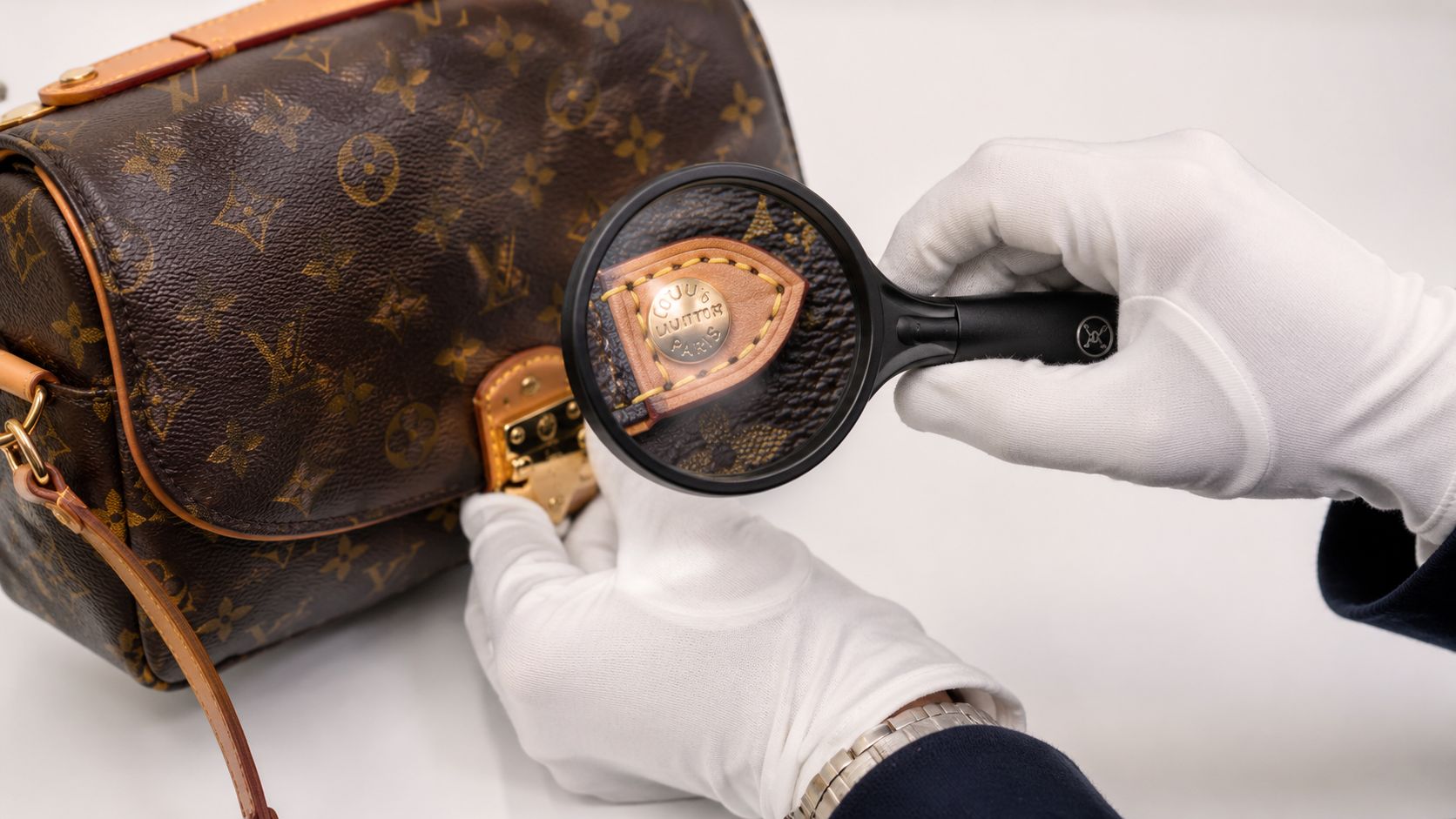
Even if you bought the bag years ago from a gift, estate, boutique, or secondary market source, don't assume paperwork alone will carry the sale. Buyers still need confidence that the item itself is correct. On peer-to-peer platforms, sellers who list questionable items can be flagged as high risk, and resale guidance notes that authenticity verification before listing helps avoid account problems and transaction issues.
What authenticators actually check
A real authentication review is detail work. It often includes:
Stitching consistency: Count, spacing, symmetry, thread quality
Materials: Leather grain, canvas finish, lining texture, edge paint
Brand-specific identifiers: Date codes, serial elements, stamp format, font spacing
Hardware details: Engravings, zipper type, plating tone, weight, screw type
Louis Vuitton, Chanel, Hermès, Gucci, Dior, and Goyard each have their own tells. The evaluator isn't just asking whether the bag looks expensive. They're asking whether every construction detail aligns with that brand and model.
Why skipping this step causes problems
If the bag fails authentication after you've listed it, several things can happen. The listing may be removed, the buyer may dispute the sale, or the platform may place restrictions on your account. Even if the bag is genuine, weak presentation and missing detail shots can make a good item look risky.
This walkthrough is useful if you want to understand how professionals inspect luxury items before an offer is made.
Authentication also affects pricing strategy. A buyer will pay more confidently, and often more quickly, when the item can be verified without back-and-forth, uncertainty, or extra review time.
How to Prepare Your Bag for a Top Offer
Presentation changes offers. Not by magic, but because it changes the first condition grade the bag receives.
Stage the bag before anyone evaluates it
Top-tier resale guidance notes that a bag presented in pristine, staged condition can yield an offer 15 to 20% higher than one shown with creases, dirt, or a collapsed shape, according to Fashionista's guide to reselling handbags.
Start with careful staging:
Clean the interior first. Remove dust, tissue, receipts, and debris. Wipe gently with methods suitable for the material.
Restore the shape. Stuff the bag with acid-free tissue so it stands correctly and doesn't photograph as tired or collapsed.
Polish the hardware lightly. Fingerprints and dull metal make a bag look more worn than it is.
Lay out everything included. Dust bag, box, receipt, authenticity card, strap, lock, clochette, mirror, care booklet, and any inserts.
A seller often loses value before the appraisal even starts, simply because the bag arrives looking neglected.
Don't overclean. Aggressive products, heavy conditioners, or amateur repair attempts can create new problems. Before repairing a flaw, think in net terms. For many imperfect bags, selling as-is with honest disclosure is better than paying for work that won't come back in the offer.
Photograph it like a buyer will inspect it
Good photos reduce doubt. They also reduce follow-up questions that delay offers.
Use bright, even light and capture:
Front, back, sides, bottom
Close-ups of corners and handles
Hardware and zipper pulls
Interior lining and pockets
Brand stamp, date code, serial area if applicable
Every flaw clearly
If you want cleaner product presentation, this guide to flat lay to ghost mannequin shows useful principles for making product photos look more polished and consistent. And while it's focused on a different category, many of the same image discipline rules apply in this article on how to photograph jewelry.
A staged bag signals care. A wrinkled bag on a kitchen counter signals risk.
Where Is the Best Place to Sell a Designer Handbag
The best place to sell depends on what you're optimizing for. Speed, convenience, and final payout pull in different directions.
Choose based on your real priority
If you need liquidity fast, direct buyout is usually the clearest path. Industry guidance notes that the most reliable method for immediate liquidity is direct buyout, with offers processed within 1 to 2 business days, while consignment channels average 30 to 90 days depending on brand tier and price point, according to Handbag Designer 101 on resale strategy and payout timing.
If your bag is highly desirable, complete, and in strong condition, consignment can make sense if you're willing to wait. If it's imperfect, niche, or you need certainty, waiting for the ideal buyer can become expensive in time, effort, and price reductions.
Comparing Handbag Selling Options
Selling Method | Payout Speed | Payout Potential | Seller Effort | Security |
|---|---|---|---|---|
Direct buyer | Fast | Usually strong, but tied to immediate buyout economics | Low | High when handled through established professional process |
Consignment shop | Slow | Can be higher if the right buyer appears | Medium | Usually structured, but seller waits for sale |
Peer-to-peer marketplace | Variable | Can be high in the right case | High | Depends on platform rules, documentation, and shipping discipline |
Auction route | Variable | Best suited to rare, highly collectible pieces | High | Can be strong, but not ideal for everyday luxury bags |
Direct buyer
This is the route for sellers who value speed, certainty, and minimal work. You present the bag, it is evaluated, and you either accept the offer or you don't. There is no waiting for a retail customer, no listing management, and no need to negotiate with multiple strangers.
This option tends to fit:
Time-sensitive sellers
Imperfect bags
People who want privacy
Sellers who don't want return disputes or shipping drama
Consignment
Consignment can work well for a bag that has broad demand and presents very well. The trade-off is time. You may wait while the shop prices, photographs, markets, and eventually sells the item. If the initial asking price is too ambitious, markdowns can follow.
This option tends to fit:
Popular bags in strong condition
Sellers who can wait
People willing to trade certainty for upside
Peer-to-peer marketplaces
Selling it yourself can produce a strong result if you know the model, price it correctly, authenticate it, photograph it well, and handle questions patiently. It also asks the most from you. You'll manage inquiries, offers, packaging, shipping, and disputes if they happen.
This option tends to fit:
Experienced sellers
Trend-driven bags that attract active search traffic
People comfortable documenting every detail
Auction
Auction is more specialized. It makes the most sense for exceptionally rare or especially sought-after items where collector competition matters. For a common luxury tote or flap bag, auction often adds complexity without clear benefit.
Convenience has value. So does certainty. Many sellers underestimate both until a self-managed sale starts dragging on.
If you want a broader side-by-side on authentication, fees, timing, and risk, review this comparison of top platforms for selling handbags covering authentication, fees, payout speed, and steps to maximize value and security.
What usually works best for imperfect bags
Many articles fail sellers at this point. They talk as if every bag is pristine.
If your bag has corner wear, odor, missing accessories, softened structure, or visible hardware wear, ask one question first: will extra time solve the problem? Often, it won't. A marketplace listing with perfect language won't turn a worn bag into a pristine one. And a consignment wait doesn't always produce a better net result if the bag needs buyer education or repeated markdowns.
For imperfect bags, direct evaluation usually gives the clearest answer fastest. You learn what the flaws mean in resale terms and whether any repair is worth considering before you spend more money.
How to Safely Complete the Transaction
The riskiest point in the sale is often the last ten minutes. You have an agreed price, the buyer wants the bag, and it is tempting to rush the handoff. Slow down here. A careful finish protects both your payout and your bag.
What to expect in person
A professional in-person transaction should feel structured, private, and easy to follow. Bring the bag plus every item that came with it if you still have them. Common examples include the strap, lock, keys, clochette, mirror, pouch, dust bag, box, receipt, and any authentication paperwork.
The buyer will usually check four things before releasing payment:
Authenticity details and construction
Condition in direct light
Completeness of accessories
Function of zippers, clasps, feet, and hardware
Ask two practical questions before the appointment. Is the offer final, or still subject to inspection? And will payment be made on the spot, or after a second review? Those details matter. A strong offer means less if the process leaves room for avoidable surprises.
Some sellers prefer face-to-face review because they want immediate answers and a clear yes-or-no decision. Others value the broader perspective that comes with comparing remote and local luxury buyers. If you want a useful parallel on how established buyers handle verification, shipping, and payout timing, this guide to online watch buyers and how professional remote transactions are structured is helpful.
How to ship a handbag safely
Shipping works well when the buyer has a defined intake process and you document the bag before it leaves your hands. This matters even more for bags with wear, because condition disputes usually start with vague photos and weak packing.
Use this checklist:
Photograph the bag before packing: Include front, back, base, corners, interior, hardware, serial area, and all accessories.
Support the shape: Use acid-free tissue or clean soft stuffing, then place the bag in its dust bag if you have it.
Pack in layers: Protect the bag inside a smaller wrap or inner box, then place that inside a sturdy outer carton with cushioning.
Separate documents from hardware: Put receipts, cards, and loose accessories in a sleeve or pouch so they do not mark the leather.
Use tracked, insured shipping: Match the insurance amount to the agreed value and keep the receipt until payment clears.
Do not hand over or ship the bag until payment terms are clear in writing. Confirm who pays for shipping, when ownership transfers, how long inspection takes, and what happens if the buyer raises a condition issue. Sellers who need speed often accept a lower but cleaner offer from a direct buyer because the process is simpler. Sellers chasing the highest possible payout may accept more steps, longer waiting, and a greater chance of renegotiation.
That is the trade-off at the transaction stage. Safety is not only about avoiding fraud. It is also about choosing a sale process that matches your timeline, your comfort level, and the condition of your bag.
FAQs About Selling Your Designer Handbag
Is now a good time to sell my designer handbag
A common seller question starts like this: the bag has been sitting in the closet, styles have changed, and you want to know whether selling now makes sense or whether waiting could bring more money.
In many cases, now is a reasonable time to test the market. The better question is whether now is the right time for your specific bag. Strong brands, current models, classic colors, and complete sets usually sell with less friction. Seasonal colors, older collections, or bags with visible wear can still sell well, but the best route matters more. If you need funds quickly, a direct buyer or local evaluation often makes more sense than waiting for a higher asking price that may or may not convert.
Should I clean my bag before selling it
Yes, lightly.
Wipe surface dust with a soft dry cloth, empty the interior, and present the bag neatly. Stop there unless you know the material well. Home fixes often lower value. I see more damage from over-cleaning than from honest wear, especially on lambskin, suede, patent leather, and light-colored interiors.
Can I sell a designer handbag without the dust bag or receipt
Yes. Missing accessories do not automatically block a sale.
They do affect price and buyer confidence, though. A sought-after bag can still get strong interest without a receipt or dust bag, but a complete set usually gives you more options and a firmer offer. If paperwork is missing, clear photos and a proper review matter even more. Sellers who want a broader view of how condition and documentation affect luxury value can also read this guide on how jewelry appraisals work and what appraisers look for.
Is consignment always the highest paying option
No. Consignment can produce a better payout on the right bag, especially if it is current, highly marketable, and in excellent condition. It also comes with trade-offs. You may wait weeks or months, accept markdowns, and get paid only after the item sells.
For many first-time sellers, the better choice is the option that fits their timeline. A lower direct offer can be the smarter result if it removes return risk, relisting delays, and repeated price cuts.
What if my bag is not in perfect condition
That is normal. Many bags sold on the resale market show corner wear, softened structure, interior marks, or missing accessories.
The goal is not to make an imperfect bag look perfect. The goal is to price and place it correctly. Some buyers avoid flawed pieces. Others buy them if the model is desirable and the condition is described clearly. Honest disclosure usually protects your payout better than vague language, because it reduces the chance of renegotiation after inspection.
Is local selling better than listing online
It can be, especially for first-time sellers or anyone uncomfortable with packing, shipping, and remote disputes.
A local sale often gives you faster answers on authenticity, condition, and pricing. It also shortens the path to payment. Online listings can reach more buyers and sometimes bring a stronger result, but they require better photos, more patience, and more tolerance for no-shows, questions, and returns. If speed and simplicity matter most, local is often the cleaner path. If maximizing payout matters most and your bag presents well, online or consignment may be worth the extra work.
Get a Professional Valuation for Your Handbag Today
If you want to sell your designer handbag without wasting time, start with a real evaluation. A professional review gives you the current market view of your bag's brand, model, condition, completeness, and buyer demand so you can decide whether to sell now, wait, or compare routes.
That matters even more if your bag isn't perfect. Small issues like odor, glazing wear, corner rub, missing accessories, or a softened shape can change the best selling strategy.
For anyone who also wants to understand how valuation works across other luxury categories, this guide on how to appraise jewelry is a helpful companion.
A clear offer starts with clear facts, not guesswork.
If you're ready for a professional, low-pressure review, Antwerp Diamond offers confidential evaluations for designer handbags in the Atlanta market, including Buckhead, Roswell, Sandy Springs, Alpharetta, Brookhaven, Midtown Atlanta, and clients across Georgia and the U.S. You can request an online evaluation or arrange a private appointment to have your bag inspected for authenticity, condition, and current resale demand.


