
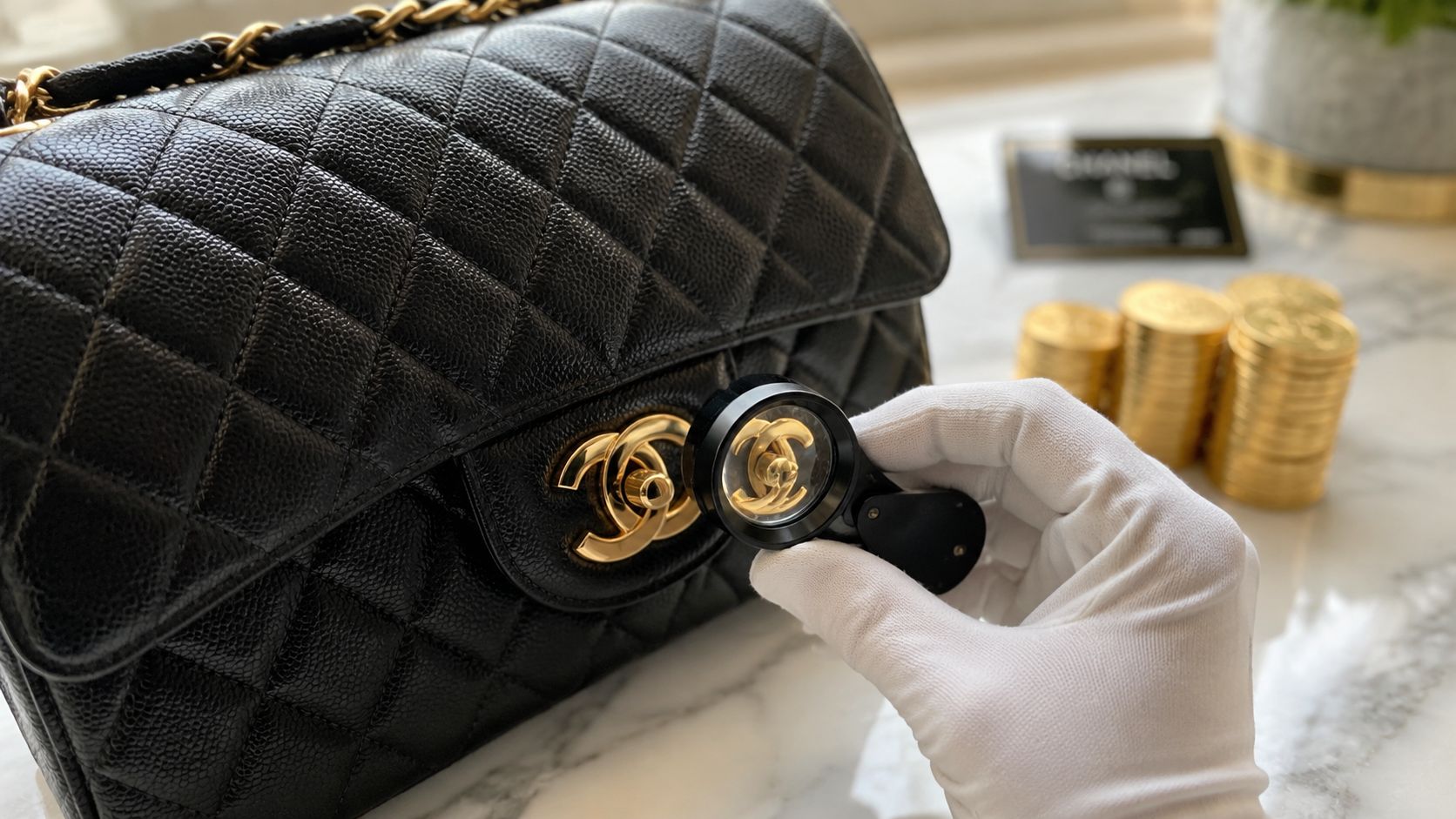
Chanel bag resale value is primarily determined by model, condition, and current market demand, and iconic models in excellent condition retain an average of 92% of their current retail price on the resale market, according to Baghunter's Chanel bag values research study. Smaller Chanel bags also tend to hold value better than larger ones, with SACLÀB reporting about 87% retail retention for small bags versus about 58% for Jumbo and Large formats in its 2026 Chanel investment report.
That gap is what most sellers miss. They assume the interlocking CC logo alone sets the price, when in practice the final offer often comes down to a more technical mix of size, leather, structure, wear pattern, and how easy the bag is to place in the current secondary market.
If you're trying to understand what your Chanel is worth before you sell, borrow against it, or request a formal appraisal, the useful question isn't “Do Chanel bags hold value?” It's “What kind of Chanel bag do I have, what shape is it in, and how confident will the next buyer feel about it?”
Table of Contents
Understanding Chanel Bag Resale Value in 2026
Recent Chanel retail increases have kept resale expectations high, but headline demand is only part of the story. In practice, the gap between two offers on similar bags often comes down to three things working together: condition, provenance, and where the market is trading for that specific model right now.
Sellers usually start with retail price. Buyers start with risk. A bag with strong structure, clean corners, and a documented ownership trail gives the next buyer more confidence, which supports a stronger offer. The same model without its original accessories, with softened shape or visible wear, may still sell well, but the margin for error gets smaller.
Fashionphile's 2024 resale report noted continued strength in top-tier luxury resale, but Chanel does not trade as a single category. Classic Flaps, seasonal pieces, minis, totes, and discontinued variations move at different speeds. That is why broad averages are useful for context but weak for pricing an individual bag.
Core Value Drivers
For a first-pass self-assessment, focus on these three areas:
Condition: Shape retention, corner wear, leather dryness, hardware scratching, interior marks, odor, and strap wear all affect liquidity and offer strength.
Provenance: Receipt, authenticity card if applicable to the production year, dust bag, box, repair history, and a clear chain of ownership reduce buyer hesitation.
Current market position: Demand changes by model, size, leather, hardware finish, and color. A bag can be authentic and desirable, yet still trade below expectation if that configuration is slow at the moment.
These factors do not carry equal weight in every case. Strong provenance will not erase heavy wear. Excellent condition can offset a missing box, but usually not major authenticity friction. A currently popular model with average wear often performs better than a less liquid style in near-pristine condition.
That is the framework I use before assigning numbers. First, assess the bag in front of you. Then place it in the current market. Then ask how easy it will be for the next buyer to say yes.
For sellers in Atlanta, Buckhead, Sandy Springs, Alpharetta, Roswell, Brookhaven, Midtown Atlanta, and the wider Georgia market, local inspection still matters. Photos miss glazing issues, leather suppleness, scent, and small shape changes. Those details often separate a strong offer from an optimistic estimate.
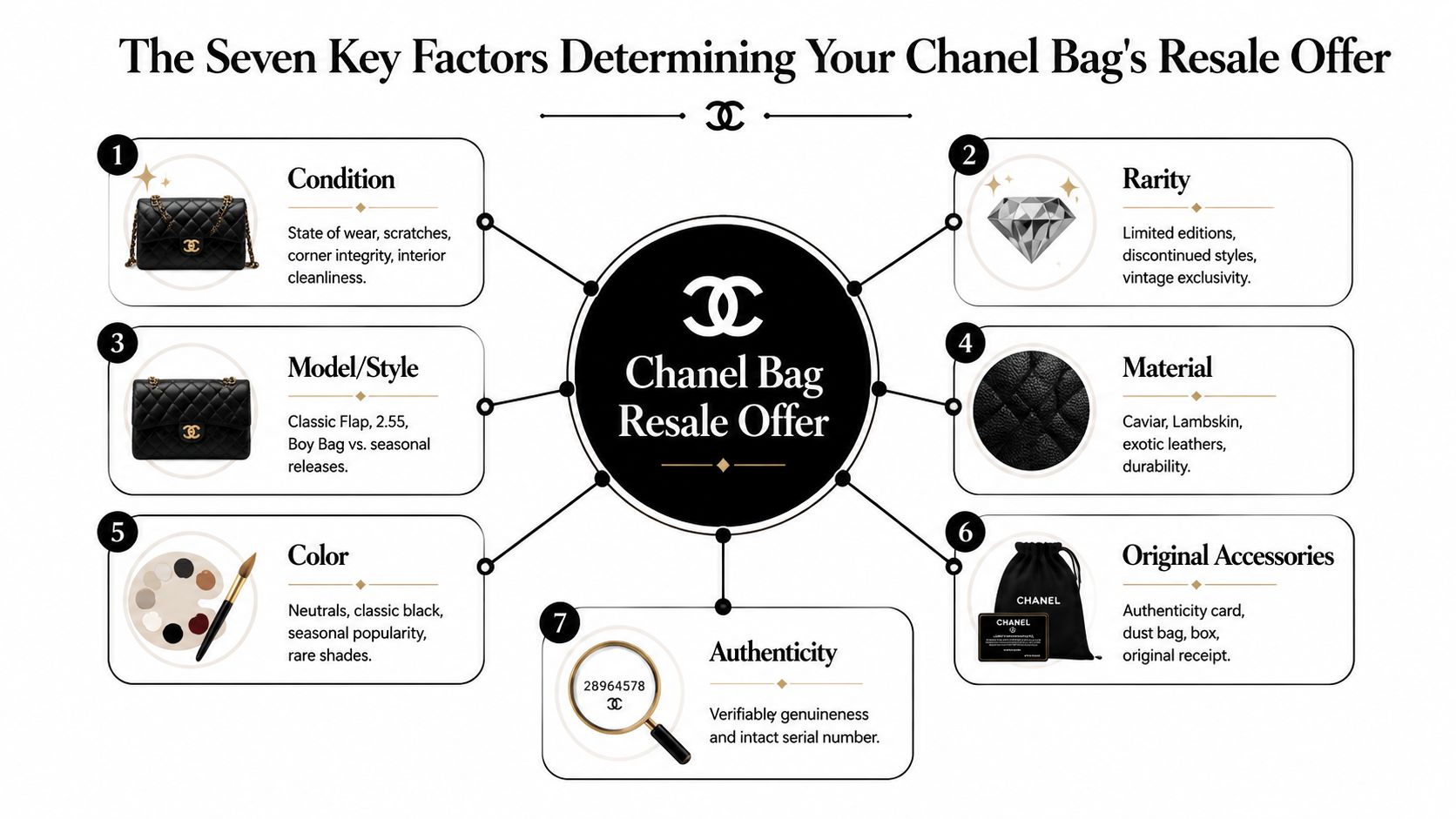
The Seven Key Factors That Determine Your Offer
Strong offers come from seven factors working together, not from one standout feature. I have seen excellent bags trade below expectation because the paperwork was thin or the market for that exact configuration had cooled. I have also seen modestly worn bags outperform cleaner examples because the model, size, and buyer demand were stronger.
Model and size
Model is the first pricing filter because it determines how liquid the bag is. Classic Flaps, Minis, and certain Boy Bag configurations usually have a deeper buyer pool than seasonal shapes or less recognizable lines.
Size matters for the same reason. As noted earlier, smaller Chanel bags have generally shown stronger resale support than larger formats. That does not make larger bags poor sellers. It means offers tend to be more selective because fewer buyers are waiting for them at any given time.
This is one place where sellers misread value. A bag can be expensive at retail and still be slower on the secondary market if the size falls out of favor.
Condition
Condition affects both price and speed of sale. Buyers do not just ask whether a bag is used. They ask how the wear presents, whether it is honest wear or damage, and how much correction would be needed before resale.
The highest-impact issues are usually corner rubbing, loss of shape, interior staining, odor, strap wear, and visible hardware scratches. Lambskin deserves extra scrutiny because pressure marks and surface abrasion show quickly. Caviar often wears more predictably, but deep corner wear and dry glazing still reduce confidence.
What to check before appraisal
Corners and edges: Friction wear lowers appeal fast, especially on dark bags where rubbing exposes lighter undertones.
Shape and structure: A sagging base, warped flap, or flattened quilting changes how the bag presents in photos and in hand.
Interior: Ink, makeup, loose threads, odor, and peeling pockets all affect offers.
Hardware finish: Light hairlines are common. Deep scratches, fading, or replacement parts raise bigger concerns.
Strap and closure function: Chains should sit correctly, and the lock, zipper, or magnetic closure should work without resistance.
Condition is also where seller expectations often drift. A bag can be authentic, desirable, and still discounted if the next buyer sees repair risk.
Rarity
Rarity only adds value when it aligns with buyer demand. Limited editions, unusual hardware combinations, and discontinued colors can command stronger prices, but only if the market recognizes and wants that variation.
A rare Chanel with weak buyer recognition can be harder to sell than a common black Classic Flap in better condition.
That trade-off matters. If a piece is rare because production was limited but current demand is thin, the offer may reflect liquidity risk rather than scarcity.
Age and vintage status
Vintage value depends on more than age. Buyers pay for era-specific details they trust, such as older construction, desirable proportions, or hardware finishes associated with certain production periods.
Provenance carries more weight here than it does on many newer bags. If a vintage piece comes with a clear ownership trail, matching period details, and no signs of major alteration, collectors are usually more comfortable. If it shows heavy restoration, mixed parts, or unclear origin, vintage appeal drops quickly.
Hardware
Hardware tells a practical story about use and originality. Buyers look closely at the CC turn lock, chain links, grommets, zipper pulls, screws, and plating consistency because these areas show wear early and are difficult to correct invisibly.
Original hardware supports value. Replaced parts, uneven tone, or signs of aggressive polishing make buyers pause because they raise questions about repair history and authenticity. That same dynamic appears in other collectible luxury categories, including watches, where originality and service history shape value just as much as brand name. The same logic shows up in this overview of whether watches make good investments over time.
Materials
Material changes how a bag ages and how confidently a buyer can own it after purchase. Caviar usually gives the market more comfort because it handles regular use better. Lambskin can be highly desirable, but buyers price in its tendency to mark, soften, and lose surface uniformity more quickly.
Exotic or specialty finishes add another layer. They can be attractive and scarce, but the buyer pool is often narrower, and condition standards are stricter.
Provenance
Provenance reduces hesitation. Receipt, dust bag, box, authenticity card where appropriate for the production year, boutique repair records, and a clear chain of ownership all support a stronger offer.
These items do not erase condition problems, but they can tighten the spread between a cautious number and a confident one. That matters most when the bag sits in a gray area, such as a desirable model with moderate wear or a vintage piece with collectible details. In those cases, good provenance can make the difference between a bag that is easy to stand behind and one that is priced defensively.
For self-assessment, use the factors in order. Start with model and size, then objectively assess condition, then ask whether provenance supports the story the bag is telling. After that, check whether rarity, age, hardware, and material strengthen the case or introduce more buyer hesitation.
How Market Trends and Price Hikes Affect Value
Chanel resale value doesn't move in isolation. It responds to what Chanel does at retail and to what buyers decide they want right now in the pre-owned market.
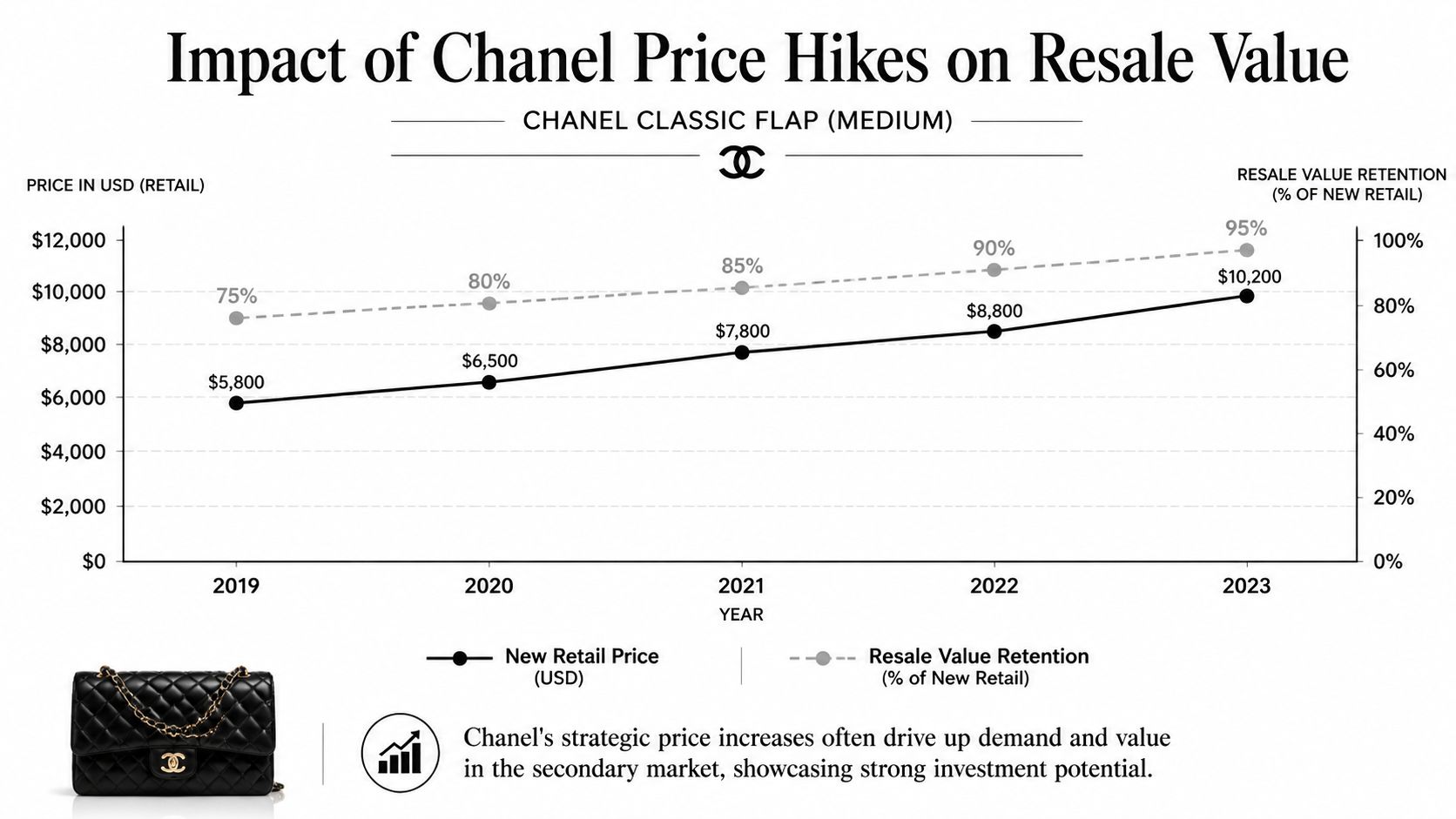
The most important outside force is retail pricing. When boutique prices rise, pre-owned pieces often look more attractive to buyers who still want the model but don't want to pay the latest store price.
Retail price hikes change resale expectations
Sotheby's explained this clearly in its coverage of the latest 2025 Chanel bag price hikes and the resale market. Chanel raised U.S. handbag prices by 4 to 7% in 2025 across most core styles, and the Classic Medium Flap moved from $10,800 to $11,300, a 4.6% increase.
That kind of movement matters because resale buyers don't compare your bag to what Chanel charged years ago. They compare it to what the same or similar bag costs now. A higher retail ceiling can support stronger pre-owned pricing, especially for iconic models with stable demand.
There is a close parallel with other collectible luxury categories. If you want to see how buyers think about brand strength, scarcity, and replacement cost in another market, this piece on whether watches are good investments is useful context.
Demand shifts inside the Chanel market
Not every trend is broad enough to deserve a hard number, but appraisers see certain shifts repeatedly:
Compact formats stay competitive: Smaller bags often attract strong cross-generational demand.
Classic colors are easier to place: Black and other neutral tones usually bring broader buyer interest than niche seasonal shades.
Original configuration matters: Buyers respond better when hardware, strap, and finish remain consistent with how the bag left Chanel.
Condition sensitivity rises in softer markets: When buyers have more options, they become stricter about wear.
When Chanel raises retail prices, many buyers become more flexible about buying pre-owned, but more demanding about condition.
For sellers, timing can matter. If the market is actively re-pricing around boutique increases, authenticated pre-owned inventory often receives sharper attention than it does during quieter periods.
A Professional's Guide to Inspecting Your Bag
The fastest way to misjudge Chanel bag resale value is to look only at the front of the bag and assume the rest will follow. Professionals inspect Chanel from multiple angles because small inconsistencies can change both authenticity confidence and condition grade.
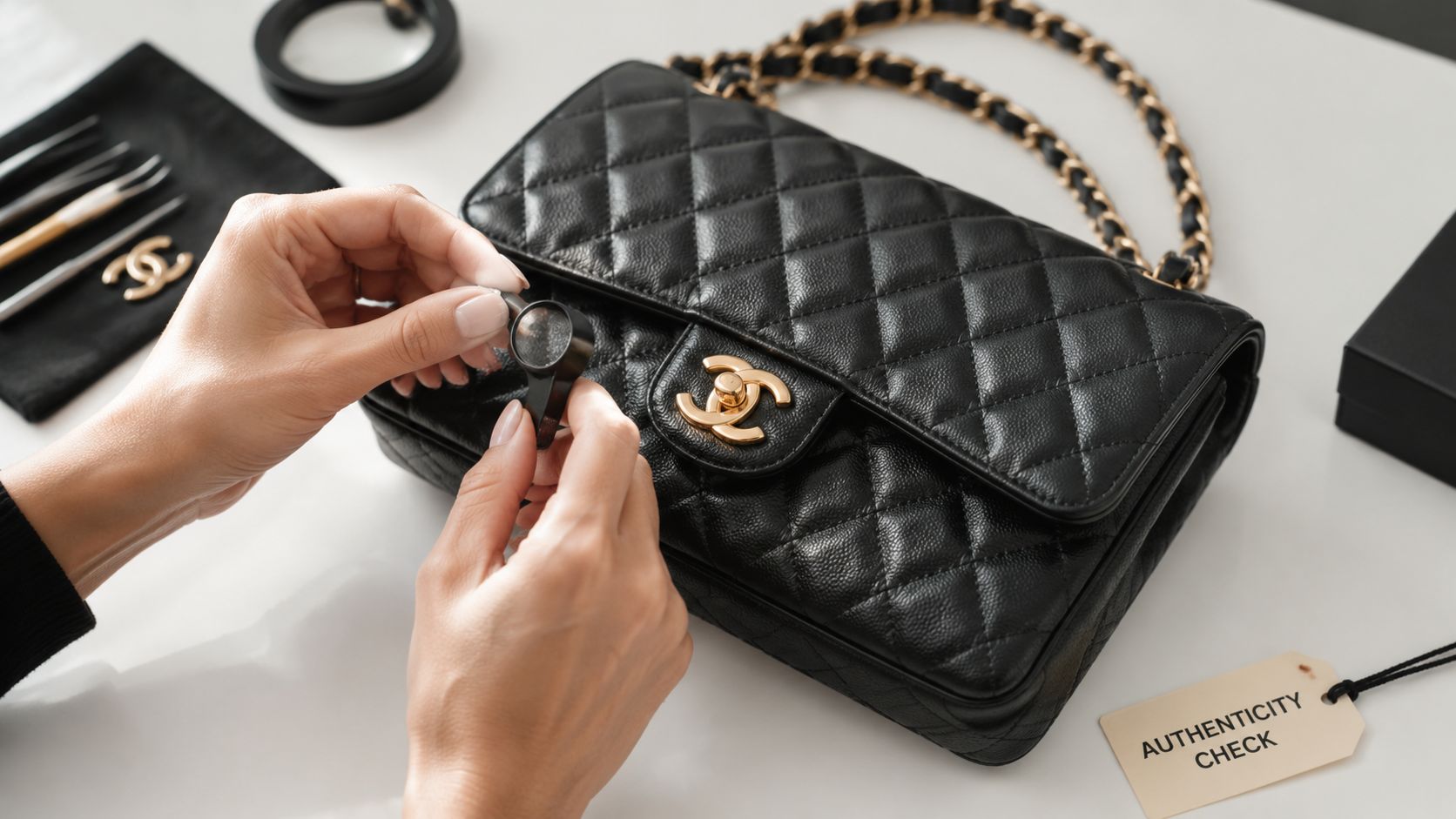
What an appraiser checks first
Start with structure. Set the bag down on a flat surface and look at the base, side panels, flap line, and handle or chain anchors. A bag that leans, twists, or collapses often needs a closer look.
Then move to the wear zones:
Corners: Check for rubbing, color loss, and softened edges.
Interior: Look for residue, stains, odor, and pocket stretching.
Hardware contact points: Examine the clasp, chain, grommets, and zipper pulls.
Stitching consistency: Uneven stitching or later repair work can affect confidence and value.
After the general walkaround, quilting alignment matters. On many Chanel bags, buyers will look at how the diamond pattern runs across the flap and body, and whether back-pocket alignment appears consistent.
Authentication details that matter
Self-inspection should be careful, not overconfident. There are authentic bags with age-related variation, and there are counterfeit bags with convincing surface details.
Here are some of the details professionals typically review:
CC lock markings and finish: The turn lock should show the expected quality, alignment, and wear pattern for the bag's era.
Serial or chip era cues: The sticker or chip system should correspond sensibly to the bag's production period.
Leather feel and construction: Lambskin, calfskin, and grained leathers each have distinct texture and aging behavior.
Quilting symmetry: Distortion can come from wear, but poor symmetry can also raise other questions.
This video gives a useful visual look at the kind of close inspection luxury items require before valuation:
Why self-inspection has limits
A seller can absolutely do a useful first pass. You can spot obvious corner wear, missing accessories, shape loss, or interior issues on your own.
But a self-check won't replace a hands-on evaluation when authenticity, restoration, or nuanced condition questions are in play. If you want to understand how professionals approach valuation standards across luxury categories, this guide on how to appraise jewelry is a good reference point. The same principle applies to handbags. details, documentation, and market context all need to line up.
How to Prepare Your Chanel Bag for a Top Valuation
Preparation won't turn an average bag into a great one, but it can prevent avoidable discounts. The goal is to present the bag clearly, truthfully, and in the strongest legitimate light.
Your pre-valuation checklist
Start with completeness. Gather the bag, box, dust bag, authenticity card if applicable, receipt if you still have it, and any original inserts or packaging elements that belong with it. Missing items don't make a bag unsellable, but complete presentation usually makes the transaction easier.
Then focus on presentation:
Clean gently: Remove surface dust with a soft cloth. Don't use harsh cleaners, leather dye, or home repair products.
Leave questionable repairs alone: DIY touch-ups often create bigger valuation problems than the original flaw.
Restore shape carefully: Light stuffing with clean, soft material can help the bag photograph and present better.
Photograph everything: Front, back, side profile, interior, corners, hardware, serial area or chip area, and accessories.
If you're taking photos before sending details to a buyer, this guide for consistent product photography is useful for getting clean, even shots that show texture and condition accurately. Good photos don't replace in-person inspection, but they do reduce back-and-forth and help an appraiser identify the right questions faster.
Seller note: Honest photos usually lead to better conversations than flattering photos. If wear shows up later, the offer often changes.
For a more item-specific visual checklist, this article on how to photograph jewelry also translates well to handbags because the same basics apply: neutral lighting, sharp detail, and full-angle documentation.
Comparing Selling Channels Online vs Direct Buyers
Where you sell affects how much control you keep, how long the process takes, and how much uncertainty you're willing to absorb. Chanel sellers usually end up comparing three paths: consignment marketplaces, auction houses, and direct buyers.
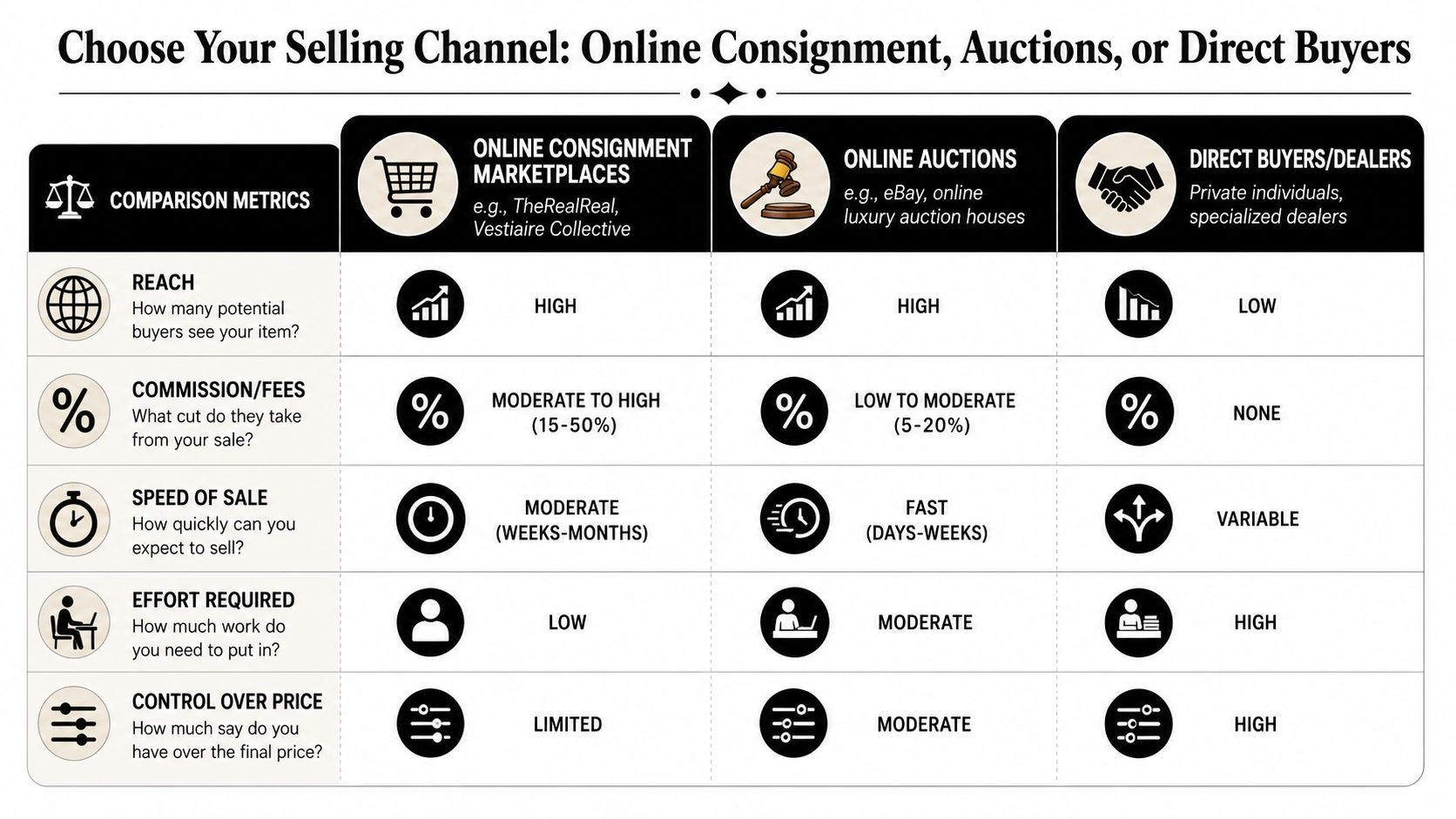
Online consignment marketplaces
Consignment works well when you're willing to wait for the right buyer and you want broad online exposure. The platform handles listing, audience access, and often authentication steps, but you usually give up speed and some control over the final outcome.
This route can make sense for mainstream Chanel models in attractive condition, especially if you aren't in a rush. The trade-off is simple. You don't get paid until the bag sells, and the process can involve revisions, returns, or price reductions.
Auction houses
Auction is a more specialized channel. It tends to suit bags with collector appeal, unusual provenance, or characteristics that may attract competitive bidding.
For a standard Chanel bag, auction isn't always the cleanest fit. The result depends on who shows up, how the lot is positioned, and whether the bag creates urgency on that sale date. Strong pieces can do well. Ordinary ones may not.
Direct buyers
A direct buyer evaluates the item and makes an outright offer. That model is usually the most straightforward if you value privacy, speed, and clarity over waiting for a possibly higher but less certain sale.
For many sellers in Atlanta, Buckhead, Sandy Springs, Roswell, Alpharetta, Brookhaven, Midtown Atlanta, and elsewhere in Georgia, in-person review is a practical advantage. You don't have to ship first and hope the item is represented correctly on arrival. If you're comparing channels in more detail, this guide that compares top platforms for selling handbags covering authentication fees payout speed and steps to maximize value and security is a helpful next read.
A direct buyer can also be useful when you want one decision-maker assessing authenticity, condition, and marketability at the same time. Antwerp Diamond is one example of that model, offering confidential evaluations for luxury handbags with private appointments and mail-in review options.
Selling channel | Best fit | Main advantage | Main trade-off |
|---|---|---|---|
Consignment marketplace | Common, in-demand Chanel bags | Broad audience reach | Slower payout, less certainty |
Auction house | Rare, vintage, or unusual pieces | Collector exposure | Outcome depends on auction-day demand |
Direct buyer | Sellers who want speed and privacy | Immediate clarity | Offer reflects dealer resale risk |
Your Next Steps for Selling Your Chanel Bag
If you want an accurate view of Chanel bag resale value, start with the factors you can verify now: model, size, condition, material, hardware, and provenance. Then compare those facts against how easy the bag is likely to place in the current market.
A formal valuation becomes more important as the bag becomes more valuable, rarer, or harder to authenticate confidently from photos alone. That's especially true if you're deciding between selling outright, consigning, or using the bag as part of a broader luxury asset review.
For many sellers, the smartest next step is simple. Get a current-market opinion before making assumptions based on old retail receipts or online asking prices. If you also have jewelry, watches, or other valuables to review, this guide on where to sell jewelry online may help you think through the same process across categories.
FAQs
Does Chanel bag resale value stay strong for every model
No. Chanel overall has strong resale performance, but value varies sharply by model and size. Some core iconic bags perform much better than others.
Which Chanel bag sizes hold value best
Smaller sizes have historically performed better. SACLÀB reported stronger retention for small and mini formats than for Jumbo and Large formats in its 2026 report.
Does condition really change the offer that much
Yes. Structure, corner wear, hardware condition, lining cleanliness, and originality all affect buyer confidence and the final offer.
Do I need the box and authenticity card to sell my Chanel bag
No, but original accessories and documentation usually help. They make the bag easier to evaluate and easier for the next buyer to trust.
Is it better to sell a Chanel bag locally in Atlanta
For many sellers, yes. A local in-person review in areas like Buckhead, Sandy Springs, Roswell, Alpharetta, or Midtown Atlanta can reduce shipping risk and make condition assessment more precise.
If you'd like a confidential, no-obligation evaluation, Antwerp Diamond offers in-person appointments in the Atlanta area and insured options for remote clients. That can be a practical next step if you want a real offer based on current demand, condition, and authenticity review rather than guesswork.