

A diamond Cuban link chain for men is a luxury chain with interlocking links, usually gold, set with diamonds. In the current retail market, these chains commonly range from 16 to 30 inches in length, often appear as 20-inch pieces, and widths commonly span 6 mm to 19 mm, with prices starting around $1,000 and reaching $132,300 for a listed 20 mm men's diamond Cuban necklace.
If you're holding one right now, you're probably asking a more practical question: what is my chain worth if I sell it? That answer depends less on hype and more on a few hard value drivers, namely the gold content, the total diamond build, the craftsmanship, and whether the diamonds are natural or lab-grown.
Most owners don't need more marketing language. They need a clear way to understand what they own, what buyers look for, and how to avoid leaving money on the table. That's especially true in Atlanta, Buckhead, Sandy Springs, Alpharetta, Roswell, Brookhaven, Midtown Atlanta, and the broader Georgia market, where clients often want a fast but informed valuation before they sell, borrow against, or insure a piece.
Table of Contents
Your Guide to Understanding and Selling a Diamond Cuban Link Chain
A diamond Cuban link chain for men is one of those pieces that can look simple from a distance and become highly technical once you evaluate it properly. Two chains may look similar across a room, yet sell for very different amounts because of what they're made of and how they're built.
That matters if you inherited a chain, bought one years ago, or received one as a gift and now want to sell it. A proper evaluation looks at the metal first, then the diamonds, then the condition, then the current resale appetite for that exact style.
In plain terms, your chain's value usually comes from four things:
Gold content: The purity and weight of the metal matter.
Diamond build: Buyers look at the stones' quality, total presence, and setting style.
Craftsmanship: Strong links, secure settings, and a dependable clasp support value.
Resale demand: Some builds are easier to resell than others.
Practical rule: A flashy chain isn't always a strong resale chain. Buyers pay for measurable specs, not just visual impact.
If you want a broader overview of the selling process for fine jewelry before focusing only on Cuban links, this guide on where to sell fine jewelry is a useful starting point.
What Exactly Is a Diamond Cuban Link Chain
A man walks into the store with a heavy chain he has worn for years and asks a simple question: “Is this just a gold chain with diamonds, or is it something buyers value differently?” That question matters, because a diamond Cuban link chain is its own category, and the details shape both price and resale potential.
A diamond Cuban link chain starts with the classic Cuban, also called the Miami link. Its links are rounded, tightly interlocked, and designed to lie flat against the body. That flat construction matters. It creates a broad top surface, which gives a setter room to place rows of small diamonds without losing the chain's bold, dense profile.
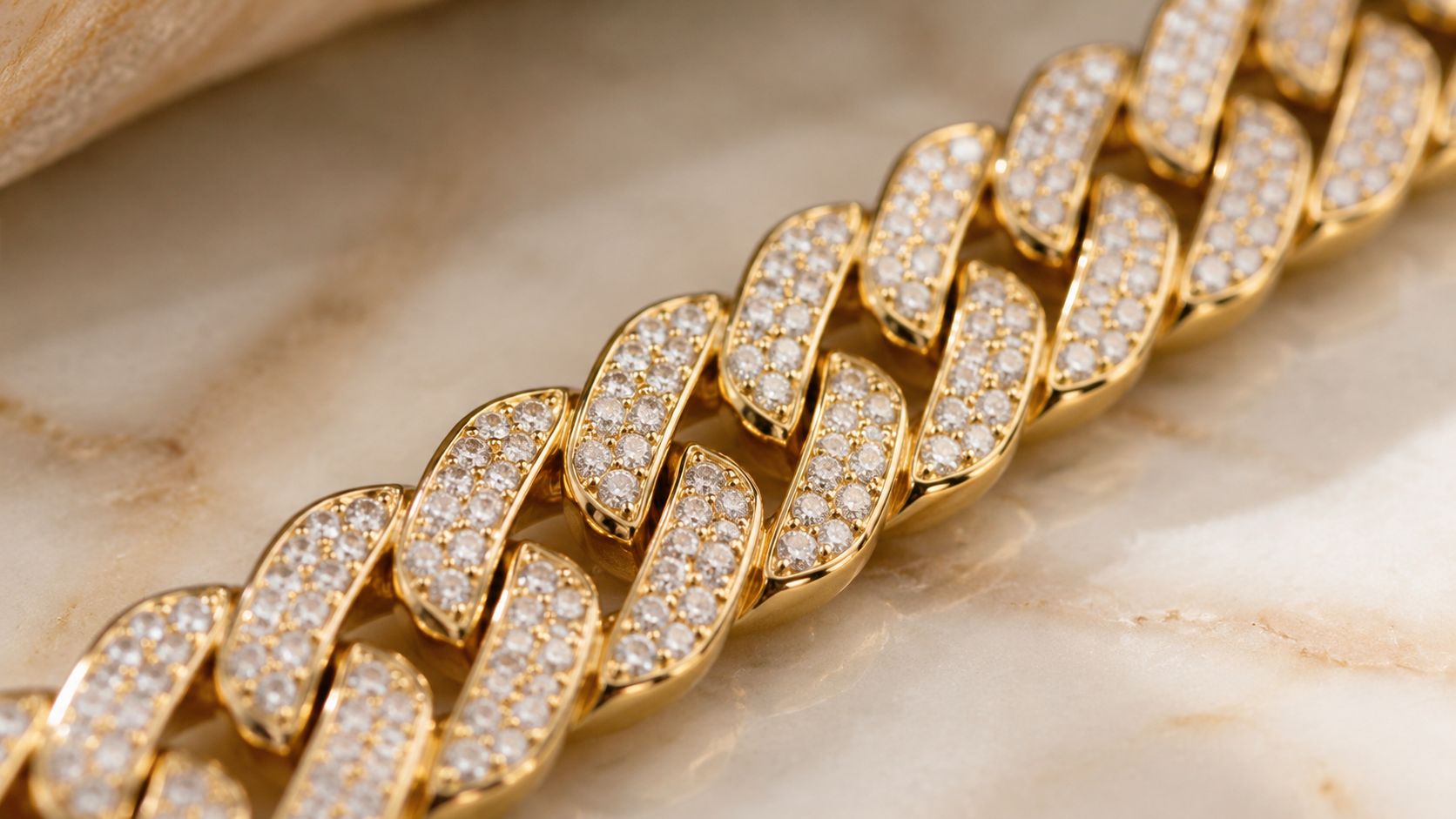
The easiest way to understand it is to separate the chain into two assets. First, you have the gold framework. Second, you have the diamond layer added on top. In resale, buyers rarely treat those two parts equally. Gold usually has a clearer baseline market. The diamonds can add value, but only if their quality, setting work, and desirability hold up under inspection.
That point becomes even more important with natural versus lab-grown diamonds. A chain set with natural diamonds may cost more up front, but it often holds stronger resale interest because the secondary market for natural stones is broader and more established. A chain set with lab-grown diamonds can look nearly identical face-up, yet resale buyers often discount the diamond portion more heavily. For a seller, that means two chains with the same visual impact can liquidate very differently.
In men's jewelry, the Cuban link stands apart because it has visual mass. A tennis chain gives you a continuous line of stones. A rope chain gives you texture and twist. A Cuban link gives you structure. Once diamonds are added, the piece reads less like a delicate accent and more like wearable hardware finished with light.
That is also why first-time sellers get tripped up. “Diamond Cuban link” sounds like one standard product, but the category covers several very different builds:
Partially iced chains: Diamonds appear on the top or selected sections, with more of the gold still visible.
Fully iced chains: Diamonds cover most visible surfaces, which increases labor and changes repair costs.
Natural diamond versions: Usually stronger for resale, assuming the stones and workmanship are credible.
Lab-grown diamond versions: Often lower at retail and sometimes weaker on the secondary market.
Solid vs. hollow construction: Two chains can look similar in photos but carry very different underlying metal value.
If you are comparing one chain against another, it helps to understand the base chain style before judging the diamond work. This guide to buying gold chains and comparing chain styles gives useful context.
A good practical definition is this: a diamond Cuban link chain is a flat, interlocking gold chain built for weight and presence, then upgraded with diamond setting that can range from modest to fully covered. For wear, that affects appearance. For resale, it affects how much of your value comes from recoverable gold, how much comes from the diamonds, and how easily a buyer can trust what is in front of them.
How to Identify Quality in Your Diamond Cuban Link
When I inspect a diamond Cuban link chain, its makeup is much like a recipe. If the gold is weak, the piece suffers. If the diamonds are poorly chosen or badly set, the piece suffers. If the workmanship is sloppy, the whole chain becomes harder to wear, harder to repair, and harder to sell.

Start with the gold
The first question is simple: what is the chain made of? Look for a hallmark on the clasp or a nearby section of the chain. That stamp often tells you the gold purity.
A seller should also pay attention to feel. A well-made Cuban link should feel substantial, not flimsy, and the links should move smoothly without obvious twisting, gaps, or rough finishing.
Here are the practical checkpoints I use:
Hallmark present: A visible purity stamp supports identification.
Weight and density: Heavier chains often contain more precious metal.
Link consistency: The links should be uniform and sit cleanly.
Clasp security: A weak clasp lowers confidence immediately.
Then evaluate the diamonds
For diamonds, the same broad quality principles still apply. Buyers look at cut, color, clarity, and carat weight, but in a chain they also care about consistency across the entire piece. A chain with unevenly matched stones can look busy up close and trade less favorably than a more balanced build.
The setting matters too. If stones are loose, chipped, poorly aligned, or unevenly mounted, value can drop because a future buyer may need repair work before resale.
A diamond chain should sparkle evenly. If some sections go dark and others light up, the issue may be stone quality, setting quality, or simple dirt hiding in the links.
If you're unsure whether the stones in your chain are real diamonds or a simulant, this explanation of what genuine diamond means can help you ask better questions before a valuation.
Why width and build matter so much
Many people underestimate what they own. Industry retail guides show a common men's range from 6 mm to 19 mm, with 7 to 8 mm identified by one jeweler guide as a balanced width range for men, and popular widths including 6 mm, 8.5 mm, and 12 mm. At the premium end, a 15 mm custom chain can contain about 23 carats of diamonds, include 1,166 round diamonds, and weigh about 305 grams of gold, which illustrates how quickly material intensity rises as the chain gets wider, according to this diamond Cuban link collection reference.
That one example explains a lot about the category. A wider chain doesn't just look bigger. It may carry dramatically more gold and far more stones, which changes replacement cost, repair cost, and resale positioning.
A quick quality snapshot can help:
Area | What to check | Why it matters |
|---|---|---|
Gold | Hallmark, weight, finish | Supports metal value and authenticity review |
Links | Uniformity, smooth movement | Better construction usually means better durability |
Diamonds | Match, brightness, security | Inconsistent stones reduce buyer confidence |
Clasp | Tight closure, no wobble | Security affects wearability and risk |
Overall build | Clean underside, solid feel | Better workmanship usually sells more easily |
What Determines the Resale Value of a Diamond Cuban Chain
A seller walks into a jeweler with a heavy diamond Cuban chain, remembers the original purchase price, and expects the offer to land somewhere close. The jeweler sees the piece differently. He is pricing a combination of scrap gold, salable diamonds, labor risk, repair risk, and how easy that exact chain will be to sell again.
That difference is where resale value is set.
What a buyer is actually valuing
Resale usually comes down to two buckets. The first is material value, meaning the gold and the diamonds. The second is liquidity, meaning how easily the piece can be turned into cash by the next buyer.
Gold acts like the floor. If the chain is real gold and has meaningful weight, it carries a base level of value even if the diamond portion is less attractive to the market. Diamonds can add to that value, but only if the stones are desirable enough, consistent enough, and secure enough that a buyer wants to keep them in the piece rather than treat them as a complication.
Craftsmanship matters for the same reason good framing matters in a house. Strong structure supports value. Weak construction makes every other feature less persuasive.
A buyer will usually weigh these questions at the same time:
How much recoverable gold is here?
Are the diamonds natural or lab-grown?
Do the stones look matched and well set?
Is the chain in a style that resells easily?
Will repairs be needed before it can be offered again?
If you want more background on how individual stones are priced, this guide on how much a diamond is worth gives useful context.
Natural versus lab-grown diamonds in resale
This is the part many style-focused articles miss. For resale, diamond origin can change the economics of the deal more than the visual appearance.
Natural diamonds and lab-grown diamonds may look similar in a finished Cuban link chain. At the counter, though, they are often treated very differently. Natural diamonds still tend to hold more resale interest because the secondary market recognizes them more readily. Lab-grown diamonds have become much cheaper to replace, so many buyers are cautious about paying much for the stone portion of a pre-owned chain that uses them.
The practical result is simple. Two chains can look nearly identical on the neck, but produce very different offers in practice.
That does not mean a lab-grown diamond Cuban chain has no resale value. It means the offer may lean more heavily on the gold content and less on the diamonds. A natural diamond chain may also be valued conservatively, especially if the stones are commercial quality or poorly matched, but it often has a broader resale audience.
For a seller who may liquidate later, this is a financial decision as much as a style decision. Natural diamonds usually cost more upfront. Lab-grown diamonds often lower the initial purchase price, but that savings can come with a weaker resale position later. The trade-off is similar to buying a car with expensive options that look great new but do not return their full cost at trade-in.
Condition affects liquidity, not just appearance
Condition shapes how confident a buyer feels. Confidence affects the offer.
A clean, well-maintained chain with secure stones, a dependable clasp, and no obvious repair issues is easier to price and easier to resell. A chain with loose diamonds, solder marks, bent links, or visible patchwork creates uncertainty. Uncertainty lowers offers because the buyer has to budget for labor, replacement stones, and the chance that the piece sits longer in inventory.
Custom work also cuts both ways. A highly personalized chain may have been expensive to make, but resale buyers do not always pay for someone else's taste. Classic Cuban links usually move more easily because the buyer pool is wider.
Good presentation helps here too. Clear photos can make a buyer more comfortable before the chain is even inspected in person. If you plan to request quotes remotely, the PhotoMaxi guide for better product images is a useful reference.
The main factors that raise or lower an offer
Value factor | Supports resale value | Lowers resale value |
|---|---|---|
Gold content | Higher real gold weight and verified purity | Low weight for size, unclear metal quality |
Diamond origin | Natural diamonds with marketable quality | Lab-grown diamonds in a softer secondary market |
Diamond quality | Well-matched stones, good brightness, secure setting | Poor matching, cloudy look, chipped or loose stones |
Construction | Solid links, strong clasp, clean workmanship | Weak build, obvious repairs, structural wear |
Style | Classic Cuban proportions with broad appeal | Very niche custom styling |
Documentation | Receipts, grading reports, repair history | No paperwork and unclear provenance |
The short version is this. Resale value is not a reward for what you paid. It is a market judgment about what a buyer can recover, what risk the piece carries, and how quickly that chain can be turned back into cash.
How to Prepare and Sell Your Chain Step by Step
A seller walks into a meeting with a heavy diamond Cuban chain, but cannot confirm whether the stones are natural or lab-grown, cannot show the weight, and has only one dim photo on a phone. The buyer sees risk first and value second. Preparation changes that equation.
Step 1, gather proof before you ask for a price
Start by collecting anything that helps a buyer verify what the chain is made of and how it has been maintained. A resale buyer is not paying for your memory of the purchase. They are judging how easy the chain will be to verify, resell, or break down for value.
Pull together:
Original receipt: Helps confirm the seller, date, and original description.
Diamond grading report: Useful when the chain includes larger featured stones or documented natural diamonds.
Appraisal paperwork: Good background, even though insurance value and resale value are different.
Repair records: Important if stones were replaced, links were rebuilt, or the clasp was serviced.
Original box or packaging: Helpful for presentation, though rarely a major value driver.
If you are unsure whether your diamonds are natural or lab-grown, flag that early. That one detail can change the buyer pool and the offer range more than owners expect. In resale, natural diamonds usually attract stronger demand because the secondary market is broader. Lab-grown diamonds can still add visual appeal, but resale buyers often discount them more aggressively because replacement supply is easier to find.
Step 2, clean the chain lightly and document it clearly
Your goal here is simple. Make inspection easier.
Use a gentle cleaning method, then photograph the chain like you are building a case file. Include the full chain laid flat, the clasp, any hallmarks, close views of the link pattern, the back side of the piece, and any wear or repairs. Honest photos save time because they answer the buyer's first questions before the appointment starts.
If you need help with lighting and framing, the PhotoMaxi guide for better product images covers solid photo basics. For jewelry-specific examples, this article on how to photograph jewelry is useful when you are requesting a preliminary evaluation.
Good photos do not raise value. They reduce uncertainty, and lower uncertainty often produces a more confident first quote.
Step 3, choose the selling route that matches your chain
Different selling channels value different things. A pawn transaction usually prioritizes speed and downside protection for the buyer. A private buyer may pay more for a chain with strong visual appeal, but you take on more work, more screening, and more payment risk. A jeweler or diamond buyer can often assess workmanship, stone matching, repairs, and marketability more accurately.
This matters even more with diamond Cuban links because two chains that look similar from a distance can trade very differently on the market. One may be heavy 14K or 18K gold with natural melee and solid construction. Another may have lighter build quality, filled sections, or lab-grown stones in a softer resale category. The first chain has more exit options. The second may still sell, but often to a narrower group of buyers.
For owners in Atlanta, Buckhead, Sandy Springs, Alpharetta, Roswell, Brookhaven, Midtown Atlanta, and across Georgia, an in-person luxury buyer can be a sensible choice when the chain is substantial, heavily diamond-set, or difficult to judge from photos alone.
Step 4, get a hands-on evaluation if anything is unclear
Some details cannot be settled from paperwork and photos alone. Diamond origin is one of them. So are hidden repairs, solder work, weak clasps, and stone security.
A proper evaluation usually looks at:
Gold purity and actual weight
Whether the diamonds appear natural or lab-grown
Overall diamond quality and matching
Security of the settings
Signs of repair, replacement, or structural wear
How easy the exact style will be to resell
That process works like inspecting a used luxury watch with the case opened, not just admired through a display window. Surface appearance matters, but the offer depends on what is confirmed under close examination.
Antwerp Diamond Store is one Atlanta-area option for preliminary online evaluations, in-person appointments in Buckhead and Roswell, and insured shipping for remote clients. That can be useful if you want a detailed review instead of a rough guess from a few photos.
Cleaning and Caring for Your Chain to Maintain Value
A chain that looks neglected can create unnecessary doubt during a sale. Basic care doesn't turn an average piece into a premium one, but it does help preserve appearance, reduce avoidable wear, and make the item easier to inspect.
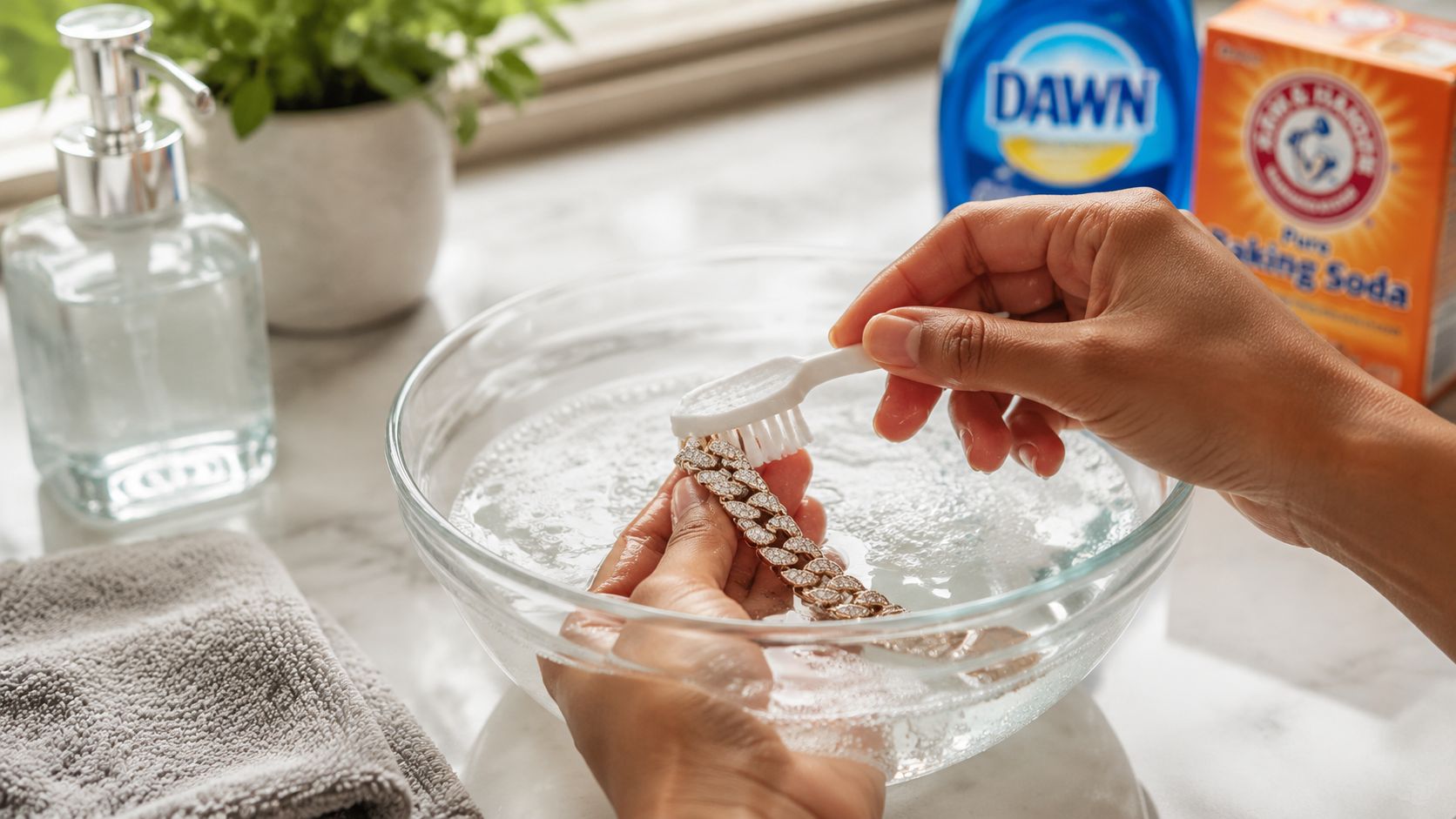
Safe at-home cleaning
For routine care, use lukewarm water, a small amount of mild dish soap, and a very soft brush. Gently work around the links and settings, then rinse carefully and pat dry with a soft lint-free cloth.
Don't scrub aggressively. Cuban links can trap residue, and diamond settings can collect lotion, skin oils, and dust, but harsh cleaning can do more harm than good.
A few simple habits help:
Store it separately: Avoid scratches from other jewelry.
Remove it before rough activity: Hard impacts can loosen stones.
Keep chemicals away: Household cleaners, chlorine, and harsh solutions can be risky.
Check the clasp often: Security issues usually start small.
If you'd like a second set of practical at-home ideas, these jewelry cleaning tips are a useful companion reference.
When to stop and let a jeweler handle it
If you hear rattling, see a lifted stone, notice a bent link, or spot movement in the clasp, stop cleaning and have the piece inspected. Moisture and brushing won't fix a structural issue.
This short video gives a helpful visual overview of jewelry cleaning technique before you attempt it at home:
Professional cleaning is also smart before a sale if the chain has heavy buildup behind the stones. Buyers need to see the piece clearly, and a jeweler can often clean and inspect it without stressing fragile settings.
Frequently Asked Questions About Selling Diamond Chains
Do I need the original box and papers to sell my chain
No. A buyer can still test the metal, inspect the setting work, and evaluate the diamonds without the box or receipt.
That said, paperwork can change the conversation. A lab report, purchase invoice, or repair record helps support what the chain is made of and how it was represented at the time of sale. This matters even more if your piece contains natural diamonds, because natural stones usually have a stronger resale position than lab-grown stones in the secondary market. If the chain has lab-grown diamonds and no documentation, some buyers will price it more cautiously because replacement cost is lower and resale demand is thinner.
Does size really affect what a diamond Cuban chain sells for
Yes, but size does not work alone.
A wider or longer chain usually contains more gold and often more diamond weight, so the asking price at retail rises with size. Resale value is more selective. Buyers look at whether the added size comes with solid construction, well-matched stones, and a style they believe they can resell. A heavy chain with commercial-grade diamonds can disappoint a seller who expects the same response as a smaller piece with brighter, better-matched natural stones.
A simple way to view it is this: size sets the stage, quality decides how much of that stage matters.
Is selling to a jeweler different from selling to a pawn-oriented buyer
Usually, yes.
A jeweler often evaluates the piece more like inventory. They may separate the value into parts, gold, diamonds, workmanship, brand, and overall resale appeal. A pawn-oriented buyer may focus more on how quickly the chain can be turned into cash and how much risk sits in the diamonds. That difference becomes sharper with iced-out Cuban links, where diamond origin and setting quality can swing the offer.
If your chain has natural diamonds, a jeweler may be more willing to examine color, clarity, and matching. If it has lab-grown diamonds, many buyers treat the diamond portion more conservatively because resale demand is weaker. The Federal Trade Commission explains the disclosure rules for natural and lab-created diamonds in its jewelry guidance, which is helpful if you are unsure how your chain should be described during a sale: FTC jewelry guides.
How long does the selling process take
It depends on how easy the chain is to verify.
A plain gold Cuban with a few accent stones can often be reviewed quickly. A fully flooded chain takes longer because the buyer may need to check whether the diamonds are natural or lab-grown, look for repairs, inspect missing or replaced stones, and judge whether the mounting work is secure. Custom pieces can also slow the process because custom design rarely brings back full retail on resale.
If time matters to you, bring every document you have and be ready for questions about diamond origin. That one issue often affects both the offer and the speed of the transaction.
Get a Professional Valuation for Your Diamond Chain
A diamond Cuban link chain for men can carry real value, but only if you understand what drives that value. The strongest selling position comes from knowing the gold content, evaluating the diamond build accurately, recognizing how condition affects liquidity, and taking the natural versus lab-grown resale question seriously.
If you're planning to sell, borrow against, or understand a chain, a professional review is usually the smartest next move. That matters even more for larger or heavily iced pieces, where small details in construction and diamond type can change the conversation.
If you're in Atlanta, Buckhead, Roswell, Sandy Springs, Alpharetta, Brookhaven, Midtown Atlanta, or elsewhere in Georgia, you can contact Antwerp Diamond for a confidential, no-obligation evaluation. Bring the chain, any paperwork you have, and clear questions about resale, appraisal, or loan options so you can make a decision based on facts rather than guesswork.


