
The best way to sell silver and gold is to identify what you have, confirm purity and weight, check the live spot price, and compare at least three same-day bids from reputable buyers before you agree to anything. In the U.S. precious metals are priced in troy ounces, and 1 troy ounce equals 31.1 grams according to 31 U.S. Code § 5116.
A lot of people start this process the same way. They open a drawer, jewelry box, or safe deposit box and find old rings, broken chains, silver flatware, bullion coins, or inherited pieces they haven't looked at in years. The mistake isn't waiting to sell. The mistake is assuming every item should be sold the same way.
If you want a fair result, the first decision isn't where to sell. It's what kind of value your item has. Some pieces are worth melt. Some are worth more as wearable jewelry. Some coins belong in a collectible lane, not a scrap lane. That one distinction can change the entire selling strategy.
Table of Contents
First Steps Before You Sell Your Precious Metals
If you've got a mixed pile of gold and silver, don't walk into a buyer's office with everything tangled together. Organizing first makes the valuation cleaner, faster, and harder to misunderstand.
Sort by category before you price anything
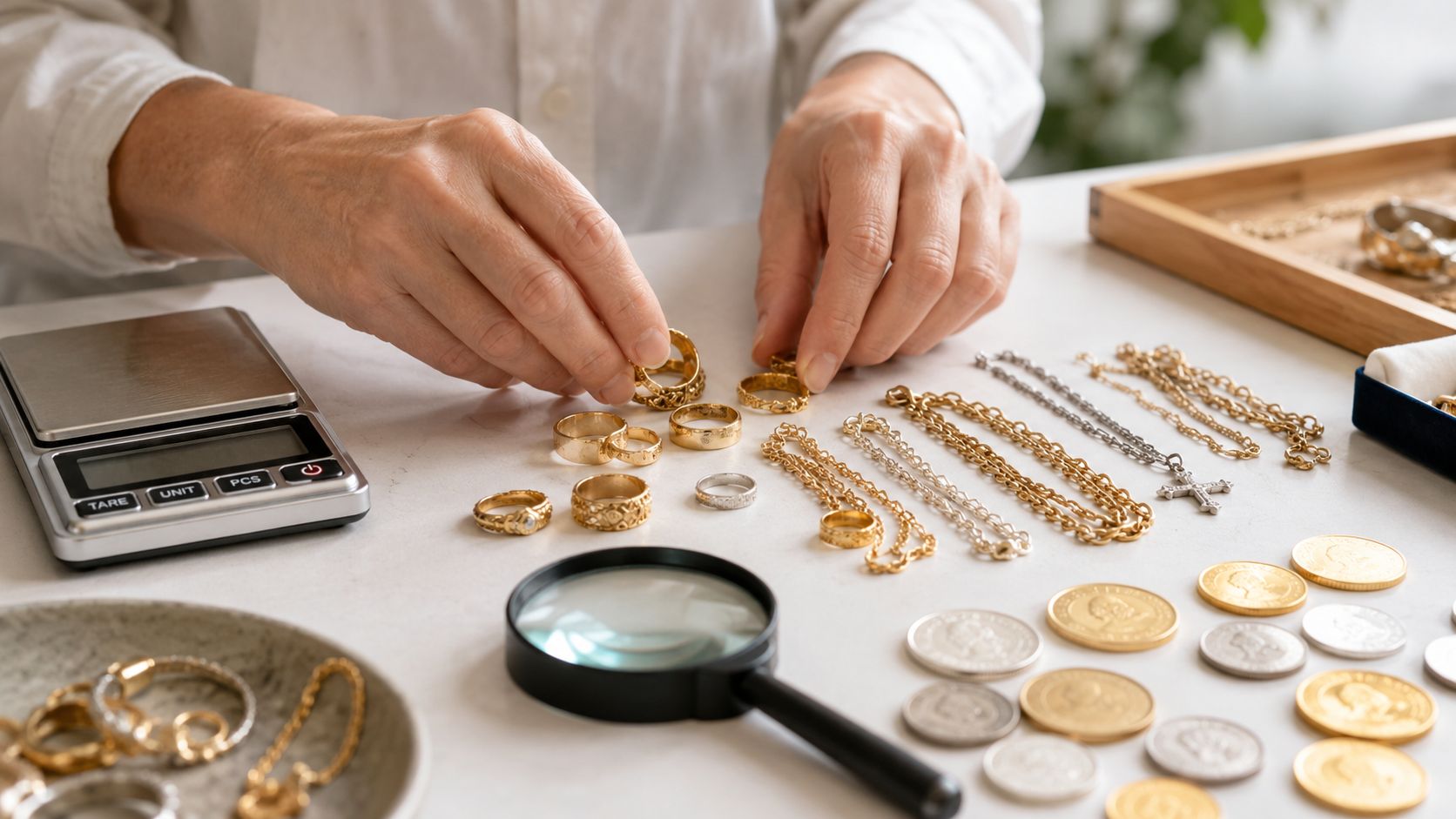
Start by separating your items into practical groups:
Jewelry: rings, bracelets, necklaces, earrings, charms, cufflinks
Coins: bullion coins, old U.S. coins, foreign coins, proof sets
Bullion: bars, rounds, wafers
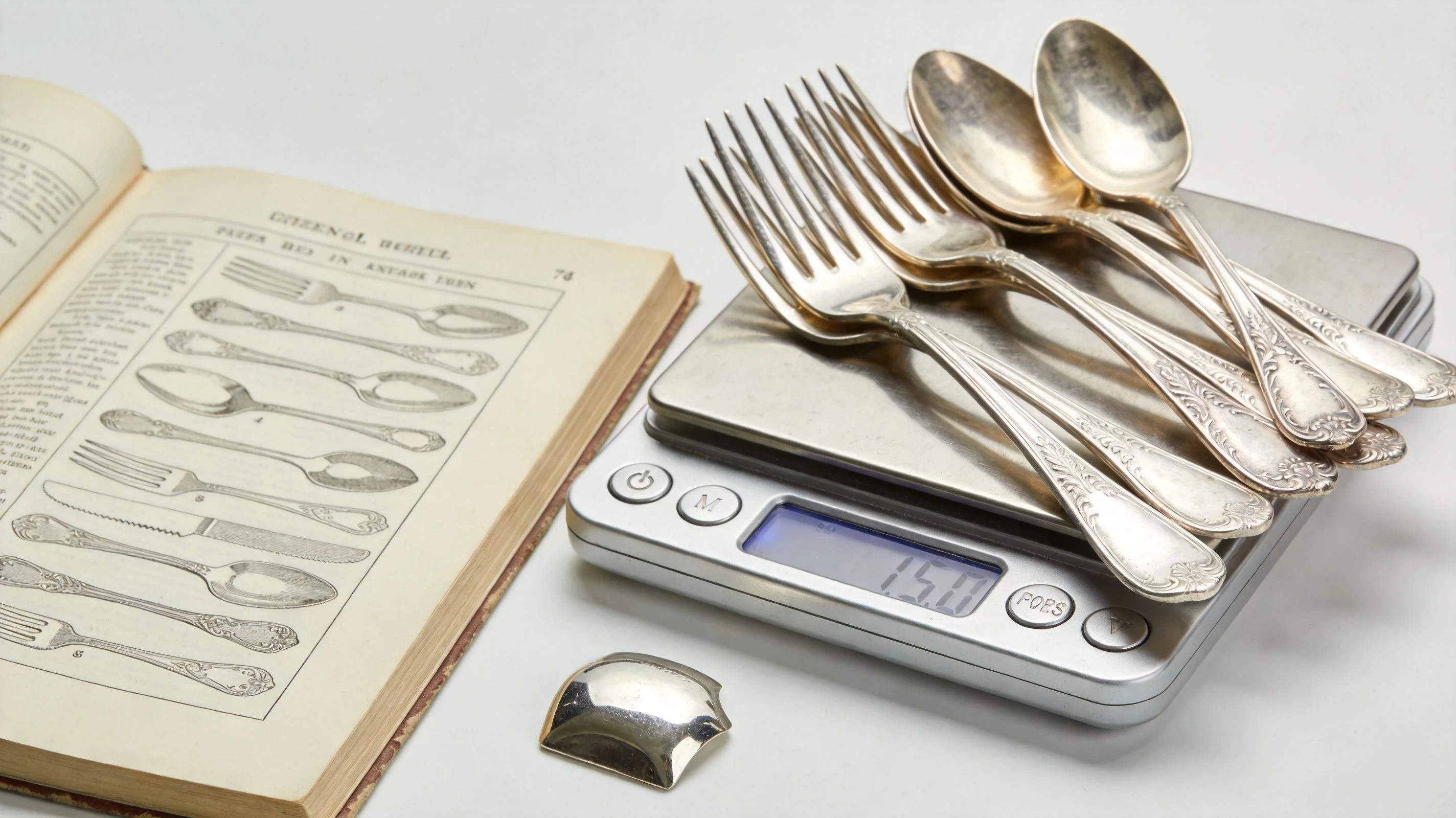
Flatware and hollowware: forks, spoons, trays, cups
Scrap: broken chains, single earrings, damaged settings, bent pieces
That sort matters because different buyers value different things. A broken gold chain usually trades on metal content. A signed bracelet from a recognized jewelry house may carry resale value beyond melt. A coin that looks ordinary can sometimes belong in a collectible category.
Practical rule: Never let a buyer collapse everything into one lump offer if your lot includes coins, branded jewelry, and scrap together.
If a piece has a hallmark, note it before you leave home. Common marks include 14K, 18K, 24K, 925, or 999. Those marks don't replace testing, but they give you a starting point. Also check for brand signatures, coin dates, mint marks, presentation boxes, grading holders, or original receipts.
Photos help, especially if you want an online pre-evaluation. A clean set of close-up images of hallmarks, fronts, backs, and any damage will make remote conversations much more productive. This guide on how to photograph jewelry for evaluation is useful if you're preparing pieces before contacting buyers.
Read the marks and separate melt from resale
Most first-time sellers lose money by focusing on whether the item is gold or silver. The better question, however, is: what market should this item be sold into?
Here's the simplest framework:
Value type | Usually fits | Best selling path |
|---|---|---|
Melt value | Broken, generic, damaged, incomplete items | Bullion dealer, precious metal buyer, refinery-style buyer |
Resale value | Wearable jewelry, branded pieces, attractive estate jewelry | Jewelry buyer, estate buyer, luxury resale specialist |
Collectible value | Rare coins, graded coins, unusual mint products | Coin specialist, auction format, numismatic buyer |
AARP notes that buyers verify purity and weight, but may not pay extra for rare coins without independent grading, while JM Bullion points out that two similar-looking pieces can price very differently based on design details and collector value, which is why treating every item as scrap can leave money on the table, as explained in JM Bullion's guide to selling bullion locally.
A practical example: sterling flatware with heavy wear might still be a straightforward silver sale. A vintage gold bracelet with strong design appeal might be worth more intact than melted. Old coins should be paused and reviewed before anyone quotes them as metal.
If you're selling in Atlanta, Buckhead, Sandy Springs, Alpharetta, Roswell, Brookhaven, or Midtown Atlanta, this first sorting step also helps you choose the right local buyer instead of taking everything to the first storefront with a gold sign.
How Gold and Silver Value is Calculated
A seller brings in a box with a tangled gold chain, a clean American Silver Eagle, and an old ring from a relative. All three contain precious metal. They should not be priced the same way.
That is the mistake that costs first-time sellers money. Before anyone talks numbers, the main question is what kind of value is doing the work. Some items are worth their metal content. Some are worth more intact because buyers want the design, brand, or condition. Some have collectible value that can sit well above melt. Once you sort the item correctly, the pricing method becomes much easier to judge.
Start with spot price, then adjust for purity and weight
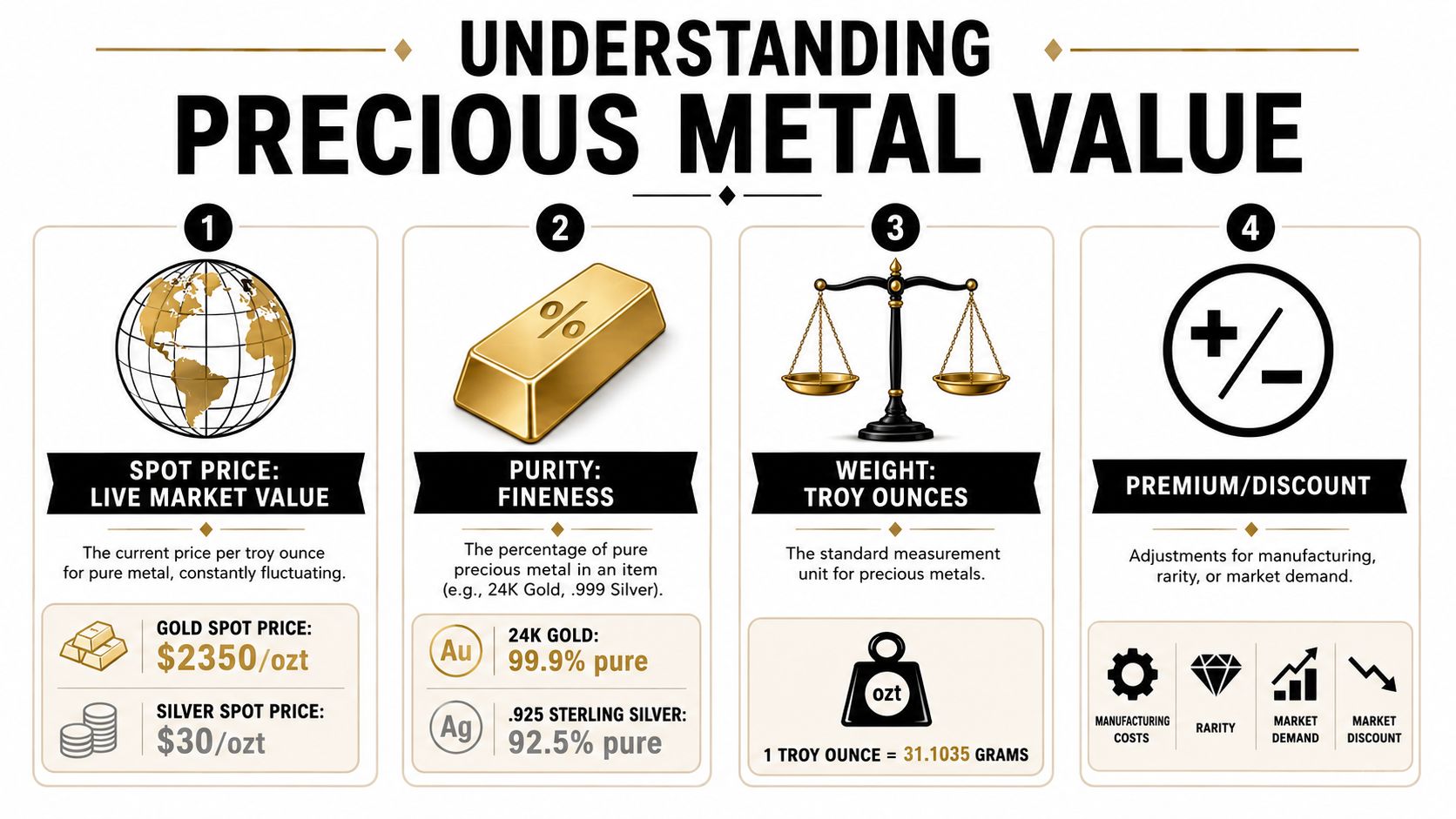
For melt-driven items, value starts with the live market price for pure gold or pure silver, usually called the spot price. Then the buyer adjusts for two facts: how much the item weighs, and how pure the metal is.
The basic formula is straightforward:
weight x purity x spot price = approximate metal value
Use that as a screening tool, not a promised payout. A 14K gold bracelet is not pure gold, so only part of its weight counts as gold content. A sterling silver tray is mostly silver, but not pure silver. If the item is headed to a refiner or scrap buyer, this calculation is the backbone of the offer.
Units matter more than many sellers expect. Jewelry is often weighed in grams. Bullion markets are often quoted in troy ounces. If a buyer quotes off one unit and you are thinking in another, it becomes harder to tell whether the offer is fair. Earlier in the article, I mentioned the legal and market standard behind troy-ounce pricing. The practical point is simple: ask to see the weight, the purity, and the unit of measure before discussing price.
Melt value is only one lane
Sellers either protect their upside or give it away.
A damaged ring with no design appeal often belongs in the melt lane. A signed David Yurman bracelet, a Cartier piece, or an attractive estate necklace may sell for more as jewelry than as scrap. A dated coin, proof set, or limited-issue bullion product can carry collector demand that has little to do with raw metal weight.
That is why a good buyer does not stop at the formula. They first decide whether the item should be bought as scrap, resold as jewelry, or evaluated as a collectible. If you are selling bullion, product type still matters. This guide on how to sell Silver Eagles shows why a widely recognized coin can trade differently from generic silver rounds, even at the same silver spot price.
Why your offer is below spot
Sellers often look up gold or silver online and assume that number should match the check. It rarely does.
For a melt purchase, buyers build in costs and risk:
Testing risk. Stamps help, but serious buyers still verify purity.
Refining or handling cost. Scrap jewelry, mixed lots, and damaged pieces take work to process.
Liquidity. Recognizable bars and coins are easier to resell than odd items or partial pieces.
Margin. Every legitimate buyer needs room to operate at a profit.
Bid price matters more than the headline number on a chart because bid reflects what the market is paying, not what someone hopes to get. In practice, the strongest offers come with a clear explanation of how the buyer reached the number.
For people comparing physical ownership with newer forms of exposure, this overview of digital gold assets gives context on how the market values gold in different formats.
A fair quote shows the weight, the tested purity, the pricing basis, and whether the item is being bought for melt, resale, or collectible value.
Choosing the Right Buyer for Your Gold and Silver
Where you sell affects speed, convenience, and how confidently you can judge the offer. The right buyer depends on the item in front of you and the kind of transaction you want.

When a local buyer makes the most sense
A local jewelry or bullion buyer is often the simplest choice when you want a face-to-face evaluation, immediate explanation of the testing process, and same-visit payment. That's especially useful for inherited jewelry, mixed lots, and sellers who don't want to ship valuables.
AARP recommends shopping at least three pawn shops, jewelry stores, or metal dealers for comparable offers, comparing bids on the same day, focusing on the bid price, and asking for an itemized receipt plus the buyer's pricing method, as outlined in AARP's guide to selling gold and silver.
For metro Atlanta sellers, that means checking more than one option in Buckhead, Roswell, Sandy Springs, Alpharetta, Brookhaven, or Midtown Atlanta if your items have meaningful value. It also means comparing buyers who handle jewelry differently from buyers who mainly handle bullion.
One practical option in the Atlanta market is Antwerp Diamond's guide to where to sell jewelry online, especially if you're deciding between a local appointment and a remote process.
Buyer comparison at a glance
Different channels fit different situations:
Buyer type | Good for | Main advantage | Main trade-off |
|---|---|---|---|
Local jewelry or bullion dealer | Jewelry, bullion, estate pieces | In-person testing and immediate discussion | You still need to compare offers |
Online mail-in buyer | Standard bullion, non-urgent sales | Convenience from home | You must trust shipping and payout terms |
Pawn shop | Fast cash situations | Immediate transaction option | Offers may reflect loan-style economics |
Auction route | Rare coins, unusual signed pieces | Better fit for collectible demand | Slower and less predictable timing |
A local appointment usually works best when you want clarity. You can watch the weighing, ask how purity affects pricing, and decide on the spot. Mail-in options can be useful if you already know your items are common and you're comfortable with shipping procedures.
The right buyer isn't the one with the loudest ad. It's the one whose process matches your item type.
Pawn shops fill a real need, but they're often used by sellers who prioritize speed over maximizing value. If you're not under pressure, compare them against dedicated metal and jewelry buyers before making a final call.
The Selling Process From Appraisal to Payment
A first-time seller often loses money at one point. The buyer treats everything as scrap.
That is the decision to slow down and get right. Before any quote means much, the buyer should determine whether your item belongs in one of three buckets: melt value, resale value, or collectible value. A plain broken chain may be worth its metal content. A signed bracelet from a known house may sell for more intact. A coin with date, mint mark, or limited demand may belong in the collectible category instead of the melt pile. That single distinction shapes the offer, the selling method, and how long you should expect the process to take.

What a professional evaluation should look like
A proper evaluation starts by sorting, not pricing. Rings, chains, bullion bars, branded jewelry, and coins should not be tossed into one group and quoted as a lump sum. Any buyer worth your time will separate items first, then test purity, weigh them, and explain which value standard applies to each piece.
For metal testing, XRF is common because it checks surface composition without cutting into the item. Many buyers also confirm marks, dimensions, and overall condition. For jewelry, craftsmanship and brand matter. For coins, date, mint, and demand matter. For scrap, weight and purity do most of the work.
What you should expect to see:
Items sorted by type: scrap jewelry, wearable jewelry, bullion, and coins reviewed separately
Purity testing explained: the buyer tells you what method is being used and why
Weight shown clearly: you can see the scale and understand whether stones or non-metal parts were excluded
Category stated out loud: melt, resale, or collectible
Quote logic explained: the offer is tied to spot price, resale margin, or collector demand, depending on the item
If you are selling jewelry and want to know how condition, maker, and construction affect the number, this guide on how jewelry appraisal works helps clarify what a buyer should review before making an offer.
One practical point matters here. If a buyer skips the category decision and goes straight to a single dollar amount, ask them to break the quote apart item by item. That request weeds out weak offers fast.
How payment and remote selling should work
Remote selling can work well for straightforward bullion or common pieces, but the paperwork matters more because you are not watching the process in person. Get the terms before you ship. That includes how the buyer tests, how they handle items with stones, whether they contact you before removing gemstones, and how long payment takes after the package is received.
For higher-value shipments, insurance deserves real attention. Standard carrier coverage may not fully protect precious metals, jewelry, or coins in transit, which is why some sellers review transportation coverage such as PIA's inland marine solutions before sending valuable property.
A sound remote transaction includes:
Written pricing terms: know whether the quote will be based on melt, resale potential, or collectible demand
Insured, trackable shipping: every package should have tracking and declared procedures
Documented contents: photograph each item and keep a packing list
Approval steps: know whether you must accept the final offer before payment is issued
Clear return policy: understand what happens if you decline the offer
Here is a short walkthrough of what sellers should expect during testing and quoting:
At payment, ask for a receipt that shows what was bought, how each item was classified, the weight used, the purity used, and the final total. Good buyers do this without hesitation. It protects both sides and gives you a clean record of the sale.
How to Identify and Avoid Common Selling Scams
A first-time seller walks in with a mixed pouch of old rings, a silver chain, and a few coins. The buyer glances at the lot, names one total, and starts talking about how the market could drop by the hour. That is the point where sellers lose money, not because the metal changed value, but because nobody stopped to sort melt items from pieces that should be sold for resale or collectible value.
Scams and bad offers often hide behind speed and vagueness. A buyer who keeps everything in one pile can underpay you in three different ways at once. Scrap gold gets priced below a fair melt range, branded jewelry gets treated like broken metal, and coins with collector interest get bought as bullion. Once you know those categories exist, weak offers get much easier to spot.
Red flags that should stop the sale
Walk away, or pause the transaction, if you see any of the following:
A single price for mixed items: this is one of the biggest warning signs. Different items belong in different lanes. Melt, resale, and collectible pieces should not be blended into one number without explanation.
Pressure to sell on the spot: honest buyers give you time to review the offer, especially if an item may have value beyond metal weight.
Weighing you cannot follow: you should be able to see what is being weighed and understand whether stones, clasps, or non-gold parts were excluded.
No clear explanation of testing: a legitimate buyer should explain how they checked purity and authenticity in plain language.
Brand names or coins brushed aside: if the buyer ignores maker marks, coin dates, hallmarks, or original packaging, they may be steering valuable items into the scrap category.
Terms that change mid-transaction: fees, deductions, or revised percentages that appear late are a bad sign.
One more warning sign matters in practice. A buyer who talks only about "today's spot price" can make a weak offer sound more convincing. Spot is only one input. A crucial question is how your specific item will be sold after they buy it.
What trustworthy buyers do differently
Good buyers break the offer down item by item. They explain which pieces are being bought for metal content, which might sell for design or brand value, and which deserve a closer look because rarity could push the price higher.
That distinction matters more than sellers realize. A plain damaged chain may be a straightforward melt item. A Tiffany bracelet, a Rolex gold clasp, or an older coin in original packaging belongs in a different conversation. If a buyer does not separate those cases, you are not getting a careful evaluation.
Trustworthy operations are also easy to verify. Look for a consistent business name, a real office, clear contact information, and staff who answer direct questions without getting defensive. If you want to compare local options before committing, this guide on where to sell jewelry for cash is a practical place to start.
Ask one simple question: "Are you buying this for melt, resale, or collectible value?" A serious buyer will answer clearly.
If a buyer cannot explain how your item is being classified, they have not explained the offer well enough.
Frequently Asked Questions About Selling Gold and Silver
Should I clean gold or silver before selling it?
Usually, no aggressive cleaning is needed. Harsh polishing can damage surfaces, remove patina, or reduce appeal on collectible items. Wipe dust gently and leave anything unusual alone.
Is broken jewelry worth selling?
Yes. Broken chains, single earrings, bent rings, and damaged bracelets can still have melt value if the metal is genuine. Damage affects resale potential more than raw metal content.
Are all silver items worth the same if they weigh the same?
No. Purity matters, and product type matters too. Sterling silver, fine silver, bullion, flatware, and decorative items don't always sell through the same channel.
Should I sell coins as scrap metal?
Not automatically. Some coins should be evaluated for collectible value before anyone prices them for melt. This is especially important if the coins are older, graded, in original packaging, or have unusual details.
Is local or online better if I need money quickly?
Local often makes sense when you want immediate evaluation and payout. Online can still work, but timing depends on shipping, inspection, and settlement terms.
What should I bring to a gold or silver appointment?
Bring the items, any boxes or paperwork, grading certificates if you have coins, and a list of questions. If pieces are branded or part of a set, keep those together.
Can sellers in Georgia get an evaluation without committing to sell?
Yes. Many buyers in the greater Georgia market offer an evaluation before you decide. That's useful if you're comparing options in Atlanta, Sandy Springs, Alpharetta, Roswell, Brookhaven, or Midtown Atlanta.
Get a Professional Valuation for Your Precious Metals
Selling precious metals goes more smoothly when you know whether you're dealing with melt, resale, or collectible value before the first offer comes in. A professional review can help you sort mixed lots, verify purity, and understand which selling path makes the most sense for your specific items.
If you're in Atlanta or nearby, an in-person evaluation can give you immediate clarity. If you're outside the city, a remote review may still be practical when the shipping process and payout terms are clearly documented.
If you'd like a clear, no-pressure evaluation, Antwerp Diamond offers confidential reviews for gold, silver, jewelry, watches, and other high-value items, with private appointments and remote options for sellers who want a straightforward process before deciding whether to sell.