

Find a Trusted Engagement Ring Store Near Me
A engagement ring store near me search should lead you to a jeweler where you can view diamonds in person, compare settings, ask direct questions, and understand the full cost before you buy.
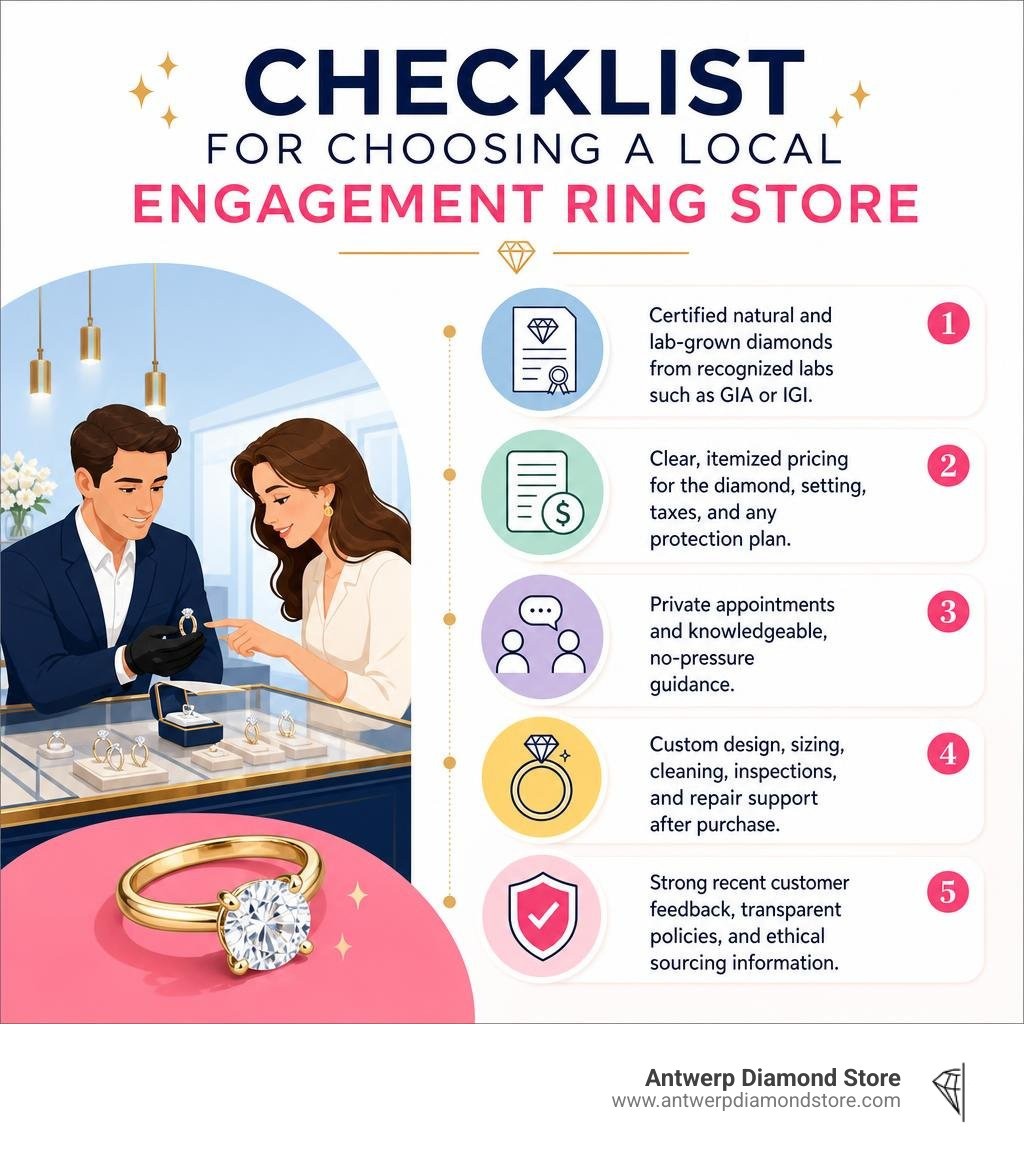
For a quick shortlist, choose a local store that offers:
Certified natural and lab-grown diamonds from recognized labs such as GIA or IGI.
Clear, itemized pricing for the diamond, setting, taxes, and any protection plan.
Private appointments and knowledgeable, no-pressure guidance.
Custom design, sizing, cleaning, inspections, and repair support after purchase.
Strong recent customer feedback, transparent policies, and ethical sourcing information.
An engagement ring is often worn every day for decades. That makes the right store as important as the ring itself. A good local jeweler lets you inspect the details that photos cannot show, from a diamond's sparkle and proportions to how a setting feels on the hand.
Whether you want a classic solitaire, a detailed halo, or a one-of-a-kind custom ring, shopping locally can give you more confidence before making a major purchase.
Local Jewelers vs. National Chains: Finding an Engagement Ring Store Near Me
When searching for an engagement ring store near me, one of your first big decisions is deciding whether to buy from a local boutique jeweler or a national retail chain. Both avenues have distinct features, and understanding how they differ helps you select the best destination for your proposal journey.
National chains offer convenient mall locations and large stock inventories across nationwide storefronts. Many offer flash sales—such as 50% off select fine jewelry or 12-month special financing on purchases of $999 or more. However, national chains often work within structured retail templates, meaning custom work can carry longer turnaround times because items may be shipped to central regional workshops.
Local independent jewelers, on the other hand, frequently feature in-house master jewelers who perform setting, resizing, and custom work directly on-site. Local shops tend to focus on individualized, low-pressure guidance, offering private viewing tables or specialized diamond rooms where you can compare loose stones under proper gemological lighting.

Category Feature | Independent Local Jewelers | National Retail Chains |
|---|---|---|
Customization | Bespoke CAD design & on-site master jewelers | Standardized semi-mount options & off-site custom processing |
Diamond Inventory | Curated loose diamonds (Natural & Lab-Grown) | Large mass-market inventory & standard pre-set rings |
Pricing Model | Transparent itemized pricing & competitive retail markups | Frequent percentage-off sales & bundled store promotions |
Customer Service | Direct, long-term relationship & private consultations | Standardized store policies & high sales floor turn-over |
Maintenance & Care | On-site cleaning, bench repair, and immediate inspections | Sent to regional repair centers for maintenance |
Comparing Pricing and Average Ring Costs
Understanding diamond pricing is key to managing your bridal budget effectively. The final price tag of an engagement ring combines two separate factors: the center stone and the mounting (setting).
Retail markups vary significantly across the industry. National chains frequently market steep promotional discounts off higher original tag prices, whereas local jewelers generally price their loose stones closer to true market valuation. To evaluate if you are getting a fair quote, learn how much is a diamond based on its individual characteristics, or use our guide to calculate diamond price by evaluating carat weight, cut, color, and clarity.
On average, a traditional natural diamond engagement ring ranges between $3,500 and $10,000+, depending on carat size and cut grade. Choosing a lab-grown center stone can dramatically reduce that baseline cost while maintaining identical chemical and optical properties.
What to Expect When Visiting an Engagement Ring Store Near Me
Stepping into a local jewelry showroom should feel exciting, not overwhelming. A premier engagement ring store will offer private, one-on-one consultation sessions—often structured in 30-minute to 1-hour slots—where an engagement concierge guides you through their collection.
During your visit, you can expect:
Private Diamond Viewing: A dedicated desk equipped with specialized loupes, color grading cards, and gemological microscopes.
Loose Stone Selection: The opportunity to evaluate unmounted natural and lab-grown diamonds side by side to observe fire, brightness, and contrast.
Setting Try-Ons: Sample silver or gold alloy settings that allow you to feel setting heights, band widths, and profile shapes on your finger.
Budget Alignment: Professional guidance focused on maximizing visual size and brilliance within your stated budget parameters, without high-pressure sales tactics.
In-Store vs. Online Ring Shopping: Key Factors to Consider
Modern ring buyers do not have to choose strictly between physical stores and digital storefronts. Today’s market supports a hybrid shopping approach that combines online research with local in-person verification.
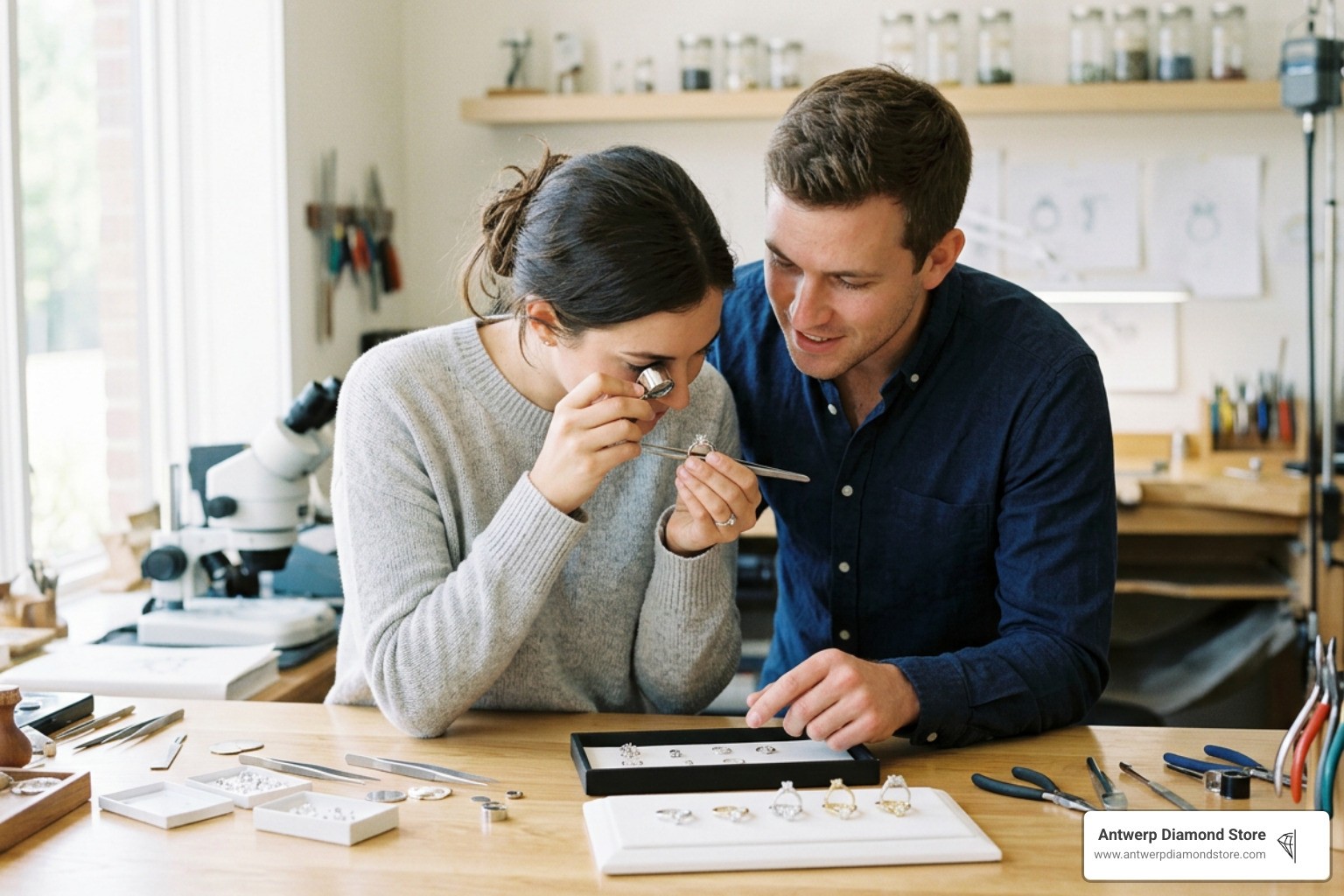
Shopping exclusively online gives you access to global diamond databases and tools like dual-camera virtual appointments. Some digital brands even provide a mail-order home try-on service—allowing you to test alloy sample rings at home for around $200 before finalizing a order.
However, buying entirely online lacks the hands-on tactile experience of visiting a physical store. In person, you can verify how comfortably a setting sits against a future wedding band, observe subtle color undertones, and check stone proportions directly with your own eyes.
Evaluating Natural vs. Lab-Grown Diamonds
Both natural and lab-grown diamonds offer genuine brilliance, but understanding their differences ensures you make the right choice for your lifestyle and personal values.
Natural diamonds formed miles beneath the Earth's surface over billions of years. Due to their physical rarity, natural diamonds maintain long-term resale value and cultural prestige.
Lab-grown diamonds are created in controlled laboratory environments utilizing High Pressure High Temperature (HPHT) or Chemical Vapor Deposition (CVD) technologies. They possess identical chemical, physical, and optical attributes as mined diamonds. Because lab production is scalable, lab-grown diamonds cost up to 70% to 80% less than natural stones of equivalent specifications.
When evaluating ring options, look closely at the total weight. Understanding what is CTW (Carat Total Weight) helps you differentiate between the weight of the main center gem and the combined weight of all surrounding accent stones. If you want a impressive visual outline within a practical budget, a popular choice like an oval lab grown diamond provides an elongated shape that makes the center stone look larger on the hand.
Custom Engagement Ring Design Process
If pre-set showroom rings do not match your exact vision, custom ring design allows you to craft a unique piece from scratch. Local jewelers with on-site master jewelers guide you through a step-by-step creation process.
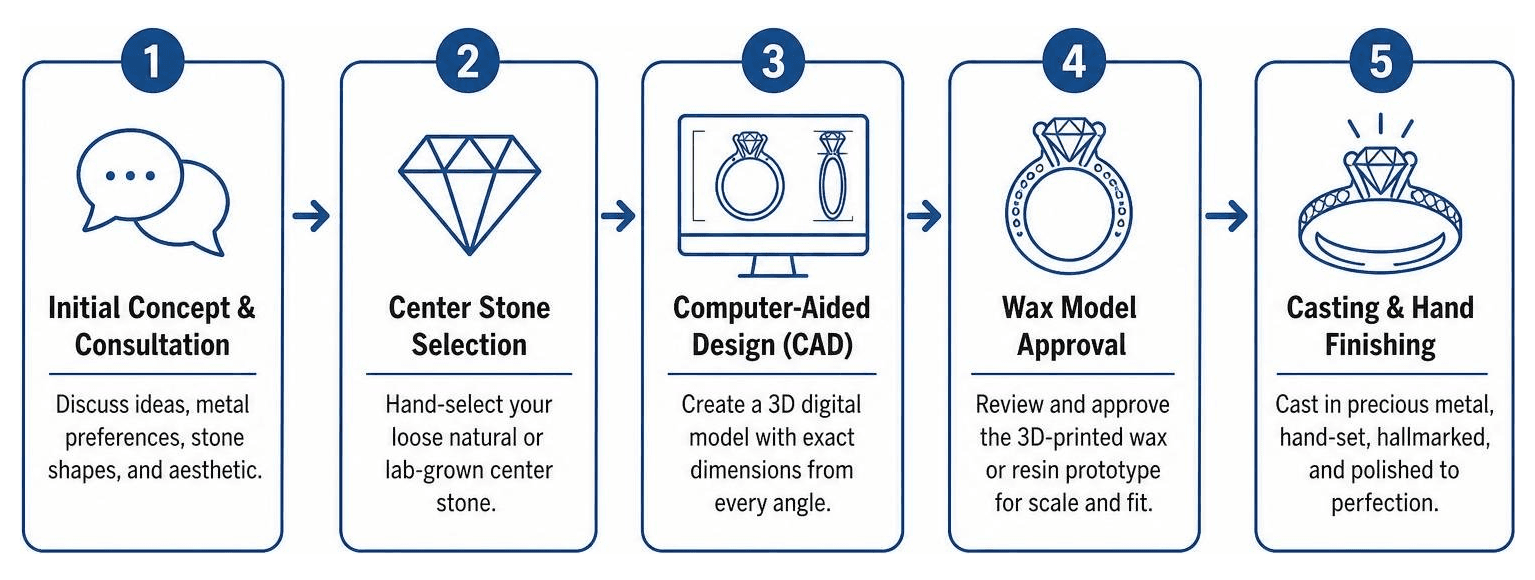
Initial Concept & Consultation: Discuss design ideas, metal preferences (such as 14k gold, 18k gold, or durable 950 platinum), stone shapes, and overall aesthetic.
Center Stone Selection: Hand-select your loose natural or lab-grown center stone based on cut precision and color harmony.
Computer-Aided Design (CAD): The master jeweler creates a 3D digital model of your ring, giving you exact dimensional renders from every angle.
Wax Model Approval: A 3D-printed wax or resin prototype is produced so you can test the scale and physical shape in person.
Casting & Hand Finishing: The precious metal is cast, hallmarked, hand-set with your selected diamonds, and polished to perfection.
Essential Retail Services, Certifications, and Store Standards
A trustworthy jewelry store does not stop serving you once you walk out the door with your purchase box. Long-term care, proper laboratory certification, and clear store guarantees are essential benchmarks of an exceptional local jeweler.
Verifying Diamond Quality and Authenticity
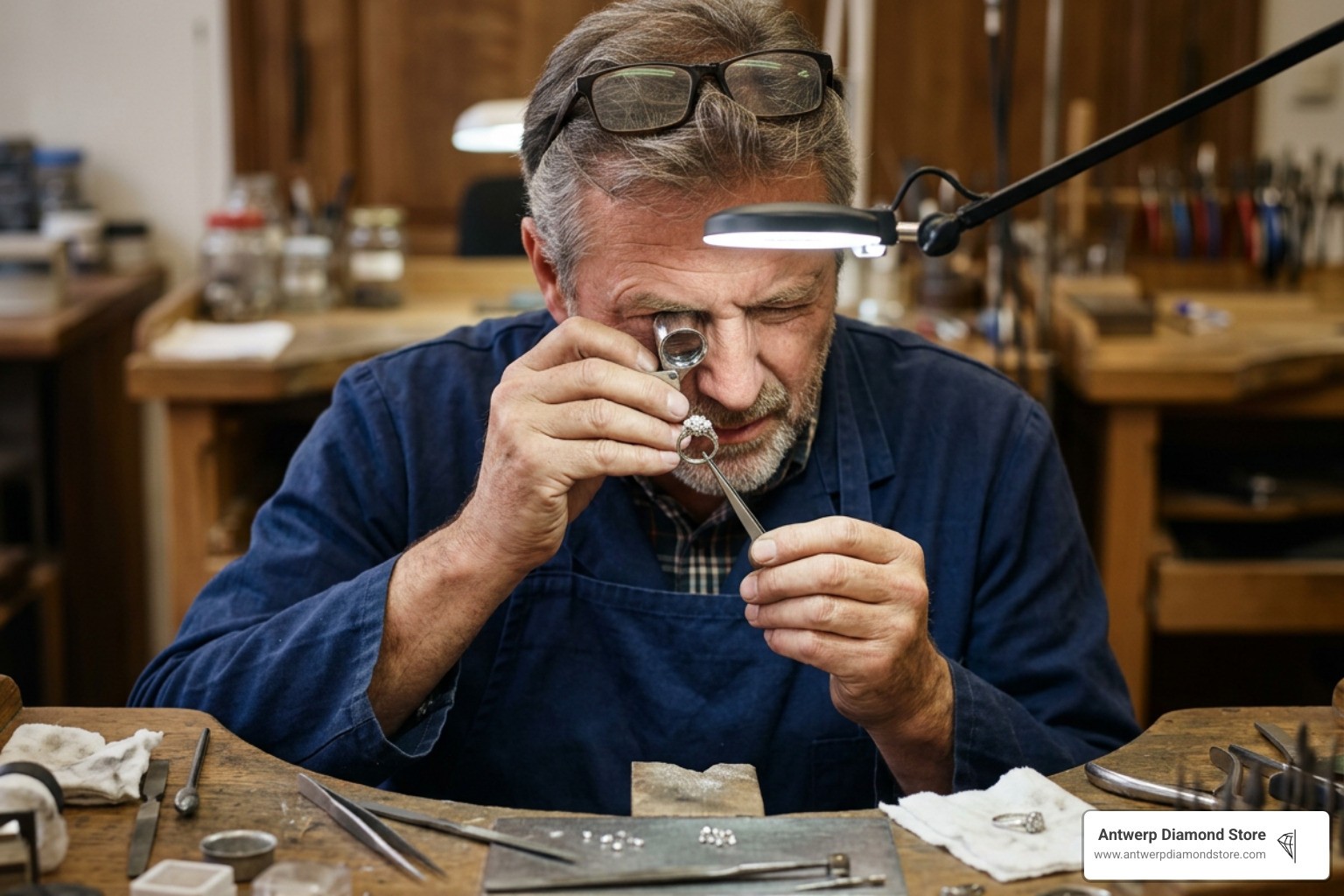
Never purchase a major diamond without independent third-party grading certification. The Gemological Institute of America (GIA) and the International Gemological Institute (IGI) represent the gold standards in gemological evaluation.
A certificate verifies the 4 Cs:
Cut: The most critical factor determining a diamond's sparkle, fire, and light return.
Color: Graded from D (completely colorless) down through the alphabet as light yellow or brown body color increases.
Clarity: Evaluating natural internal features. Knowing what is an inclusion in a diamond allows you to choose "eye-clean" stones where minute marks are invisible without magnification.
Carat Weight: The physical metric weight of the gem (where 1.00 carat = 0.200 grams).
Insisting on a certified center stone ensures that you pay for true quality rather than inflated retail claims. Be sure to select a verified GIA certified engagement ring for maximum peace of mind and resale verification.
How to Evaluate an Engagement Ring Store Near Me
Before selecting a store, evaluate their standing within the community and their commitment to ethical industry standards.
Key criteria to review:
Ethical Sourcing: Ensure the store adheres to the Kimberley Process, guaranteeing that natural diamonds are conflict-free and responsibly mined.
Independent Appraisals: Top jewelers supply an independent laboratory assessment or recommend an accredited independent jewelry appraiser for insurance documentation.
Customer Feedback: Review recent customer ratings, paying close attention to comments regarding post-sale support, custom alterations, and warranty honors.
Appraisal Expertise: Staff should clearly explain how to appraise jewelry so you understand full replacement value versus liquid cash value for insurance coverage.
Engagement Ring Financing, Warranties, and Maintenance
An engagement ring is a significant financial commitment. To help manage this expenditure, many retailers offer flexible financial options, including special credit prequalifications that check eligibility without impacting your credit score.
Payment options frequently include:
0% APR Special Financing: Promotional programs lasting from 6 to 36 months through retail financing partners (such as Affirm or store credit cards) for qualified applicants.
Trade-Up Programs: Policies allowing you to apply 100% of your original natural diamond purchase price toward an upgraded center stone in the future.
Lifetime Protection Plans: Comprehensive store warranties that cover routine prong tightening, scratch polishing, center and accent stone repairs, and complimentary semi-annual ultrasonic cleanings.
Understanding what is fine jewelry means recognizing that precious metals like gold and platinum require ongoing care. Regular inspections prevent loose prongs from causing stone loss over years of daily wear.
Frequently Asked Questions About Engagement Ring Stores
What is the average price range for engagement rings at local stores?
Most couples spend between $2,500 and $7,500 on an engagement ring at local jewelry stores. However, price ranges vary widely based on stone selection:
Budget Tier ($1,000 – $2,500): Solitaire or halo settings featuring certified lab-grown diamonds (1.00 to 2.00 CTW) set in 14k gold.
Mid-Range Tier ($3,000 – $8,000): Custom-designed settings in 18k gold or platinum featuring 1.00 to 1.50ct natural diamonds or substantial lab-grown center gems.
Luxury Tier ($10,000+): High-carat natural diamonds (2.00ct+) with premium GIA color and clarity grades set in handcrafted designer mountings.
How long does the custom engagement ring process take?
A custom engagement ring typically takes between 2 to 6 weeks from initial consultation to final delivery. Initial 3D CAD design models take about 3 to 7 business days, wax casting requires 1 to 2 weeks, and hand-setting the diamonds with final polish takes an additional week. If you have a firm proposal deadline, notify your jeweler during your first meeting.
What core services should a reputable jeweler provide?
A reputable local jeweler should provide complimentary lifetime cleaning and visual inspections, clear mounting guarantees, professional ring resizing support, gemological origin documentation, and transparent trade-in or buyback policies.
Conclusion
Finding the right local engagement ring store is all about establishing trust, clarity, and access to master craftsmanship. By visiting a local jeweler in person, you can examine diamond fire under magnification, craft bespoke custom settings, and secure dependable long-term maintenance for your piece.
At Antwerp Diamond Store, we assist clients through every phase of luxury jewelry ownership. Operating out of Atlanta, GA, we buy luxury watches, fine diamond jewelry, and designer handbags for cash—providing private, appointment-only consultations, transparent market-based evaluations, and instant payouts without hidden fees. Whether you are seeking expert guidance on fine diamonds or looking to unlock value from existing luxury items, our team delivers discreet, high-end care tailored to your needs.