

Get a Quick Online Estimate for Your Ring
You can appraise my ring online by uploading clear photos and basic details, then comparing the result with recent market sales. Most free tools provide a preliminary value range in seconds or minutes. A human online review may take 24 to 48 hours.
Appraisal route | Typical cost | Typical turnaround | Best use |
|---|---|---|---|
Free online photo estimate | $0 | Under a few minutes | A fast resale-value starting point |
Human online review | Often paid | 24-48 hours | A closer market assessment |
In-person appraisal | $50-$200+ | Appointment plus review time | Insurance, estate, or legal documentation |
For a quick estimate, photograph the ring from the top and side, plus any stamps inside the band. Include details you know, such as the metal, gemstone type, carat weight, designer name, and original diamond certificate.
Online tools are especially useful when you want a discreet first look at what a ring may bring on today's market before you seek a formal appraisal or accept a buyer's offer. Just remember: a photo cannot confirm metal purity, diamond authenticity, or hidden stone features. Treat the result as a useful range, not a guaranteed cash price.

How to Appraise My Ring Online in 4 Simple Steps
Evaluating jewelry used to mean taking an afternoon off, searching for a local specialist, and paying anywhere from $50 to $200 or more just to find out what your item is worth. In fact, industry surveys show that 35% of consumers cite cost as their biggest barrier to getting an appraisal, while 30% struggle to find a local specialist they trust, and 11% find waiting for traditional written reports frustrating.
Modern digital tools make learning how to appraise my ring online accessible, instant, and completely stress-free.
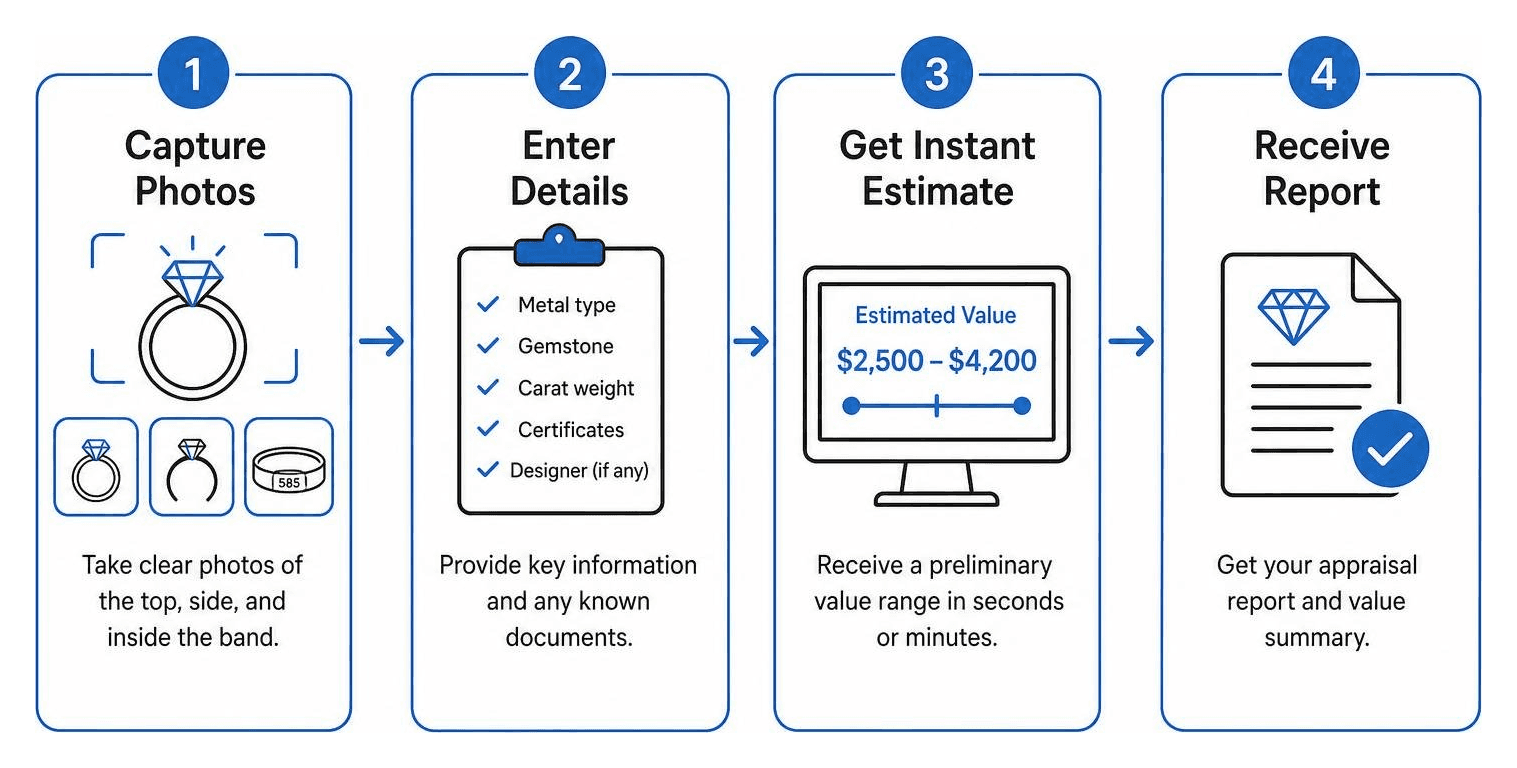
To get the most accurate results when you want to appraise my ring online for free, follow these four simple steps:
Clean and Prepare Your Ring: Gently wipe your ring with a soft lint-free microfiber cloth to remove skin oils, dust, and fingerprints. Cleaning the gemstone surfaces allows light to reflect properly, giving automated image tools a clear view of the stone's cut, clarity, and brilliance.
Capture Clear, Well-Lit Photographs: Set your ring on a plain, neutral background (such as white paper or clean gray linen) under bright, natural light. Avoid using harsh camera flash, which creates blinding reflections, and avoid low-light room lamps that alter metal tone. Take close-up shots of the top face, profile, setting, and any hallmarks inside the band.
Gather Key Product Details: Locate any physical paperwork you possess. Look for diamond grading lab certificates (from GIA, IGI, or AGS), original sales receipts, store boxes, or historical insurance schedules. Knowing metal karats or stone carat weight dramatically refines your online estimate.
Submit Your Photos to an Online Valuation Tool: Upload your image files and written specifications into a reputable digital appraisal platform. Computer algorithms or human gemologists will analyze visual markers and cross-reference your ring against database archives containing tens of thousands of recent completed market sales.
Best Free Tools to Appraise My Ring Online
Whether you are holding an engagement ring, an heirloom, or a vintage piece, several digital platforms offer fast, zero-cost digital estimates. These platforms use advanced visual recognition algorithms and historic sales records to estimate current market values:
Instant Computer Vision Algorithms: Automated visual appraisal systems analyze photos instantly. They compare your ring's silhouette, stone setting, and metal tone against auction house archives and verified secondary markets, returning a valuation report in under 60 seconds.
Engagement & Diamond Ring Tools: For solitaire diamonds, halos, or bridal sets, specialized online ring appraisal tools focus on stone proportions, setting styles, and estimated carat size to deliver targeted price ranges.
Gemstone & Specialty Ring Estimators: Colored stones like sapphires, rubies, or opals require specialized reference pricing. Digital estimators assess color play, pattern, and setting type to separate lab-grown stones from high-end natural gems.
Historic Database Archival Searches: Free online jewelry appraisal platforms leverage deep valuation archives—some housing tens of thousands of historical appraisals dating back over several decades—to benchmark your ring against real-world secondary market transactions.
Using an instant photo tool gives you an immediate, low-risk preview of your ring's potential worth without requiring you to leave home or pay upfront fees.
What Details to Provide When I Appraise My Ring Online
While advanced visual AI can identify overall designs, the accuracy of any online valuation depends heavily on the specific details you submit. To help virtual tools generate a narrow, reliable price estimate, try to provide as much of the following information as possible:
High-Resolution Photography: Upload crisp, in-focus photos taken from multiple angles (top view, side profile, underside of the setting).
Hallmark and Maker Stamps: Include a macro photo of any tiny letters, numbers, or symbols stamped inside the inner shank of the ring (e.g., 14K, 18K, 750, Pt950, or maker initials).
Metal Composition and Color: Note whether the band is solid yellow gold, white gold, rose gold, platinum, or sterling silver.
Center Stone Specifications: If known, list the stone type (natural diamond, lab-grown diamond, sapphire, emerald), shape (round, princess, oval, cushion), and estimated carat weight.
Documentation & Certificates: Mention if you have an official grading report from recognized laboratories like the Gemological Institute of America (GIA). Mentioning certificate numbers allows appraisers to verify precise color, clarity, and cut parameters.
Ring Size and Total Weight: If you have a jeweler's scale, providing the total weight of the ring in grams helps estimate baseline precious metal melt value.
Key Factors That Determine Ring Worth
Whether evaluated through an online computer vision tool or during an in-person physical inspection, every ring's financial value is built upon core material, craftsmanship, and market demand factors. Understanding how these factors interact helps you interpret digital valuation reports accurately.
For a deeper dive into valuation techniques, read our complete guide on How to Appraise Jewelry.
Factor | Increases Ring Value | Decreases Ring Value |
|---|---|---|
Metal Composition | Solid High-Karat Gold (18K, 24K), Platinum (Pt950) | Gold-plated, gold-filled, brass, or heavily worn silver base metals |
Center Gemstone | Natural untreated diamonds/gems, high clarity (VVS/VS), excellent cuts | Synthetic/simulated stones, heavily included (I2/I3), poor symmetry |
Branding & Provenance | Renowned luxury houses (Cartier, Tiffany & Co., Van Cleef & Arpels) | Unbranded, generic commercial mass-market production |
Item Condition | Original pristine structure, crisp hallmark stamps, tight prongs | Severe band thinning, missing accent stones, heavy deep gouges |
Historical Period | Authentic vintage/antique (>100 years), rare Art Deco or Victorian styles | Outdated modern designs with low market demand |
To explore how these variables specifically impact diamond rings, explore our guide on How Much to Value a Diamond Ring.
Metal Purity and Hallmark Marks
The inner metal band forms the physical foundation of your ring's value floor. Precious metals like gold, platinum, and silver are priced daily on global commodities markets based on their weight and purity.
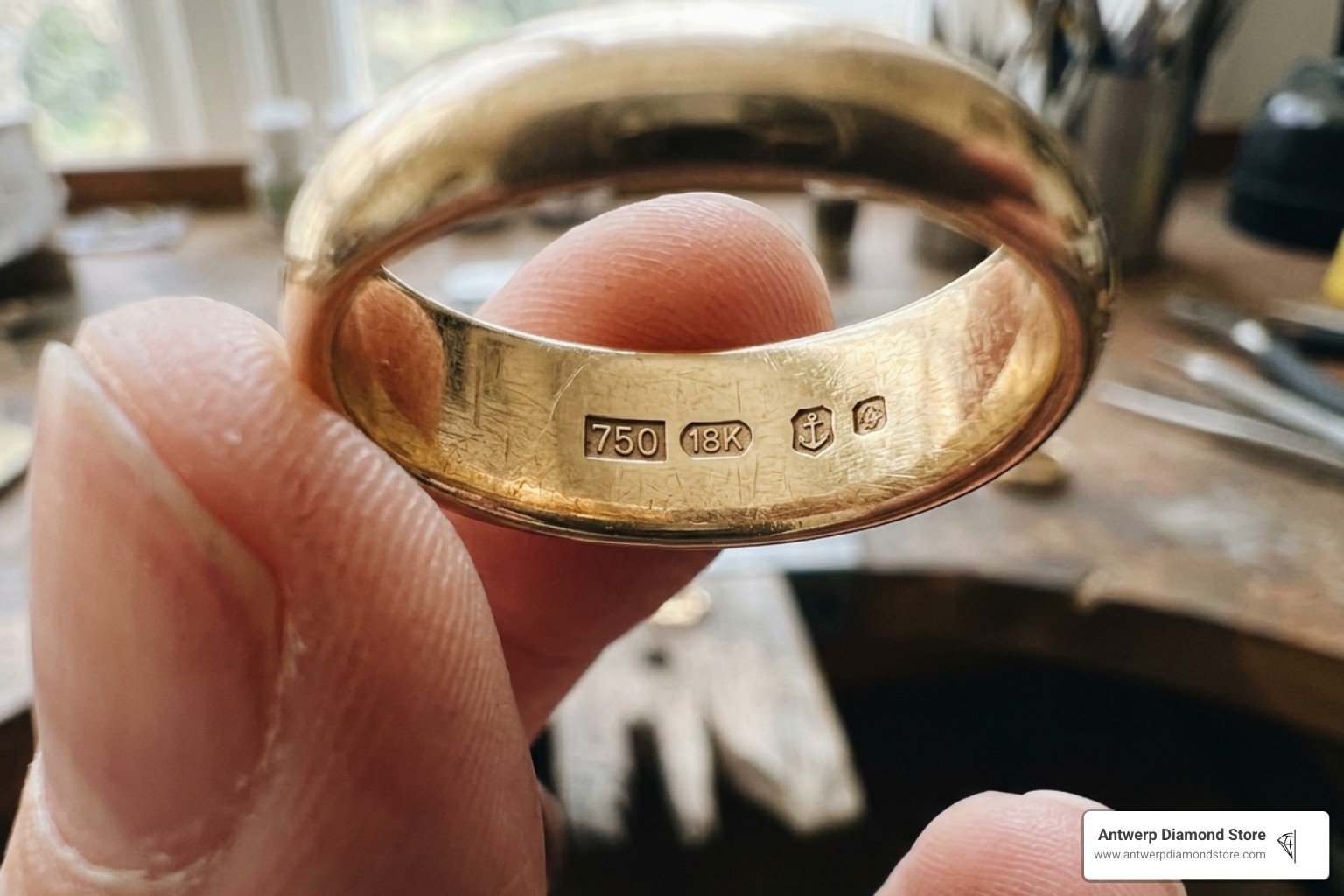
When you examine the inside of your ring band, look for small engraved hallmarks:
Gold Marks: Gold is measured in karats out of 24 parts. Common stamps include 10K (41.7% pure gold), 14K or 585 (58.3% pure gold), 18K or 750 (75% pure gold), and 24K (99.9% pure gold). Higher karat numbers indicate greater precious metal purity and intrinsic melt value.
Platinum Marks: Platinum is dense, heavy, and naturally white. Standard stamps include PLAT, Pt900, or Pt950 (indicating 95% pure platinum).
Silver Marks: Fine silver rings usually bear stamps like 925 or Sterling, indicating 92.5% silver content.
Stamps can drastically alter a ring's valuation. An unsigned gold band might be valued strictly for its gold scrap weight, whereas identifying a rare maker's mark alongside a purity stamp can turn a $200 scrap piece into a $2,000 collectible vintage item.
Gemstone Carat, Cut, and Rarity
For engagement rings and fine gemstone pieces, the center stone usually represents the largest share of overall monetary value. Natural diamonds and high-grade colored gems are evaluated using globally accepted grading criteria, most notably the 4 Cs:
Carat Weight: Gemstones are weighed in metric carats (1 carat = 0.2 grams). Price increases exponentially with carat weight because larger, high-quality natural stones are exponentially rarer in nature.
Cut: The quality of a diamond's cut determines how brilliantly light reflects through its facets. Cuts graded as "Ideal" or "Excellent" command premium market prices compared to deep or shallow cuts that leak light.
Color: Colorless diamonds are graded on a scale from D (completely colorless) to Z (noticeable yellow/brown tint). D-F grades command the highest prices. For colored gemstones like sapphires or opals, vivid, saturated natural color drives premium pricing.
Clarity: Measured from Flawless (FL) down to Included (I1-I3), clarity rates the presence of internal inclusions or surface blemishes.
If you are trying to estimate what your center stone might be worth on the secondary market, read our breakdown on How Much Is a Diamond to better understand current industry pricing parameters.
Vintage Styles, Brand Makers, and Condition
Beyond raw materials, market demand strongly influences what a buyer will pay for your ring:
Luxury Designer Brands: Signed rings from iconic houses like Tiffany & Co., Cartier, Van Cleef & Arpels, or Harry Winston carry substantial brand equity. A signature can double or triple the secondary market value compared to an unbranded ring with identical diamond specifications.
Historical Eras and Antiques: By industry standards, a ring is officially classified as "antique" once it reaches 100 years of age. Pieces from the Georgian, Victorian, Edwardian, or Art Deco eras often feature handcrafted filigree and rare antique cuts (such as Old European or Old Mine cuts) that appeal strongly to historic jewelry collectors.
Condition and Alterations: Excessive resizing, worn prongs, chipped stone facets, or erased hallmarks reduce secondary resale value. Preserving original finishes and avoiding unnecessary solder repairs preserves maximum historical value.
To learn more about identifying older heirloom pieces, visit our resource on Estate Jewelry Appraisal.
AI-Powered Estimates vs. Certified Human Appraisals
As online valuation tech advances, consumers can choose between rapid AI-driven photo tools and traditional human review. Both methods play distinct roles in helping you assess your jewelry.
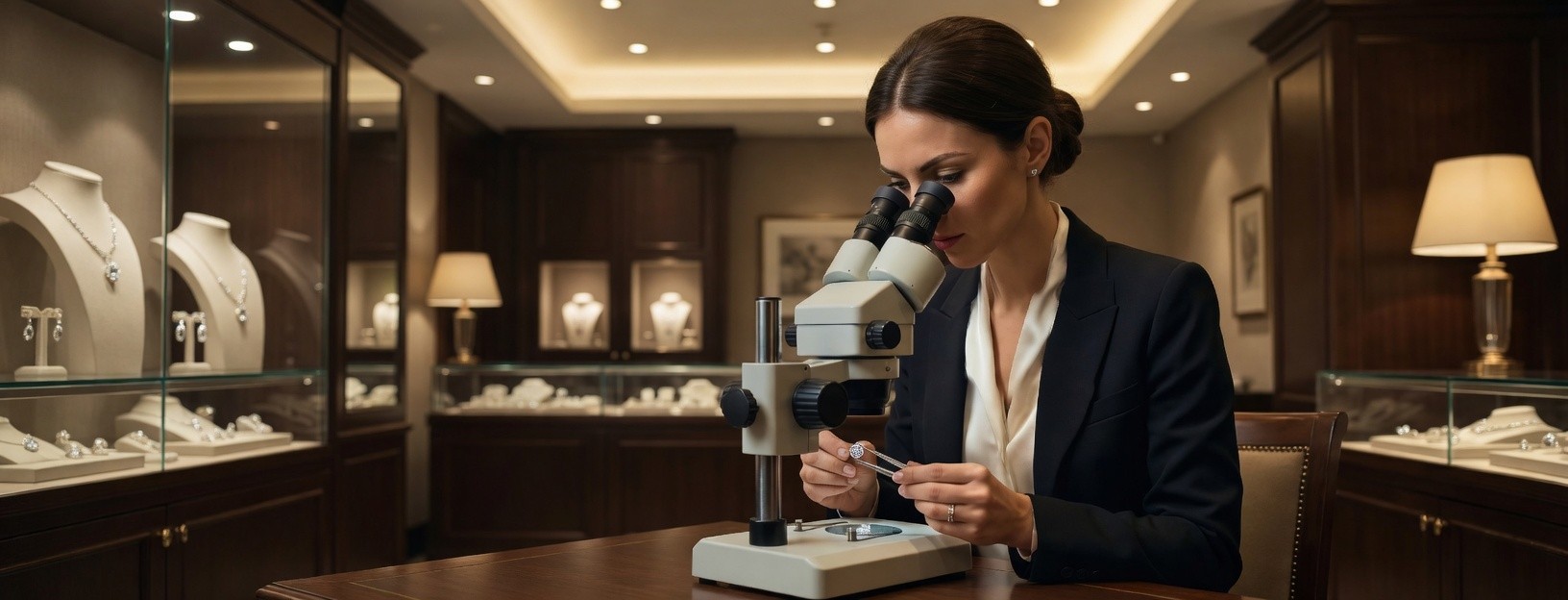
AI image tools analyze uploaded photos using visual recognition algorithms trained on vast databases of jewelry styles, stone shapes, and historical auction records. They excel at identifying item types, recognized design patterns, and broad market value ranges within seconds.
However, computer vision has clear physical boundaries. An algorithm cannot feel metal weight, view inclusions under 10x magnification, or run physical tests. When formal, legally recognized valuations are needed, working with an Independent Jewelry Appraiser or certified professional remain necessary.
Limitations of Digital Photo Appraisals
While online tools provide an exceptional, low-risk starting point, you should understand the physical testing limitations inherent to photo-based appraisals:
Metal Purity Verification: A photograph cannot perform acid testing, X-ray fluorescence (XRF) metal scanning, or specific gravity testing. A photo cannot distinguish solid 18K white gold from heavy 18K white gold plating over base metal.
Subsurface Gemstone Inspection: High-resolution digital photos cannot replace a physical gemological microscope or loupe. Digital visual tools cannot detect microscopic internal feather inclusions, pinpoint laser drill holes, or surface-reaching fracture fillings.
Gemstone Authenticity & Origin: Photos cannot reliably separate natural diamonds from synthetic lab-grown diamonds or cubic zirconia simulants. Physical instruments like refractometers and UV light detectors are required to check fluorescence, refractive index, and diamond thermal conductivity.
Claw and Prong Security: A photo cannot physically test whether prongs are loose or if stone settings are structurally compromised.
For these reasons, online estimates should be viewed as preliminary market direction rather than binding technical guarantees.
Insurance Replacement Value vs. Fair Market Cash Value
One of the most common points of confusion for ring owners is the difference between an insurance replacement appraisal and a fair market cash offer:
Insurance Replacement Value: This figure represents the estimated cost to rebuild or purchase a brand-new retail equivalent of your ring at a full-price retail store in the event of loss or theft. It includes retail profit margins, store overhead, labor costs, and local sales tax. Insurance values are intentionally set near high retail levels and do not represent cash you can collect when selling.
Fair Market Cash Value (Resale Payout): This is the realistic cash amount a willing buyer will pay you in current secondary market conditions. It reflects used condition, current metal scrap rates, wholesale diamond values, and secondary market demand. Fair market value is typically 30% to 50% of the original retail replacement value.
To estimate what your ring might net on the secondary cash market, try our online Diamond Resale Value Calculator.
Getting Ready to Sell Your Ring Online
Once you have gathered an online valuation range and understood your item's parameters, you are well-positioned to navigate the resale market safely and profitably.
Before requesting cash offers, organize your ring's support materials:
Gather original lab certificates (GIA, IGI), retail receipts, and brand boxes.
Calculate diamond weight and metal purity baselines using our Calculate Diamond Price guide.
Decide whether speed and discretion outweigh the longer wait times associated with peer-to-peer listing sites.
Where to Sell and Maximizing Resale Value
When transitioning from digital research to a real transaction, you have several primary selling avenues:
Direct Luxury Buyers: Established buyers offer the fastest route to cash. They perform free expert physical evaluations, verify diamond certificates, offer transparent market-based pricing, and make instant payments without listing delays or consignment risk.
Online Peer-to-Peer Marketplaces: Listing your ring on consumer auction platforms lets you set your own price directly. However, sellers face platform transaction fees, buyer return risks, fraud threats, and shipping liability.
Consignment Stores & Pawn Shops: Local consignment shops put your ring in front of walk-in buyers, but take 20% to 50% commissions and can take months to complete a sale. Pawn shops offer instant cash, but usually pay bottom dollar based strictly on scrap metal and liquidation pricing.
For a complete breakdown of online sales channels, explore our guides on Where to Sell Jewelry Online and top-rated Online Jewelry Buyers.
Transitioning from Appraisal to Cash Offers
To turn your digital appraisal into an immediate, secure cash payout:
Review your online appraisal report to understand your ring's realistic wholesale and resale value floor.
Reach out to verified buyers who provide transparent evaluations without high-pressure sales tactics.
Verify that the buyer offers fully insured overnight shipping or private, appointment-only physical consultations.
Ensure payment is issued immediately via direct bank wire, check, or cash upon offer acceptance.
When you are ready to sell, read our step-by-step guide to Sell Diamond Ring Online to ensure a safe, high-value transaction.
Frequently Asked Questions About Online Ring Appraisals
Can I use an online ring appraisal for insurance or legal purposes?
No. Free online photo appraisals and automated digital valuation reports are designed exclusively for preliminary informational market estimates, resale guidance, and personal triage.
Insurance underwriters, probate courts, tax authorities, and divorce settlement proceedings legally mandate a formal, signed written appraisal report prepared in person by a certified gemologist or accredited appraiser adhering to USPAP (Uniform Standards of Professional Appraisal Practice) guidelines.
How long does an online ring appraisal take?
Turnaround time depends entirely on the evaluation method you select:
AI-Powered Photo Tools: Deliver digital valuation reports instantly, usually in under 60 seconds after photo upload.
Specialist Online Reviews: Virtual reviews conducted by human gemologists who manually examine uploaded photos and diamond certificates typically take 24 to 48 hours.
Traditional In-Person Appraisals: Usually require booking an appointment and leaving your ring with a jeweler for 3 to 7 business days while formal written documentation is prepared.
Can vintage, antique, or costume rings be appraised online?
Yes! Online valuation tools are particularly helpful for sorting through inherited jewelry collections.
Vintage & Antique Rings: AI and archival tools excel at identifying period design markers (such as Art Deco geometrics or Victorian filigree) and matching hallmarks to known historic makers. A ring must be at least 100 years old to be legally classified as an antique.
Costume Jewelry: Digital tools help identify signed vintage costume pieces from desirable fashion houses like Trifari, Miriam Haskell, or Chanel. While unsigned costume jewelry made of non-precious metals holds limited monetary resale value, collectible signed pieces can command surprisingly high prices on the secondary market.
Conclusion
Learning how to appraise my ring online gives you a fast, zero-risk way to unlock your jewelry's potential value without leaving home or paying expensive upfront fees. By capturing clear, well-lit photographs, identifying inner band hallmarks, and providing diamond certificate details, you can generate reliable market price ranges in under a minute.
While instant photo estimates serve as an excellent first step, visual tools cannot replace physical gemological testing for formal insurance schedules or legal filings. However, when you want to discover what your ring is worth on the secondary market, online appraisals give you the knowledge needed to make informed financial decisions.
When you are ready to turn your ring's value into immediate cash, work with a buyer you can trust. At Antwerp Diamond Store, we purchase luxury jewelry, fine diamond rings, high-end watches, and designer goods. Located in Atlanta, GA, we offer free professional evaluations, transparent market-driven offers, and instant payouts through private, discreet appointments with zero hidden fees. Contact us today to receive a cash offer for your ring!


