
Why an Antique Cushion Cut Engagement Ring Feels So Special
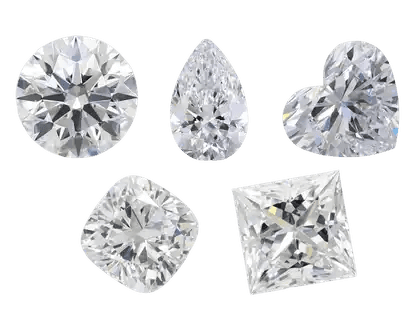
An antique cushion cut engagement ring centers on a hand-cut diamond with soft, rounded corners, large facets, and a warm pattern of broad light flashes. Many are old mine cuts, made before modern cutting tools and prized for their high crowns, small tables, and visible open culets.
For buyers, the appeal is simple:
Choose antique if you want a one-of-a-kind diamond with historic character and a softer, candlelit glow.
Choose modern cushion if you prefer highly uniform symmetry and tighter, brighter sparkle.
Look beyond a grading report. In an antique diamond, face-up shape, light performance, eye-clean clarity, condition, and provenance matter as much as the 4Cs.
Antique cushions became popular from the 18th century through the early 1900s, especially in Victorian and Edwardian jewelry. Each was shaped largely by hand, so no two have exactly the same outline or facet pattern. That individuality is a major reason these diamonds are among the most sought-after shapes in 2026.
Whether set in warm yellow gold, romantic rose gold, or durable platinum, an antique cushion brings together heirloom history and a distinctly personal look.
What Defines an Antique Cushion Cut Diamond?
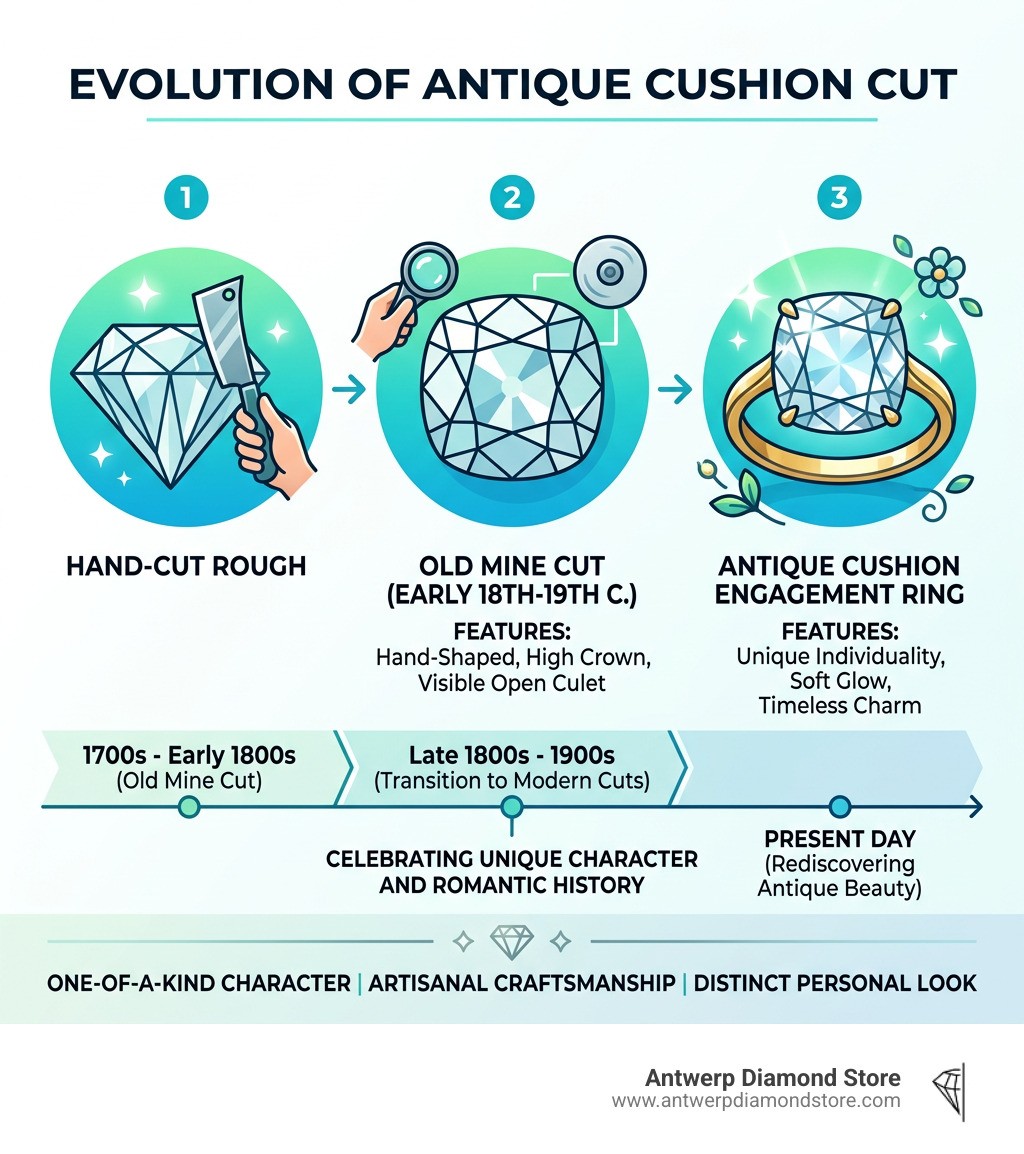
At its heart, an antique cushion cut diamond is a testament to the artisan's eye. Long before computer algorithms and laser cutting dictated diamond proportions, 18th- and 19th-century lapidaries cleaved and polished rough diamonds entirely by hand. Using foot-powered wheels and judging symmetry by candlelight, these master cutters shaped gems with soft, rounded corners and gently curved perimeters—resembling a plush pillow or cushion.
Unlike modern stones engineered to maximize raw light return, antique cushions were cut to optimize personal charm, depth, and the natural crystal structure of the rough diamond. As highlighted in Vogue's guide to rare antique diamond cuts, jewelry lovers are increasingly moving away from mass-produced uniformity toward stones filled with personality, romantic history, and organic beauty.
The Old Mine Cut Connection and Historic Evolution
The antique cushion cut shares direct lineage with the historic old mine cut. During the 18th and 19th centuries, the primary sources of diamonds shifted from the ancient alluvial riverbeds of India to the rich deposits of Brazil, and later to South Africa. The term "old mine" initially arose to distinguish these early Brazilian and Indian diamonds from the newer African discoveries.
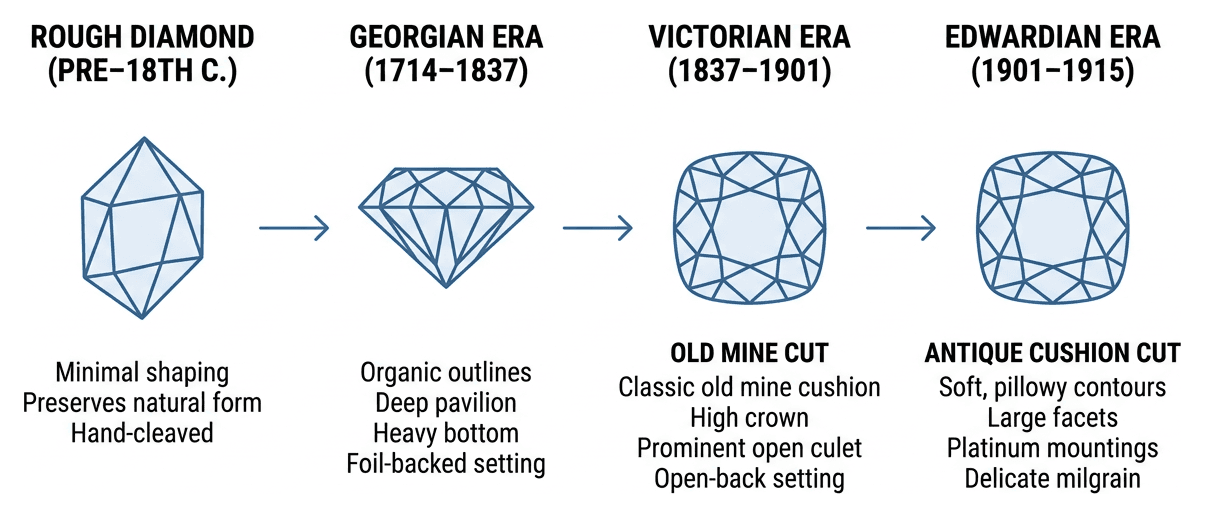
Across these pivotal jewelry eras, the antique cushion evolved:
The Georgian Era (1714–1837): Stones featured deep pavilions, heavy bottoms, and distinctly organic outlines, mounted in closed-back foil settings to maximize color and luster under flickering candles.
The Victorian Era (1837–1901): As open-back settings grew popular, the classic old mine cushion thrived. Artisans favored dramatic, high crowns and prominent open culets, framing stones in rich yellow gold, rose gold, and intricate buttercup motifs.
The Edwardian Era (1901–1915): The introduction of platinum allowed jewelers to craft gossamer, lace-like mountings and delicate milgrain borders, perfectly complementing the soft, pillowy contours of antique cushions.
The Art Deco Transition (1920s–1930s): Diamond cutters began refining proportions into earlier iterations of the modern brilliant cut. However, the geometric silhouettes of old cushion cuts fit seamlessly alongside baguette and emerald-cut accents in architectural platinum settings.
Antique Cushion vs. Modern Cushion Brilliant
To understand why an antique cut feels so distinct on the finger, it helps to compare it directly against its contemporary counterpart:
Feature | Antique Cushion Cut (Old Mine) | Modern Cushion Brilliant / Modified |
|---|---|---|
Facet Structure | Chunky, large geometric facets (typically 58) | Smaller, densely clustered facets (58 to 70+) |
Crown Height | High, prominent crown with steep angles | Relatively shallow to medium crown profile |
Table Size | Small, compact table percentage (often < 50%) | Larger table percentage (typically 56%–62%) |
Culet | Large, polished open culet visible through the table | Pointed culet or none (closed culet) |
Sparkle Style | Broad, bold spectral flashes of fire; warm glow | Tighter, splintery scintillation or "crushed-ice" look |
Cutting Method | Hand-shaped by eye | Computer-guided laser and precision machinery |
Girdle | Frosted, unpolished, or uneven girdle line | Faceted or polished uniform girdle |
Modern cushion modified brilliants often exhibit a "crushed-ice" look—a shimmering, pinfire sparkle reminiscent of broken glass under stadium lighting. In contrast, an antique cushion delivers dramatic, slow-moving flashes of fire and distinct geometric contrast.
Key Characteristics of an Antique Cushion Cut Engagement Ring
An authentic antique cushion diamond features distinct optical and structural hallmarks that separate it from contemporary stones:
Chunky, Broad Facets: Rather than hundreds of tiny reflections, antique facets create bold mosaic-like patterns across the crown.
The Open Culet: The culet (the bottom point of the diamond) was blunted or polished flat to prevent chipping during cutting and setting. Look through the top table of an antique cushion, and you will often see a distinct circle or facet at the center of the stone.
Steep Crown Angles & Small Table: The diamond's top surface (table) is noticeably small, while the crown rises steeply like a miniature pyramid, creating incredible optical depth.
Visual Patina and Individuality: Minor asymmetries in facet alignment are not defects—they are the authentic signature of the historic lapidary who crafted the stone.
Light Performance and Candlelight Optimization
Before the widespread adoption of electricity in the late 19th and early 20th centuries, evening life unfolded by the warm, flickering illumination of oil lamps and beeswax candles. Diamond cutters shaped stones specifically to come alive in these ambient, low-light environments.
Because modern brilliant cuts rely on rapid light return engineered for bright ambient daylight, they can sometimes appear washed out in subdued settings. Antique cushions, however, produce remarkable chromatic dispersion—breaking white light into vivid, bold flashes of red, blue, green, and gold. Their optical warmth and high crown create a magnetic, romantic scintillation that feels alive and expressive.
Comparing Antique Cushions to Old European and Asscher Cuts
When exploring vintage engagement rings, buyers often weigh antique cushions against other heirloom shapes:
Old European Cut: The direct predecessor of the modern round brilliant, the Old European cut shares the antique cushion's high crown, small table, and open culet, but features a circular outline rather than a square, pillowy perimeter.
Asscher Cut: Developed in 1902 by the Asscher brothers, this square step-cut diamond emphasizes clean linear geometry, straight crop corners, and an optical "hall of mirrors" effect rather than the brilliant, broad flashes of an antique cushion.
Modern Oval or Round Brilliant: While round brilliants deliver maximum white light return, a well-proportioned 1.5-carat old mine cushion will often face up larger and offer a far more distinct silhouette than a standardized round diamond of equivalent carat weight.
Evaluating Quality and the 4Cs in Vintage Gems
Evaluating an antique diamond requires a different philosophy than assessing a newly cut modern stone. Standard laboratory grading focuses heavily on mathematical symmetry, precise light return formulas, and the absence of natural characteristics. However, when selecting an authentic GIA-certified engagement ring from an antique era, gemologists assess the gem using modified grading criteria that respect historic proportions.
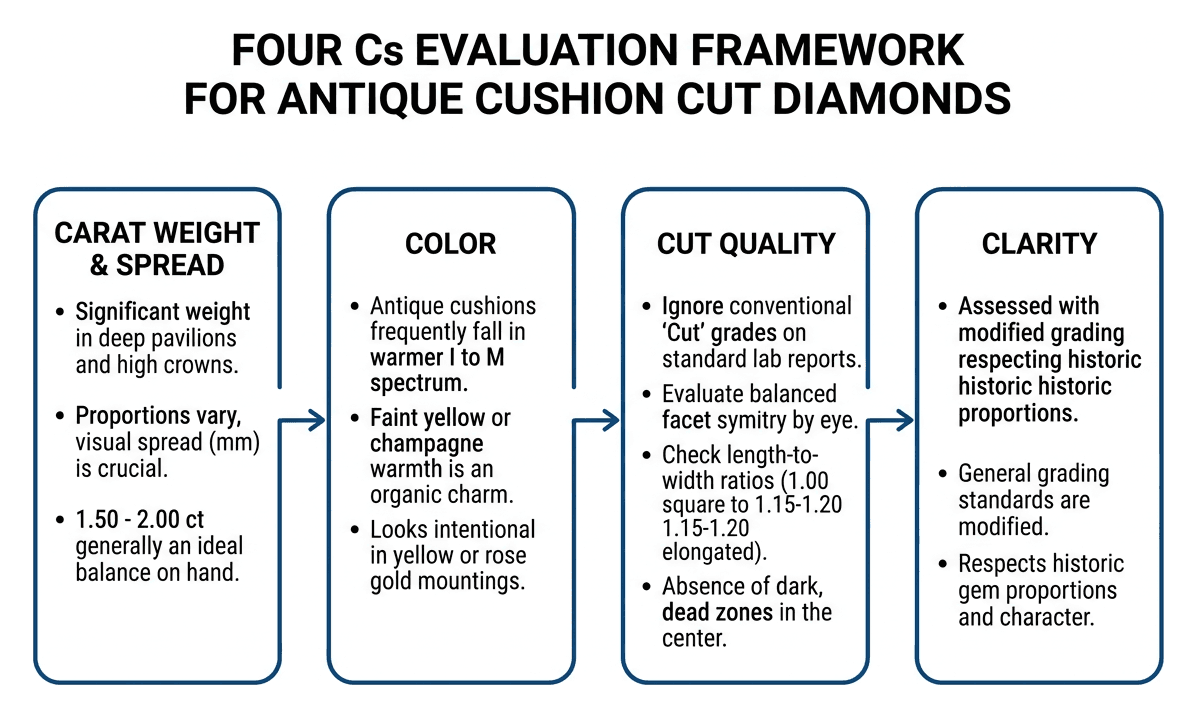
Evaluating the 4Cs in an Antique Cushion Cut Engagement Ring
Carat Weight & Spread: Vintage stones hold significant weight in their deep pavilions and high crowns. Because proportions vary, visual face-up spread (measured in millimeters) is just as important as total carat weight. A 1.50- to 2.00-carat antique cushion generally strikes an ideal balance on the hand without overpowering the finger.
Color: On standard diamond color grading scales, antique cushions frequently fall in the warmer I to M spectrum. While modern buyers often seek icy D–F colors, antique cushions possess an organic charm where faint yellow or champagne warmth looks intentional and gorgeous, especially when paired with period-accurate yellow or rose gold mountings.
Cut Quality: Ignore conventional "Cut" grades on standard lab reports. Instead, evaluate the cut with your own eyes: check for balanced facet symmetry, pleasing length-to-width ratios (ranging from 1.00 for square cushions to 1.15–1.20 for elegant elongated cushions), and an absence of dark, dead zones in the center of the gem.
Clarity and Inclusion Dispersal in Chunky Facets
When examining vintage clarity, it is essential to understand what is an inclusion in a diamond. In step cuts like emerald or Asscher diamonds, internal flaws are immediately visible due to the open table.
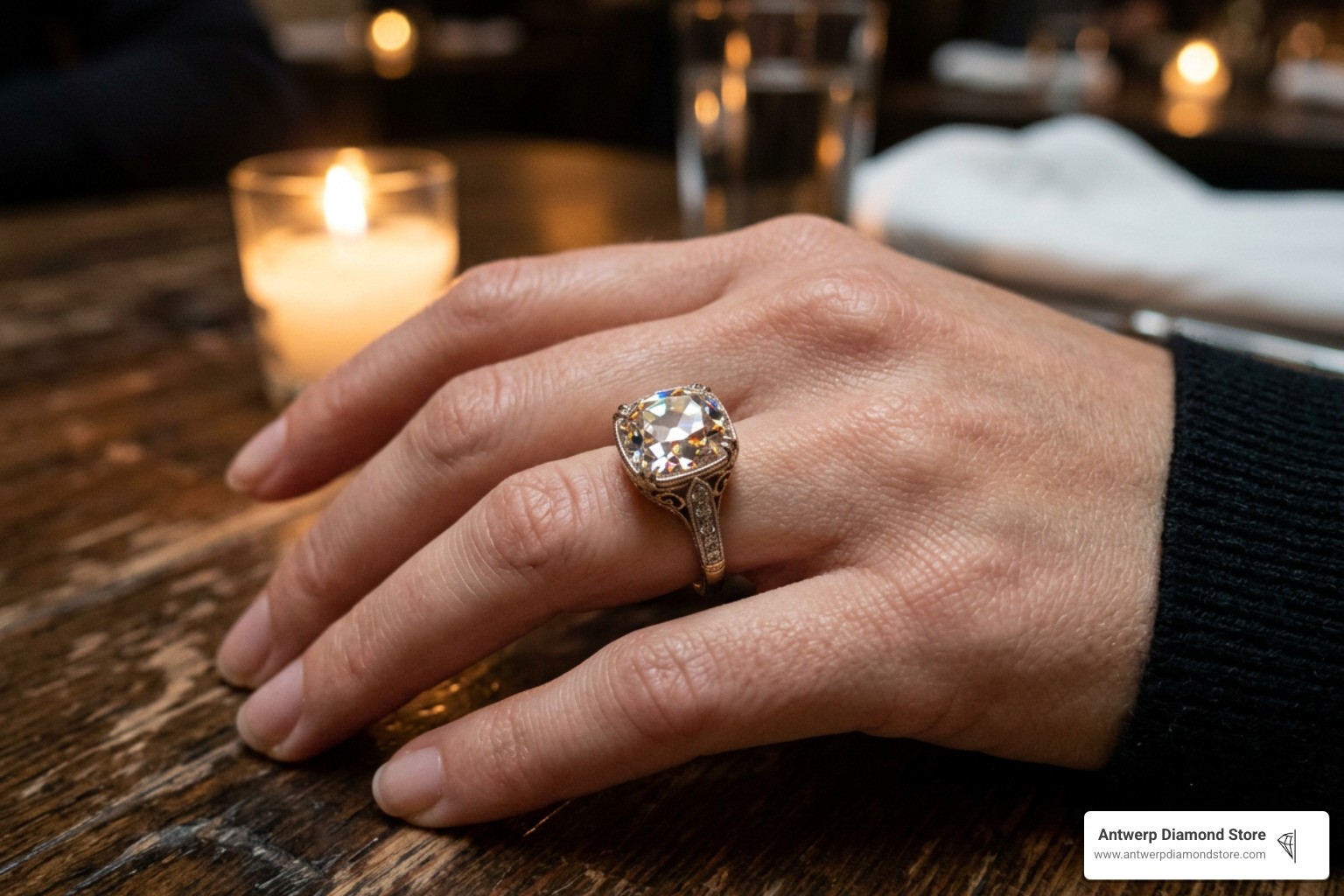
Fortunately, the lively facet structure of an antique cushion naturally diffuses light throughout the crystal. As a result:
The Sweet Spot (VS2 to SI1): Grades in the VS2 to SI1 range represent outstanding value. Minor crystal inclusions or feathers are easily disguised by the stone’s bold light patterns.
Eye-Clean Standards: Because antique facets are broader than modern micro-facets, ensure that any inclusion near the center table does not disrupt transparency or durability.
Perimeter Inclusions: Natural carbon spots or small feathers near the girdle can often be safely concealed under a well-crafted prong or bezel.
Setting Styles, Authenticity, and Market Value
Whether you are acquiring a historic treasure or utilizing a diamond resale value calculator to evaluate an inherited family heirloom, antique cushions hold a distinct position in the luxury jewelry trade.
Unlike modern diamonds that can be cut on demand from newly mined or lab-created rough, authentic old mine cushions represent a strictly finite supply. Many historic stones were recut into modern round brilliants throughout the mid-20th century, making intact, high-carat antique cushions (particularly 2.00 carats and above) exceptionally rare.
Best Metal Settings for an Antique Cushion Cut Engagement Ring
Selecting the right mounting enhances the historical integrity and optical performance of the diamond:
Warm 18k Yellow Gold: Highlights the soft, romantic undertones of antique color grades (G–J). Victorian-style crown prongs or buttercup collets frame the stone in classic 19th-century luxury, accentuating the natural warmth and candlelight glow of historic solitaires.
Platinum and Milgrain Solitaires: Perfect for an Edwardian or Art Deco aesthetic. Crisp platinum prongs and hand-rolled milgrain accentuate the icy brilliance of near-colorless antique stones without showing unnecessary metal bulk.
Modern Split Shank & Micropavé: Contemporary designs frequently marry antique cushions with modern styling, using delicate micro-pavé halos and split bands to maximize finger coverage while maintaining a timeless center gem.
Victorian Buttercup & Rosy-Gold Mountings: For lovers of true period romance, classic floral mountings blend antique gold hues with genuine vintage charm, offering sculptural prongs that elevate the stone.
Sourcing Authentic Vintage Rings vs. Modern Replicas
When shopping the vintage market, understanding whether a ring is an authentic antique or a modern vintage-inspired replica is crucial:
Hallmarks and Assay Stamps: Inspect the inner shank for maker's marks, purity stamps (such as Victorian 15k, 18k, or Edwardian platinum marks), and period hallmarks.
Mounting Wear & Tooling Marks: Genuine antique rings show subtle, honest signs of wear—softened edges on prongs, hand-engraved details rather than cast filigree, and evidence of historic sizing.
Preservation of the Culet: Ensure the diamond's original open culet has not been chipped or recut by a modern jeweler seeking to standardize its proportions.
Frequently Asked Questions About Antique Cushion Rings
Is an antique cushion cut the same as an old mine cut?
Yes, in modern jewelry terminology, "antique cushion cut" and "old mine cut" are frequently used interchangeably. Both refer to historical diamonds hand-cut between the early 1700s and early 1900s featuring a cushion perimeter, high crown, small table, deep pavilion, and an open culet.
Do antique cushion cut diamonds sparkle less than modern diamonds?
Not at all—they simply sparkle differently. While modern cushion cuts exhibit a tight, pinfire scintillation engineered for fluorescent lighting, antique cushions produce broad, dramatic flashes of spectral color and fire that come alive in candlelight and natural sunlight.
How can buyers verify if an antique cushion ring is authentic?
Verification requires examination by a certified gemologist. A formal grading report from an independent laboratory like the GIA will classify the cut style as an Old Mine or Cushion Brilliant, verifying its proportions, natural origin, and vintage characteristics.
Conclusion
An antique cushion cut engagement ring offers an enduring connection to history, artistry, and romance. In a world of standardized, machine-cut diamonds, these hand-sculpted gems stand out as one-of-a-kind heirlooms that never fade from style.
At Antwerp Diamond Store, we specialize in high-end diamond evaluation, estate jewelry acquisition, and luxury transactions. Operating from our private, appointment-only showroom in Atlanta, GA, our team provides discreet consultations, transparent market-based evaluations, and immediate cash payouts with no hidden fees.
Whether you are looking to authenticate an inherited family ring, liquidate an estate collection, or seek an accurate market valuation, contact us today to schedule your confidential estate jewelry appraisal.