
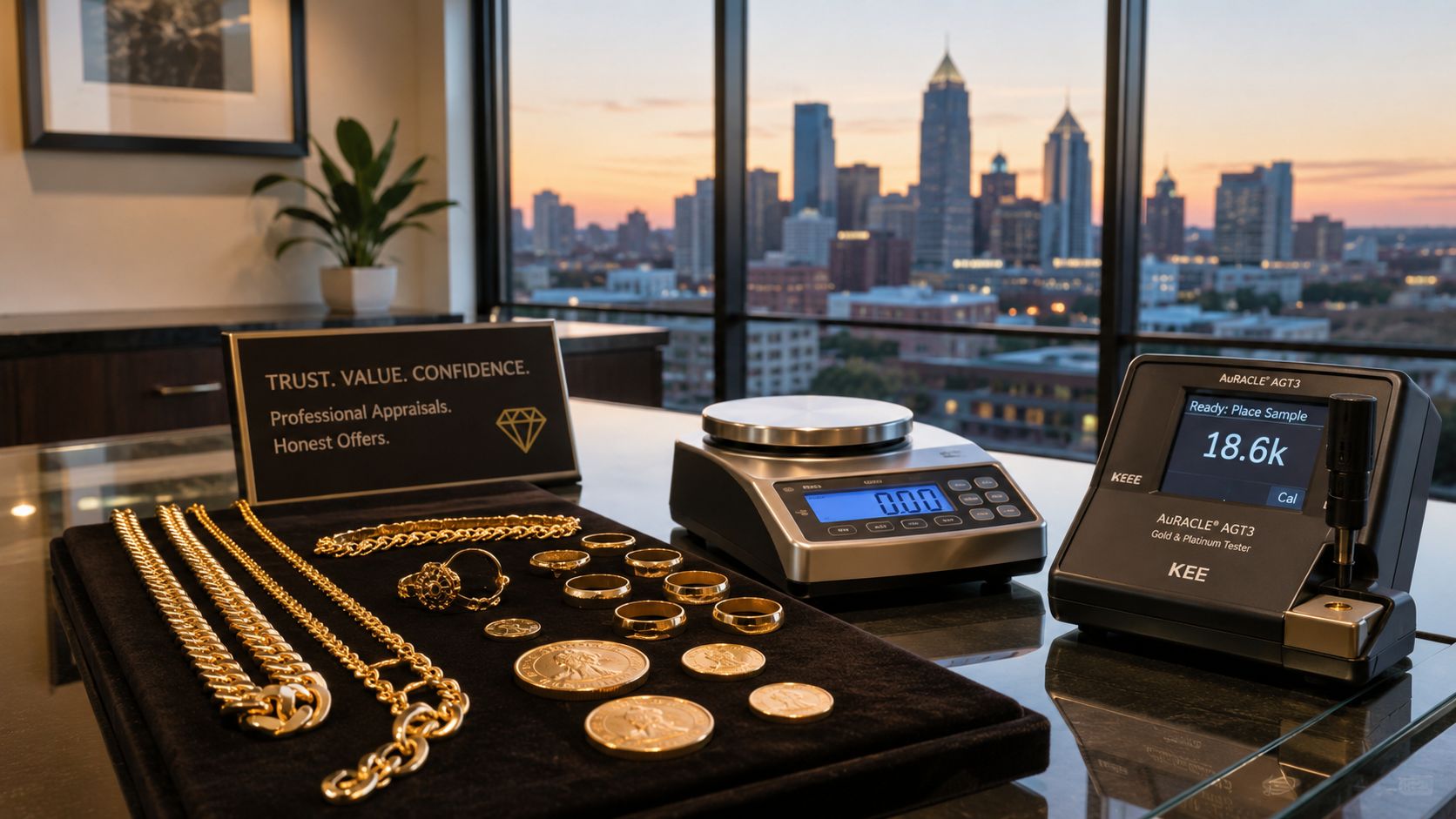
To sell gold in Atlanta, start by sorting your items and finding a trustworthy evaluator like Antwerp Diamond Store. Reputable gold buyers will base their offers on the gold's purity, weight, and the current market price, providing a transparent breakdown of their calculation.
If you're looking at a drawer of old chains, broken bracelets, unmatched earrings, or inherited rings and wondering where to begin, that's the right instinct. Selling gold goes more smoothly when you prepare at home first, understand how buyers price different item types, and choose a buyer whose process is clear from the first conversation through final payment.
Table of Contents
Your Guide to Selling Gold in Atlanta
You open a jewelry box to find a broken chain, a few old rings, one designer bracelet, and a pair of coins you forgot you had. The first question is usually, "Where do I take this?" The better question is, "Who is the right buyer for each piece, and how do I get paid safely once I decide to sell?"
Atlanta is a good city to sell gold because you have real options. You can sit down with a neighborhood jeweler, visit a pawn shop, work with a coin or bullion dealer, or use a secure remote process if you want more privacy or more time to compare offers. That range helps sellers, but only if you match the item to the buyer. A broken 14k chain, a Rolex bracelet, and an American Gold Eagle should not be evaluated the same way.
Across Buckhead, Midtown, Marietta, Roswell, Alpharetta, and downtown, Atlanta's precious-metals market is well-established. Many buyers offer free evaluations, same-day offers, and immediate payment. That convenience is useful, but speed should not replace explanation. A solid buyer can tell you what was tested, what was weighed, whether stones were included or excluded, and whether any piece has resale value above melt.
Start with a practical route:
Prepare at home first: Know which items are jewelry, scrap, coins, or branded pieces before you meet any buyer.
Choose a buyer by item type: Jewelers may pay differently than pawn shops. Coin dealers often handle bullion and collectible coins more accurately.
Ask how the offer was built: You want the karat, weight, current gold basis, and any deduction explained in plain language.
Decide how you want to sell: In-person works well for fast local transactions. Secure remote selling can make sense if you want to compare offers without visiting several stores.
I tell first-time sellers to pay attention to one thing above all. Clarity. If the explanation is rushed or vague, the offer is harder to trust.
If you want a useful comparison before choosing between local appointments and a mail-in process, this guide on how sellers use online evaluations before deciding where to sell shows the broader workflow clearly.
How to Prepare Your Gold and Jewelry for Sale
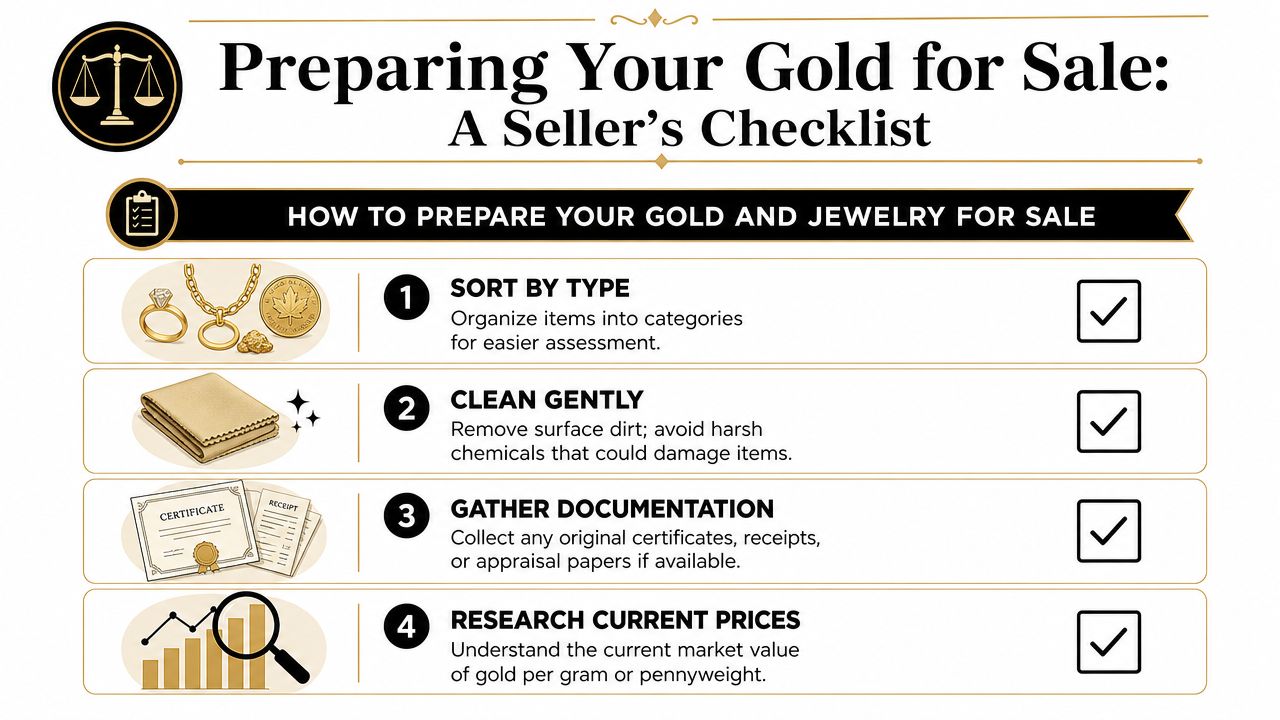
Preparation changes the quality of the transaction. It doesn't magically make low-value items high-value, but it does reduce confusion, speed up the appraisal, and help you spot whether a buyer is being careful or careless.
Sort first, price later
A more accurate selling workflow in Atlanta is to sort items by karat, then test purity with magnet screening followed by acid testing. Buyers commonly distinguish 10kt, 14kt, 18kt, 22kt, and 24kt before pricing, and some jewelry may be worth more as pre-owned merchandise than as scrap, so separating melt items from resale-grade pieces can materially affect the offer (Atlanta gold sorting and testing guidance).
Start with three piles:
Jewelry you think may have resale appeal Think designer pieces, well-made chains, wearable bracelets, or earrings in matched pairs.
Scrap gold Broken clasps, single earrings, dented bands, kinked chains, and damaged settings usually belong here.
Coins or bullion Keep these separate from jewelry. They are evaluated differently and should never be dumped into a generic scrap pile.
Then check for markings. Rings often carry stamps inside the band. Chains may be marked near the clasp. Common marks include karat numbers or fineness-style stamps. If a piece has no visible mark, that doesn't automatically mean it's worthless, but it does mean the buyer will need to test it.
Bring order to the appointment. A mixed bag forces the evaluator to do basic sorting during the appraisal, and that often slows down clear pricing.
What to bring with you
Condition and documentation matter more for certain pieces than sellers expect. Bring anything that supports identity, quality, or prior purchase.
Receipts or previous appraisals: These won't dictate today's offer, but they can help identify what the item is.
Original boxes or certificates: More useful for coins, collectible pieces, and branded jewelry than for ordinary scrap.
Loose parts: If a chain is broken, bring all sections. Missing segments affect weight.
Matching components: Pairs sell differently from singles.
Clean gently, but don't overdo it. A soft cloth is fine for surface dirt. Avoid aggressive polishing, chemical dips, or amateur repair attempts. I've seen sellers unintentionally lower confidence in a piece by buffing away detail or stressing a clasp just before the appointment.
If your item includes diamonds or gemstones, don't assume the gold weight tells the whole story. A ring with meaningful center stones should be evaluated as jewelry first, not stripped mentally down to metal. That distinction also matters when people compare options for selling a diamond ring near them, because the stone, mounting, and brand can all affect the outcome.
Understanding How Gold Is Valued and Priced
Most disappointment in gold selling comes from a pricing mismatch in the seller's head. People often imagine one universal gold price. Buyers don't work that way.
What actually affects the offer
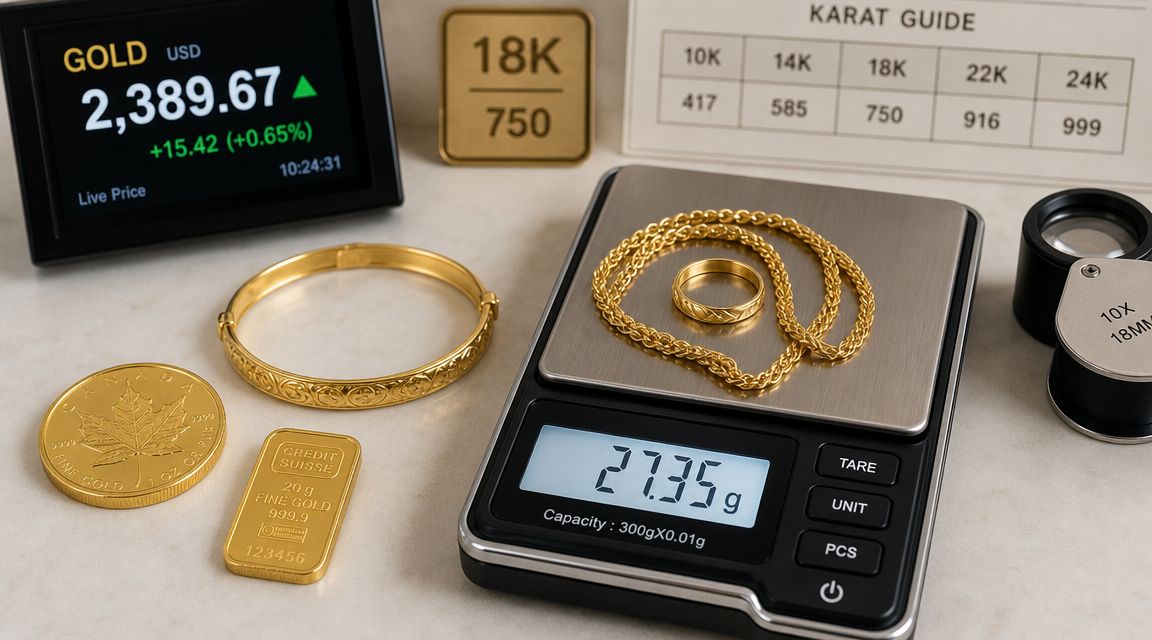
Atlanta-area pricing guidance is consistent on the core factors. Offers should be based on the current market price for gold, the item's weight and purity, and any additional collectible value. The same guidance also warns gold coin sellers that offers as low as 50% to 60% of melt value would be considered unacceptable by industry standards (Atlanta guidance on gold and silver pricing).
That tells you two important things.
First, the item's form matters. A tangled 14K bracelet is not priced the same way as a recognizable bullion product or a collectible coin. Second, a serious buyer should be able to explain why a piece is being treated as scrap, resale jewelry, or collectible inventory.
A transparent review usually looks like this:
Factor | What the buyer checks | Why it matters |
|---|---|---|
Purity | Karat or test result | Higher purity means more actual gold content |
Weight | Net gold weight | Heavier items contain more precious metal |
Item type | Scrap, wearable jewelry, coin, bullion | Different categories sell into different markets |
Extra value | Brand, design, rarity, collectibility | Some items deserve more than melt logic |
If the explanation skips straight to a flat number without showing how the buyer got there, pause.
Melt value is not always the whole story
Melt value is a useful baseline for scrap. It is not a complete pricing method for every gold item.
A plain broken chain is often a melt-driven transaction. A signed bracelet, antique ring, or popular gold coin may belong in a different lane. For these, specialist knowledge matters. Buyers who understand fine jewelry, branded goods, and secondary-market demand can identify pieces that shouldn't be treated as generic scrap.
Expert check: Ask one direct question. "Are you valuing this for melt only, or do you see resale value in the piece as it sits?"
That single question often tells you how astute the buyer really is.
For sellers who want a second opinion on pieces that may carry jewelry value rather than only metal value, it helps to review how experienced buyers approach where to sell fine jewelry, because the evaluation framework differs from simple bullion or scrap buying.
Where to Sell Gold in Atlanta and What to Expect
You sort your pieces at home, drive into Atlanta with a small pouch of jewelry, and then realize the hard part is not finding a buyer. It is choosing the right type of buyer before the gold ever leaves your hand.
Gold buyers Atlanta sellers come across usually fit into a few clear categories. The right fit depends on what you are selling, how private you want the process to be, and whether the item should be treated as scrap, wearable jewelry, coin inventory, or a luxury resale piece.
Atlanta has options, but the buyer type matters
Across Buckhead, Midtown, Marietta, Roswell, Alpharetta, and downtown, sellers can find pawn shops, jewelry stores, coin dealers, private appointment buyers, and remote buyers who serve the Atlanta area. Free evaluations, no-obligation offers, and same-day payment are common enough that you can compare more than one offer without much difficulty.
That helps, but only if you compare the right things.
A fast offer on a broken chain is one kind of transaction. A signed bracelet, a diamond ring, or a bullion coin is another. I tell first-time sellers to match the buyer to the item first, then compare numbers.
Buyer Type | Typical Offer (% of Melt Value) | Expertise | Security & Discretion |
|---|---|---|---|
Pawn shop | Varies | Often broad general-item knowledge, but not always strong on collectible or jewelry-specific nuances | Can be convenient, privacy depends on the shop setup |
Jewelry store | Varies | Often better for wearable fine jewelry and branded pieces | Usually more polished in-person environment |
Coin or precious-metals dealer | Varies | Often strongest for bullion, scrap metals, and coins | Usually straightforward if the process is clearly documented |
Private specialist buyer | Varies | Stronger when jewelry, stones, branding, and resale demand all matter | Often better for private appointments and discreet handling |
Mail-in or remote buyer | Varies | Depends entirely on the company and review process | Convenient if shipping and payment protections are clear |
No honest buyer can promise that one category always pays more. Pawn shops can be perfectly reasonable for simple, low-complexity gold if speed matters most. Coin dealers usually make more sense for bullion and coins. Jewelry with designer, antique, or gemstone value often deserves a specialist review before anyone reduces it to melt.
In-person versus secure remote selling
Many local articles stop at the storefront visit. The full seller journey is wider than that.
Some Atlanta sellers want to sit across from a buyer, watch the testing, and decide on the spot. Others would rather avoid carrying valuables through traffic, parking garages, or multiple appointments. Both approaches can work if the process is clear from the start.
In-person selling is often the easiest format for a first sale. You can watch the evaluation, ask why one piece is grouped as scrap and another is not, and accept payment the same day if the offer makes sense.
Remote selling asks for a different kind of discipline. The questions should be practical and specific:
Is the shipment insured from the moment it leaves your hands?
Who receives and signs for the package?
Do you get a documented evaluation before deciding?
What is the return process if you decline the offer?
How is payment sent, and how quickly?
For some sellers, a hybrid option makes the most sense. Antwerp Diamond offers in-person evaluations in Buckhead and Roswell, along with insured shipping options for clients who prefer not to travel. That setup is useful when the item may carry designer, gemstone, or jewelry resale value and needs more than a simple scrap quote.
If you want a broader framework for comparing buyer formats, this guide on the best place to sell gold helps clarify when convenience, privacy, or category expertise should drive the decision.
If you plan to carry gold, jewelry, or watches across town before making that choice, review this complete guide to travel protection. It is a practical reminder that the selling process starts before the appointment and ends only when payment is secure.
Safety Tips and Red Flags for Gold Sellers
The safest gold sale doesn't feel rushed. It feels documented, visible, and easy to follow.
What a safe transaction looks like
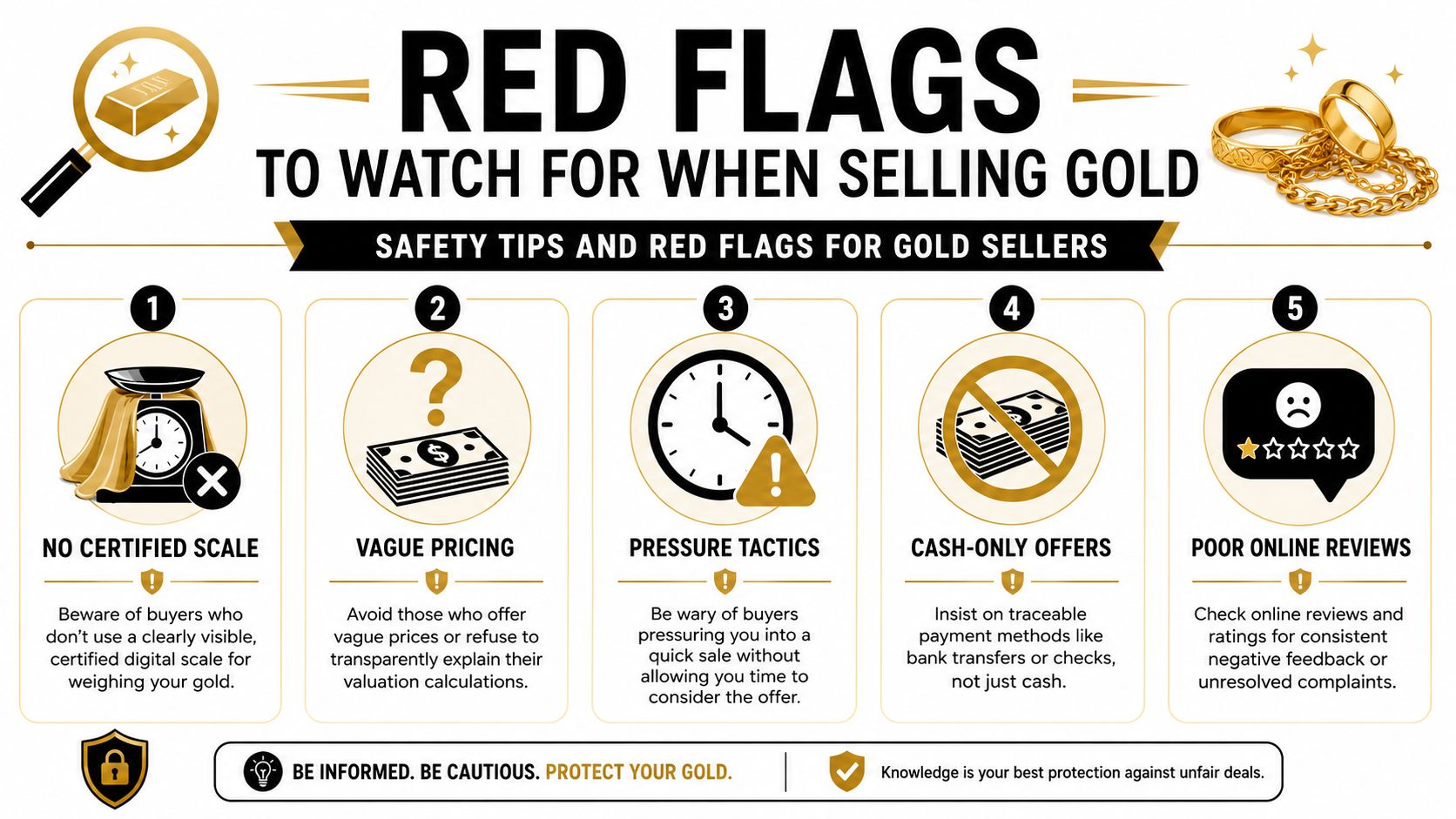
A legitimate buyer doesn't need mystery. You should be able to see the weighing process, hear how the item is categorized, and understand the payment method before handing anything over.
Look for these green flags:
Visible weighing: The scale should be easy for you to see.
Clear item separation: Scrap, coins, and jewelry should not be lumped together carelessly.
No-obligation language: You should feel free to decline without argument.
Traceable payment: A secure transfer or documented payment creates a cleaner record than an undocumented handoff.
Professional setting: Private appointments and controlled intake reduce avoidable risk.
If you're carrying gold, watches, or jewelry to an appointment, basic travel security matters too. A practical read on keeping valuables secure in transit is this complete guide to travel protection, especially if you're combining errands or traveling from outside central Atlanta.
Choose the buyer before you leave home. Most avoidable problems happen when sellers walk in somewhere convenient without checking how the transaction is handled.
Red flags that should stop the sale
Some warning signs are immediate. Others show up as discomfort. Trust both.
Vague pricing: If the buyer won't explain the offer in plain English, stop.
Pressure to sell now: A fair offer doesn't need manufactured urgency.
Cash-only insistence: That may not suit every seller, especially for higher-value transactions where records matter.
Messy handling: Pieces tossed together, weak labeling, or casual treatment of stones and settings signal poor controls.
No time for questions: If the evaluator is irritated by normal questions, that tells you a lot.
A poor online reputation can also be a clue, but don't rely on ratings alone. Read for patterns. Complaints about communication, item handling, unclear payment, or abrupt value changes matter more than one angry review.
For a broader decision framework, especially if you're comparing local cash options, this guide on where to sell jewelry for cash can help you filter convenience from genuine transaction quality.
Frequently Asked Questions About Selling Gold
Can I sell broken gold jewelry
Yes. Broken chains, single earrings, bent rings, and damaged clasps are commonly sold as scrap gold. Condition affects whether a piece is valued for resale, but damage doesn't prevent a gold item from having metal value.
Do I need an appointment to sell gold in Atlanta
That depends on the buyer. Some walk-ins are fine. Private appointments are often better if you want more time, discretion, or a careful review of jewelry that may have value beyond scrap.
What's the difference between scrap value and resale value
Scrap value focuses on the recoverable precious metal based on purity and weight. Resale value considers whether the item can be sold again as jewelry, a collectible coin, or a branded piece in wearable condition.
Should I clean my gold before bringing it in
Light cleaning is fine. Use a soft cloth and avoid harsh chemicals or aggressive polishing. Buyers care more about accurate testing and condition than about shine.
Can I sell gold coins the same way I sell old jewelry
You can, but you shouldn't assume they belong with scrap. Coins may carry value beyond melt, and Atlanta-specific guidance warns that very low offers on coins can fall below acceptable industry norms, so coin sellers should be especially careful in comparing offers.
Is cash the only payment option
Not always. Some sellers prefer cash for speed, while others want a documented bank transfer or check for record-keeping and security reasons. Ask before the appointment so you know how the transaction will close.
Are there tax consequences when selling gold
There can be, depending on your circumstances and the nature of the sale. That's a question for a qualified tax professional, not a buyer.
If you're ready to compare offers or want a careful review before making a decision, Antwerp Diamond offers a low-pressure way to start with a professional evaluation, either through a private in-person appointment or a secure remote process.