

To evaluate diamonds accurately, we first need to distinguish between a store of value and a growth asset.
A growth asset (like stocks, technology equities, or high-yield real estate) is designed to produce income, generate compounding returns, or expand rapidly in capital value over a short-to-medium timeframe. A store of value, on the other hand, is an asset that maintains its purchasing power over long periods without degrading, expiring, or inflating away into paper money.
Historically, natural diamonds fall into the store of value category rather than a growth play. Natural diamonds formed billions of years ago under extreme heat and pressure deep within the Earth’s mantle. Because geological conditions limit their global supply—and several major producing mines face depletion in the coming decade—high-quality natural stones carry inherent physical scarcity.
However, unlike gold or stocks, demand for investment-grade diamonds accounts for less than 5% of the total value of polished diamonds on the market. Most polished diamonds are embedded in luxury jewelry, where emotional connection takes priority over financial strategy. According to an academic study on diamond portfolio diversification, polished gemstone diamonds can offer diversification benefits and historically demonstrate lower price volatility (roughly 1.6x lower volatility than gold according to Bain & Co.), but they rarely function as dividend-yielding equity investments.
Comparing Diamonds as a Store of Value Against Gold, Stocks, and Bitcoin
When evaluating diamonds as a store of value, comparing them against traditional financial instruments and alternative hard assets highlights key performance differences.
Asset Class | 10-Year Price Trend (2016–2026) | Spot Price Standardization | Liquidity Level | Volatility Index |
|---|---|---|---|---|
Natural Diamonds | Down ~29% overall | None (Individual grading) | Low to Moderate | Low |
Gold | Up ~250% | High (Global spot price) | Very High | Low to Moderate |
Nasdaq (Stocks) | Up ~400%+ | High (Exchange traded) | Extremely High | High |
Bitcoin | Up heavily overall (high swing) | High (Digital exchanges) | Very High | Extremely High |
Looking purely at raw market returns, common commercial natural diamonds have lagged behind traditional equity markets and precious metals over the past decade. While the Nasdaq skyrocketed over 400% and gold experienced a massive multi-year bull run rising 250%, average commercial natural diamond indices fell roughly 29% over the same 10-year span.
A 5-year DCA asset comparison tracking a $100/month allocation simulation from 2021 through 2026 illustrated a similar story: gold grew a $6,000 contribution to $10,001 (+67%), Bitcoin yielded $6,651 (+11%), while 1-carat commercial diamonds drifted lower from peak average prices near $4,800 to around $4,000.
The primary difference lies in standardization. Gold is uniform, universally accepted, and trades against a live global spot price per gram. You can take a 24-carat gold bar anywhere in the world, and a buyer will offer 90% to 95% of live market spot rates almost instantly. Diamonds lack a single global terminal market, meaning resale valuations are negotiated stone by stone based on microscopic quality shifts.
Currency Devaluation and Geopolitical Portability
Where diamonds shine as a store of wealth is in their extraordinary value density and physical discretion.
High-grade natural diamonds offer unmatched financial concentration. A top-tier 3-carat natural diamond or a rare fancy pink diamond weighing just 2 or 3 grams can hold the monetary equivalent of over 100 kilograms of gold or millions in paper currency.
During periods of hyperinflation, severe currency devaluation, or geopolitical unrest, physical cash can lose its purchasing power overnight. Governments can print paper money at will, but they cannot print natural geological scarcity. For high-net-worth families seeking generational wealth protection across borders, high-value certified diamonds serve as portable, non-digital reserves that do not require continuous electrical power, server access, or ongoing property maintenance fees.
Why Diamonds Lose Value After Purchase: Retail Markups and Liquidity Friction
If natural diamonds are scarce physical assets, why do everyday consumers get shocked by low offers when trying to sell them? The disconnect comes down to initial retail markups and secondary market friction.
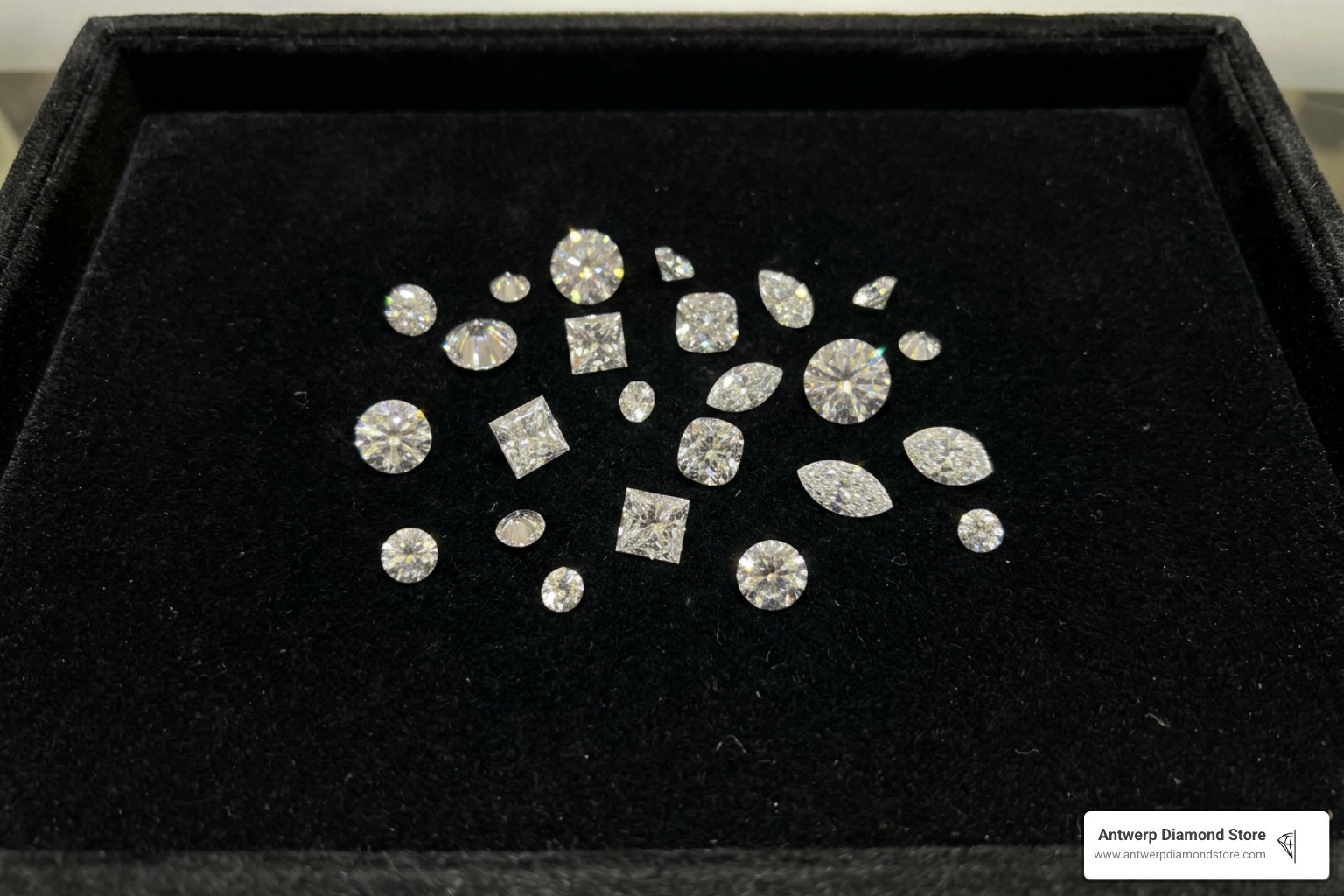
When you walk into a traditional high-street jewelry store, you aren't paying for just the raw wholesale value of the diamond. You are paying for a multi-layered supply chain, physical store rent, staff commissions, marketing campaigns, and inventory holding costs.
To calculate diamond price accurately on the secondary market, you must strip away those retail expenses and evaluate what a professional buyer can pay in cash today.
The Retail Depreciation Gap and Secondary Market Offers
Retail jewelry markups on high streets can range anywhere from 100% to 200% above true market wholesale value. When a buyer purchases a diamond ring for $10,000 at a high-end retail boutique, the actual wholesale market value of that loose diamond might only be $4,000 to $5,000.
How Lab-Grown Diamonds Impact Natural Diamond Resale Value
The luxury diamond landscape experienced a massive disruption over the past five years with the rapid scaling of laboratory-grown diamonds.

Chemically, optically, and physically, lab-grown diamonds are identical to natural mined diamonds. However, their long-term economic trajectories as diamonds as a store of value could not be more different.
To understand the full breakdown, read our guide on lab grown vs natural diamond characteristics.
Market Bifurcation Between Mined and Synthetic Stones
As production technology (specifically Chemical Vapor Deposition and High-Pressure High-Temperature methods) improved, factory production capacity surged. What happened next was a textbook lesson in supply and demand:

Lab-Grown Price Collapse: Between 2020 and early 2025, retail lab-grown diamond prices crashed by roughly 74%. Today, lab-grown stones sell for 83% to 85% less than equivalent natural diamonds.
Impact on Commercial Natural Diamonds: Lab-grown diamonds captured over 60% of the US engagement ring market for stones under 2 carats. This heavy penetration put pressure on lower-grade, commercial natural diamond prices, causing a 26% drop in commercial natural retail prices from their peak in 2022.
Resale Economics: Because factories can manufacture lab-grown diamonds in unlimited quantities, synthetic stones have zero long-term natural scarcity. When a consumer attempts to resell a lab-grown diamond, secondary market buyers rarely make cash offers, as a brand-new factory stone can be produced for a fraction of the original cost.
This has caused a clear bifurcation: lab-grown diamonds serve as affordable fashion accessories, while natural diamonds hold market share for consumers prioritizing natural scarcity and long-term value retention.
What Characteristics Make a Diamond Retain Its Worth?
Not all natural diamonds hold their ground equally when it comes to capital preservation. Mass-market commercial diamonds bought at high-street stores suffer heavy depreciation, whereas exceptional, high-spec natural stones hold their value far better over time.

If you are evaluating stones for long-term value retention, working with a certified stone is non-negotiable. Learn why in our overview of purchasing a GIA certified engagement ring.
High-Grade Specifications for Evaluating Diamonds as a Store of Value
To maximize value retention, industry criteria defined by major gemological institutions point toward specific "investment-grade" specifications:
Independent Certification: Must carry an unimpeachable third-party grading report from the Gemological Institute of America (GIA). Reports from lesser-known or in-house store labs often inflate grades, leading to lower resale payouts later.
Color Grade: Top colorless grades—specifically D, E, or F.
Clarity Grade: High clarity with minimal eye-visible flaws—IF (Internally Flawless) down to VVS2. Knowing what is an inclusion in a diamond helps you avoid structural flaws that hurt resale worth.
Cut / Symmetry / Polish: "Triple Excellent" (3EX) grading on round brilliant cuts to guarantee maximum light dispersion and liquid resale demand.
Fluorescence: Zero (None) fluorescence, as medium-to-strong fluorescence lowers market value on high-color stones.
Classic Shapes: Round brilliant, oval, and emerald cuts retain liquid secondary demand far more consistently across decades than trendy novelty shapes.
Understanding these criteria clarifies how much is a 1.00 ct diamond worth on live markets versus inflated retail displays.
Carat Weight Thresholds and Rare Large Diamonds
In diamond valuation, price jumps non-linearly across specific carat thresholds. A natural diamond weighing 0.99 carats is noticeably less expensive per carat than a stone weighing exactly 1.00 carat, even though the visual size difference is invisible to the naked eye.
What Is the Realistic 5 to 10 Year Financial Outcome for Engagement Ring Buyers?
When you buy a natural diamond engagement ring, what should you realistically expect if you decide to sell it 5 to 10 years down the road?
Let's look at a realistic financial scenario to remove the guesswork:
Initial Retail Purchase: You purchase a 1.50-carat GIA-certified natural diamond engagement ring at a high-end retail boutique for $12,000.
Breakdown of Purchase Price:
Raw wholesale diamond value: ~$5,500
Ring setting (18k gold/platinum labor): ~$1,000
Retail overhead, branding, and sales tax: ~$5,500
Selling After 5 to 10 Years: You bring the ring to a professional luxury estate buyer.
The buyer evaluates the loose diamond based on current live wholesale secondary prices and pays cash for the precious metal melt value of the setting.
Realistic Cash Offer: $4,500 to $5,800 (retaining 35% to 50% of original retail outlay).
If you originally bought the stone closer to true wholesale market pricing through a specialized diamond dealer, your retention rate jumps to 70% to 80% ($5,500 offer on an $7,500 acquisition).
To get a clearer picture of your ring's financial baseline, review how much is a diamond worth at base trade levels and our breakdown on how much to value a diamond ring.
Buying an engagement ring is primarily an investment in love, commitment, and personal enjoyment. The emotional return on investment is priceless—the financial outcome is partial capital recovery, not a speculative profit.
Frequently Asked Questions About Diamond Resale Retention
Do natural diamonds increase in value over time?
Most standard commercial natural diamonds (under 1.50 carats with average color and clarity) do not rapidly appreciate in value over short-to-medium timeframes. They hold baseline material worth but face secondary market resale spreads. However, extremely rare natural diamonds—such as top-tier 3-carat+ D-Flawless stones or certified Fancy Vivid pink and blue diamonds—have historically shown long-term capital appreciation due to extreme geological scarcity and mine depletion.
Why do jewelers offer less than the original purchase price when reselling a diamond?
When you sell a diamond back to a jeweler or estate buyer, they must buy at wholesale prices so they can resell the stone at a fair market margin while covering holding time, repolishing, re-grading, and insurance. The original retail price you paid included showroom overhead, marketing fees, and sales taxes—costs that do not add physical value to the loose stone on the second-hand market.
Can lab-grown diamonds be used as a store of value?
No. Lab-grown diamonds cannot function effectively as a store of value. Because manufacturing technology continues to improve and production supply is virtually unlimited, the cost to produce synthetic diamonds falls every year. As a result, lab-grown diamonds experience sharp price depreciation over time and carry minimal to zero cash resale value on the secondary market.
Conclusion
When evaluating diamonds as a store of value, success comes down to setting the right expectations. Natural diamonds offer remarkable durability, privacy, portability, and capital preservation across generations. However, they are not liquid, high-yield trading instruments like stocks or gold bullion.
To protect your wealth when purchasing natural diamonds:
Avoid Overpaying Upfront: Minimize high-street retail markups by dealing directly with established diamond specialists.
Prioritize Certification: Demand independent GIA grading reports to verify natural origin and precise quality metrics.
Focus on High Grades: Select classic cuts with top color (D–F), eye-clean clarity (IF–VVS2), and zero fluorescence.
When you are ready to sell pre-owned diamond jewelry, luxury timepieces, or fine estate pieces, working with an experienced, transparent buyer ensures you receive true market value without delay.
At Antwerp Diamond Store in Atlanta, GA, we buy luxury watches, fine diamond jewelry, and designer accessories for cash. We offer free professional evaluations, transparent market-based offers, and immediate payouts in a private, appointment-only setting with zero hidden fees. If you want to evaluate your jewelry's true cash worth, visit our team at Antwerp Diamond Store today.


