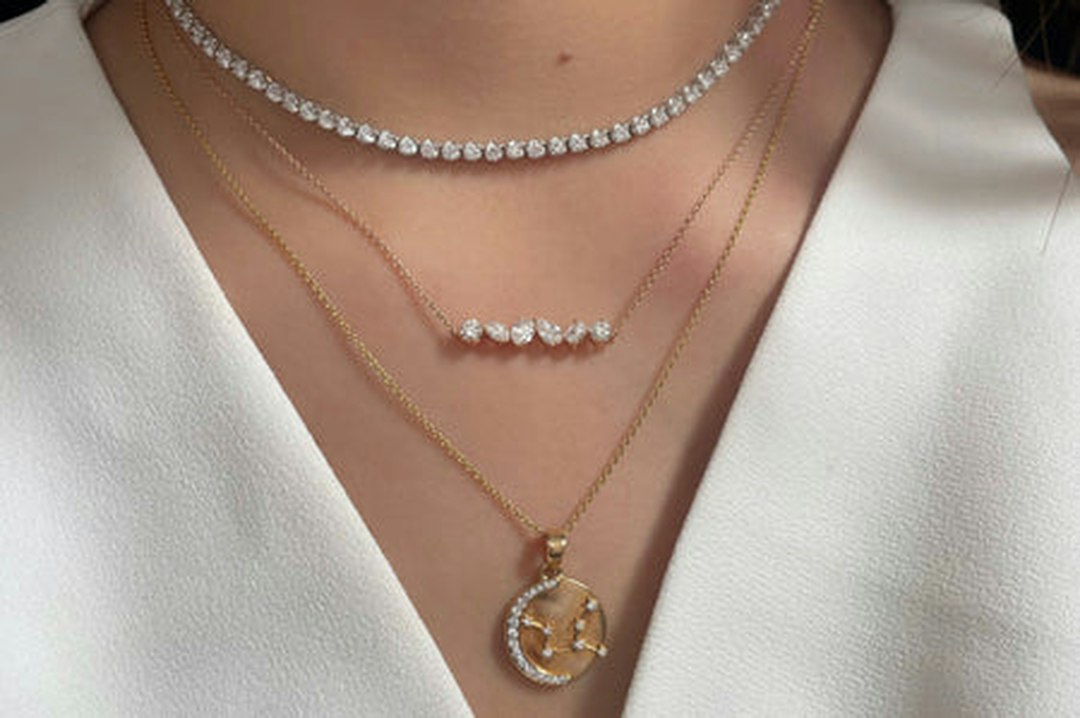

What looks like a flashy chain can be a very specific kind of luxury piece, and that's where a lot of sellers get confused. A bust down chain is generally a chain fully set with diamonds or other gemstones, with the metal surface heavily covered rather than just accented, and that full coverage is what drives most of its appeal and value.
If you're trying to sell one, the important question isn't just “Is it iced out?” It's how the chain is built, how securely the stones are set, what metal it uses, and how well you can document it for a buyer or appraiser.
Table of Contents
Introduction to Bust Down Chain
A bust down chain is a chain that's been fully covered with diamonds or other stones, so the surface reads as almost entirely iced out. In today's luxury jewelry market, that detail matters because buyers judge these pieces by coverage, craftsmanship, and material quality, not just by the slang name.
That's why two chains can both be called bust down and still be very different in real value. One may have careful stone setting on a solid gold base, while another may only mimic the look. For a first-time seller, learning the difference helps you avoid underpricing the piece, overtrusting a label, or missing signs of poor workmanship.
A good starting point is to think of the chain as a finished build, not just a style. The stones, metal, setting method, and documentation all shape how a buyer evaluates it.
Understanding the Core Concept
The phrase bust down comes from hip-hop and jewelry slang, where the idea of “busting” something down ties to a transformation that makes it more extravagant. In jewelry use, that meaning is flipped into a luxury signal, since the piece is upgraded rather than damaged. Contemporary explainers describe a bust down chain as a chain fully set with diamonds covering the metal surface, not just decorated in a few spots, which matches the way the term is used in the market today.

What qualifies a chain as bust down
The visual test is simple. If the chain looks like the metal has been almost completely buried under stones, it fits the slang meaning better than a chain with only a diamond accent. That is why the label is more about appearance and overall effect than a formal gemological category.
Practical rule: If you can easily see large stretches of plain metal, the chain may be iced, but it may not read as fully bust down in trade language.
This is also where confusion starts for sellers. A chain can have a flashy look, a known style like Cuban or Franco, and still differ widely in how much stone coverage it has. For a buyer, the phrase is a starting point, not the final answer.
See an iced-out Cuban chain example
Construction and Common Materials
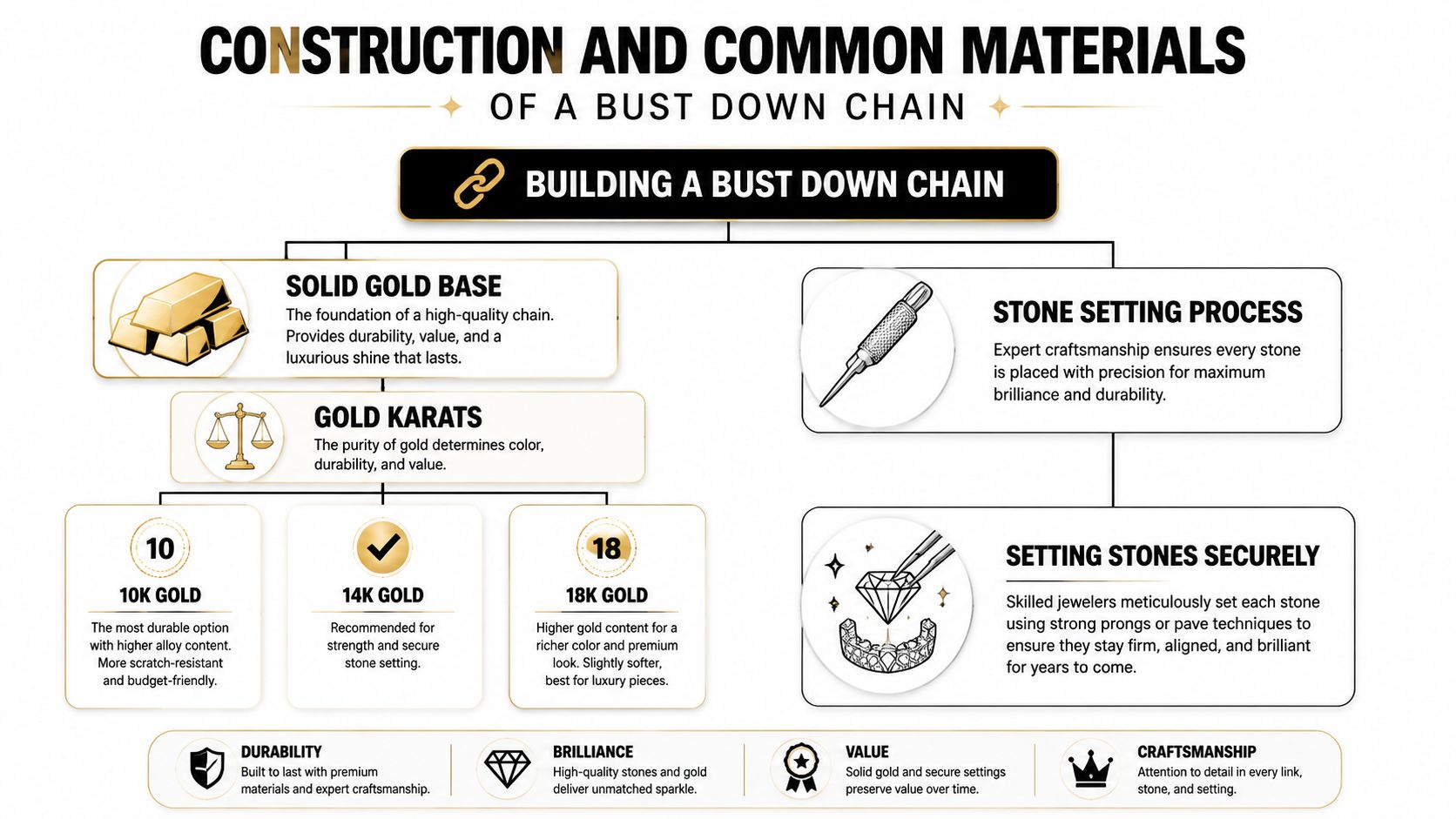
A proper bust down chain usually starts with a solid gold base, commonly 10K, 14K, or 18K. Industry guidance points to 14K gold as a practical middle ground because it balances strength and appearance while supporting secure stone setting. The karat stamp matters because it tells you something about the alloy mix, which affects durability and wear.
How the build affects the finish
The setting process is where the piece becomes fully iced out. Stones have to be placed with care so the chain keeps its structure and the stones stay secure through normal wear. If the base metal is too soft or the workmanship is weak, the final look may be impressive at first but less dependable over time.
Common link styles can also affect the overall feel. Cuban links tend to present a bold, flat surface that can support a heavy visual presence, while rope and Franco styles create different textures and light patterns. Those differences matter because the chain's shape changes how the stones sit, how the piece drapes, and how well the finished work holds up.
A simple way to think about it is this. The metal is the foundation, and the stone setting is the finishing architecture. A seller who understands both can speak more confidently about quality and value.
Learn what to look for when buying gold chains
Quality Indicators and Value Drivers
The biggest value driver is not the slang label, it's the total quality of the finished piece. A bust down chain with dense, even stone coverage and strong craftsmanship usually presents more convincingly than one that only looks crowded at a glance. In the modern luxury-jewelry market, that full-stone look also carries status value, which is why custom work often commands premium pricing rather than mass-market pricing.
What a serious buyer examines
The first thing is stone count and coverage. More important than raw quantity, though, is how uniformly the stones are set and whether the surface looks balanced. Buyers also look at the precision of the setting, since loose alignment, uneven spacing, or visible gaps can hurt confidence fast.
Metal purity matters too, because the base metal supports the entire piece. A chain with solid gold construction generally tells a stronger story than one with uncertain materials. Brand provenance can also affect interest, especially when the chain comes from a recognized maker or a documented custom jeweler.
A bust down piece isn't valued like costume jewelry. Buyers usually look at it as a labor-heavy luxury item with material value, craftsmanship value, and market appeal.
For sellers in Atlanta, Buckhead, Sandy Springs, Alpharetta, Roswell, Brookhaven, and Midtown Atlanta, that means the best offer usually comes after a careful in-person look, not from the name alone. The more clearly you can explain materials, setting quality, and origin, the easier it is for a buyer to make a serious offer.
See how diamond Cuban link chains are evaluated
Authentication and Grading Tips
Start with the karat stamp or hallmark. If the base metal claim is unclear, the rest of the conversation gets shaky very quickly. Then look for paperwork that matches the item, including any appraisal or purchase documents, because those help support the story behind the piece.
Qualified appraisers should ideally have gemological training such as a G.G. diploma from GIA, since there are no federal or state licensing requirements for jewelry appraisers in the United States Jewelers of America appraisal guidance. That's why credentials matter, especially when you're trying to value a piece that combines precious metal and stone setting work.
Requirement | Details |
|---|---|
Owner information | Owner's name and address |
Appraiser information | Appraiser's name and address |
Item description | Weight, carats, stones, serial or model numbers |
Value basis | Replacement value based on similar items |
Document sign-off | Appraiser's signature |
Timing | Date of appraisal |
Learn why an independent jewelry appraiser matters
A written appraisal should describe the item, evaluate relative quality, and give an opinion of value. If those basics are missing, the paper may be less useful than it looks.
Maintenance Care and Avoiding Scams
A bust down chain needs gentle care because the stones and the metal work together. Keep it stored separately so it doesn't rub against harder jewelry pieces, and wipe it clean with a soft, dry cloth after wear. If the chain is heavy or highly detailed, even minor knocks can affect the look of the setting over time.
Scams usually show up in the details. If a seller's photos look too perfect, or if the stones seem uniform in a way that doesn't match the weight and setting quality, slow down and ask for documentation. A chain that's presented as luxury-grade but comes with weak paperwork or inconsistent construction deserves closer inspection.
The most useful habit is to compare the story to the object. Does the metal feel right for the claimed karat? Do the stones sit securely, or do they look glued in place? Does the piece present like custom work, or like something assembled to imitate the look from a distance?
Most insurance companies require appraisals to be updated every three to five years because jewelry values can change with market prices, gemstone availability, and brand demand Rough Notes appraisal guidance. That same logic helps sellers too, because old paperwork can make a valuable chain harder to price correctly.
Selling Your Bust Down Chain
The cleanest selling process starts with a clear evaluation of what you have. Gather any appraisal, receipt, box, or brand documentation, then take straight photos of the front, back, clasp, and any stamps or serial details. Those images help a buyer decide whether the piece deserves a closer in-person review.

For remote sellers, secure shipping is the right path when you can't visit in person. For local sellers in Atlanta and across Georgia, a private appointment gives you the advantage of immediate inspection, direct questions, and a faster discussion of condition and marketability. If you're preparing images for a listing or a preliminary valuation, resources like AI tools for product photos can help you present the item more clearly before a buyer ever sees it.
What buyers usually check first
A serious jewelry buyer typically starts with authentication, then moves to condition, materials, and current resale demand. The chain's setting quality, stone coverage, and any brand or custom details can shift the offer significantly. A well-documented piece generally gets a smoother review than one with no proof of origin.
Payout method matters too. Some sellers prefer cash for speed, while others want a secure transfer for cleaner records and added convenience. Either way, the best outcome usually comes from a clear evaluation, honest condition notes, and a buyer who can explain how the offer was reached.
See how online jewelry buyers handle evaluations
Conclusion and Next Steps
A bust down chain is more than a flashy label. Its value depends on full stone coverage, solid gold construction, setting quality, documentation, and current market demand. Once you understand those parts, you can judge the piece more accurately and avoid treating every iced-out chain as if it belongs in the same price range.
If you're planning to sell, the smartest move is a careful evaluation before you commit to an offer. Bring your chain for a private review, or start with a free online estimate if you want a first pass before visiting in person. That approach keeps the process discreet, practical, and easier to compare across options.
A CTA for Antwerp Diamond.