
The Rolex GMT-Master II blue and black, usually called the Batman, is reference 126710BLNR and currently trades on the secondary market at about $17,187 on average, with live asking prices from $16,500 to $21,000 depending on condition and completeness. If you're deciding whether to hold or sell in 2026, the strongest move is to get the watch professionally authenticated and graded before you test the market, because condition, originality, and set completeness still drive the final number more than the nickname alone.
A lot of owners are in the same position right now. They bought the watch to wear, not to flip, then watched the market move far above retail, level off, and become more selective. If you own a Rolex GMT Master II blue black and you're wondering whether this is still a seller's market, the answer is yes, but it's a more disciplined one than it was when nearly any steel Rolex sold instantly at a premium.
Table of Contents
Your Rolex GMT Master II Blue Black Explained
The Rolex GMT-Master II blue black is the stainless steel GMT with the blue and black Cerachrom bezel, reference 126710BLNR. It remains one of the most recognized modern Rolex sports watches, and in practical resale terms it sits in the category of watches that still command a meaningful premium above retail.
That matters because many sellers still look at an old receipt or current boutique pricing and assume that's enough to estimate value. It isn't. Real offers depend on the reference, bracelet, authenticity, visible wear, service history, and whether the watch comes with its original box and papers.
Rolex lists the GMT-Master II as a dual-time watch with a dedicated 24-hour hand and a two-color rotatable 24-hour bezel that lets the wearer read local time and a second time zone simultaneously, which is the core reason the model has stayed relevant far beyond collector hype (Rolex GMT-Master II product details).
What owners usually want to know
What exactly do I have: The current blue and black stainless steel version is the 126710BLNR, often called the Batman.
What is it worth now: Current secondary market activity places it well above retail, but the spread between average used value and top asking prices depends heavily on condition and set completeness.
Should I hold or sell: That's the right question in 2026, because this is no longer a market where every strong Rolex reference is moving up at the same pace.
Practical rule: A Batman with clean condition, correct parts, and full documentation is easier to sell and easier to defend on price than a watch with vague provenance.
For owners in Atlanta, Buckhead, Sandy Springs, Alpharetta, Roswell, Brookhaven, Midtown Atlanta, and the wider Georgia market, that practical reality matters even more. Local in-person evaluations are useful because buyers can inspect the watch, bracelet, clasp, crystal, bezel, and movement performance firsthand instead of making assumptions from photos.
The Identity and History of The Batman
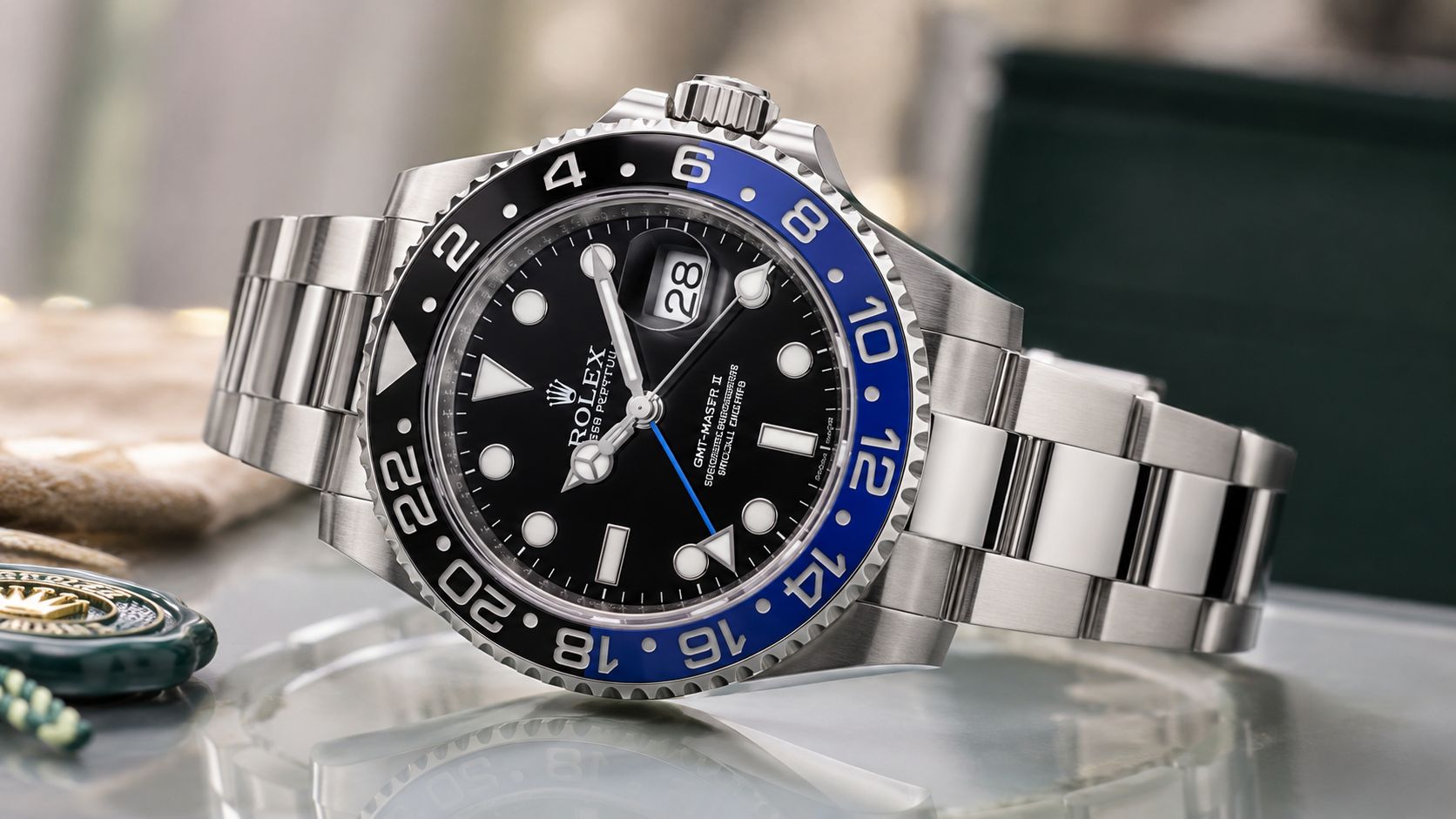
The Batman nickname came from the watch's blue and black bezel. Rolex doesn't use that nickname officially, but the market does, and the shorthand stuck because it's instantly recognizable. Among modern GMTs, few color combinations are as easy to identify from across a room.
Why collectors call it the Batman
The blue and black bezel gave the watch a distinct personality from the start. It wasn't just another black sports Rolex. It had enough color to feel different, but not so much contrast that it became difficult to wear daily. That's part of why the model has stayed liquid in the resale market.
There are two references owners and buyers usually mean when they say "Batman." The earlier 116710BLNR established the look. The later 126710BLNR updated the watch and is the current production reference discussed by most sellers in 2026.
If you're unsure which version you own, the serial and reference details matter. A careful check of engraving and paperwork is the first step, and a watch serial number lookup guide is often a useful starting point before you bring the piece in for formal review.
Why the reference matters when you sell
Reference confusion costs sellers money. A buyer doesn't value "blue and black GMT" in the abstract. They value a specific reference, specific bracelet configuration, and specific condition state.
The current 126710BLNR is also important because it's still in production, unlike some scarcer GMT variants. That gives sellers a different market dynamic. It remains obtainable at retail in theory, but actual secondary pricing still reflects strong demand and limited availability in practice, while discontinued alternatives can command their own scarcity premium.
Buyers don't just ask whether it's a Batman. They ask which Batman, on which bracelet, with what paperwork, and in what condition.
That distinction becomes central once you enter hold versus sell territory. An owner of a current-production 126710BLNR isn't selling the same story as someone offering an earlier discontinued reference.
Key Specifications and Distinguishing Features
A seller deciding whether to hold or sell a Batman in 2026 needs more than the nickname and a rough price target. Buyers pay for a specific technical package, and they discount quickly when a watch shows wear in the wrong places or lacks the traits tied to the stronger references.
For the current 126710BLNR, the core of that package is Caliber 3285. It is a self-winding Rolex movement with a 72-hour power reserve, Chronergy escapement, and Rolex's Superlative Chronometer standard of ±2 seconds per day, as summarized in this Rolex GMT-Master guide. In practice, that means a watch can sit through a weekend and still be running Monday morning. It also means a serious buyer expects clean hand-setting, stable amplitude, and no hesitation in the local jumping hour hand.
The bezel matters almost as much as the movement during a sale. The blue and black Cerachrom insert is one of the model's defining features, but it is also one of the first things a trained buyer studies under light. Chips are uncommon. Hairlines, poor replacement parts, or softened numerals are not. On a BLNR, bezel condition affects both buyer confidence and final offers because the insert is central to the watch's identity.
The GMT function is still a real selling point, not just marketing copy. The independently adjustable local hour hand, 24-hour hand, and bidirectional bezel let the wearer track multiple time zones quickly. That utility helps the Batman hold attention against newer Rolex sports references that compete for the same buyer.
Rolex GMT-Master II 126710BLNR Specifications
Feature | Specification |
|---|---|
Model | Rolex GMT-Master II Blue and Black |
Reference | 126710BLNR |
Case diameter | 40mm |
Case height | 12mm |
Lug-to-lug | 48mm |
Lug width | 20mm |
Movement | Caliber 3285 |
Power reserve | 72 hours |
Accuracy | ±2 seconds/day |
Bezel | Bidirectional blue and black Cerachrom bezel |
Bracelet options | Oyster or Jubilee |
The proportions are part of why the BLNR remains liquid on the secondary market. At 40mm wide, 12mm thick, with a 48mm lug-to-lug span and 20mm lug width, it wears well on many wrists without feeling oversized, based on published 126710BLNR size and dimensions. That broad wearability helps resale because fewer buyers rule it out on fit alone.
Bracelet configuration also affects demand. Some buyers want the sportier Oyster look. Others will pay more attention to a Jubilee-equipped example because it feels closer to the current Rolex presentation and often wears with a bit more comfort. Neither bracelet guarantees a premium in every transaction, but the right bracelet for the current buyer pool can shorten selling time.
Condition still decides the spread between an average offer and a strong one. Crisp case edges, tight bracelet stretch, even lume, correct GMT hand stack, and a clean ceramic insert make a watch easier to place with dealers and end buyers. If you want a visual benchmark, reviewing comparable used luxury watches for sale helps clarify what experienced buyers notice first. Counterfeit risk also remains part of the equation, especially for popular Rolex sports models, and broader brand-side methods for how manufacturers detect counterfeit products give useful context for why documentation and part correctness matter so much at appraisal.
How to Authenticate and Grade Your Watch Condition
An owner walks in certain the watch is right, then the offer comes in lower than expected. In 2026, that gap usually comes from two things. Authentication confidence and condition confidence. On a Rolex Batman, both matter even more if you are deciding whether to hold through a softer market or sell before a newer reference pulls more buyer attention.
Authentication points that deserve close attention
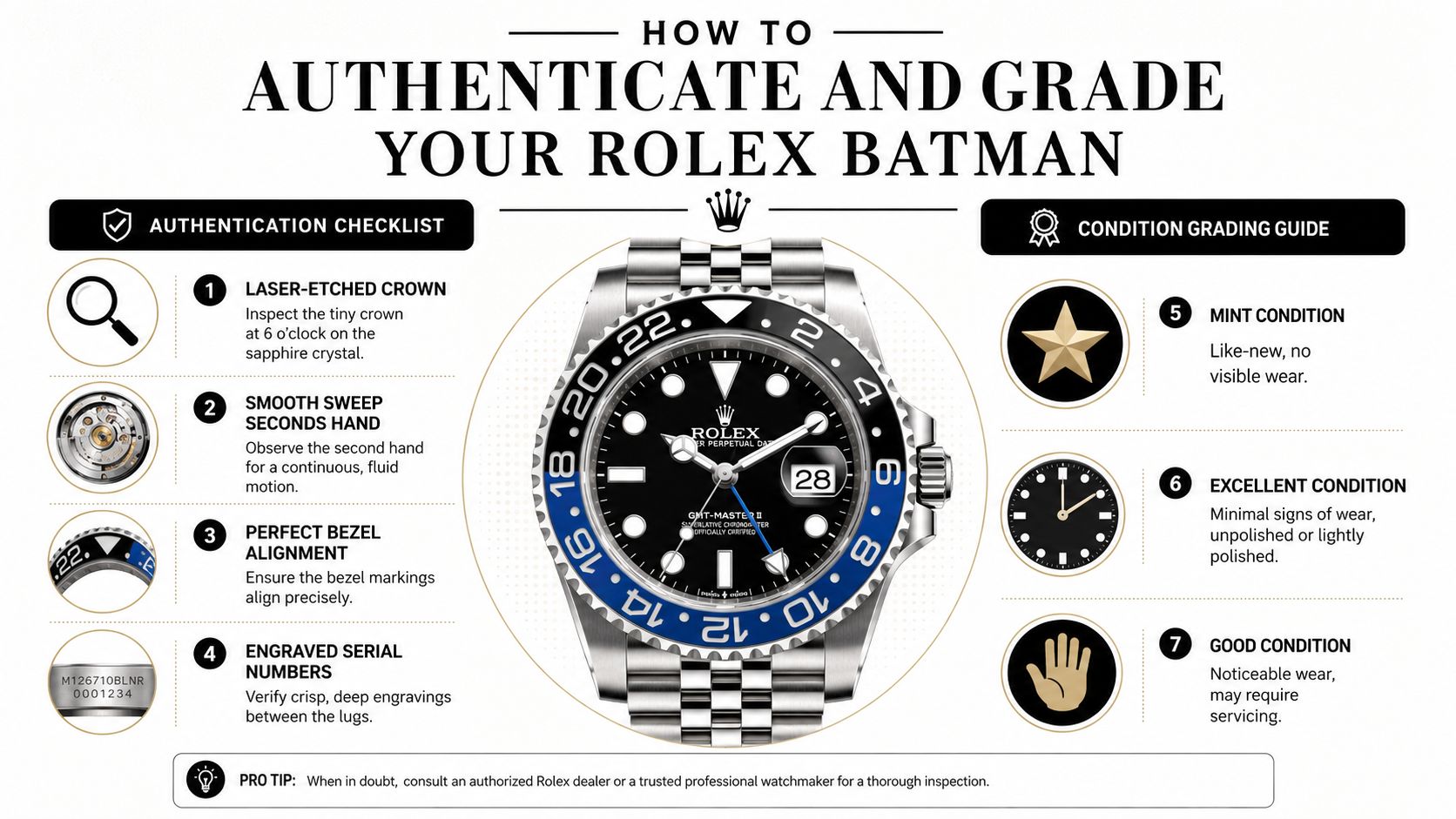
Start with consistency, not a single magic tell. A genuine BLNR should present as one coherent watch. Dial, hands, bezel, case, bracelet, clasp code, reference, and paperwork should all agree with the production period. If one part looks newer, older, or wrong for the reference, buyers will pause and discount first.
The first pass is visual. Dial printing should be crisp under magnification. The Cyclops should magnify cleanly and sit correctly over the date. The bezel should rotate with firm, even clicks and line up properly at 12. Engravings on the rehaut, clasp, and case should look sharp, not washed out or poorly spaced.
Then check the details that experienced buyers and service centers notice quickly:
Laser-etched crown: Look for the crown at 6 o'clock on the crystal. It should be subtle and precise.
Hand stack and motion: The seconds hand should move in a smooth mechanical sweep, and the GMT hand stack should match the model's construction.
Bezel and insert alignment: Markers should track cleanly against the dial furniture with no obvious drift.
Reference and serial agreement: The watch, bracelet, card or papers, and known model features should match each other.
For owners doing a home review before requesting offers, a specialist guide on how to know if your Rolex is real is a useful starting point. For broader context, how manufacturers detect counterfeit products explains why professionals rely on a pattern of small checks rather than one dramatic giveaway.
A practical warning from the trade. Many counterfeit Batman models now get the obvious visuals close enough for casual buyers. The mistakes show up in proportion, print quality, movement behavior, bracelet finishing, and part compatibility. That is why a recent Rolex service record, original sales card, and matching accessories can strengthen a sale even when the watch itself appears correct.
How condition grading changes your offer
Condition grading affects liquidity first and price second. A sharp, honest watch is easier to place with both dealers and private buyers. A polished case with soft crown guards, rounded lugs, bracelet sag, chipped crystal edges, or uncertain replacement parts creates negotiation room for the buyer.
The bezel deserves close inspection. Ceramic inserts usually resist daily wear well, so visible chips, cracks, or heavy marks raise more concern than ordinary hairlines on the clasp. On a Batman, buyers also look hard at the transition between blue and black because poor aftermarket inserts and damaged originals both hurt confidence.
Use a simple grading standard:
Mint: Very light wear, sharp case geometry, clean crystal, tight bracelet, and no visible issues that need explanation.
Excellent: Light signs of use, still very clean on the wrist, with no major damage or suspect parts.
Good: Noticeable wear, likely polish history, more bracelet looseness, and possible service questions.
Fair: Heavy wear, clear refinishing, replacement concerns, or damage that will need costed work before resale.
Service history changes the result, but not always in the way owners expect. A documented Rolex service can help. Unclear third-party work, relumed hands, replaced bezel inserts, and aftermarket bracelets often lower confidence even if the watch runs well. Originality still carries a premium.
Do not try to freshen the watch yourself before selling. Amateur polishing removes metal that cannot be put back, and even a well-meant crystal or bezel swap can turn a strong original example into a harder sell. If you are on the fence between holding and selling, get the watch authenticated and graded first. That gives you an objective basis for the decision, because a top-condition full set behaves very differently in the market than an honest but worn watch only.
Understanding the 2026 Rolex Batman Market Value
You check your Batman against dealer listings, see asking prices far above retail, and assume the decision is easy. In 2026, it is not. The BLNR still carries a premium, but owners now need to separate headline prices from executable selling prices, and that gap matters if you are deciding whether to hold or sell.
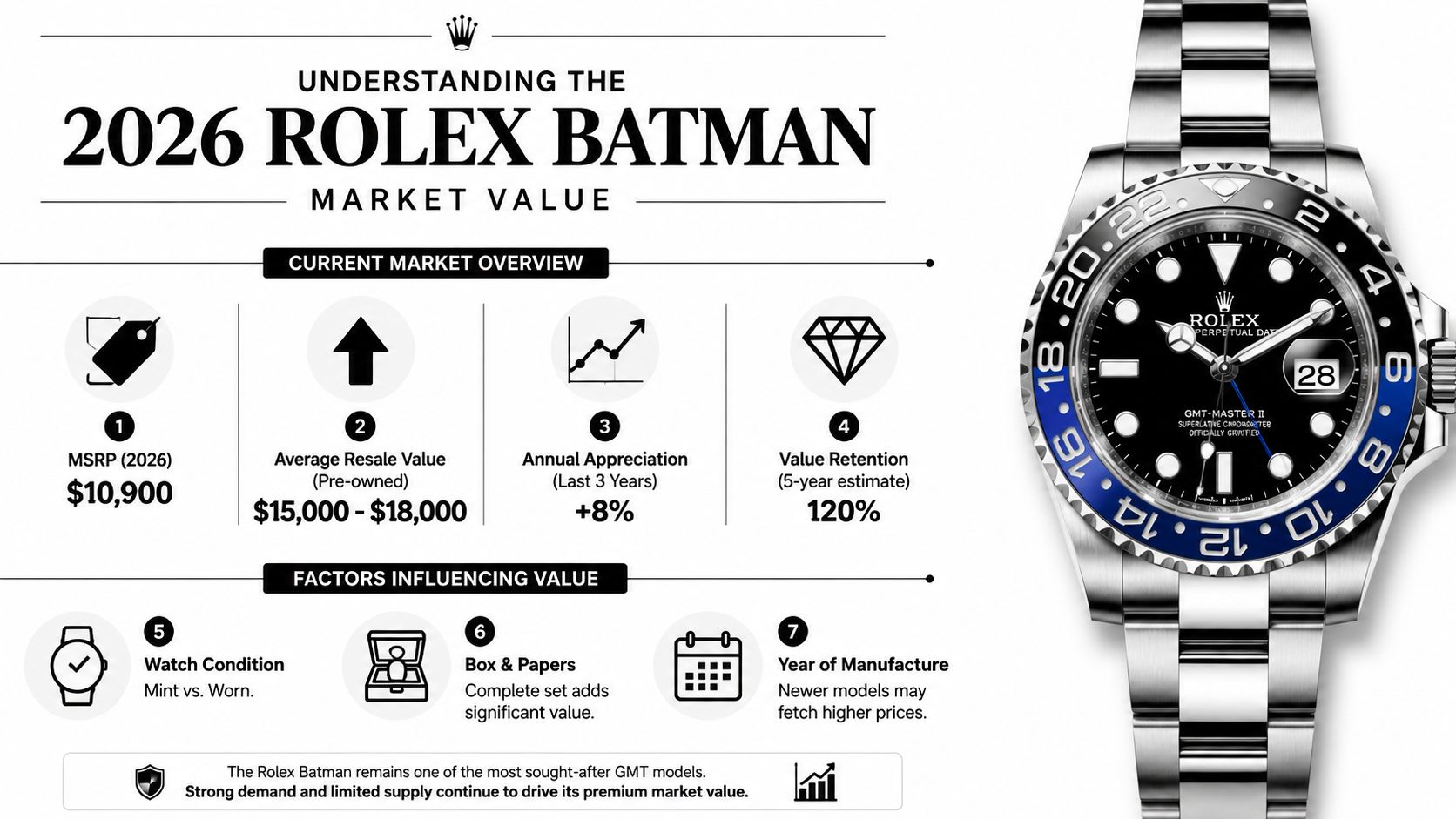
Retail remains well below the secondary market for a current steel BLNR. Clean, correctly presented examples still trade above list because immediate availability, trusted authentication, and full-set completeness continue to command a premium. At the same time, the heat has come out of the category compared with the sharpest post-hype years. Buyers are more selective, and dealers are less willing to stretch on mediocre examples.
Retail versus real market value
The number on Rolex's price list is only one reference point. Real market value depends on how quickly a buyer wants the watch, how much confidence the set inspires, and whether the seller is a private owner, grey dealer, or established specialist offering inspection and return protection.
That is why owners often get confused by the spread. Dealer asking prices can look strong, but sold prices usually settle lower once condition, bracelet stretch, service history, and missing accessories are factored in. A sharp full-set Batman on the right bracelet gets attention. A polished watch-only example with uncertain parts history trades in a different bracket, even if the reference number is the same.
The practical point is simple. The BLNR remains a liquid Rolex sports model, but 2026 rewards accuracy, not optimism.
Hold or sell in 2026
For current owners, the decision gets more interesting. The Batman still benefits from a strong identity, broad buyer recognition, and a long track record of demand. But it no longer sits in a vacuum. Newer GMT references give buyers more choice, and that puts pressure on how much extra the market will pay for any one steel model unless the example is especially clean or especially complete.
The newer 126710GRNR is part of that pressure. It gives buyers another current-production steel GMT option at a lower official entry point, which matters more than enthusiasts sometimes admit. Some buyers still prefer the blue-black bezel on sight alone. Others want a modern steel GMT and will compare price first. That substitution effect can compress the BLNR premium, especially for average examples.
I see the 2026 decision in three buckets:
Sell now if your watch is original, sharp, and complete, and you would be satisfied locking in gains rather than waiting for another strong run.
Hold if your cost basis is low, you wear the watch regularly, and you are comfortable with steadier pricing rather than rapid appreciation.
Reassess before listing if the watch needs service, has replacement parts, or is missing box and papers, because those factors narrow your buyer pool and weaken your negotiating position.
Condition changes the answer. So does purchase history. An owner who bought at retail years ago can afford to be patient. An owner who paid near a market peak should be more disciplined and compare likely net proceeds now against the risk of further premium compression.
Photos also affect outcomes more than many sellers expect. Before you test the market, study a few principles behind professional product photos at scale. Clear images of the case flanks, clasp, bracelet sag, rehaut, dial, and full set help serious buyers price the watch correctly on the first pass.
If you want a current baseline before deciding, get a specialist sell my Rolex watch evaluation. That gives you a defendable number based on the watch you own, not the best example currently advertised online.
The Smart Way to Sell Your Rolex GMT Master II
Selling a high-value watch is mostly about reducing risk. The right process protects the watch, verifies authenticity, and narrows the gap between what you hope it's worth and what a real buyer can defend.
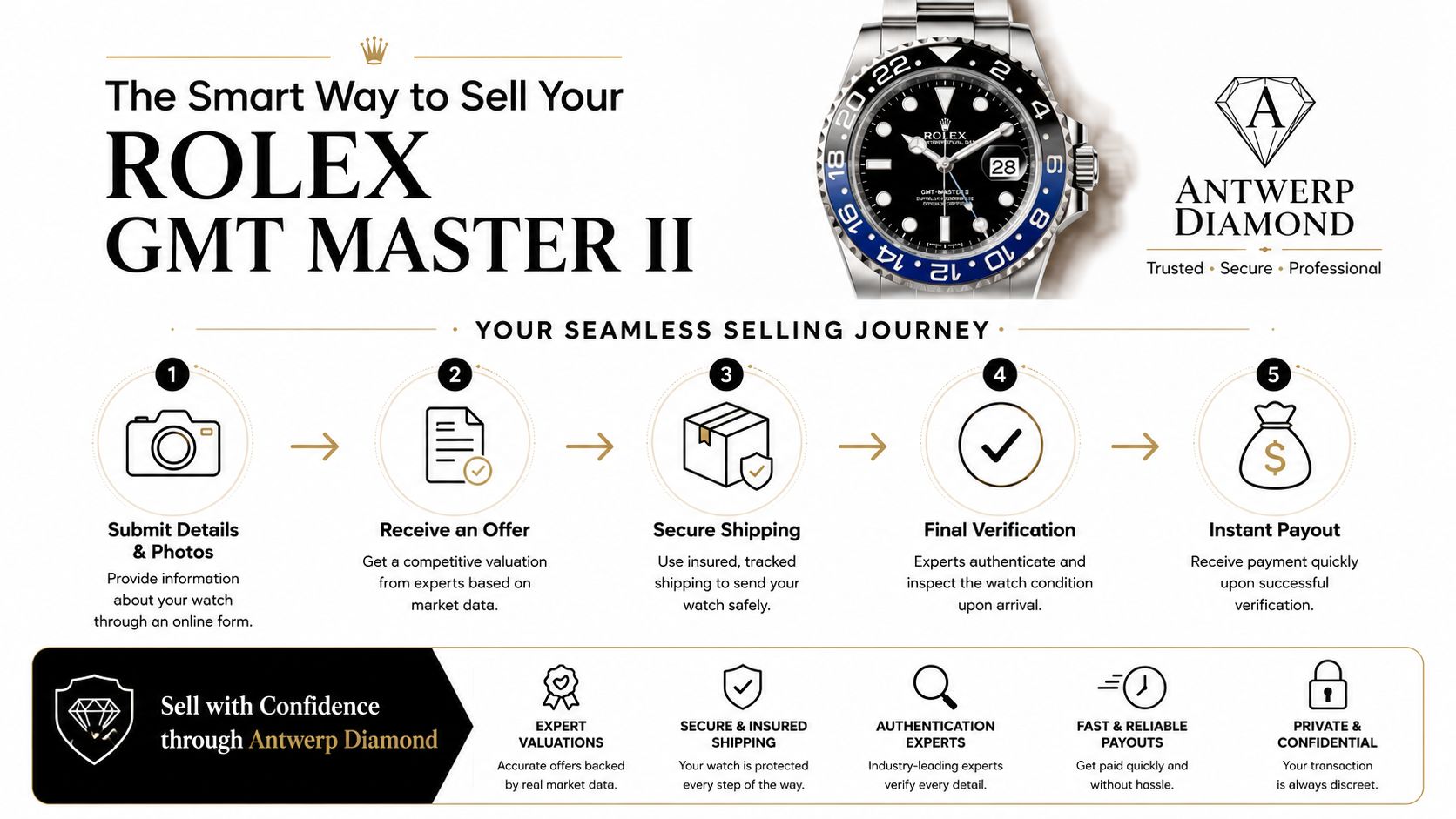
A secure selling process that protects value
A straightforward process usually works best:
Gather the full set: Watch, box, papers, tags, receipts, and service records if you have them.
Take clear photos: Front, side profile, caseback, clasp, bracelet stretch, papers, and any visible wear.
Request a preliminary evaluation: This helps you avoid wasting time with unrealistic venues.
Submit for in-person or shipped inspection: Serious buyers need to verify the watch physically.
Review the final offer after authentication and grading: That's when condition, originality, and completeness are confirmed.
Good photos help more than most owners realize. If you want to improve listing or submission images before sending them to a buyer, this guide to professional product photos at scale offers practical ideas that apply well to watches, especially for crystal glare, bracelet texture, and case edge detail.
A video walkthrough can also help owners understand what a buyer is looking for during intake and review.
What local Georgia sellers should do
If you're in Atlanta, Buckhead, Sandy Springs, Alpharetta, Roswell, Brookhaven, Midtown Atlanta, or elsewhere in Georgia, an in-person review is often the cleanest route. A trained evaluator can inspect bracelet wear, check the feel of the bezel, review paperwork, and spot signs of overpolishing or parts replacement immediately.
Remote sellers should focus on security and chain of custody. Use insured shipping, document the condition before packing, and work only with established professional buyers who authenticate on arrival before finalizing an offer.
Private sales can sometimes look attractive because the asking number appears higher. In practice, they also bring more risk, slower closings, uncertain payment, and a larger burden of proving authenticity. Many owners decide a vetted professional buyer is the better route once they compare effort against the actual net result.
If you're comparing channels, reviewing how online watch buyers work can help you decide whether local appointment, consignment-style sale, or direct purchase is the best fit.
Frequently Asked Questions About Selling a Rolex Batman
Do box and papers matter?
Yes, especially if you are deciding whether to hold or sell in 2026. A BLNR with its original warranty card, box, manuals, tags, and matching bracelet links is easier to place because the buyer has fewer authentication questions and less reason to discount the offer.
The gap is usually not about collectibility alone. It is about risk. If two watches present similarly, the complete set often gets stronger bids because a dealer can resell it faster and with less friction.
Should I service the watch before selling?
Service only solves the right problem. If the watch is running poorly, has very low amplitude, shows moisture history, or the GMT hand or date change is not working correctly, service can protect value because a serious mechanical fault will get priced in hard.
If the watch is running well and the issue is cosmetic wear, I usually tell owners to pause before authorizing Rolex service. A fresh service invoice sounds positive, but it also costs real money, adds waiting time, and can reset parts that some buyers wanted left untouched. That matters most on watches with attractive original hands, dial, bezel insert, and sharp case geometry. Get the watch inspected first, then decide.
Does Oyster or Jubilee bring a better price?
The better bracelet is the correct bracelet for the reference and sale setup. On paper, some buyers chase Jubilee because it feels newer and broadens the watch beyond the original Batman look. In practice, originality and condition matter more than internet preference.
A worn Jubilee with stretch, dented links, or replacement parts will not outperform a clean Oyster because Jubilee is fashionable. If you own a BLNR that started life on Oyster, buying a second bracelet just to sell rarely produces a clean profit after parts cost and fitting.
Is it safe to ship a Rolex for evaluation?
It is safe if the buyer has a controlled intake process and you do your side properly.
Photograph the serial area, clasp, full set contents, and all four case profiles before packing. Record the watch running. Use insured shipping with adult signature required, and confirm in writing how the buyer handles receipt, authentication, and return if the offer is declined. Owners lose money when they treat shipping like a formality.
How do I know if now is the right time to sell?
Start with the main question. Are you holding a Batman because you wear it, or because you expect the next price spike?
The 2026 market rewards clean examples, full sets, and correct parts. It is less forgiving with polished cases, swapped components, and vague provenance. Newer GMT variants and a more selective buyer pool have put pressure on average examples, but strong BLNRs still trade well because the model remains liquid and widely recognized. If your watch is complete, honest, and you are not wearing it much, selling now can be the better decision. If yours is incomplete or needs work, holding until you can present it properly may protect more value than rushing it out.
If you're ready to understand what your Rolex GMT Master II blue black is worth on the current market, Antwerp Diamond offers a professional, low-pressure way to start. You can request an evaluation, schedule a private appointment in the Atlanta area, or bring in your watch for an in-person review so an expert can authenticate it, assess condition, and explain the offer clearly.