

The best place to sell old jewelry depends on what you have and whether you care more about price, speed, or simplicity. If the piece is branded, diamond-set, or collectible, a specialized buyer or auction route usually makes more sense, while local jewelers are often the right fit for wearable fine jewelry and online marketplaces suit sellers who want control and don't mind doing the work.
A lot of people start in the same place. They open a drawer, find an inherited ring, an outdated bracelet, a tangled gold chain, or a piece they haven't worn in years, and then ask the wrong first question. Instead of "Where can I sell this fast?" the better question is "Is this worth more as scrap, or more as jewelry?"
That distinction changes everything. If you understand melt value versus resale value before you meet a buyer, you'll avoid the most common mistake sellers make: taking a scrap offer on a piece that still has design, brand, diamond, or estate value.
Table of Contents
Deciding Where to Sell Your Old Jewelry
If you're trying to figure out where to sell old jewelry, start by sorting your piece into one of three buckets: scrap metal, wearable fine jewelry, or high-value estate or designer jewelry. That one step usually points you toward the right buyer faster than anything else.
The resale market is active. The global jewelry market was valued at USD 381.5 billion in 2025 and is projected to reach USD 578.5 billion by 2033, which tells you there is still strong demand for precious materials and finished luxury pieces. For sellers, that matters because buyers are operating in a market where gold jewelry, diamonds, signed pieces, and estate items continue to move.
A simple way to classify what you have
Scrap-oriented jewelry: Broken chains, single earrings, damaged settings, bent bangles, or plain gold items with little design premium.
Wearable resale jewelry: Diamond studs, gemstone rings, bracelets, necklaces, and vintage pieces that can be sold again without being melted.
High-value or collector pieces: Cartier, Tiffany & Co., Van Cleef & Arpels, signed estate jewelry, important diamonds, and unusual antique pieces.
Practical rule: If the piece would look at home in a jewelry case today, don't assume it should be sold for melt.
Your goal matters just as much as the item. If you want immediate liquidation, you'll usually accept a lower offer. If you want to maximize the selling price, you need more patience, stronger documentation, and the right channel.
Sellers in Atlanta, Buckhead, Sandy Springs, Alpharetta, Roswell, Brookhaven, Midtown Atlanta, and the wider Georgia market usually have access to several options at once. That's helpful, but it also creates confusion. A pawn shop, an independent jeweler, an estate buyer, and an auction specialist may all look at the same ring and value it in completely different ways because they're buying for different business models.
The question that should guide the sale
Ask this before anything else:
Am I selling for speed?
Am I selling for the highest realistic offer?
Am I selling a piece for its metal, or for its full identity as jewelry?
Once you answer that, the right place to sell gets much clearer.
How to Prepare Your Jewelry for a Successful Sale
Preparation changes outcomes. Sellers who walk in with paperwork, photos, and realistic expectations usually get better conversations and cleaner offers than sellers who hand over a bag of mixed jewelry and say, "Tell me what this is worth."

Start with documents and identifying marks
Before you visit a buyer, gather anything that supports identification or value:
Grading reports: GIA reports for diamonds or gemstone paperwork if you have it.
Original purchase records: Receipts, warranty cards, service records, or branded packaging.
Maker's marks and hallmarks: Cartier, Tiffany & Co., 14K, 18K, platinum marks, serial numbers, and signatures.
Previous appraisals: Useful for identification, but not automatically equal to today's selling price.
Even if a document is old, keep it with the piece. It helps the buyer verify what they're looking at and reduces uncertainty.
Know whether you are selling metal or a finished piece
This is the central issue most sellers miss. As CNB notes in its guidance on estate jewelry, many guides don't explain the gap between melt value and resale value, and a piece without a gemstone report can be worth significantly less because buyers may undervalue it or offer only scrap pricing.
In plain English, this means:
Melt value is based on the precious metal content.
Resale value reflects the whole item, including design, condition, gemstones, brand, and current buyer demand.
A plain damaged gold bracelet may trade close to its metal logic. A signed bracelet, antique ring, or diamond piece should be judged as a finished product first. If the buyer only talks about weight and ignores craftsmanship, stone quality, and brand, you're likely in a scrap conversation.
If a ring has a center diamond but no lab report, some buyers will price around uncertainty, not around possibility.
Clean lightly and photograph clearly
Don't over-clean jewelry. A soft wipe and basic tidying are enough. Aggressive polishing can damage finishes, loosen stones, or remove details that matter to vintage buyers.
For online quotes or private listings, take clear photos in natural light. Include the front, back, side profile, clasp, hallmarks, and any visible chips or wear. If you need a simple process, this guide on how to photograph jewelry for resale is a useful starting point.
A quick prep checklist helps:
Separate pieces by category: Scrap, wearable, branded, diamond-set, and unknown.
Match documents to each item: Don't hand buyers one stack for ten pieces.
Write down what you know: Metal type, approximate age, original purchaser, and any repairs.
Take photos before handing the item over: Especially for designer or gemstone pieces.
That prep won't manufacture value. It does make it harder for value to be missed.
Comparing Your Selling Options A Detailed Guide
The right selling channel depends on what the buyer can do with your jewelry. A buyer who resells finished pieces will value items differently from a buyer who mainly melts metal or lends against collateral.
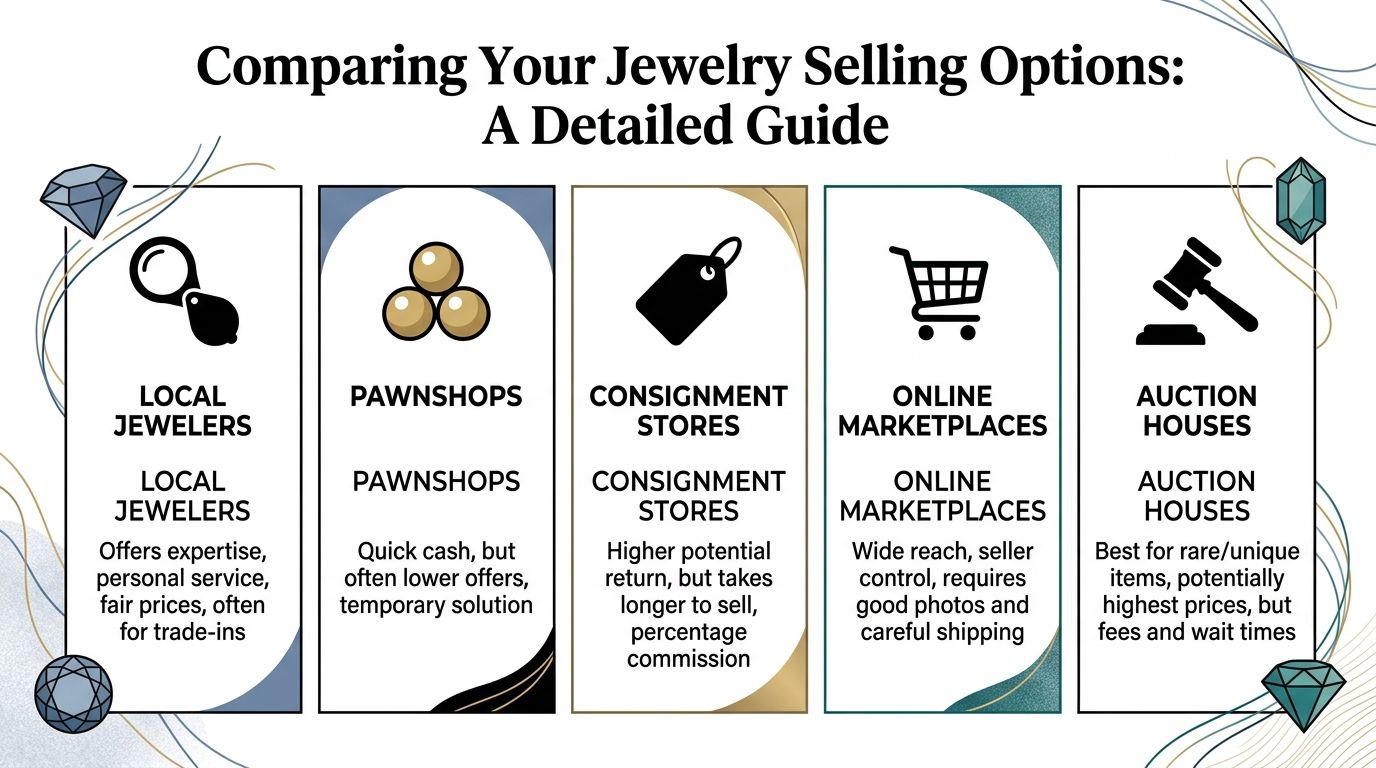
Comparison of Jewelry Selling Options
Selling Option | Expected Payout | Sale Speed | Best For |
|---|---|---|---|
Local jewelers | Often higher than scrap-focused outlets for wearable fine jewelry | Usually fast | Fine jewelry that can be resold in-store |
Pawnshops | Usually lower, especially if valued mainly for metal | Fast | Immediate cash needs |
Consignment stores | Potentially higher, but delayed and dependent on sale | Slow | Pieces with retail appeal when you're not in a rush |
Online marketplaces | Varies widely, seller keeps pricing control | Slow to moderate | Mid-range, vintage, or niche pieces if you can list and ship |
Auction houses | Can be strong for important items, but selective | Slow | High-value estate, signed, rare, or collector jewelry |
One of the clearest real-world differences is between local jewelers and scrap-driven outlets. Fox Fine Jewelry notes that local jewelers with retail inventories often pay 40 to 60 percent of an item's resale value, while pawn shops or "We Buy Gold" services may pay only for scrap metal weight, sometimes as low as 10 to 20 percent of actual market worth. That's why channel selection matters so much.
What each option gets right and wrong
A short video can help if you want a visual overview before deciding.
Local jewelers
Local independent jewelers are often the most practical middle ground. They can inspect condition in person, test metal, assess wearability, and decide whether a piece belongs in inventory.
Pros:
Personal evaluation
Better chance of recognition for craftsmanship or gemstones
Often straightforward for Atlanta-area sellers who want in-person discussions
Cons:
Offers vary a lot by store
Some jewelers still buy mostly for scrap
Not every store wants estate or designer inventory
Pawnshops
Pawn shops are built for speed. That can be useful if you need immediate liquidity, but it's usually not where you want to start with fine jewelry.
Pros:
Fast
Accessible
Useful when condition is poor and speed matters most
Cons:
Commonly metal-weight focused
Less upside for branded or estate pieces
Limited incentive to reward design history or collector demand
Consignment stores
Consignment can work for attractive wearable jewelry, but sellers often underestimate the time and lack of control involved.
Pros:
Retail-facing exposure
You may get more if the right buyer appears
Cons:
No immediate payout
Your item may sit for a long time
Price reductions can erode your net return
Online marketplaces
Private selling through online marketplaces works well for sellers who can write accurate listings, take sharp photos, respond to buyers, and ship securely. It's a common path for mid-tier pieces where the owner wants control over pricing.
Pros:
Broad audience
You control the listing
Good for vintage, signed, or stylistically specific pieces
Cons:
Time intensive
Higher fraud and return risk
You handle buyer questions, negotiation, and shipping
If that's the path you're considering, this guide on where to sell jewelry for cash gives a useful comparison of direct-sale channels.
Specialized buyers and auction houses
These are the right lanes for stronger material. If the piece is signed, has an important diamond, includes natural colored stones, or belongs in the estate market, general buyers often aren't the right audience.
Pros:
Better fit for premium items
More attention to provenance, brand, and rarity
Useful when privacy matters
Cons:
Selective
More documentation often needed
Auction timelines can be slow
How to choose based on your real goal
Use a simple matching rule:
Need speed: pawn or direct local buyer
Need fair value on wearable fine jewelry: independent jeweler or specialist buyer
Need market exposure for a niche or mid-tier piece: online marketplace
Need collector-level positioning: auction or estate specialist
The worst match is selling a resale-worthy piece to a melt-driven buyer.
Selling High-Value and Designer Jewelry
Important jewelry needs a narrower selling strategy. A Cartier bracelet, Tiffany & Co. diamond ring, Van Cleef & Arpels necklace, or a large diamond estate ring shouldn't be treated like an ordinary gold chain because buyers are evaluating more than metal and stone weight. They are evaluating desirability, authenticity, condition, documentation, and who the next buyer is likely to be.
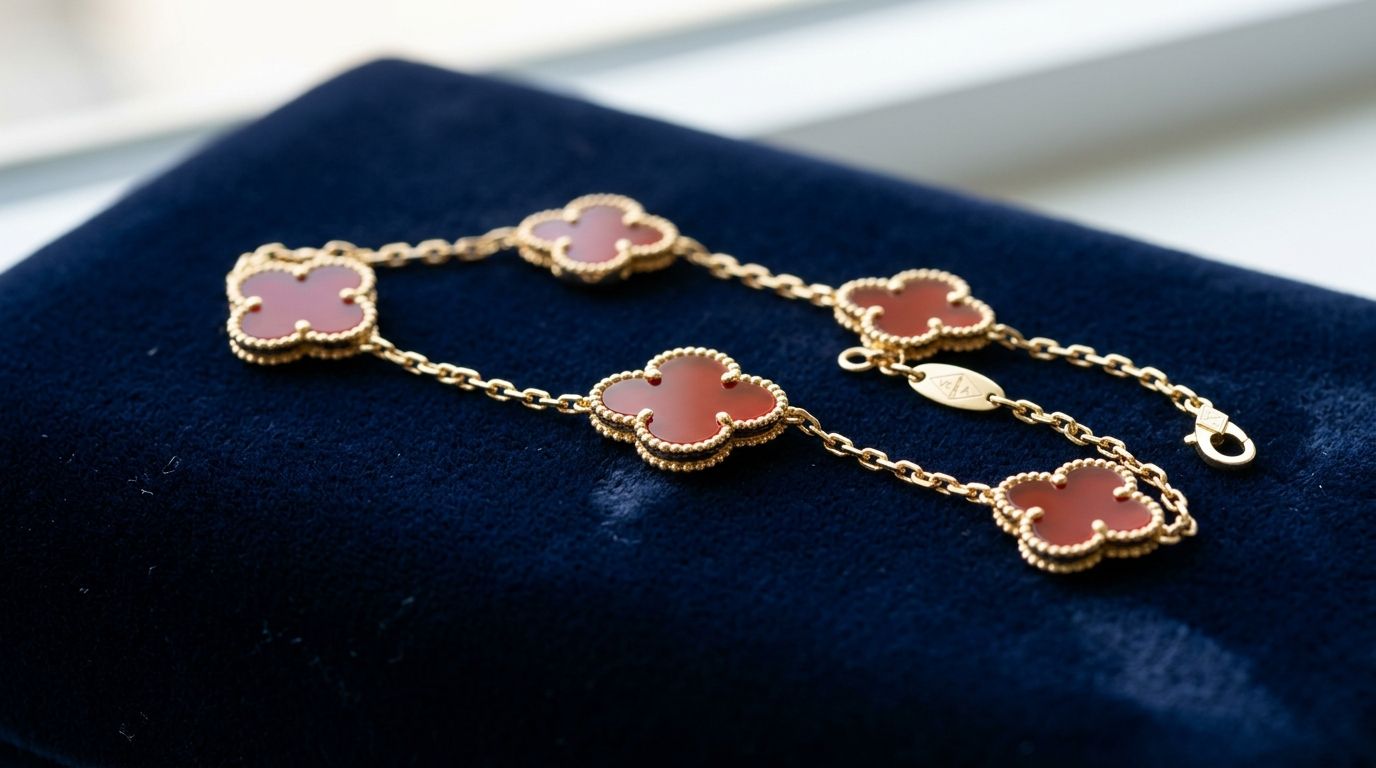
When auction houses make sense
For high-value estate jewelry, the auction route can be effective because it puts the piece in front of collectors and motivated global buyers. But it only works well when the item is good enough for that stage and documented well enough to inspire bidding confidence.
As discussed in this industry conversation about selling expensive jewelry, high-value estate jewelry often performs best through auction houses such as Christie's or Sotheby's, but official certification from a lab like GIA is important because unverified items face bidder skepticism and may sell for significantly less.
That point matters more than many sellers realize. If the center stone is important and the stone isn't documented, the market usually prices in doubt.
Buyer mindset: Strong jewelry can attract strong offers, but uncertainty always gets discounted.
When a specialist buyer is the better route
Auction isn't automatically the right answer. It can be slow, selective, and less appealing if you want privacy or a direct result. A specialized luxury buyer is often a better fit when you want a confidential transaction, faster turnaround, and someone who regularly evaluates signed jewelry, diamonds, and luxury watches under one roof.
In the Atlanta market, including Buckhead, Sandy Springs, Roswell, and nearby areas, sellers often prefer a direct in-person review for exactly that reason. A specialist can inspect hallmarks, verify whether a diamond has the characteristics expected for its claimed grade, and explain whether the value sits in the brand, the center stone, the mount, or all three.
For example, Antwerp Diamond is one local option that buys fine jewelry, diamonds, watches, and other luxury assets through in-person appointments and remote evaluations. For sellers who are comparing routes, a good reference point is understanding what a GIA certified engagement ring changes in buyer confidence.
Designer jewelry without paperwork can still sell. It just needs a buyer with the expertise to authenticate it properly. The stronger the brand and the higher the ticket, the less room there is for guesswork.
When to Get a Professional Jewelry Appraisal
A professional appraisal and a purchase offer are not the same thing. Sellers confuse these two constantly, and it leads to frustration when an insurance appraisal doesn't match a cash offer.
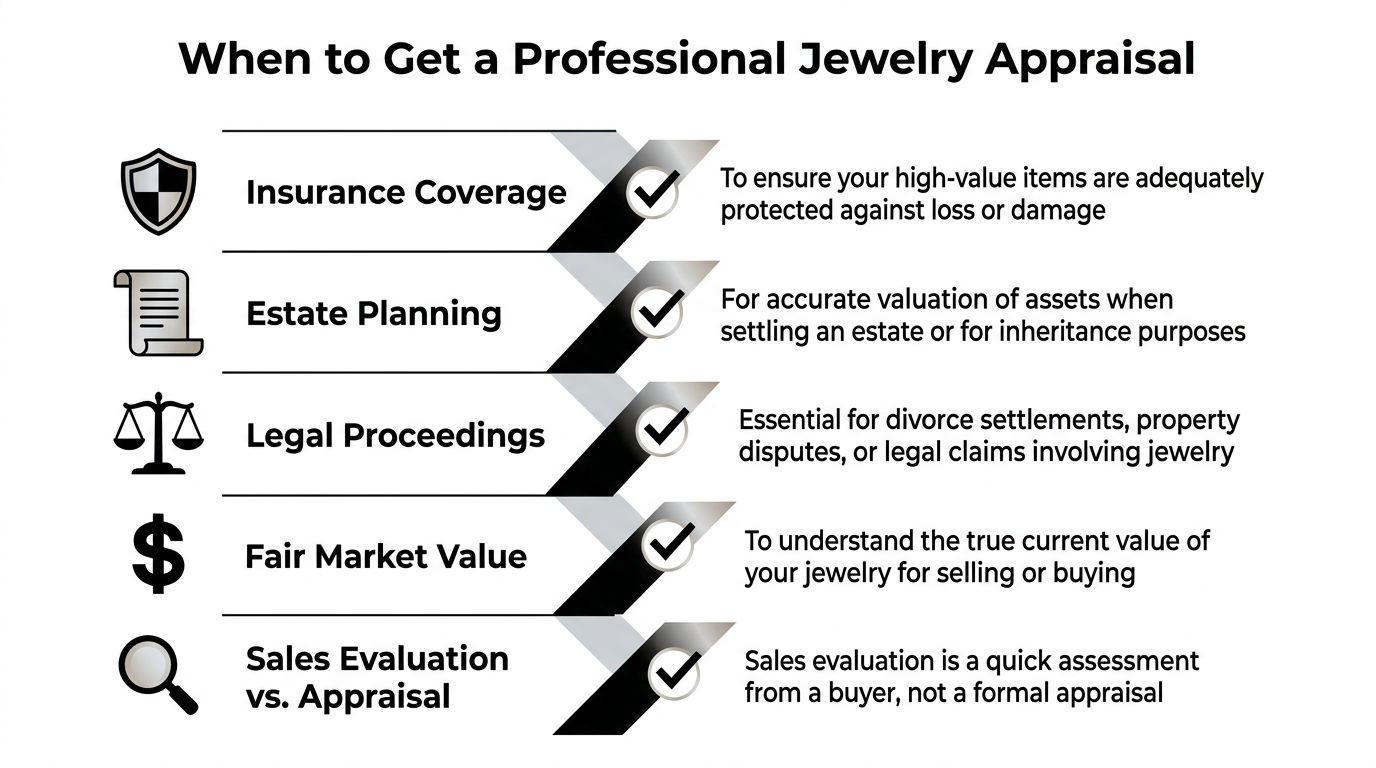
Appraisal versus purchase evaluation
A formal appraisal is usually a written valuation document prepared for a specific purpose such as insurance, estate administration, or legal matters. A buyer evaluation is a market-based offer to purchase the item now.
Those numbers can differ because the purposes differ. One documents value in a formal context. The other reflects what a buyer can realistically pay and resell within the current market.
The American Gem Society advises that a certified appraiser can determine an item's current value, and notes that certified jewelers in greater Atlanta often provide higher offers than pawn shops. That's especially relevant around Buckhead, Sandy Springs, and Midtown Atlanta, where sellers often have access to both certified jewelers and quick-cash outlets.
When paying for an appraisal is worth it
An appraisal usually makes sense in a few situations:
You need formal documentation: Insurance, estate, or legal use.
The item is unusual: Antique, signed, or difficult to identify.
You need clarity before selling: Especially if family members disagree on value.
The stone may be important: Large diamonds and notable colored stones benefit from professional documentation.
A formal appraisal may be less necessary if you're selling a straightforward gold chain, a common bracelet, or a commercial diamond piece and you're comparing direct offers. In those cases, a purchase evaluation may tell you what you need to know faster.
A written appraisal tells you what the item is and how it's being valued for a defined purpose. It doesn't obligate a buyer to pay that number.
If you want to understand the process before you spend money on one, this guide on how to appraise jewelry gives a practical overview.
Red Flags to Watch For and How to Sell Safely
The fastest way to lose money when selling jewelry is to deal with a buyer who wants you confused, rushed, or isolated from comparison. A fair transaction should feel clear. You should understand what is being tested, what is being valued, and why the offer lands where it does.
Warning signs during the offer process
Watch for these red flags:
Pressure to sell immediately: If someone insists the offer is only good for the next few minutes, step back.
No explanation of value: A serious buyer should be able to discuss metal purity, stone quality, brand relevance, condition, and resale logic.
Everything is treated as scrap: If diamonds, signed components, or vintage workmanship are dismissed without analysis, the buyer may only be interested in melt.
No paperwork or receipt: Even simple transactions should leave a record.
Reluctance to let you compare offers: Honest buyers know sellers shop around.
A low offer isn't automatically dishonest. A vague offer often is.
How to protect yourself in person and online
Selling safely looks different depending on the channel.
For in-person sales:
Choose established locations: Especially in Buckhead, Roswell, Sandy Springs, Alpharetta, or other active retail areas.
Bring documentation: It helps keep the conversation factual.
Ask direct questions: What part of the offer is based on metal, what part on stones, and what part on resale potential?
Don't leave items casually: If a piece stays for further review, confirm the intake process in writing.
For online or remote sales:
Use insured shipping procedures: Valuable jewelry should never be mailed casually.
Photograph the item before shipment: Include close-ups and serial details where relevant.
Read the buyer's process carefully: Especially return handling, timeline, and authentication steps.
For private marketplace sales, caution matters even more. If you're exploring remote options, this article on how to sell a diamond ring online is a practical reference for managing photos, shipping, and buyer screening.
One more point: selling high-value assets can have tax or reporting implications depending on your situation. It's wise to ask a qualified tax professional or attorney if you have concerns. This article isn't legal or tax advice.
Your Next Step to Selling Confidently
The right answer to where to sell old jewelry isn't one place for every piece. It depends on whether your item should be valued for melt, wearable resale, or collector demand, and whether your priority is speed, privacy, or maximum realistic return.
If you take one lesson from this, let it be this: don't accept a scrap conversation for a piece that may deserve a resale conversation. Check for documentation, understand the buyer's model, and compare offers when the item has real upside.
If you're in Atlanta, Buckhead, Sandy Springs, Roswell, Alpharetta, Brookhaven, Midtown Atlanta, or elsewhere in Georgia, an in-person evaluation can clarify that quickly. The same applies if you're mailing an item to a qualified buyer for review. A careful first evaluation usually saves sellers from the biggest pricing mistakes.
Frequently Asked Questions About Selling Jewelry
Can I sell broken jewelry?
Yes. Broken jewelry can still have value, especially if it contains gold, platinum, or usable diamonds. The key question is whether the piece still has resale appeal as jewelry, or whether the buyer will treat it as scrap.
Is old jewelry worth more for gold weight or for design?
It depends on the item. Plain damaged pieces often trade closer to metal value, while signed, antique, diamond-set, or wearable vintage pieces may be worth more intact.
Do I need the original box and papers?
Not always, but they help. Original receipts, branded packaging, diamond reports, and service records increase buyer confidence and can make authentication easier.
Should I clean jewelry before selling it?
Light cleaning is fine. Don't use harsh methods or heavy polishing, especially on vintage or gemstone jewelry.
Are local jewelers better than pawn shops?
For many fine jewelry pieces, local jewelers are often the better first stop because they may evaluate the item as something they can resell, not just melt. Pawn shops may be more useful when speed is the main goal.
Should I sell jewelry online or in person?
Online selling gives you pricing control and access to more buyers, but it requires more work and more caution. In-person selling is usually simpler and better for immediate evaluation.
What if I don't know whether my stone is real?
That uncertainty is exactly why a qualified evaluation matters. If the stone may be meaningful, don't assume a scrap buyer will identify its full value.
Is an appraisal required to sell jewelry?
No. Many pieces can be sold without a formal appraisal. But if the item is high-value, unusual, part of an estate, or likely to be disputed, professional documentation can help.
If you'd like a professional next step, Antwerp Diamond offers evaluations for fine jewelry, diamonds, watches, and other luxury items through in-person appointments and remote review options. Bring the piece, bring any paperwork you have, and use the evaluation to understand whether you're looking at melt value, resale value, or a more specialized market opportunity.


