

The best place to sell designer handbags online depends on your priority: consignment sites like RealReal or Vestiaire Collective may offer higher prices but require waiting for a sale, while direct buyers like Antwerp Diamond provide immediate, secure payment with no fees. That choice matters more now because the global luxury resale market is projected at USD 41.61 billion in 2026 and USD 60.11 billion by 2030, and it's growing faster than the firsthand market, which means sellers have more online options but also more fee structures, payout delays, and authentication standards to sort through.
If you're holding a Chanel flap bag, a Hermès Kelly, a Louis Vuitton Capucines, or even a well-used Gucci tote, you're probably asking a practical question, not a theoretical one: where can I sell this safely, and what will I receive in the end? That's the right question. The highest advertised resale price isn't always the highest net payout once commissions, return windows, processing charges, and time on market are factored in.
Table of Contents
Your Guide to Selling Designer Handbags Online
Individuals searching for where to sell designer handbags online usually balance three things: price, speed, and security. You usually get to optimize for two, not all three at once. If you want broad exposure and are willing to wait, consignment can make sense. If you want control and privacy, a direct sale often fits better.
The size of the resale market is part of why this decision matters. According to global luxury resale market projections, the market is valued at USD 41.61 billion in 2026 and projected to reach USD 60.11 billion by 2030, and it's growing three times faster than the firsthand luxury market. That tells you demand is real, but it doesn't tell you which selling path protects your outcome.
Practical rule: Choose the channel that matches your real goal, not the one with the most attractive headline payout.
A pristine Hermès Birkin with original receipt, dust bag, lock, clochette, and box belongs in a different sales conversation than a Chanel bag with corner wear or a Louis Vuitton piece that has been customized. High-demand bags can perform well on major resale platforms. Bags with condition issues, modifications, or missing accessories often need a different path and more realistic pricing.
That's why listicles that rank sites by commission alone aren't enough. Your result depends on what happens after the bag is submitted: authentication, pricing, buyer interest, return risk, and how long your money is tied up. If you also sell jewelry or other valuables, the decision process is similar to what's covered in this guide on where to sell jewelry online, where net proceeds matter more than the top-line number.
How to Prepare Your Handbag for a High Value Sale
A strong sale starts before you choose the platform. Preparation affects buyer confidence, appraiser confidence, and how much back-and-forth you'll deal with later.
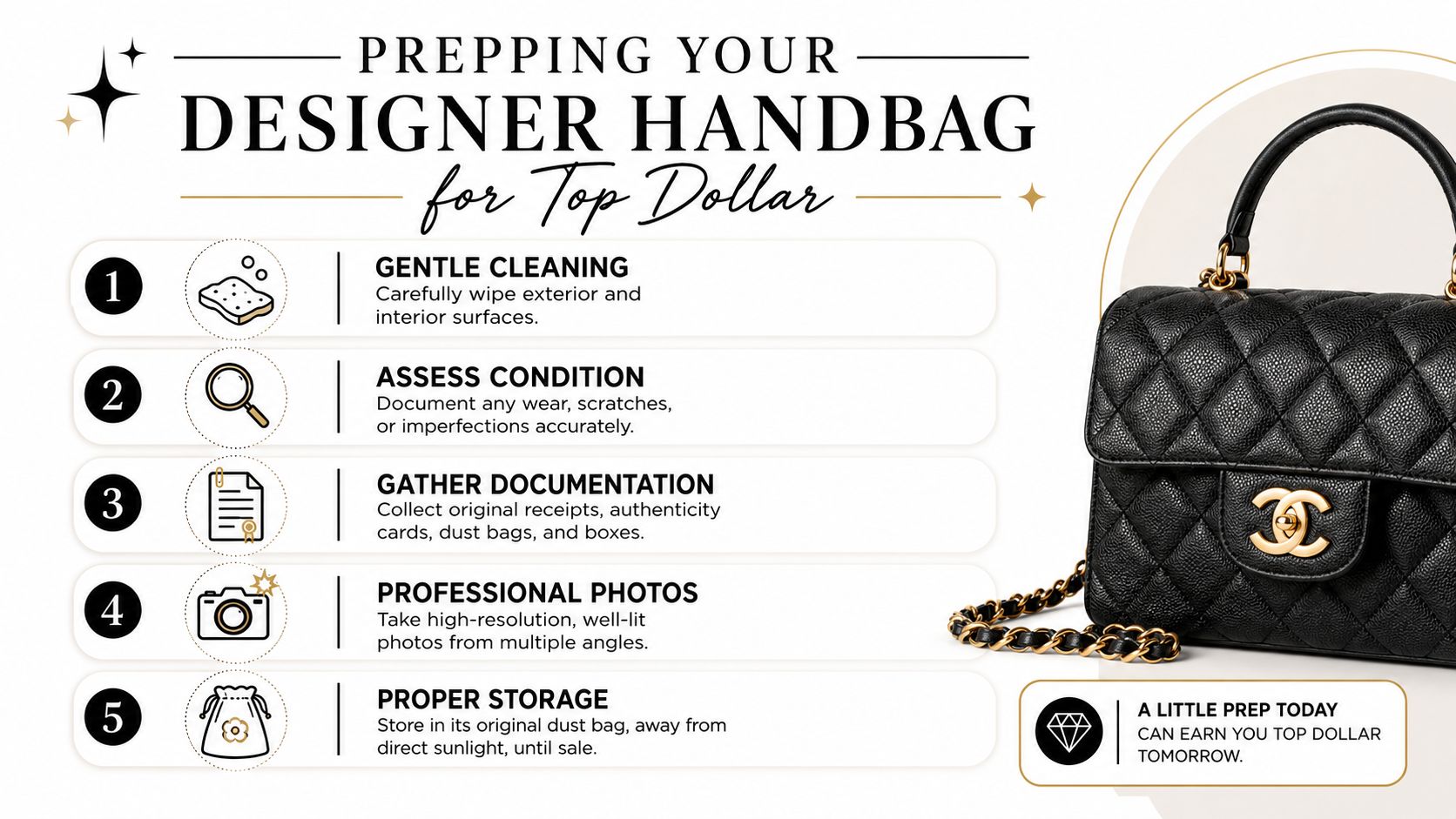
Start with condition and completeness
Don't overclean the bag. Gentle wiping is fine. Aggressive leather treatments, hardware polishing, or home repair attempts can hurt value because they change the original finish or create new red flags during inspection.
Use a simple checklist before you submit anything:
Empty every compartment: Check interior pockets, zip pouches, and removable inserts.
Gather what came with it: Include authenticity cards, receipts, dust bag, box, care booklet, straps, lock, keys, and any replacement paperwork.
Note flaws: Corner wear, glazing cracks, odors, stains, scratches, hardware fading, and repairs should all be disclosed.
Store it properly: Keep it in its dust bag and away from direct sun or moisture until shipment or evaluation.
An evaluator looks at more than whether the bag is genuine. They also want to know whether it will sell smoothly. A bag with full accessories and clear ownership history is easier to price and easier for the next buyer to trust.
Here's a useful visual reference for sellers who want their photos to look cleaner and more consistent before submitting a bag: this guide to product photography covers framing, lighting, and background basics in a way that's easy to apply at home.
Photographs affect trust before anyone reads your description
Good photos reduce disputes. They also reduce unrealistic negotiations because the condition is already visible.
Take clear images of the front, back, base, corners, interior, zipper pulls, hardware, handles, strap, logo stamp, serial details if present, and every flaw. Natural light helps, but consistency matters more than trying to make the bag look dramatic.
Buyers and authenticators don't punish honest photos. They punish surprises.
If you want a more detailed breakdown of lighting, angles, and close-up techniques, this article on how to photograph jewelry and valuables for resale is useful even if your item is a handbag. The same rule applies: clean documentation builds trust.
Comparing the Top Online Sales Channels
A seller with a Chanel Classic Flap often sees the same pattern. One platform advertises a high selling price, another promises fast payment, and a third offers more control. The right choice depends on net payout, time to cash, and how much risk you are willing to carry during the sale.
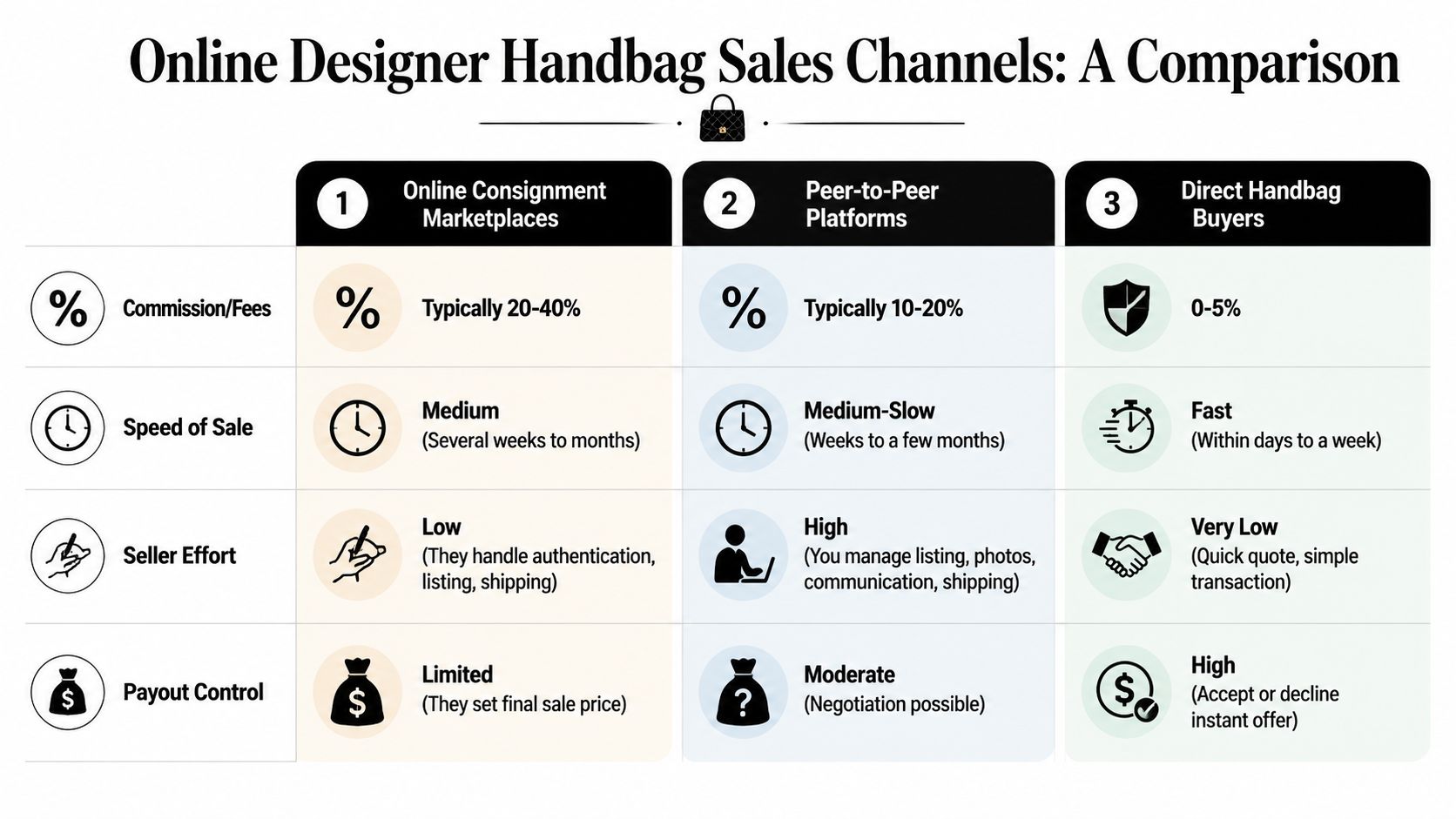
The advertised price is only one part of the equation. A higher headline number can still leave you with less after commission, payment processing, shipping, return exposure, price reductions, and weeks or months on the market. Sellers who compare channels well look at the full transaction, not just the top-line offer.
Online consignment marketplaces
Consignment marketplaces suit sellers who want the platform to handle the sale from start to finish. You send in the bag, the company authenticates it, creates the listing, fields buyer questions, and manages fulfillment.
That convenience costs money and time. Your payout comes after the bag sells, and in many cases after the return window or platform conditions are satisfied. You also give up some control over listing language, pricing changes, and markdown timing.
This platform is a familiar example. A retail-focused review of The RealReal seller terms notes that sellers may receive up to 85% of the final sale price, with a 3% processing fee and payout options such as direct deposit, mailed check, or store credit. For strong, in-demand bags, that structure can work well. For a seasonal piece or a bag in worn condition, the waiting period and possible markdowns can narrow the final result more than sellers expect.
Peer to peer platforms
Peer-to-peer platforms give you price control and direct contact with the buyer. That can raise your net if you know the market, write accurate listings, and handle shipping carefully.
It also turns you into the entire sales operation. You take the photos, answer condition questions, negotiate price, pack the bag, track the shipment, and deal with any dispute. For lower-value designer bags, some sellers accept that trade-off because the process is manageable and the fee structure may be lighter than consignment.
For high-ticket pieces, the risk profile changes. A Hermès, Chanel, or rare Louis Vuitton listing attracts more scrutiny, more attempted fraud, and more pressure around returns or authenticity challenges. The gross sale price may look attractive, but the effort and exposure are materially higher.
Direct luxury buyers
Direct buyers replace the open-market listing process with an offer model. You submit the bag details, the buyer evaluates the piece, and you decide whether the offer meets your target.
This route usually produces a lower top-line number than the best-case consignment outcome. In return, you get clarity. There is no waiting for the right retail buyer, no public listing, and no extended back-and-forth with strangers. For sellers who value speed, privacy, and a defined payout timeline, those advantages often outweigh the possibility of a slightly higher price elsewhere.
For a side-by-side look at fees, authentication handling, payout timing, and seller workload, review this comparison of top platforms for selling handbags.
Channel Type | Typical Payout Speed | Fee Structure | Best For |
|---|---|---|---|
Online consignment marketplaces | After the bag sells and platform conditions are met | Commission-based, sometimes plus processing deductions | Sellers of strong brands who can wait for exposure and want less hands-on work |
Peer to peer platforms | After buyer payment clears and shipment is complete | Platform fees plus your own shipping, insurance, and time costs | Sellers who want price control and can manage negotiation, packing, and dispute risk |
Direct luxury buyers | After evaluation and acceptance of the offer | Offer-based, typically without consignment commissions | Sellers who prioritize privacy, speed, and transaction certainty |
The best channel is the one that matches your priorities. If your goal is the highest possible upside and you can wait, consignment may fit. If your goal is control, peer-to-peer can work. If your goal is predictable payment with fewer moving parts, a direct buyer is often the cleaner choice.
Understanding Handbag Authentication and Valuation
You send a bag in expecting one number, then the final offer lands lower because the platform is pricing the bag for what it can sell, not for the best-case listing screenshot. That gap usually comes from two separate questions. Is the bag authentic, and what is the bag worth in the current resale market?
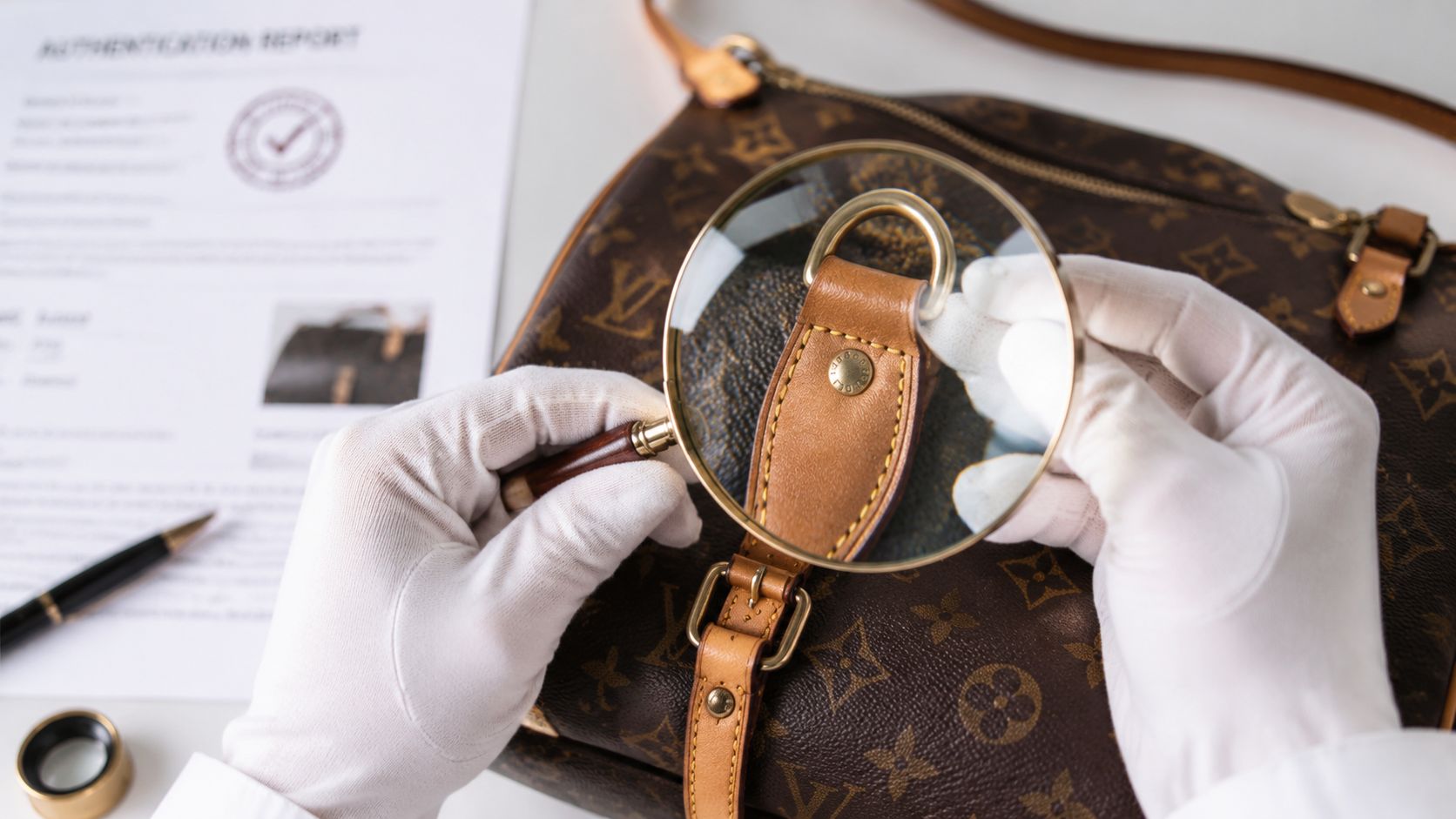
What appraisers actually look at
Authentication starts with consistency. A trained evaluator checks the materials, hardware, logo details, stamps, date or serial indicators where applicable, stitching, lining, glazing, and overall construction to confirm that the bag matches the brand's known production standards for that model.
Valuation is a separate step. It asks a harder market question: how easy is this exact bag to sell, in this condition, at this moment?
That is where seller expectations often drift away from resale reality. A black Chanel classic flap in a common sought-after size usually has a broad buyer pool. A seasonal piece in an unusual color, or a bag with visible corner wear and missing accessories, may still be fully authentic but attract fewer serious buyers and lower offers.
The strongest value drivers usually include:
Brand and model demand: Hermès, Chanel, Louis Vuitton, Goyard, Gucci, and certain Dior bags often resell well, but demand still depends on the specific style.
Condition: Wear on corners, handles, lining, hardware, and closure points directly affects buyer interest and pricing.
Completeness: A box, dust bag, receipt, strap, clochette, lock, or keys can support buyer confidence and improve marketability.
Originality: Repainting, redyeing, replaced parts, and customization can reduce the pool of buyers.
Current resale climate: Some bags sell steadily year-round. Others perform better only when a color, silhouette, or era is back in demand.
If you're selling Chanel specifically, this overview of how Chanel bag resale value is assessed shows how condition, rarity, and model popularity can change an offer.
Why the initial quote may not be your real payout
An opening quote is often a starting estimate, not a guaranteed result.
On consignment platforms, the final number can shift because the bag may need price reductions to sell, the commission applies only after the sale closes, and additional costs such as shipping, insurance, payment processing, or return handling may affect what you keep. On peer-to-peer marketplaces, the headline price can look stronger, but seller workload and dispute risk are part of the actual value equation too.
I tell sellers to ask one question before they ship anything: what is my net payout if the bag sells under normal platform conditions?
That means asking for the expected payout after commissions, markdowns, authentication review, and any other deductions. It also means asking how long similar bags have been taking to sell. A higher listed price is not automatically a better result if the bag sits for weeks, gets discounted, or exposes you to more transaction risk.
The practical goal is accuracy, not optimism. A realistic offer with clear terms is often worth more than an attractive estimate that leaves too many variables open.
The Secure Alternative Selling to a Direct Buyer
A seller receives a strong consignment estimate, then waits through intake, authentication, listing, and price reductions before the bag sells. If the goal is predictable cash and a controlled handoff, a direct buyer often produces the better net result even when the headline offer looks lower at first glance.
When certainty matters more than upside
The direct-buy model is simple. You submit details, the buyer reviews condition and authenticity, you receive an offer, and you decide whether the payout works for you.
The trade-off is clear. A direct buyer usually pays less than an ideal end-buyer sale because that buyer is taking on resale risk, authentication responsibility, and time-on-market. In return, the seller gets a defined number, a shorter timeline, and fewer opportunities for the transaction to go sideways.
That matters more than many sellers expect.
The highest advertised resale price is not always the highest real outcome. Net value depends on what reaches your account after commissions, markdowns, shipping exposure, return risk, and the time your bag spends off the market. Direct buyers appeal to sellers who want to reduce those variables.
A direct buyer often makes sense when:
You need a firm payout soon: Timing matters more than waiting for the right retail buyer.
You want a private transaction: The bag does not need to be publicly listed with photos and an asking price.
Your bag may be slower to place: Noticeable wear, missing receipts, replacement parts, or incomplete sets can limit consignment demand.
You want less seller involvement: No listing maintenance, buyer messages, negotiation cycle, or post-sale dispute handling.
One example is selling a designer handbag directly to Antwerp Diamond, where the transaction is structured as an evaluation and buyout rather than a consignment listing. That model fits sellers who value speed, clarity, and security over testing the highest possible market price.
Why local sellers in Atlanta often prefer private evaluation
For clients in Atlanta, Buckhead, Sandy Springs, Alpharetta, Roswell, Brookhaven, Midtown Atlanta, and the broader Georgia market, an in-person review can remove guesswork. Condition issues such as corner wear, odor, hardware scratches, handle glazing, or interior staining are easier to assess in hand than through photos.
That can cut down on revisions between the initial estimate and the final offer.
A private evaluation also gives sellers a clearer read on whether the bag is a strong direct-buy candidate or whether it belongs in a slower sales channel. For expensive or sentimental pieces, many sellers prefer that level of control and discretion.
A private evaluation is useful when the bag is expensive, sentimental, or difficult to grade from photos alone.
The same principle applies across luxury categories. Fine jewelry, watches, diamonds, and handbags all rely on condition details that can materially change value. Direct inspection does not guarantee a higher offer, but it often gives the seller a cleaner, safer decision.
Your Final Decision A Seller's Checklist
If you're still deciding where to sell designer handbags online, use this checklist to match the channel to your actual needs.
Questions that narrow the right path
Do you want the highest possible exposure? Consignment may fit if you're comfortable waiting and understand that the final payout depends on when the item sells and what deductions apply.
Do you want full control over pricing and communication? Peer-to-peer can work if you're comfortable photographing, listing, negotiating, and shipping the bag yourself.
Do you want a definite offer and a faster finish? A direct buyer usually makes more sense when certainty matters more than testing the market.
Red flags to catch before you ship
Unclear fee language: If you can't tell what your net payout will be, pause.
Vague authentication steps: High-value bags need a clear review process.
No discussion of condition details: Serious buyers and platforms ask specific questions for a reason.
Pressure to submit without understanding terms: Slow down and get the payout timeline in writing.
The right answer isn't the same for every bag. A pristine, highly liquid piece can justify patience. A bag with wear, missing accessories, or a seller who wants immediate funds usually points in a different direction.
Frequently Asked Questions About Selling Handbags
Can I sell a designer handbag that isn't in perfect condition
Yes, but condition changes the likely sales channel and price. Some platforms are selective about visible wear, alterations, or customization, while direct buyers or niche resale channels may be more practical for non-standard items.
Is insured shipping important for online handbag sales
Yes. High-value luxury goods should be shipped with tracking, insurance, and signature confirmation. If a platform or buyer provides an insured label, read the instructions carefully and follow them exactly.
Which brands usually have the strongest resale demand
Hermès, Chanel, Louis Vuitton, Goyard, Gucci, and certain Dior pieces are common names in resale conversations. That said, value still depends on the specific model, condition, color, size, and whether the bag comes with original accessories.
Should I clean my bag before sending it in
Light cleaning is fine. Heavy restoration, repainting, or hardware polishing usually isn't something to do on your own. If a bag needs repair, get advice before making changes that could affect authenticity review or value.
Is it better to consign or sell outright
It depends on your timeline and tolerance for uncertainty. Consignment may suit a seller who wants exposure and can wait. An outright sale may suit someone who wants immediate closure, a fixed offer, and no fee surprises.
If you want a professional opinion on your handbag before choosing a platform, Antwerp Diamond offers confidential evaluations for designer handbags and other luxury assets, with in-person options in Atlanta area locations and secure mail-in service for U.S. clients. It's a practical next step if you want to compare a direct offer against the slower consignment route and make the decision with clearer numbers.


