
A gold Jesus chain is a pendant depicting Jesus, and its value is driven first by the purity and weight of the gold, then by the quality of any diamonds. Prices can range from a few hundred dollars for simple 10K gold pieces to tens of thousands for heavy, diamond-encrusted 18K gold pendants.
If you're holding one right now, you're probably trying to answer two practical questions. Is it real gold, and what could it realistically sell for? Those are the right questions, because a Jesus piece can be part faith symbol, part fashion statement, and part precious metal asset, but buyers only pay for what they can verify.
A lot of owners inherit these pendants, receive them as gifts, or bought them years ago when style mattered more than metal details. By the time they think about selling, borrowing against it, or getting an appraisal, the biggest source of confusion isn't the design. It's whether the piece is solid gold, hollow gold, plated metal, or a diamond-heavy pendant with less gold value than expected.
Table of Contents
What Defines a Gold Jesus Chain?
The basic definition
A Gold Jesus chain usually refers to a chain paired with a Jesus piece, a pendant showing the face of Jesus Christ, often with a crown of thorns. In jewelry and resale terms, the pendant matters more than the chain style because that's where the visual identity, craftsmanship, and much of the value often sit.
The design has deep religious roots, but its modern identity is also tied to fashion and music culture. The Jesus piece, often referred to as a gold Jesus chain in hip-hop culture, is a pendant depicting the face of Jesus Christ wearing the crown of thorns. Its modern prominence in the hip-hop community began in the 1990s, with rapper The Notorious B.I.G. establishing it as a high-status symbol, as noted by So Icy Jewelry's history of the Jesus pendant.

That dual identity matters when you evaluate one. Some pendants are simple devotional pieces in plain yellow gold. Others are oversized luxury pieces with diamond pavé, sculpted facial detail, and heavy bails built for thick rope chains or Cuban links.
For owners trying to understand style and construction, this guide on buying gold chains helps frame how chain type, thickness, and pendant pairing affect overall wear and resale appeal.
A Jesus piece isn't just one thing. In the market, it can sit anywhere between religious jewelry, custom hip-hop jewelry, and a precious metal item sold mainly for intrinsic value.
Why gold matters beyond looks
Gold isn't used only because it looks expensive. In religious jewelry, gold has long carried symbolic meaning tied to purity and divinity. That symbolism helps explain why yellow gold, white gold, and sometimes rose gold remain the preferred metals for Jesus pendants even when silver is also common.
You'll also see a wide spread in construction quality:
Solid gold pieces hold the strongest intrinsic value because their worth is tied to actual gold content.
Hollow gold pieces can still be real gold, but they weigh less and are easier to dent.
Gold-plated or PVD-coated pieces may look similar in photos, but they trade very differently when it's time to sell.
Diamond-set versions can carry substantial additional value, but only if the stones and workmanship check out.
The style side can be loud, but the resale side is disciplined. Buyers separate symbolism from material facts very quickly.
How to Tell If a Jesus Piece Is Real Gold
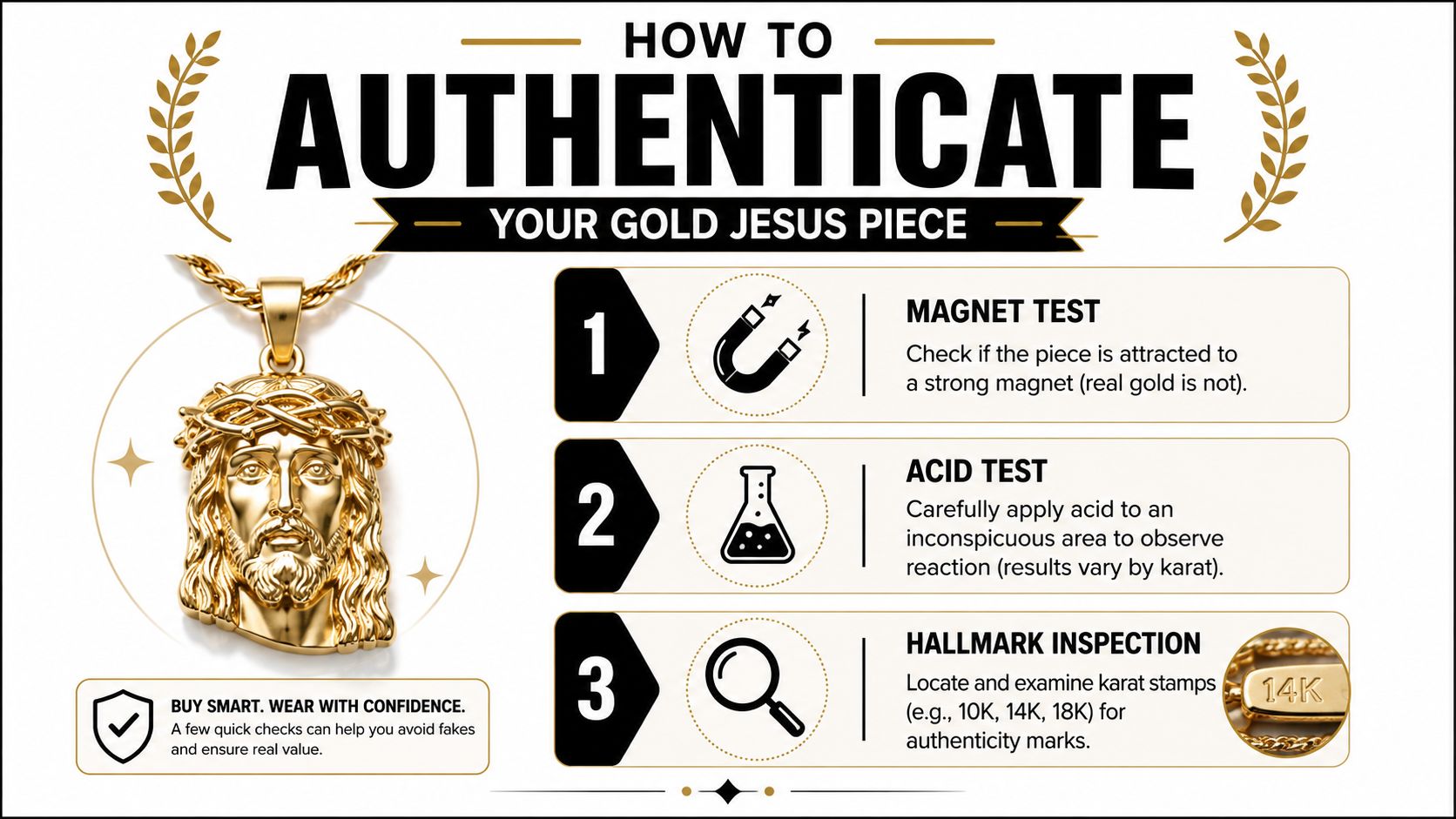
The first thing to check is the stamp. If a pendant is real gold, there is often a hallmark on the back of the pendant, the bail, or the clasp if the chain is included. Common marks include 10K, 14K, 18K, 417, 585, and 750.
A lot of confusion starts online, where photos make plated jewelry look solid. A 2024 FTC report found that 32% of online gold jewelry listings in the U.S. misrepresent metal composition, with hip-hop jewelry being the highest-risk category, which is why verifying hallmarks and material quality matters before you sell, according to this summary referencing the FTC jewelry enforcement finding.
Start with the hallmark
Hallmarks tell you the stated gold purity. They don't guarantee authenticity on their own, but they're the first filter.
If you see a clean 14K or 585 stamp, that's a positive sign. If you see wording like plated, GP, HGE, or PVD, you're no longer dealing with a solid gold piece in the standard resale sense.
Use a loupe if you have one. A phone flashlight also helps. Look for:
Back of the pendant: Many makers stamp the reverse side.
Inside or side of the bail: This is a common spot on custom pendants.
Clasp area on the chain: Sometimes the chain and pendant are different metals.
For a deeper breakdown of purity differences, this article on the difference between 14K and 18K gold is useful when you're comparing durability, color, and resale expectations.
Gold Karat Comparison
Karat | Gold Purity | Common Hallmarks | Characteristics |
|---|---|---|---|
10K | Lower purity than 14K and 18K | 10K, 417 | More durable, often used in everyday jewelry, lower intrinsic gold value per gram |
14K | Higher purity than 10K, lower than 18K | 14K, 585 | Strong balance of durability and gold content, common in fine jewelry |
18K | Higher purity than 14K and 10K | 18K, 750 | Richer gold color, higher intrinsic gold content, softer than lower karat options |
Simple checks you can do before a professional test
A home check won't replace a proper evaluation, but it can keep you from making obvious mistakes.
Magnet test: Real gold isn't magnetic. If the pendant strongly jumps to a magnet, be cautious.
Surface wear check: Look around edges, the bail, and raised details. Plated pieces often show a different base metal underneath once they wear.
Consistency check: If the chain is stamped but the pendant isn't, or vice versa, don't assume both are the same material.
Later in the process, a professional may use acid testing, electronic testing, or other bench methods to verify what the piece is. That's the stage where plated, filled, and solid gold differences become clear.
A visual walkthrough can help if you've never inspected jewelry before:
Practical rule: If you're planning to sell in Atlanta, Buckhead, Sandy Springs, Alpharetta, Roswell, Brookhaven, Midtown Atlanta, or elsewhere in Georgia, don't rely on online listing language alone. Rely on the hallmark, the weight, and a professional test.
What Is My Gold Jesus Chain Worth?
A Gold Jesus chain is valued like a layered equation. The gold sets a floor, the diamonds may raise it, and the craftsmanship and resale demand determine whether the piece trades above basic material value.
The gold in a pendant carries symbolic weight, signifying purity and divinity, which is why it's the preferred metal. Its value is tied directly to its weight and the current market price of gold, which forms the basis of appraisal, as explained in this overview of the meaning and styles of Jesus pendants.
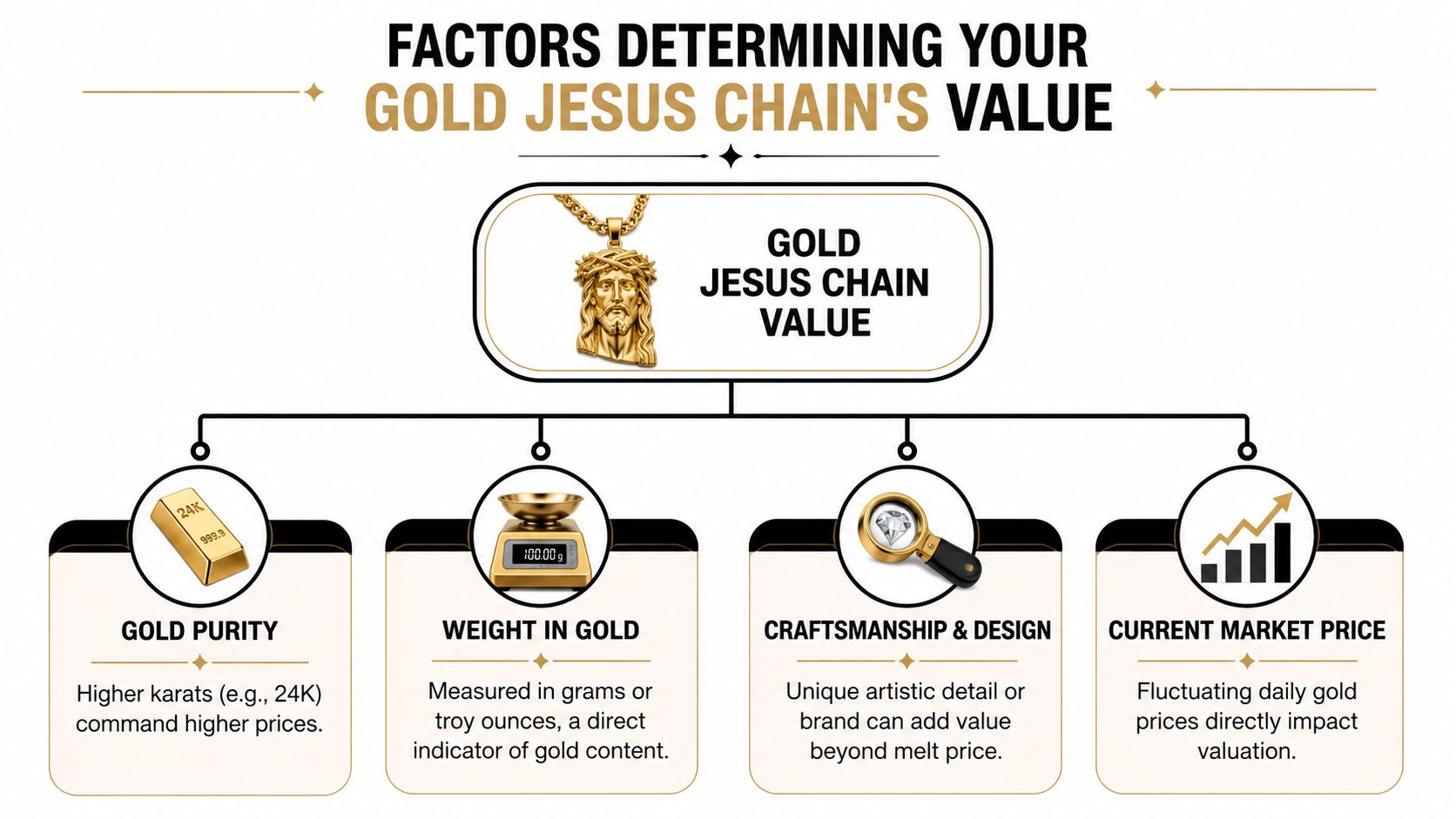
The four factors that control value
Gold purity and weight
This is the foundation. A heavier 18K pendant contains more gold value than a lighter 10K pendant, assuming both are solid.Diamond quality
Not all diamond-set Jesus pieces deserve a premium. Buyers look at the basics, such as cut, color, clarity, and carat weight, plus whether the stones appear natural, treated, or lower-grade commercial goods.Craftsmanship and design
Hand-finished detail, strong casting, clean stone setting, and a well-made bail can add value. Poorly made custom pieces may look impressive at a distance but trade close to material value.Condition and marketability
Bent bails, missing stones, repaired loops, thinning chains, and obvious plating wear all hurt confidence. Clean, structurally sound jewelry is easier to resell.
A solid pendant can also outperform a flashy one. That's why many owners are surprised when a simpler heavy piece gets a stronger offer than a large iced-out pendant with weak stone quality.
For context on how weight and solid construction affect value, this page on a solid gold Cuban chain offers a useful comparison point.
Why two similar pendants can get very different offers
Two Jesus pieces can look nearly identical in a photo and still appraise very differently in person.
One may be solid 14K with secure natural diamonds and good finish. The other may be plated, hollow, heavily repaired, or set with stones that don't add much market value. The buyer isn't paying for the idea of the pendant. The buyer is paying for verified gold content, verified stones, condition, and resale confidence.
Think of valuation like four dials, not one price tag. When purity, weight, diamonds, and craftsmanship all turn up together, the number rises quickly.
Care and Cleaning Tips to Preserve Value
Condition affects confidence, and confidence affects offers. Even when a buyer mainly values a pendant for gold content, damage still creates problems during inspection and resale.
Safe cleaning at home
Use warm water, mild soap, and a very soft brush. Rinse carefully and dry with a lint-free cloth. If the pendant has diamonds, make sure residue doesn't build up behind the settings or inside the crown details.
Store the pendant separately from other jewelry. A soft pouch or lined box helps prevent scratching, chain tangles, and impact damage around the bail.
What hurts resale condition
Avoid harsh household cleaners, abrasive polishing compounds, and aggressive brushing. Those can wear down finish, loosen stones, or leave the piece looking over-polished.
If your pendant has sentimental value and you also want to preserve its metal quality, this guide on a 24 carat gold ring offers helpful context on how softer high-gold items need gentler handling.
Don't polish away detail. On a Jesus piece, facial features, hair texture, and crown-of-thorns definition matter to both appearance and buyer confidence.
How to Sell Your Gold Jesus Chain Safely
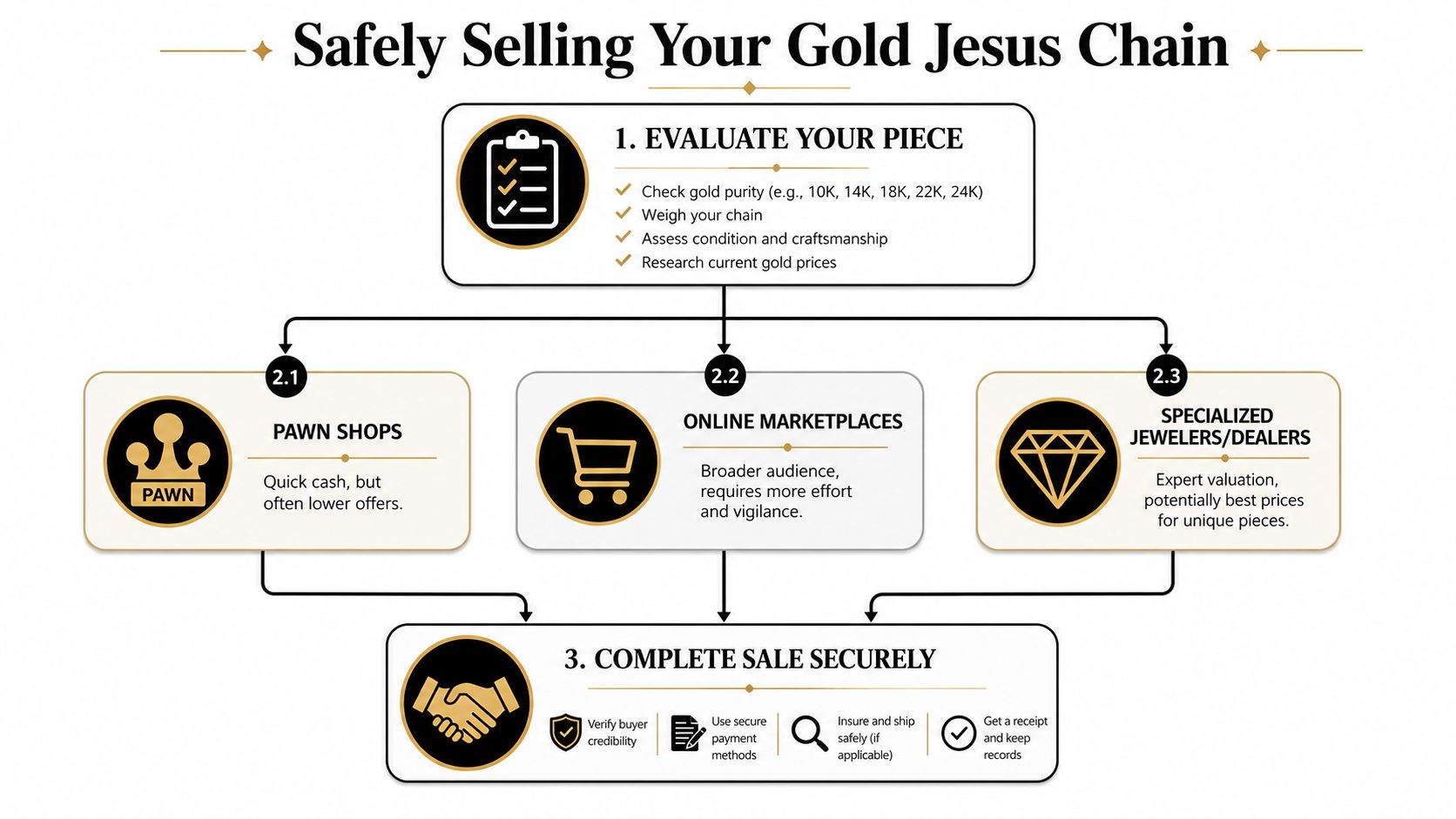
Selling a Jesus piece safely comes down to three things. Know what you have, choose the right selling channel, and keep the process documented.
Some of these pendants carry family or religious meaning in addition to metal value. In many cultures, gold chains featuring religious pendants are given for significant life events like baptisms. When selling such an item, its history and personal heritage are best valued by a specialist who understands both its material and market worth, as explained in this history and symbolism guide for men's gold chains.
Comparing your selling options
Selling Option | Best For | Trade-Offs |
|---|---|---|
Pawn shops | Fast local transactions | Speed can come with less detailed evaluation, especially for custom or diamond-set pendants |
Online marketplaces | Sellers willing to photograph, list, message buyers, and ship | More effort, more risk, and more room for disputes over authenticity or condition |
Specialized jewelry buyers | Owners of solid gold, diamond, custom, or high-value pieces | Requires proper review, but usually gives a clearer breakdown of how the offer was reached |
If you're comparing channels, the main practical difference is how each buyer looks at the piece. A general cash buyer may focus mostly on metal. A jewelry specialist is more likely to separate gold value from stone value and design value.
What to bring before you sell
Bring the pendant, the chain if it belongs with it, any receipts, appraisals, original box, repair records, or diamond paperwork if you have them. Documentation doesn't create value by itself, but it reduces uncertainty.
For owners researching options before choosing a buyer, this article on the best way to sell gold jewelry lays out the practical differences between common selling routes.
Use a simple checklist:
Photograph the item first: Take clear images of the front, back, hallmark, clasp, and any visible damage.
Separate facts from assumptions: "Gift from family" is useful context. "Definitely 18K" needs a stamp or test result.
Ask how the offer is calculated: Serious buyers should be able to explain whether they're paying for gold, diamonds, craftsmanship, or a mix.
For sellers in Atlanta, Buckhead, Sandy Springs, Alpharetta, Roswell, Brookhaven, Midtown Atlanta, and the wider Georgia market, in-person review can be especially helpful because custom pendants often need hands-on inspection. If you're considering shipping instead, make sure the process is insured and clearly documented before you send anything out.
Frequently Asked Questions About Gold Jesus Chains
The Jesus Piece is a specific type of pendant featuring the face of Jesus Christ, often with a crown of thorns and encrusted with diamonds, serving as both a religious tribute and a status symbol, as described in this definition of a Jesus Piece.
Can a Jesus piece have value beyond melt price?
Yes. If the pendant has quality diamonds, strong workmanship, desirable design, or identifiable custom work, a buyer may value it above basic gold content. If it's damaged, generic, or stone quality is weak, the offer may lean much closer to intrinsic material value.
Is a gold Jesus chain appropriate as a gift?
In many families, yes. Religious pendants are often given for baptisms and milestone events. The personal meaning can be just as important as the metal, especially when the pendant has been kept for years.
Can I use a gold Jesus chain as collateral for a loan?
Sometimes, depending on the lender and the verified value of the piece. In practice, the same factors that affect a sale also affect lending decisions, such as gold purity, weight, diamond quality, condition, and how easily the item can be authenticated and resold. Terms vary, so review them carefully before agreeing to anything.
Do diamonds always increase the selling price?
No. Diamonds can add value, but only when they're genuine, well-set, and commercially desirable. Small, low-grade, damaged, or heavily included stones may add less than owners expect.
Should I clean my pendant before getting it evaluated?
Yes, but gently. Remove dirt and skin oils with mild soap and water, then dry it carefully. Avoid harsh products or polishing methods that can damage detail or loosen stones.
Is the chain valued separately from the pendant?
Often, yes. A buyer may weigh and assess the chain and pendant individually, especially if one is solid gold and the other isn't, or if the pendant carries most of the collectible or design value.
If you want a professional opinion on a Gold Jesus chain, Antwerp Diamond offers a practical next step. You can request an evaluation, visit for a private review in Atlanta, or speak with a specialist about selling, appraisal questions, or borrowing against a valuable jewelry piece without pressure or obligation.