

A diamond Jesus piece is a religious pendant, usually the face or bust of Jesus, made in 10K, 14K, or 18K gold and set with diamonds. Its value comes from the same things that drive any fine jewelry resale decision: gold purity and weight, total diamond carat weight and quality, craftsmanship, and condition.
If you're holding one now, you're probably trying to answer a practical question, not a cultural one: what is it worth, and how do you sell it without getting a vague, lowball offer? That matters even more with a diamond Jesus piece because it's often a non-branded luxury item, which means resale value depends less on name recognition and more on what a trained buyer can verify in the metal, stones, and build quality.
Table of Contents
What Is a Diamond Jesus Piece
A Diamond Jesus Piece is a fine jewelry pendant that depicts the face or bust of Jesus and combines religious imagery with precious materials. In the market, it sits at the intersection of personal symbolism, fashion, and asset value.
Historically, it became an established hip-hop jewelry category because it paired visible religious iconography with luxury materials. Today, it isn't treated as a niche one-off item. Street-luxury retailers sell it as a standard collection across multiple gold colors and karat levels, and one retailer notes a 5,000-square-foot showroom in Manhattan's Diamond District, which shows how mainstream the category has become in the U.S. luxury jewelry market (Frost NYC diamond Jesus piece collection).
That cultural recognition matters. It creates demand. But when it's time to sell, sentiment doesn't set the number. A buyer looks at the pendant the same way they'd assess other diamond jewelry: metal content, diamond content, workmanship, wear, repair history, and how easy the design will be to place back into the market.
Practical rule: A diamond Jesus piece can be emotionally important and still need a strictly objective valuation.
If your pendant is attached to a chain, the chain may carry separate value as well. Owners often overlook that part, especially if the focus has always been the pendant itself. If you're evaluating the full set, it helps to understand how pendants and chains interact in resale, which is why many sellers also review guidance on buying gold chains.
Anatomy of a Jesus Piece Styles and Materials
Some pendants look expensive from across the room. Others hold value because of what they're made of, not how loud they appear. A diamond Jesus piece can be either.
The core build
Published retail specs show that a diamond Jesus piece is usually a small-to-medium pendant built in 10K, 14K, or 18K gold, often with about 0.33 carats on minimalist versions and up to 2.8 carats on more fully iced retail examples, while larger custom pieces can reach 5.00 carats or more. One standard model measures 1.5 inches in total length including the bale and weighs about 10 grams in 14K gold or 11 grams in 18K gold, which helps explain why many pieces wear as compact luxury pendants rather than oversized necklaces (Icebox Jesus diamond pendant specifications).
That range tells you something useful right away. There isn't one standard Jesus piece. There are lighter, simpler pendants meant for daily wear, and there are heavier, diamond-dense versions built to read as high-visibility luxury jewelry.
Common design formats include:
Classic face pendants, usually the most recognizable and easiest for buyers to categorize.
Bust-style pieces, which may use more gold and allow more sculptural detail.
Minimal diamond accents, where the value leans more heavily on gold and craftsmanship.
Fully iced pavé designs, where surface coverage and setting quality matter more.
Gold choice changes both look and resale strategy
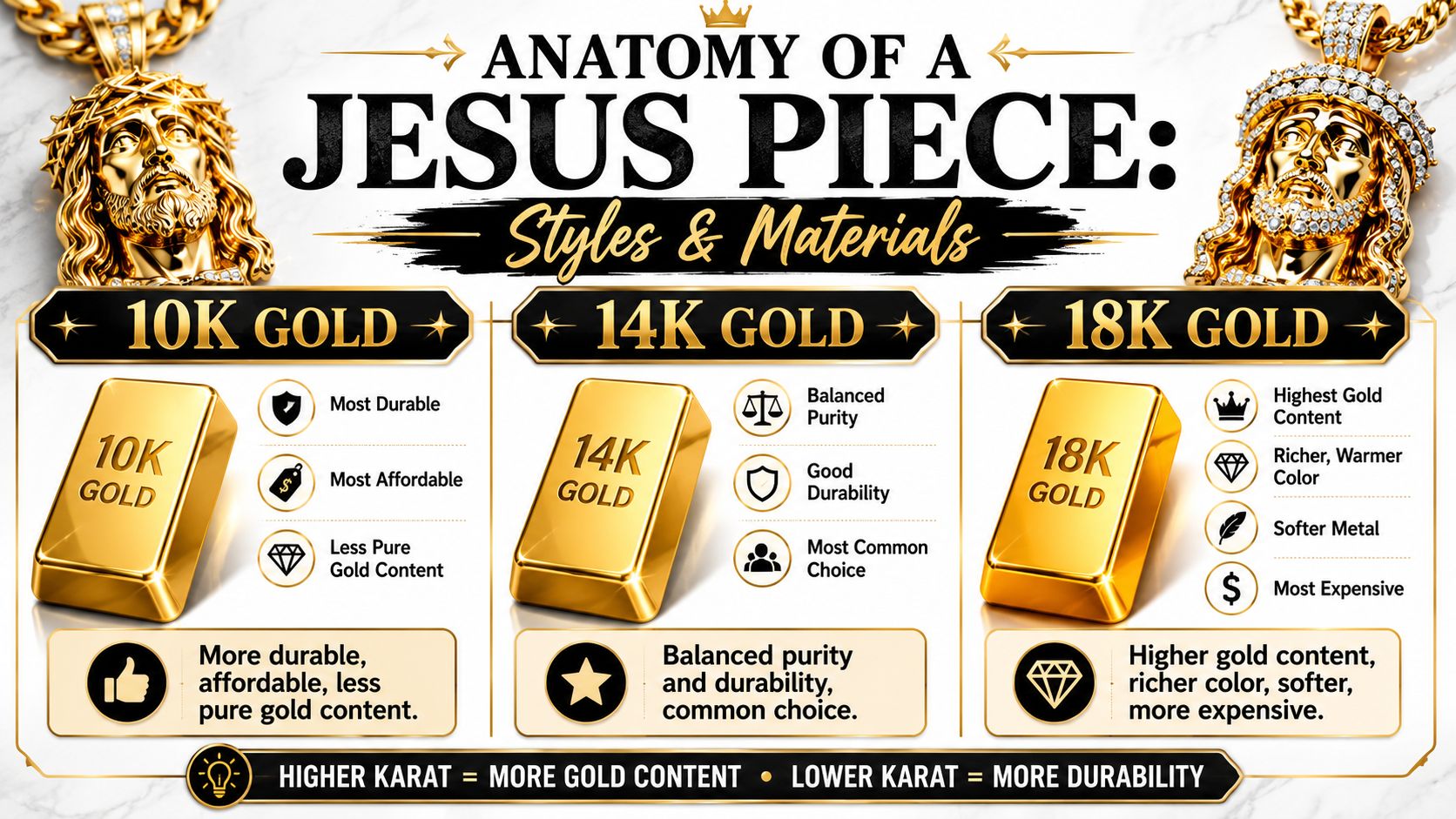
Gold purity affects appearance, wear resistance, and market positioning.
10K gold tends to appeal to buyers who prioritize durability and a lower entry point.
14K gold is often the practical middle ground in fine jewelry because it balances gold content and wearability.
18K gold carries richer gold color and higher gold content, but it's typically softer.
Color also matters. White gold creates a sharper contrast with colorless diamonds. Yellow gold gives a warmer, traditional look. Rose gold can feel more custom and fashion-driven. None of those automatically makes a pendant worth more by itself, but they can influence buyer preference and how broad the resale audience is.
A well-made piece usually shows clean finishing around the face, secure stone setting, and a bale proportioned to the chain size. If you're trying to understand why two pendants that look similar receive different offers, the gold alloy is one part of the answer. This overview of the difference between 14 K and 18 K gold is useful when you're comparing purity, wear, and resale expectations.
What Are the Key Factors That Determine Its Value
A diamond Jesus piece doesn't trade on symbolism alone. In the resale market, buyers price what's there, what's authentic, and what can be sold again with confidence.

Start with what can be measured
Published retail specifications for typical luxury-market diamond Jesus pieces commonly sit around 10K to 14K gold, with roughly 10 to 35 grams of gold and diamond totals from about 1.75 to 5.25 ctw, showing that value is driven by both metal mass and stone coverage (Frost NYC 14K yellow gold Jesus head pendant specs).
That leads to the first valuation layer:
Value driver | What a buyer checks | Why it matters |
|---|---|---|
Gold content | Karat stamp, confirmed purity, gram weight | Higher purity and greater weight usually increase intrinsic material value |
Diamond weight | Total carat weight, spread, and coverage | More diamond content can increase value, but only if the stones are real and well set |
Stone quality | Color, clarity, cut appearance, matching | Uneven or lower-grade melee can limit resale appeal |
Construction | Thickness, solder points, bale strength, setting type | Better build quality supports durability and buyer confidence |
When I assess a piece like this, I don't start by asking whether it's popular. I start by separating the pendant into components. How much verified gold is present, how much verified diamond weight is present, and how effectively are those materials assembled?
Then assess what the eye can miss
Two pendants can share similar weight and still perform very differently in resale. That's where craftsmanship, condition, and marketability come in.
Look closely at these factors:
Setting quality: Pavé and prong-set melee should sit evenly, without obvious gaps, crooked rows, or exposed weak spots.
Diamond consistency: Mismatched stones, visible tint shifts, or heavy wear can affect the offer.
Repairs: Re-tipped prongs, soldered bales, or replaced stones aren't necessarily deal-breakers, but they do change the analysis.
Maker recognition: A known jeweler, original receipt, or branded packaging can help support confidence, even if the piece isn't from a major heritage jewelry house.
Buyers don't pay retail logic on resale. They pay for verified materials, condition, and how sellable the piece is right now.
That last point is where many owners get stuck. A pendant may have cost a substantial amount to make, especially if it was custom. But custom labor isn't always fully recoverable. The market often rewards the parts buyers can verify quickly and the designs they can resell without a long holding period.
If you're trying to estimate what your stones contribute to the total, a separate review of the fair market value for your diamonds helps clarify why total carat weight alone doesn't settle the question.
How to Authenticate and Appraise Your Pendant
Authentication should happen before anyone talks seriously about price. A diamond Jesus piece may look convincing under normal lighting and still contain issues that only show up during testing.
Authentication comes before pricing
A professional evaluation usually starts with the basics:
Hallmarks and stamps
The evaluator checks for marks such as 10K, 14K, or 18K and examines whether the stamp placement and wear are consistent with the piece.Metal verification
Gold purity should be tested, not assumed from color alone.Diamond inspection
Melee diamonds are checked for authenticity, matching, setting security, and visible treatment or replacement issues when possible.Construction review
The buyer looks at the bale, joints, back finish, prongs, and any signs of structural weakness.
The harder category is customization. Product signals in the market show continued experimentation with custom builds, different gold colors, and one-off pieces, but it's still unclear whether those design choices improve liquidity or narrow the buyer pool in major markets like Atlanta (Avianne & Co. diamond Jesus pendants).
That matters because originality and liquidity aren't always the same thing. A purple-gold accent, unusual face shape, or highly specific custom engraving may make a pendant more meaningful to the owner, while making it less straightforward for the next buyer.
Appraisal value and selling value are not the same
Owners often bring in paperwork that lists a retail replacement figure for insurance. That document can be useful for ownership records, but it isn't the same as a resale offer.
A market-based appraisal asks different questions:
How much verified gold is present?
Are the diamonds commercial quality melee, or stronger?
Is the design broad enough to resell easily?
Does the condition require repair before resale?
A formal jewelry appraisal can describe replacement cost. A selling offer reflects present market demand, condition, and risk.
If you want a clearer sense of how professionals separate those numbers, this guide on how to appraise jewelry is a useful starting point.
Proper Care and Cleaning for Your Diamond Jewelry
A clean pendant presents better, wears better, and is easier to inspect accurately. It also gives you a better chance of catching loose stones before they become lost stones.
Safe at-home cleaning
Use a conservative method. You don't need aggressive products.
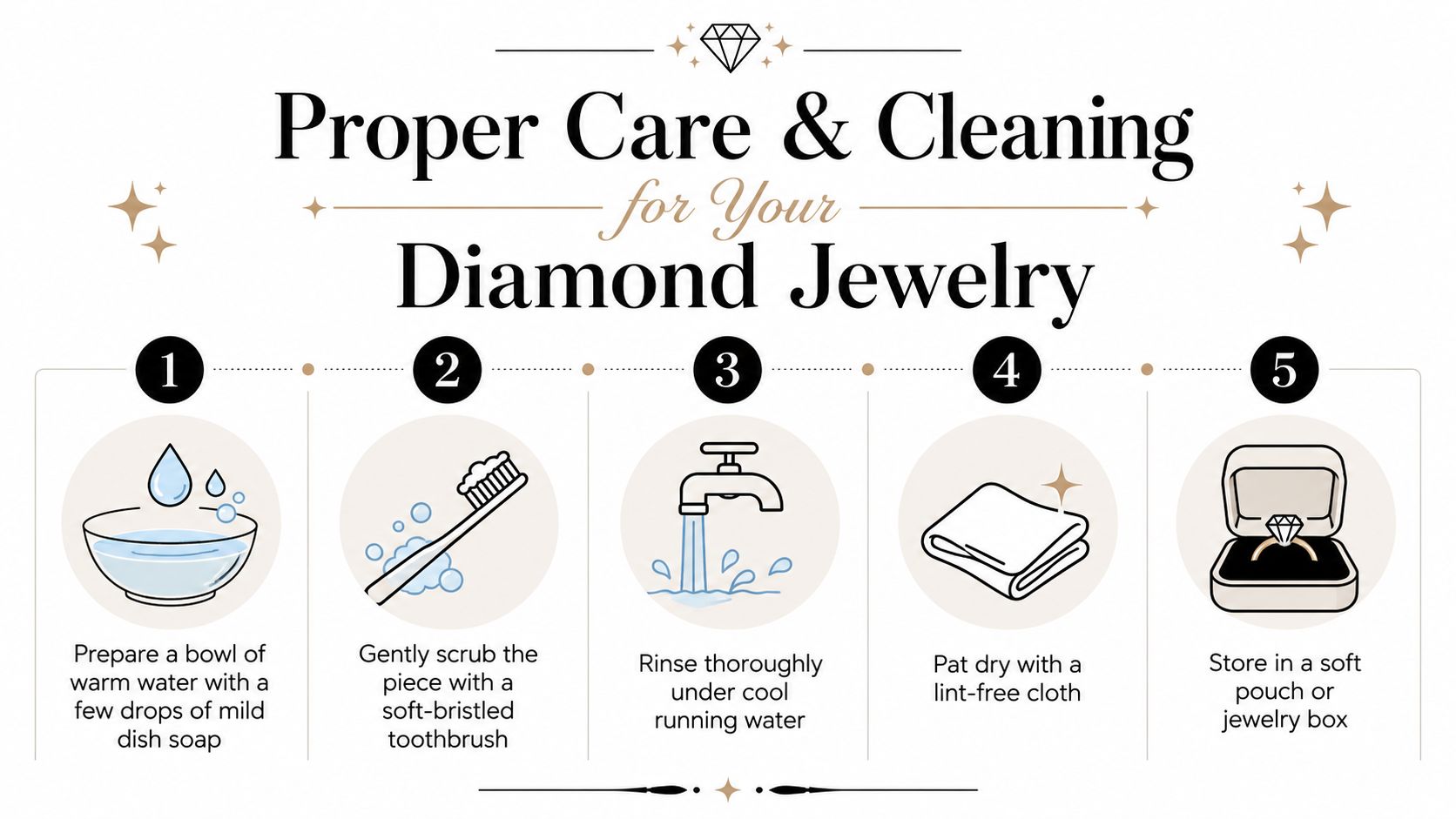
Fill a bowl with warm water and mild dish soap. Let the pendant sit briefly so residue loosens.
Use a soft-bristled toothbrush. Work gently around the crown, hair detail, pavé rows, and behind the bale.
Rinse carefully under cool water. It's smart to do this over a bowl, not an open sink drain.
Pat dry with a lint-free cloth. Don't scrub the metal surface.
Store it separately. A soft pouch or compartmented jewelry box helps prevent scratches and chain tangling.
What causes damage
Design plays a big role in durability. Shorter pendants around 1.5 inches with about 10 to 11 grams of gold are lighter and easier to wear daily, while larger 14K or 10K pieces around 34 to 36.8 grams with about 4.86 ctw of diamonds are more substantial but also create more setting surface area and more opportunities for prongs to bend or stones to loosen (Jacoje standard Jesus piece comparison).
That leads to a few don'ts:
Don't use abrasive cloths or household cleaners. They can scratch gold finishes and leave residue.
Don't assume every setting is ultrasonic-safe. Pavé-heavy or previously repaired pieces deserve extra caution.
Don't sleep in heavy pendants. Repeated torque at the bale and chain connection can stress the mounting.
A dirty piece can look dull. A damaged piece can lose value. Those aren't the same problem, and they shouldn't be treated the same way.
How to Sell Your Diamond Jesus Piece Safely
A seller walks in with a heavy Jesus piece, a chain, and an old appraisal, expecting one simple number. The market does not work that way. A diamond Jesus piece is a cultural statement when you wear it, but at the point of sale it becomes a non-branded asset that has to be verified, separated into value components, and priced against current resale demand.
Prepare the piece before you ask for an offer
Bring the pendant to market as a documented item, not as a story. Buyers pay for what they can inspect, test, and resell.
What to prepare | Why it helps |
|---|---|
Pendant and chain separately identified | Many buyers price them as two items, especially if the chain is plain and the pendant carries the design premium |
Receipts or prior paperwork | These support ownership history, but they do not replace testing and grading |
Any repair history | Solder work, retipped prongs, rebuilt bales, and replaced stones can change both risk and value |
Clear photos | Photos help a buyer screen size, style, setting condition, and whether an in-person review makes sense |
Clean presentation helps. Overhandling does not.
If you already see a loose stone, a bent bail, or a cracked setting, stop wearing the piece and disclose it upfront. Hidden condition problems are one of the fastest ways to slow a sale or lower an offer after inspection.
Choose a selling process that protects value and custody
A safe transaction has a clear chain of custody from first inquiry to final payment. That matters with a Jesus piece because many examples are custom, locally made, or altered after purchase, which makes valuation less standardized than branded luxury jewelry.
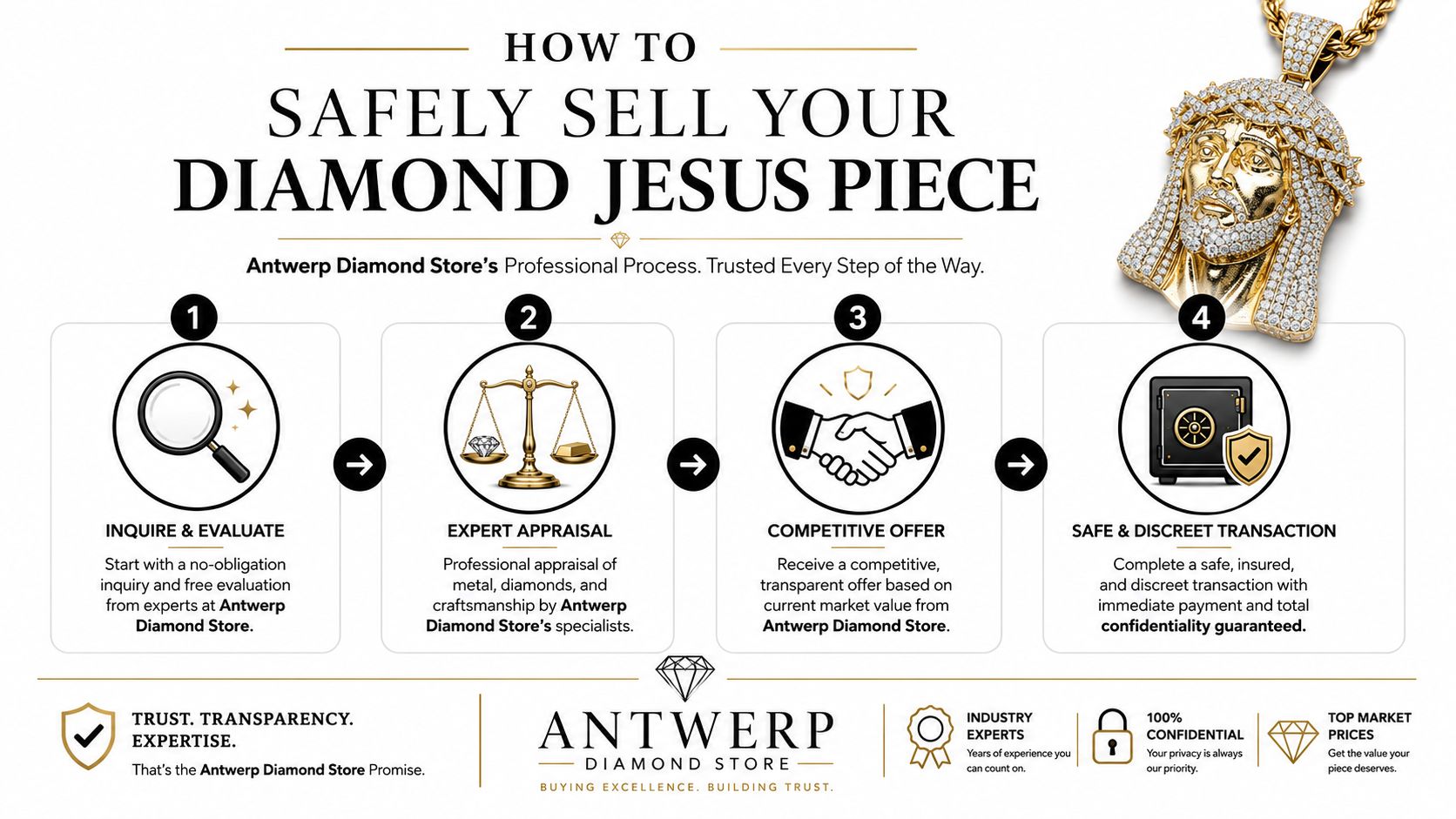
Start with a documented inquiry
Send photos, approximate measurements, metal stamps, total item weight if you know it, and note whether the chain is included. Ask how the buyer evaluates custom or non-branded diamond pendants.Use an in-person appointment or insured shipping
In-person review is often the better route for sellers in Atlanta, Buckhead, Sandy Springs, Alpharetta, Roswell, Brookhaven, Midtown Atlanta, and the wider Georgia market because the buyer can test metal purity, inspect the setting under magnification, and check for repairs. If you are selling remotely, use insured shipping with written instructions and confirmation of receipt.Ask what is driving the offer
A credible buyer should tell you whether the number comes mainly from gold weight, melee quality, center stones if present, labor quality, repair risk, or likely resale speed. That explanation matters more than a high opening quote with no breakdown.Close through a recorded, verified process
Expect identity verification, written terms, and a traceable payment method. Those steps protect both sides and reduce problems tied to high-value jewelry transactions.
Antwerp Diamond Store is one Atlanta-area option for confidential evaluations, private appointments, and insured shipping for remote sellers. The better test is not the storefront name. It is whether the buyer can explain how your pendant moves from status symbol to liquid asset, and why your specific piece will trade closer to intrinsic value, craftsmanship value, or secondhand retail potential.
If you are comparing selling channels, this guide on where to sell fine jewelry gives a useful breakdown of how different outlets handle pricing, speed, and risk.
Safe selling means documented possession, transparent valuation, and payment you can verify.
Frequently Asked Questions
Does the chain add value, or is only the pendant evaluated?
The chain can add value separately, especially if it's solid gold and substantial. In many cases, a buyer will assess the pendant and chain as two related items rather than folding everything into one rough number.
Is a custom Jesus piece worth more than a standard retail design?
Sometimes, but not automatically. Custom work can increase craftsmanship and uniqueness, yet it can also reduce liquidity if the design is highly specific. Broadly recognizable styles often have a wider resale audience.
Do engravings or personalizations hurt resale value?
They can. A discreet inscription may have limited effect, especially if it's hidden. Prominent personalization can narrow the buyer pool because the next owner may see it as someone else's story rather than a neutral luxury piece.
Will a heavier pendant always get a better offer?
Not always. More gold and more diamonds usually help, but buyers still look at stone quality, condition, repair history, and how well the piece is made. Heavy weight doesn't fix weak craftsmanship.
Can I use an old appraisal to set my asking price?
You can use it as background, but it shouldn't be treated as a resale benchmark. Insurance-style appraisals often reflect replacement logic, while a current offer reflects today's market for that exact pendant in its present condition.
If you want a practical, market-based opinion on your diamond Jesus piece, Antwerp Diamond can review it through a confidential evaluation, private in-person appointment, or secure insured shipping process. Bring the pendant, chain, and any paperwork you have, and ask for a clear explanation of how the offer is being calculated.


