
Factors Influencing the 1 Carat Diamond Gold Ring Price
When evaluating the 1 carat diamond gold ring price, understanding where your money actually goes is key to securing real value. The price tag on any diamond ring is composed of three core components: the center diamond, the gold mounting (setting), and the vendor's operating markup.
The center stone accounts for roughly 75% to 85% of the ring's overall cost when dealing with natural diamonds. Because diamonds are priced exponentially based on weight, reaching the 1.00-carat milestone creates a significant price jump compared to a 0.90-carat stone. Wholesale diamond pricing relies on market benchmarks dictated by rarity and cut quality, which jewelers use as a baseline before applying their retail margin. To understand these underlying stone values, you can use a tool to Calculate Diamond Price.
The remaining 15% to 25% of the cost goes toward the precious metal setting and labor. Factors such as the weight of the gold in grams, metal purity (10K, 14K, or 18K), and structural craftsmanship determine setting expenses. Knowing these variables allows you to adjust your budget effectively without sacrificing visual quality.
Comparing Natural vs Lab-Grown Options for 1 Carat Diamond Gold Ring Price
The choice between a natural mined diamond and a lab-grown diamond is the single largest decision affecting your total spend. Chemically, physically, and optically, lab-grown diamonds are identical to natural diamonds. However, their market value and long-term resale potential differ sharply.
A classic 14K solid gold 1.00 carat natural diamond engagement ring typically retails between $2,600 and $4,000 online, whereas a 1 carat lab grown round diamond solitaire ring in 14K gold starts around $1,800, with clearance or baseline models available closer to $1,100.
Feature / Metric | Natural 1 Carat Diamond Ring | Lab-Grown 1 Carat Diamond Ring |
|---|---|---|
Average Online Retail Price | $3,000 - $4,500 | $1,200 - $1,800 |
Traditional Retail Store Price | $6,500 - $7,500+ | $1,800 - $2,800 |
Origins & Rarity | Mined from the earth; finite supply | Grown in technological facilities; scalable supply |
Physical & Optical Properties | Pure carbon crystal structure | Pure carbon crystal structure |
Resale & Liquidation Value | Retains steady secondary market value | Low secondary market resale retention |
While lab-grown stones allow you to buy larger sizes or flawless grades for less upfront money, natural diamonds hold enduring market interest over time due to their inherent natural scarcity.
How Gold Karat and Setting Style Impact 1 Carat Diamond Gold Ring Price
Gold is priced per gram according to global market rates, meaning the karat level and setting volume directly shape the final cost.
10K Gold (41.7% Pure Gold): Highly durable and cost-effective, ideal for budget-focused settings, but contains more base alloys.
14K Gold (58.5% Pure Gold): The sweet spot for engagement rings, providing excellent structural strength, rich warm color, and balanced pricing.
18K Gold (75.0% Pure Gold): Softer with a richer golden hue, carrying a 20% to 35% premium over 14K gold due to its higher precious metal content.
To explore how alloy ratios affect both cost and daily wear, read our comparison on What Is the Difference Between 14 K and 18 K Gold.
Additionally, the complexity of the ring design affects both gold weight and labor costs. A simple four-prong solitaire band uses around 2.5 to 3.5 grams of gold and involves minimal setting labor. Conversely, a halo or three-stone setting requires extra accent diamonds and detailed prong work, driving up total costs. Pay close attention to descriptions listing Total Carat Weight (CTW); a ring with a 0.50-carat center stone surrounded by 0.50 carats of small accent diamonds will be far less expensive than a true single 1.00-carat center stone solitaire ring.
Evaluating Diamond 4Cs and Shape to Maximize Budget
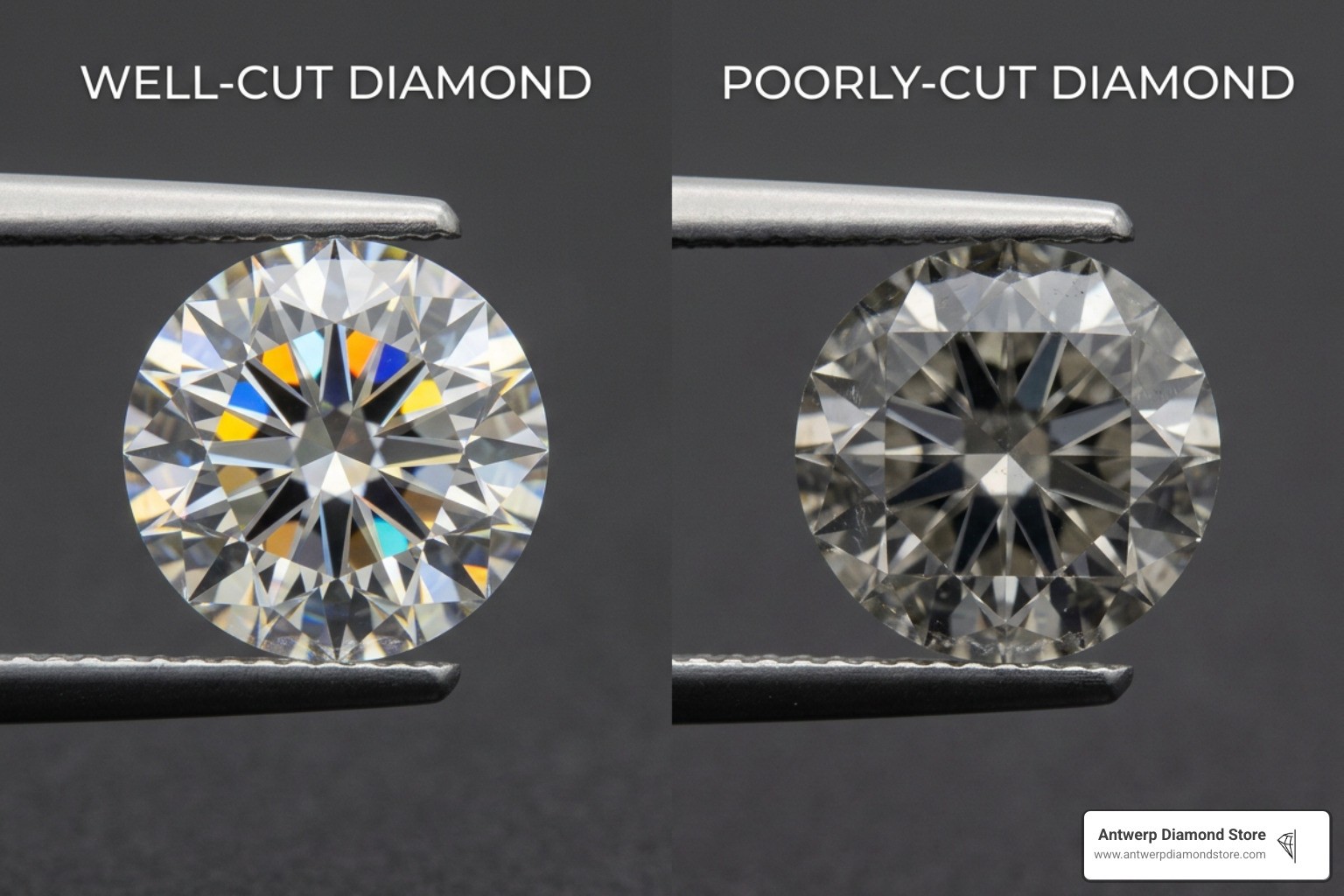
Understanding the 4Cs—Cut, Color, Clarity, and Carat Weight—is essential to stretching your budget without compromising beauty. For a comprehensive overview of how gemological institutions grade individual stones, check out our guide on How Much Is a Diamond.
When shopping for a 1-carat diamond ring, we recommend prioritizing the 4Cs in this specific order:
Cut: Governs brilliance, fire, and overall light return.
Color: Dictates body tint and visual brightness.
Clarity: Determines internal cleanliness.
Carat Weight: Defines overall mass.
Balancing Cut Color and Clarity Grades
Cut quality should never be compromised. An "Ideal" or "Excellent" cut round diamond reflects light back out through the top, concealing subtle inclusions and making the stone appear larger and brighter. A poorly cut diamond leaks light through the sides, resulting in a dull appearance regardless of its weight.
When pairing diamonds with gold settings, you can save money on color grades:
White Gold or Platinum: Opt for G or H color. These diamonds face up bright white to the naked eye without commanding the steep price premium of colorless grades (D-F).
Yellow Gold or Rose Gold: You can safely step down to I or J color. The warm metal naturally masks subtle yellow undertones, allowing you to reallocate hundreds of dollars toward cut quality or setting design.
For clarity, target VS2 or eye-clean SI1 grades. These stones feature minor inclusions that require a microscope or jeweler's loupe to spot. Selecting eye-clean VS2 or SI1 diamonds provides the exact same visual appearance as a Flawless or VVS stone at a fraction of the cost. Always confirm grading accuracy with a reputable laboratory report, such as a GIA Certified Engagement Ring evaluation.
Visual Size Millimeter Proportions and Diamond Shapes
Carat weight measures physical mass, not surface area. A standard 1.00-carat round brilliant diamond measures approximately 6.3 mm to 6.5 mm in diameter. However, diamond shapes distribute their mass differently, impacting how large they look on your finger.
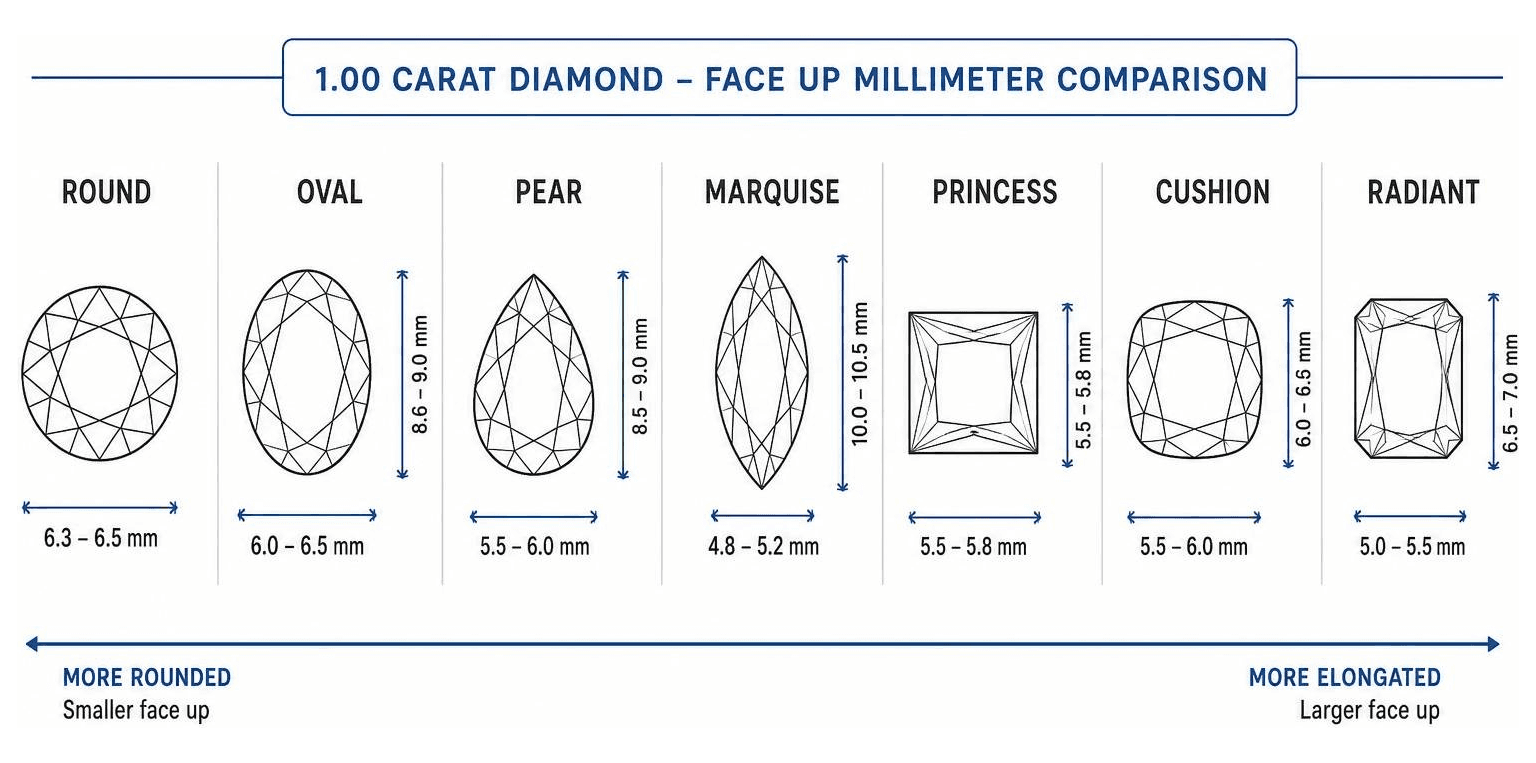
Elongated Shapes (Oval, Pear, Marquise): These shapes spread weight across a broader surface area. An oval diamond can appear 10% to 15% larger than a round brilliant of the exact same carat weight.
Fancy Square Cuts (Princess, Cushion, Radiant): Square shapes retain deeper proportions. For instance, options like a 1.5 carat radiant cut solitaire diamond ring in 10K yellow gold or a 1.5 carat round solitaire lab-grown diamond ring in 18K yellow gold showcase how fancy shapes offer brilliant face-up presence while usually costing 15% to 25% less per carat than standard round diamonds.
Setting Options Retail vs Online Markups and Extra Expenses
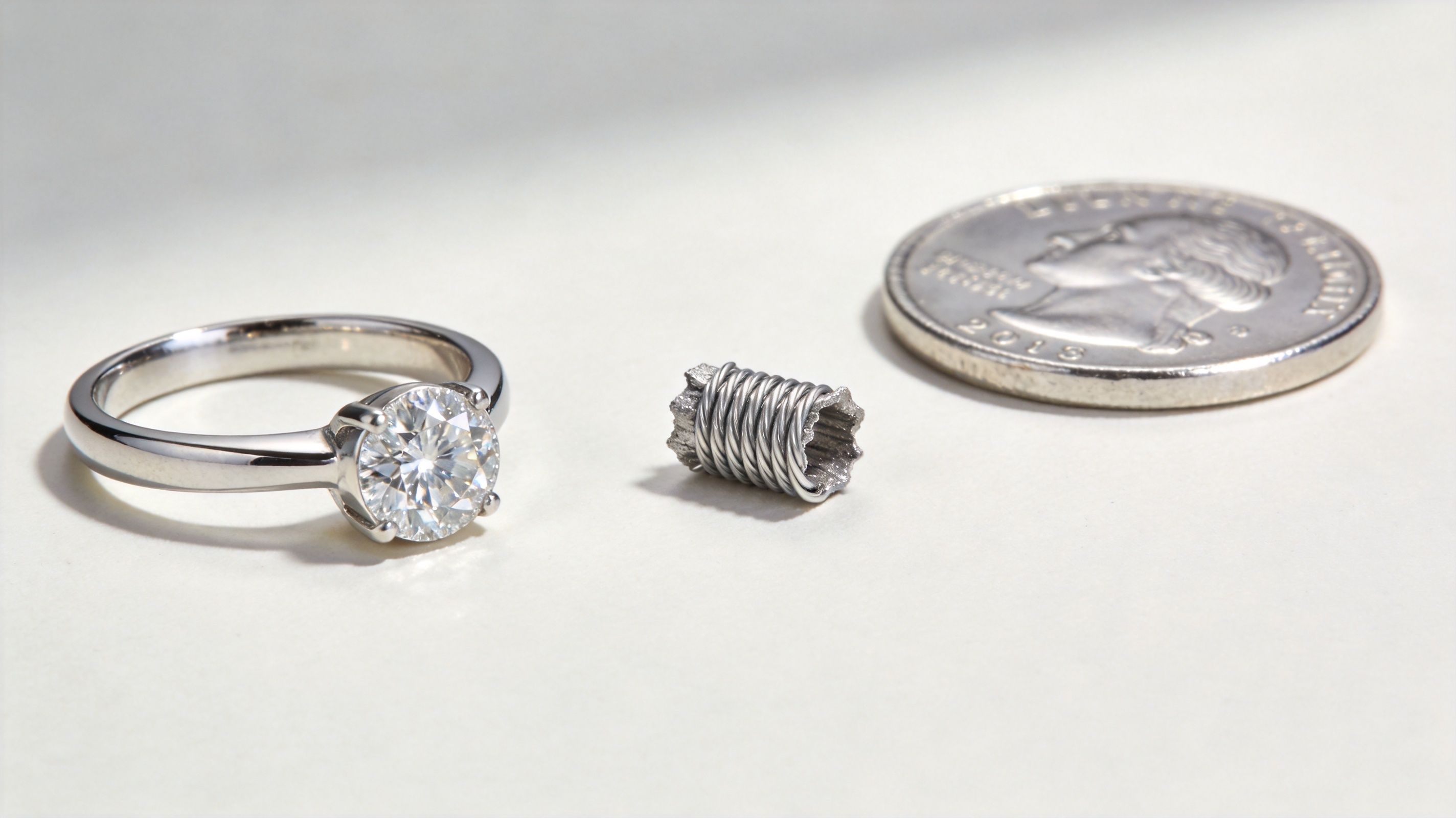
Where you buy your ring directly dictates your total outlay. Brick-and-mortar jewelers carry substantial overhead costs--such as physical store rent, insurance, and retail staff commissions--which are baked directly into consumer ring prices. A good quality 1 carat natural diamond ring in a traditional physical store often costs between $6,500 and $7,500.
Brick and Mortar Stores vs Online Direct Pricing
Online direct-to-consumer jewelry models cut out commercial retail markups. By operating with centralized inventory, online sources list comparable 1 carat natural diamond gold rings between $3,000 and $4,000.
If you are buying pre-owned or estate pieces, retail markdowns can be even greater, often yielding 40% to 70% savings off original retail store prices. For example, a 1.00 carat natural diamond ring set in solid 14K gold with VS1 clarity can be acquired online for roughly $3,000, whereas a traditional retail boutique might price the same piece well over $6,000.
Hidden Costs Certification Taxes and Insured Shipping
When budgeting for a 1 carat diamond ring, factor in secondary expenses that are easy to overlook. For general consumer education on diamond grading terminology, the Gemological Institute of America provides a useful overview of the 4Cs and quality factors buyers commonly see on grading reports.
Independent Grading Fees: Independent laboratory evaluation (GIA or IGI) ensures diamond authenticity and grading accuracy. Uncertified stones carry hidden risk.
Sales Tax: Depending on your jurisdiction, state or local taxes can add 6% to 10% to the checkout total, adding $200 to $700 onto a $4,000 purchase.
Ring Sizing Charges: Adjusting a ring band outside standard sizes (typically US sizes 6 to 7) generally costs $40 to $120 based on gold karat and band structure.
Logistics and Insurance: High-value transit requires specialty carrier routing. Read our guide on Insured Shipping Jewelry to understand how transit coverage protects your shipment.
Appraisal Fees: Post-purchase insurance appraisals cost between $75 and $150.
Secondary Market Resale Value and Liquidation Expectations
Understanding secondary market realities is essential whether you are buying for the future or liquidating pre-owned jewelry. Consumers are often surprised to discover that a diamond ring's resale payout ranges between 30% and 50% of its original retail purchase price.
This gap exists because retail stores add significant markups over primary wholesale diamond trading floors to cover operating expenses. When a private owner sells a diamond ring back to a professional buyer or jeweler, the offer reflects underlying wholesale spot cash values minus refining and resale costs.
To estimate your item's pre-owned market value, try using our online Diamond Resale Value Calculator. When you are ready to sell, review our comprehensive walkthrough on How to Sell Diamonds to navigate offers safely and securely.
At Antwerp Diamond Store, we buy pre-owned fine jewelry, loose diamonds, and luxury timepieces. We provide private, appointment-only valuations and competitive, instant payouts based on real-time market data.
Frequently Asked Questions About 1 Carat Diamond Rings
What is the average price range for a 1 carat diamond gold ring?
The average price for a 1 carat natural diamond ring purchased online ranges between $3,000 and $4,000, while traditional retail stores price similar pieces between $6,500 and $7,500. A 1 carat lab-grown diamond ring in 14K gold typically costs between $1,100 and $2,000.
Which diamond shape offers the largest appearance for a 1 carat weight?
Elongated shapes—specifically oval, pear, and marquise—offer the largest visual face-up area. An oval cut diamond spreads its weight outward, often appearing 10% to 15% larger on the hand than a standard 6.5 mm round brilliant diamond of equal carat weight.
How does gold purity impact the durability and cost of a ring band?
Gold purity dictates metal softeness and expense. 10K gold is harder and lower in price but contains less pure gold (41.7%). 14K gold (58.5% pure) delivers the ideal balance of scratch resistance, structural security, and moderate cost. 18K gold (75% pure) offers a richer golden hue but carries a higher metal price per gram and scratches more easily over time.
Conclusion
Finding the ideal 1 carat diamond gold ring comes down to balancing diamond quality, metal purity, and retailer options against your specific budget. By choosing eye-clean VS2 or SI1 clarity grades, selecting G-H or I-J color tiers, and purchasing through direct online platforms, you can save thousands of dollars without compromising visual quality.
Whether you are evaluating new engagement ring options or liquidating existing luxury items, work with trusted experts who offer transparent market pricing. Contact Antwerp Diamond Store for professional jewelry evaluations, expert secondary market advice, and immediate, hassle-free valuation services.