
Rough diamonds are mainly classified in three practical ways: by end use (gem-quality or industrial), by crystal shape such as octahedral, cubic, or macle, and by internal clarity, because those factors control what the stone could become after cutting. If you've inherited an uncut stone and want to know what it may be worth, those are the first things a buyer or appraiser will study.
That matters because rough diamonds rarely look impressive to the untrained eye. They can seem cloudy, greasy, flat, chipped, or oddly shaped, yet those exact features often decide whether the stone could become fine jewelry, an industrial abrasive, or something in between. For anyone in Atlanta, Buckhead, Sandy Springs, Alpharetta, Roswell, Brookhaven, Midtown Atlanta, or elsewhere in Georgia, understanding the types of rough diamonds helps you ask better questions before you sell, borrow against, or appraise an inherited stone.
Table of Contents
Understanding the Main Types of Rough Diamonds
A client brings in a small paper parcel from an estate drawer. Inside is a dull-looking crystal with a greasy surface and an odd triangular outline. The first concern is rarely mineralogy. It is usually, "What kind of rough is this, and how will that affect what a buyer offers me?"
That question gets to the heart of rough diamond valuation. "Types of rough diamonds" does not mean one neat set of labels. Buyers sort rough in layers, the way a sawmill sorts logs by species, straightness, and usable yield rather than by appearance alone. A stone may be genuine diamond and still attract a modest offer if its shape wastes weight, its interior is busy with inclusions, or its surface features suggest risk during cutting.
For a seller, three factors usually drive the conversation first.
End use: Can the stone realistically become a polished gem for jewelry, or is it better suited to industrial use?
Crystal form: Does the rough shape allow a cutter to plan an efficient polished result with limited weight loss?
Internal and surface condition: Do inclusions, fractures, etch marks, or cloudiness reduce clarity potential or increase cutting risk?
Those points often explain why inherited rough surprises families. Rough diamonds rarely look impressive before cutting, and attractive-looking rough can still perform poorly in valuation. By contrast, an unassuming crystal may receive stronger interest if the form is workable and the interior appears clean enough to produce a salable polished stone.
Practical rule: Buyers price rough diamonds by recovery potential. They are estimating what can come out of the crystal after cutting, not rewarding the specimen for looking dramatic in the hand.
If you are still separating "real diamond" from materials that only resemble it, this guide to what genuine diamond meaning really involves gives useful background before appraisal.
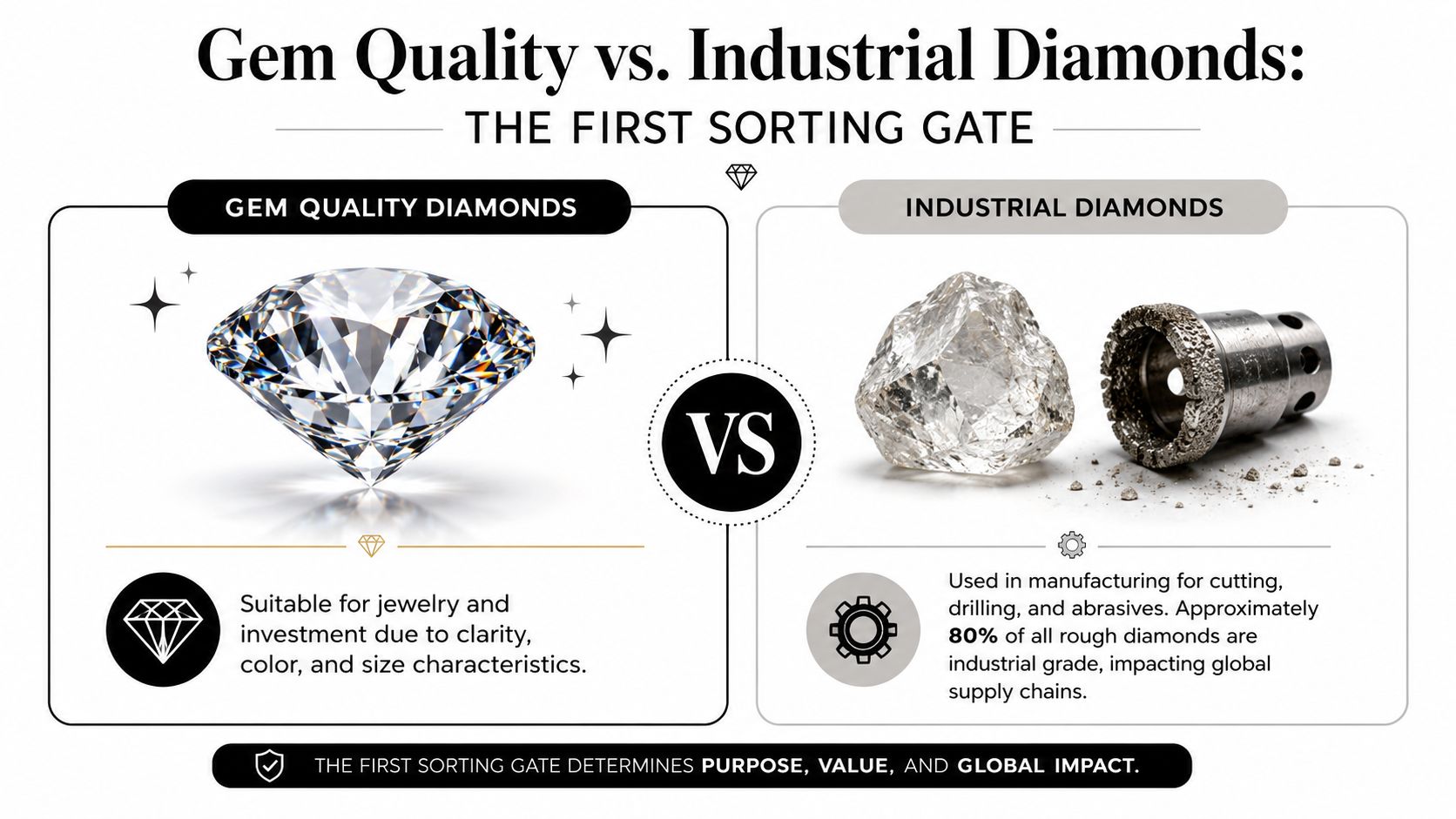
Gem Quality vs Industrial Diamonds The First Sorting Gate
The first serious question in valuation is whether the rough belongs in the gem-quality stream or the industrial stream. This is the most important split because it sets the price ceiling before anyone gets into fine details.
According to this reference on rough diamond classification, rough diamonds are primarily divided into gem-quality diamonds and industrial diamonds, and approximately 80% of global rough diamond production is industrial-grade material unsuitable for fine jewelry. That single fact explains a lot of disappointment and a lot of confusion.
Why this split matters first
A gem-quality rough diamond has the potential to become a polished stone for jewelry. That usually means the crystal shows enough clarity, color potential, and shape integrity to justify cutting and polishing.
Industrial diamonds are different. They may be opaque, heavily included, badly fractured, poorly shaped, or otherwise unsuitable for fine jewelry. They still have real utility because diamond is extremely hard, but their value follows manufacturing use rather than jewelry demand.
Here's the simplest comparison:
Category | Typical use | Main value driver |
|---|---|---|
Gem-quality rough | Jewelry and polished gemstones | Potential polished beauty and yield |
Industrial rough | Cutting, grinding, drilling, abrasives | Durability and practical utility |
What a buyer looks for immediately
A trained evaluator usually looks for visual transparency first. Not because transparency alone decides everything, but because it quickly hints at whether the interior may support a polished gem.
Then the buyer checks for obvious problems:
Heavy inclusions: If the stone is crowded with internal features, the polished result may be too compromised.
Poor shape: A crystal may be genuine but shaped in a way that wastes too much weight during cutting.
Fractures and stress: These raise manufacturing risk.
Surface condition: A rough stone's outer skin can hide or reveal useful clues.
The first sorting gate isn't sentimental. It asks one commercial question: will cutting this stone into a gem make economic sense?
For sellers, this is why online guesses are unreliable. A rough stone that looks dull might still be gem-quality. A larger rough crystal that seems impressive might end up in the industrial category if it is too included or too irregular.
How Crystal Shape Dictates a Diamond's Potential
After end use, crystal habit becomes one of the most important clues in valuation. Shape affects how a cutter plans the stone, what polished shapes are possible, and how much weight is likely to survive the process.
Rough diamonds are technically classified into three primary crystal habits: octahedral, cubic, and macles, as described by this crystal habit reference.

Octahedral crystals
An octahedral rough diamond is the classic form one hopes to see. Think of it as two small pyramids joined base to base. This is the predominant habit, and it often gives a cutter a more balanced starting point.
Why does that matter to value? Because balanced geometry usually gives more options. If the crystal is reasonably clean, the cutter may be able to plan a polished stone with less waste and better proportions.
In plain language, octahedral rough often makes life easier. Easier cutting usually means lower risk, and lower risk can support a stronger offer.
Cubic crystals and macles
A cubic rough diamond forms more like a block. These are less common. Their geometry can lead to different planning choices, and depending on internal purity, they may suit specialized cutting decisions or non-jewelry uses.
A macle is a triangular, flat, plate-like crystal formed by mechanical twinning. This shape often confuses inherited-stone owners because it can look unusual, thin, or even damaged. It isn't necessarily damaged. It's a real crystal habit.
The trade often treats macles cautiously for one reason. Their flat geometry can reduce polished yield compared with better-shaped octahedral crystals. That doesn't make them worthless. It means the cutting plan is tighter and the margin for error is smaller.
A simple way to understand:
Octahedral: Usually the most promising starting shape for polished recovery.
Cubic: More variable, depends heavily on internal quality and planning.
Macle: Distinctive and real, but often trickier because the crystal is flatter.
A cutter doesn't buy rough shape for beauty. A cutter buys shape for options.
Surface texture also matters. Rounded faces, ribs, and corrosion-related features can all affect planning. Some rough diamonds look large on the outside but hide inefficient geometry once you account for surface loss and internal issues. That's why two stones with similar face-up size can bring very different offers.
Reading the Clues Inclusions and Surface Features
You bring in an inherited rough diamond that looks large, bright, and promising. Then the buyer turns it slowly under a lamp, studies one corner for a full minute, and lowers the offer. In many cases, that drop comes from clues inside the crystal or along its surface, because those clues tell the buyer how much of the stone may survive cutting and what risks come with trying.
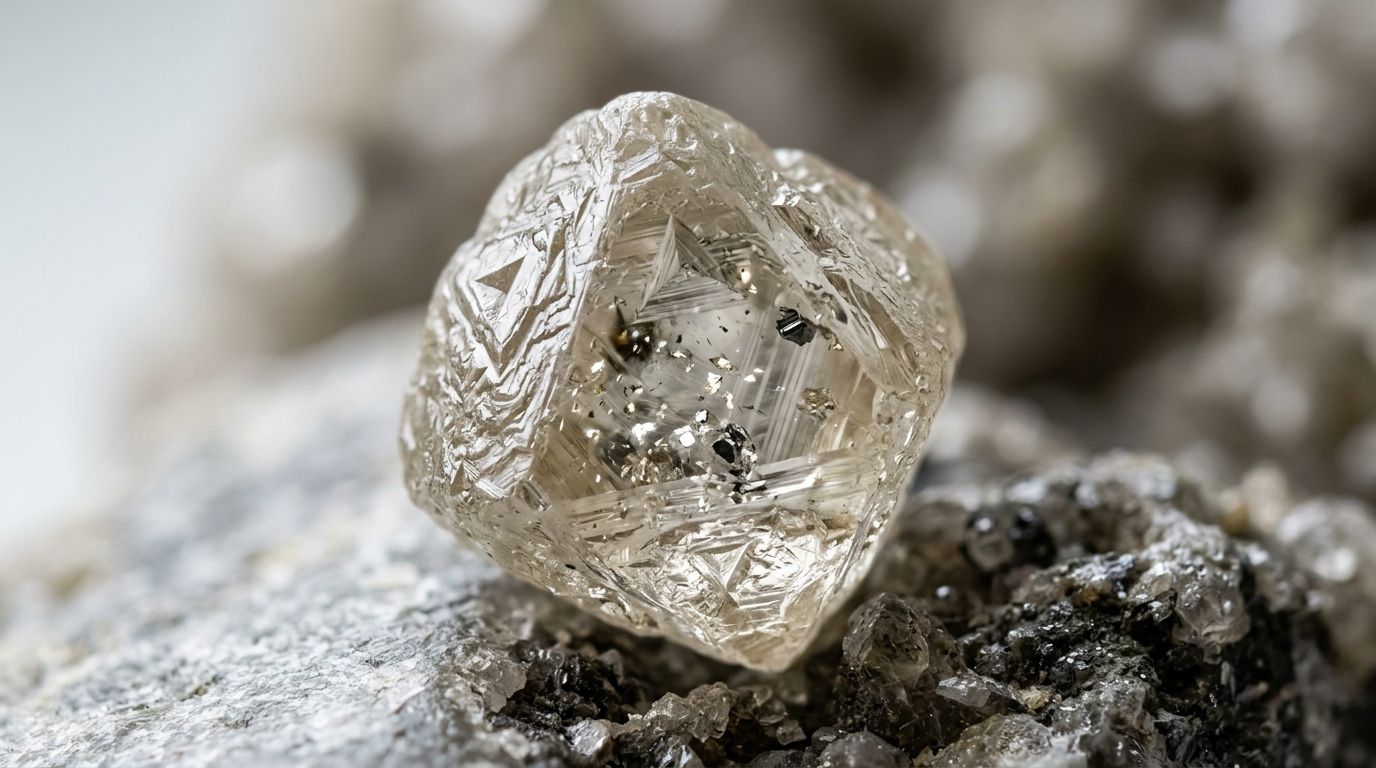
Rough clarity is really a forecasting exercise. A buyer is not valuing the crystal only for what it is today. The buyer is estimating what it can become after planning, sawing, polishing, and unavoidable weight loss. According to this rough diamond valuation guide, inclusions such as clouds and feathers can reduce yield, which directly lowers the rough price a buyer can justify.
What inclusions mean for your offer
Three inclusion types come up often in rough:
Clouds: dense groups of tiny pinpoints that can create a hazy or sleepy look
Feathers: internal breaks or fracture-like features that can raise durability concerns
Pinpoints: tiny crystals or marks that may matter more when they are numerous or concentrated
A useful way to read this is simple. Inclusions cost money when they force a cutter to do one of three things: remove more weight, accept a lower clarity outcome, or abandon an otherwise better cutting plan.
Clouds are a good example. A rough diamond may look translucent rather than crisp, almost as if a thin fog sits inside it. That fog can carry through into the polished result. Feathers create a different problem. They may sit where a cutter would prefer to place a facet junction or divide the rough, which turns an efficient plan into a cautious one.
This is why a smaller, cleaner crystal can receive a stronger offer than a larger stone with obvious internal disruption. Size attracts attention. Recoverable polished quality drives price.
If you are used to polished clarity grades, comparing rough to finished-diamond terminology helps. This guide to VVS diamond earrings for men shows why very high clarity earns buyer confidence once a diamond has already made it through cutting.
Surface features matter because they affect planning
The outside of a rough diamond works like the skin of a fruit. It gives clues, but it can also hide damage underneath. Surface features do not always reduce value, yet they often change how much certainty a buyer has about the stone.
Common surface observations include:
Etching or frosting: can obscure the true outline and make the crystal harder to assess accurately
Surface-reaching fractures: increase the risk of breakage or extra loss during cutting
Corroded areas or irregular growth marks: may reduce usable volume in the parts that matter most
Cleaner, sharper faces: usually give the buyer more confidence in planning and yield
Sellers often assume surface texture is cosmetic. In rough, it is economic. A heavily etched stone may require more cautious mapping. A crack that reaches the surface can shrink the number of safe cutting options. An odd bump or wasted area can prevent the cutter from placing the polished diamond where the weight return would have been best.
One more point causes confusion. A rough stone can look impressive from the outside and still produce a disappointing offer because the buyer sees hidden loss from both the surface and the interior. That is why two inherited stones of similar apparent size can receive very different bids.
If a buyer spends a long time rotating the stone under light, they are usually estimating risk, yield, and polishing options.
Understanding Common Rough Diamond Sorting Categories
A seller often hears a buyer use trade words that sound technical but have a simple purpose. They help the buyer estimate risk, cutting options, and likely payout.
Sorting categories sit one level below basic shape. Shape tells the buyer what the crystal looks like. Sorting tells the buyer how that crystal may behave in manufacturing and how much of it might survive the trip from rough to polished. For an inherited stone, that distinction matters because buyers do not price rough by appearance alone. They price the plan.
A practical way to read these categories is to ask one question: does this type of rough give the cutter flexibility, or does it force compromises?
Sorting category | What a buyer is really assessing | What it can mean for your offer |
|---|---|---|
Sawable | Whether the stone can be divided in a controlled way to keep useful polished options | Often supports stronger offers because planning is clearer |
Cleavage rough | Whether the stone may need splitting along natural structural directions | Can lower offers if the buyer sees more breakage risk or fewer safe options |
Makeable | Whether the rough can be polished with a practical shape and acceptable weight retention | Usually positive for value because waste may be more manageable |
Near-gem or mixed-use rough | Whether only part of the crystal is suitable for jewelry use | Often brings discounted pricing compared with cleaner gem-grade rough |
The easiest analogy is lumber grading. Two boards can be the same size, but the straighter board with fewer weak points gives the carpenter more usable material. Rough diamond sorting works in much the same way. A buyer is estimating how much of the crystal can become saleable polished diamond, how difficult that process will be, and how much could be lost along the way.
Sawable rough usually attracts attention because it may allow a controlled split or cut that preserves more value. Cleavage rough can still be valuable, but the planning is more delicate. If the stone must be separated along a natural weakness, one wrong decision can reduce recovery. Buyers build that risk into the bid.
Makeable rough is another term sellers should understand. It usually refers to rough that lends itself to a realistic polishing plan without extreme sacrifice of weight. That does not guarantee a premium offer, but it often improves confidence. Confidence matters because uncertainty is expensive in the rough trade.
This is one reason two inherited stones with similar dimensions can produce very different offers. One may fit neatly into a profitable manufacturing path. The other may require conservative planning, accept more loss, or produce a less desirable polished shape. If you want a pricing framework before meeting a buyer, this diamond resale value calculator overview can help you understand the resale mindset, though rough still needs in-person evaluation.
Trade language can also confuse sellers into focusing on the wrong thing. A category is not a prestige label. It is a working label tied to yield. If a buyer calls a stone sawable, makeable, or cleavage rough, they are really describing the economics of cutting it.
If you prefer visual explanations, the LunaBloom AI video platform is one example of how technical subjects can be easier to follow when the steps are shown rather than described only in text.
How to Prepare a Rough Diamond for Appraisal
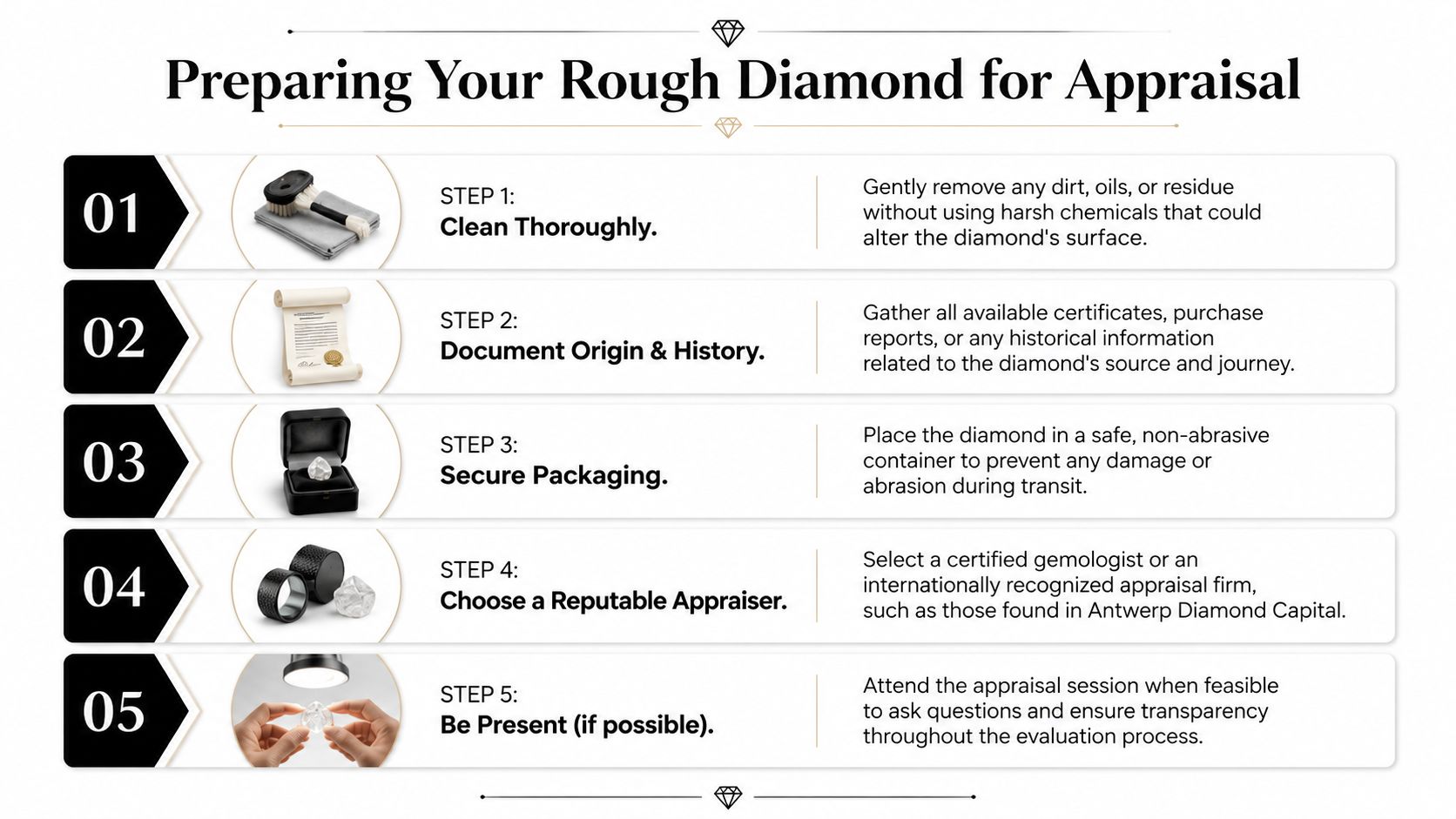
Inherited rough diamonds often arrive in tissue paper, coin envelopes, old jewelry boxes, or plastic bags. That's common. The right preparation is simple, but it can protect both the stone and the accuracy of the evaluation.
What to gather before the appointment
Bring the stone with any documents you have, even if they seem minor. Old receipts, estate paperwork, prior appraisals, family notes, parcel papers, or origin stories can all provide context.
A practical checklist:
Any paperwork: Previous reports, invoices, estate records, or insurance documents.
Known history: Where the stone came from, how long it's been in the family, and whether it was ever evaluated.
Secure packaging: A soft pouch, gem box, or other protective container that won't abrade the surface.
Your questions: Write them down. Sellers often forget what they wanted to ask once the evaluation starts.
If you're someone who learns better by watching rather than reading, this LunaBloom AI video platform is a useful example of how visual explanation tools can make technical subjects easier to understand before an in-person appointment.
Later in the process, it also helps to see how professionals discuss stone value in plain language:
What not to do with inherited rough
This matters just as much as preparation.
Don't polish it yourself: You can destroy diagnostic features or reduce value.
Don't scrub aggressively: Surface clues matter in rough appraisal.
Don't chip or test it at home: Hardness tests done badly can damage the stone or prove nothing useful.
Don't expect a firm online quote from photos alone: Rough needs in-person inspection.
A rough diamond's potential value depends on details that photographs often miss, including transparency, inclusions, surface texture, and how light moves through the crystal under controlled examination. If you're trying to understand rough pricing in broader terms before the visit, this article on how much a diamond is worth gives useful context.
Bring the stone as found, protect it well, and let the evaluator see the evidence untouched.
For sellers in Buckhead, Atlanta, Sandy Springs, Alpharetta, Roswell, Brookhaven, Midtown Atlanta, or elsewhere in Georgia, an in-person review is usually the clearest path if the goal is a sale, an appraisal, or a loan discussion based on the stone's current marketability.
FAQs About Selling and Valuing Rough Diamonds
A seller usually asks the same question in different forms: What will make a buyer offer more, and what will make that offer drop?
With rough diamonds, the answer is rarely a single trait. Buyers are weighing what the crystal is today against what it can become after cutting, and how much risk sits between those two points. That is why two rough stones that look similar to an owner can receive very different offers.
Can I sell a rough diamond without a grading report
Yes.
Rough diamonds often do not have the kind of laboratory report people associate with polished stones. A buyer can still evaluate one, but the process depends on direct examination. They need to confirm that the stone is natural, assess whether it is gem quality or industrial, study the crystal shape, and estimate how much usable polished diamond may come out of it.
A report can support value in some situations. It does not replace an in-person inspection, because the offer depends on cutting potential, not just identification.
Does origin affect the offer
Sometimes, but usually less than owners expect.
Origin matters most when it is documented clearly and when that documentation helps buyer confidence or resale appeal. Without paperwork, origin often becomes a story rather than a pricing factor. Buyers tend to return to the same practical questions: Is the crystal clean enough, well-shaped enough, and large enough to justify the cutting risk?
For inherited rough, origin is usually a secondary issue. The stronger drivers of value are transparency, internal inclusions, surface condition, and the likely polished yield.
Why can't I get a firm price online
Because rough value is tied to details that photos rarely show well.
A buyer needs to look at the stone from multiple angles, under controlled lighting, and often with magnification. Small surface features can change how the stone must be sawn or polished. Internal inclusions can shift the best cutting plan. A shape that seems promising in a phone photo may produce less finished diamond than expected once the crystal is examined closely.
A simple comparison helps here. Pricing a polished diamond from a report is like valuing a finished house from its inspection and floor plan. Pricing a rough diamond is more like valuing land with a structure still buried under brush. The hidden conditions affect the offer.
If your goal is to sell rather than just identify the stone, this guide on where to sell loose diamonds explains how to compare buyers and selling options.
In practice, a fair offer on rough usually depends on four answers gathered in person:
Is it a natural diamond
Is it gem quality or industrial
How much polished weight and quality might it yield
How much cutting risk does the buyer have to absorb
That last point is easy to miss. Buyers do not price rough the way retail stores price finished jewelry. They discount for uncertainty. The more guesswork a stone creates, the more conservative the offer tends to be.
If you want a professional opinion on an inherited rough diamond, Antwerp Diamond offers private evaluations for sellers who need clear, no-pressure guidance. Whether you're in Atlanta, Buckhead, Roswell, or elsewhere in Georgia, bringing the stone in for review is the most reliable way to understand its type, cutting potential, and realistic market value.