
The Art and Materials of Historic Cameo Carvings
Cameo carving belongs to the ancient tradition of glyptic art, the delicate craft of carving raised bas-relief designs into stratified materials. Unlike intaglios, which feature recessed carvings meant for pressing wax seals, cameos present a sculpture in miniature that rises outward toward the viewer. Carvers utilize the distinct geological or organic layers of a medium, chiseling away the lighter upper layer to form a figure while leaving the darker stratum beneath to serve as a contrasting background.
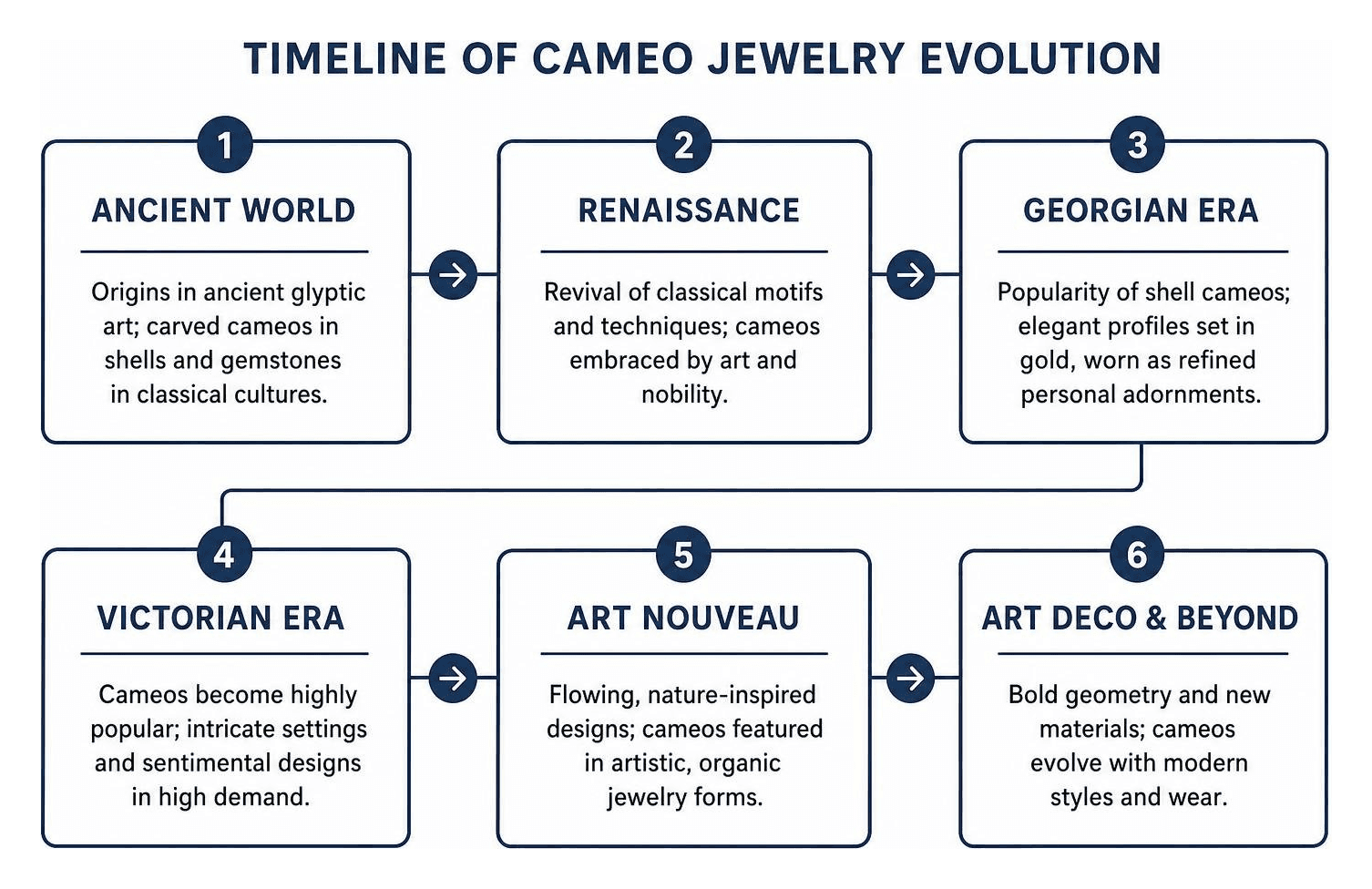
Over centuries, master artisans produced these miniature sculptures across a broad spectrum of antique jewelry, transforming organic shells and crystalline minerals into wearable heirlooms.
Essential Materials Used in Antique Cameo Jewelry
Understanding the medium is vital when evaluating authentic pieces:
Helmet and Queen Conch Shells: Popularized during the Renaissance and reaching a creative peak in the 19th century, marine shells offered warm shades ranging from coral pink to deep chocolate brown beneath a milky white surface. Shell is naturally curved, relatively soft (Mohs hardness of roughly 3.5), and permits exceptional fluidity in drapery and facial carving. Contemporary designer adaptations, such as the Lady Vintage Cameo Necklace – Hannah Blount Jewelry, celebrate this traditional white and pink shell carving set into precious metals.
Carnelian Shell: Often showcasing vibrant orange-red backgrounds paired with ivory-hued portraits, carnelian shell provided high visual contrast that made Victorian brooches pop against dark silk garments.
Sardonyx and Banded Agate: The gold standard of hardstone carving. Sardonyx features parallel layers of deep reddish-brown or black alternating with white chalcedony. With a Mohs hardness of 6.5 to 7, working sardonyx required steel drills, diamond-dust abrasive slurries, and months of patient labor.
Chalcedony and Onyx: Monochromatic or subtly banded microcrystalline quartz allowed sculptors to create luminous, translucent figures. An exceptional Victorian Hardstone Cameo and Natural Pearl Pendant/Brooch and Earring Set illustrates the mastery of chalcedony carving, pairing milky profiles with rich 14K yellow gold and natural pearls.
Lava Rock and Coral: Sourced from the volcanic deposits of Mount Vesuvius, porous lava stone cameos were carved in muted shades of olive green, gray, ochre, and terra cotta as souvenirs during the Grand Tour of Italy. Mediterranean coral was equally prized for vivid orange-red relief profiles.
Historical Portraiture and Mythological Symbolism
Cameo portraiture served as a visual language of intellect, romantic allegiance, and societal status. During the 18th and 19th centuries, well-read collectors wore classical Roman profiles, philosophers, and Greek deities as an outward reflection of their education. Common subjects included:
Flora and Bacchus: Flora, the Roman goddess of spring and flowers, appeared with blossoms woven into her hair to represent youth and abundance. Bacchus (Dionysus), the god of wine, was depicted draped in grapevines and ivy leaves.
Medusa: Symbolizing protection, female sovereignty, and resilience, Medusa cameos depicted winged tresses and coiled serpents.
Mourning Allegories: Following the death of Prince Albert in 1861, Queen Victoria popularized mourning wear. Cameos carved from dark sardonyx, jet, or onyx portrayed weeping willows, classical urns, and veiled figures to symbolize enduring love beyond the grave.
These sentimental motifs elevated carved gems into the realm of timeless fine jewelry.
Evolution of Cameos Through the Victorian and Art Deco Eras
The Victorian era (1837–1901) marked the golden age of cameo production. In the Early Victorian or Romantic Period (1837–1860), pieces featured delicate natural shell carvings framed in scrollwork, celebrating romantic love and botanical themes.
As the mid-century Grand Period (1860–1885) took hold, darker stones and heavier designs emerged. Grand Neoclassical revival pieces like the French Neoclassic Hardstone Cameo Lavalière featured black sardonyx centers surrounded by 147 rose-cut diamonds and natural pearls, capturing the era's taste for grandeur.
By the late Victorian Aesthetic Movement and the dawn of the 20th-century Art Deco period, tastes transitioned toward geometric mountings, platinum, and die-struck filigree.
Setting Styles, Filigree Mounts, and Period Metalwork
The metal surrounding a cameo provides crucial evidence of its era:
Victorian Gold Frames: High-karat yellow gold (14k to 18k) and durable 10k alloys were often embellished with repoussé work, cannetille wire, and hand-applied black enamel. Multi-tone gold accents, combining green and yellow gold floral motifs, framed exceptional centerpieces like the Antique Victorian 10k Gold Cameo Pendant With Pearl Dangle Auction, which carries an estimated value of $949 to $1,233.
Pinchbeck and Rolled Gold: Less affluent Victorians wore Pinchbeck—a zinc-and-copper alloy invented by Christopher Pinchbeck—which mirrored the look of 22k gold without tarnishing quickly.
Art Deco Filigree: During the 1920s and 1930s, shell cameos were set into die-struck 14k white gold lace mountings. These pieces often featured a genuine single-cut diamond pavé pendant at the subject's neckline, as seen in the Antique 14k White Gold Cameo Diamond Filigree Pendant Auction, which maintains an auction estimate of $780 to $1,014.
Contemporary Reinterpretations: Modern jewelers continue to pair antique and vintage cameo centers with mixed metals and diamonds, as seen in modern collections from Emily Warden Designs .
Understanding these variations is fundamental to learning what is fine jewelry versus decorative costume production.
Identifying Antique, Vintage, and Modern Cameo Pieces
To categorize a cameo accurately, inspect the subject's anatomy, the setting mechanics, and the carving technique:
Characteristic | Antique Cameo (Pre-1930) | Vintage Cameo (1930–1980) | Modern Cameo (Post-1980) |
|---|---|---|---|
Facial Profile | Classical Roman nose (straight bridge), subtle chin, natural curves | Upturned "button" nose, idealized modern beauty standards, shorter neck | Uniform features, laser-cut symmetry, often lacks realistic facial depth |
Material Base | Hand-cut sardonyx, agate, conch shell, lava, coral | Shell, early cast resin, molded glass, sterling silver | Ultrasonically milled agate, acrylic, laser-cut composite plastic |
Carving Marks | Visible hand-chisel striations, undercut curls, organic asymmetry | Softer hand tooling or early mechanical pantograph lines | Perfectly uniform textures, zero chisel variation under a loupe |
Clasp / Setting | Simple tube hinge with long pin stem and open "C" clasp; bezel prongs | Safety barrel clasp, locking rollover mechanism, stamped prongs | Modern safety catch, mass-cast settings, rhodium-plated alloys |
Typical Value | $500 – $8,000+ (depending on hardstone vs. shell) | $150 – $600 | Under $150 (unless signed fine jewelry) |
A Guide to Valuing and Collecting Antique Cameo Jewelry
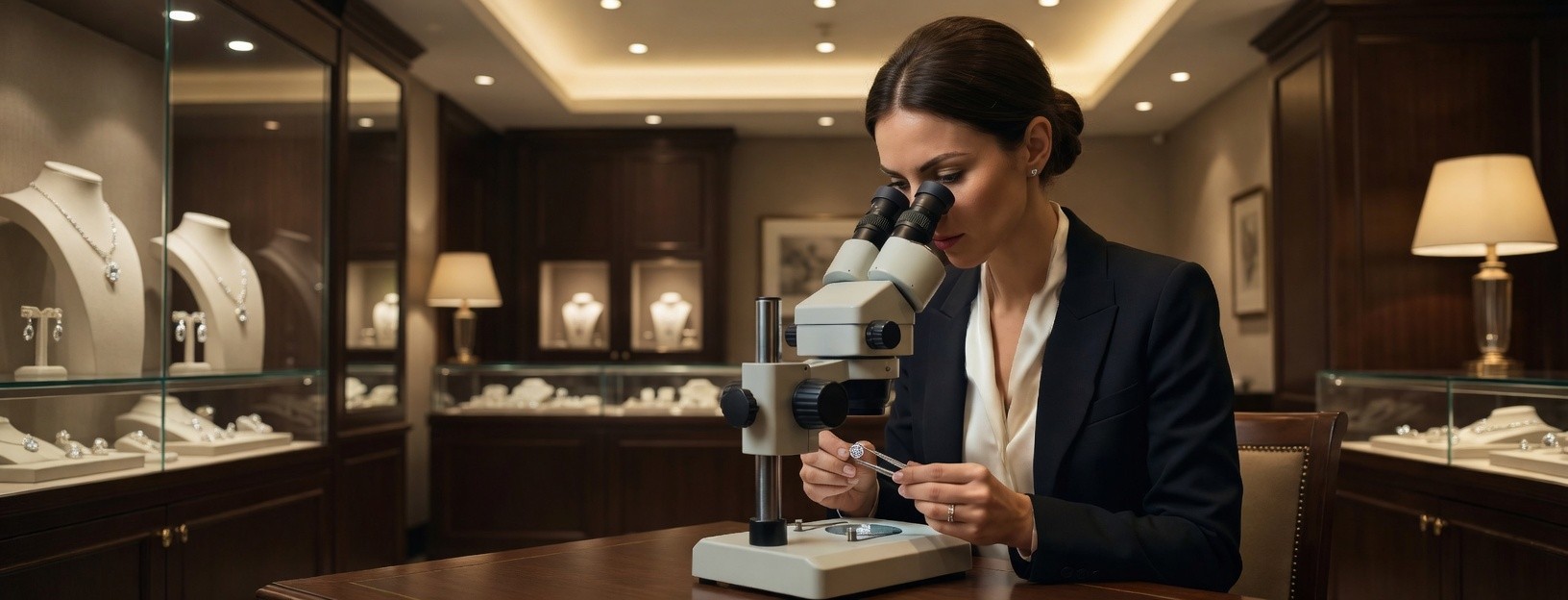
The market for carved portraiture spans everything from accessible vintage silver collectibles to museum-grade hardstone masterworks. Knowing how to appraise jewelry allows collectors and heirs to properly evaluate historical significance alongside intrinsic gemstone value.
Market benchmarks in 2026 highlight these distinctions clearly:
Affordable Silver & Fashion Pieces: Entry-level 925 sterling silver vintage cameo chain necklaces with marcasite or crystal borders typically sell between $97 and $267. Scenic statement pendants in silver frames trade between $225 and $315.
Fine Antique Gold & Filigree Pieces: Antique Victorian 10k and 14k gold pendants with shell carvings and natural pearl drops regularly fetch $780 to $1,250 at auction.
Masterpiece Hardstone Parures & Rare Links: Top-tier Victorian hardstone cameo sets featuring natural pearls and matching earrings reach $5,850. Elaborate multi-stone floral link bracelets in high-karat gold range from $5,065 to $6,645, while museum-caliber French Neoclassical lavalières with antique-cut diamonds can command $7,750 or more.
How to Authenticate Antique Cameo Jewelry and Spot Reproductions
Molded plastic, cast resin, and glass imitations have existed since the Victorian era. Use these professional tests to verify authenticity:
The Transillumination Test: Hold a shell cameo against a warm light source. Natural shell reveals organic growth bands, subtle color shifts, and gentle translucency. Molded plastics appear completely opaque or unnaturally uniform.
Loupe Tool-Mark Analysis: Under a 10x jeweler's loupe, authentic antique cameos reveal tiny tool striations and individual chisel marks around undercut areas, like the curls of hair or folds of a gown. Molded plastic or resin pieces exhibit rounded edges, flat planes, and occasional air bubbles.
The Cold-to-Touch Surface Check: Touch the piece to your cheek. Genuine hardstone (agate, sardonyx) feels cold and takes considerable time to warm up. Plastic warms instantly to skin temperature.
The Hot-Needle Test (Use Extreme Caution): Heated pin tests applied to an inconspicuous reverse rim can identify modern plastics by giving off an acrid chemical smell. This test should only be performed by professionals when applying reliable jewelry appraisal tips 2026.
Price Factors: Craftsmanship, Condition, and Provenance
When evaluating value, consider these primary elements:
Relief Depth and Undercutting: High-relief carvings where curls of hair and chin lines physically separate from the background require extraordinary skill and command high premiums.
Condition of the Medium: Examine shell cameos for "crazing"—microscopic hairline cracks caused by dehydration. Agate and sardonyx pieces must be inspected for edge chips along the bezel frame.
Signed Pieces: While most antique carvers worked anonymously, cameos signed by renowned Italian masters (such as Tommaso Saulini) or bearing French hallmarks on the setting can double or triple an item's value.
Estate Lineage: When selling inherited jewelry, preserving original fitted velvet boxes, bills of sale, or documented family provenance directly protects resale value.
Best Practices for Preserving and Maintaining Antique Cameos

Because shell is an organic material made primarily of calcium carbonate, it requires special care to prevent drying and cracking:
Hydrate Shell Annually: Shell cameos should be treated once a year with a light coat of pure mineral oil or sweet almond oil. Apply a tiny droplet with a cotton swab, let it sit overnight to nourish the natural layers, and gently wipe away excess oil with a soft microfiber cloth.
Never Use Ultrasonic Cleaners: Ultrasonic vibrations and steam cleaners will shatter delicate shell layers, compromise hardstone settings, and crack antique enamel borders.
Gentle Cleaning Only: Clean antique cameos using lukewarm water, a drop of mild dish soap, and an extra-soft baby toothbrush. Never submerge the piece for prolonged periods.
Separate Storage: Store cameos flat in a velvet-lined jewelry box away from direct sunlight, heating vents, and items with hard gemstones (such as diamonds and sapphires) that could scratch the carving.
Frequently Asked Questions About Antique Cameo Jewelry
How can you tell if an antique cameo is made of shell or hardstone?
Shell cameos are lighter, feature a subtle natural concave curve across the reverse side, and feel warm against the skin relatively quickly. Hardstone cameos (such as agate, chalcedony, and sardonyx) are completely flat on the reverse, feel heavy in hand, remain icy cold to the touch, and cannot be scratched with a standard steel needle.
Why are hardstone cameos typically more valuable than shell carvings?
Hardstone carving requires months of lapidary work using diamond-powdered rotary tools to cut through tough banded quartz (Mohs hardness of 7). Hardstone is exceptionally durable, impervious to drying or crazing, and historically rarer than shell, making antique hardstone examples prime targets for collectors and estate auctions.
Can antique cameo jewelry be worn every day?
Hardstone cameos can be worn regularly with proper care, but shell and lava cameos are delicate and susceptible to impact damage, household chemicals, and perfumes. It is best to reserve antique shell brooches and pendants for special occasions and avoid wearing them during physical activities or in harsh weather.
Professional Estate Cameo Evaluations
Whether you own a high-relief sardonyx lavalière, an Art Deco diamond filigree pendant, or an inherited Victorian suite, determining the authentic history and market worth of historic pieces requires specialized expertise.
At Antwerp Diamonds, we provide discrete, private consultations in our Atlanta office for clients looking to evaluate, sell, or liquidate fine estate treasures. We offer free professional evaluations, transparent pricing backed by secondary market demand, and immediate cash payouts with no hidden fees.
Schedule an estate jewelry appraisal with our experienced team today to discover the true value of your antique collection.