

Many assume older Gucci automatically means more money, but that's not how the market works. With vintage Gucci bags, value comes from the intersection of era, recognizability, condition, and wearability, not age alone.
A bag can be old and still be hard to sell if it's awkward to carry, heavily worn, or too niche for current buyers. The pieces that draw attention are usually the ones tied to Gucci's most important design milestones, and the ones that still feel usable today.
Table of Contents
Why Age Alone Does Not Determine Vintage Gucci Value
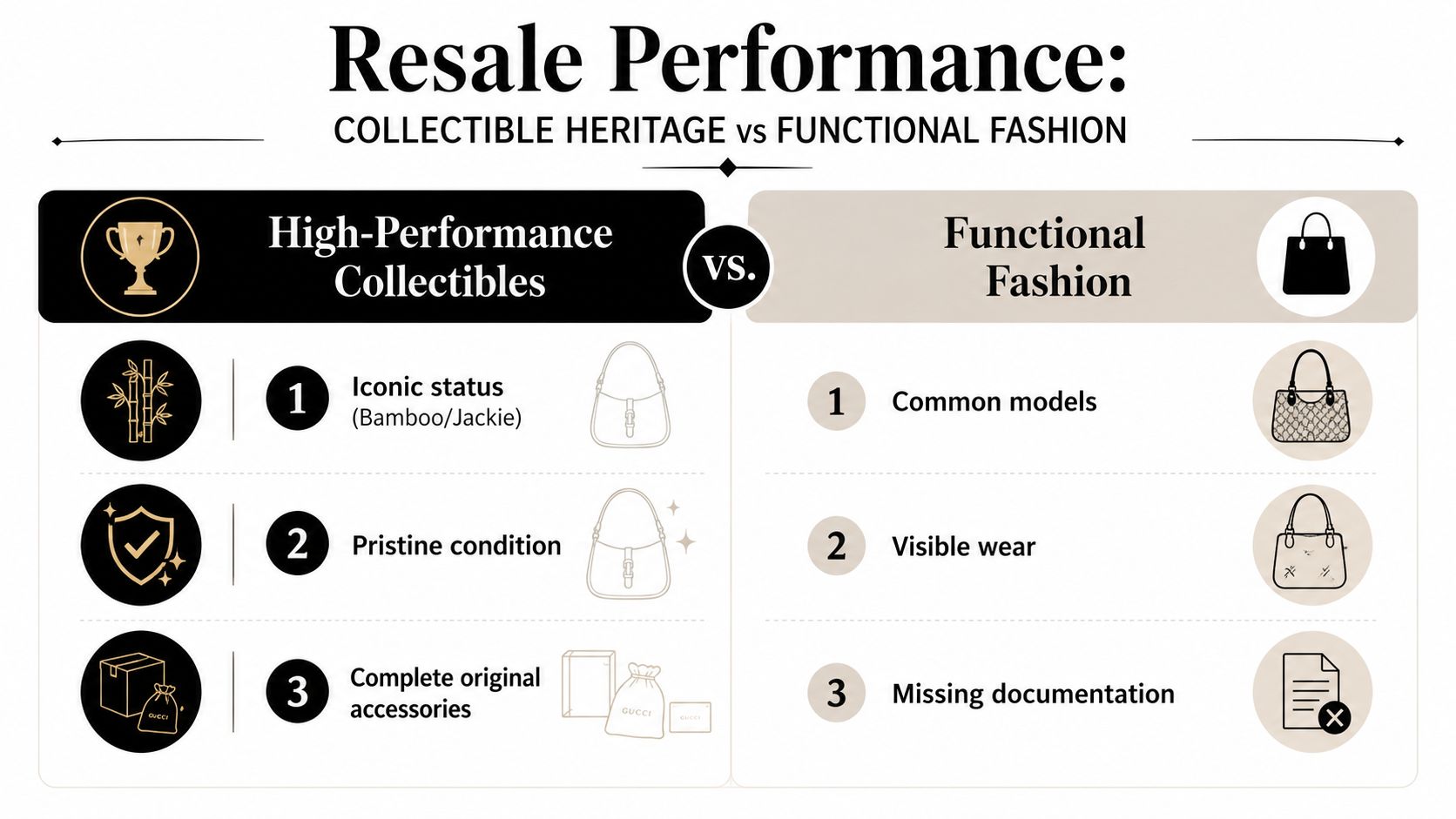
The biggest mistake sellers make is assuming that a bag becomes valuable because it's old. In practice, the market divides vintage Gucci bags into two very different groups, collectible heritage pieces and functional fashion pieces, and they don't behave the same way at resale.
I see this most clearly when a seller brings in something from the 1970s that looks impressive on paper but has soft structure, tired hardware, or a shape that doesn't fit modern carry habits. That bag may interest a fashion archivist, but a day-to-day buyer often wants something cleaner, easier to wear, and easier to verify. The older piece can still be desirable, but desirability isn't the same as strong resale performance.
A more recognizable style often performs better because buyers know what they're looking at. A Jackie, a Bamboo, or a GG Supreme-type piece can get more attention than a rarer bag if it presents well and reads clearly in photos. That's why broad “rare equals expensive” advice falls apart in real selling situations.
Practical rule: If a vintage Gucci bag is hard to identify at a glance, it usually has a smaller buyer pool than a clearly recognizable house icon.
The best comparison is not between “old” and “new,” it's between “collectible” and “usable.” Collectible pieces can command attention because they sit close to Gucci's history, while usable pieces attract broader demand because buyers can imagine carrying them now. That distinction matters if you're trying to sell rather than just admire the item.
For owners who also evaluate other luxury categories, the same logic shows up in watch sales too, and this vintage watch valuation guide makes the same point in a different market. Age gets a buyer's attention, but condition and market readability decide whether that attention turns into an offer.
The Three Iconic Vintage Gucci Bag Lines
Gucci's vintage market is built around a few landmark designs, not a random pile of old handbags. The most important names are the Bamboo from 1947, the Horsebit from 1955, and the Jackie from 1961, all of which Christie's identifies as collectible handbag lines. Those dates matter because buyers often pay more when a bag can be tied to a known launch year, original product number, or celebrity association. Britannica's history of Gucci anchors the house's founding in 1921 in Florence, which is the baseline many collectors use when thinking about early Gucci leather goods.
Bamboo from 1947
The Bamboo bag is the clearest example of wartime ingenuity turning into a lasting house code. Gucci introduced bamboo-handled bags in 1947, after material shortages pushed the brand toward signature innovation. The key collectible point is not just the material, but the story behind it, because that origin is what gives the design historical weight.
1stDibs notes that one Gucci Bamboo bag took 13 hours to make, which helps explain why early examples are scarce and why craftsmanship is still central to value. In practical terms, that kind of labor intensity often shows up in the details buyers check, especially the handle shape, the quality of the leather, and the overall balance of the bag.
Horsebit from 1955
The Horsebit line became one of Gucci's most recognizable signatures because it translated equestrian language into handbag design. Christie's places the handbag line at 1955, which gives it a clean launch-year reference that collectors understand quickly. That date matters because people who buy vintage often want an object they can place in a documented design timeline, not just an old accessory.
Jackie from 1961
The Jackie has perhaps the most immediate fashion recognition because it ties directly to a public style story. Christie's identifies 1961 as its collectible milestone, and that date is the one serious buyers tend to use when separating authentic vintage references from later revivals. The classic value case here is simple, a Jackie that's easy to authenticate, easy to wear, and linked to the right era will usually be easier to place in the market than a more obscure hobo-style Gucci from the same decade.
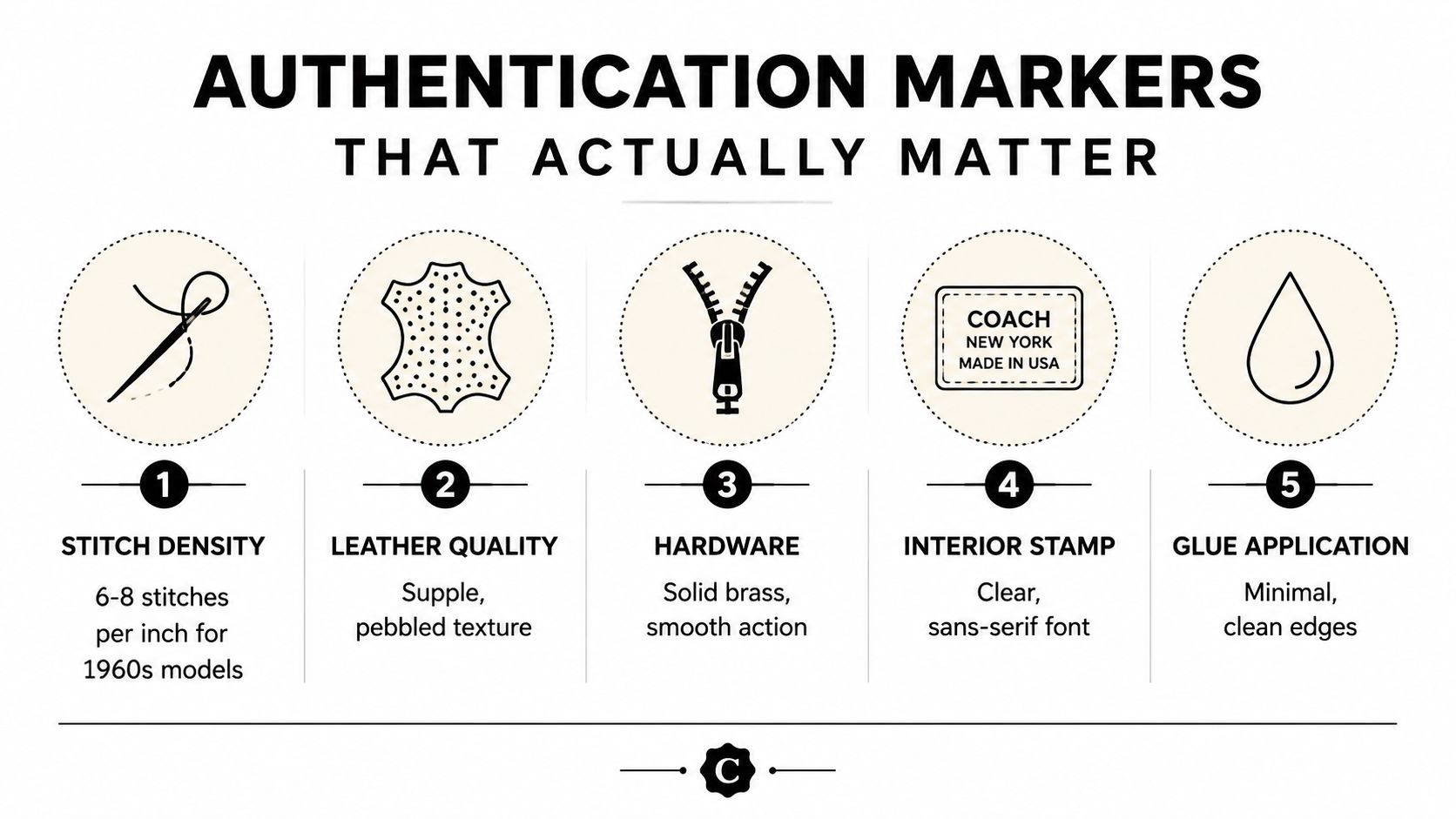
Authentication Markers That Actually Matter
Surface logos are the easy part. Real authentication starts with construction, because counterfeiters can copy a stamp long before they can copy the feel of a well-made vintage bag. For vintage Gucci bags, the most useful signals are stitch quality, tag construction, and whether the details make sense for the claimed era.
Start with stitching before branding
Reputable reseller guidance says genuine older Gucci pieces often show about 6 to 8 stitches per inch, while some structured bags can run 7 to 9 SPI depending on construction method and era. The useful trick is not memorizing one number, it's matching the stitch pattern to the period. A 1960s to 1970s hand-saddle-stitched bag may show slightly irregular spacing around 6 to 7 SPI, while late-1980s and 1990s machine-stitched examples often tighten to 8 to 9 SPI.
That matters because stitch density affects seam integrity, puckering, and overall finish. When the stitching looks too perfect for a bag that should be hand-finished, or too loose for a later production era, the bag deserves more scrutiny. For a practical authenticity workflow, this fake designer bag spotting guide is a useful companion to hands-on inspection.
A real vintage bag usually feels consistent. The stitches, the leather, and the hardware all tell the same era story.
Check the tag and code, but don't stop there
Independent authentication guides say genuine vintage Gucci bags usually carry a leather interior tag stamped on the reverse with a 10 to 13 digit code, often split into two sets where the first set is the style or model number and the second is the supplier or batch code. The stamping should look centered and crisp, and the tag is not sewn on all four sides because the serial number is on the reverse.
That said, the code alone can't carry the whole decision. Some older Gucci bags don't follow neat modern numbering patterns, and the tag has to be judged alongside construction, materials, and hardware. If the serial format looks wrong for the claimed decade, or if the font looks muddy, that's a warning sign, not a final verdict.
Use hardware as a consistency check
Hardware doesn't authenticate a bag by itself, but it helps confirm whether the piece belongs to the era it claims. A vintage clasp, zipper pull, or buckle should look age-consistent, not artificially distressed. If the leather has aged naturally but the metal looks newly manufactured, the bag needs a closer look.
Resale Performance, Collectible Heritage vs Functional Fashion
Not every authentic vintage Gucci bag is equally attractive to buyers. The market usually rewards bags that balance recognizability, condition, and wearability, while rare pieces can underperform if they're awkward to use or too compromised to feel current.
A rare 1970s bag with hardware wear and structural sagging may attract collectors, but it can still lose ground to a cleaner Jackie or a straightforward GG-style bag that presents well in photos. That sounds backward to beginners, but it's normal in resale. Buyers pay for confidence as much as for rarity, and confidence comes from a bag that looks stable, understandable, and ready to carry.
What usually helps resale
Iconic model recognition: A Bamboo, Jackie, or Horsebit is easier for buyers to price quickly.
Honest condition: Clean leather, intact structure, and tidy interiors matter more than dramatic age.
Usable proportions: Bags that fit modern carry habits tend to move faster.
Verifiable details: Clear tags, believable stitching, and coherent hardware reduce hesitation.
What tends to weaken offers
Structural sagging: A bag that won't hold shape often looks tired in listings.
Heavy hardware wear: Scratches are normal, but deep deterioration makes buyers cautious.
Interior issues: Strong odors, staining, or deterioration often push buyers down a tier.
Unclear identity: If the model can't be quickly placed, many buyers pass.
A useful way to think about it is this, a more common bag in better condition can outperform a rare bag in poor condition. That's especially true when the common bag is easy to verify and still looks current enough for daily use.
For a wider comparison with another luxury category, this Chanel bag resale value guide shows how the same condition-first logic appears across designer handbags.
Understanding Serial Numbers and Production Eras
Serial-number advice gets oversimplified fast. Many people assume every authentic Gucci bag should have a modern-looking code, but that's not how older production works. One authentication guide says date codes were not introduced until the late 1990s, while another notes that Gucci began stamping serial numbers from the late 1970s to early 1980s. The practical takeaway is that production era changes the authentication method.
Vintage eras need different screening
Bags from the 1950s to 1980s are often authenticated through design, materials, and construction rather than serial numbers. That means a seller who fixates only on the interior code can miss the genuine evidence, or reject a legitimate bag just because it doesn't match a modern expectation. The absence of a serial number is not automatically disqualifying for older Gucci.
Here's a simple way to think about it:
Production Era | Serial Number System | Primary Authentication Methods | Common Characteristics |
|---|---|---|---|
1950s to 1970s | Often no modern serial system | Design, materials, construction, hardware | Era-specific silhouettes, hand-finished details |
Late 1970s to early 1980s | Early stamping appears on some bags | Interior tag, code format, stitching, material quality | Transitional tagging, mixed construction cues |
Late 1990s and later vintage | More standardized code use | Interior code, centered stamp, consistent construction metrics | Clearer tag conventions, more regular formatting |
Read the code in context
When a code is present, the format should make sense for the claimed period. Independent guides describe genuine bags as usually carrying a 10 to 13 digit stamp split into two number sets, often with model and supplier information. If a seller claims one era but the code or tag style points to another, that mismatch deserves attention.
The safest approach is to combine tag placement, font sharpness, stitching, hardware, leather quality, and era knowledge. A single clue can mislead you, but a consistent pattern usually tells the truth.
The absence of a serial number doesn't end the conversation. For older Gucci, it just means the bag has to be judged the old-fashioned way, piece by piece.
Preparing Your Vintage Gucci Bag for Sale
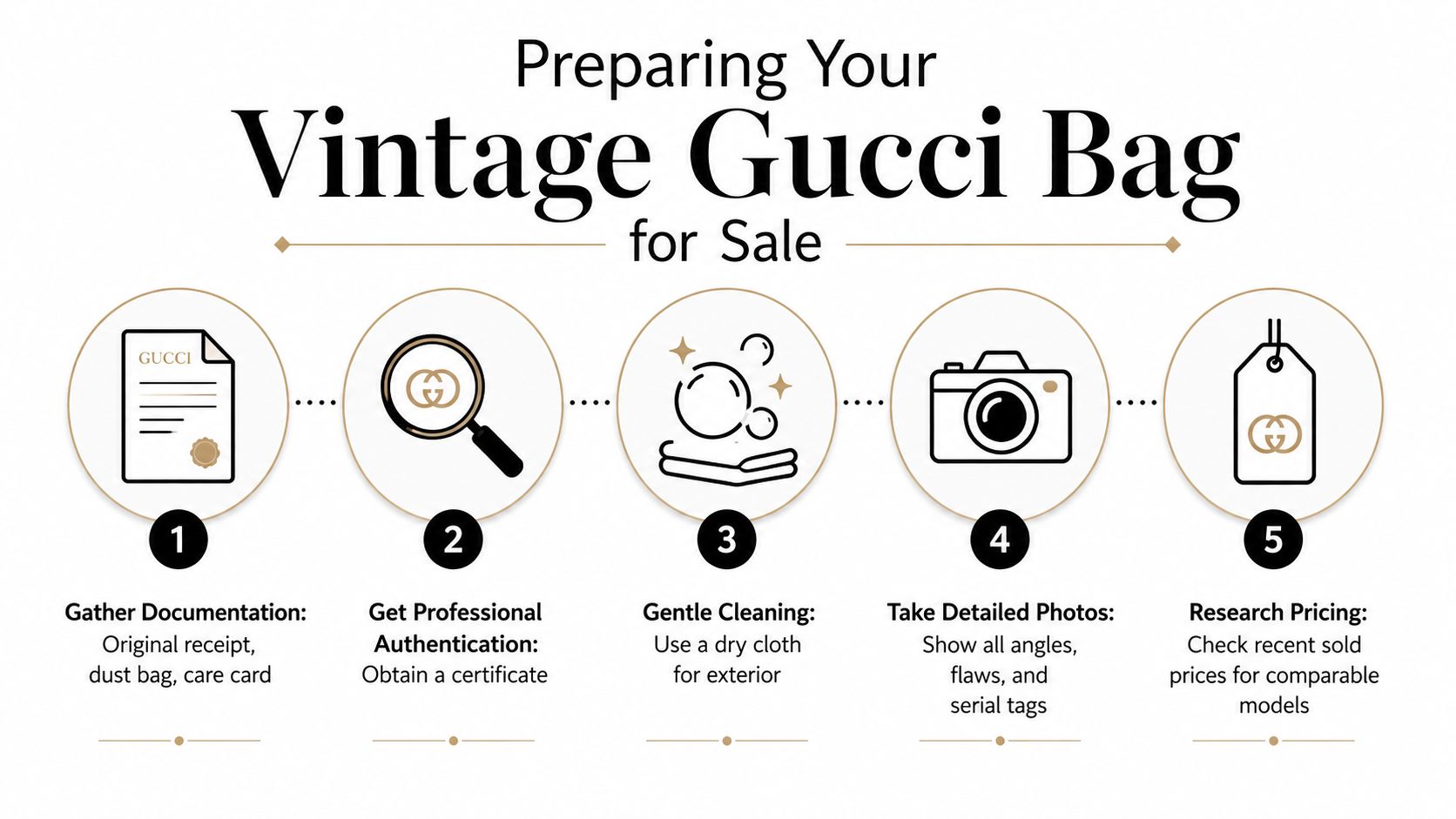
Preparation changes how buyers read a bag. A vintage Gucci piece doesn't need to look new, but it does need to look cared for, complete, and presented. That means gathering paperwork, cleaning safely, and photographing the bag in a way that shows both the beauty and the flaws.
What to gather first
Start with whatever documentation still exists. Original receipts, dust bags, authenticity cards, and previous appraisal reports can all help a buyer move faster because they reduce uncertainty. If you have old repair records, keep those too, since restoration history can affect how a buyer evaluates the piece.
For leather care that protects vintage character instead of stripping it away, the worn leather bag care and restoration guide is a useful reference before you touch the bag.
How to clean without overdoing it
Use a dry cloth for the exterior first. Avoid aggressive cleaning products unless you're certain they suit the material, because vintage leather and coated canvas can react badly to modern cleaners. Buyers usually prefer honest patina over shiny over-restoration, especially when the piece is meant to remain collectible.
What to photograph
Take clear photos of the front, back, sides, bottom, interior, hardware, tag, stitching, and any wear. Don't hide scratches or scuffs, because buyers will find them anyway, and hidden defects make them distrust the listing. The strongest listings are the ones that show the full story of the bag.
A practical checklist helps here:
Documentation: Gather proof of purchase, accessories, and prior evaluations.
Condition notes: Record wear, repairs, odors, and loose stitching.
Identity markers: Photograph tags, logos, hardware, and base shape.
Presentation: Use bright, neutral light and avoid heavy filters.
Market research: Compare similar sold pieces before asking for an offer.
If you're comparing where to sell, this platform comparison for selling handbags helps frame the trade-offs around authentication, payout speed, and security.
Getting Professional Evaluation and Fair Market Offers
Professional evaluation is the best route when a bag may have collectible value, unclear era markers, or restoration history that a casual buyer might misread. A good evaluator doesn't just glance at the logo, they assess authenticity, condition, model demand, and current market fit together. That's the difference between a fast guess and a fair offer.
The strongest buyers are transparent about how they arrived at the number. They explain what helped the bag, what hurt it, and whether the piece is stronger as a collectible or as a functional fashion item. If a buyer won't discuss those factors clearly, that usually tells you more than the offer itself.
What to ask before you sell
How will you authenticate it? You want to know whether they inspect construction, tags, and era cues.
Do you evaluate in person? In-person review is often better for vintage bags because texture, shape, and hardware are easier to judge accurately.
Are there hidden fees? Clear offers should be easy to understand.
What condition issues matter most? That tells you whether the buyer is focused on resale demand or just passing the item along.
How fast is payment? Speed matters, but it shouldn't replace clarity.
Remote assessment can be useful for an initial screen, but it's not the same as handling the bag directly. Vintage leather, stitching, interior odor, and structural collapse are much easier to judge in person than through photos. That's why sellers who want a serious market opinion often prefer a direct evaluation over a generic online estimate.
If you're ready to compare offers and want a straightforward selling process, this guide to selling a designer handbag gives a good sense of how a professional review should work from start to finish.
If you're thinking about selling a vintage Gucci bag in Atlanta, Buckhead, Sandy Springs, Alpharetta, Roswell, Brookhaven, or Midtown, bring it to Antwerp Diamond for a discreet evaluation. You'll get a practical assessment of authenticity, condition, and current market demand, so you can decide whether to sell now, hold, or compare options with confidence.


